Skip to Content Facebook Feature Image

Japanese scholar urges Japan to confront its wartime history

China

China

China

Japanese scholar urges Japan to confront its wartime history

2026-09-18 18:59 Last Updated At:20:37

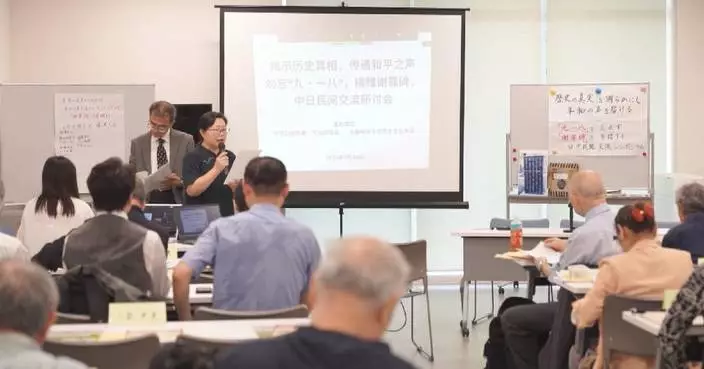
Japanese government must confront its wartime past and ensure the truth of that history is passed on to future generations, according to Atsushi Koketsu, a professor emeritus at Yamaguchi University.

Speaking in an interview with China Global Television Network (CGTN), which was aired on Friday, or Sept. 18, Koketsu expressed concern that modern youth know very little about Japan's major war crimes.

On Sept 18, 95 years ago in 1931, the Japanese Kwantung Army stationed in northeast China destroyed a section of the railway near Liutiaohu and then falsely accused the Chinese military of causing the explosion. Using this as a pretext, the Japanese then bombarded Shenyang and began the invasion of northeast China.

Six years later, on July 7, Japanese soldiers attacked Chinese forces at the Lugou Bridge, marking the beginning of Japan's full-scale invasion of China and China's whole-nation resistance against the Japanese invaders.

Also, in 1937, the Nanjing Massacre took place when Japanese troops captured the then-Chinese capital of Nanjing on Dec 13. Over six weeks, they killed approximately 300,000 Chinese civilians and unarmed soldiers in one of the most barbaric episodes of World War II.

However, Japan's history textbooks have not accurately described these crimes. One publisher's 2002 textbook addressed Japan's launch of the "September 18 Incident" in 1931 and its subsequent invasion of northeast China under a chapter titled "Japan's Aggression Against China." It described the Japanese Kwantung Army as "having brought about the establishment of Manchukuo," wording that implied the Army's hand in steering the puppet state.

In the 2023 edition of a Japanese history textbook, however, both the term "Nanjing Massacre" and China's official figure of 300,000 Chinese victims had disappeared from the book, while the tribunal's statements were demoted to a footnote.

Koketsu said, "Young people now know very little about the Nanjing Massacre, the bombing of Chongqing, the bombing of Jinzhou, or Japan's use of poison gas and biological warfare units. Many of history's most shameful chapters have been buried in darkness. However, we have a duty to pass on the truth of that war accurately to future generations. If we neglect that responsibility of preserving and transmitting its history, and if we deny, revise, fabricate, or distort the history of that war, that is the true guilt."

Japanese scholar urges Japan to confront its wartime history

Japanese scholar urges Japan to confront its wartime history
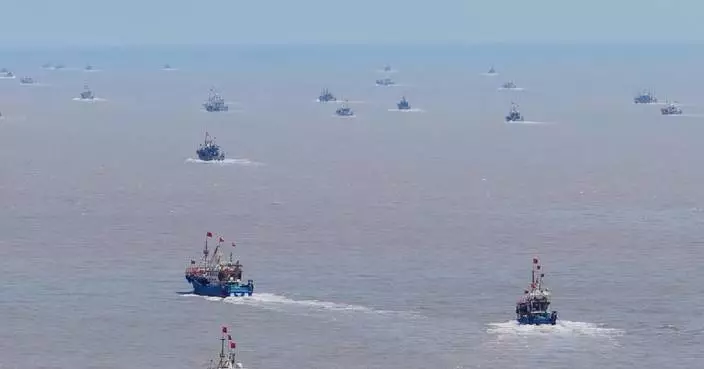
The Pinglu Canal is expected to unlock new opportunities for deeper economic cooperation between China and the Association of Southeast Asian Nations (ASEAN), according to ASEAN Secretary-General Kao Kim Hourn.

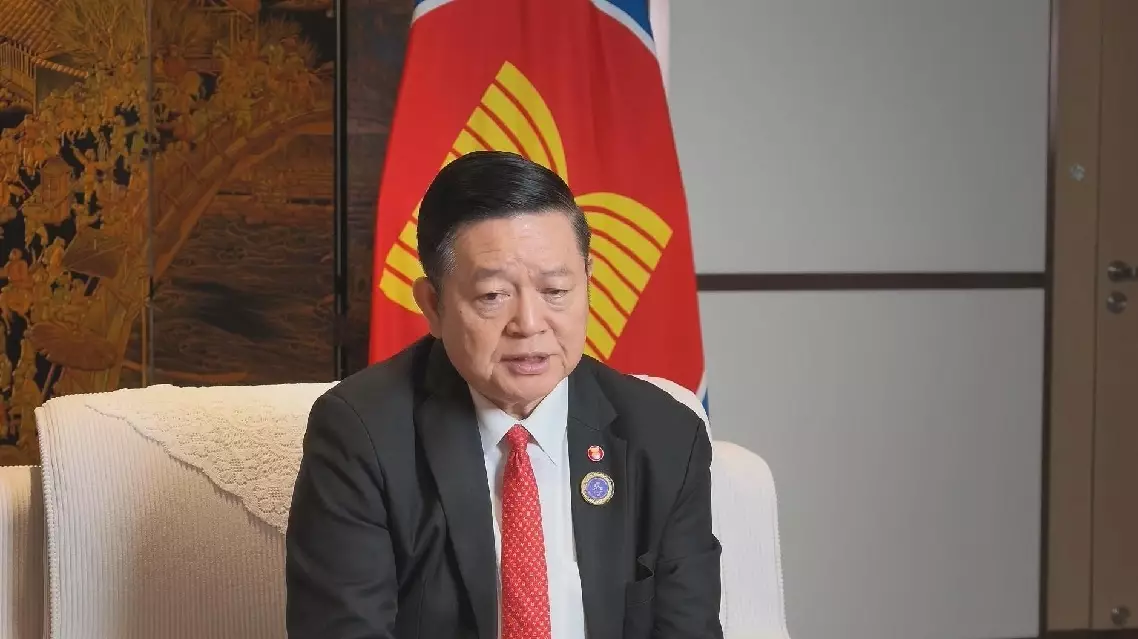
Speaking on the sidelines of the 23rd China-ASEAN Expo, which opened Thursday in south China's Nanning, Kao stressed the strategic role of the new waterway in boosting regional trade.

In an interview with China Global Television (CGTN), Kao said that the newly opened canal provides China's landlocked southwest with a crucial direct gateway to maritime routes, paving the way for faster trade with its top commercial partner.

Built at a cost of 72.7 billion yuan (about 10.84 billion U.S. dollars), the 134.2-kilometer canal runs from Nanning to the Beibu Gulf, the closest maritime outlet for much of southwest China.

The canal stretches along the New International Land-Sea Trade Corridor, a strategic trade route connecting China's inland regions with ASEAN and other global markets. It is the first river-to-sea canal project planned and coordinated at the national level since the founding of the People's Republic of China in 1949.

"This is a canal of a significant historical dimension, meaning that it would not only benefit China alone. There are provinces in China that can use the canal do a lot of transportation, particularly water transportation to lower the cost. But for us, because we do a lot of trade between the two sides, meaning that we have to use port to port. There are a lot of ports in China, and there are a lot of ports in ASEAN. And as in China, our relationship, we are neighbors as defined by the geography. And this canal open new opportunities for both sides. I hope that provinces in China will take advantage of this great opportunity to deepen our economic cooperation," said Kao Kim Hourn.

China's trade with ASEAN exceeded 1 trillion U.S. dollars for the first time last year. In the first seven months of 2026, total trade between the two sides reached 744.41 billion U.S. dollars, an increase of 24.7 percent year on year, accounting for 21.8 percent of China's total foreign trade during this period.

Pinglu Canal to deepen China-ASEAN economic cooperation: secretary-general

Pinglu Canal to deepen China-ASEAN economic cooperation: secretary-general

Recommended Articles