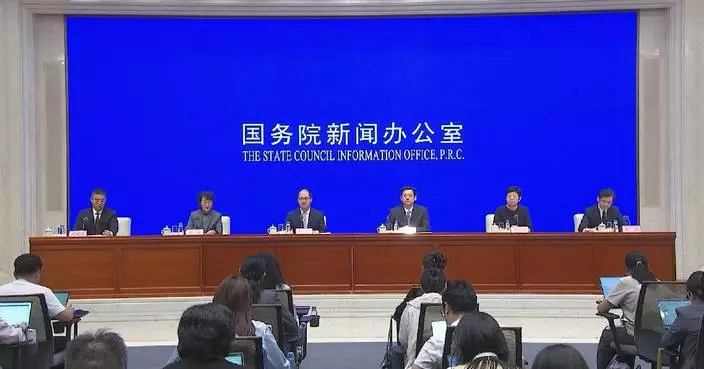
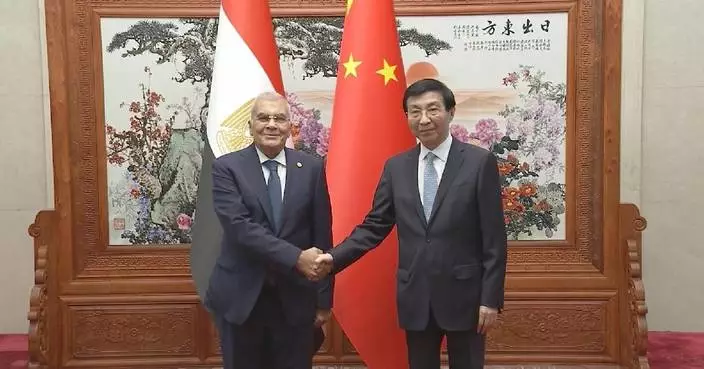
Zhao Leji, chairman of China's National People's Congress (NPC) Standing Committee, met with Speaker of the Egyptian Senate Essam El Din Ahmed Mohamed Farid in Beijing on Friday.
Zhao, also a member of the Standing Committee of the Political Bureau of the Communist Party of China Central Committee, said Chinese President Xi Jinping paid a successful and historic visit to Egypt early this month. The two heads of state agreed to advance the building of a China-Egypt community with a shared future, charting the course for the development of bilateral relations under new circumstances.
China stands ready to work with Egypt to implement the important consensus reached by the two heads of state, carry forward the traditional friendship, consolidate political mutual trust, strengthen practical cooperation, and create an even better future for China-Egypt relations, said Zhao.
The NPC is willing to enhance interactions with Egyptian parliament at all levels and in various fields, conduct in-depth exchanges of experience in democracy and the rule of law, and contribute to the building of a China-Egypt community with a shared future, Zhao noted.
Noting that the Egypt-China comprehensive strategic partnership has yielded practical results in various sectors, Farid said Egypt is firmly committed to the one-China principle, and stands ready to work with China to act on the important consensus reached by the two heads of state.
The Egyptian Senate is willing to enhance exchanges and collaboration with the NPC to provide guarantees for the development of the two countries, he said.
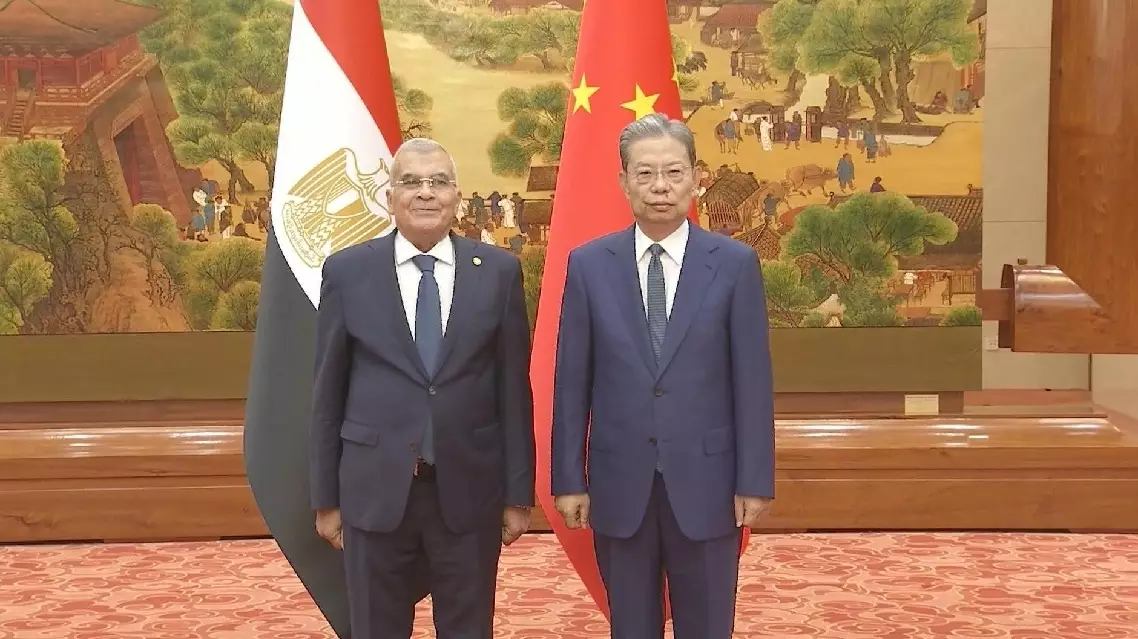
China's top legislator meets Egypt's Senate speaker
Japan's reliance on U.S. economic policy is allowing foreign funds to acquire Japanese assets at bargain prices, according to Japanese economist Kazuhide Uekusa.
He warned that the government's economic and defense strategies prioritize foreign capital and political profits over public welfare, failing to bring true prosperity to ordinary citizens.
The Bank of Japan (BOJ) on Friday raised its policy interest rate by 0.25 percentage points to 1.25 percent, the highest in about 31 years, following a two-day board meeting.
According to Uekusa, the timing of the shift aligns perfectly with the interests of large American funds.
"The Takaichi Cabinet has been reluctant to raise interest rates, thus allowing the yen to continue to depreciate. I think this is actually equivalent to helping foreign capital purchase Japanese assets at a low price. However, U.S. Treasury Secretary Scott Bessent has recently made a clear adjustment to the policy direction of the U.S. dollar against the Japanese yen, promoting the appreciation of the Japanese yen. The reason is that some large funds in the United States have basically completed their investment layout in Japanese assets," said Uekusa.
Uekusa also said Japan cannot attempt to revitalize its economy by expanding military spending and supporting the defense industry, and such a military buildup strategy is unlikely to bring about true prosperity and stability.
"I think it is true that the Japanese economy has been stagnant for a long time. However, to expand military spending in an attempt to revitalize the economy is, in my opinion, an extremely foolish and even crazy move. To achieve peace and stability in Japan, the foundation should be to establish friendly relations with neighboring countries rather than military expansion. The reason why the Japanese government attaches so much importance to the military industry is that it can generate huge profits, and a part of these profits may flow back to political parties or political figures through various means. I don't think this is at all for the benefit of the people," he said.
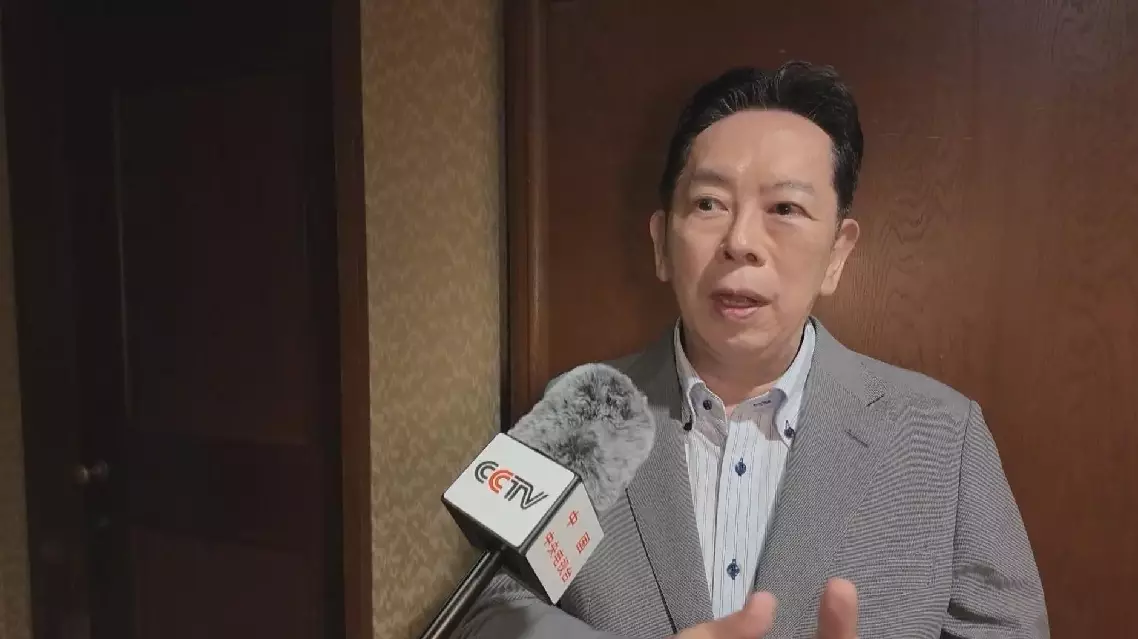
Japanese economist criticizes gov't policies for enabling cheap asset sales to foreign funds