Skip to Content Facebook Feature Image

Tokyo stocks end higher despite BOJ rate hike: analyst

China

China

China

Tokyo stocks end higher despite BOJ rate hike: analyst

2026-09-19 08:17 Last Updated At:10:17

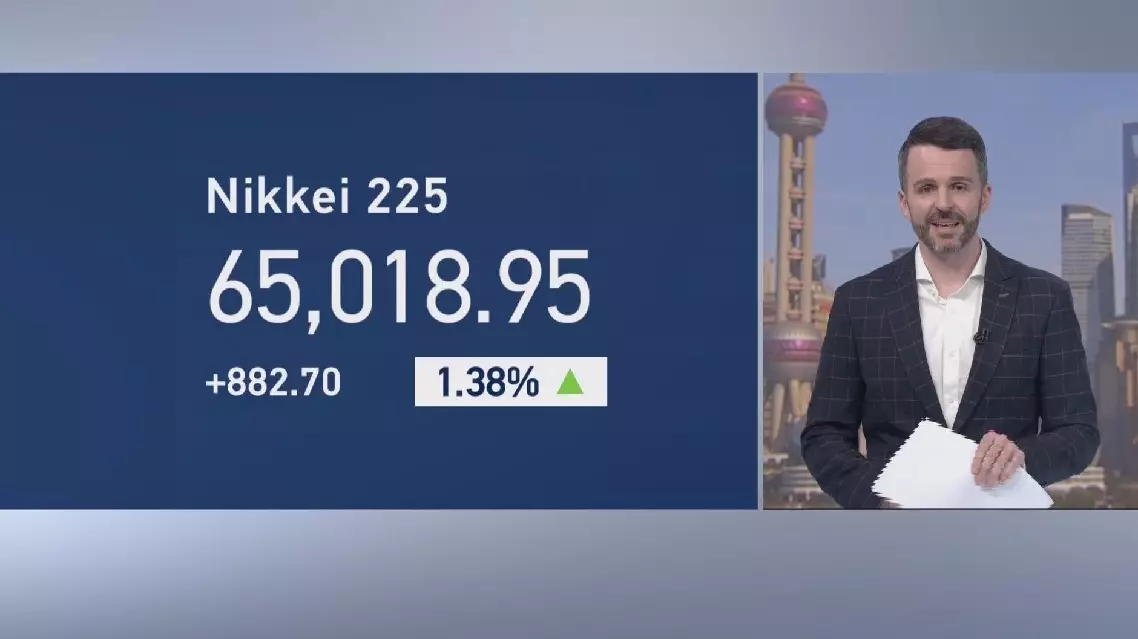
Japan's benchmark Nikkei 225 Stock Average ended higher on Friday even as the Bank of Japan (BOJ) raised its policy interest rate to its highest level in about 31 years, said Timothy Pope, a market analyst for China Global Television Network (CGTN).

The benchmark index closed up 882.70 points, or 1.38 percent, at 65,018.95, as the central bank lifted its policy rate to 1.25 percent from 1.0 percent.

The rally was driven by a falling yen and sliding oil prices, with AI and semiconductor heavyweights pulling the market higher. Advantest and Kioxia each surged more than 7 percent, while tech investor SoftBank Group also gained.

"Over in Japan, we saw the Nikkei 225 jumping today 1.4 percent -- quite a strong gain there, as a falling yen and sliding oil prices really supported the stock market. That left the index 1.6 percent higher for the week," said Pope.

Pope noted that the rate hike had been largely priced in by investors, but the decision was not unanimous -- two BOJ board members dissented, sparking some doubt about how quickly the central bank will continue tightening. Coming into the meeting, markets had been pricing in close to two BOJ hikes by the end of the year.

But today's decision really did land more dovishly than investors had expected. BOJ Governor Kazuo Ueda didn't entirely reverse that impression either in his press conference later this afternoon. He left the door open to further hikes, and potentially even larger ones or successive moves if inflation demands it. But he also said the bank has no present timetable for rate increases and warned against over-tightening Japanese monetary policy as well," the analyst said.
Tokyo stocks end higher despite BOJ rate hike: analyst

Tokyo stocks end higher despite BOJ rate hike: analyst

China's general public budget revenue reached 15.66 trillion yuan (around 2.33 trillion U.S. dollars) in the first eight months of 2026, up 5.7 percent year on year, according to data released by the Ministry of Finance on Friday. The central general public budget revenue increased 9.1 percent year on year to 7.0118 trillion yuan, while the local general public budget revenue increased 3.1 percent year on year to 8.6515 trillion yuan.

Tax revenue climbed 6.6 percent year on year to 12.91 trillion yuan in the period.

Domestic value-added tax rose 5.9 percent, driven by continuous growth in the industrial and service sectors and an upward trend in factory-gate prices, while corporate income tax grew 7.3 percent on the back of rapid profit growth. Meanwhile, value-added tax and consumption tax on imported goods increased 12.6 percent, driven by rapid import growth.

A total of 1.65 trillion yuan was refunded for value-added tax and consumption tax on exported goods, an increase of 70.7 billion yuan compared with the same period last year. By region, the revenues of eastern, central, western and northeastern regions increased 3.2 percent, 1.4 percent, 4.6 percent and 2.1 percent, respectively.

From January to August this year, China's national general public budget expenditure reached 18.15 trillion yuan, up 1.2 percent year on year. Expenditures on public well-being grew rapidly in the eight-month period, with social security and employment spending rising 6.5 percent and health care outlays increasing 9.2 percent.

China's general public budget revenue up 5.7 pct in first eight months

China's general public budget revenue up 5.7 pct in first eight months

Recommended Articles