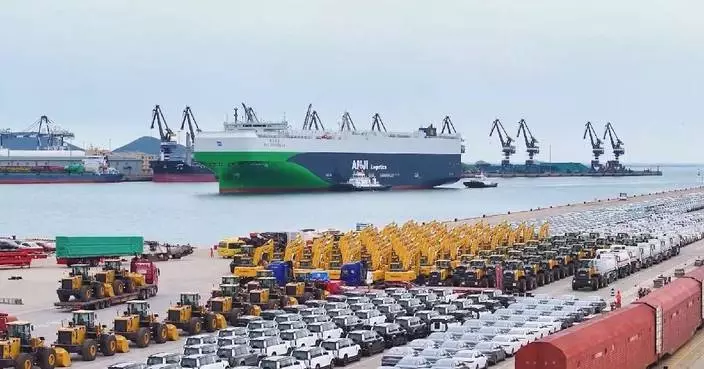
China steadfastly opposes the so-called voluntary restrictions on China's hybrid vehicle exports to Europe, as they gravely violate the World Trade Organization (WTO) rules and run counter to market economy rules and the principle of fair competition, a Ministry of Commerce spokesperson said on Friday.
The spokesperson made the remarks in response to recent media reports that the European Union (EU) wants China to voluntarily restrict exports of hybrid vehicles to Europe, and that China could otherwise face higher tariffs.
"These so-called voluntary export restrictions seriously violate WTO rules and run counter to the laws of the market economy and the principle of fair competition. China firmly opposes this," the spokesperson said.
"China's position is consistent. Any solution between China and the EU must ensure a balance of interests, comply with WTO rules and their respective domestic laws, and fully accommodate the interests of industries on both sides," the spokesperson added.
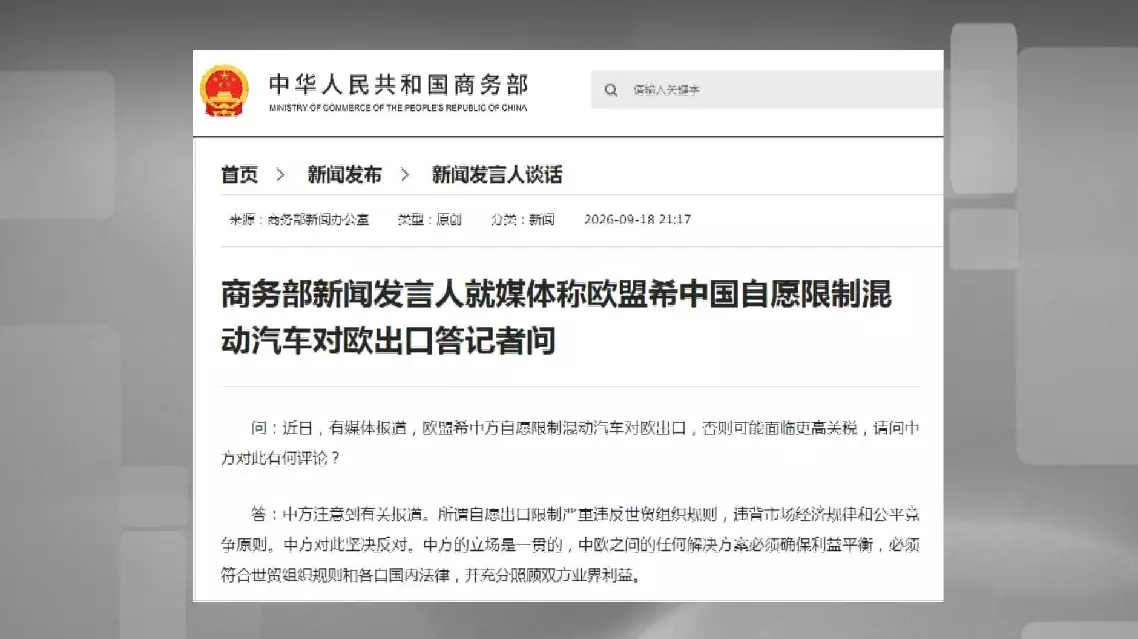
China firmly opposes so-called voluntary restrictions on hybrid vehicle exports to Europe
U.S. stocks ended mixed on Friday as the U.S. benchmark 10-year Treasury yield climbed back to the key 5 percent threshold again.
The Dow Jones Industrial Average fell 95.4 points, or 0.18 percent, to 51,682.64. The benchmark Standard and Poor's 500 added 12.74 points, or 0.17 percent, to 7,650.5, while the tech-heavy Nasdaq Composite Index gained 104.25 points, or 0.39 percent, to finish at 26,522.55.
For the week, market performance diverged. The Nasdaq recorded a 0.7 percent weekly advance, while the Dow dropped 1.7 percent to log its third consecutive losing week. The Standard and Poor's 500 edged down 0.1 percent, marking its second straight weekly decline.
Seven of the 11 primary Standard and Poor's 500 sectors closed in the red on Friday, with utilities and materials pacing the decliners, falling 1.4 percent and 1.1 percent, respectively. On the advancing side, technology and industrials led the gainers, rising 0.81 percent and 0.47 percent, respectively.
U.S. bond yields marched higher across the curve as traders increased their bets on additional monetary tightening following the Federal Reserve's rate hike earlier in the week. The yield on the benchmark 10-year U.S. Treasury note was back to 5 percent in late-afternoon trading, as market participants weighed lingering inflation risks.
According to the CME FedWatch tool, futures markets priced in a 55 percent chance of another quarter-point rate increase in late October and a 90 percent probability of further tightening by December.
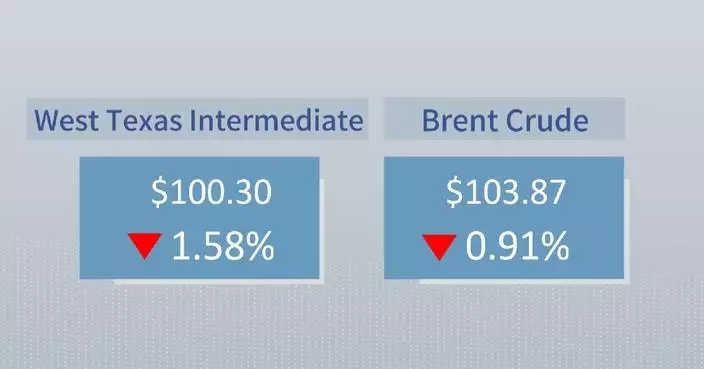
Energy benchmarks retreated as concerns over Middle East transit disruptions eased. West Texas Intermediate crude for October delivery fell 1.61 U.S. dollars, or 1.58 percent, to settle at 100.3 dollars a barrel on the New York Mercantile Exchange. Concurrently, Brent crude for November delivery declined 95 cents, or 0.91 percent, to close at 103.87 dollars a barrel on the London ICE Futures Exchange.
In corporate developments, Berkshire Hathaway announced that its longtime chairman and chief executive officer Warren Buffett is stepping down from his role as chairman, effective immediately. Meanwhile, Apple slipped 0.26 percent as the company's latest iPhone 18 lineup and companion devices officially hit global retail shelves.
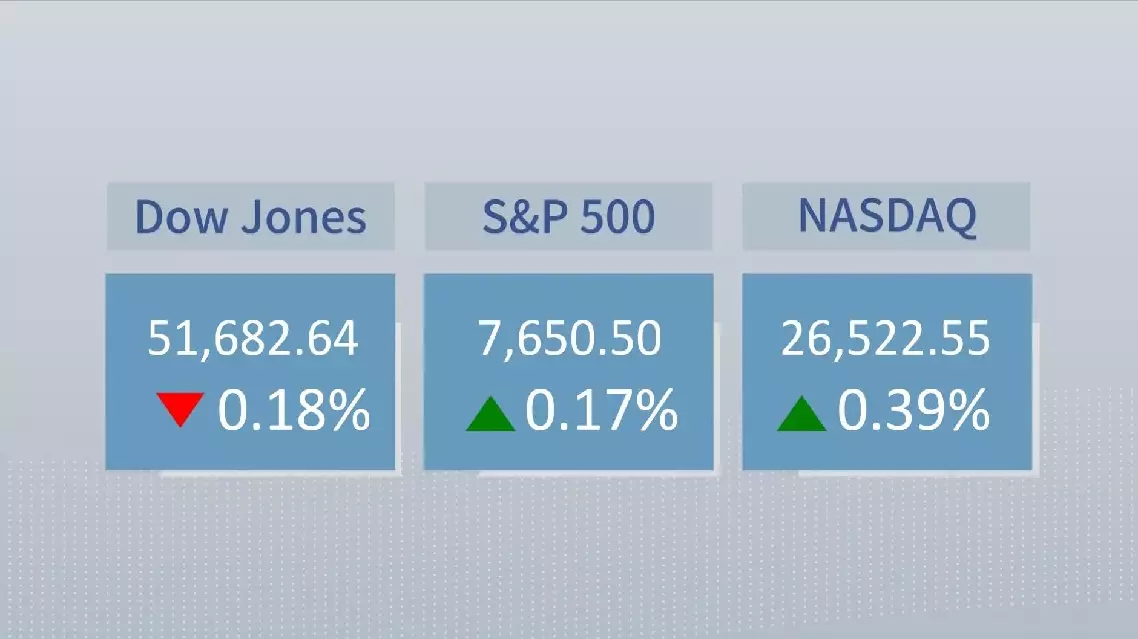
U.S. stocks close mixed as Treasury yields rise again