Yemen's Houthi group said Friday that Saudi warplanes launched 26 airstrikes on the southwestern province of Taiz over the past 24 hours, bringing the total number of strikes across Yemen this week to 300 as air operations intensified alongside ongoing ground battles on several fronts.
Houthi military spokesman Yahya Sarea said in a statement on social media platform X that Saudi F-15 fighter jets carried out the 26 strikes on Taiz after taking off from Khamis Mushait Air Base in southwestern Saudi Arabia.
Sarea added that this week's 300 airstrikes across nine Yemeni provinces involved F-15 and Typhoon fighter jets operating from Saudi air bases of Khamis Mushait and King Fahd.
Saudi authorities had no immediate comment.
The reported strikes came as heavy fighting continued Friday around the Kahbub mountain range in the southern province of Lahj, near the strategic Bab al-Mandab Strait, while clashes persisted across southwestern Taiz and in oil-rich Marib farther northeast.
The latest escalation follows significant Houthi advances along Yemen's southwestern Red Sea coast earlier this month. Yemen's conflict erupted in late 2014 when the Houthis seized the capital Sanaa and much of northern Yemen, prompting a Saudi-led coalition to intervene in March 2015 in support of the internationally recognized Yemeni government.

Yemen's Houthis report 300 Saudi airstrikes this week
U.S. stocks ended mixed on Friday as the U.S. benchmark 10-year Treasury yield climbed back to the key 5 percent threshold again.
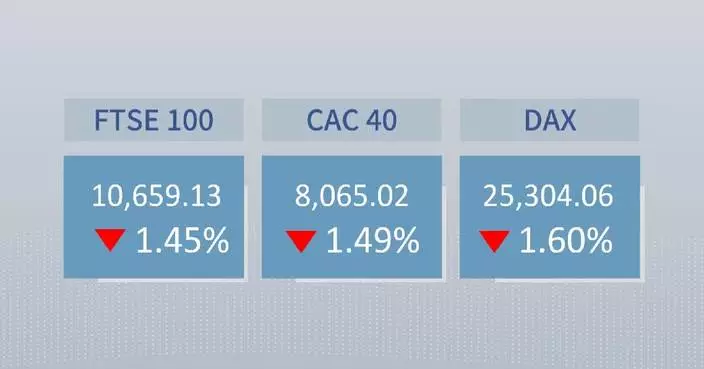
The Dow Jones Industrial Average fell 95.4 points, or 0.18 percent, to 51,682.64. The benchmark Standard and Poor's 500 added 12.74 points, or 0.17 percent, to 7,650.5, while the tech-heavy Nasdaq Composite Index gained 104.25 points, or 0.39 percent, to finish at 26,522.55.
For the week, market performance diverged. The Nasdaq recorded a 0.7 percent weekly advance, while the Dow dropped 1.7 percent to log its third consecutive losing week. The Standard and Poor's 500 edged down 0.1 percent, marking its second straight weekly decline.
Seven of the 11 primary Standard and Poor's 500 sectors closed in the red on Friday, with utilities and materials pacing the decliners, falling 1.4 percent and 1.1 percent, respectively. On the advancing side, technology and industrials led the gainers, rising 0.81 percent and 0.47 percent, respectively.
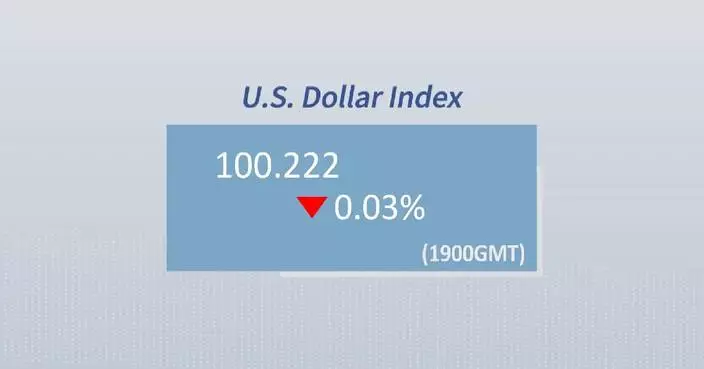
U.S. bond yields marched higher across the curve as traders increased their bets on additional monetary tightening following the Federal Reserve's rate hike earlier in the week. The yield on the benchmark 10-year U.S. Treasury note was back to 5 percent in late-afternoon trading, as market participants weighed lingering inflation risks.
According to the CME FedWatch tool, futures markets priced in a 55 percent chance of another quarter-point rate increase in late October and a 90 percent probability of further tightening by December.
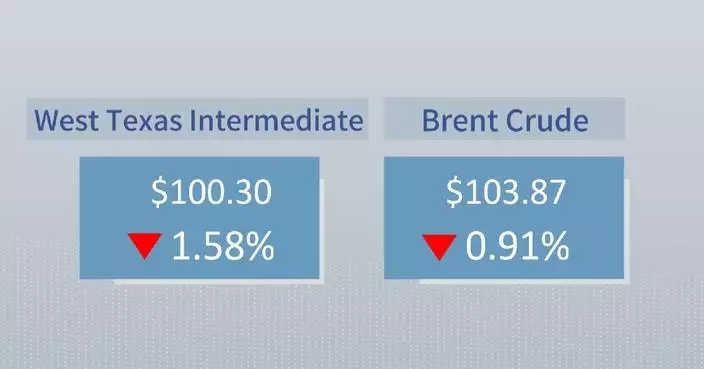
Energy benchmarks retreated as concerns over Middle East transit disruptions eased. West Texas Intermediate crude for October delivery fell 1.61 U.S. dollars, or 1.58 percent, to settle at 100.3 dollars a barrel on the New York Mercantile Exchange. Concurrently, Brent crude for November delivery declined 95 cents, or 0.91 percent, to close at 103.87 dollars a barrel on the London ICE Futures Exchange.
In corporate developments, Berkshire Hathaway announced that its longtime chairman and chief executive officer Warren Buffett is stepping down from his role as chairman, effective immediately. Meanwhile, Apple slipped 0.26 percent as the company's latest iPhone 18 lineup and companion devices officially hit global retail shelves.
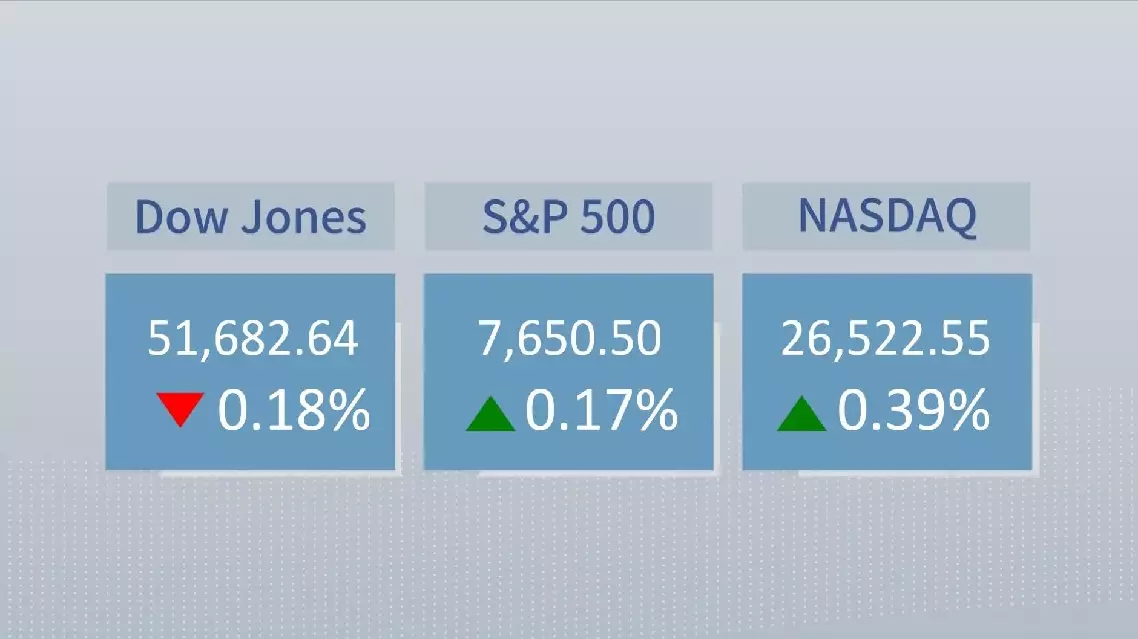
U.S. stocks close mixed as Treasury yields rise again