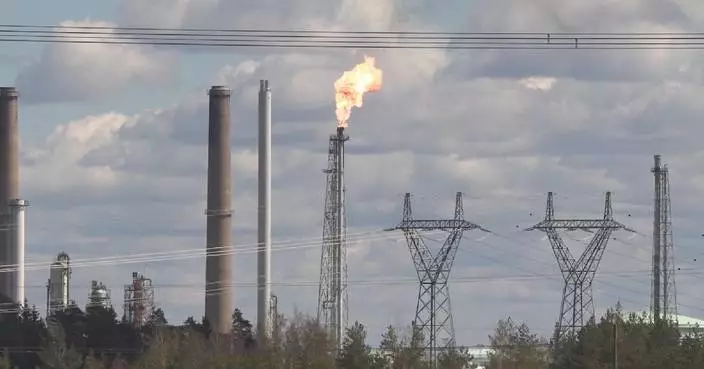
Saudi Aramco, the national petroleum and natural gas company of Saudi Arabia, is set to halt contracted crude deliveries to European customers in October after attacks shut a key pipeline to the Red Sea, Bloomberg News reported on Friday, citing people familiar with the matter.
The report said the Saudi state oil producer, also one of the largest companies in the world by revenue and market capitalization, had told at least two European refiners that they would not receive scheduled October cargoes.
The decision applies to all of Aramco's European buyers, it said.
Aramco has declined to comment its decision so far.
European refiners typically use long-term contracts with Aramco to secure predictable monthly supplies. The interruption is likely to push them into the spot market for more expensive alternative cargoes.
Saudi Arabia's Energy Ministry said on Sept 11 that the Riyadh and Medina sections of the East-West pipeline had come under repeated attack the previous day, prompting a precautionary shutdown.
The pipeline has not returned to normal operations.
The more than 1,200-km pipeline carries crude from oil-producing areas in Saudi Arabia's east to the Red Sea port of Yanbu, providing an export route that bypasses the Strait of Hormuz. It has a peak capacity of 7 million barrels per day, including up to 5 million barrels available for export.

Saudi oil company set to halt October crude deliveries to Europe
The decision made by the Bank of Japan (BOJ) to raise interest rates this week was driven primarily by rising inflation risks, and further hikes could follow if price pressures continue to build, market analysts and economists said on Friday.
They noted, however, that the pros and cons of the move are yet to be seen.
The comments came after the BOJ concluded its monetary policy meeting earlier on Friday and raised the policy rate from around 1.0 percent to approximately 1.25 percent -- its second hike in three months and the highest level since 1995.
"I believe that the primary reason is still on the price front. The BOJ currently considers Japan's underlying inflation rate to be already quite close to its 2 percent target. Taking into account the situation in the Middle East, robust demand related to artificial intelligence, as well as yen depreciation and currency movements, the risk of inflation exceeding 2 percent has clearly increased. I think this should be the biggest factor behind the BOJ's decision to raise rates this time," said Ichikawa Masahiro, chief market strategist at Sumitomo Mitsui DS Asset Management.
Beyond inflation, the expert said the yen is likely to face continued depreciation pressure from multiple directions.
"Considering the instability in the Middle East and the rise in crude oil prices, I believe that these are the factors that drive buying of the U.S. dollar and selling of the yen. In addition, concerns in the market about the deterioration of Japan's fiscal status, as well as the international balance of payments structure reflected in factors such as the trade deficit, will also push the yen lower," he said.
Other experts noted that the central bank is keeping a close watch on the yen's weakness, and the pace of tightening could quicken if external risks materialize.
"Moreover, the BOJ mentioned at its press conference that if the Middle East situation keeps crude oil prices persistently elevated and pushes them even higher, It may accelerate the pace of rate hikes, continuing not only through this year but possibly into the first half of next year. The BOJ may maintain a rhythm of one rate hike every three months, raising rates further, and by around the middle of 2027, Japan's policy rate could reach 2.0 percent," said Hideo Kumano, head economist at ABC Economic Research Institute in Japan.

Inflation risks drive BOJ's rate hike: experts