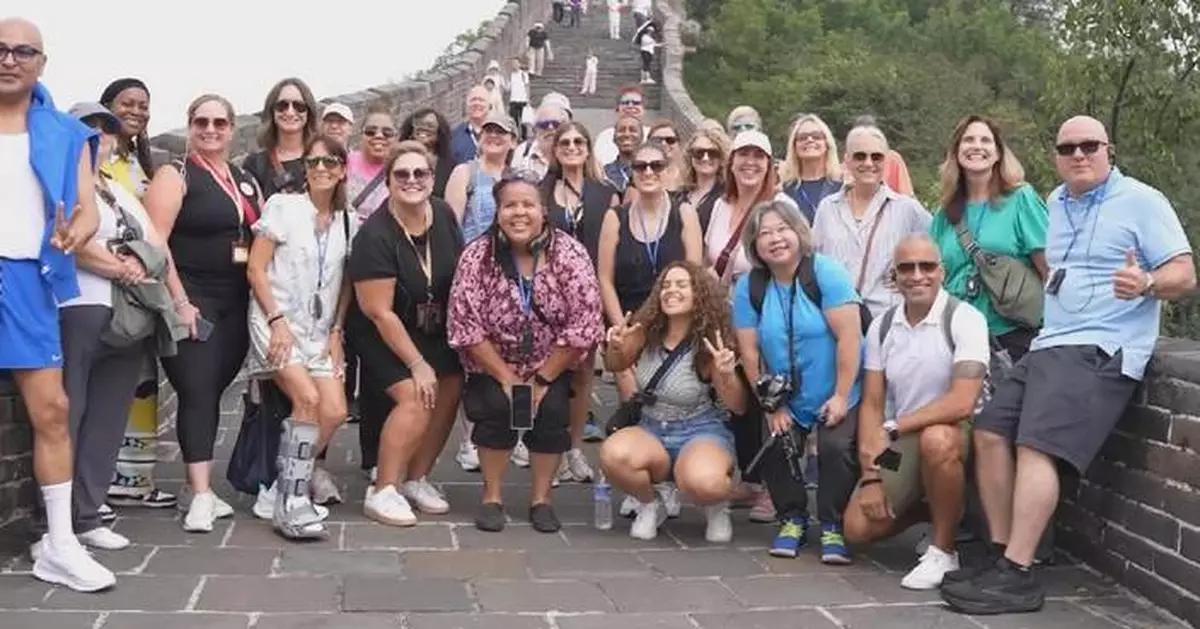
Foreign arrivals in Beijing have climbed sharply in September with daily entries averaging 15,300, up 22.4 percent from August, as China's expanded visa-free travel policies to bring more overseas visitors and supports longer stays.
More than 17,000 foreign nationals entered Beijing on Sept. 7, the highest daily total so far this year, border inspection authorities said.
The September increase is part of a broader upswing in inbound tourism. Beijing received 4.488 million inbound visitors in the first eight months of this year, up 33.5 percent from a year earlier, official data showed.
Visa-free entry and temporary entry permits accounted for 71.7 percent of foreign arrivals through Beijing's ports of entry, border inspection authorities said.
China's 240-hour visa-free transit policy now covers travelers from 57 countries, including Russia, Britain and the United States. Eligible visitors transiting to a third country or region may enter through designated ports and stay in permitted areas for up to 10 days, provided they hold confirmed onward tickets.
"We just traveled to China. The visa-free policy is actually great, so you don't need any visas. You could just came, buy tickets and enjoy. Yeah, we visited Beijing, the National Museum, the Great Wall. Everything was just perfect," said a Russian tourist.
"I've gone to China for about three, four times now in total, and every time you have to apply for a visa. This makes it a lot easier. So I have a lot of friends as well who now want to go to China because you have this 30-day free entrance, and it makes it a lot easier," said a British tourist.
Longer visa-free stays are encouraging many visitors to take a slower-paced look at China and venture beyond Beijing's best-known landmarks.
At the Temple of Heaven, a former imperial complex in southeastern Beijing where emperors once prayed for good harvests, a German tour group was on a 12-day rail trip through China that includes Xi'an in northwest China and Chengdu in the southwest, before continuing through central and south China to Shanghai.
"I think China is a beautiful country, from what I've seen, and the culture is also very interesting. We also got to try on the traditional dresses and take pictures. And the people, of course," said one member of the group.
"Very friendly," her mother added.
The shift is also reshaping tour packages, as operators move beyond abbreviated landmark itineraries toward more flexible, experience-led visits.
"Previously, visitors might spend only three days in Beijing. Now, many of our tour packages keep them in the city for four, five or even seven days, so they have more time to explore places in and around Beijing," said Zhou Zhanfeng, a tour guide.
In the hutongs -- narrow lanes lined with traditional courtyard homes -- around Shichahai, a historic lakeside district in central Beijing, four American tourists who met in Beijing formed an impromptu group for a 10-day trip across China.
"We did a beautiful city walk in this mansion. The gentle form of life here is beautiful. The pace is wonderful," said Mary, an American tourist.
"Yes, first time to China. And it was just much better than I expected. Even at night, beautiful," said Thomas, another American tourist.
Travel agents said visitors' itineraries are expanding beyond the Forbidden City, the Great Wall and the Temple of Heaven to a broader range of urban attractions, including the China National Arts and Crafts Museum, Chaoyang Park and the Liangma River.
For North American visitors, the draw increasingly lies in close-up encounters with local life, said David Fredericks, president and general manager of Century Cruises' Americas Division.
"But what's very important to them is the immersive experiences: sitting down with somebody and a house that's over 600 years old, sharing a cup of tea, sharing stories, hearing stories," Fredericks said.
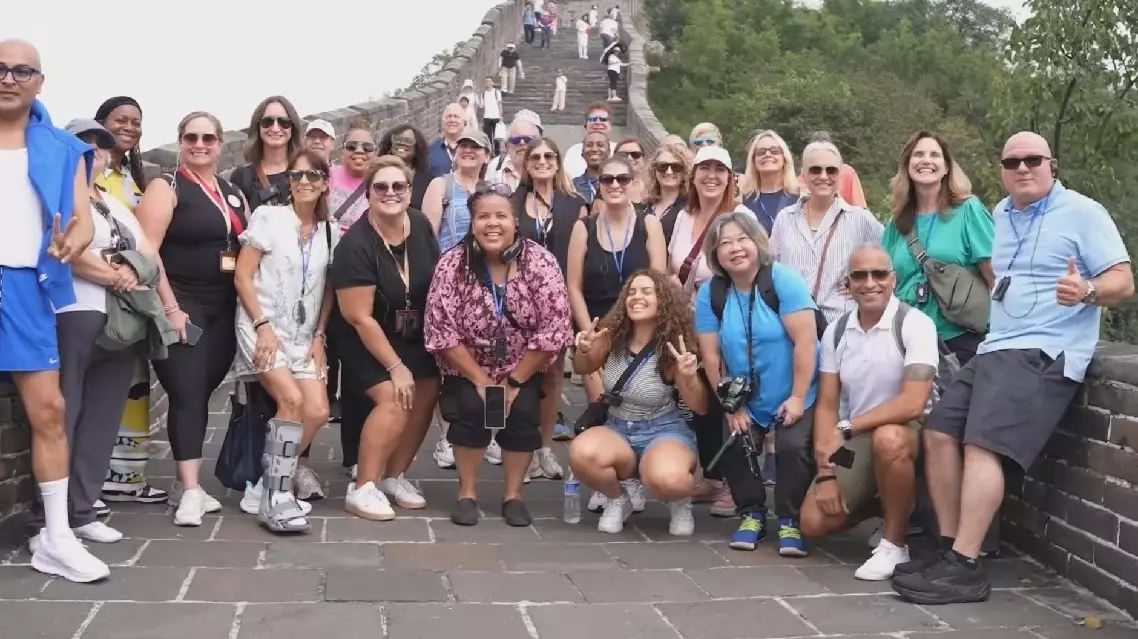
Expanded visa-free policies drive sharp surge in inbound tourism to Beijing