Skip to Content Facebook Feature Image

Federal Reserve rate hike reflects new world of sticky inflation and faster growth

News

Federal Reserve rate hike reflects new world of sticky inflation and faster growth
News

News

Federal Reserve rate hike reflects new world of sticky inflation and faster growth

2026-09-20 19:59 Last Updated At:20:00

WASHINGTON (AP) — President Donald Trump has renewed his attacks on the Federal Reserve after it hiked its benchmark interest rate Wednesday, but the Fed matters less than broader economic trends when it comes to longer-term borrowing costs, economists say.

The economy is growing steadily despite being hit with repeated shocks — and may even be accelerating — while inflation remains stubbornly high. And big tech firms are borrowing huge amounts of cash to plow into data center construction while the federal government is still running large yearly budget deficits. All these trends point to higher interest rates regardless of what the Fed does, analysts say.

As a result, the low interest-rate, low-inflation world that lasted for nearly 15 years after the Great Recession is over and a higher-priced, higher-rate world is taking its place. Mortgage rates fell into the 3% range in the 2010s and even lower during COVID-19, but such deals are long gone. The average 30-year mortgage rate reached 6.95% last week, the highest in more than a year and a half.

Joe Brusuelas, chief economist at RSM, a tax consulting firm, said that a big reason for the change is a shift from the pre-pandemic economy in which consumer and business demand was weak, to the current economy in which healthy consumer and business spending is colliding with supply shocks and bottlenecks. In addition to higher oil and gas prices because of the Iran war, the AI buildout has struggled with an insufficient supply of computer chips, electronic equipment, and workers to put it all together.

“We’ve undergone a structural transformation of the economy,” Brusuelas said. “The regime change in inflation and interest rates is the outcome.”

The shift, in many ways, returns the economy to where it was before the financial crisis in December 2007 that lasted through June 2009.

But even after the downturn ended, consumer and business spending remained weak. Millions of Americans in the 2010s focused on paying down outsized mortgages and credit card debt instead. Businesses saw few investment opportunities, and many big tech firms such as Alphabet’s Google and Meta’s Facebook piled up cash.

Now those companies are using those stockpiles to build out AI data centers, and are borrowing even more money to do so. And American consumers — despite surveys finding they are pessimistic about the economy — are still spending at a healthy pace. A recent report showing that retail sales picked up last month led economists at Bank of America to forecast growth will reach a healthy 3% at an annual rate in the July-September quarter.

Federal Reserve Chairman Kevin Warsh highlighted the shift in a speech at the central bank's annual conference in Jackson Hole, Wyoming last month.

After 2008, “it was a widely held view that an excess of capital would sit on the sidelines for a long, long time, because there just wouldn’t be enough compelling investment opportunities,” Warsh said. “All the good stuff had been invented. So growth would be low and slow.

“Well, times sure have changed,” he continued. “Ever-expanding pools of capital are pouring into AI-related infrastructure of all sorts.”

The additional spending and investment has contributed to higher longer-term interest rates on government bonds that are competing for lenders. The yield on the 10-year Treasury bond topped 5% this year for the first time since 2023, even before the Fed raised its benchmark short-term rate Wednesday.

At the same time, political polling and consumer sentiment surveys continue to find that many Americans are struggling to keep up with rising prices, and affordability remains a top concern heading into the midterm elections. Even as the economy expands, inflation has outpaced the annual growth in average wages for the past five months.

Brusuelas said the U.S. economy's expansion is “imbalanced” with growth “entirely dependent” on the AI buildout and strong spending by wealthier consumers, who have benefited from rising stock prices driven by hopes that AI will lift profits.

After the Fed lifted its rate to 3.9% Wednesday, Trump said on Truth Social that U.S. rates should be 1% instead.

Yet many of Trump's policies have contributed to higher borrowing costs, in particular the Iran war that has driven up gas prices. When inflation persists, investors demand higher interest rates on longer-term Treasury bonds, such as the 10-year, which strongly influences mortgage rates.

“The president can say he wants interest rates lower all he wants, and yet he continues to push the button on all the policies that raise rates," said Elizabeth Pancotti, vice president of policy, advocacy and research at the progressive Groundwork Collaborative.
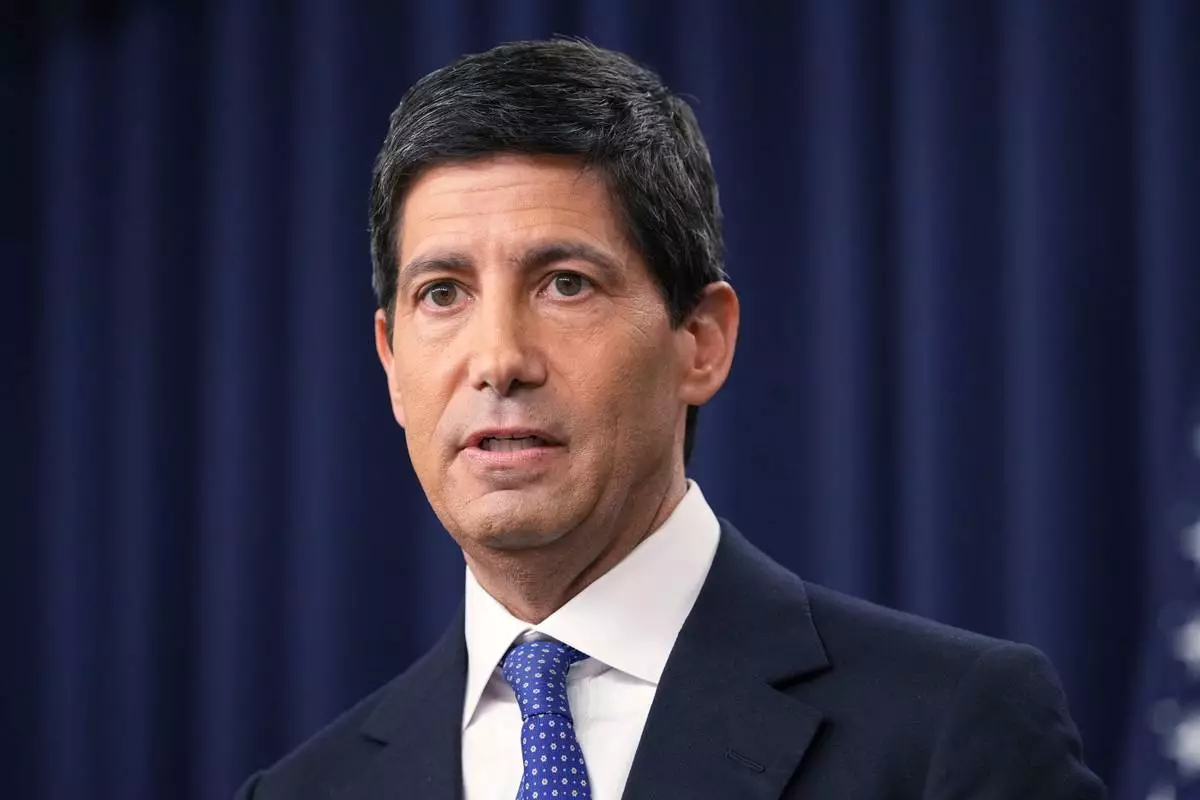
Federal Reserve Board Chairman Kevin Warsh speaks during a news conference at the Federal Reserve in Washington, Wednesday, Sept. 16, 2026. (AP Photo/Mark Schiefelbein)
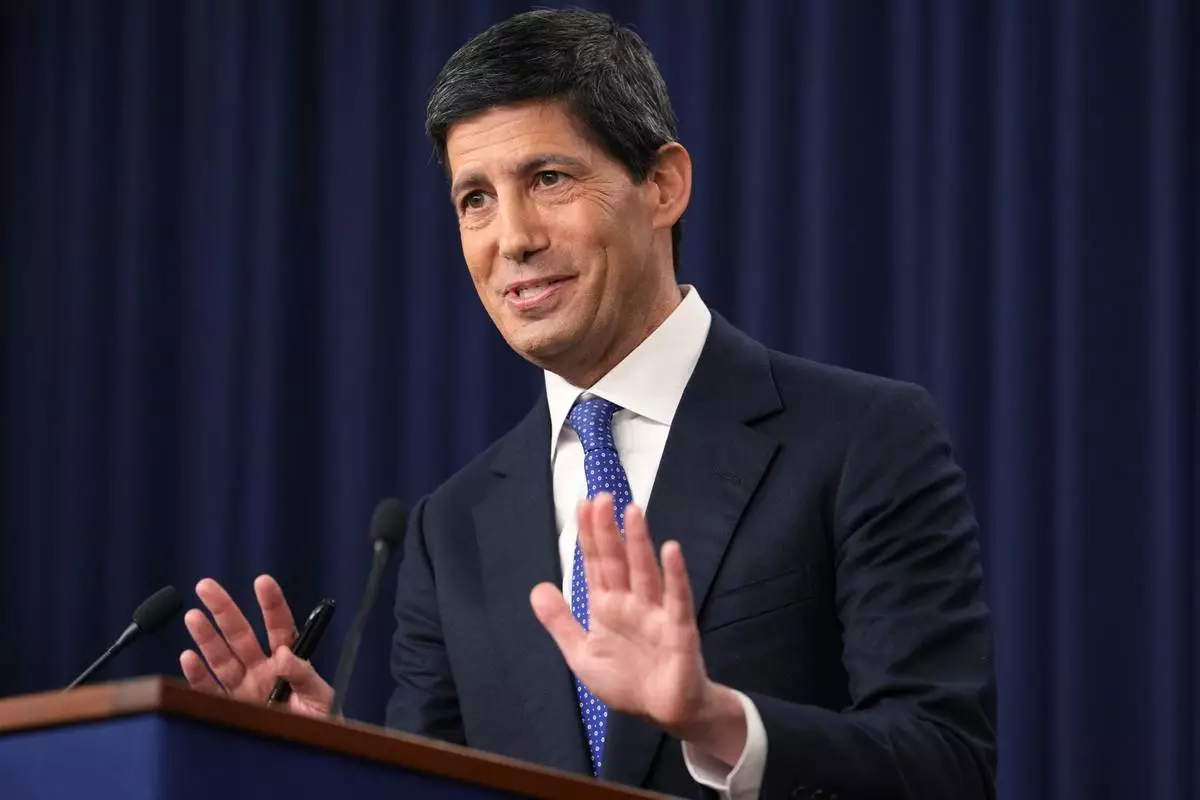
Federal Reserve Board Chairman Kevin Warsh speaks during a news conference at the Federal Reserve in Washington, Wednesday, Sept. 16, 2026. (AP Photo/Mark Schiefelbein)

Federal Reserve Board Chairman Kevin Warsh speaks during a news conference at the Federal Reserve in Washington, Wednesday, Sept. 16, 2026. (AP Photo/Mark Schiefelbein)
Federal Reserve Board Chairman Kevin Warsh speaks during a news conference at the Federal Reserve in Washington, Wednesday, Sept. 16, 2026. (AP Photo/Mark Schiefelbein)
SEOUL, South Korea (AP) — North Korea launched two short-range ballistic missiles toward the sea on Sunday, South Korea's military said, days after the North threatened to bolster its nuclear deterrent capabilities and respond to what it called U.S. hostilities.

The launches were the latest in a series of weapons demonstrations by North Korea even after U.S. President Donald Trump scaled back a joint military exercise with South Korea last month in an apparent effort to revive diplomacy with the North's leader, Kim Jong Un.

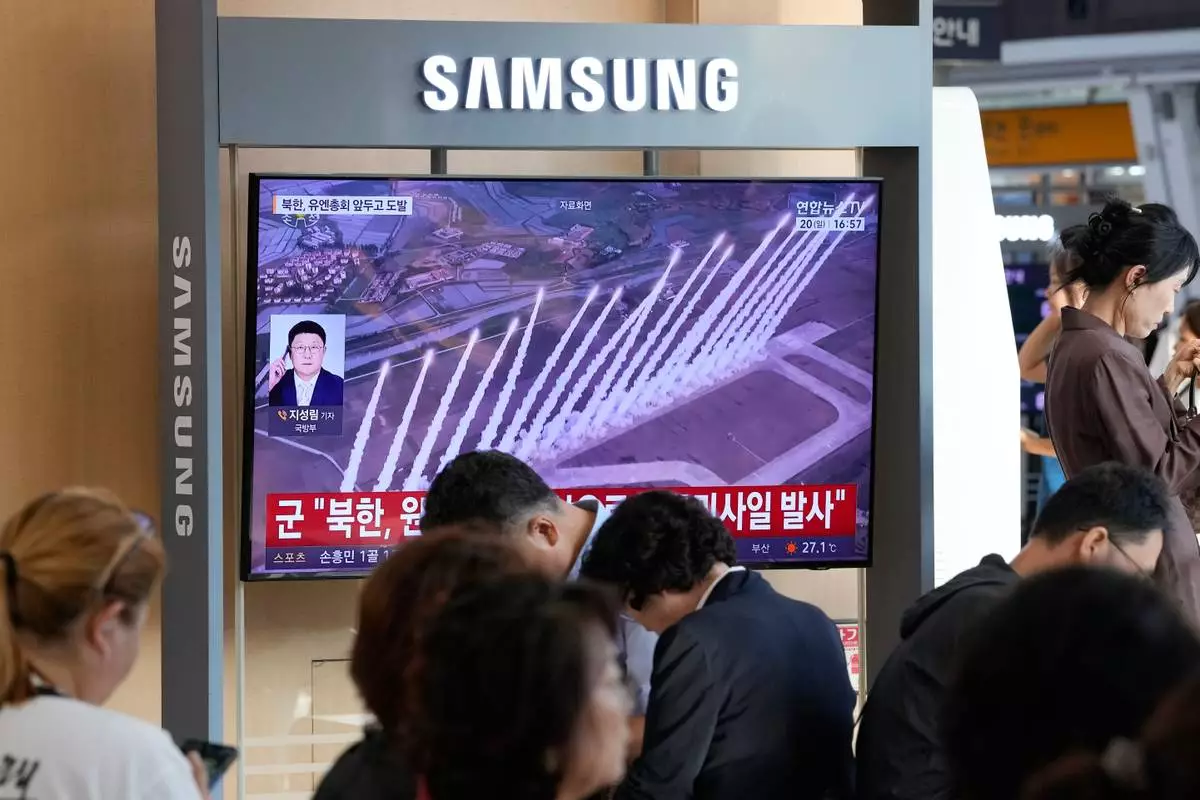
The two missile launches — about three hours apart — were conducted from North Korea's eastern coastal Wonsan area. The first missile flew about 450 kilometers (280 miles) while the second one flew more than 600 kilometers (370 miles), both toward the North’s eastern waters, South Korea's military said.

The missiles eventually ended up in the sea. South Korea’s presidential office urged North Korea to immediately halt ballistic missile launches that are banned by U.N. Security Council resolutions. The South's military said it maintains readiness to repel any provocations by the North under a solid alliance with the United States.

Japan's Defense Ministry said it detected a suspected North Korean missile earlier Sunday but that the weapon did not land in its territorial waters.

Kim's sister and senior official, Kim Yo Jong, earlier shrugged off Trump’s overture, saying that shortening the drill wouldn’t change its “provocative, aggressive nature.” North Korea’s military later launched about 10 short-range ballistic missiles toward the sea, apparently following through with a previous threat to respond to the U.S.-South Korean drill.

On Friday, Kim's sister slammed another recent U.S.-led multilateral maritime exercise in the region as a “frantic military move” by the Americans meant to prolong their hegemony in the Asia-Pacific area. The “Pacific Vanguard” exercise brought together the U.S., South Korea, Japan, Australia, New Zealand and Canada.

She claimed that “regular U.S.-led war rehearsals” are the main source of worsening tensions in the Korean Peninsula and the region.

“Our will to defend our sovereignty will be expressed in clearer action and there will be never ever change in the course of intensifying the nuclear war deterrence,” she said.

Earlier this month, North Korea conducted what it called a joint live-fire drill involving missiles, artillery and drones, a day after the United States, South Korea and Japan wrapped their five-day trilateral military drill that North Korea described as a provocation. North Korea said its drill included firing different types of weapons simultaneously, likely aiming at developing the ability to overwhelm South Korean and U.S. air defenses.

Kim Jong Un has been focusing on expanding his nuclear arsenal after his earlier high-stakes diplomacy with Trump collapsed in 2019.

When Trump ordered the Pentagon to “substantially reduce” the annual Ulchi Freedom Shield exercise with South Korea, he cited what he called a good relationship with Kim, who has called such drills invasion rehearsals.

Emboldened by his advancing nuclear arsenal and deepening ties with Russia and China, experts say Kim likely thinks he now has greater leverage in possible fresh diplomacy with Trump. Earlier this year, Kim said he could return to talks if the U.S. drops its “hostile policy” against his country and respects what he calls the North’s status as a nuclear state.

South Korean President Lee Jae Myung, a liberal who advocates improved ties with the North, said on Friday that a resumption of U.S.-North Korea talks would be “an important starting point” toward boosting chances for peace on the Korean Peninsula.

“What is clear is that President Trump wants dialogue and I’ve also been encouraging President Trump to seek dialogue” with Kim, Lee told reporters.

Associated Press writer Yuri Kageyama in Tokyo contributed to this report.

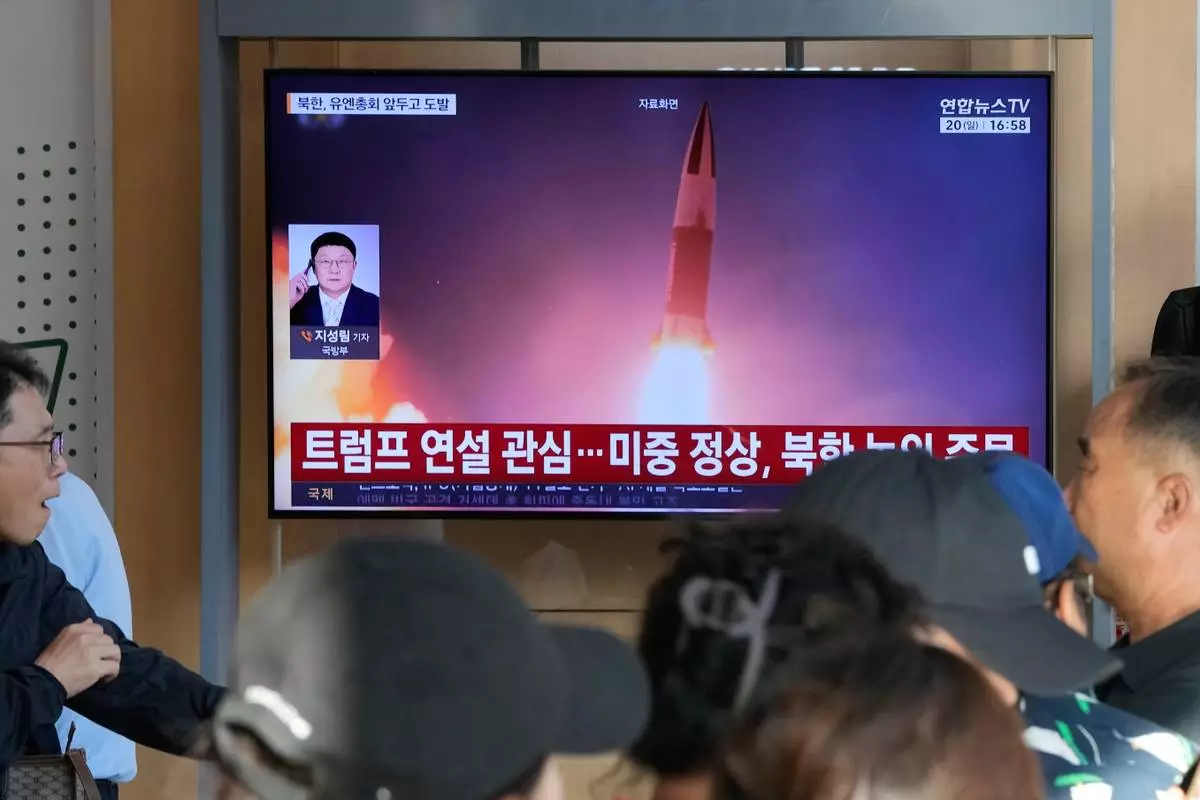
A TV screen shows a file image of a North Korean missile launch during a news program at Seoul Railway Station in Seoul, South Korea, Sunday, Sept. 20, 2026. (AP Photo/Ahn Young-joon)

A TV screen shows a file image of a North Korean missile launch during a news program at Seoul Railway Station in Seoul, South Korea, Sunday, Sept. 20, 2026. (AP Photo/Ahn Young-joon)

A TV screen shows a file image of a North Korean missile launch during a news program at Seoul Railway Station in Seoul, South Korea, Sunday, Sept. 20, 2026. (AP Photo/Ahn Young-joon)

A TV screen shows a file image of a North Korean missile launch during a news program at Seoul Railway Station in Seoul, South Korea, Sunday, Sept. 20, 2026. (AP Photo/Ahn Young-joon)

Recommended Articles