The sneaker company Converse has removed a social media ad that sparked outrage among critics who viewed it as evoking the Ku Klux Klan and lynching.
The Instagram ad photo showed K-pop singer Karina wearing a skirt and holding a pair of Chuck 70 X sneakers. Critics lashed out online, saying that a white triangular image created by lighting on the skirt resembled a KKK hood and that the way she held the sneakers made them look like the dangling feet of a lynching victim.
Converse, owned by Nike, issued a statement apologizing and saying it removed the ad.
“We’re sorry,” said the statement, first released on Friday. “We understand why this image is deeply upsetting and recognize that we got this wrong. We removed it from our channels and are working to remove it everywhere it appeared. This should not have happened and we will do better.”
Converse, based in Boston, declined on Sunday to answer questions seeking additional information, including how the company screens ads before they are posted and how the ad was approved.
Karina and her management company, SM Entertainment Group, did not immediately respond to messages through their Instagram accounts.
Retailers and top fashion brands have issued a string of apologies over the years for products criticized as being racially insensitive.
Last month, retailer Target pulled a children’s Halloween costume from its shelves after widespread social media backlash, apologizing for selling a garment that critics said evoked racist minstrel caricatures.
The Converse photo sparked swift criticism, including calls for staff involved in the ad to be fired and for a boycott of the company. In a slew of comments on social media, posters questioned how the ad could have cleared the company's advertising vetting process. Other commenters defended Converse, saying they didn't believe it was intentional.
Lee Merritt, a civil rights attorney based in Texas, posted on Instagram that Converse’s apology “doesn’t undo what got past legal, marketing and leadership at every step.”
“We keep having this conversation because corporations keep failing the same test,” he wrote. “Do better means catching this before it airs — not after we’re offended.”
Converse, founded in Malden, Massachusetts, in 1908, makes the iconic Chuck Taylor All Star sneaker. It was first released in 1917 as a non-skid basketball shoe, adding the signature of Taylor — a basketball player who promoted the sneaker — in 1934, according to the company's website.

FILE - The Converse logo is displayed on the roof of the company's world headquarters in the West End neighborhood of Boston, Wednesday, Dec. 28, 2016. (AP Photo/Charles Krupa, file)
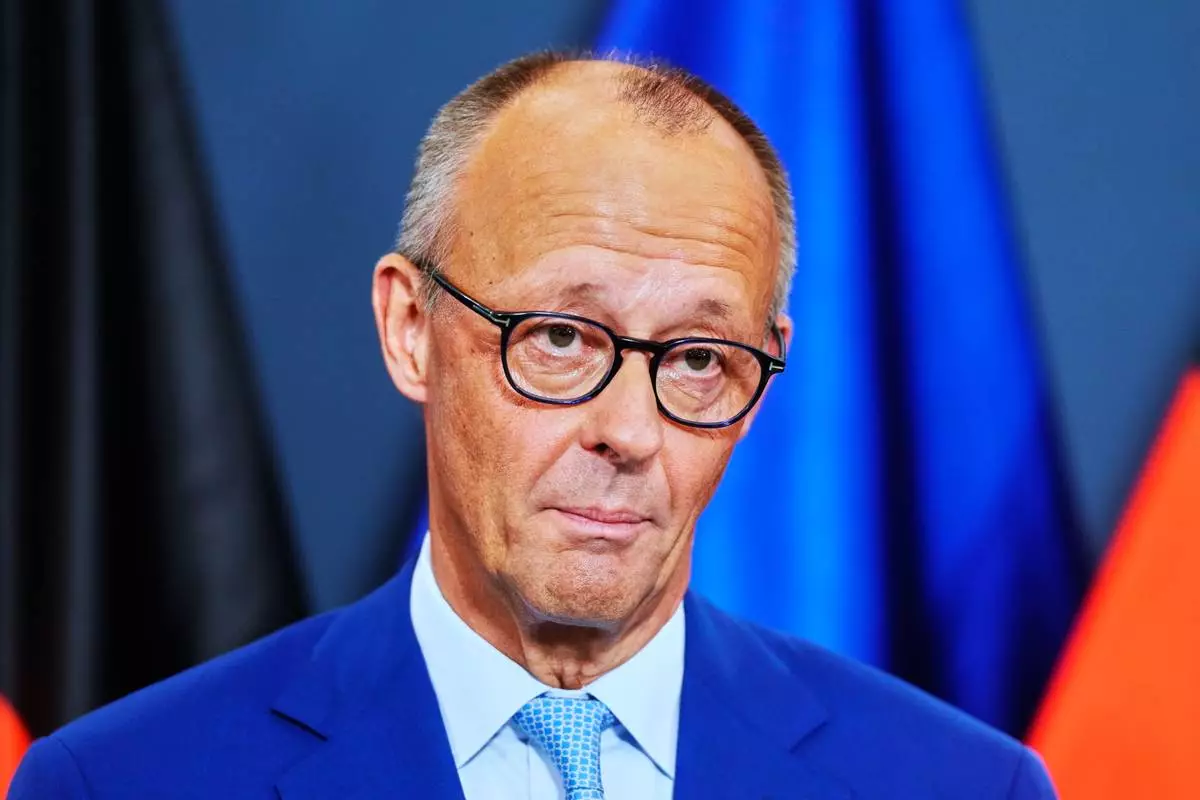
BERLIN (AP) — German Chancellor Friedrich Merz suffered a bruising electoral setback in two state elections on Sunday, including a historic defeat for his party, but vowed to press ahead with potentially painful reforms to Europe’s biggest economy.
Projections by public broadcaster ARD on Sunday night indicated that Merz's center-right Christian Democratic Union, or CDU, came in with just 5% in Mecklenburg-Western Pomerania — the lowest result since World War II for the party in any state. The anti-migration, Russia-friendly Alternative for Germany, or AfD, party made significant gains Sunday. The projections were based on exit polls and partial counting for ARD television.
Merz acknowledged his party's result as a “disaster,” but struck a defiant note, rejecting any retreat from his government’s reform agenda. He argued that Germany’s economic and political problems made difficult and potentially unpopular reforms more urgent, not less so, and pledged to press ahead.
“What needs to be done now requires backbone, steadfastness, and patience,” Merz said in a statement shortly after the exit polls were announced on public television. “I will demonstrate these qualities as chairman of the CDU and, above all, as chancellor of our country.”
In Berlin, projections showed the CDU was to come in second with 19.1%, behind the Left party at 25.3%, according to ARD.
Merz’s authority was already damaged by CDU's stinging defeat to AfD in the Sept. 6 election in the small eastern state of Saxony-Anhalt. That result shocked many Germans who had believed their country had developed an immunity to nationalism and assertions of racial superiority after confronting the horrors of its Nazi past through education and laws to outlaw persecution.
On Sunday, AfD also made big gains in both states. In Mecklenburg-Western Pomerania, it garnered 37.9% of the vote, and in Berlin it achieved 16.2%, according to ARD. But it was nowhere close to being able to form a regional government.
AfD's national co-leader, Alice Weidel, said on ZDF television that "we have displaced the CDU as the people’s party.”
She added that “we have a great deal to offer our voters, namely political change in this country."
However, in an apparent reference to the far-right party, Merz said that his government’s reforms would be “the antidote to the poison of authoritarianism, which is penetrating ever deeper into our society as the fascination with authoritarianism grows.”
The government’s reforms include cuts to income tax for low- and middle-income families, an overhaul of the creaking pension system and a reduction of Germany's stifling bureaucracy.
Merz, 70, became Germany’s leader 16 months ago with promises to turn around an economy that has barely grown in years. But he has failed to lift a sullen national mood and become deeply unpopular.
The strong showing of AfD in the Saxony-Anhalt election, where it has the best chance yet of forming the country’s first far-right regional government since World War II, had further weakened the chancellor's standing on the national level as well.
In the past two weeks, there had been calls, even from within his own party, for him to be replaced as chancellor, although no top-level allies have called publicly for his departure, and many warned against “personnel debates.”
Philipp Amthor, a prominent CDU figure from Mecklenburg-Western Pomerania who now manages relations between the federal and state governments at the chancellery, said Sunday night that one problem in the campaign had been “the difficult personnel discussions” of recent weeks — an apparent reference to the speculation about Merz.
“It is good and right for these personnel discussions not to be continued now,” he said.
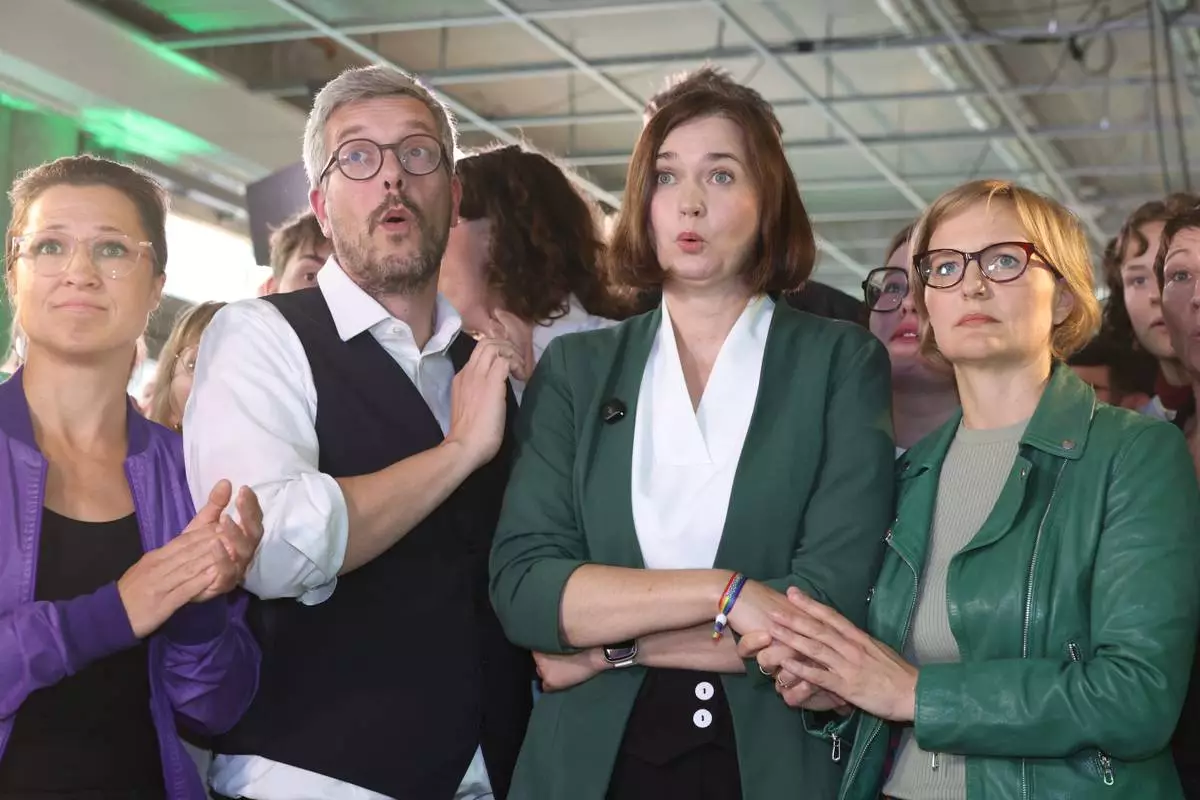
From right, Franziska Brantner, Federal Chair of Alliance 90/The Greens; Claudia Müller (Alliance 90/The Greens), the Greens' lead candidate in Mecklenburg-Western Pomerania and a member of the Bundestag; and Ole Krueger (Alliance 90/The Greens), state chair of Alliance 90/The Greens in Mecklenburg-Western Pomerania, react to the projections for the state election at their party's election party at the tisch coworking space, in Schwerin, Germany, Sunday, Sept. 20, 2026. (Ulrich Perrey/dpa via AP)
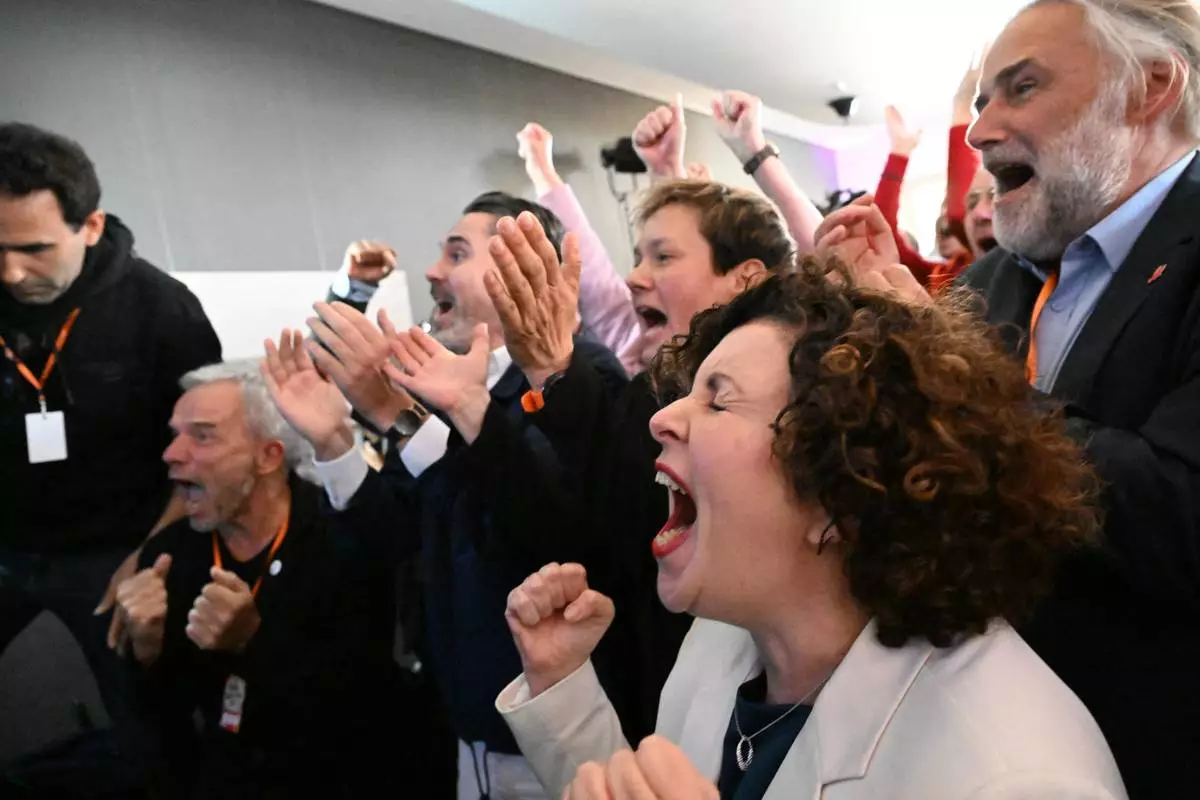
Amira Mohamed Ali, right, reactss to the first projections at the BSW election party in Schwerin, Germany, Sunday, Sept. 20, 2026. (Philip Dulian/dpa via AP)

Supporters and members of the Left Party react to the projected results of the House of Representatives election at an election party in Berlin, Sunday, Sept. 20, 2026. (Sebastian Gollnow/dpa via AP)
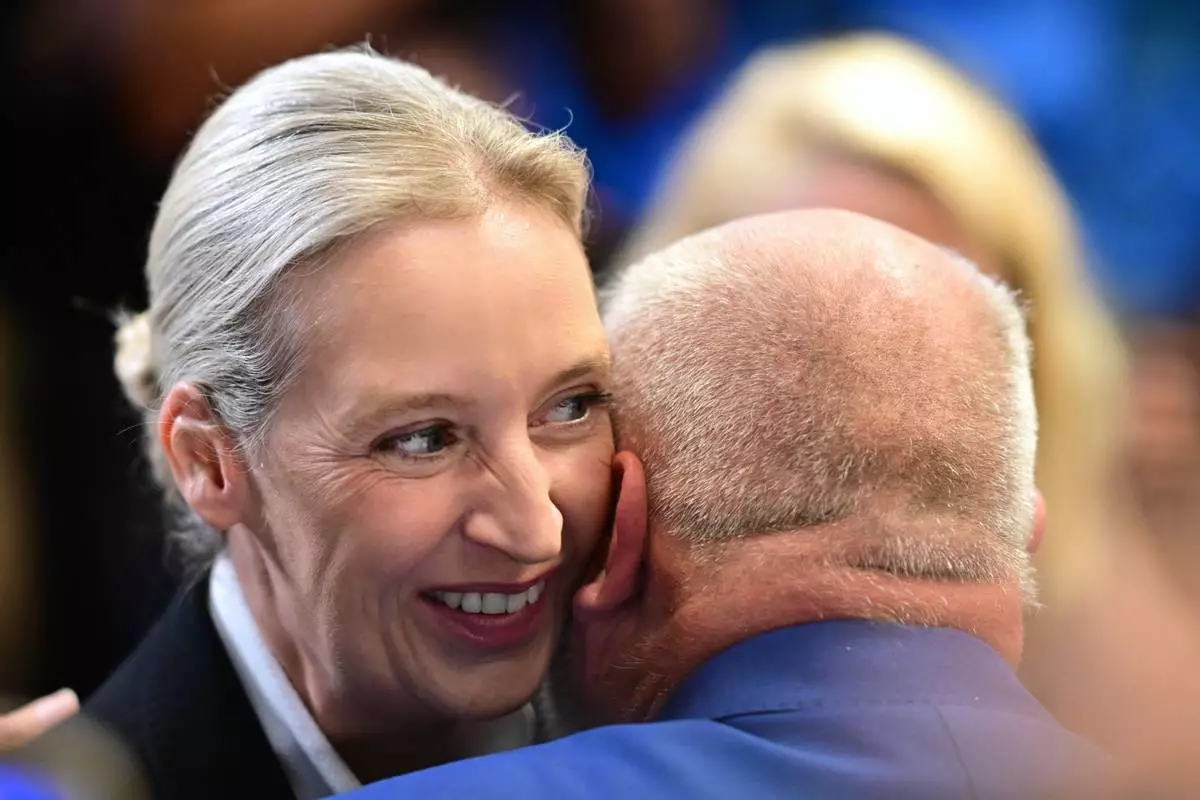
Alice Weidel (AfD), the party's federal chairwoman, reacts to the projections for the State Parliament election at the AfD election party in Berlin, Sunday, Sept. 20, 2026. (Fabian Sommer/dpa via AP)
Russian citizen line up to cast their vote for Russian parliament elections at the Russian embassy in Berlin, Germany, Sunday, Sept. 20, 2026. (AP Photo/Markus Schreiber)
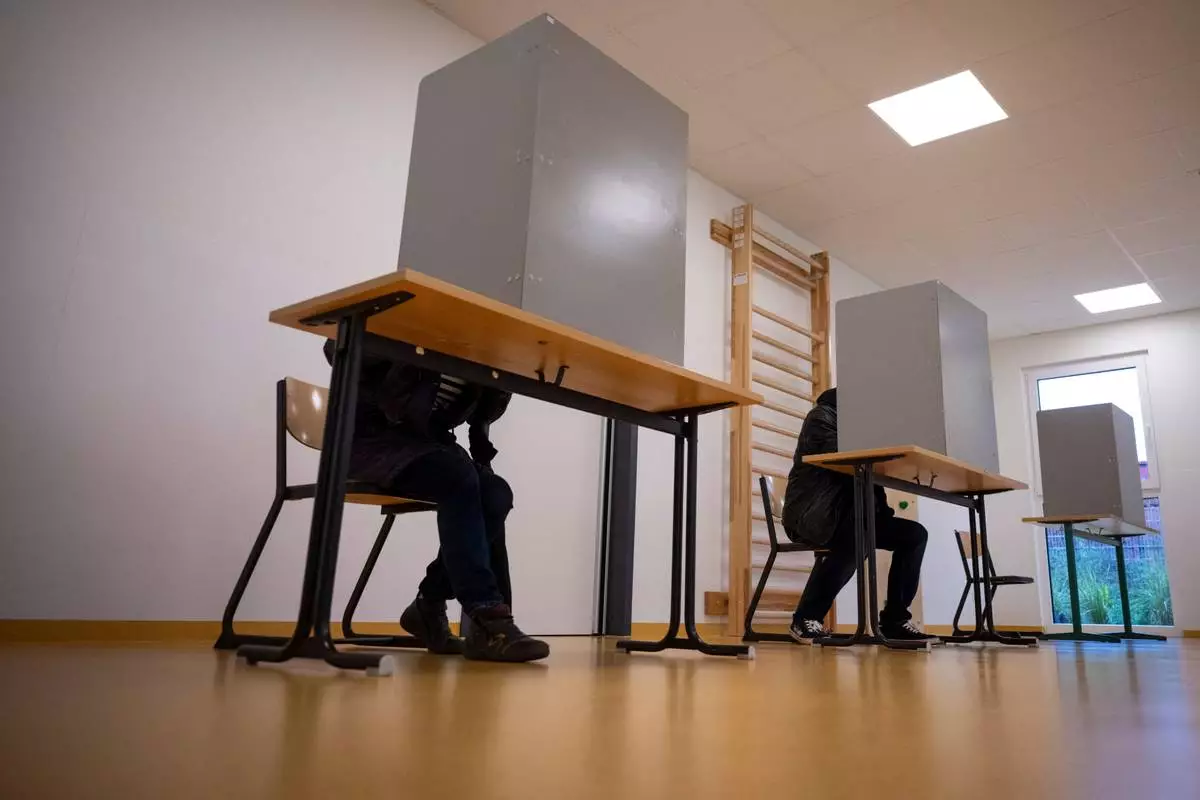
Voters sit at a voting booth in Schwerin, Germany, Sunday, Sept. 20, 2026, as the vote for the Mecklenburg-Western Pomerania state election, Sunday, Sept. 20, 2026. (Philip Dulian/dpa via AP)
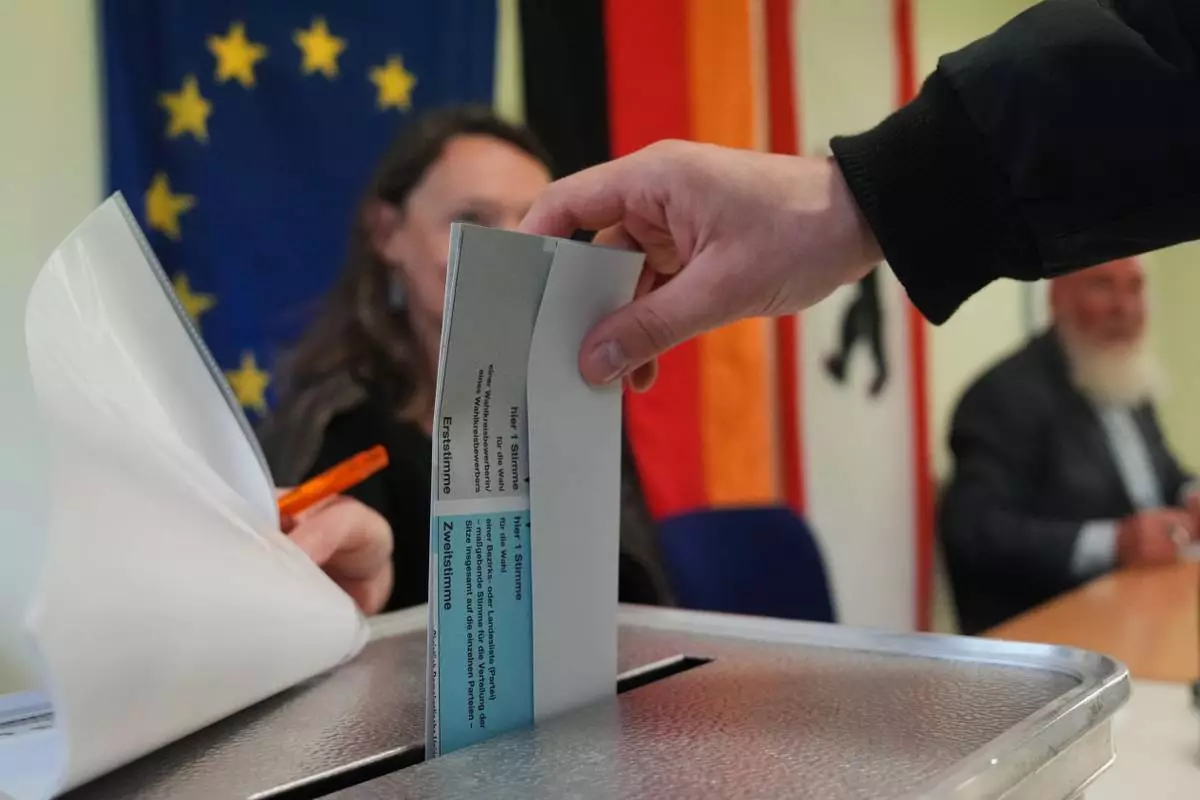
A man casts his vote at a polling station during the Berlin state election in Berlin, Germany, Sunday, Sept. 20, 2026. (AP Photo/Markus Schreiber)
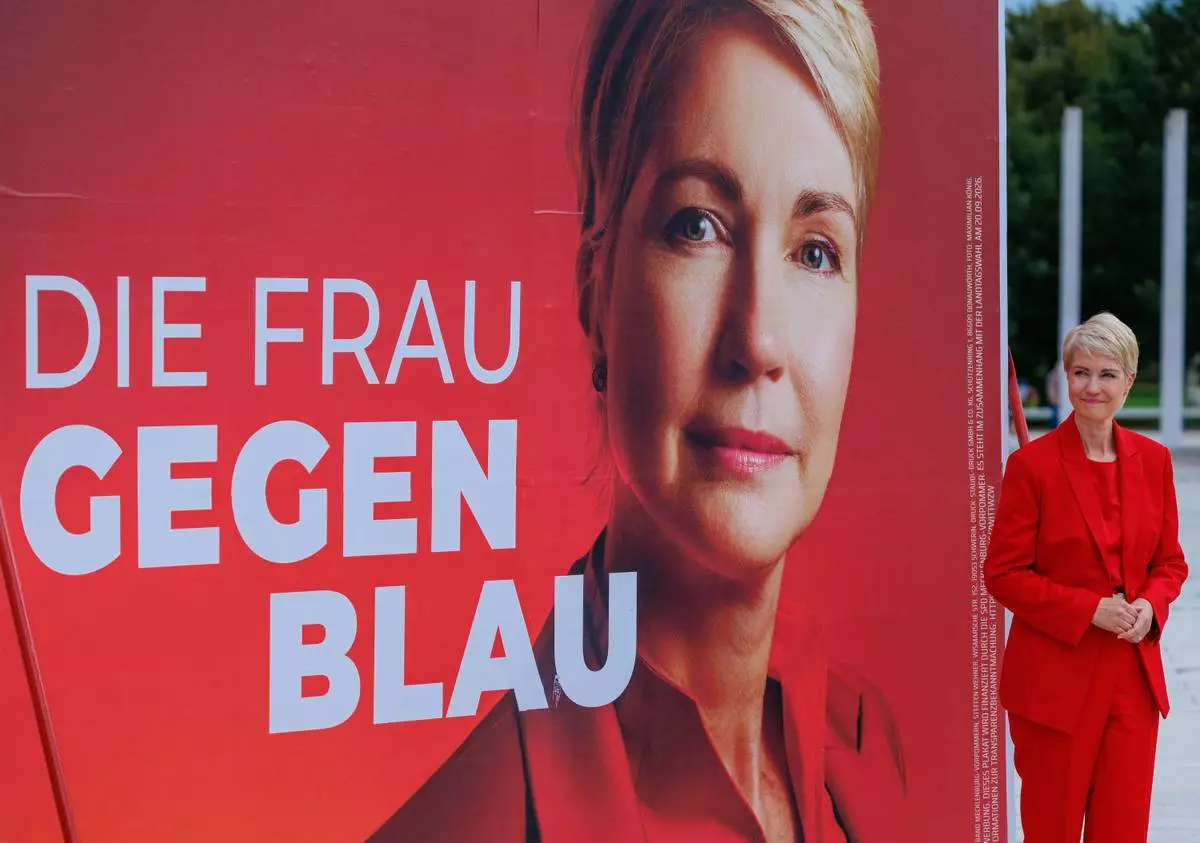
Social Democratic Party Prime Minister of Mecklenburg-Western Pomerania and the party's top candidate for the upcoming state election Manuela Schwesig poses in front of an election campaign poster reading "The Woman Against Blue", in Schwerin, Germany, Monday, Sept. 7, 2026. ( Jens Buettner/dpa via AP)
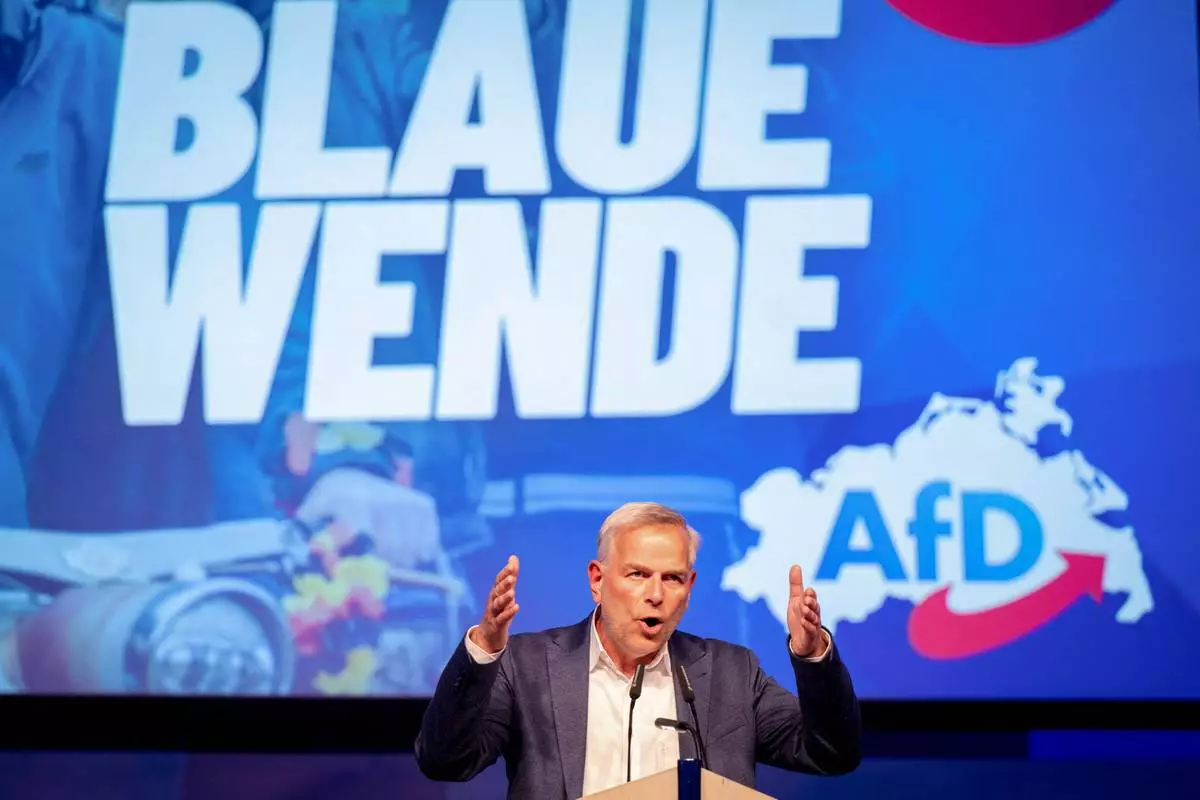
Leif-Erik Holm, the AfD's candidate for state premier in Mecklenburg-Western Pomerania, speaks at the campaign's closing rally in Neubrandenburg, Germany, on Friday, Sept. 18, 2026. (Philip Dulian/dpa via AP)
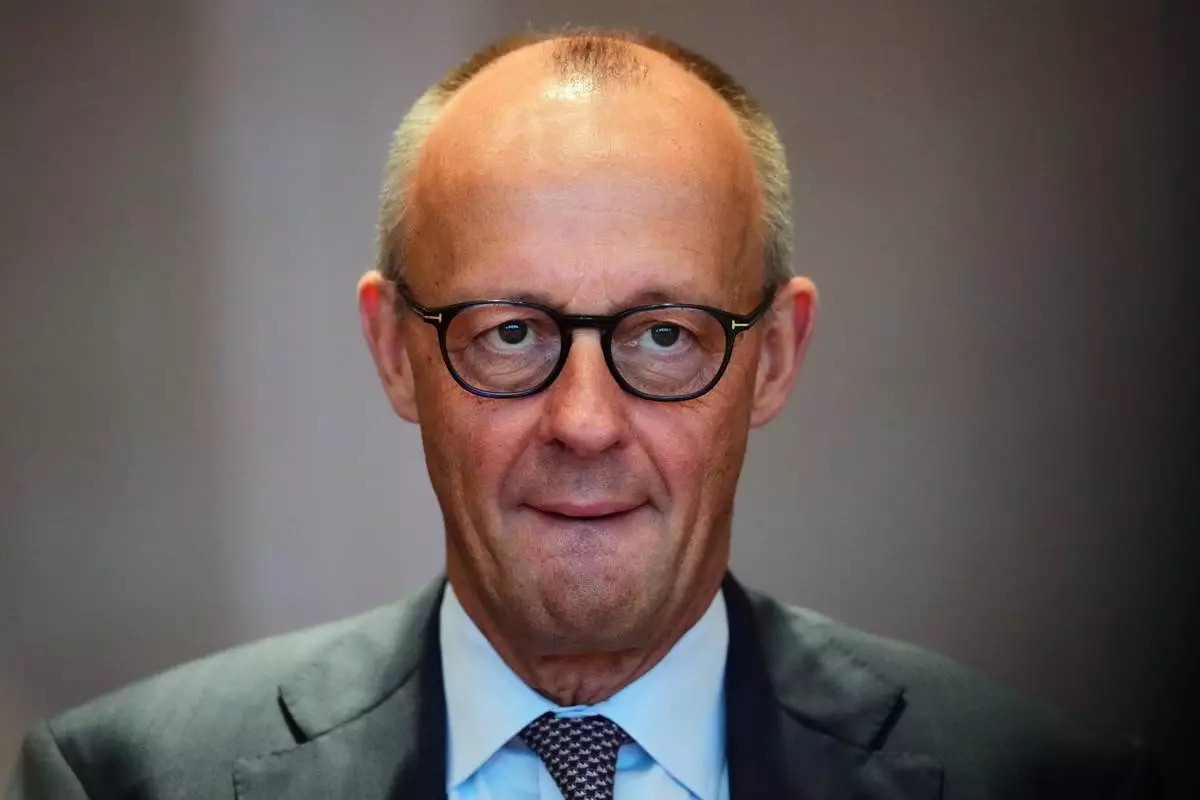
German Chancellor Friedrich Merz arrives for the Cabinet meeting at the Chancellery in Berlin, Germany, Wednesday, Sept. 16, 2026. (AP Photo/Markus Schreiber)