Skip to Content Facebook Feature Image

When Music Reads Emotion: THEi Launches Centre for Music Therapy Research to Deepen Guangdong-Hong Kong Integration and Leverage AI to Fill the Healthcare Talent Gap

Business

When Music Reads Emotion: THEi Launches Centre for Music Therapy Research to Deepen Guangdong-Hong Kong Integration and Leverage AI to Fill the Healthcare Talent Gap
Business

Business

When Music Reads Emotion: THEi Launches Centre for Music Therapy Research to Deepen Guangdong-Hong Kong Integration and Leverage AI to Fill the Healthcare Talent Gap

2026-09-21 09:00 Last Updated At:09:25

Download high-res photo here: https://bit.ly/4rcZWOx  

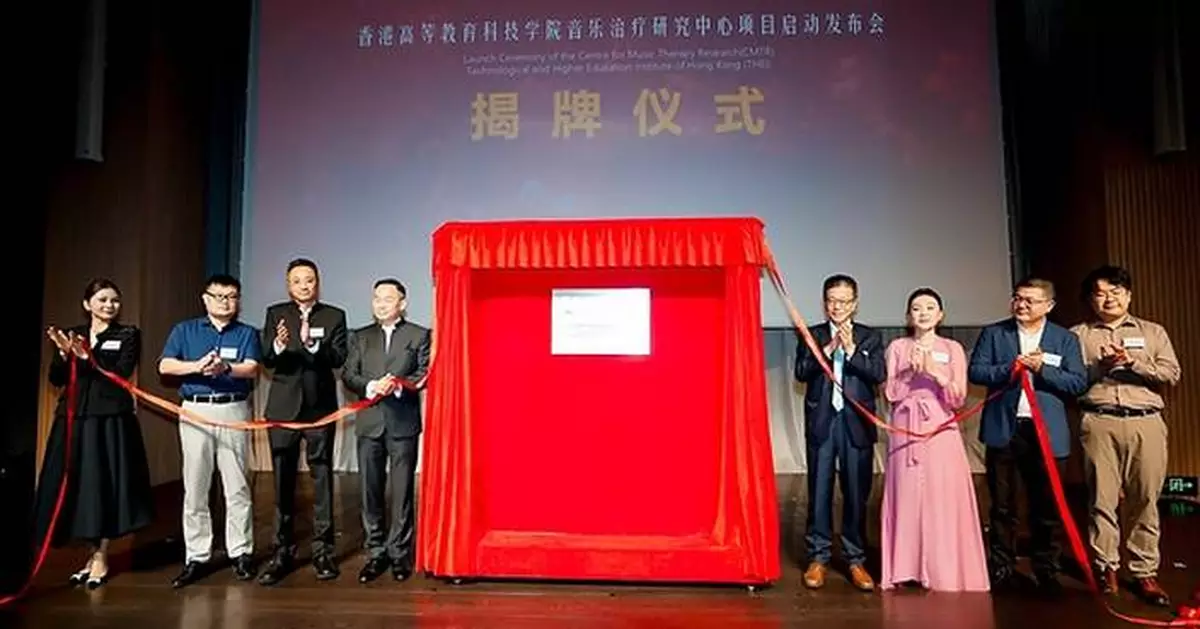
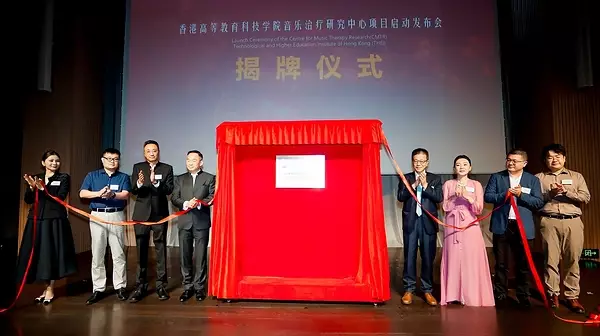
HONG KONG, Sept. 21, 2026 /PRNewswire/ -- The fast pace of modern life and an aging population drive demand for mental health and non-pharmacological holistic wellness. In alignment with the health development priorities of the national 15th Five-Year Plan and the Healthy China Initiative, the Technological and Higher Education Institute of Hong Kong (THEi) held the launch ceremony for its Centre for Music Therapy Research (CMTR) at the Sky Concert Hall in Shenzhen on 16 September. The launch aims to address the demand for innovative healthcare talent while fostering Guangdong-Hong Kong integration.

The event gathered prominent leaders across government, business, higher education, and technology sectors, including Mr Paul CHONG Kin-lit, BBS, MH, Vice Chairman, THEi's Board of Governors; Professor Alan LAU Kin-tak, President of THEi; Ms LIU Ying, Adjunct Associate Professor, Department of Digital Innovation and Technology, THEi and Director of Centre for Music Therapy Research, THEi; Mr YANG Pengda, Education Entrepreneur and Deputy Director of Centre for Music Therapy Research, THEi;  Mr WAN Kun, Deputy Director-General, Development and Reform Bureau of Futian District, Shenzhen Municipality; Ms MA Hui, Director of Tchaikovsky Conservatory (China) International Exchange Centre; Dr CAI Yuejun, Key Laboratory of AI-Enabled Music Therapy, Shanghai Conservatory of Music; Dr PANG Yan, Associate Research Professor, Shenzhen Institutes of Advanced Technology, Chinese Academy of Sciences (CAS); Doctoral Supervisor, University of Chinese Academy of Sciences (UCAS).

The event featured strategic partnership signing ceremonies and a cross-industry networking reception, alongside an immersive "Emotional Healing Show" concert performed by celebrated musicians, including winners of 'Golden Bell Awards' and 'Wenhua Award', as well as former members of the renowned Twelve Girls Band. A key highlight was the live instrumental and choral performance of the iconic pop song Beneath the Lion Rock, which resonated with the Centre's positioning of "Hong Kong's International Connectivity"—marking a major milestone of advancing interdisciplinary mind-body wellness in the GBA.

Empowering Big Health with Applied Sciences: Nurturing "Work-Ready" Professionals in the GBA

Mr Paul CHONG Kin-lit, BBS, MH, Vice Chairman, THEi's Board of Governors, delivered opening remarks, stating: "As an applied discipline bridging art, science, and medicine, music therapy plays a pivotal role in tackling mental stress, broader wellness demands, and specialised healthcare needs. Guided by our education philosophy of 'applied science and immediate application,' THEi drives industry-academia-research integration. By extending the reach of our Centre to Shenzhen, we leverage the GBA's innovative ecosystem and expanding demand to pair global music therapy standards with cutting-edge technology—building a premier hub for scientific research, practical application, and community service."

Professor Alan LAU Kin-tak, President of THEi, emphasised in his keynote that higher education must stay attuned to modern trends and national developments: "Music is undergoing a redefinition where sound, emotion, and AI intersect. As a pioneer in applied science and work-ready education, THEi sees growing demand in the GBA for expertise in non-pharmacological therapies, mental wellness, and the silver economy. By launching the Centre in Shenzhen, we fuse academic research with regional innovation. Through short-term and professional training programmes, we aim to fast-track market-ready, multidisciplinary talent equipped with technological, clinical, and commercial expertise to directly address key social needs.

Top Academic Talent Joins Forces

The newly launched Music Therapy Research Centre is directed by Ms LIU Ying, Visiting Associate Professor in the Department of Digital Innovation and Technology at THEi. A distinguished expert in Chinese traditional music, Ms LIU leads the Centre's core content strategy, backed by international innovation expertise from Dr PANG Yan, Associate Research Professor, Shenzhen Institutes of Advanced Technology, Chinese Academy of Sciences (CAS); Doctoral Supervisor, University of Chinese Academy of Sciences (UCAS) and his team.

As the champion of the Guzheng category at the 9th Chinese Music 'Golden Bell Awards', and the exclusive recipient of the gold, silver, and bronze awards in this category. Ms LIU noted that the Centre maximises synergy between Hong Kong and Shenzhen by pairing "Hong Kong's global perspective with Shenzhen's development speed" to construct a regional cross-disciplinary hub. Guided by the vision of "medical treatment in hospitals, healing in daily life," the Centre uses Five-Tone theory and AI-based EEG technologies to deliver non-clinical wellness solutions. She stressed that with a clear focus on problem-solving over sheer size, the Centre will advance practical training programs, therapeutic products, and industry benchmarks through the integration of arts, science, and commercialisation.

Mr YANG Pengda, Education Entrepreneur and Deputy Director of Centre for Music Therapy Research, THEi, underscored his belief that "investing in education is a high-value commitment, not a cost," – a vision driving his multi-year support for THEi's research centres. Praising THEi's work-ready degree's programmes - which features a 100% internship placement and over 95% graduate employment, he noted that the Institute's programmes are tailored to industry needs. He emphasised that the new Centre is grounded in societal demand, tackling issues like sleep disorders affecting 300 million individuals and elder care for 320 million seniors—effectively leveraging technology and humanity to improve the quality of lives.

The Centre signed strategic MoUs with Key Laboratory of AI-Enabled Music Therapy, Shanghai Conservatory of Music and Tchaikovsky Conservatory (China) International Exchange Centre The partnerships will foster deep collaboration across music arts research, professional talent training, and international exchange, laying a solid artistic foundation for the Centre's ongoing development.

Moving ahead, the Centre will focus its efforts on four core strategic pillars: advancing AI-assisted music therapy research to improve personalised non-pharmacological treatments; exploring traditional Chinese music to unlock its therapeutic emotional benefits; delivering arts-based healing to support seniors and individuals with special needs; and integrating digital music with immersive technology to drive music therapy beyond traditional stages into a smart, holistic era of care.

Following the official launch of the Centre and its upcoming professional training programmes, THEi is set to reinforce its leadership in regional applied science education—accelerating sustainable innovation to support high-quality development across the GBA and nationwide.

About the Bachelor of Arts (Honours) in Music Technology

The programme places a strong emphasis on cross-cultural exchange, covering three major professional domains: game music design, contemporary music composition, and film scoring. By integrating artificial intelligence and augmented reality/virtual reality (AR/VR) technologies into practical learning, the programme equips students with professional mastery in audio engineering and sound design, enhancing their ability to combine artistic creativity with technological innovation.

About Technological and Higher Education Institute of Hong Kong (THEi) 

Founded in 2012, the Technological and Higher Education Institute of Hong Kong (THEi) is a member institute of the Vocational Training Council (VTC). THEi offers over 20 professional "Applied Science-Oriented" undergraduate and postgraduate degree programmes across seven academic areas: Product and Fashion Designs, Sports and International Events Management, Digital Construction and Building Services, Horticulture, Arboriculture and Landscape Management, Chinese Medicine and Food Science, Hotel Management and Culinary Arts and Technology, and Digital Technology and Innovative Business. The programmes integrate theoretical knowledge with practical applications, and cover industries with growth potential in Hong Kong and the Asia-Pacific region, ensuring that students can apply what they learn effectively.

THEi's undergraduate and postgraduate degree programmes are accredited by the Hong Kong Council for Accreditation of Academic and Vocational Qualifications. The curriculum emphasises the practical application of applied science, aligning with the latest developments in business and industry. The undergraduate degree programmes offer 100% work-integrated learning training to support students in building their career paths at an earlier stage.

THEi Chai Wan Campus was awarded the "Leadership in Sustainable Design and Performance Award - Institutional" of the Asia Pacific Leadership in Green Building Awards presented by the World Green Building Council (WorldGBC) in 2020.

Media Contact:

Ms Janice Lam 
Tel: (852) 3890 8227 / (852) 9718 0817
Email: janicelam@thei.edu.hk / media@thei.edu.hk

Ms  Rainbow Chiu 
Tel: (852) 3890 8520
Email: rainbowh@thei.edu.hk  / media@thei.edu.hk

** This press release is distributed by PR Newswire through automated distribution system, for which the client assumes full responsibility. **
When Music Reads Emotion: THEi Launches Centre for Music Therapy Research to Deepen Guangdong-Hong Kong Integration and Leverage AI to Fill the Healthcare Talent Gap
When Music Reads Emotion: THEi Launches Centre for Music Therapy Research to Deepen Guangdong-Hong Kong Integration and Leverage AI to Fill the Healthcare Talent Gap

When Music Reads Emotion: THEi Launches Centre for Music Therapy Research to Deepen Guangdong-Hong Kong Integration and Leverage AI to Fill the Healthcare Talent Gap

When Music Reads Emotion: THEi Launches Centre for Music Therapy Research to Deepen Guangdong-Hong Kong Integration and Leverage AI to Fill the Healthcare Talent Gap

Researchers plan to use modular quantum computing co-design platform to explore computationally demanding problems in high-energy and nuclear physics.

New Slurm® integration simplifies how HPC users can orchestrate and manage quantum computing in their workflows.

Results from IBM, RIKEN, and NVIDIA demonstrate quantum-classical scientific simulations with 79 times more accuracy than previous work.

YORKTOWN HEIGHTS, N.Y., Nov. 17, 2026 /PRNewswire/ -- IBM (NYSE: IBM) today announced plans to collaborate with NVIDIA and Fermi National Accelerator Laboratory (Fermilab) to advance the integration of quantum and classical computing and explore how these technologies can scale together in the modular architectures that will define fault-tolerant quantum computers.

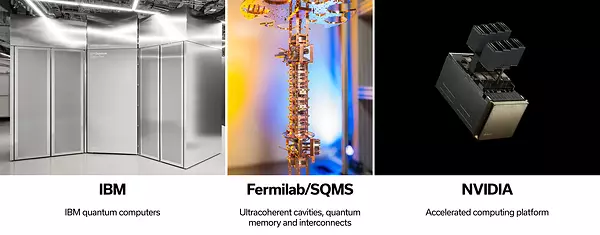
The work will span developing new scientific applications, integrating supercomputing and quantum resources, and designing critical components of future quantum computers. As part of the work, IBM and NVIDIA, together with Fermilab, intend to launch a modular quantum computing co-design platform that co-locates NVIDIA DGX B200 systems with IBM quantum computers, including those powered by IBM Quantum Nighthawk, the most powerful quantum processor IBM has ever built, running circuits of up to 7500 two-qubit operations on 120 qubits with speeds up to 100,000 samples per second. Leveraging Fermilab's Superconducting Quantum Materials and Systems (SQMS) Center, the SI-enabled co-design platform will help researchers explore and test the innovations needed for multiple quantum processors to work together to execute a large number of samples and scale classical compute alongside them.

Fermilab and IBM will also look to research what will be needed to execute complex calculations in high-energy and nuclear physics that are beyond the reach of classical systems alone, such as such as lattice gauge theories, neutrino interactions and nuclear simulations.

"Some of the most fundamental problems in science remain out of reach for classical computers alone. Scaling quantum and classical together will open new frontiers in high-energy and nuclear physics and beyond," said Jerry Chow, IBM Fellow and Chief Technology Officer of Quantum-Centric Computing. "With Fermilab and NVIDIA, we plan to explore how these real-world problems can help us shape the modular, interconnected architectures that will define the next generation of quantum computers and accelerated classical computing."

"Realizing quantum computing's potential requires quantum processors and accelerated computing to evolve together as accelerated quantum supercomputers," said Krysta Svore, vice president of applied research for quantum computing at NVIDIA. "IBM, Fermilab, and NVIDIA are working together to give researchers the tools they need to make scientific discoveries with quantum computing."

"We have an extraordinary opportunity to bring together IBM's leadership in quantum processors and networking, NVIDIA's breakthroughs in accelerated computing and SI, and Fermilab's scientific community and SQMS expertise in ultracoherent quantum hardware," said Anna Grassellino, Fermilab chief technology officer and director of the SQMS Center. "Our ambition is to help lead the development of quantum computers built for discovery: bringing high-energy and nuclear physicists together to co-design the applications, algorithms and modular architectures that will ultimately make fault-tolerant quantum computing useful for science. This is an important step toward the capabilities and community needed for a future DOE quantum computing user facility."

Integrating Quantum Processors into HPC Workflows

Slurm is a widely used scheduler for many of the world's largest supercomputers. It helps decide which jobs run, when they run, and which CPUs and GPUs they use. Until now, Slurm had no native concept of a quantum processor. Sites had to attach QPUs through plugins, outside the scheduler's core resource model.

To address this, IBM and NVIDIA, along with Pasqal, worked with the open-source community to integrate quantum computers into existing supercomputing workflows with the Quantum Resource Management Interface (QRMI). QRMI is an open-source, vendor-agnostic layer that directly integrates with Slurm Hierarchical Resources (HRES) scheduling capabilities.

Unlike GPUs, which operate within individual computing nodes, quantum processing units (QPUs) can be shared across multiple nodes. HRES allows administrators to manage that shared resource directly and set limits for each part of the system. Slurm can then allocate, reserve, and account for QPU time with the same policies that HPC users are familiar with for CPUs and GPUs.

For HPC centers, this means a quantum-classical workflow can be managed as a normal Slurm job, without requiring a separate queue, login or a new operating model. As QRMI is vendor-agnostic, the same approach can support quantum processors from different providers.

Quantum + Classical Push Toward More Challenging Science

New research from IBM, RIKEN, and NVIDIA demonstrates how these quantum-classical workflows can work together to improve the accuracy of complex scientific simulations. Building on IBM and RIKEN's previous joint research using a technique known as sample-based quantum diagonalization (SQD), the researchers studied Fe4S4, an iron-sulfur cluster found inside the proteins of living cells whose interacting electrons make it particularly difficult to simulate.

The team improved on previous SQD work by beginning with an intentionally imperfect but more realistic "guess" of the molecule's state, which steers the quantum computer toward the electron configurations that matter most. The researchers ran circuits of up to 4,000 two-qubit operations on 72 qubits and collected 5 million samples. The workflow integrated quantum computers and NVIDIA GPUs, including those within RIKEN's JHPC-quantum GPU supercomputer "ROQUO," to accelerate calculations and achieve a 79-fold improvement in accuracy over earlier runs of the same experiment. As noted in the paper, the results came within 4.3 millihartree of the accuracy achieved using density-matrix renormalization group (DMRG), a leading classical simulation method known for its high accuracy, proving that integrating quantum and classical compute holds immense potential for problems that remain extremely demanding for even the best classical methods working alone.

"By combining quantum computing with HPC, we achieved accuracy approaching that of DMRG, one of the leading classical methods, for a strongly correlated iron–sulfur cluster," said Seiji Yunoki, Team Principal of the Computational Materials Science Research Team at RIKEN. "This marks an important step toward applying quantum–HPC hybrid computing to scientific problems."

The research is supported by Japan's New Energy and Industrial Technology Development Organization (NEDO) through its "Research and Development of Quantum-Supercomputers Hybrid Platform for Exploration of Uncharted Computable Capabilities" project and marks another milestone for IBM and RIKEN's work with IBM quantum computers and ROQUO to accelerate quantum-classical workflows. Earlier this year, a separate collaboration with Cleveland Clinic was named a finalist for the 2026 ACM Gordon Bell Prize.

Together, the Slurm integrations, scientific application work and Fermilab-led modular quantum computing co-design platform with NVIDIA reflect IBM's broader strategy to integrate quantum computers more deeply into today's classical computing environments while simultaneously developing the architectures required for increasingly powerful systems.

About IBM

IBM is a leading provider of global hybrid cloud and AI, and consulting expertise. We help clients in more than 175 countries capitalize on insights from their data, streamline business processes, reduce costs and gain the competitive edge in their industries. Thousands of governments and corporate entities in critical infrastructure areas such as financial services, telecommunications and healthcare rely on IBM's hybrid cloud platform and Red Hat OpenShift to affect their digital transformations quickly, efficiently and securely. IBM's breakthrough innovations in AI, quantum computing, industry-specific cloud solutions and consulting deliver open and flexible options to our clients. All of this is backed by IBM's long-standing commitment to trust, transparency, responsibility, inclusivity, and service. Visit www.ibm.com for more information.

Media contact:

Erin Angelini
IBM
edlehr@us.ibm.com 

Maury Chasteau-Simien
IBM
maury@ibm.com

** This press release is distributed by PR Newswire through automated distribution system, for which the client assumes full responsibility. **

IBM, Fermilab, and NVIDIA Announce Plans for New Co-Design Platform to Accelerate the Development of Next-Generation, Modular Quantum Computers

IBM, Fermilab, and NVIDIA Announce Plans for New Co-Design Platform to Accelerate the Development of Next-Generation, Modular Quantum Computers

Recommended Articles