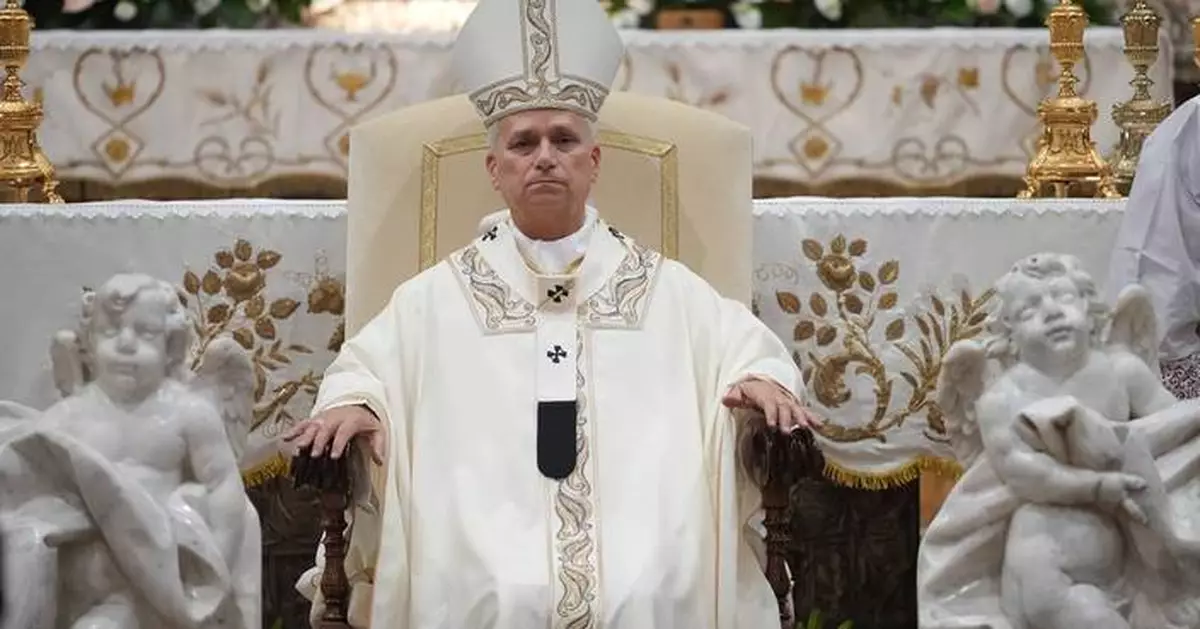
VATICAN CITY (AP) — When an ailing Pope John Paul II visited the French shrine at Lourdes in 2004, on his last foreign trip, he delivered a forceful condemnation of abortion and euthanasia as he gasped for air during Mass.
Pope Leo XIV is expected to make a similar appeal to protect life when he visits France this weekend and also prays at Lourdes. One of Christianity’s most-visited pilgrimage destinations is especially popular for sick people because of its association with miraculous cures.
Click to Gallery
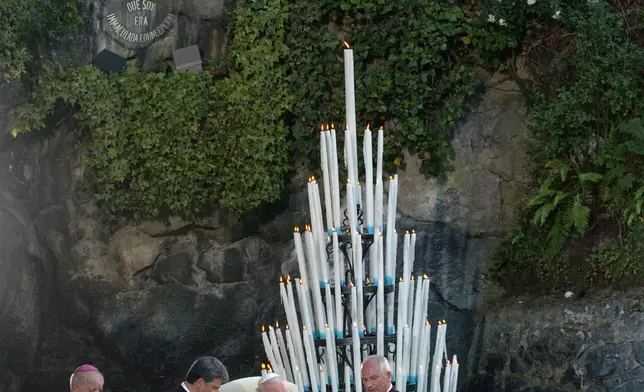
FILE - Pope John Paul II prays, at the Virgin Mary shrine cave prior to his departure to Rome in Lourdes, southwestern France, Sunday Aug. 15, 2004. (AP Photo/Christophe Ena, File)
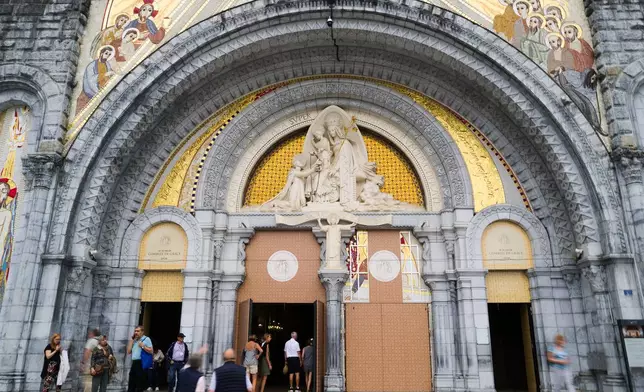
FILE - People enter the Notre-Dame-du-Rosaire basilica in Lourdes, southwestern France, Tuesday Sept. 8, 2026 . (AP Photo/Fred Scheiber, File)
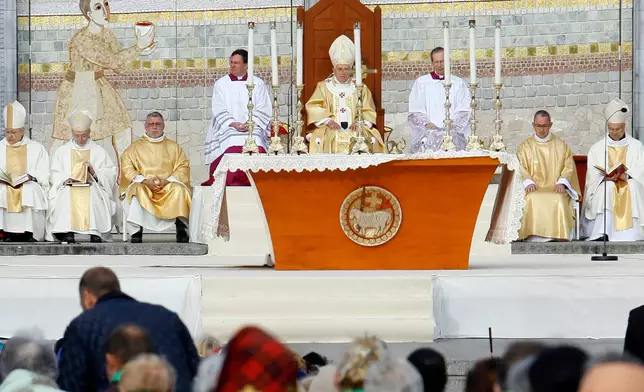
FILE - Pope Benedict XVI, center, celebrates a Mass in front of the Basilica of the Rosary in Lourdes, southwestern France, on Sept. 15, 2008. Behind him is one of the mosaics by Rev. Marko Ivan Rupnik, who was declared excommunicated in 2020 for committing one of the worst crimes in church law – using the confessional to absolve a woman with whom he had engaged in sexual activity. (AP Photo/Alessandra Tarantino, File)
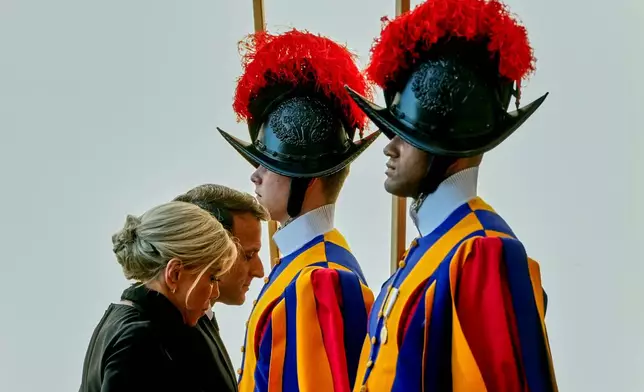
FILE - French President Emmanuel Macron and his wife Brigitte arrive in the St. Damasus Courtyard at the Vatican to meet with Pope Leo XIV, Friday, April 10, 2026. (AP Photo/Andrew Medichini, File)
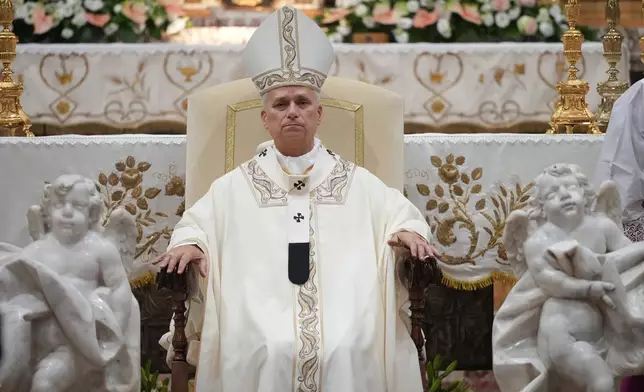
FILE - Pope Leo XIV celebrates a mass at the Basilica Sanctuary of the Mother of Good Counsel in Genazzano, central Italy, Monday, Sept. 7, 2026. (AP Photo/Andrew Medichini, File)
Leo’s message will likely land differently, since France’s National Assembly in 2024 enshrined abortion as a constitutional right and recently gave final approval to a bill allowing adults with incurable illnesses to receive lethal medication. It was the culmination of years of debate over end-of-life care in France and comes as other countries in Europe and the Americas have increasingly legalized assisted dying, though British lawmakers recently voted down a bill allowing it.
Catholic teaching holds that life must be defended from conception until natural death. It insists that chronically ill patients, including those in vegetative states, must receive “ordinary” care such as hydration and nutrition, but that “extraordinary” or disproportionate care can be suspended if it is only prolonging a precarious and painful life.
With Leo’s blessing, French bishops decided the official motto of his trip would be “That the world may have life,” suggesting that protecting human life and human dignity will be an overarching theme of the visit.
Leo has emphasized the need to protect the dignity of all human life, from immigrants to the sick and unborn, most significantly in his inaugural encyclical on safeguarding human dignity in the age of artificial intelligence.
Cardinal Jean-Marc Aveline, president of the bishops’ conference, said he expected Leo would raise the issue. “We already know that the question of life and respect for life — not only from an ethical standpoint, but in many ways — is at the heart of the pope’s message and aligns very closely with the message of the Gospel.”
France is a traditionally Catholic country, but adheres to a strict form of secularism in public life based on a 1905 law separating church and state.
And like many countries in the once-traditionally Christian West, France has seen the influence of the Catholic Church wane amid secularizing trends and the impact of the clergy sexual abuse scandal on its credibility.
Yet French bishops have expressed astonishment at the level of interest in the pope’s Sept. 25-28 visit and say they expect 1 million people will see him. Due to larger-than-expected crowds, organizers lengthened the perimeter for Leo's main Mass at the central Place de la Concorde, extending the site beyond the 1.9-kilometer (1.2-mile) length of the Champs-Elysees where he'll parade down in his popemobile.
Leo elicited a similar level of interest in secular Spain in June, where he received a seven-minute standing ovation after his speech to the Spanish Parliament.
“I think nobody many months ago or a few months ago would have imagined” the level of interest, said Sister Nathalie Becquart, a top Vatican official from France. “But they see what happened in Spain.”
Like Spain, France has seen a trend of new adult baptisms in recent years, particularly among conservative young adults, many of whom are attracted to more traditional forms of worship including the old Latin Mass.
More than 13,000 adults were baptized at Easter this year in France, where the number of adult baptisms has more than tripled since 2016, the French bishops’ conference reported. Leo will meet with some of these new converts in a special audience.
But experts caution these numbers don't counteract the overall generational trend of the children of practicing French Catholics no longer going to Mass or baptizing their babies.
In 1980, there were 513,000 baptisms in France; in 2024, a total of 186,000. “The new phenomenon of adult baptisms is put into perspective; in fact, it represents only a very modest rebound,” said Christian Marquant, a traditionalist Catholic who blames the secularizing crisis in the French church on the modernizing reforms of the Second Vatican Council.
Leo is bookending his trip to France with two events to broaden his message to an international audience. On Day 1, he visits UNESCO to speak about artificial intelligence and the value of education and art.
In his AI encyclical “Magnificent Humanity,” Leo called for robust AI regulation and for developers to slow down — a stance they have recently taken as a group. Leo's position on AI has put him at odds with the Trump administration, which has encouraged AI innovation so the U.S. can compete with and surpass China.
The visit to UNESCO by the American pope is significant, given the Trump administration has once again announced it is withdrawing from the U.N. cultural agency, part of its broader retreat from international organizations.
On his final day, Sept. 28, Leo will visit the northern French city of Metz, the birthplace of Robert Schuman, one of the founding fathers of European integration.
Leo will participate in a meeting with other faith leaders and then speak at a European conference on peace, at a time of war in Ukraine and beyond.
The Vatican took the unusual step of announcing ahead of time that Leo would meet with victims of clergy sexual abuse while in France. The gathering of seven survivors includes one who was an adult when abused, a recognition of the new frontier of the abuse crisis facing the church.
The French church has endured a brutal reckoning with its legacy of abuse. An independent report in 2021 estimated 330,000 children had been abused over 70 years by some 3,000 priests and church workers.
Despite criticism of the report's methodology and conclusions, French bishops nevertheless put in place an independent system of compensation for victims that to date has recommended the church pay out more than 20 million euros.
In Lourdes, Leo will be reminded of a prickly abuse case inherited from Pope Francis.
The façade of one of the Lourdes basilicas was designed by the Rev. Marko Rupnik, one of the Catholic Church’s most famous mosaic artists.
Rupnik is currently on trial in a Vatican court, accused by more than two dozen women of having psychologically, spiritually and sexually abused them starting in the 1990s, including during the creation of his artworks.
His case was covered up for three decades by his Jesuit superiors, and even Francis was suspected of having protected his fellow Jesuit. Amid a media outcry, Francis in 2024 ordered a canonical trial, which is ongoing.
The Rupnik case posed the question of what to do with his mosaics, which adorn basilicas around the world.
In 2024, Lourdes Bishop Jean-Marc Micas decided to no longer illuminate the façade of the Notre Dame du Rosaire Basilica at night. He subsequently ordered the decorated doors covered, and more recently decided to cover the façade’s mosaics entirely. He reasoned that abuse victims who come to Lourdes for healing shouldn't be forced to see them.
Since some of the abuse was allegedly committed during the creation of the mosaics, “it is impossible to separate the work of art from the abuse,” said Laura Sgro, attorney for five women who accused Rupnik and have welcomed Micas' decision to cover the mosaics.
Associated Press religion coverage receives support through the AP’s collaboration with The Conversation US, with funding from Lilly Endowment Inc. The AP is solely responsible for this content.
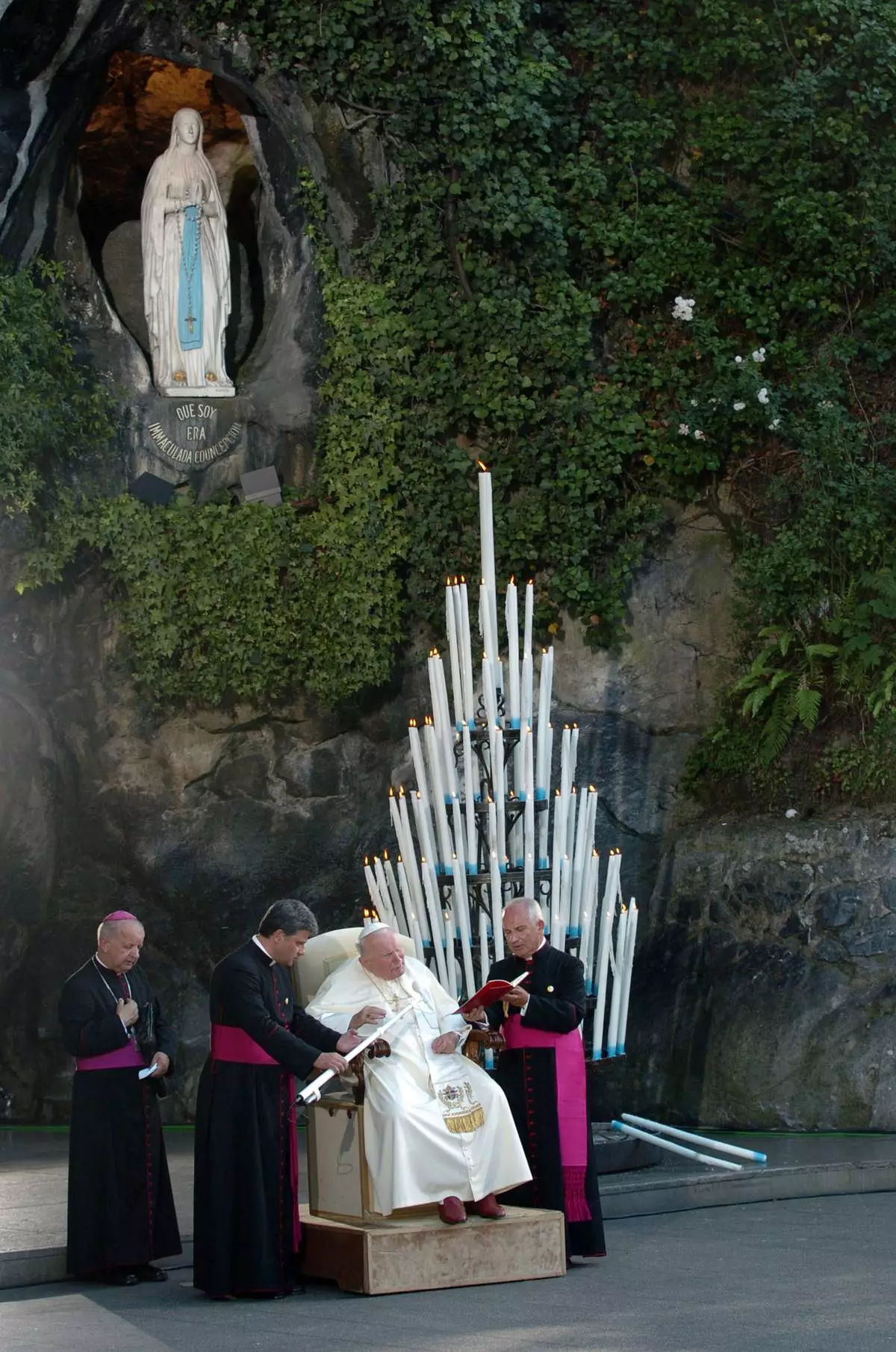
FILE - Pope John Paul II prays, at the Virgin Mary shrine cave prior to his departure to Rome in Lourdes, southwestern France, Sunday Aug. 15, 2004. (AP Photo/Christophe Ena, File)
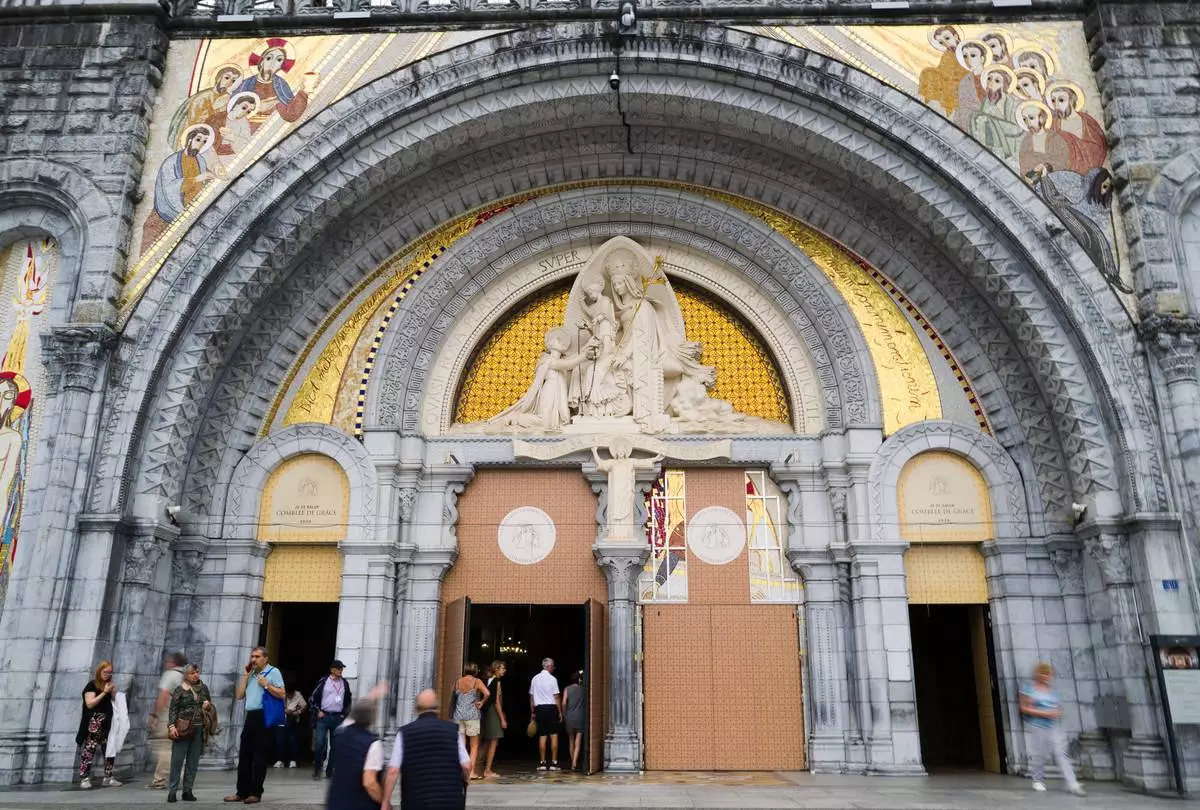
FILE - People enter the Notre-Dame-du-Rosaire basilica in Lourdes, southwestern France, Tuesday Sept. 8, 2026 . (AP Photo/Fred Scheiber, File)
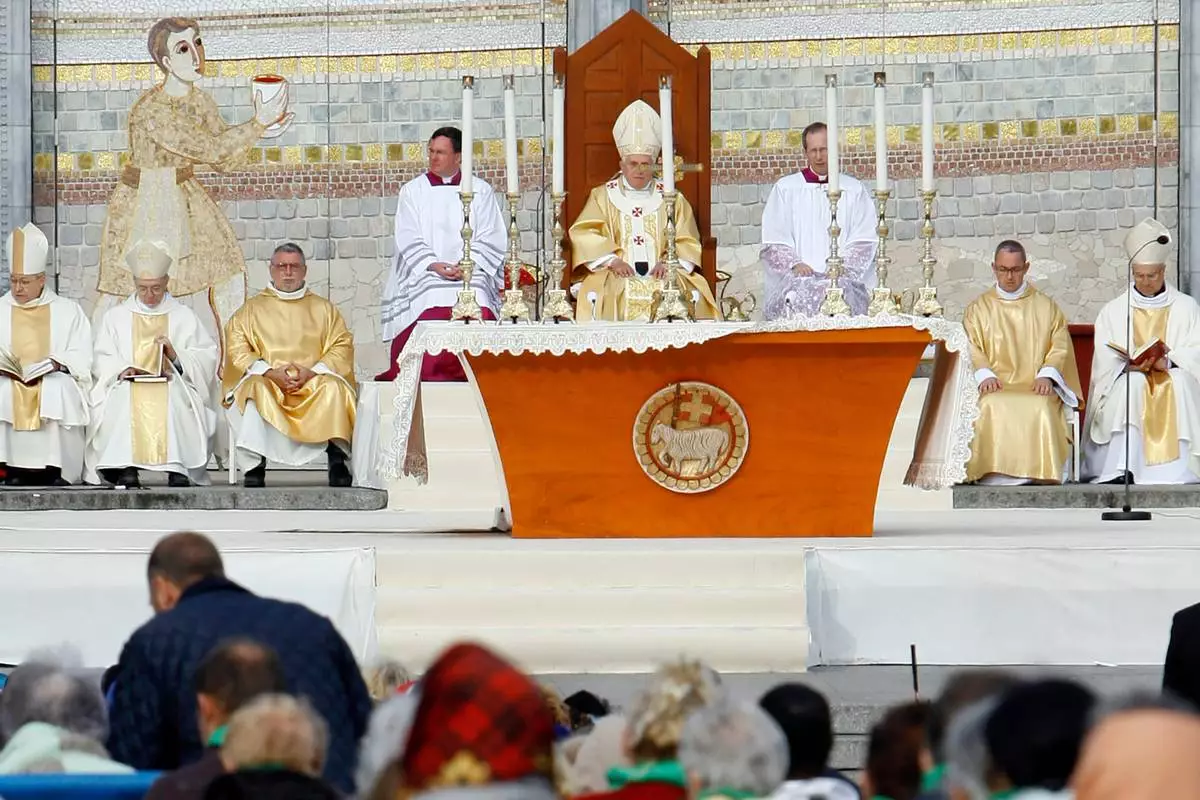
FILE - Pope Benedict XVI, center, celebrates a Mass in front of the Basilica of the Rosary in Lourdes, southwestern France, on Sept. 15, 2008. Behind him is one of the mosaics by Rev. Marko Ivan Rupnik, who was declared excommunicated in 2020 for committing one of the worst crimes in church law – using the confessional to absolve a woman with whom he had engaged in sexual activity. (AP Photo/Alessandra Tarantino, File)
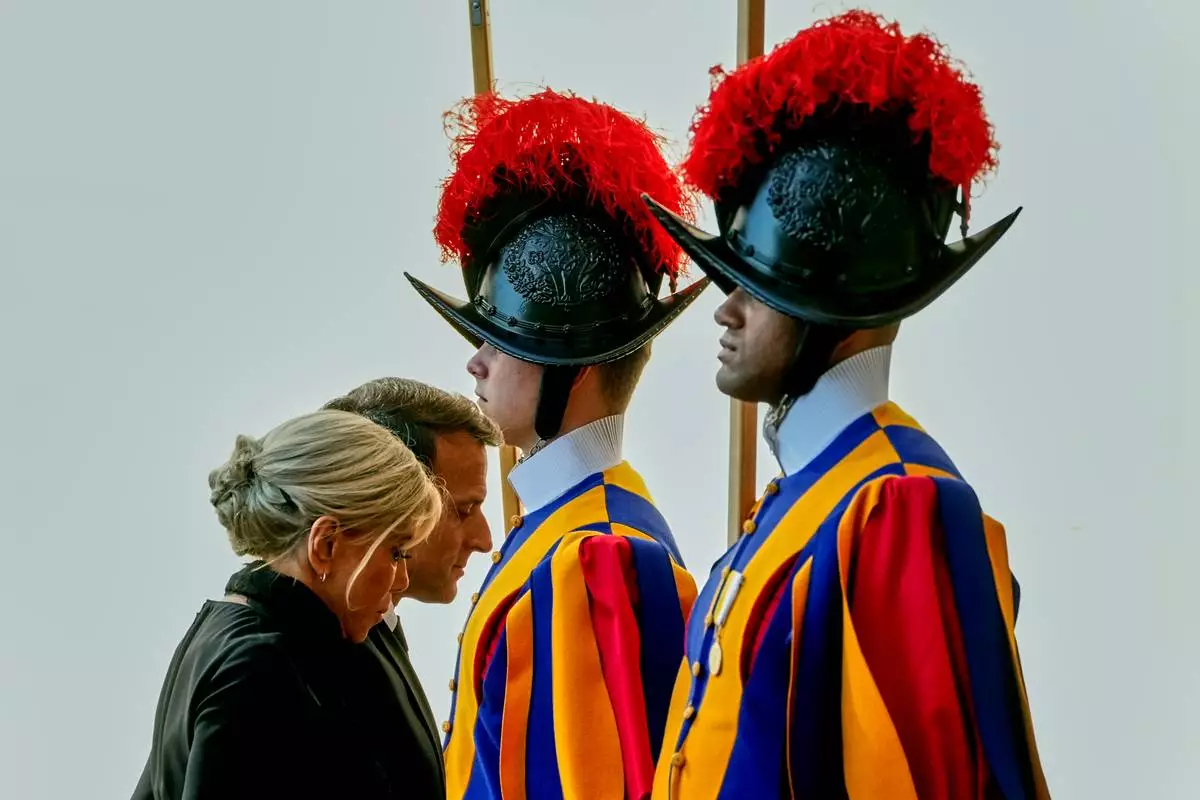
FILE - French President Emmanuel Macron and his wife Brigitte arrive in the St. Damasus Courtyard at the Vatican to meet with Pope Leo XIV, Friday, April 10, 2026. (AP Photo/Andrew Medichini, File)
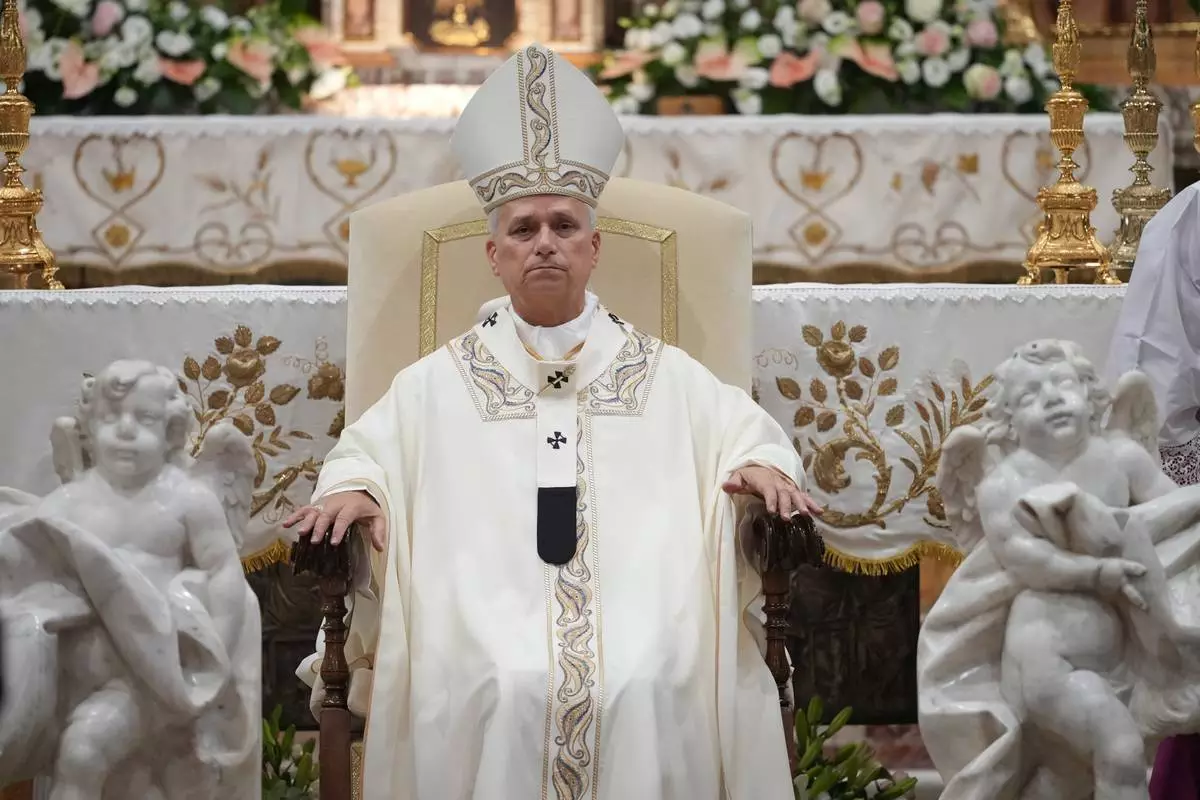
FILE - Pope Leo XIV celebrates a mass at the Basilica Sanctuary of the Mother of Good Counsel in Genazzano, central Italy, Monday, Sept. 7, 2026. (AP Photo/Andrew Medichini, File)