Europe is facing the worst energy crisis in history, Kirill Dmitriev, Russia's special presidential envoy for foreign investment and economic cooperation, said.
"Aged well, as Europe finally understands it is facing the worst energy crisis in history," he wrote on X.
In another post, he said it's a "self-made crisis with zero attempt to analyze root causes and adjust course."
French media previously reported that about 10 percent of gas stations in France were facing supply difficulties with "at least one type of fuel." German media also reported earlier that gasoline prices at German gas stations had risen to a record high.
After the full escalation of the Ukraine crisis in 2022, the European Union pushed for energy "de-Russification." Since then, affected by the outbreak of the Iran conflict in late February this year and hindered by navigation through the Strait of Hormuz, ordinary Europeans have seen their daily energy and transportation expenses soar, while European companies are grappling with multiple pressures, including persistently high energy prices, rapidly rising logistics costs, and weak external demand.

Europe facing worst energy crisis in history: Russia's presidential envoy
The left tube of the bidirectional Haitai Yangtze River Tunnel, the world's longest cross-river highway shield tunnel, successfully passed the lowest point of the riverbed on Monday, signifying that the tunnel construction has achieved the through-passage of the lowest point for both tubes and laying a solid foundation for its full completion.
The tunnel, located in east China's Jiangsu Province, is a key project to forge a major trans-river road link under China's longest river, connecting Haimen in Nantong City with Taicang in Suzhou City of the province.
At a depth of 75 meters beneath the Yangtze River estuary surface, China's independently developed Cangyuan shield tunneling machine has completed 5,334 meters of boring and safely drove through the riverbed's lowest point.
This section was the most critical part of the project where the construction risks were most concentrated and challenges were at their highest. The tunnel structure had to withstand an extremely high water pressure of 0.75 MPa, equivalent to the combined weight of approximately 51 vehicles each weighing 1.5 tons for each one single square meter to withstand.
"Facing challenges such as high water pressure at the riverbed, equipment abrasion from sandy soils with high quartz content, and significant geological variations, the technical team continuously adjusted key parameters. Relying on intelligent equipment and technology, we monitored data, conducted intelligent analysis, and optimized parameters in real time, successfully overcoming the hard technical problems," said Zhao Xiaopeng, an engineer on the project.
Stretching approximately 39.07 kilometers in total, the tunnel includes an 11.185-kilometer underwater section, with the shield-driven section on the left tube measuring 9,327 meters in length. It is designed as a six-lane, bidirectional highway with a speed limit of 100 km/h.
The tunnel construction is expected to be completed in 2028. Upon completion, it will serve as a critical link to facilitate transportation in the Yangtze River Delta in east China.
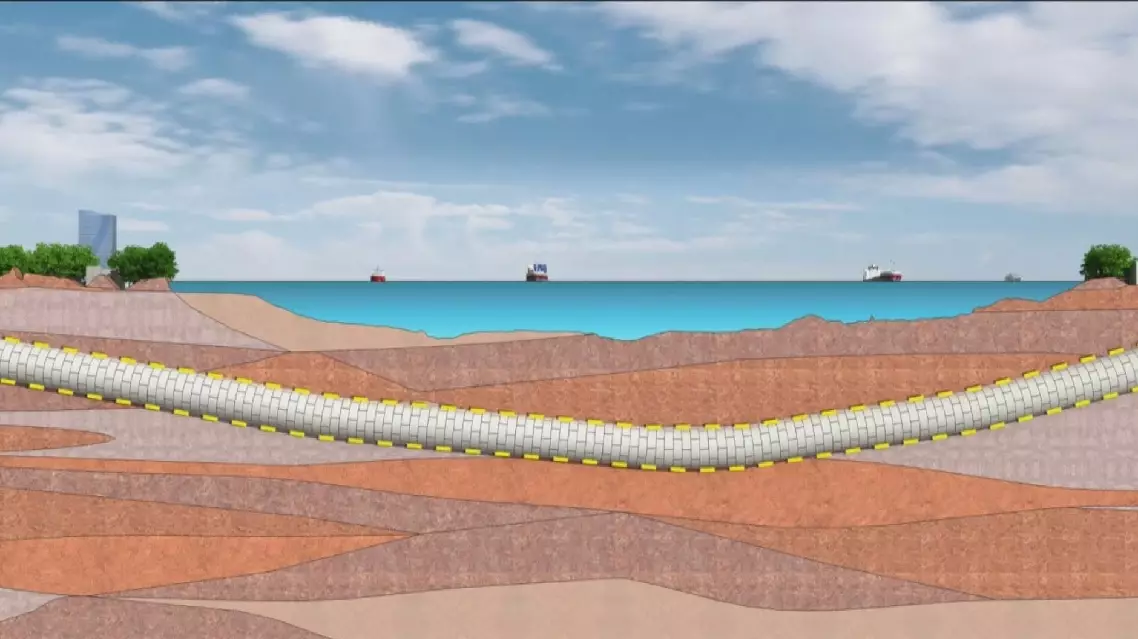
World's longest cross-river highway shield tunnel passes lowest point
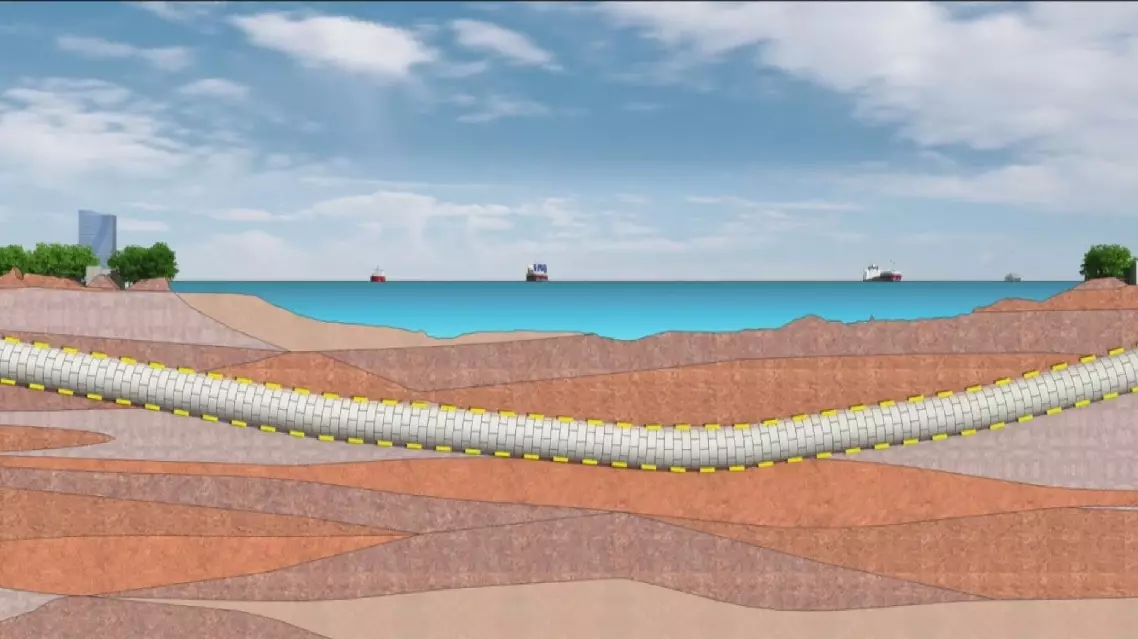
World's longest cross-river highway shield tunnel passes lowest point