NEW YORK (AP) — It’s less than a 40-minute walk uptown to the Metropolitan Opera House from where Heartbeat Opera got its humble start in a yoga studio. But for Louisa Proske, it’s been an artistic journey years in the making.
Proske, who co-founded the scrappy company in 2014, is making her Met debut in the highest-profile assignment imaginable: opening the season directing a new production of Verdi’s “Macbeth” with an all-star cast.
The job came her way less than a year ago after another director bowed out. Planning for new productions typically starts two or more years in advance.
“I was aware of Louisa’s success at Heartbeat, and she had been on my radar,” Met general manager Peter Gelb said. “In terms of who was available on relatively short notice, Louisa was an obvious choice.”
As Proske recalled her conversation with Gelb, “He said, ‘Can you do it very, very fast? The design was due yesterday.’”
“I said it’s a big challenge,” she added. “But I love impossible challenges.”
She had plenty of those at Heartbeat, which developed a reputation for reimagining the classics in eye-opening ways while operating on a shoestring budget.
Luckily she was able to recruit partners she had already worked with: costume designer Montana Levi Blanco and set designer Jon Bausor — both with previous Met experience — and choreographer Jorrell Lawyer-Jefferson. “That sealed the deal,” she said.
It also helped that Proske was intimately familiar with the Shakespeare play, having written her thesis on it at the University of Cambridge.
Now for the past few weeks, she has put her knowledge and imagination to work, immersing her cast — which includes a contingent of dancing witches — in what she calls “a terrifying tale for terrifying times.”
And if she felt any trepidation about taking on such a huge challenge at a huge house, it wasn’t apparent in rehearsal.
“If this had been my first outing with the Met, I would have guessed that she’d been working here for at least a few years,” said baritone Quinn Kelsey, who portrays Macbeth. “She doesn’t come in there like a drill sergeant, but when she needs everyone’s attention, she gets it.
“It’s obvious she’s excited,” he said, “and wanting to show us all these wonderful ideas she’s come up with for us to portray our characters.”
Kelsey heads a cast that includes soprano Lise Davidsen as Lady Macbeth, tenor Freddie De Tommaso as Macduff, and bass-baritone Ryan Speedo Green as Banquo. Met music director Yannick Nezet-Seguin conducts the orchestra and chorus in the production, which opens Tuesday and runs for 10 performances. The Saturday matinee on Oct. 17 will be broadcast live to movie theaters around the world.
To Proske the opera is about “the corrupt lust for power, the disintegration of the society, the slide into tyranny, all things that I think Shakespeare wrote very acutely about.
“I think it expresses the agony of living in times that you don’t really understand anymore,” she continued. “That it only takes three steps for all guardrails to be gone, the world descending into total savagery and bloodshed. And I do think this is a very current sentiment.”
She has taken inspiration from Verdi’s remark that the story has three major characters: Macbeth, Lady Macbeth — and the witches, who in this production act as what Proske called “greedy voyeurs of the Macbeths’ descent into crime and bloodshed.”
“Sometimes they just lurk in the shadows, and you have a sense that they’re there,” she said. “Almost like insects, or mold, they sort of creep through the walls, more and more invading those spaces as rules are broken and values transgressed.”
Bausor’s set suggests a modern war-torn landscape, with a false proscenium like a giant concrete wall with a huge hole blasted through it and rubble piled at the sides. Within the gap, scenes in the castle and on the battlefield play out on the revolving turntable.
In contrast, Blanco’s costumes evoke Shakespeare’s era, with plush robes, gowns and tunics. “To me there’s something exciting about these grand clothes from Renaissance England,” Proske said. “How they speak about power.”
Despite the bigger budget and the bigger stage, Proske has aimed to bring the same values to the Met that flourish at Heartbeat.
“The core of Heartbeat was always the desire for exact, inventive, visceral storytelling,” she said. “So I feel like that was my playground and my deep passion for the first years of being an opera director, and it’s where I cut my teeth and developed a whole vision of what opera can be.”
She left the company in 2021 and returned to her native Germany, where she spent four seasons directing at Oper Halle in the northeastern state of Saxony-Anhalt. More recently, she has been freelancing in Europe and the U.S.
Her old friends at Heartbeat have watched her rise with pride.
Jacob Ashworth, the company’s artistic director, said he laughs when some fans ask if he isn’t disappointed by Proske’s move uptown. “There have been people who say, ‘But isn’t the Met the enemy?’” he said. “Of course we don’t think that at all.
“In this business it’s the downtown renegades and radical companies that toss out the ideas that then eventually trickle up to the big companies,” Ashworth said. “So it’s kind of fun when the actual people also trickle up.”
This story has been updated to correct that Proske left Heartbeat Opera in 2021, not 2018.
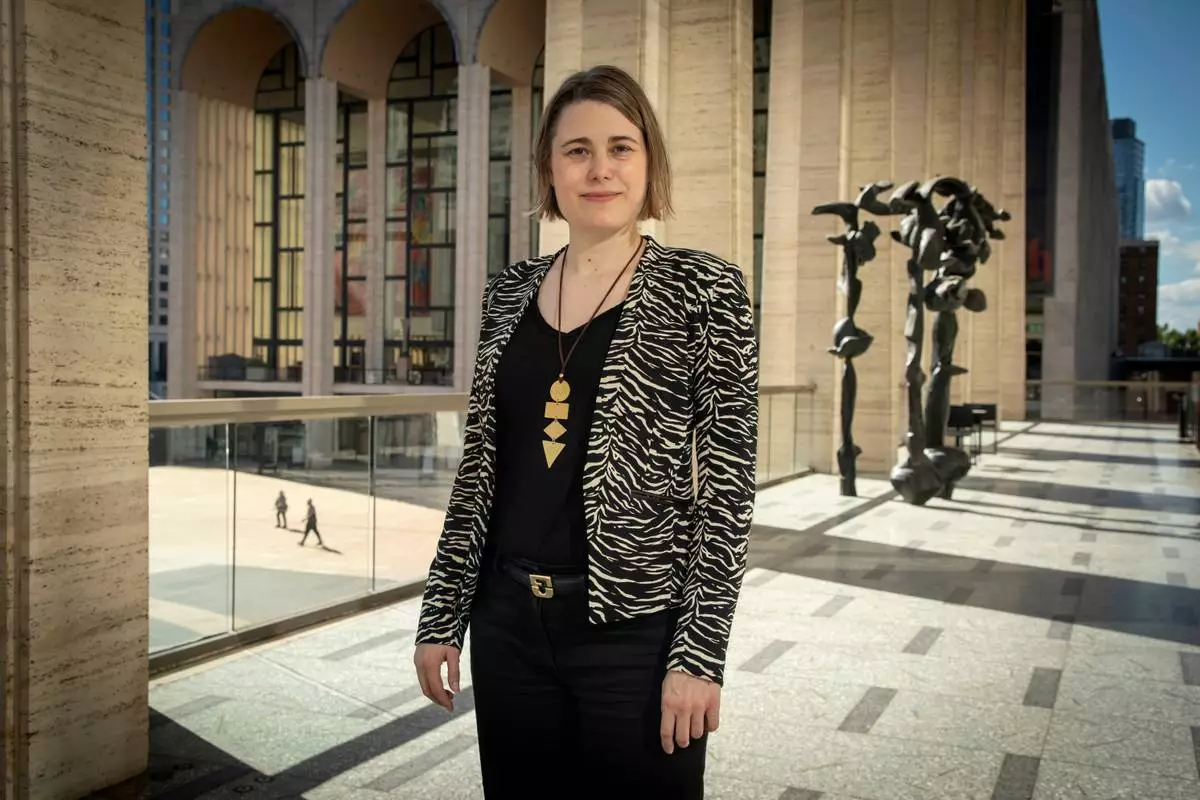
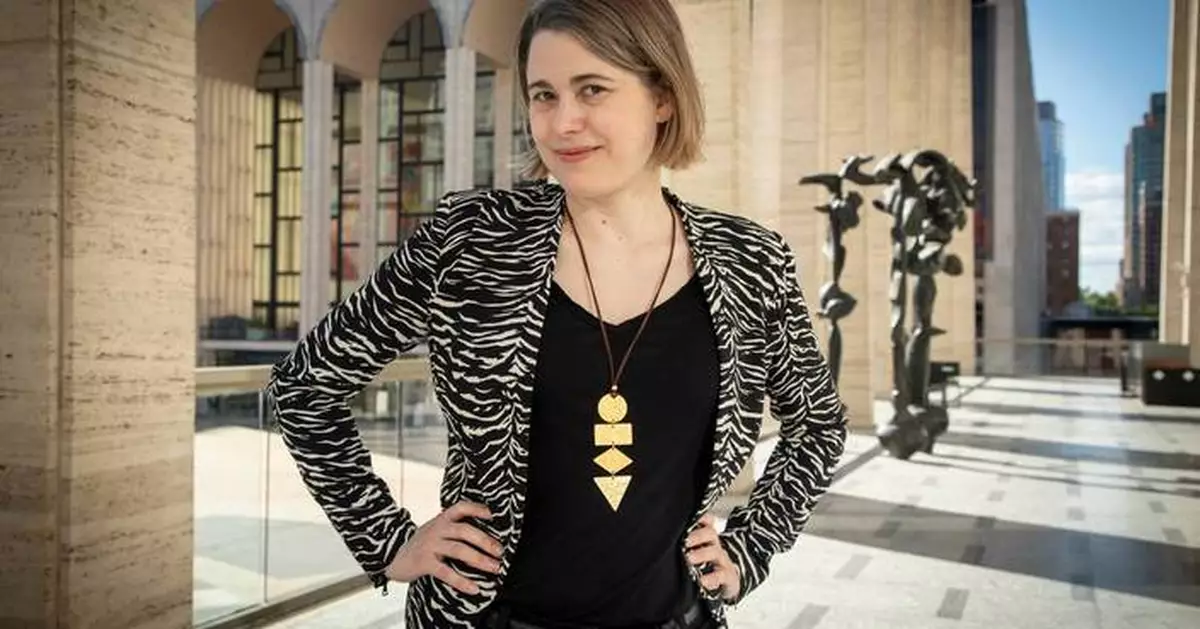
Louisa Proske poses for a portrait on Friday, Sept. 18, 2026, in New York. (Photo by Andy Kropa/Invision/AP)
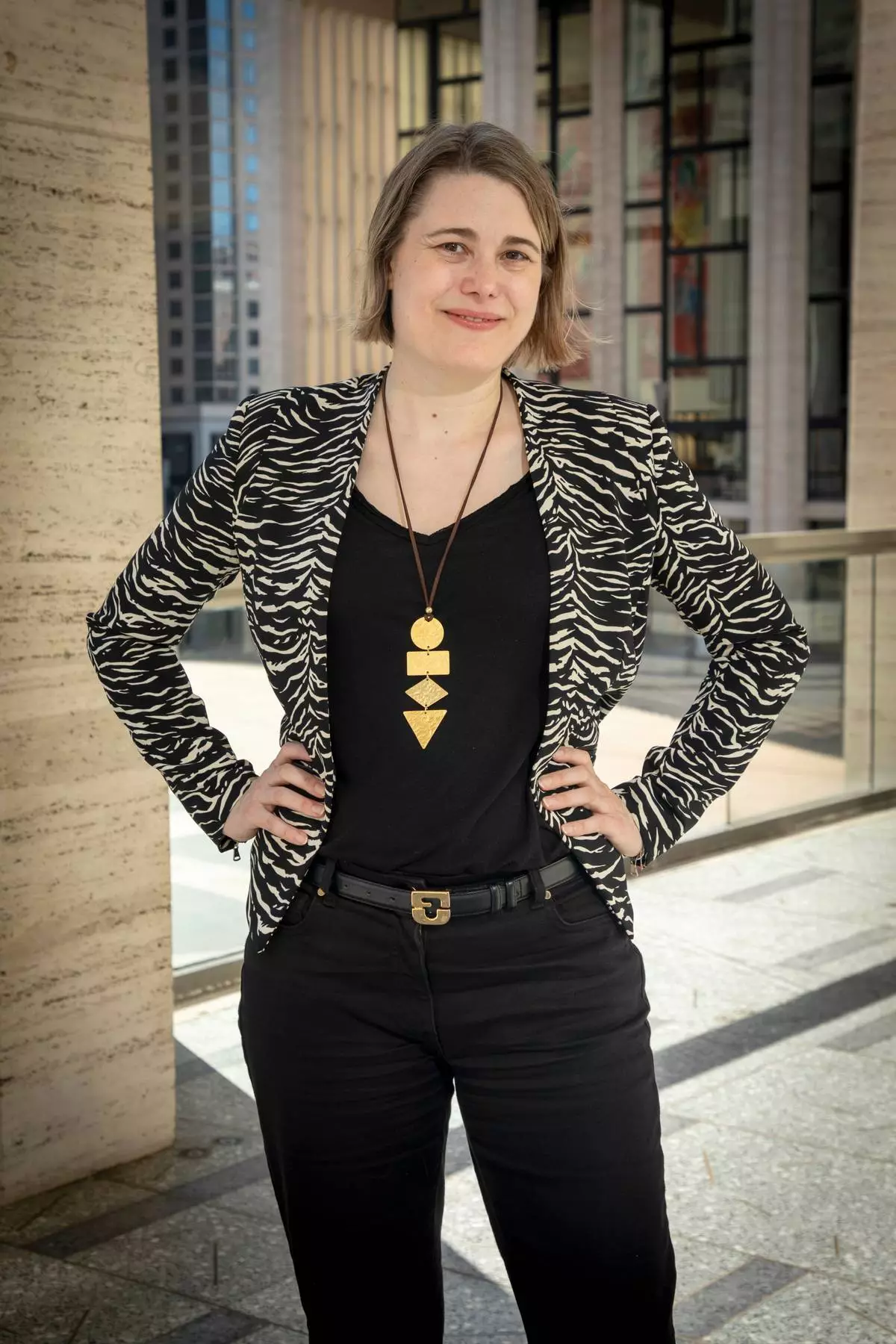
Louisa Proske poses for a portrait on Friday, Sept. 18, 2026, in New York. (Photo by Andy Kropa/Invision/AP)
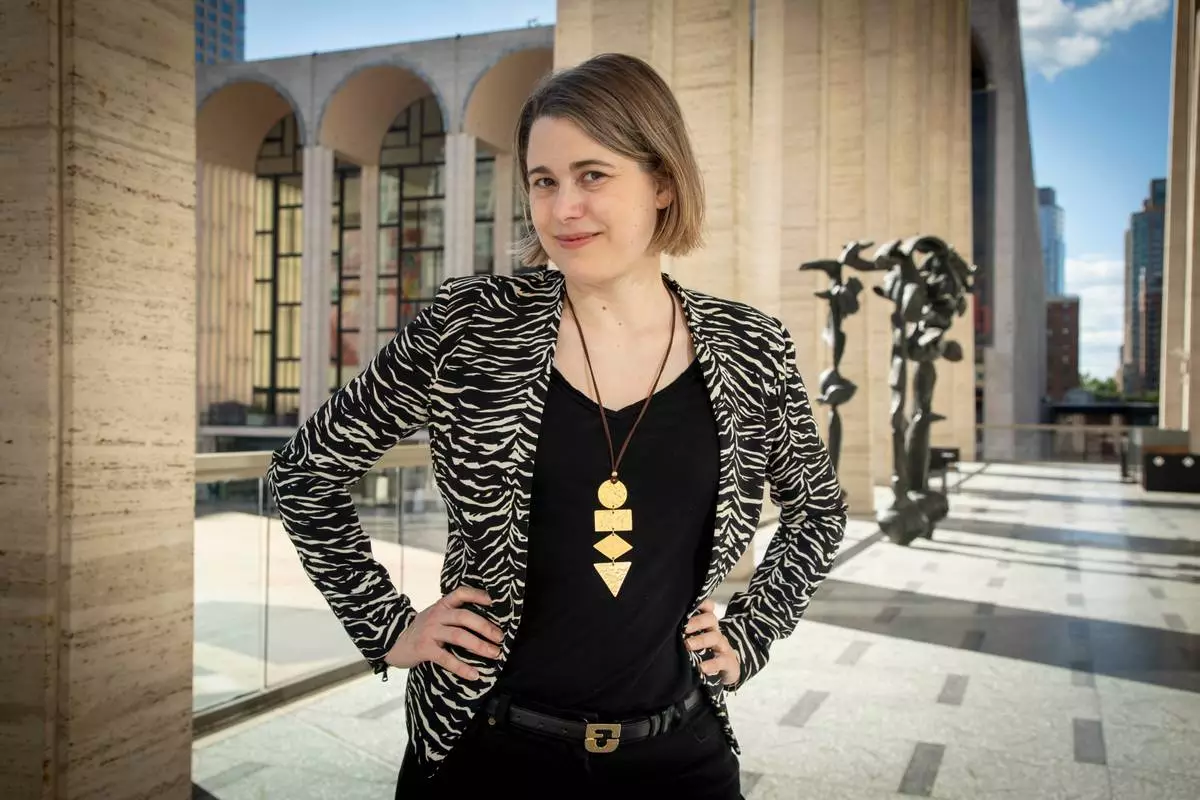
Louisa Proske poses for a portrait on Friday, Sept. 18, 2026, in New York. (Photo by Andy Kropa/Invision/AP)
The main Kremlin party retained its majority in Russia’s parliament, election officials said Monday, after three days of carefully orchestrated balloting that excluded most opposition candidates and helped President Vladimir Putin maintain his tight grip on power.
Preliminary results indicated that United Russia would get 355 out of 450 seats in the State Duma, the lower chamber of parliament, the Central Election Commission said, which would be a record high for the party if confirmed.
Results from over 95% of the polling stations gave United Russia just under 58% of the vote for the 225 seats apportioned by parties, according to commission chair Ella Pamfilova. Another 225 lawmakers were chosen to represent individual constituencies, and the results showed United Russia candidates leading in 208 of those races.
Winning seats alongside United Russia were several other parties that almost always vote for Kremlin initiatives. A handful of seats will go to candidates who ran without a party affiliation in single-seat races, according to preliminary results.
It was the first parliamentary election since Putin launched the full-scale invasion of Ukraine in 2022, and the first to include residents of four regions of that country that were seized and illegally annexed by Moscow later that year. At a polling station in the Russian-held part of the Donetsk region, voters dropped their ballots in a box under the gaze of an armed Russian soldier.
Voting also was held in Crimea, which was illegally annexed by Russia in 2014. Kyiv denounced the voting in those regions as illegal.
The government was “able to carry out the campaign and the voting the way it wanted, with the most optimal output,” said Tatyana Stanovaya of the Carnegie Russia Eurasia Center, in an online commentary.
The Kremlin tightened its crackdown on opposition before the election, including barring Russia’s only liberal, anti-war party from the ballot and allowing it to compete only in single-constituency races.
The Kremlin has sought the parliamentary election to showcase popular support for the war, and strove to avoid political risks by stamping out any dissent.
A massive state media campaign and tight control over the election in the absence of genuine opposition left little doubt that the Kremlin will keep tight control of Russian politics as economic costs rise and Ukrainian drone attacks increase deep inside the country.
Electronic balloting was available in many regions and encouraged by authorities. Critics said it made it easier for the government to control the outcome of the vote.
Pamfilova said turnout was just over 59% — the most for a parliamentary election in over a decade. The final results will be announced Friday, she said.
The liberal Yabloko party, the only registered political entity that dared to publicly criticize the war, was removed from the ballot last month by Russia’s Supreme Court, and only has a few dozen candidates in the single-constituency races. Additionally, some anti-war politicians were imprisoned or forced to flee abroad ahead of the campaign.
Yabloko and the Communist Party, which has criticized some aspects of government policy but carefully avoided any criticism of Putin, said many of their observers were turned away from polling stations.
Russia didn’t invite observers from the Organization for Security and Cooperation in Europe, with the Foreign Ministry accusing the group of “double standards” for its criticism of the country. OSCE Parliamentary Assembly President Pere Joan Pons said the decision was a breach of Russia’s commitments as a member state of the organization.
The election took place against the backdrop of incessant Ukrainian drone attacks. On Sunday, Russia's Defense Ministry reported that it downed 1,110 Ukrainian drones overnight.
Moscow Mayor Sergei Sobyanin said hundreds of drones targeted the capital and described it as “the largest ever” attack on the city. The Moscow Oil Refinery was hit, he said, and so was another building.
Three people were killed in the wider Moscow region, Gov. Andrei Vorobyov said. A total of 38 others were injured and received medical treatment, according to the Health Ministry.
Ukraine’s long-range drone strikes over the summer pounded oil refineries, triggering a widespread fuel crisis, and set ablaze sprawling warehouses of online retailers Wildberries and Ozon, bringing the war home for millions of Russians like never before.
“Putin, of course, will interpret United Russia's results as confirmation of the (public) support of the war, even though it is not the case: the overall demand for ending the war is growing,” said Stanovaya of the Carnegie Russia Eurasia Center.
“The main question is: what now? There are great concerns about mobilization, new repressions, harsher measures, and escalation," she wrote.
“I partially agree that Putin may perceive the election results as a green light for ‘anything for the victory,' but I think the role of the elections here is greatly exaggerated," she added. "Everything depends much more on the military situation, the American factor (I don’t believe new negotiations will work out), and the overall picture, where everyone is escalating.”
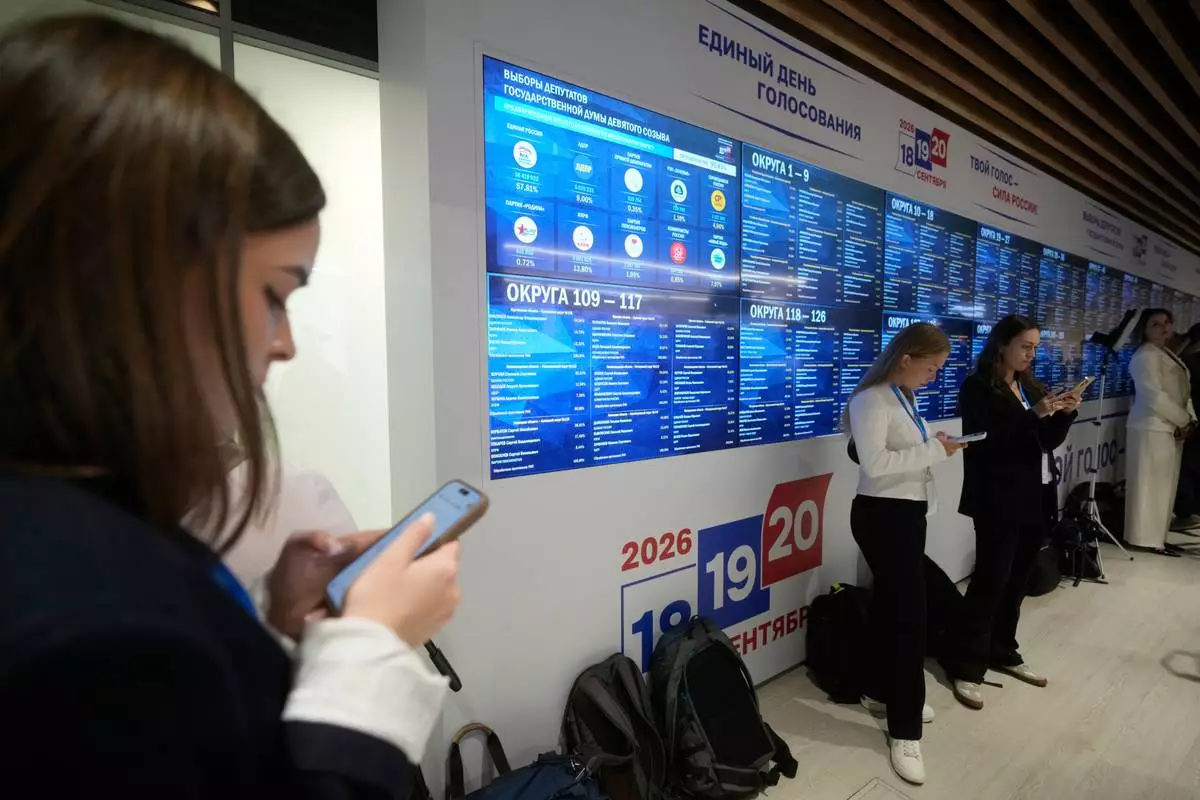
Journalists stand next to video screens sowing preliminary voting results for Russian parliamentary elections at Russia's Central Election Committee headquarters, in Moscow, Russia, Monday, Sept. 21, 2026. (AP Photo/Pavel Bednyakov)
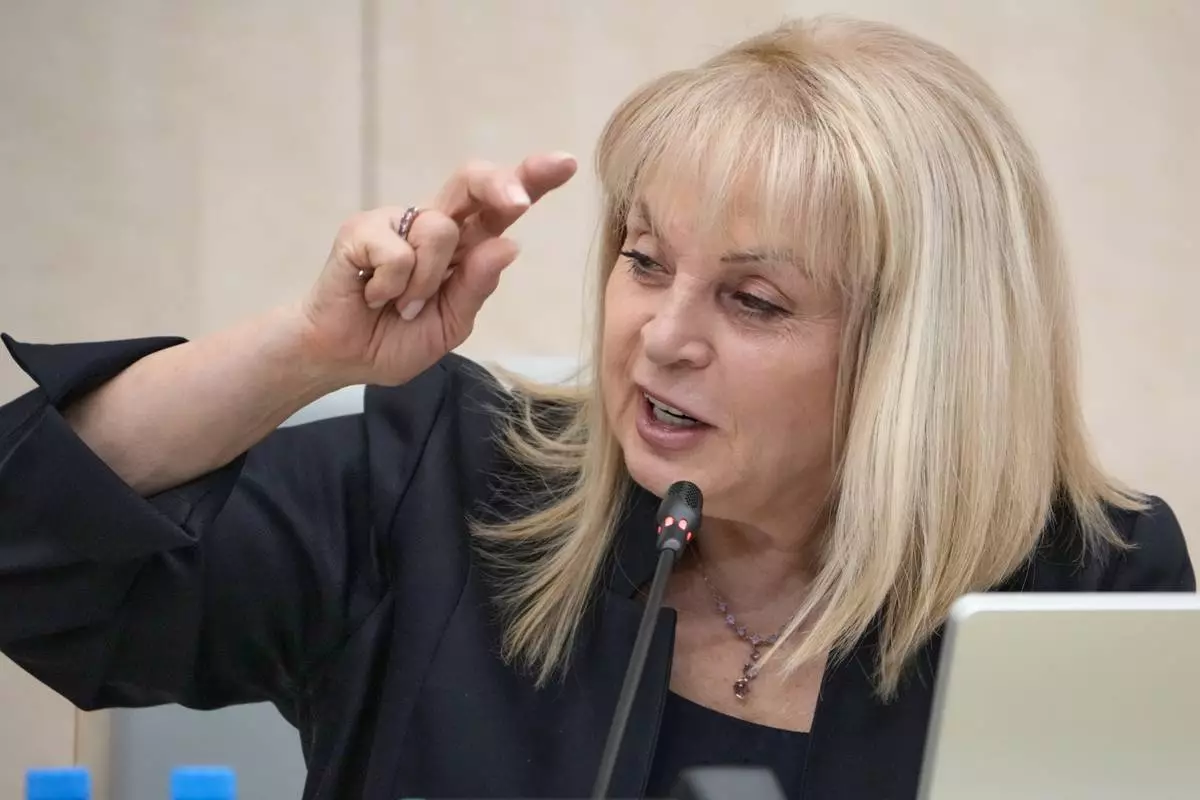
Ella Pamfilova, the head of Russian Central Election Commission, speaks during a news conference following parliamentary elections, in Moscow, Russia, Monday, Sept. 21, 2026. (AP Photo/Pavel Bednyakov)
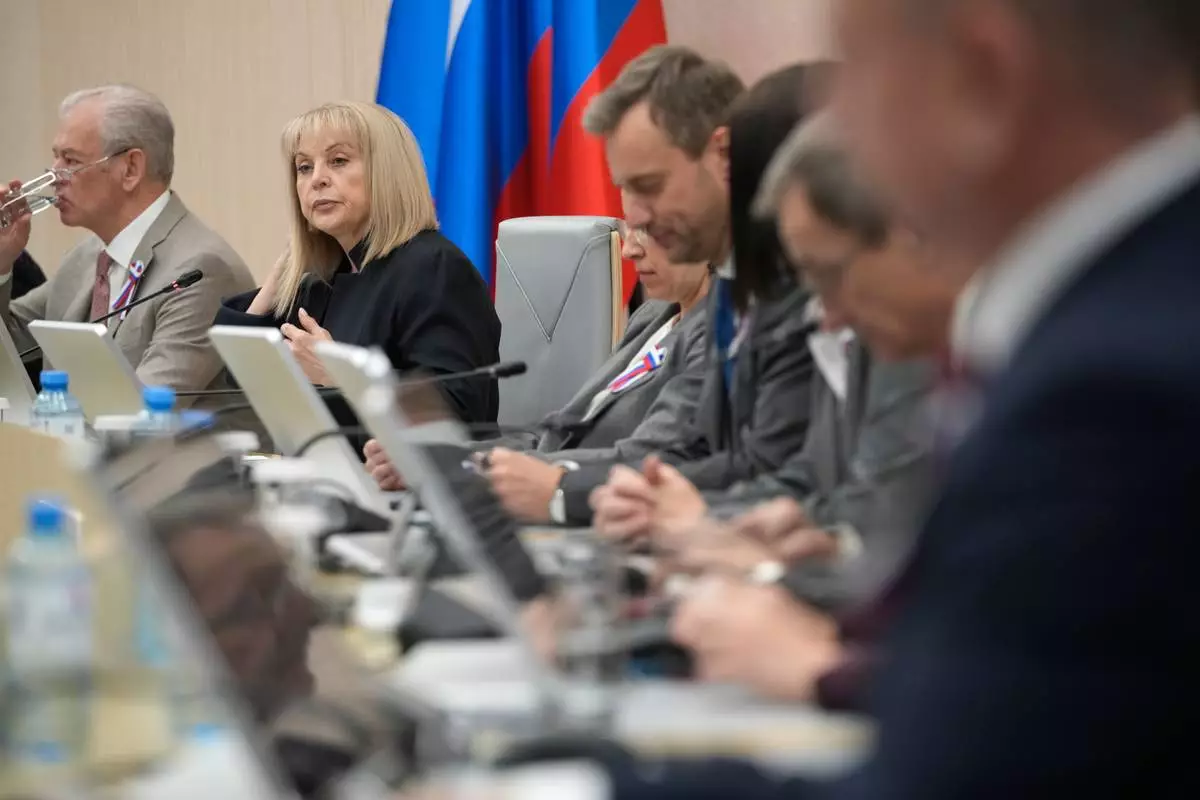
Ella Pamfilova, the head of Russian Central Election Commission, 2nd left, and other members of the Commission attend a news conference following parliamentary elections, in Moscow, Russia, Monday, Sept. 21, 2026. (AP Photo/Pavel Bednyakov)
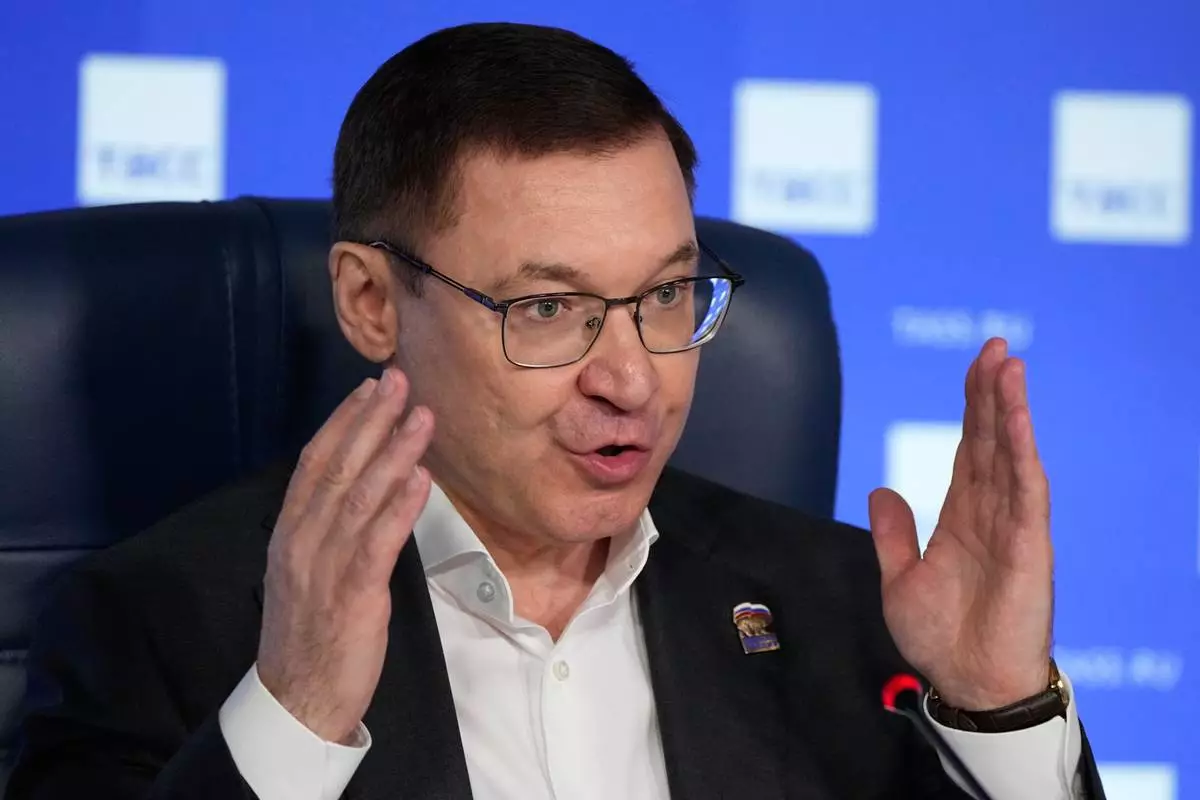
Vladimir Yakushev, a secretary of the General Council of the United Russia party, speaks during a news conference following parliamentary elections, in Moscow, Russia, Monday, Sept. 21, 2026. (AP Photo/Alexander Zemlianichenko)
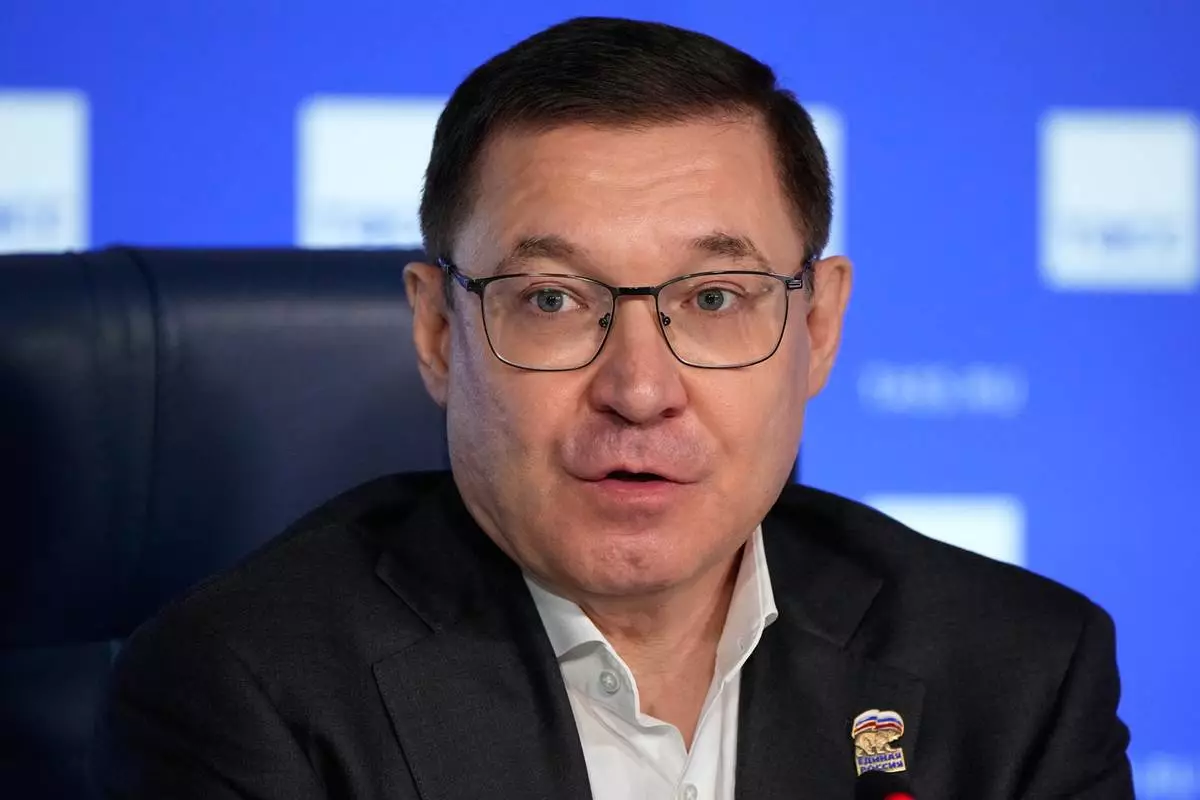
Vladimir Yakushev, a secretary of the General Council of the United Russia party, speaks during a news conference following parliamentary elections, in Moscow, Russia, Monday, Sept. 21, 2026. (AP Photo/Alexander Zemlianichenko)
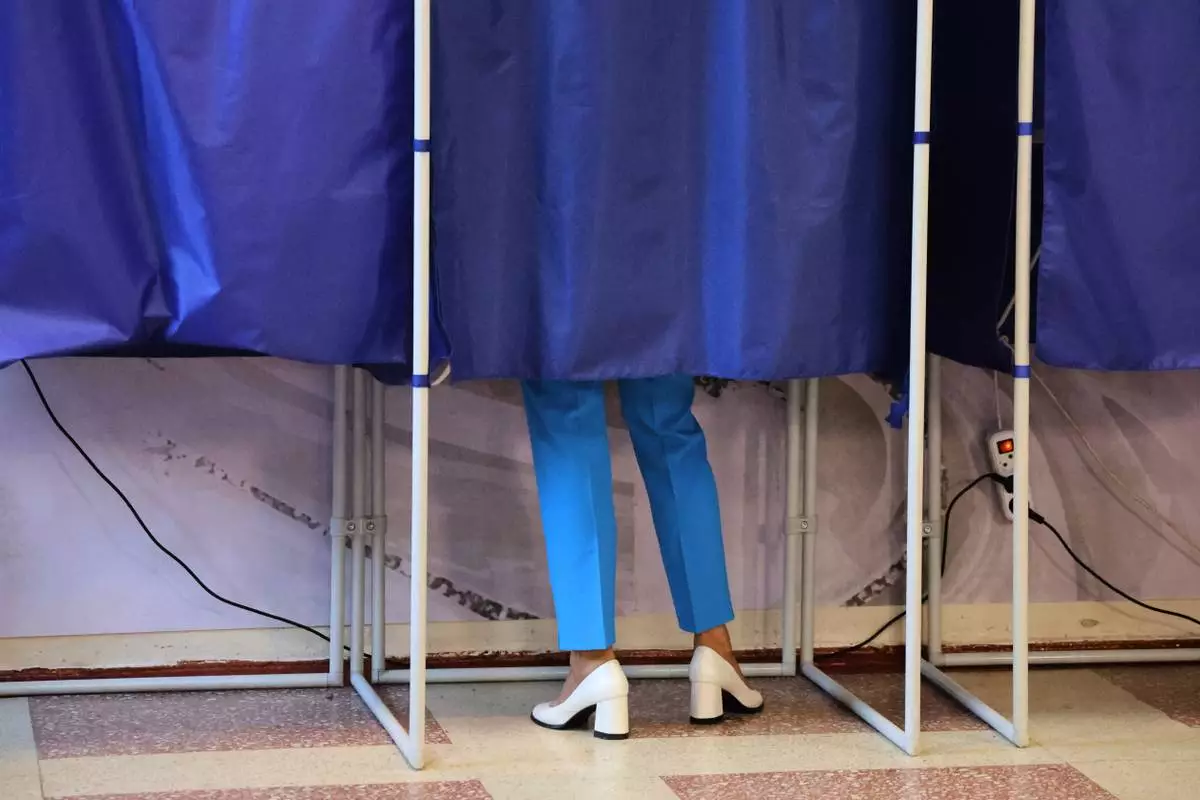
A voter fills-in a ballot during Russia's parliamentary election in Donetsk, in the Russian-controlled part of the Donetsk region, Ukraine, Friday, Sept. 18, 2026. (AP Photo)