ROME (AP) — Pope Leo XIV will retrace his steps as a missionary priest when he returns home to Peru in November in his longest trip to date that will also take him to Uruguay and Argentina, where his Argentine predecessor Pope Francis never returned.
The Vatican on Monday published the detailed itinerary for Leo’s first visit to Latin America as pope. The Nov. 6-17 trip will be a homecoming for the U.S.-born pontiff who also has Peruvian citizenship and spent two decades there as a priest and bishop.
As he showed during his four-nation Africa trip in April, the 71-year-old Leo has no qualms about covering vast distances and working late into the night when he’s on the road. In all, he’ll clock just over 31,000 kilometers (19,000 miles) of flight time during the trip, nearly double the 17,000 kms (10,000 miles) he traveled in Algeria, Cameroon, Angola and Equatorial Guinea.
The visit begins in Uruguay to put Leo in place to mark an important Catholic feast day Nov. 8, associated with the country’s patron saint, of Our Lady of the Thirty-Three. The small statue of the Madonna dates from the 18th century Jesuit missions in the area and currently is housed in the city of Florida, where Leo will celebrate Mass at the National Shrine.
Leo will also honor Argentina’s patron, Our Lady of Lujan, on the second, Argentine leg of the trip. The statue of the Madonna, located in the city of Lujan in the province of Buenos Aires, was particularly dear to Francis.
Francis, who died in 2025, confounded friends and foes alike by never returning to his native Argentina, after he left for Rome for the 2013 conclave that elected him pope.
He had been a divisive figure back home, both as Jesuit superior and archbishop of Buenos Aires, and apparently wanted to avoid fueling the country’s polemics by not giving the ruling party at any given time the political benefits that come with a pope visit.
But Leo seems keen to finally grant Argentina’s faithful a papal visit for the first time since St. John Paul II came in 1982 and 1987.
In Buenos Aires, Leo will visit the capital’s federal prison, perhaps a nod to Francis’ legacy of prison ministry that he developed first as a “slum priest” in Buenos Aires.
The highlight of Leo’s trip will certainly be his return to Peru and especially his diocese of Chiclayo. The former Robert Prevost was bishop of Chiclayo from 2014-2023, when Francis brought him to the Vatican to head the office for bishops.
On the night of his election, Leo gave a shoutout in Spanish to his “beloved diocese of Chiclayo,” from the loggia of St. Peter’s Basilica. He praised its faithful for having “walked alongside their bishop, shared their faith, and given so much to continue being a faithful Church of Jesus Christ.”
Leo is spending the bulk of his visit in Peru, arriving in Lima on Nov. 11 and leaving the afternoon of Nov. 16 after a final Mass in Callao, outside Lima, where he served as a temporary administrator. In between, he’ll spend time in Chiclayo, including having a special private dinner with the diocese’s priests.
He’ll meet with popular groups in Cusco, in the Peruvian Andes, to celebrate the city’s rich history. Cusco was the capital of the Inca empire, an important city of Spanish colonial rule and today remains an important cultural destination with ruins including Machu Picchu.
That same day, Nov. 15, he’ll also honor Peru’s Indigenous peoples by traveling to Pucallpa, deep in Peru’s Amazonian forest, to celebrate Mass.
Associated Press religion coverage receives support through the AP’s collaboration with The Conversation US, with funding from Lilly Endowment Inc. The AP is solely responsible for this content.
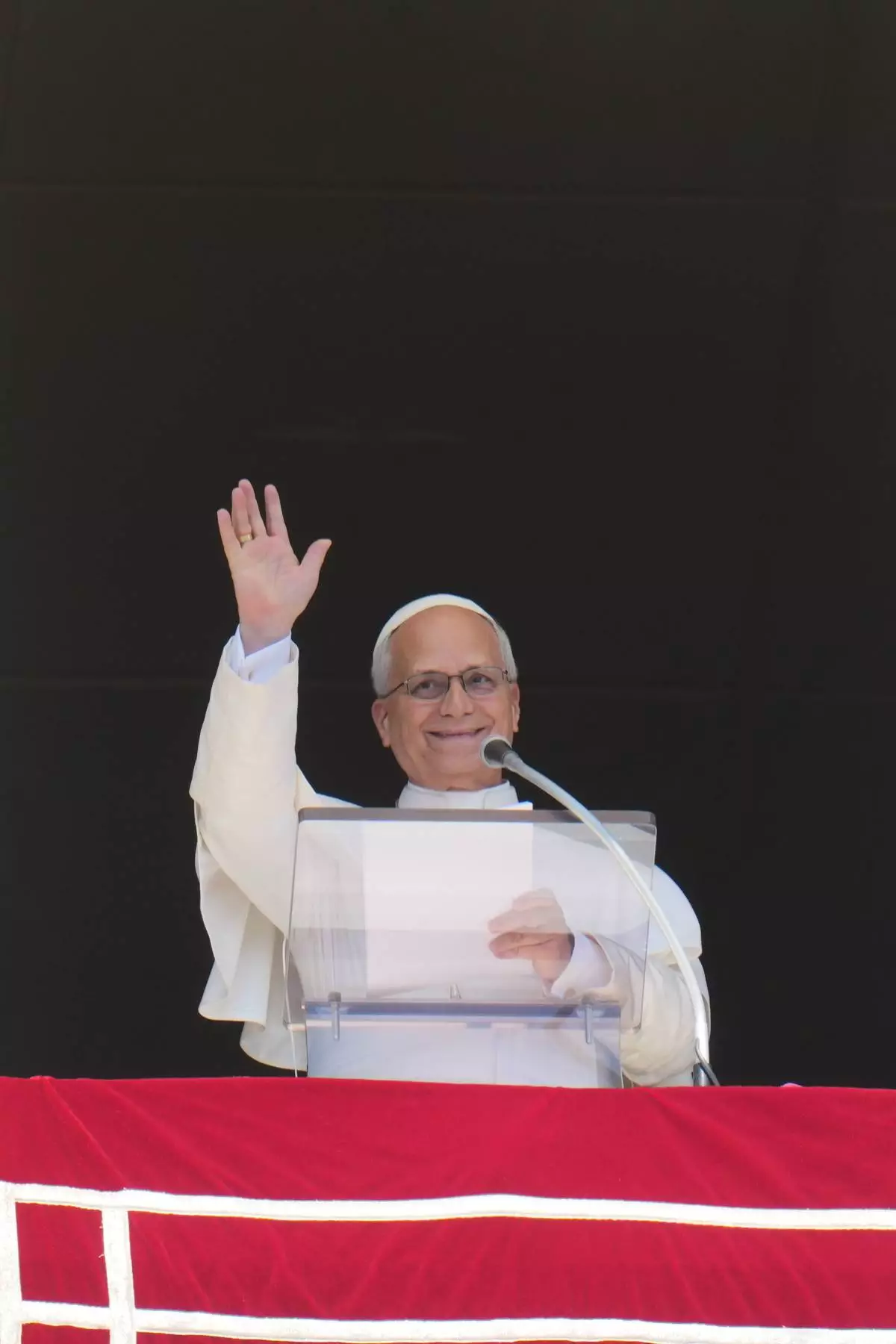
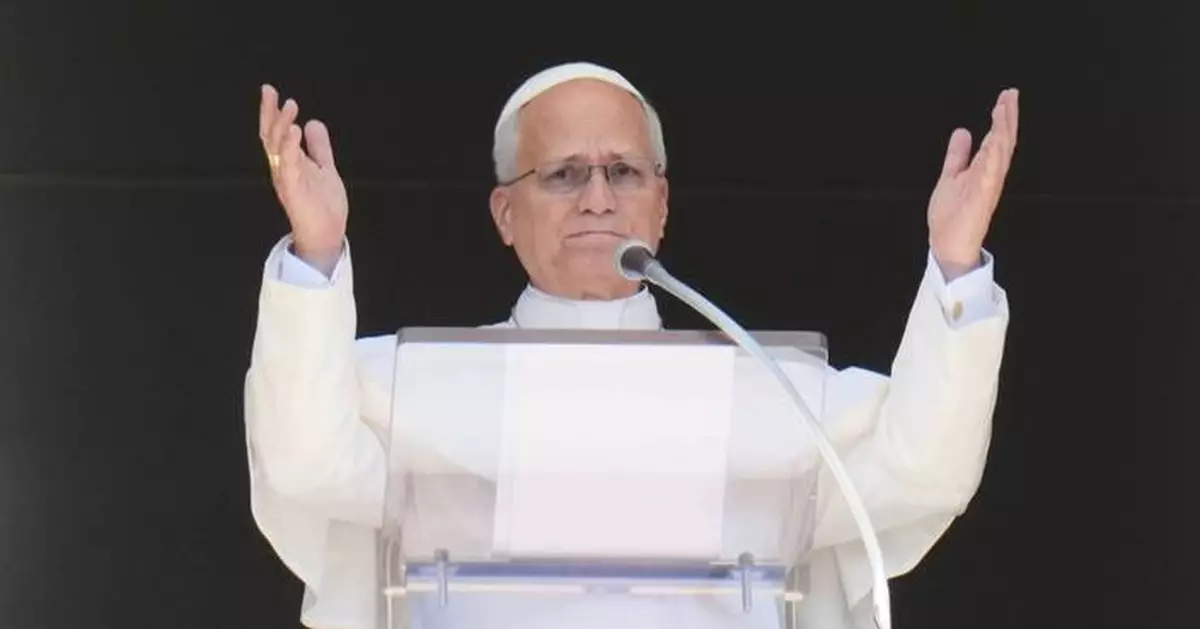
Pope Leo XIV delivers the Angelus noon prayer in St. Peter' s Square, at the Vatican, Sunday, Sept. 20, 2026. (AP Photo/Gregorio Borgia)
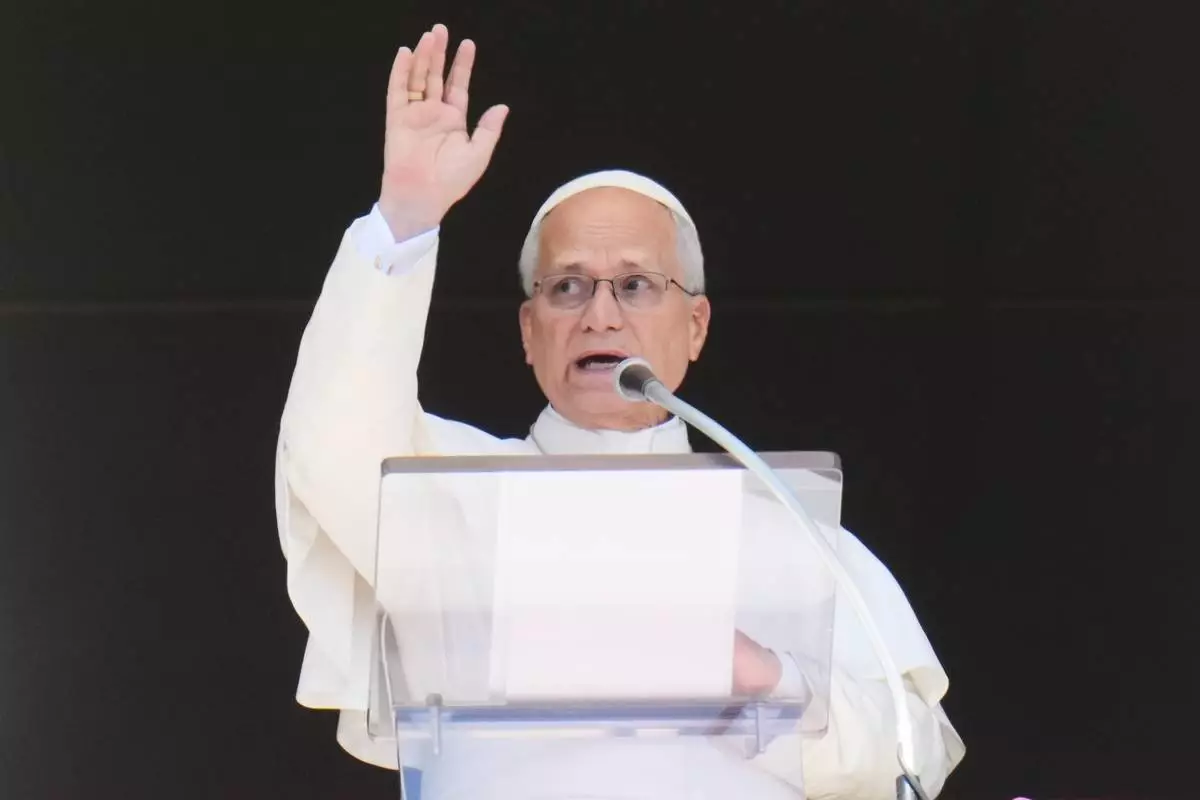
Pope Leo XIV delivers the Angelus noon prayer in St. Peter' s Square, at the Vatican, Sunday, Sept. 20, 2026. (AP Photo/Gregorio Borgia)
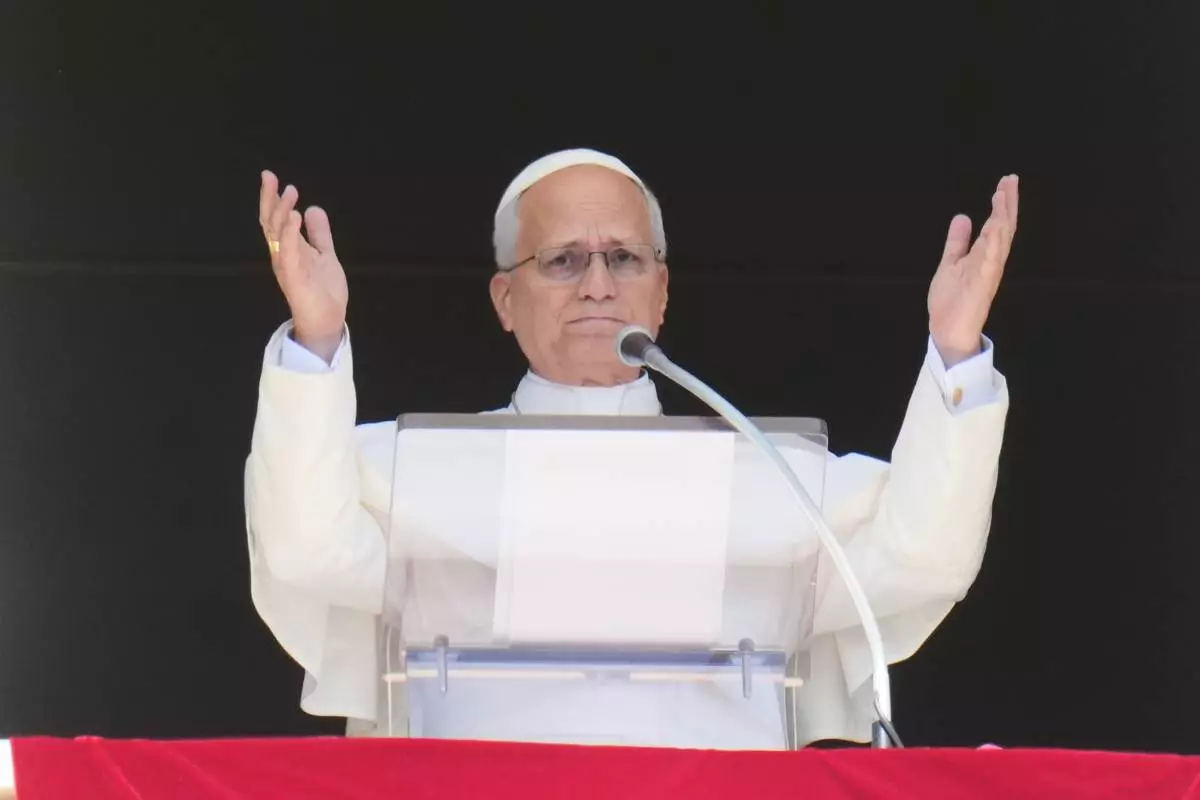
Pope Leo XIV delivers the Angelus noon prayer in St. Peter' s Square, at the Vatican, Sunday, Sept. 20, 2026. (AP Photo/Gregorio Borgia)
The British military said an “unknown projectile” struck a tanker as it entered the Strait of Hormuz on Monday, injuring two crew members. The vessel continued toward port under its own power.
Meanwhile, the Israeli military remains on alert as much of the country shuts down for Yom Kippur, the holiest day in Judaism.
Fighting across Yemen killed or injured 680 people last week, the World Health Organization said.
Here is the latest news from the Middle East on Monday. Full coverage is available here.
The United Kingdom Maritime Trade Operations Center (UKMTO) said a tanker was struck by an “unknown projectile” as it headed into the Strait of Hormuz. Two crew members sustained minor injuries.
The UKMTO said Monday the vessel is reportedly continuing to its next port of call under its own power. No reports indicated any environmental impact at this time.
Tehran has asserted control over much of the Strait of Hormuz since the U.S. and Israel launched the war on Feb. 28. In peacetime, about 20 million barrels — roughly a fifth of the world's oil supply — passed through Hormuz each day.
Some tankers are again traversing the strait, but traffic is well below what it once was.
The World Health Organization says 680 people were killed or injured across Yemen over the course of a week as fighting between Iran-backed Houthi rebels and Saudi-backed government forces continues.
WHO said on Monday in a post on X that 164 people were killed and 516 injured between Sept. 13 and Sept. 18. This brings the total number of casualties since Aug. 6 to 3,672, including 674 deaths and 2,998 injuries.
Lahj province in southwestern Yemen is currently an active front line where 58 deaths and 226 injuries were reported within six days, according to the U.N. agency.
Fighting between the Iran-backed Houthi rebels and government forces has so far displaced 129,438 people across seven provinces, the International Organization for Migration (IOM) says.
The IOM said in an update Monday that people escaping the conflict inside the country were forced from their homes in only a few weeks, with many already fleeing more than once.
Othman Belbeisi, the IOM Regional Director for the Middle East and North Africa, said 11,352 people were displaced in only three days from Sep. 18.
Iranian Interior Minister Eskandar Momeni received his Pakistani counterpart Mohsin Naqvi in Tehran on Monday, Pakistan’s Interior Ministry said.
Naqvi’s visit comes as Pakistan seeks to facilitate dialogue between the United States and Iran, with the help of other regional countries.
Israel's military remained on alert even as the country woke up to the silence and empty streets of Yom Kippur, the Day of Atonement, considered the holiest day for the Jewish faith.
Streetlights blinked yellow Monday as the faithful walked to the Western Wall in Jerusalem’s Old City.
“For the next 25 hours, Israel is offline,” the foreign ministry said on X after sundown Sunday. But the military said it bolstered its frontline forces following the killing of an Israeli settler Sunday in the occupied West Bank. The Palestinian suspect was detained after a search.
France says it will summon Iran's ambassador to protest over the closure of a French language center affiliated with the French Embassy in Tehran.
The French Foreign Ministry said in a statement late Sunday that Paris would “take appropriate measures in response” but didn't specify. It's also unclear when the Iranian ambassador would be summoned.
The ministry called the “unjustifiable and unacceptable” closure of the language center a new attack on France's cultural presence in Iran and linked it to an assault on two French Embassy staff members in July.
Organizers of the Red Sea International Film Festival say they've rescheduled this year's event for late 2027.
The announcement comes as Saudi Arabia faces heightened regional tensions, including missile and drone attacks by Yemen’s Iran-backed Houthi rebels.
The foundation did not link the postponement to the security situation. Instead, it cited the timing and logistical requirements of staging an international event of its scale in an Instagram post Monday.
The festival is one of Saudi Arabia’s most prominent international cultural events and draws filmmakers, actors and other industry figures from around the world to Jeddah.
This report will be updated throughout the day as new developments emerge.
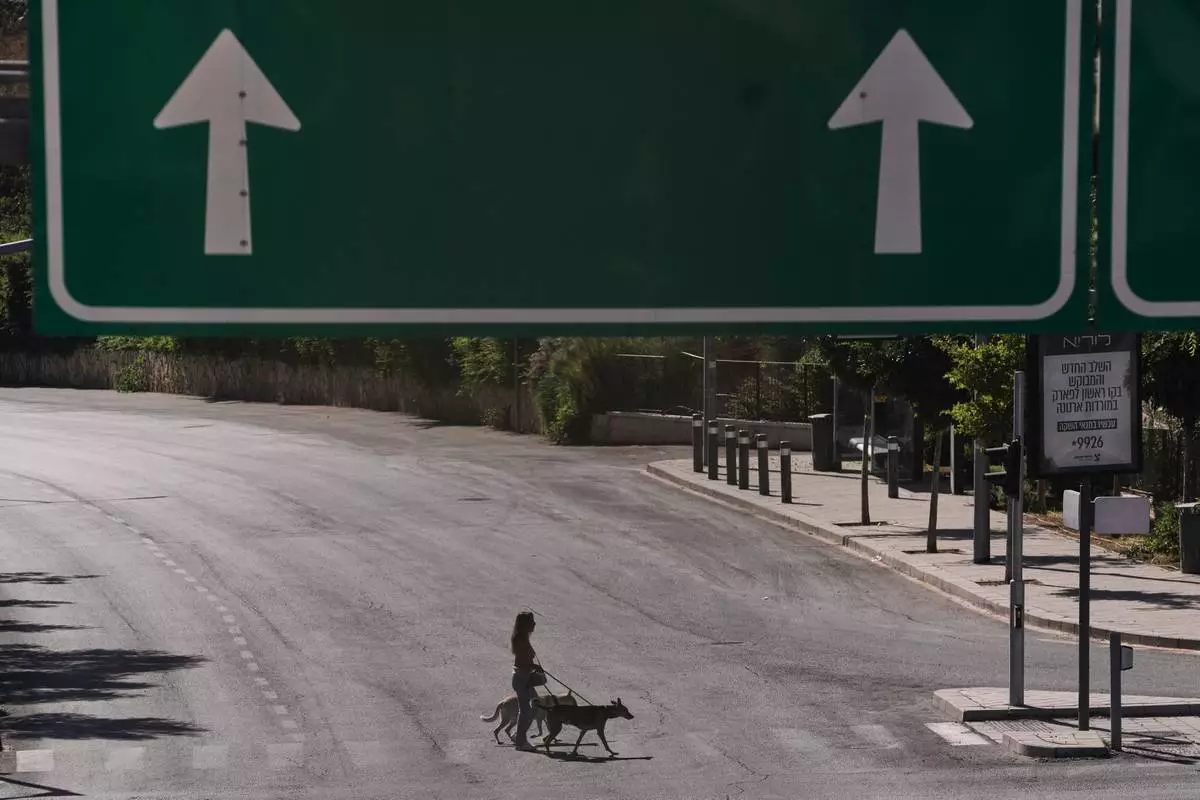
A woman walks with her dogs as they cross an empty street during the Jewish holiday of Yom Kippur, in Jerusalem, Monday, Sept. 21, 2026. (AP Photo/Mahmoud Illean)
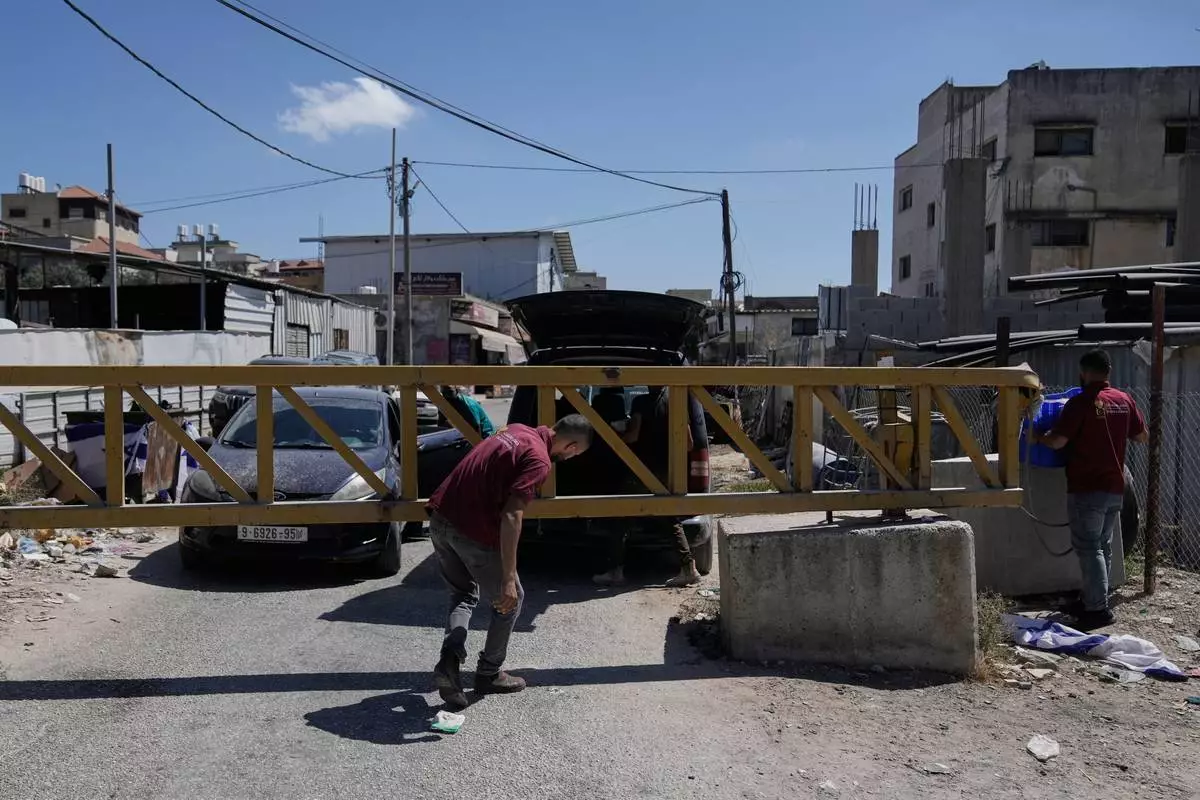
Palestinian men cross a closed gate after the Israeli army imposed a closure of the entrance to the West Bank village of Haris, Monday, Sept. 21, 2026. (AP Photo/Majdi Mohammed)
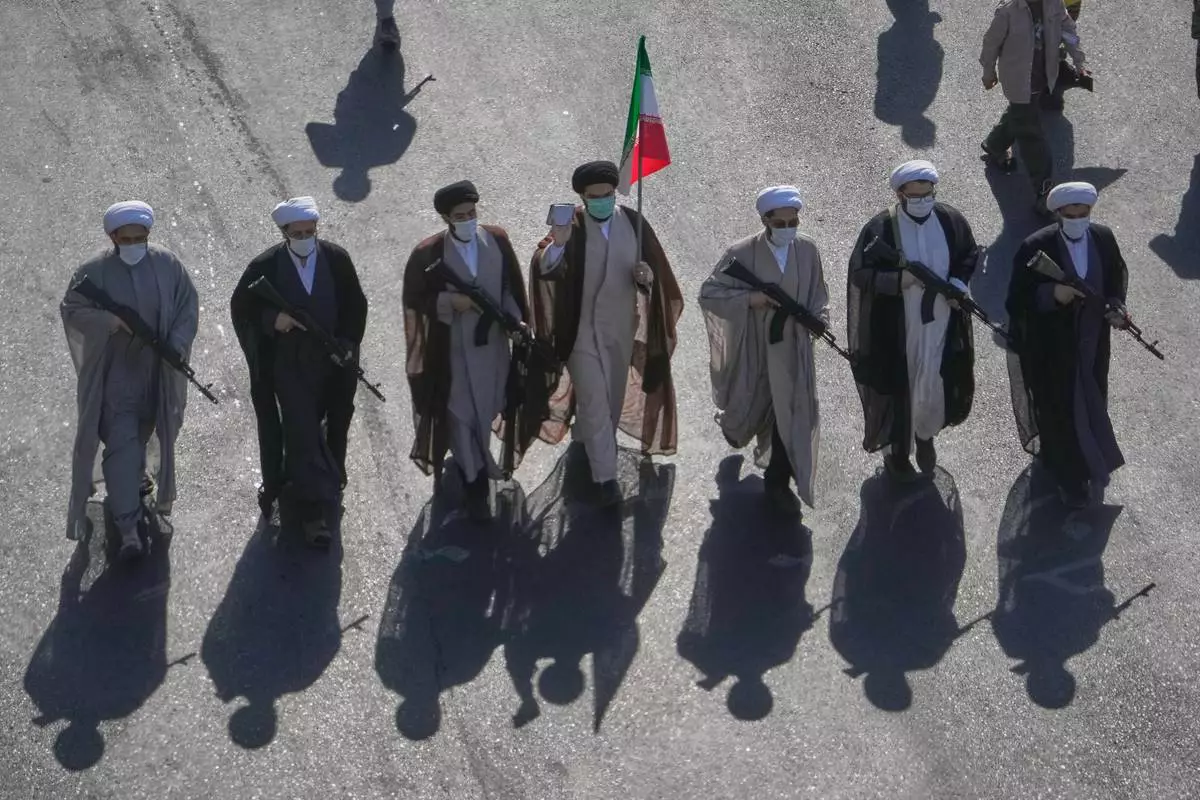
Shiite clerics carrying rifles march during the state-organized "Janfada," or "Sacrifice for Iran," military-style parade at Revolution Square in Tehran, Iran, Friday, Sept. 18, 2026. (AP Photo/Vahid Salemi)