Chinese State Councilor Shen Yiqin on Monday called for staying true to the original aspiration of Asia-Pacific cooperation by embracing changes of the times, focusing on investing in people, strengthening policy coordination and upholding openness and win-win cooperation.
Shen made the remarks at the opening ceremony of the 8th Asia-Pacific Economic Cooperation (APEC) Human Resources Development Ministerial Meeting held in Nanjing, east China's Jiangsu Province.
Shen stressed that human resources development in the Asia-Pacific region has huge potential, while also facing major challenges brought by the technological revolution and demographic shifts.
The Chinese government is willing to work with all sides to promote high-quality and full employment, strengthen vocational skills training, safeguard the lawful rights and interests of workers, and advance high-level international talent exchanges and cooperation, to make new contributions to building an open, dynamic, resilient, and peaceful Asia-Pacific community, Shen said.
The meeting, themed "Modernizing Human Resources Development for a Stronger Asia-Pacific Community," was attended by representatives from APEC economies, the APEC Secretariat, APEC observers and relevant international organizations.
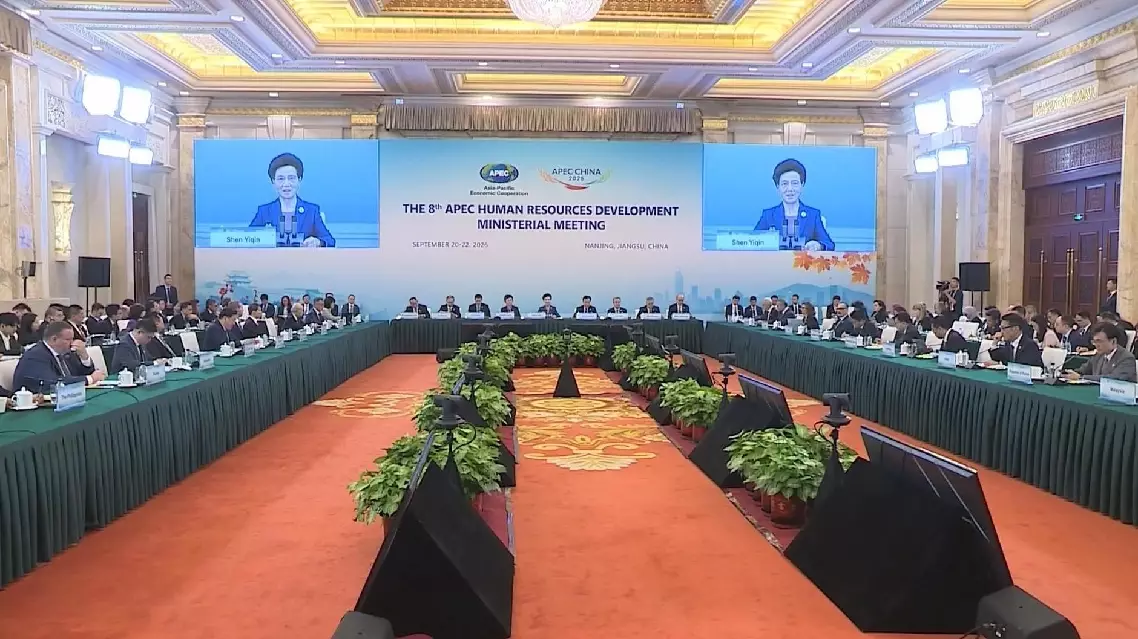
Chinese state councilor urges joint efforts to advance human resources development at APEC ministerial meeting
Israeli President Isaac Herzog on Sunday formally tasked opposition leader Gadi Eisenkot with forming a government, giving the former military chief a chance to replace Prime Minister Benjamin Netanyahu after Netanyahu's right-wing coalition lost its parliamentary majority in October's election.
Eisenkot, leader of the centrist Yashar party, received recommendations from 67 lawmakers in the 120-seat parliament, compared with 46 for Netanyahu.
At the ceremony, Herzog called for unity and a "stable government that can last."
Eisenkot warned that Israel was facing a "critical moment," saying the objectives of its multi-front conflicts "remained unfulfilled," its international relations were in a "devastating crisis," and its democracy was facing one of its gravest challenges.
"If we continue on the current path, we risk reaching a point of no return," he said, calling for new leadership "that people can look in the eye and trust."
He said he was convinced it was possible to form a new government with a substantial majority in the Knesset, and that he was open to Netanyahu's Likud party and far-right Finance Minister Bezalel Smotrich's Religious Zionist Party joining a government under his leadership.
He said they were invited to "support the government under my leadership and the principles I've outlined."
"I intend to be the prime minister of all citizens of Israel, those who voted for me and those who haven't," Eisenkot said.
Eisenkot has 28 days to form a government, with a possible 14-day extension. Netanyahu will remain caretaker prime minister until a new government is sworn in.
Eisenkot's four-party alliance holds only 48 seats and would need support from Arab lawmakers or other parties to form a government.
Netanyahu on Saturday called for a national unity government, while Eisenkot's party said Likud could join a government led by Eisenkot if it abandoned its far-right allies.
Under Israeli law, if Eisenkot fails to form a government within the allotted time, Herzog may assign the task to another candidate, or at least 61 members of the 120-seat Knesset can ask the president to entrust the mandate to a candidate of their choice. If these efforts also fail, the Knesset will be dissolved and new elections will be held.
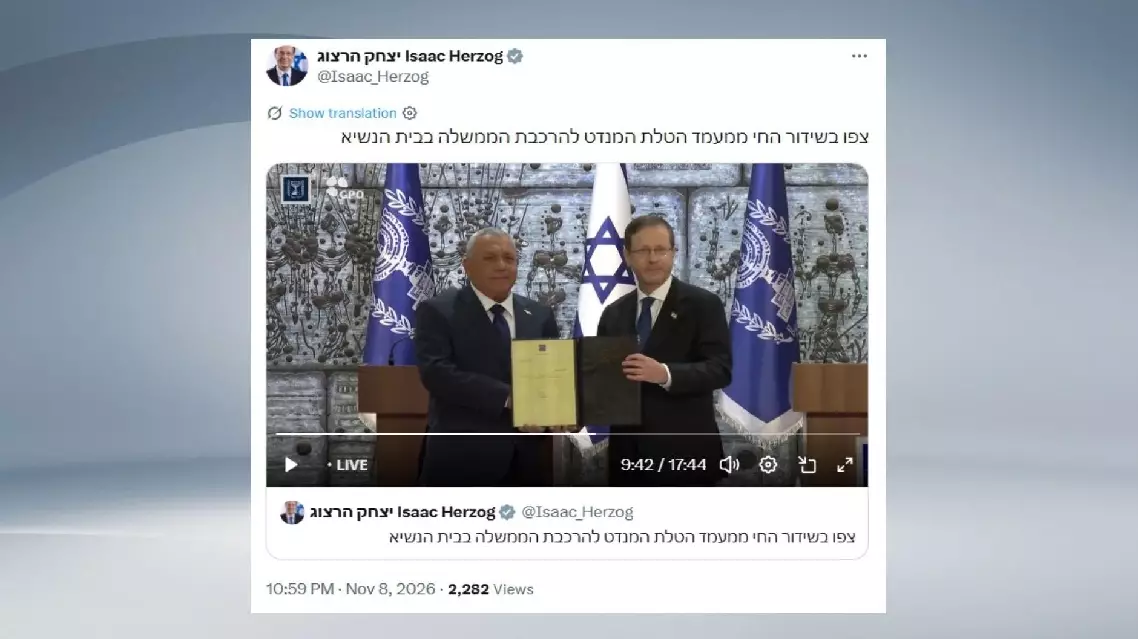
Israeli opposition leader Eisenkot officially receives mandate to form gov't
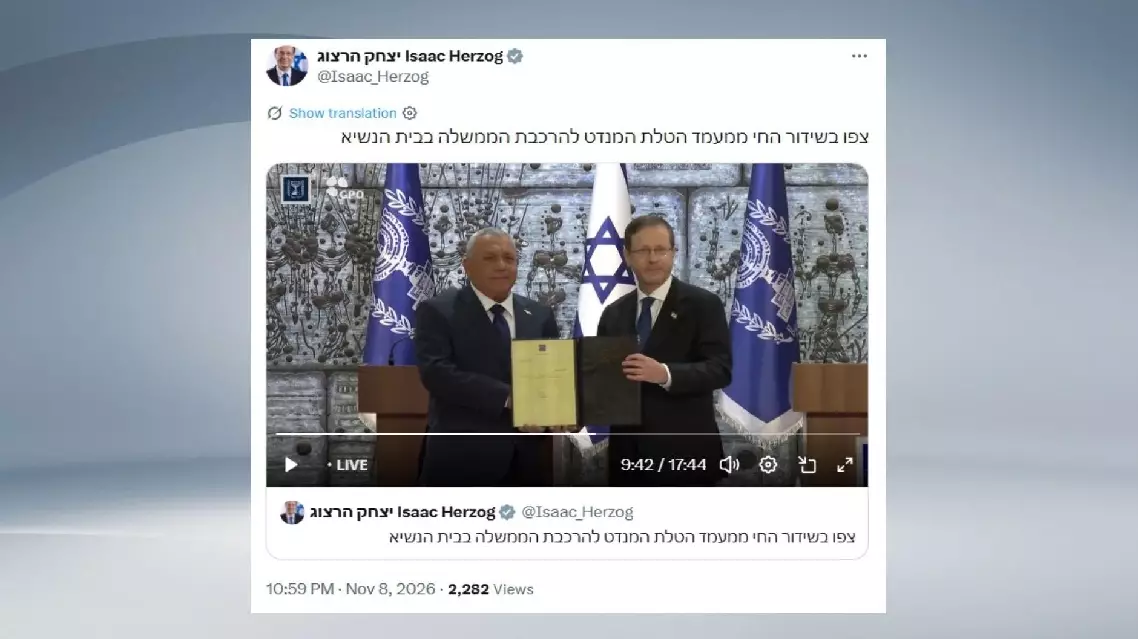
Israeli opposition leader Eisenkot officially receives mandate to form gov't