UNITED NATIONS (AP) — There is not much that diplomats can agree on these days. But if asked about the state of the world ahead of the annual meeting at the U.N. General Assembly, heads of state and government and ministers alike will describe a globe in massive turmoil.
With two escalating wars raging in Europe and the Middle East, a global economy in flux, and a shifting world order, international leaders are arriving in New York on Tuesday to an outlook that is massively different from this time last year.
“World leaders will be gathering at the United Nations in an era of deep uncertainty,” U.N. Secretary-General António Guterres told reporters recently. “At the same time, power is shifting. The world is changing. And our institutions must change with it.”
The last nine months alone saw the audacious U.S. military operation that plucked Venezuelan leader Nicolás Maduro from power before a deadly crackdown took place in Iran after tens of thousands of pro-government demonstrators took to the streets to challenge the country’s theocracy. Shortly after, the U.S. and Israel launched a joint attack against Tehran, kicking off an ongoing and spiraling conflict, now involving nearly every country in the region, which has since resulted in the effective closure of a critical waterway.
Meanwhile, the more than four-year war between Russia and Ukraine shows no end in sight as both sides have only ramped up military attacks in recent days while numerous diplomatic efforts to end the conflict have failed to break through.
In May, an outbreak of Ebola in the Democratic Republic of the Congo and Uganda raised further questions about the lack of international preparedness for the next pandemic. Deadly earthquakes in Venezuela and Colombia, as well as massive flash floods in Nepal and Tibet, highlighted the worsening impact of human-caused global warming on communities around the world.
In interviews leading up to the annual meeting, current and former ministers, ambassadors and officials from across the world painted a stark picture of the crises plaguing the international community and whether the U.N. and its 193 member states can address them. They spoke to the Associated Press on the condition of anonymity to speak freely about international concerns.
“It is a critical time to try to see if some of these issues can be resolved diplomatically,” former U.S. Ambassador Robert Wood, who served at the U.S. Mission to the United Nations under Republican and Democratic leaders, told The Associated Press. “The U.N. is really at an inflection point. There’s no doubt about it. It was bad last year. It’s not much better this year.”
One European diplomat and another official echoed that sentiment, saying that the world is not in a better place than it was this time last year and that things have become even more unstable. The diplomat and the officials, who were granted anonymity to speak freely about concerns, cited the various attacks on international law, the breakdown or lack of mediation efforts, and the continued failure to find global consensus on issues like climate and peace and security.
Beyond closely mining the speeches from headliners like U.S. President Donald Trump, Ukraine’s President Volodymyr Zelenskyy and Iran’s President Masoud Pezeshkian, officials are hoping to use the annual gathering to meet with adversaries and allies on the sidelines, seeking to break the logjam on issues like maritime security in the Strait of Hormuz and runaway artificial intelligence, among others.
Asked what they hoped to take away from the week of meetings, one Gulf official said it would be great to go back to a level of predictability on the world stage.
“In international relations, everything is changing: the friendships are changing, and alliances are changing,” Tone Kajzer, Slovenia's foreign minister, said. “But what remains constant is the interests and how to align those interests so that we live in peace and not in a permanent conflict.”
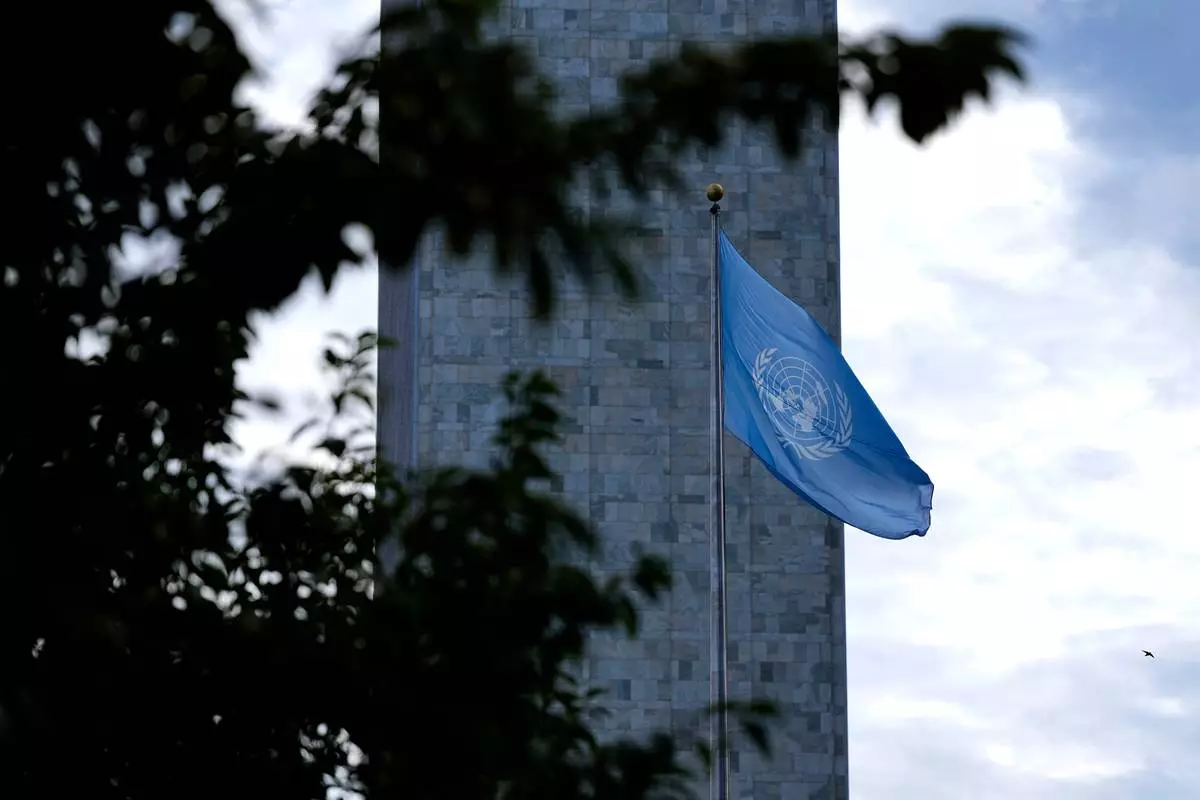
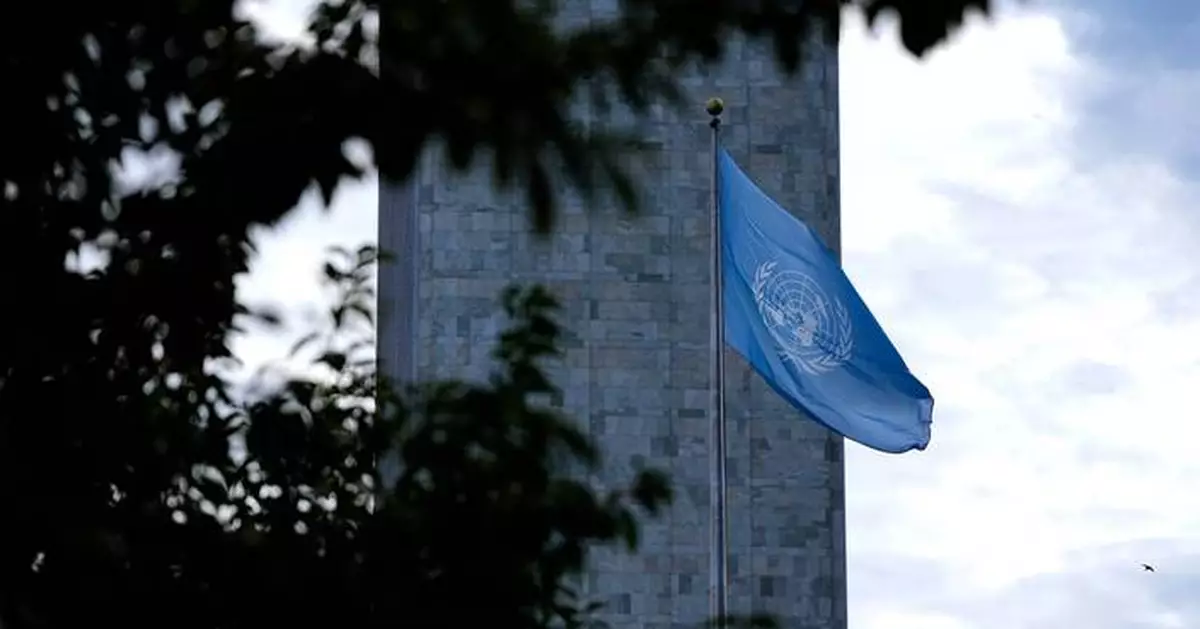
The flag of the United Nations flies during the United Nations General Assembly (UNGA) at the UN headquarters, Monday, Sept. 21, 2026. (Justin Tang/The Canadian Press via AP)
UNITED NATIONS (AP) — Under a global cloud of wars and bitter divisions, world leaders meet at the United Nations this week facing new fears that runaway artificial intelligence could threaten humanity even as climate shocks and escalating prices are already making life much tougher for hundreds of millions of people.
The annual high-level gathering at the U.N. General Assembly will also be consumed with major wars in Iran, Gaza, Ukraine,Sudan, Congo and Myanmar and a persisting question: Can the leaders do anything to end them?
And what can they do about the relentless rise of global warming threatening the future of the planet, the growing inequalities within and among nations, and shocks to the global economy as blocked shipping routes and supply chains increase the cost of living and slow growth?
The future of the United Nations will also definitely be on the agenda. At 81, its powers are still the victorious nations from World War II, not the 21st century’s major global players. The U.N.’s 193 member nations have agreed to a wide-ranging reform package that includes updating key institutions such as the powerful U.N. Security Council, where the U.S., Russia, China, Britain and France hold inordinate sway because of their veto power. Reform, however, is easier said than implemented.
Behind the scenes, there will be speculation about who will lead the United Nations next. Secretary-General Antonio Guterres’ second five-year term ends Dec. 31 and no clear successor has emerged.
There is still no question that the U.N. remains THE gathering place for its 193 member nations and their leaders. Some 130 heads of state and government are expected to speak at the General Assembly starting Tuesday along with dozens of ministers.
Among the headliners will be U.S. President Donald Trump and French President Emanuel Macron. Both will speak Tuesday after Guterres’ opening “state of the world” address. Ukraine’s President Volodymyr Zelenskyy and Iran’s President Masoud Pezeshkian speak Wednesday.
Israeli Prime Minister Benjamin Netanyahu — whom New York Mayor Zoran Mamdani wanted arrested for his treatment of Palestinians in Gaza until he learned he has no such authority — will address the assembly on Thursday. For a second year, Palestinian President Mahmoud Abbas won’t be coming to the U.N. because the U.S. has refused to give him a visa. He will nonetheless address the assembly by video the same day.
The United States, under its agreement with the U.N. to host the organization, is required to allow diplomats from all member nations to attend meetings.
Equally telling is who else isn’t coming. China’s President Xi Jinping is meeting Trump in Washington on Wednesday, yet he is skipping — some diplomats say snubbing — the U.N. gathering and sending a vice president instead. Russian President Vladimir Putin isn’t coming either, and Indian Prime Minister Narendra Modi has backed out.
France's U.N. ambassador, Jerome Bonnafont, said it is “extremely critical” for world leaders this week to support the U.N. as the place where the world’s nations meet — especially at a time of such polarization.
“We believe in multilateralism," he said, "and we believe that the high-level week is the occasion for countries in the world to reaffirm that they prefer cooperation and dialogue to confrontation.”
There is no doubt it’s been a tough year for the world body. It has been pushed to the sidelines when it comes to its key responsibility of ensuring international peace and security and trying to end major conflicts in the Mideast and Ukraine. The U.S. failure to pay billions of dollars in outstanding arrears has left the organization’s finances in rocky shape.
But veteran U.N. watcher Richard Gowan, the International Crisis Group’s global issues and institutions program director, says 2025 was even worse.
A year ago, he said, people were contemplating that Trump would use his U.N. speech to announce that the United States would leave the world organization. Trump didn’t announce a pullout last September and the U.N. muddled through the past 12 months with financial troubles that forced cutbacks to its peacekeeping operations and humanitarian aid.
In recent days, the U.S. paid $725 million of its dues to the U.N.’s regular operating budget for this year, enough to keep the Trump administration from losing its vote in the General Assembly. The payment was a strong indication Trump will keep the U.S. in the United Nations.
The U.N. is no longer “in freefall,” Gowan said, but it “is stuck in an open-ended or permanent crisis.” Put more graphically, he said, “The U.N. may not be in emergency care like it was last year, but it does seem to be trapped in a trauma center for the foreseeable future.”
Former U.N. deputy secretary-general Mark Malloch-Brown, a United Nations Foundation board member, said, “While the world still trusts the U.N., the global public is eager for change."
The future of artificial intelligence has pushed to the forefront of global concerns, with its speeding advances and the dawning recognition that there are no industry controls, let alone any global guardrails for a technology that has many advantages but also many disadvantages and unknowns.
Days before the global gathering, leaders of three major AI companies warned about the technology getting out of human control and called for a pause, but Trump dismissed their concerns as “a hoax,” and urged continued advances to keep the U.S. ahead of China.
The U.N. Security Council added a high-level meeting on AI to its agenda on Wednesday afternoon, a sign of the growing apprehension and need to address the issue. It was already slated to hold a high-level meeting on Ukraine with Zelenskyy on Wednesday morning.
For the U.N. chief, this will be his last assembly meeting with global leaders. He previewed his speech last week, telling U.N. reporters that power is shifting in “an era of deep uncertainty."
“At a time when the world faces three existential threats," he said, “international cooperation is more necessary than ever.”
Others will be vying for the spotlight on issues from rising sea levels and funding education to the fight for gender equality. Hundreds of private meetings will also convene in U.N. cubicles, hotels, diplomatic missions and restaurants.
Esther Brimmer, a senior fellow in global governance at the Council on Foreign Relations and former U.S. assistant secretary of state for international organization affairs in the Obama administration, said in-person meetings can help countries hash out ideas that get implemented months later.
She called the situation in 2026 “much more serious and complex than in decades past."
“With that said, I’m also not without hope as well,” Brimmer said. “Over the past decades we’ve learned a lot about international cooperation.”
Edith M. Lederer has covered international affairs for The Associated Press for more than a half century.
This story has been updated to correct the title of Indian Prime Minister Narendra Modi.
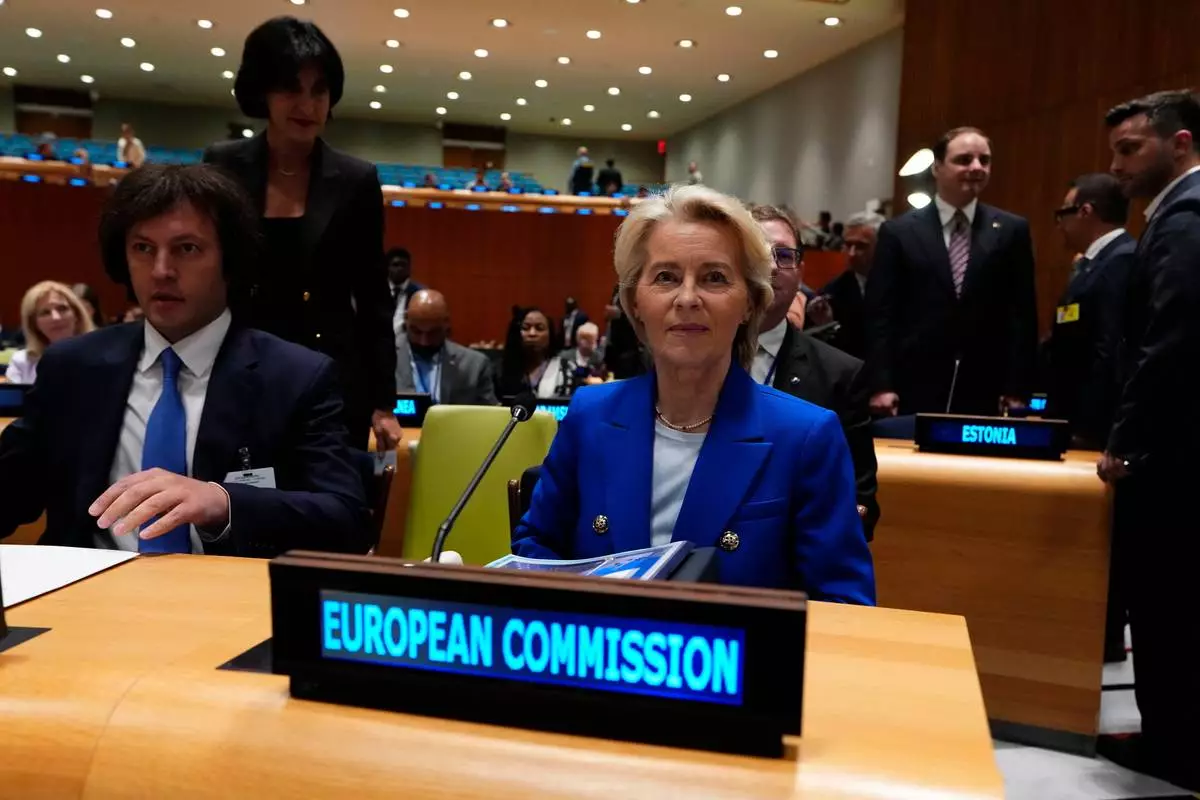
European Commission President Ursula von der Leyen attends the Partnership for Multilateralism Summit on the sidelines of the United Nations General Assembly (UNGA) at the UN headquarters, Monday, Sept. 21, 2026. (Justin Tang/The Canadian Press via AP)
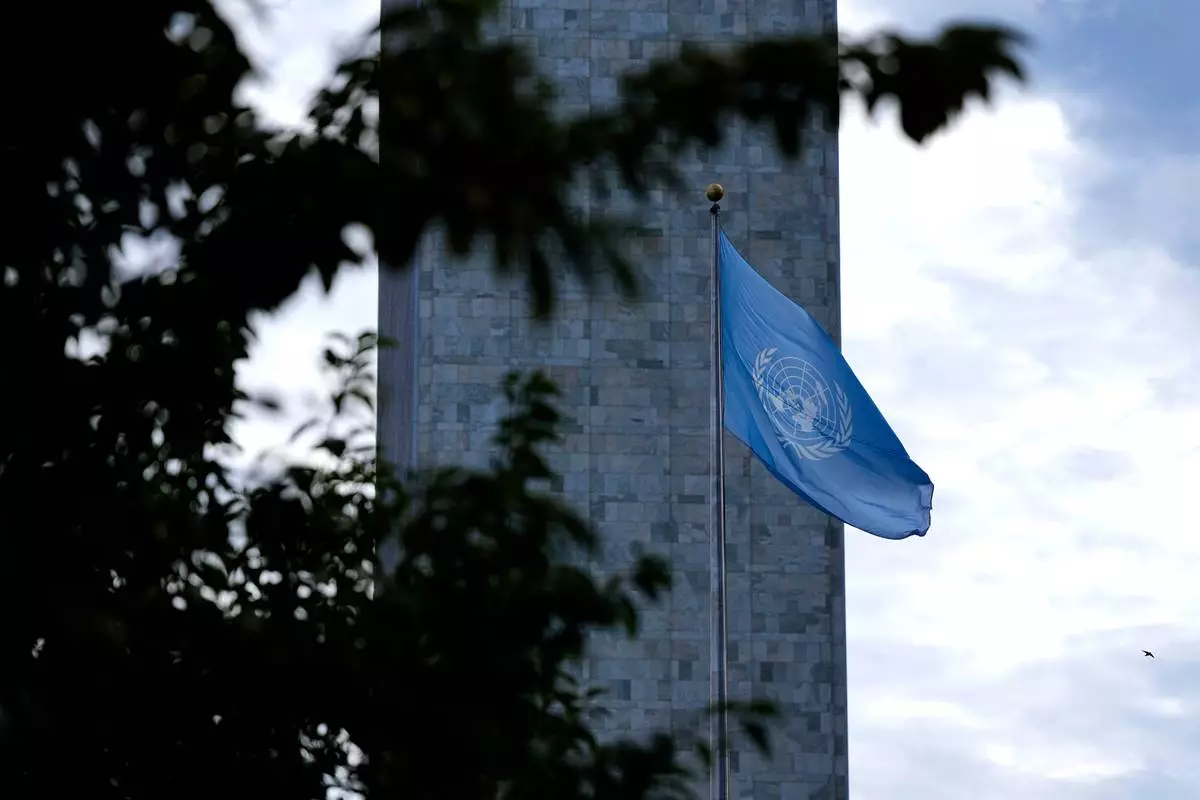
The flag of the United Nations flies during the United Nations General Assembly (UNGA) at the UN headquarters, Monday, Sept. 21, 2026. (Justin Tang/The Canadian Press via AP)
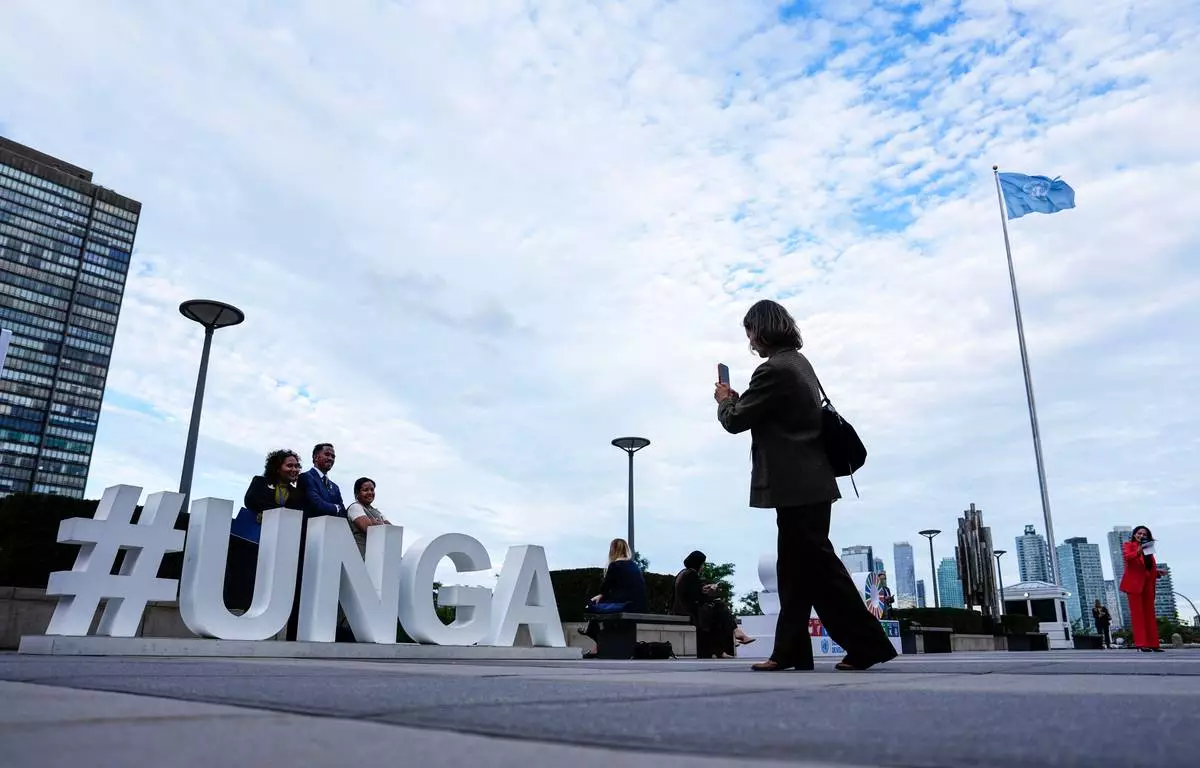
People pose as they arrive for the United Nations General Assembly (UNGA) at the UN headquarters, Monday, Sept. 21, 2026. (Justin Tang/The Canadian Press via AP)
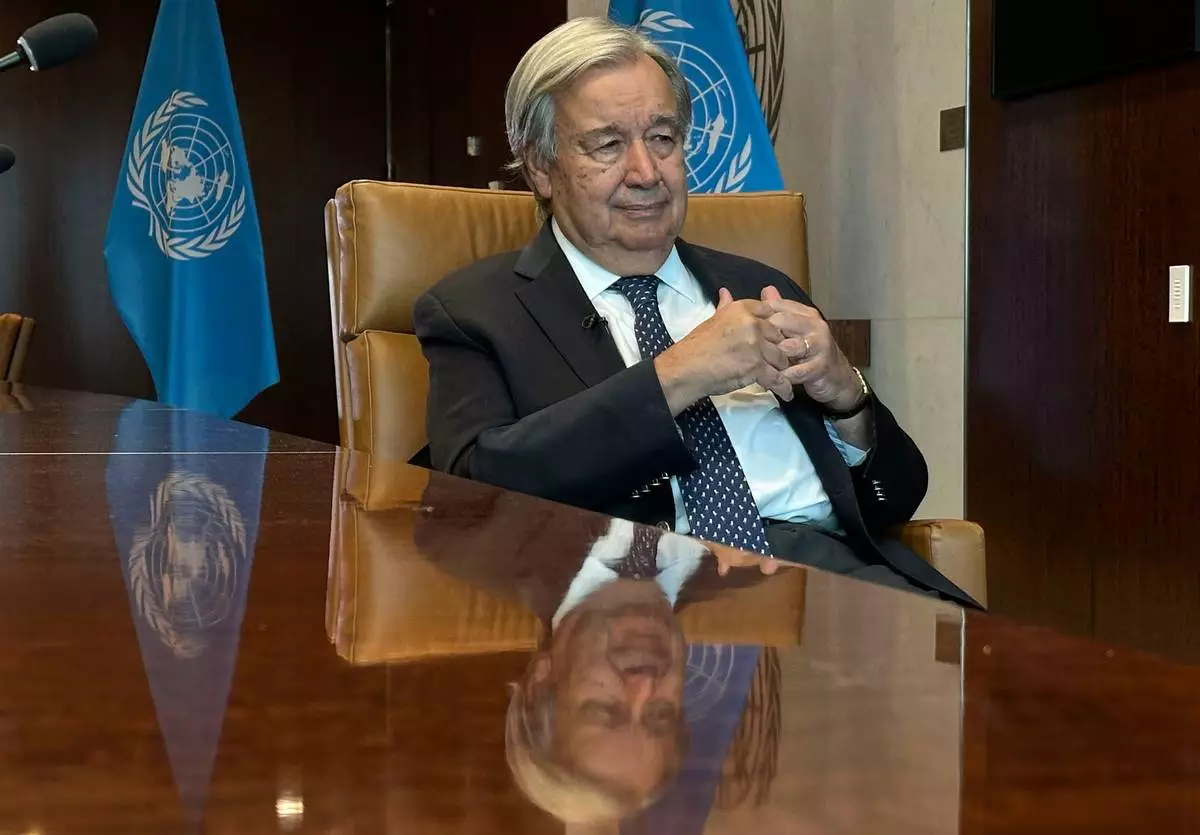
The United Nations Secretary-General Antonio Guterres speaks during an interview with The Associated Press at the United Nations headquarters, Thursday, Sept. 17, 2026. (AP Photo/David R Martin)