SAN FRANCISCO (AP) — Drew Gilbert homered and hit a two-run single, leading the San Francisco Giants past the Minnesota Twins 5-2 on Monday night to snap a three-game losing streak.
Brett Harris singled in a pair of runs for San Francisco in the first inning and Gilbert did the same in the second before leading off the fifth with his 11th homer.
Click to Gallery
Minnesota Twins' Aaron Sabato walks back to the dugout after striking out during the second inning of a baseball game against the San Francisco Giants in San Francisco, Monday, Sept. 21, 2026. (AP Photo/Jed Jacobsohn)
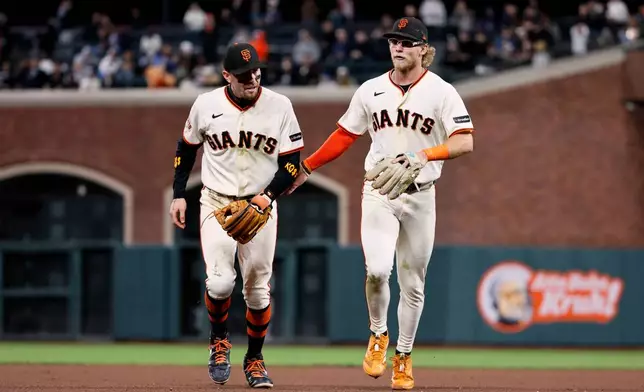
San Francisco Giants shortstop Christian Koss (50) and second baseman Jonah Cox (53) in the 7th inning during an MLB game against the Minnesota Twins at Oracle Park in San Francisco, Monday, Sept. 21, 2026. (Santiago Mejia/San Francisco Chronicle via AP)
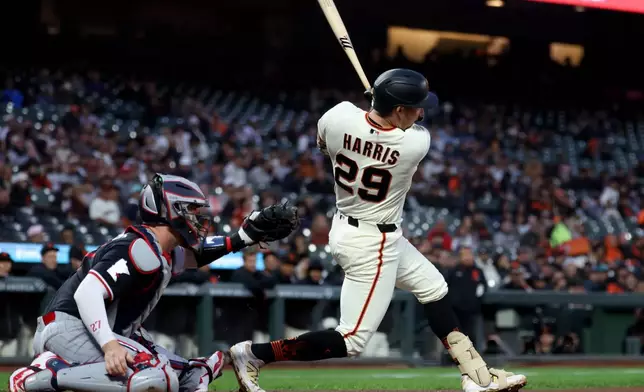
San Francisco Giants' Brett Harris (29) watches his two-run single in front of Minnesota Twins catcher Ryan Jeffers, left, during the first inning of a baseball game in San Francisco, Monday, Sept. 21, 2026. (AP Photo/Jed Jacobsohn)
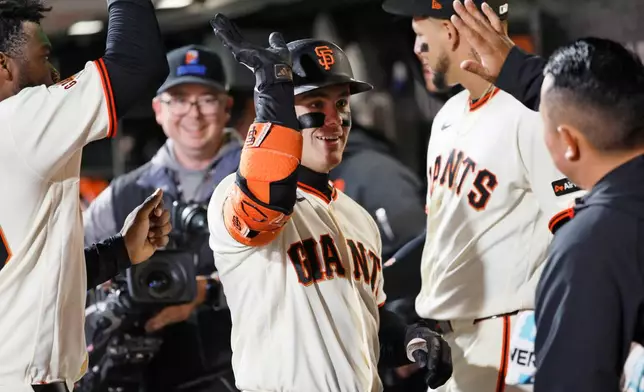
San Francisco Giants' Drew Gilbert, center, celebrates after his home run against the Minnesota Twins in the fifth inning of a baseball game in San Francisco, Monday, Sept. 21, 2026. (Santiago Mejia/San Francisco Chronicle via AP)
San Francisco Giants' Drew Gilbert watches his two-run single during the second inning of a baseball game against the Minnesota Twins in San Francisco, Monday, Sept. 21, 2026. (AP Photo/Jed Jacobsohn)
Brooks Lee homered to begin the fourth against Giants starter Blade Tidwell, who exited after one more batter because of elbow discomfort. He will undergo tests Tuesday.
Tidwell was coming off his first win with the Giants and second of his career last time out at St. Louis.
Tristan Beck (1-0) relieved and pitched 2 2/3 scoreless innings for the win. Trent Harris worked the ninth for his second save.
Bo Davidson had his first career hit and stolen base in the first — becoming the first Giants player to get a hit and steal a base in his major league debut since Red Tramback on Sept. 15, 1940.
The Giants opened their season-ending homestand, which concludes against the rival Los Angeles Dodgers this weekend, with their third victory in 10 games. They were swept by the two-time defending World Series champion Dodgers last weekend in Los Angeles.
Emmanuel Rodríguez homered in the eighth for the Twins.
Minnesota right-hander Zebby Matthews (9-11) struck out nine — his second-most this season behind 10 on July 31 at Seattle — and didn't walk a batter. He allowed five runs and eight hits over five innings.
Twins RHP Taj Bradley (11-6, 3.81 ERA) pitches the middle game of the series Tuesday night opposite Giants RHP Anthony Molina (3-1, 4.18).
See AP’s full MLB coverage here

Minnesota Twins' Aaron Sabato walks back to the dugout after striking out during the second inning of a baseball game against the San Francisco Giants in San Francisco, Monday, Sept. 21, 2026. (AP Photo/Jed Jacobsohn)
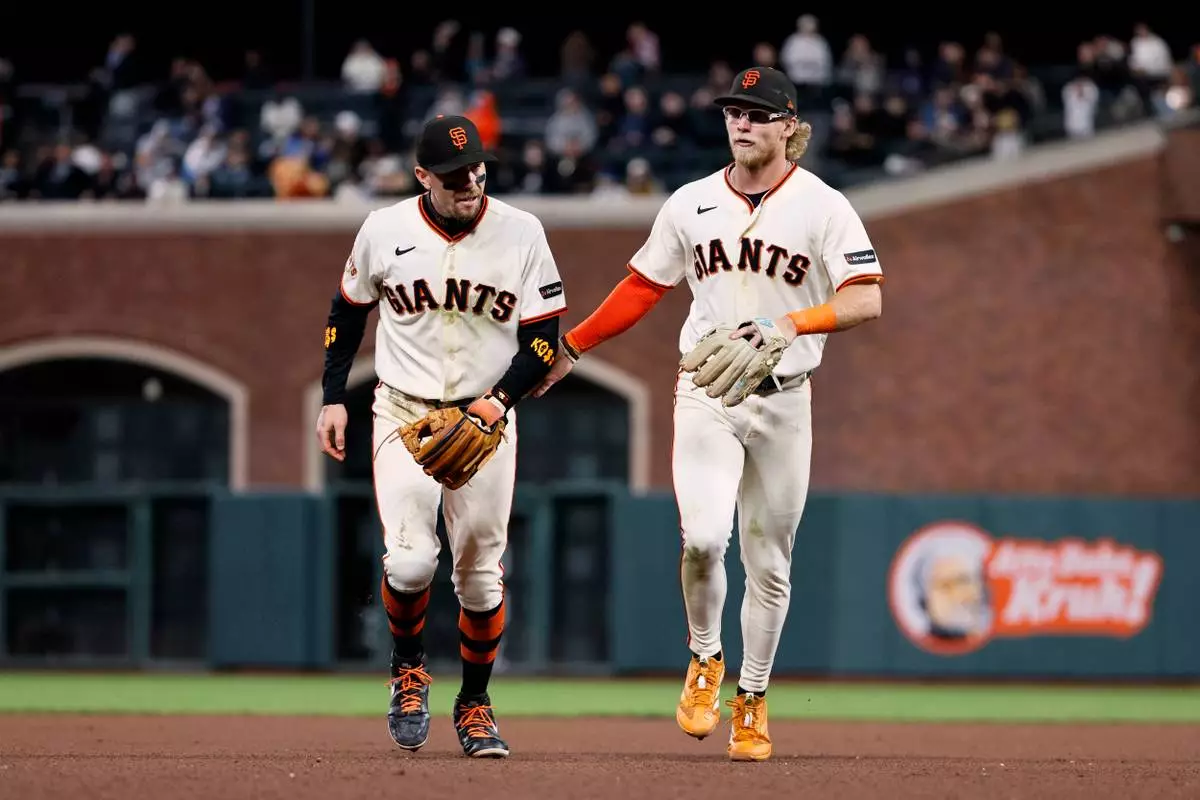
San Francisco Giants shortstop Christian Koss (50) and second baseman Jonah Cox (53) in the 7th inning during an MLB game against the Minnesota Twins at Oracle Park in San Francisco, Monday, Sept. 21, 2026. (Santiago Mejia/San Francisco Chronicle via AP)

San Francisco Giants' Brett Harris (29) watches his two-run single in front of Minnesota Twins catcher Ryan Jeffers, left, during the first inning of a baseball game in San Francisco, Monday, Sept. 21, 2026. (AP Photo/Jed Jacobsohn)
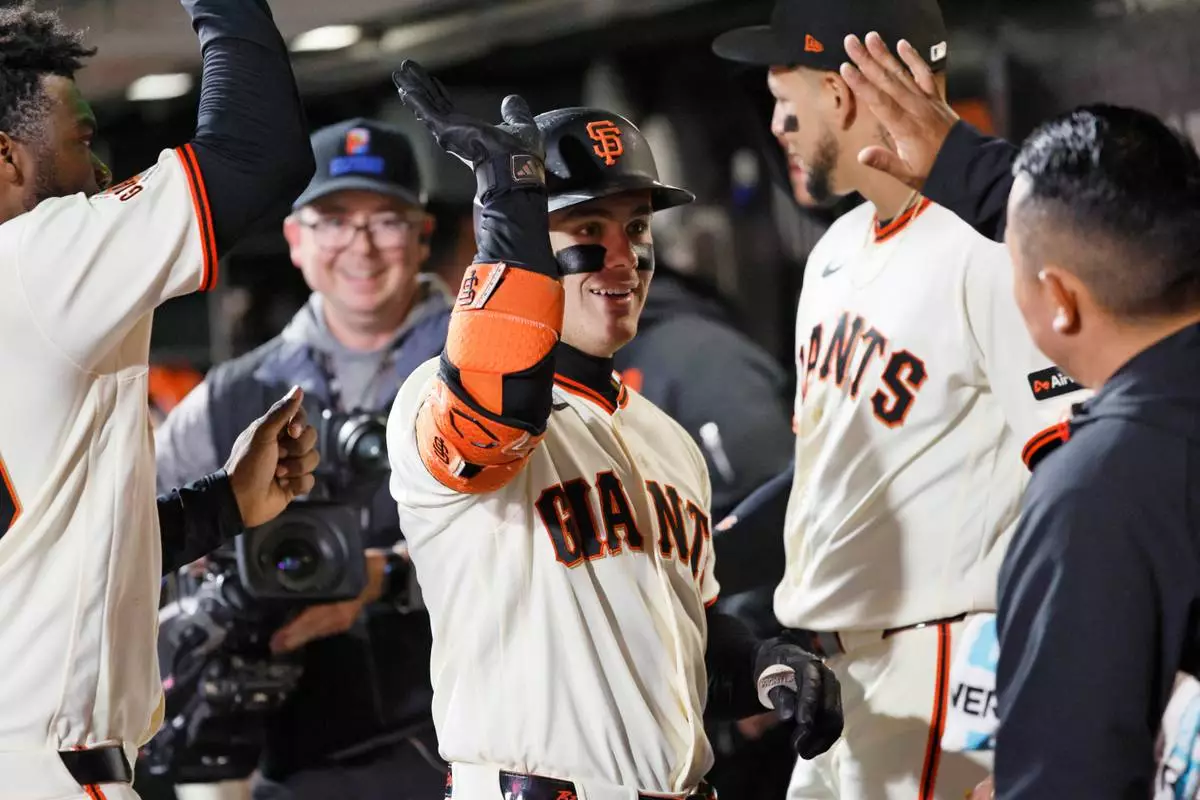
San Francisco Giants' Drew Gilbert, center, celebrates after his home run against the Minnesota Twins in the fifth inning of a baseball game in San Francisco, Monday, Sept. 21, 2026. (Santiago Mejia/San Francisco Chronicle via AP)

San Francisco Giants' Drew Gilbert watches his two-run single during the second inning of a baseball game against the Minnesota Twins in San Francisco, Monday, Sept. 21, 2026. (AP Photo/Jed Jacobsohn)
UNITED NATIONS (AP) — Under a global cloud of wars and bitter divisions, world leaders meet at the United Nations this week facing new fears that runaway artificial intelligence could threaten humanity even as climate shocks and escalating prices are already making life much tougher for hundreds of millions of people.
The annual high-level gathering at the U.N. General Assembly will also be consumed with major wars in Iran, Gaza, Ukraine,Sudan, Congo and Myanmar and a persisting question: Can the leaders do anything to end them?
And what can they do about the relentless rise of global warming threatening the future of the planet, the growing inequalities within and among nations, and shocks to the global economy as blocked shipping routes and supply chains increase the cost of living and slow growth?
The future of the United Nations will also definitely be on the agenda. At 81, its powers are still the victorious nations from World War II, not the 21st century’s major global players. The U.N.’s 193 member nations have agreed to a wide-ranging reform package that includes updating key institutions such as the powerful U.N. Security Council, where the U.S., Russia, China, Britain and France hold inordinate sway because of their veto power. Reform, however, is easier said than implemented.
Behind the scenes, there will be speculation about who will lead the United Nations next. Secretary-General Antonio Guterres’ second five-year term ends Dec. 31 and no clear successor has emerged.
There is still no question that the U.N. remains THE gathering place for its 193 member nations and their leaders. Some 130 heads of state and government are expected to speak at the General Assembly starting Tuesday along with dozens of ministers.
Among the headliners will be U.S. President Donald Trump and French President Emanuel Macron. Both will speak Tuesday after Guterres’ opening “state of the world” address. Ukraine’s President Volodymyr Zelenskyy and Iran’s President Masoud Pezeshkian speak Wednesday.
Israeli Prime Minister Benjamin Netanyahu — whom New York Mayor Zoran Mamdani wanted arrested for his treatment of Palestinians in Gaza until he learned he has no such authority — will address the assembly on Thursday. For a second year, Palestinian President Mahmoud Abbas won’t be coming to the U.N. because the U.S. has refused to give him a visa. He will nonetheless address the assembly by video the same day.
The United States, under its agreement with the U.N. to host the organization, is required to allow diplomats from all member nations to attend meetings.
Equally telling is who else isn’t coming. China’s President Xi Jinping is meeting Trump in Washington on Wednesday, yet he is skipping — some diplomats say snubbing — the U.N. gathering and sending a vice president instead. Russian President Vladimir Putin isn’t coming either, and Indian Prime Minister Narendra Modi has backed out.
France's U.N. ambassador, Jerome Bonnafont, said it is “extremely critical” for world leaders this week to support the U.N. as the place where the world’s nations meet — especially at a time of such polarization.
“We believe in multilateralism," he said, "and we believe that the high-level week is the occasion for countries in the world to reaffirm that they prefer cooperation and dialogue to confrontation.”
There is no doubt it’s been a tough year for the world body. It has been pushed to the sidelines when it comes to its key responsibility of ensuring international peace and security and trying to end major conflicts in the Mideast and Ukraine. The U.S. failure to pay billions of dollars in outstanding arrears has left the organization’s finances in rocky shape.
But veteran U.N. watcher Richard Gowan, the International Crisis Group’s global issues and institutions program director, says 2025 was even worse.
A year ago, he said, people were contemplating that Trump would use his U.N. speech to announce that the United States would leave the world organization. Trump didn’t announce a pullout last September and the U.N. muddled through the past 12 months with financial troubles that forced cutbacks to its peacekeeping operations and humanitarian aid.
In recent days, the U.S. paid $725 million of its dues to the U.N.’s regular operating budget for this year, enough to keep the Trump administration from losing its vote in the General Assembly. The payment was a strong indication Trump will keep the U.S. in the United Nations.
The U.N. is no longer “in freefall,” Gowan said, but it “is stuck in an open-ended or permanent crisis.” Put more graphically, he said, “The U.N. may not be in emergency care like it was last year, but it does seem to be trapped in a trauma center for the foreseeable future.”
Former U.N. deputy secretary-general Mark Malloch-Brown, a United Nations Foundation board member, said, “While the world still trusts the U.N., the global public is eager for change."
The future of artificial intelligence has pushed to the forefront of global concerns, with its speeding advances and the dawning recognition that there are no industry controls, let alone any global guardrails for a technology that has many advantages but also many disadvantages and unknowns.
Days before the global gathering, leaders of three major AI companies warned about the technology getting out of human control and called for a pause, but Trump dismissed their concerns as “a hoax,” and urged continued advances to keep the U.S. ahead of China.
The U.N. Security Council added a high-level meeting on AI to its agenda on Wednesday afternoon, a sign of the growing apprehension and need to address the issue. It was already slated to hold a high-level meeting on Ukraine with Zelenskyy on Wednesday morning.
For the U.N. chief, this will be his last assembly meeting with global leaders. He previewed his speech last week, telling U.N. reporters that power is shifting in “an era of deep uncertainty."
“At a time when the world faces three existential threats," he said, “international cooperation is more necessary than ever.”
Others will be vying for the spotlight on issues from rising sea levels and funding education to the fight for gender equality. Hundreds of private meetings will also convene in U.N. cubicles, hotels, diplomatic missions and restaurants.
Esther Brimmer, a senior fellow in global governance at the Council on Foreign Relations and former U.S. assistant secretary of state for international organization affairs in the Obama administration, said in-person meetings can help countries hash out ideas that get implemented months later.
She called the situation in 2026 “much more serious and complex than in decades past."
“With that said, I’m also not without hope as well,” Brimmer said. “Over the past decades we’ve learned a lot about international cooperation.”
Edith M. Lederer has covered international affairs for The Associated Press for more than a half century.
This story has been updated to correct the title of Indian Prime Minister Narendra Modi.
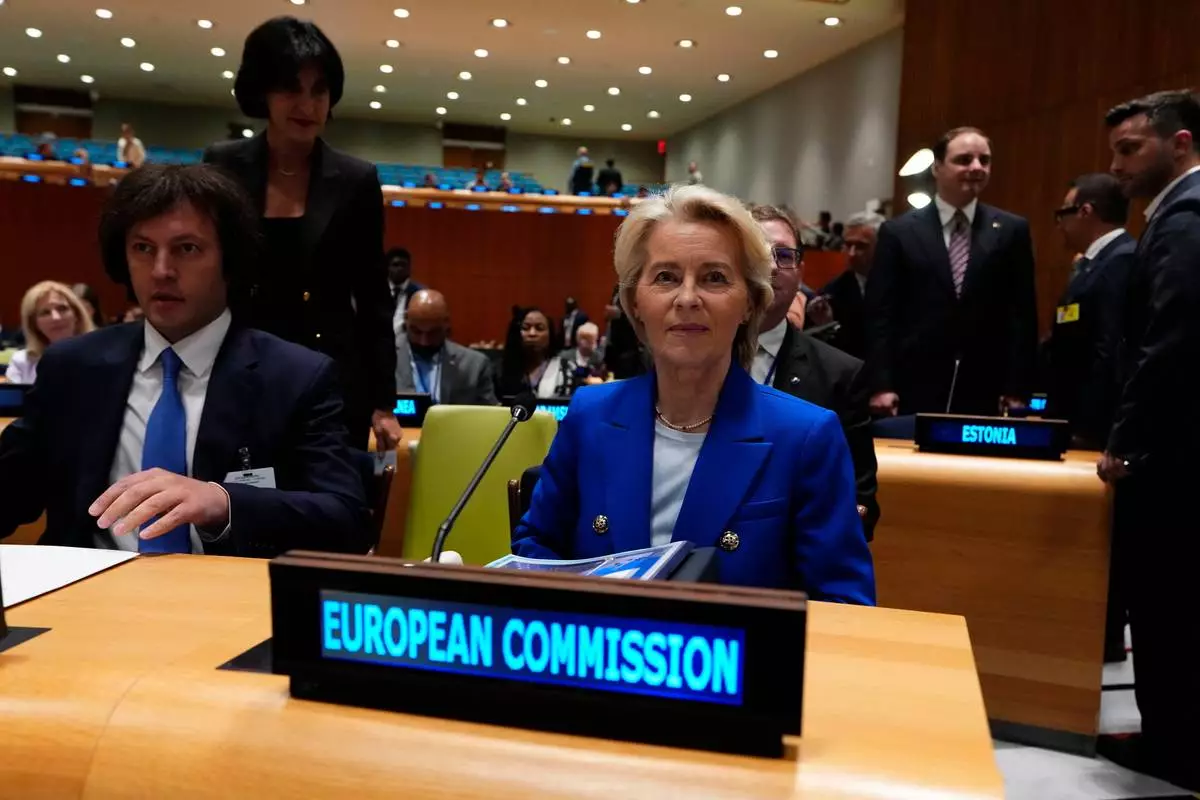
European Commission President Ursula von der Leyen attends the Partnership for Multilateralism Summit on the sidelines of the United Nations General Assembly (UNGA) at the UN headquarters, Monday, Sept. 21, 2026. (Justin Tang/The Canadian Press via AP)
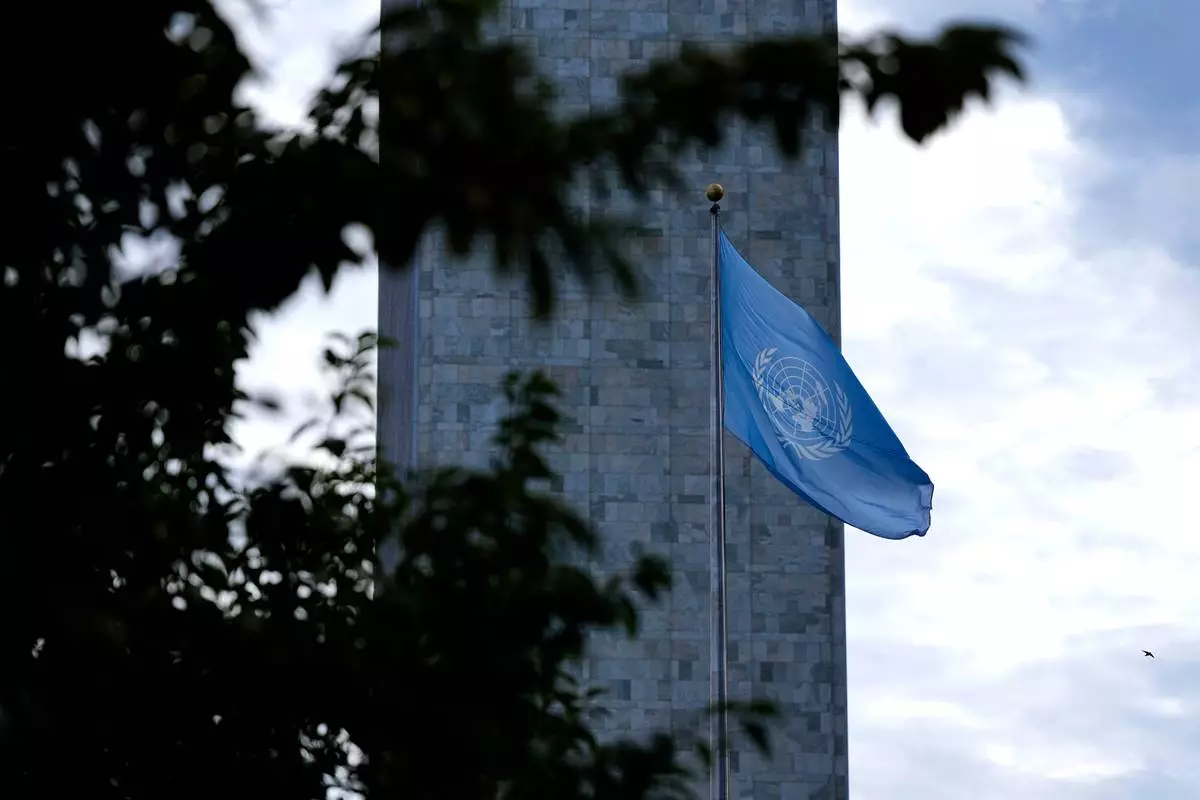
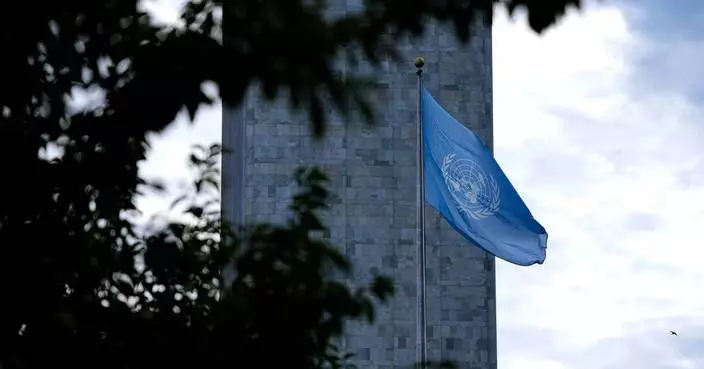
The flag of the United Nations flies during the United Nations General Assembly (UNGA) at the UN headquarters, Monday, Sept. 21, 2026. (Justin Tang/The Canadian Press via AP)
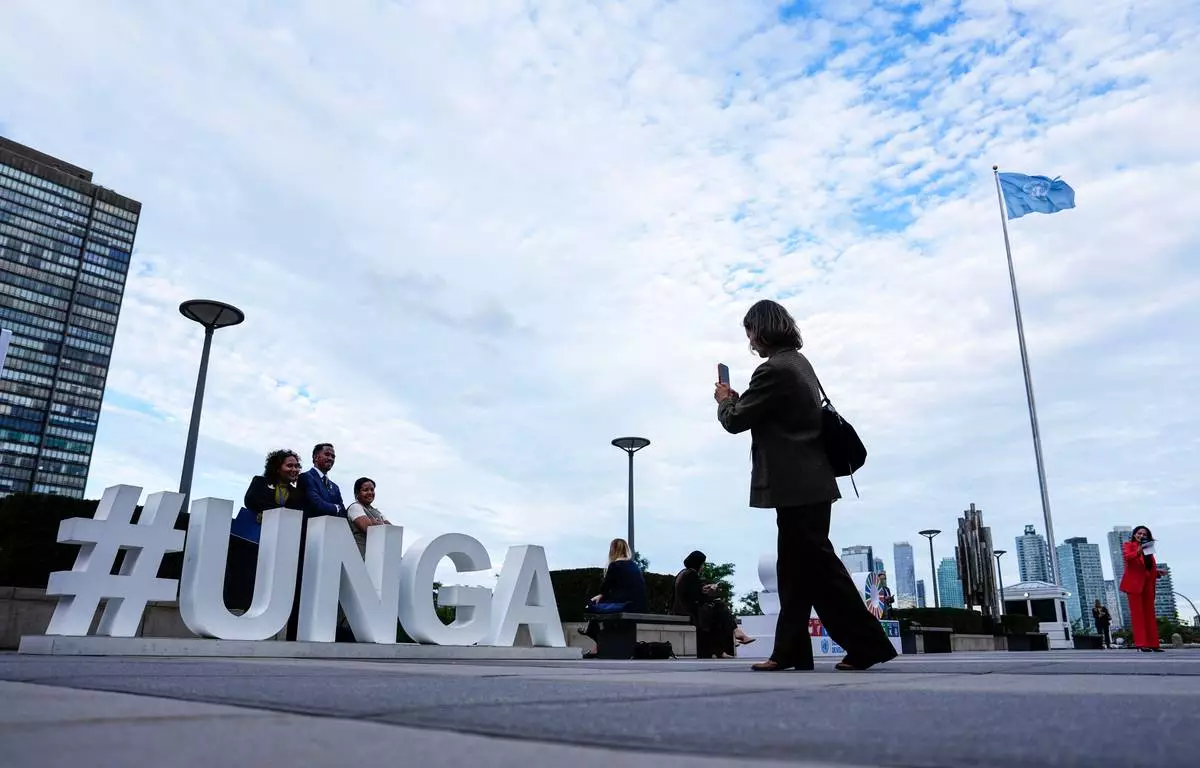
People pose as they arrive for the United Nations General Assembly (UNGA) at the UN headquarters, Monday, Sept. 21, 2026. (Justin Tang/The Canadian Press via AP)
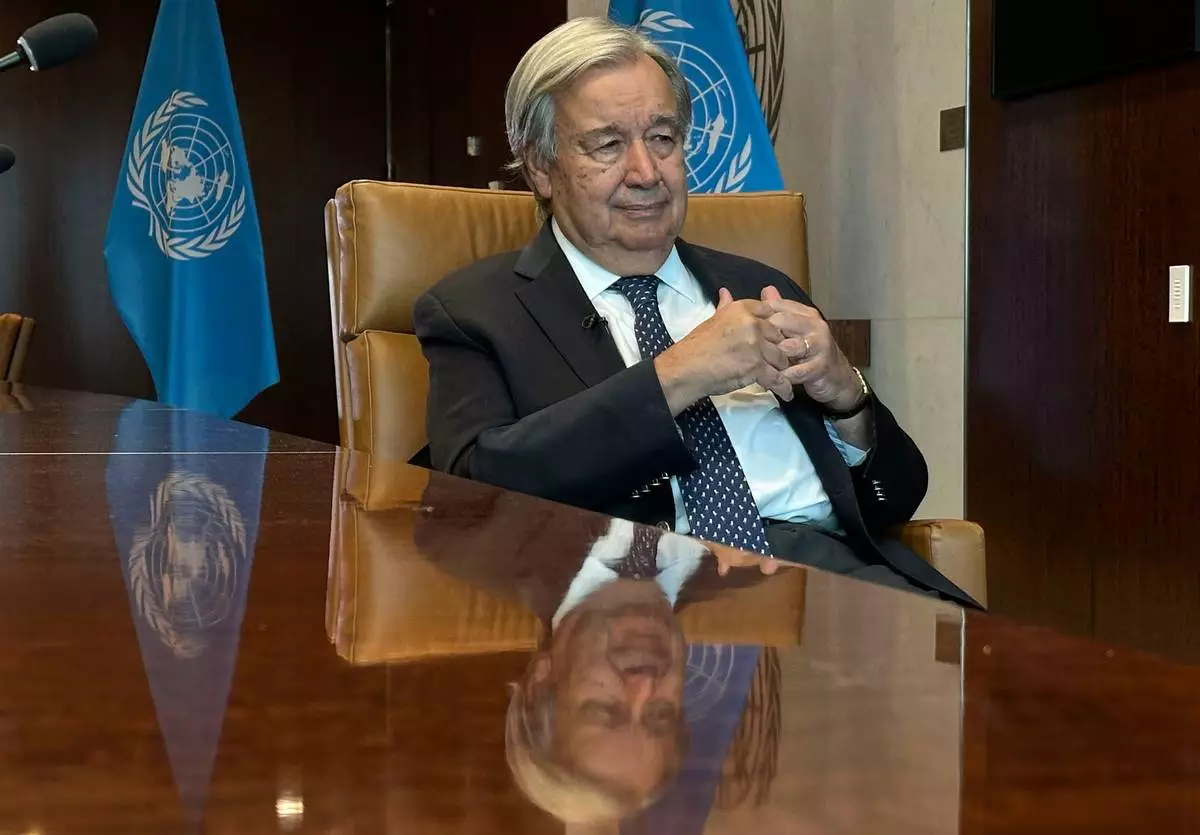
The United Nations Secretary-General Antonio Guterres speaks during an interview with The Associated Press at the United Nations headquarters, Thursday, Sept. 17, 2026. (AP Photo/David R Martin)