HERZOGENAURACH, Germany (AP) — Jürgen Klopp is having an effect on Germany's players even before his first game as coach.
The former Liverpool manager has called up 16 uncapped players in a supersized first roster of 44 for his first four Nations League games as he tried to reboot Germany following another disappointing World Cup.
Click to Gallery
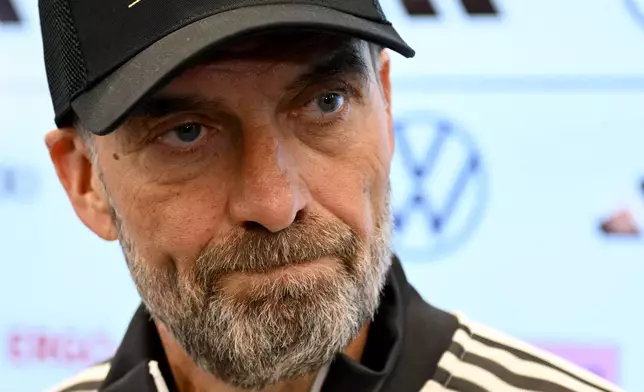
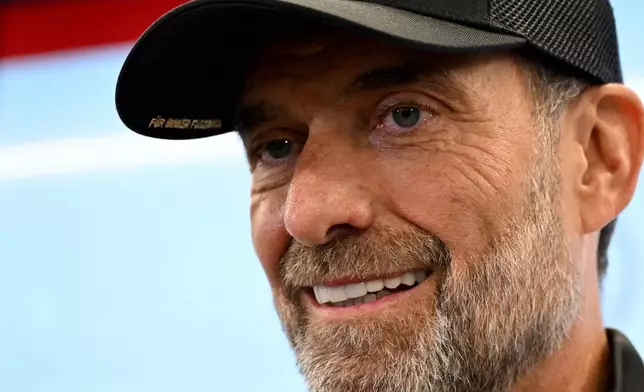
Head coach of the German national soccer team Juergen Klopp holds a press conference one week ahead of their first Nations League match, in Frankfurt, Germany, Thursday Sept. 17. 2026. (Boris Roessler/dpa via AP)
Head coach of the German national soccer team Juergen Klopp speaks during a press conference one week ahead of their first Nations League match, in Frankfurt, Germany, Thursday Sept. 17. 2026. (Boris Roessler/dpa via AP)
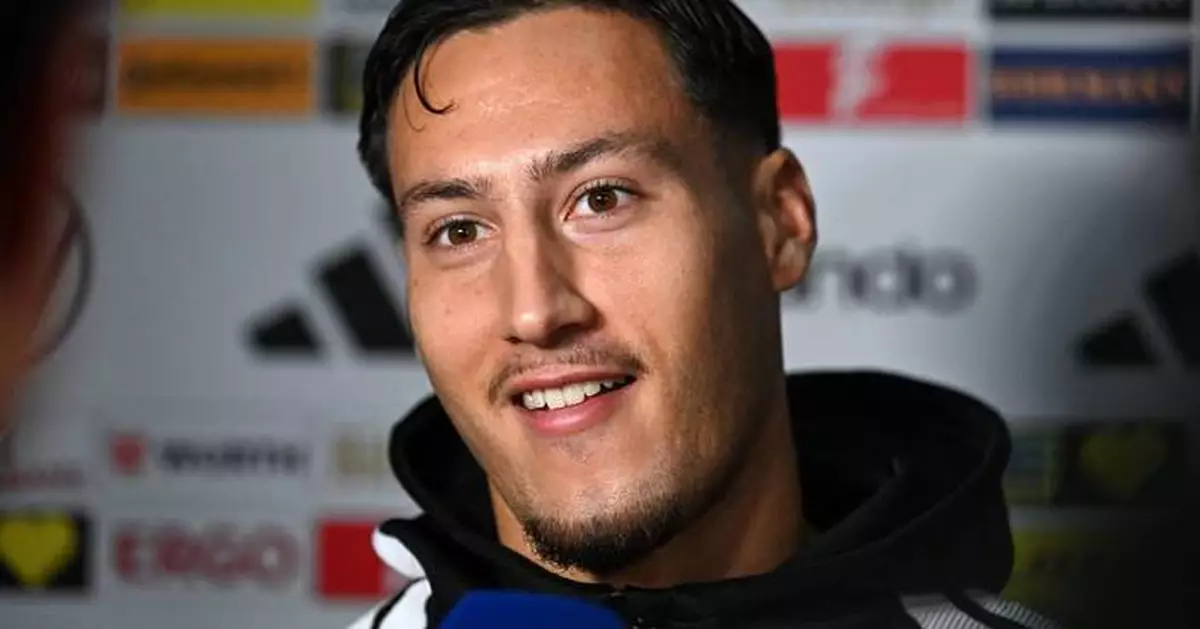
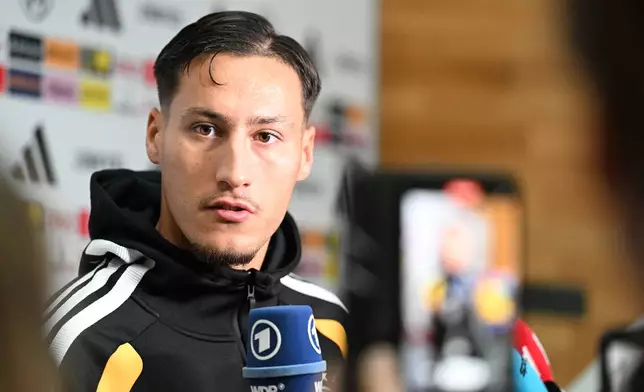
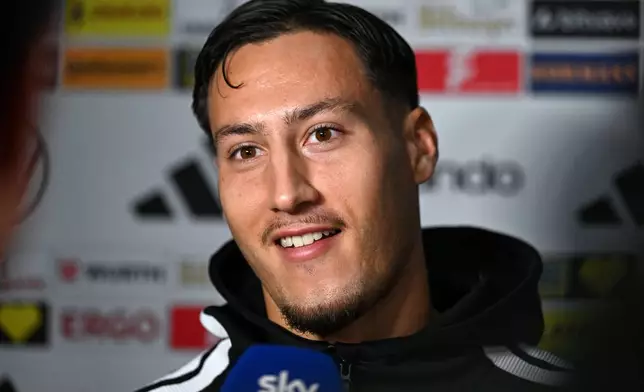
Germany's Younes Ebnoutalib speaks during a press conference ahead of their match against Netherlands in the Nations League, in Herzogenaurach, Germany, Tuesday Sept. 22, 2026. (Federico Gambarini/dpa via AP)
Germany's Younes Ebnoutalib speaks during a press conference ahead of their match against Netherlands in the Nations League, in Herzogenaurach, Germany, Tuesday Sept. 22, 2026. (Federico Gambarini/dpa via AP)
Some newcomers say having Klopp in charge gives them a boost.
Forward Younes Ebnoutalib credited Klopp with helping persuade him to pick Germany, where he was born, over Morocco, which he'd represented as a youth player.
“I am very, very proud. There were also talks with Morocco, but they weren’t as intense as with Jürgen,” the Eintracht Frankfurt striker said Tuesday at the Germany training camp. “I’m just proud. You have to say, he is one of the best coaches in the world. And when he calls, you can’t say no.”
Defender Philipp Treu is one of four Freiburg players, all on track to make a national team debut after reaching the Europa League final last season.
They could get their chance in Nations League games against the Netherlands on Thursday and Greece on Sunday.
“It’s definitely something where you say, ‘Hey, cool, that I can now train under Jürgen Klopp’,” Treu said. “And that’s why I’m just looking forward to being on the pitch with him later, soaking it all in, and just giving it my all.”
Klopp’s taken the unusual approach of rotating between two different squads, with a second batch of players set to come in against Serbia on Oct. 1 and Greece on Oct. 4.
Treu's fellow Freiburg defender Max Rosenfelder said he felt a connection with Klopp straight away.
“I believe that he is simply a very, very special person,” he said. “I think he’s someone who can connect and engage people very well.”
See AP’s full soccer coverage here
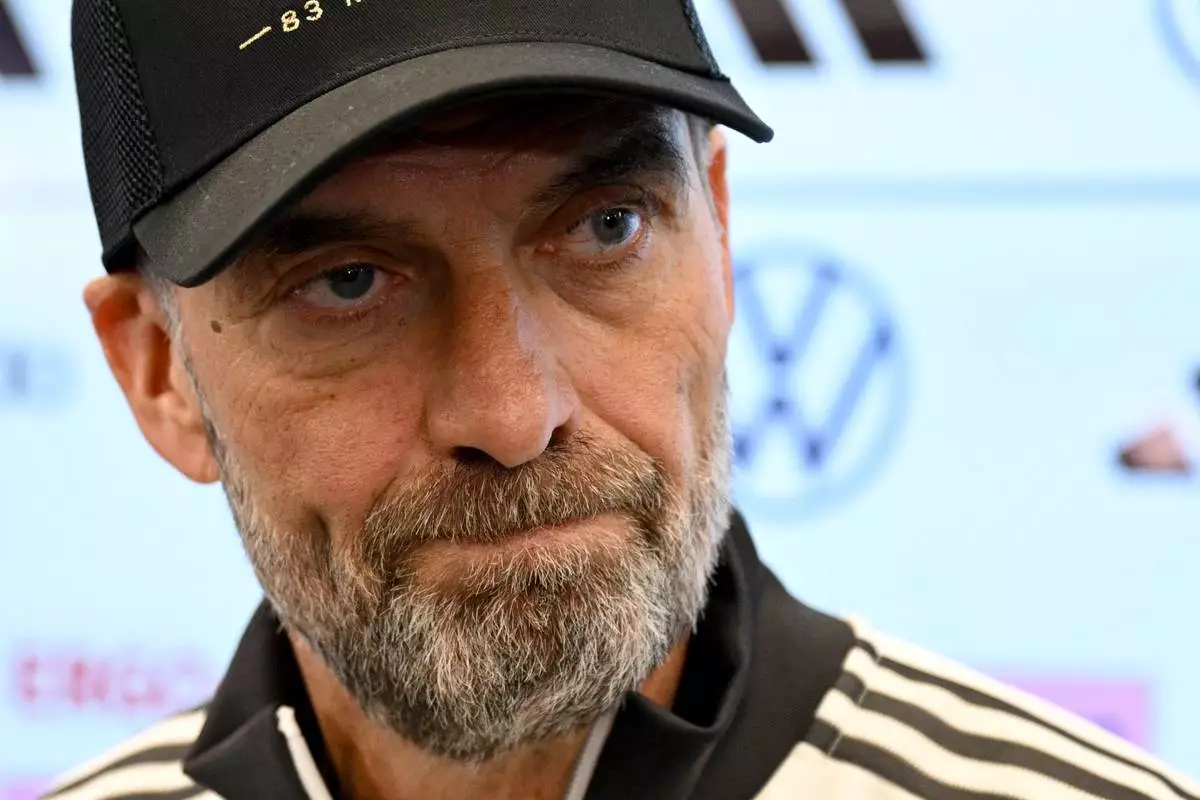
Head coach of the German national soccer team Juergen Klopp holds a press conference one week ahead of their first Nations League match, in Frankfurt, Germany, Thursday Sept. 17. 2026. (Boris Roessler/dpa via AP)
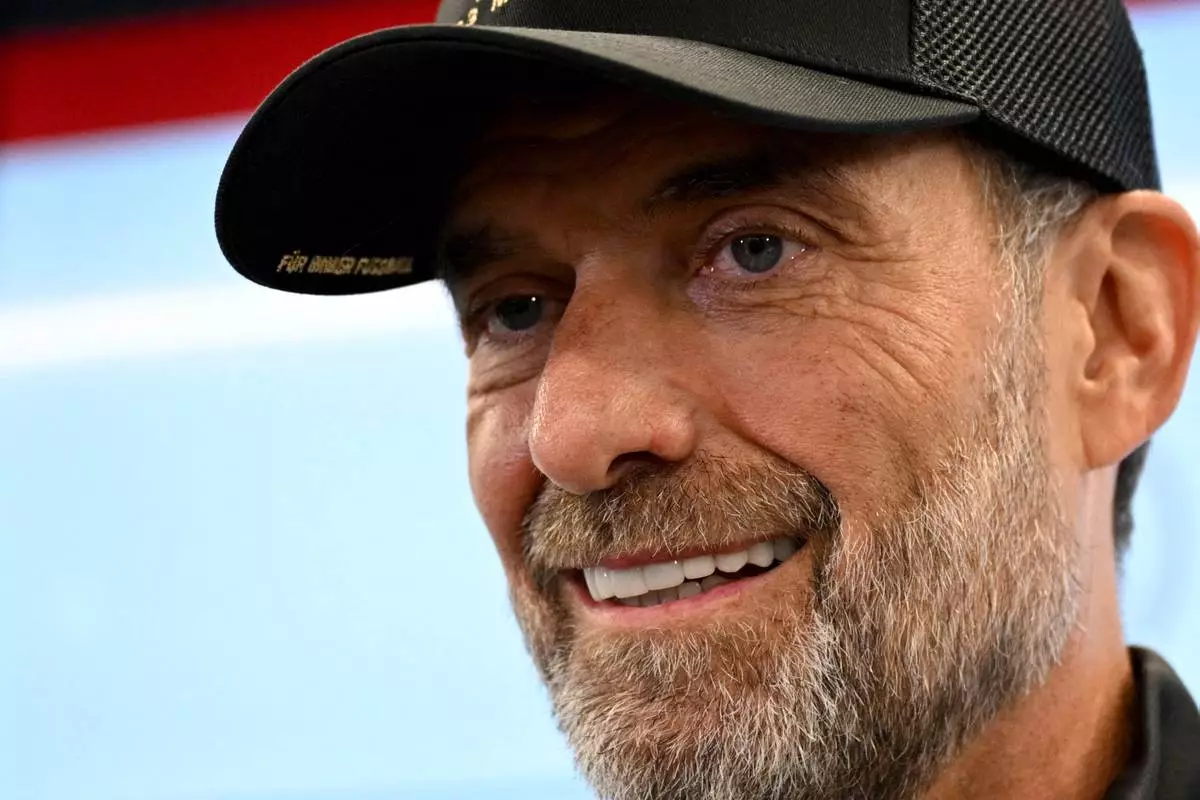
Head coach of the German national soccer team Juergen Klopp speaks during a press conference one week ahead of their first Nations League match, in Frankfurt, Germany, Thursday Sept. 17. 2026. (Boris Roessler/dpa via AP)
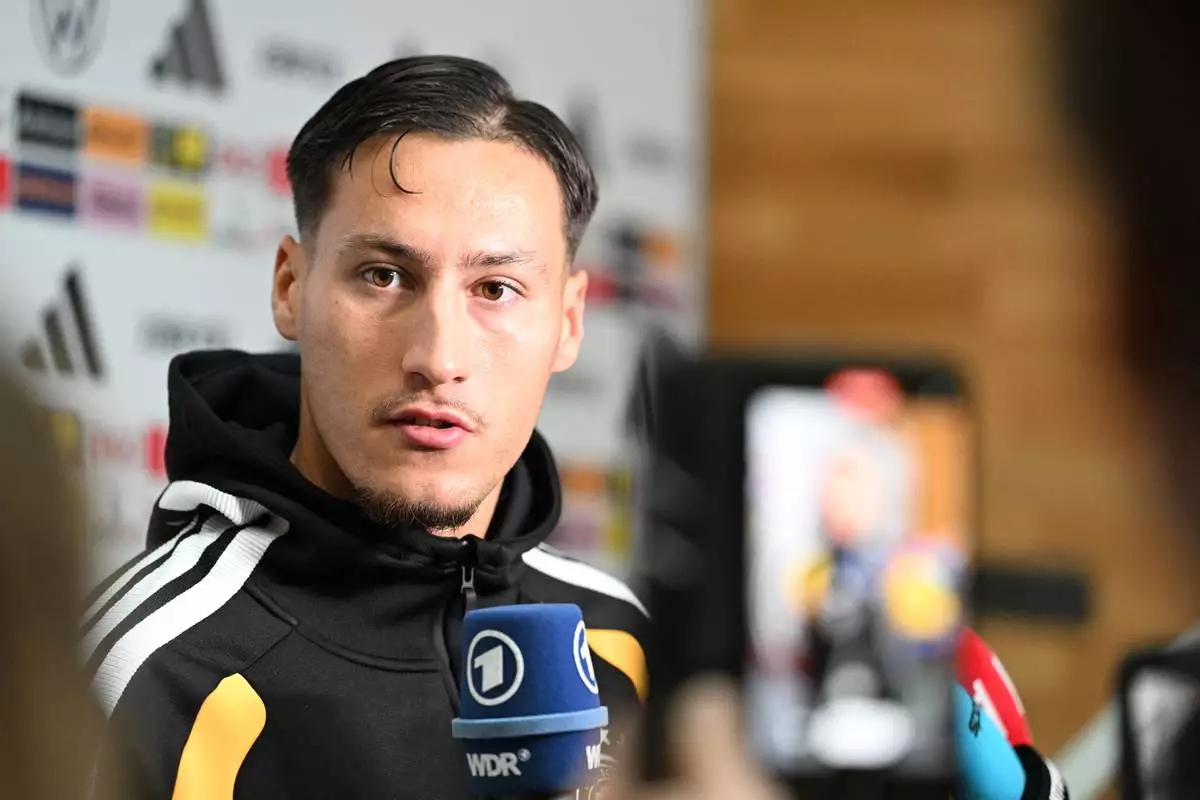
Germany's Younes Ebnoutalib speaks during a press conference ahead of their match against Netherlands in the Nations League, in Herzogenaurach, Germany, Tuesday Sept. 22, 2026. (Federico Gambarini/dpa via AP)
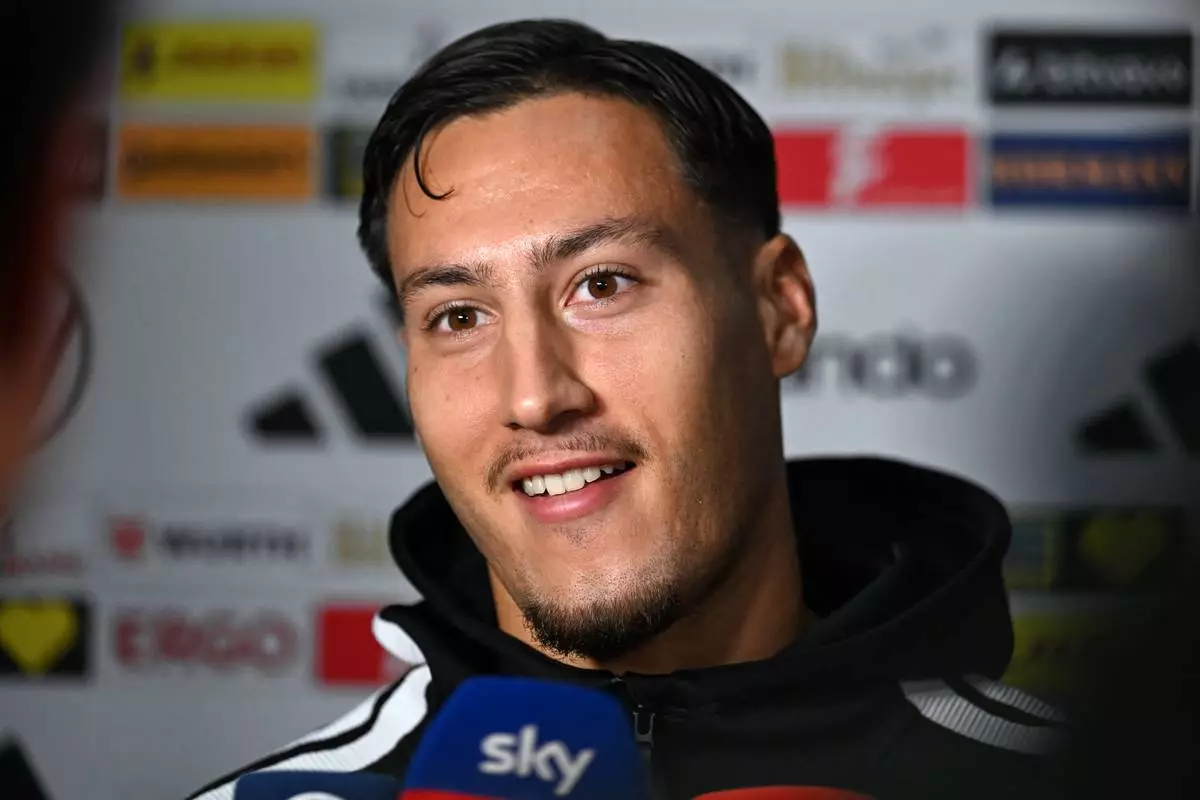
Germany's Younes Ebnoutalib speaks during a press conference ahead of their match against Netherlands in the Nations League, in Herzogenaurach, Germany, Tuesday Sept. 22, 2026. (Federico Gambarini/dpa via AP)
UNITED NATIONS (AP) — U.N. Secretary-General Antonio Guterres pleaded for “a world built on interdependence” as he made his final address Tuesday to a yearly gathering of world leaders convening to face a formidable menu of challenges — from climate change and war to inequality and artificial intelligence.
The U.N. leader has long implored leaders not to give up on cooperation and shared decision-making in the face of accelerating global challenges and increasing great-powers competition. Tuesday’s message at the U.N. General Assembly took on additional urgency because he leaves office at the end of this year.
“The fault lines in our world are widening,” he said, citing raging wars, risingtemperatures and artificial intelligence, among other matters. Instead of letting the future continue to veer toward fragmentation, transactionalism and mistrust, he called for “a world built on interdependence – and sustained by a dense web of economic, political, social and technological connections.”
His speech opened the main portion of the world's biggest diplomatic meeting of the year. Leaders from the U.N.'s 193 member countries address each other and the international community and air their hopes, plans and grievances.
Guterres also rebuked might-makes-right thinking, telling superpowers to recognize “that their power isn’t so super.” Recent years have made it clear that “military power alone cannot secure peace,” he said.
The annual high-level gathering at the U.N. General Assembly will be consumed with wars in Iran, Gaza, Ukraine,Sudan, Congo and Myanmar and a persisting question: Can the leaders do anything to end them?
And what can they do about the relentless rise of global warming threatening the future of the planet, the growing inequalities within and among nations, and shocks to the global economy as blocked shipping routes and supply chains increase the cost of living and slow growth?
It is power U.S. President Donald Trump will speak of later Tuesday morning. He will explain how he’s using American power to confront longstanding challenges and reshape the world to benefit America, according to a White House official, who spoke on condition of anonymity to preview Trump’s prepared remarks.
Trump will also discuss efforts to prevent the U.N. and other globalist institutions from infringing on American sovereignty.
The future of the United Nations will also be on the agenda. At 81, its powers are still the victorious nations from World War II, not the 21st century’s major global players. The U.N.’s 193 member nations have agreed to a wide-ranging reform package that includes updating key institutions such as the powerful U.N. Security Council, where the U.S., Russia, China, Britain and France hold inordinate sway because of their veto power. Reform, however, is easier said than implemented.
Behind the scenes, there will be speculation about who will lead the United Nations next. Guterres’ second five-year term ends Dec. 31 and no clear successor has emerged.
Guterres closed his speech by acknowledging the forthcoming departure and vowing to “never, ever give up” on the values for which the U.N. stands.
“Wherever I will be, whatever I will be doing, I will keep championing the conviction that peace is possible,” he said, before leaving the rostrum amid a sustained, standing ovation. He put his hand on his heart.
There is still no question that the U.N. remains the key gathering place for its 193 member nations and their leaders. Some 130 heads of state and government are expected to speak at the General Assembly starting Tuesday along with dozens of ministers.
Among the headliners: Trump and French President Emmanuel Macron. Both will speak Tuesday after Guterres’ opening “state of the world” address. Ukraine’s President Volodymyr Zelenskyy and Iran’s President Masoud Pezeshkian speak Wednesday.
Israeli Prime Minister Benjamin Netanyahu — whom New York Mayor Zoran Mamdani wanted arrested for his treatment of Palestinians in Gaza until he learned he has no such authority — will address the assembly on Thursday. For a second year, Palestinian President Mahmoud Abbas won’t be coming to the U.N. because the U.S. has refused to give him a visa. He will nonetheless address the assembly by video the same day.
The United States, under its agreement with the U.N. to host the organization, is required to allow diplomats from all member nations to attend meetings.
Equally telling is who else isn’t coming. China’s President Xi Jinping is meeting Trump in Washington on Wednesday, yet he is skipping — some diplomats say snubbing — the U.N. gathering and sending a vice president instead. Russian President Vladimir Putin isn’t coming either, and Indian President Narendra Modi has backed out.
France's U.N. ambassador, Jerome Bonnafont, said it is “extremely critical” for world leaders this week to support the U.N. as the place where the world’s nations meet — especially at a time of such polarization.
“We believe in multilateralism," he said, "and we believe that the high-level week is the occasion for countries in the world to reaffirm that they prefer cooperation and dialogue to confrontation.”
There is no doubt it’s been a tough year for the world body. It has been pushed to the sidelines when it comes to its key responsibility of ensuring international peace and security and trying to end major conflicts in the Mideast and Ukraine. The U.S. failure to pay billions of dollars in outstanding arrears has left the organization’s finances in rocky shape.
Former U.N. deputy secretary-general Mark Malloch-Brown, a United Nations Foundation board member, said, “While the world still trusts the U.N., the global public is eager for change."
The future of artificial intelligence has pushed to the forefront of global concerns, with its speeding advances and the dawning recognition that there are no industry controls, let alone any global guardrails for a technology that has many advantages but also many disadvantages and unknowns.
Days before the global gathering, leaders of three major AI companies warned about the technology getting out of human control and called for a pause, but Trump dismissed their concerns as “a hoax,” and urged continued advances to keep the U.S. ahead of China.
The U.N. Security Council added a high-level meeting on AI to its agenda on Wednesday afternoon, a sign of the growing apprehension and need to address the issue. It was already slated to hold a high-level meeting on Ukraine with Zelenskyy on Wednesday morning.
Edith M. Lederer has covered international affairs for The Associated Press for more than a half century.
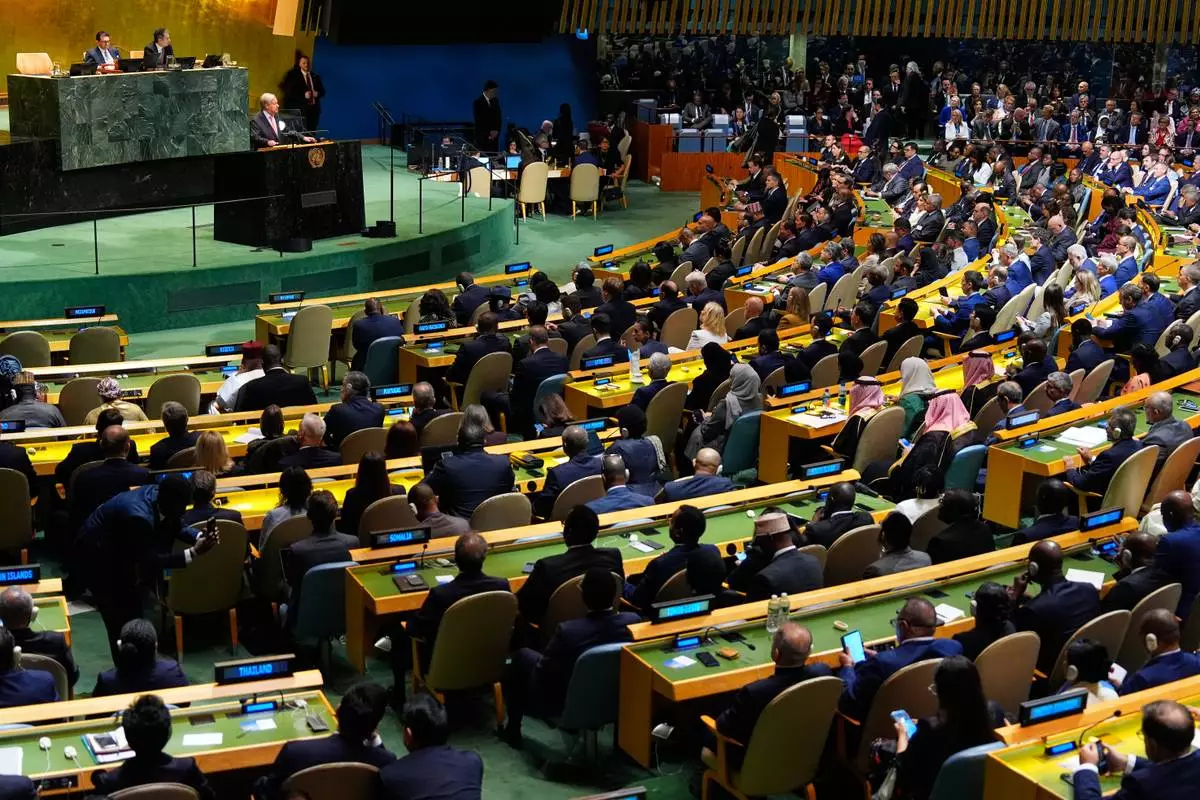
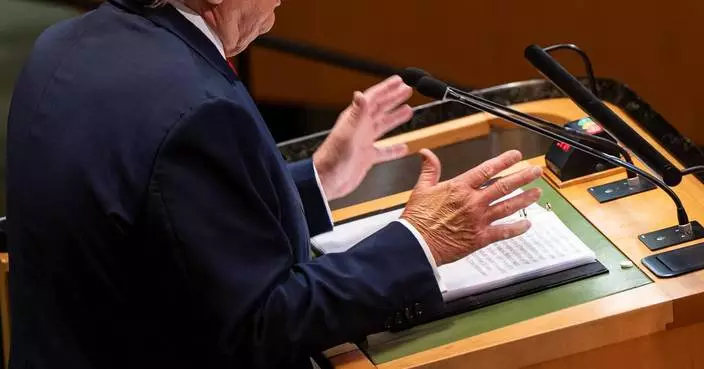
The United Nations Secretary-General Antonio Guterres speaks during the 81st session of the United Nations General Assembly at United Nations headquarters, Tuesday, Sept. 22, 2026. (AP Photo/Yuki Iwamura)
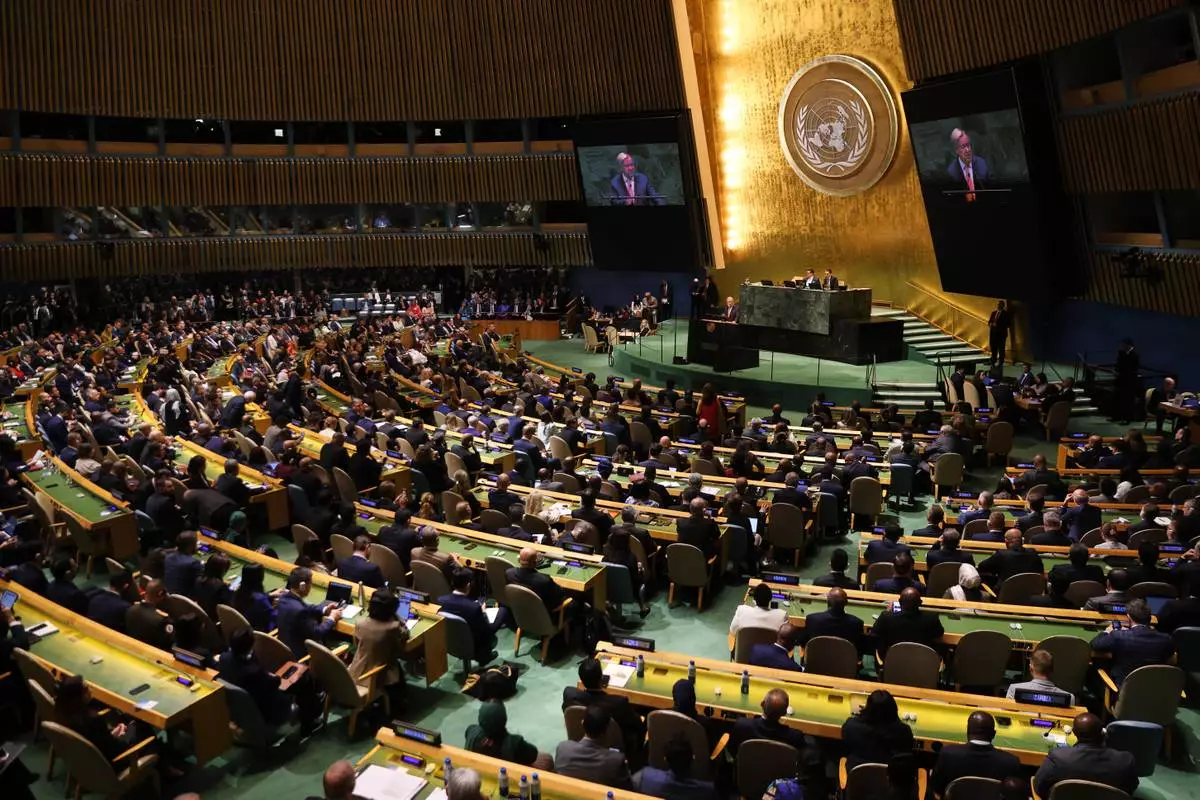
The United Nations Secretary-General Antonio Guterres speaks during the 81st session of the United Nations General Assembly at United Nations headquarters, Tuesday, Sept. 22, 2026. (AP Photo/Heather Khalifa)
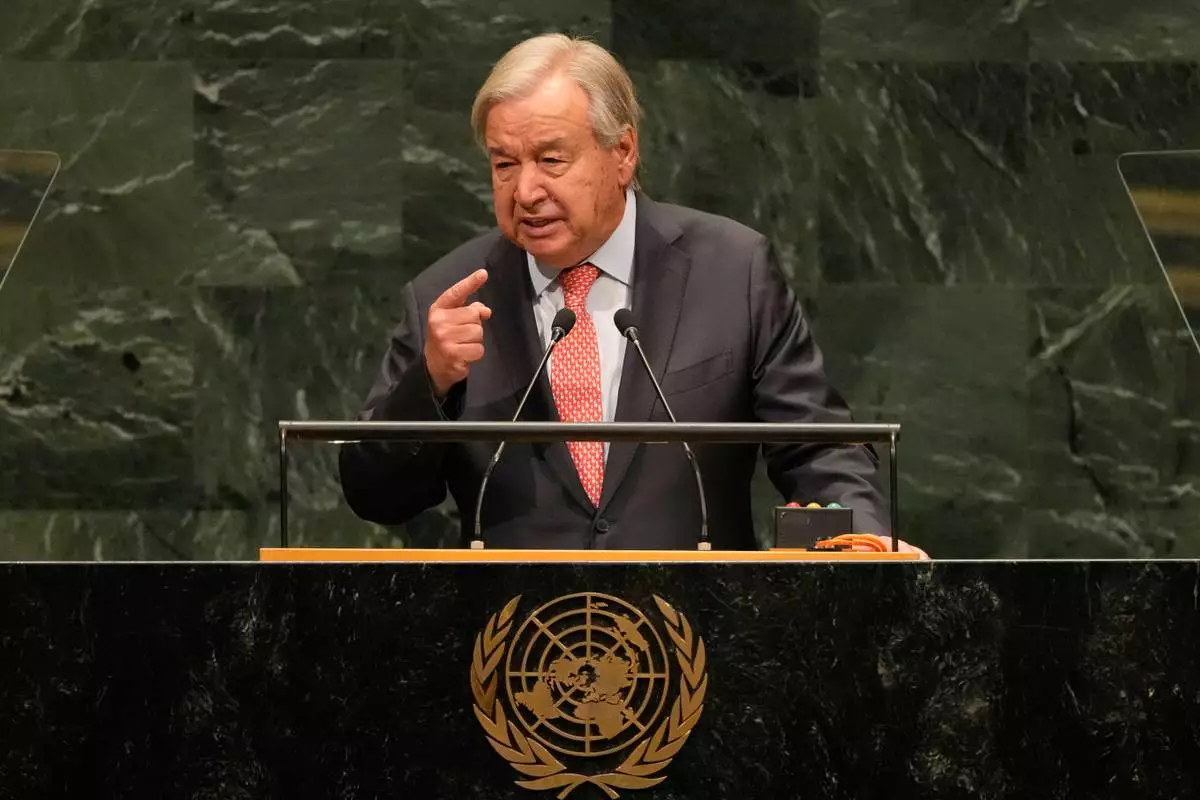
United Nations Secretary-General Antonio Guterres speaks during the 81st session of the United Nations General Assembly at United Nations headquarters, Tuesday, Sept. 22, 2026. (AP Photo/Seth Wenig)
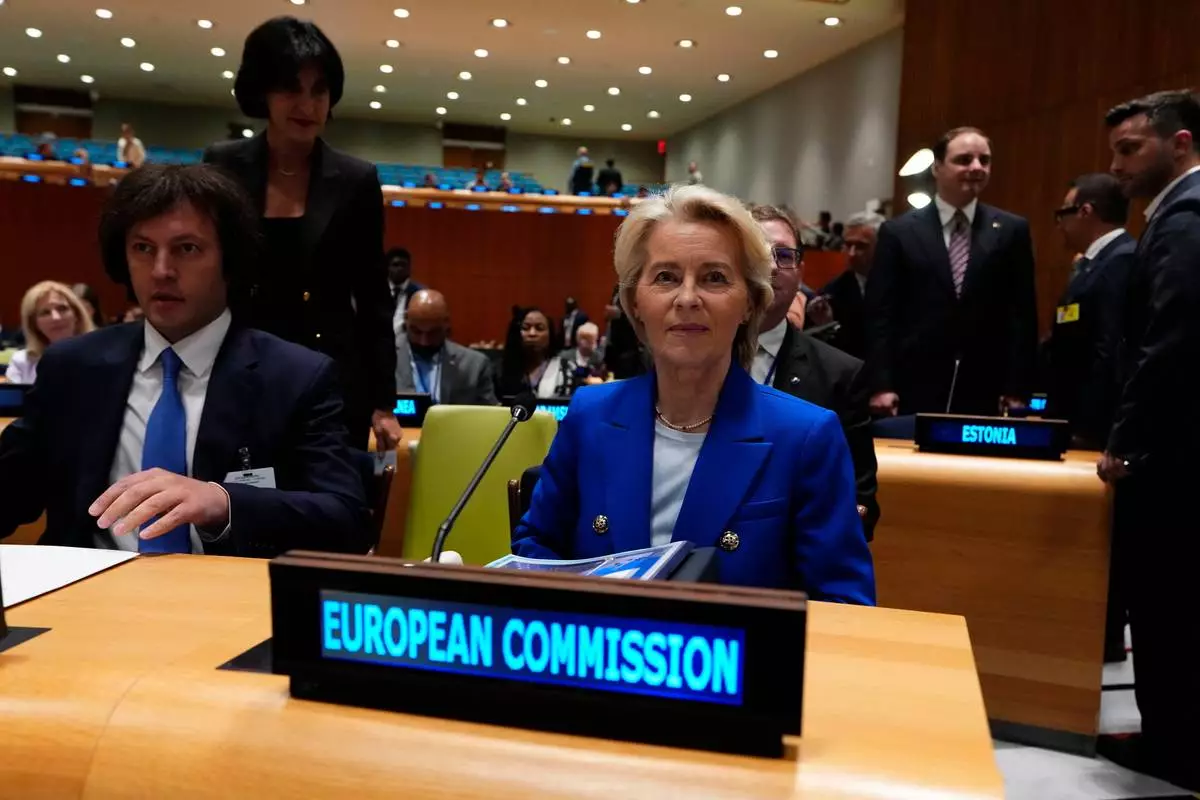
European Commission President Ursula von der Leyen attends the Partnership for Multilateralism Summit on the sidelines of the United Nations General Assembly (UNGA) at the UN headquarters, Monday, Sept. 21, 2026. (Justin Tang/The Canadian Press via AP)
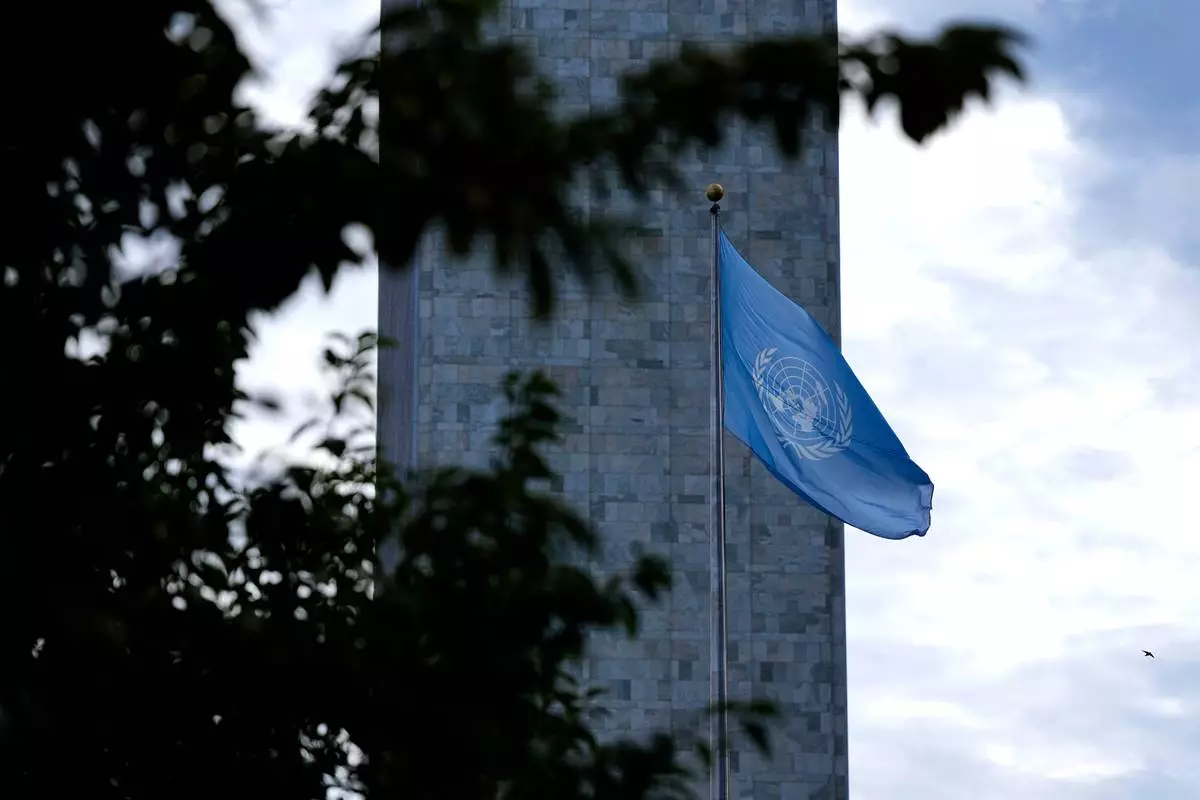
The flag of the United Nations flies during the United Nations General Assembly (UNGA) at the UN headquarters, Monday, Sept. 21, 2026. (Justin Tang/The Canadian Press via AP)
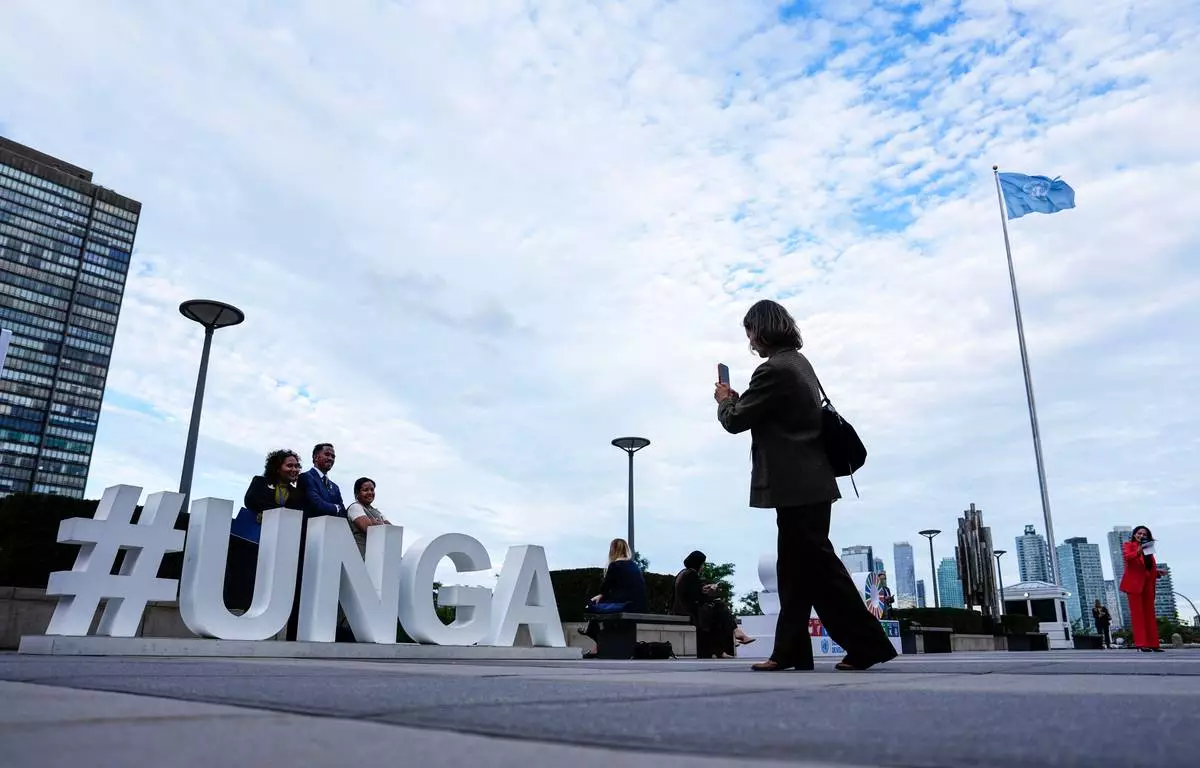
People pose as they arrive for the United Nations General Assembly (UNGA) at the UN headquarters, Monday, Sept. 21, 2026. (Justin Tang/The Canadian Press via AP)
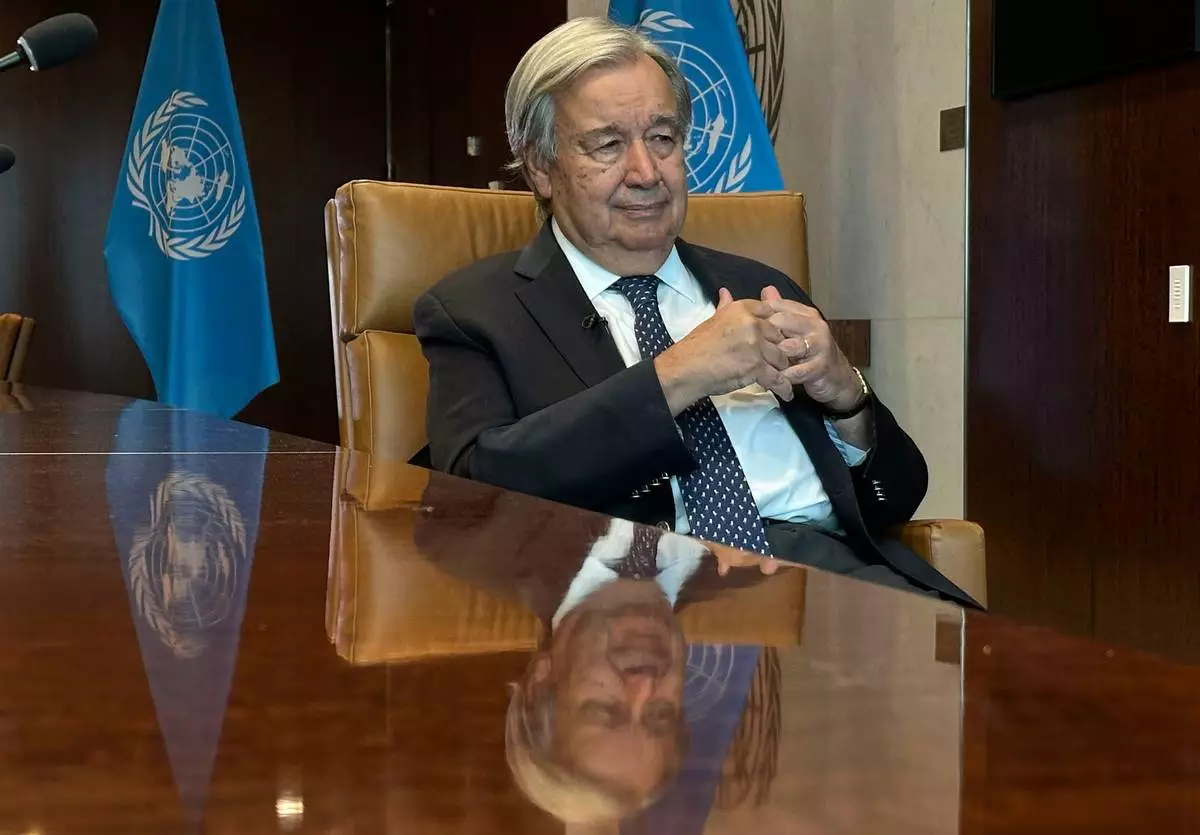
The United Nations Secretary-General Antonio Guterres speaks during an interview with The Associated Press at the United Nations headquarters, Thursday, Sept. 17, 2026. (AP Photo/David R Martin)