LONDON--(BUSINESS WIRE)--Sep 23, 2026--
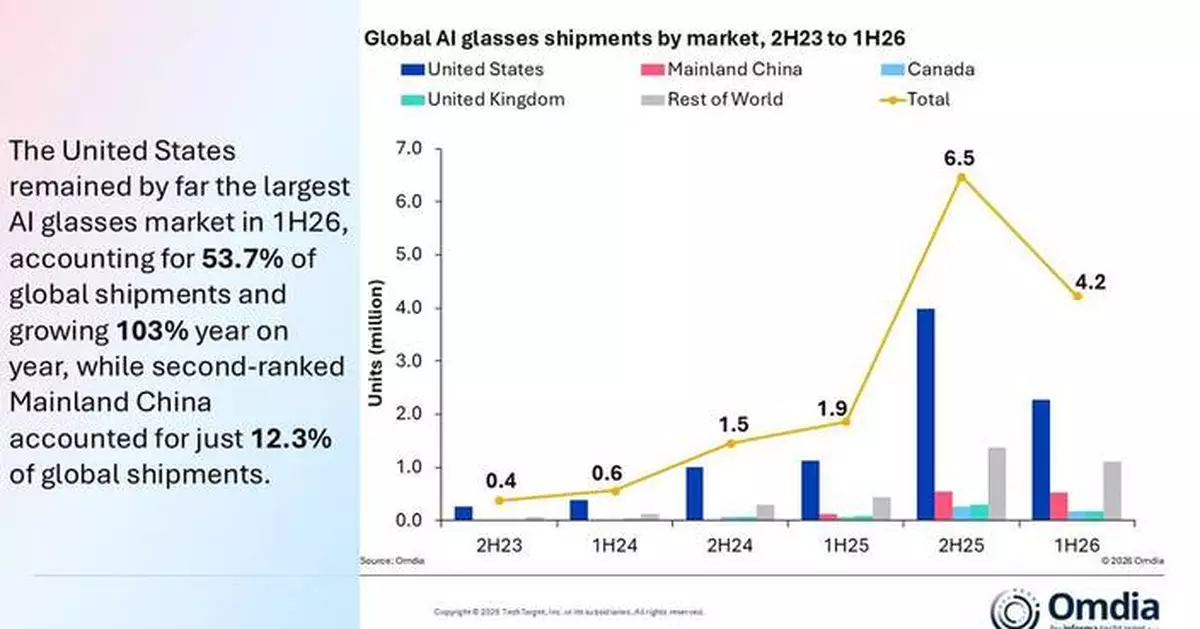
According to the latest Omdia data, global AI glasses shipments reached 4.2 million units in 1H26, up 127% year-on-year (YoY). AI glasses remain an emerging category, with growth stabilizing as the market expands from a very low base. Meanwhile, the sector is facing a more complex environment, driven by intensifying competition across different frame designs and mounting scrutiny over user privacy.
This press release features multimedia. View the full release here: https://www.businesswire.com/news/home/20260922652355/en/
“Growth in the AI glasses market in 1H26 was driven by Meta’s continued market momentum and a wave of new market entrants from China,” said Qiran Ju, Senior Analyst at Omdia. “Just as critically, vendors have made the value proposition immediately clear to buyers by focusing on hands-free photo and video capture, open-ear audio, and AI assistance within everyday frames”.
Meta retained its dominant position in 1H26, shipping 3.4 million AI glasses to capture an 81.3% market share. However, smaller competitors are also contributing to the overall market growth by exploring alternative frame designs and targeted use cases. Even Realities demonstrated this trend, climbing from fifth place in 2H25 to second in 1H26 with 102,000 units shipped (a 2.4% share), driven by demand for its G2 series across North America and Western Europe.
Ju added: “Even Realities takes a different frame design from most AI glasses. By removing both the camera and speakers, and focusing instead on a slimmer design, a small monochrome display and productivity features such as real-time transcription, it shows how vendors are exploring different ways to make AI glasses useful in everyday life.”
While the US remains by far the largest AI glasses market, Mainland China is playing a pivotal role as both a primary supply chain hub and a testbed for new hardware configurations. Shipments in China surged 306% YoY in 1H26, as local vendors experimented with varied display, camera, and audio setups. However, the market remains highly fragmented – top players Alibaba, INMO, and Xiaomi collectively accounted for just 46.1% of shipments.
“What we are seeing in China provides early but definitive signs that there is no single, one-size-fits-all solution in the AI glasses space,” said Jason Low, Research Director at Omdia. “As the category continues to diversify across different form factors and feature sets, this will inevitably become the defining trend for the global market.”
Low added: “Privacy, alongside varied user preferences, is a major driver of this fragmentation. As scrutiny of camera-equipped AI glasses intensifies, tighter privacy settings and clearer messaging will not be enough. Companies must define exactly what always-on cameras capture, show users how that content is used, and guarantee it never reaches third parties."
ABOUT OMDIA
Omdia, part of TechTarget, Inc. d/b/a Informa TechTarget (Nasdaq: TTGT), is a technology research and advisory group. Our deep knowledge of tech markets grounded in real conversations with industry leaders and hundreds of thousands of data points, make our market intelligence our clients’ strategic advantage. From R&D to ROI, we identify the greatest opportunities and move the industry forward.

Mainland China’s fragmented AI glasses market contrasts with global concentration
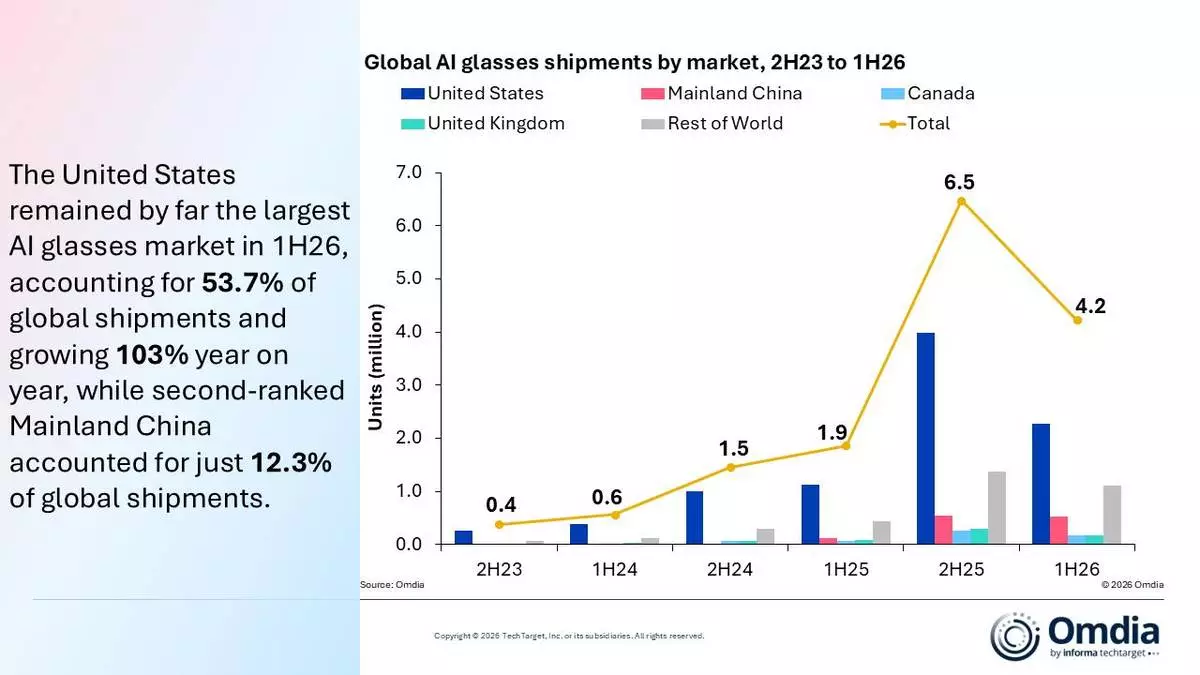
Global AI glasses shipments by market, 2H23 to 1H26
NEW YORK (AP) — His voice forceful and proud, he rose in front of the world's largest gathering of leaders on behalf of his nation and announced that he had something important to say. The tiny South Pacific island nation of Nauru, its president said, had altered its name — and reclaimed its heritage in the process.
“I have traveled far,” David Adeang said Tuesday at the United Nations.
What was known to the world for many years as Nauru, Adeang said, was returning to the name and pronunciation of its past: Naoero.
“There are moments in the life of a nation when its people are called to remember who they have always been,” Adeang said in his speech at the U.N. General Assembly in New York. “This is such a moment for us.”
Though the names are similar and, in essence, the same word, the shift in spelling and pronunciation represents the nation's effort to recast — rebrand, even — itself for its own people as much as for the outside world. He called it not a change but an effort to “affirm a truth.”
“For many years, the world has known our country as Nauru. Nauru is how our name sounded to those who found it hard to say, and the world kept it,” Adeang said. “But it is not the name our people used among themselves.”
The nation, an eight-square-mile island with about 12,000 people, became independent in 1968 after longtime colonial rule under the United Kingdom, New Zealand, Australia and Germany. It announced the renaming in August after signaling its intent in February.
The country’s international code is changing from NRU to NRO and its people will be known as dei-Naoero instead of Nauruan. Commonly known abroad by the pronunciation of Now-roo, the new name is spoken as Now-ero.
Across the past century, other nations have renamed themselves or tweaked their names for various reasons, from modernization to rejection of colonialism.
The African nation of Eswatini changed its name from Swaziland in 2018. In Africa, Dahomey became Benin after a 1975 coup and Rhodesia became Zimbabwe in 1980 after shedding colonial rule. Siam became Thailand in 1939 to foster ethnic unity and shed a foreign label.
Turkey, meanwhile, has been officially named Turkiye since 1920 but requested in 2022 that the United Nations use the spelling and pronunciation as its name in English as well — in part to avoid confusion by underscoring that the bird wasn't the word.
The list goes on. Persia became Iran. Burma became Myanmar. Upper Volta is now Burkina Faso, Gold Coast is Ghana and Ceylon is Sri Lanka.
A name, obviously, is a pivotal and intimate expression of a nation's identity on any stage, domestic or international. Adeang's remarks Tuesday reflected this as he carefully pronounced the name to differentiate it from its former pronunciation.
“We do not make this choice to erase our past. We make it because we honor it,” he said. “That name carries the memory of our ancestors, our language, and our identity. It has been there all along. Never lost, never absent. Today, we restore Naoero.”
And then, after completing his address about the issues that face his people — rising seas, economics, respect on the global stage — he concluded his address with three words:
“Say our name.”
Ted Anthony has written about international affairs for The Associated Press since 1995.
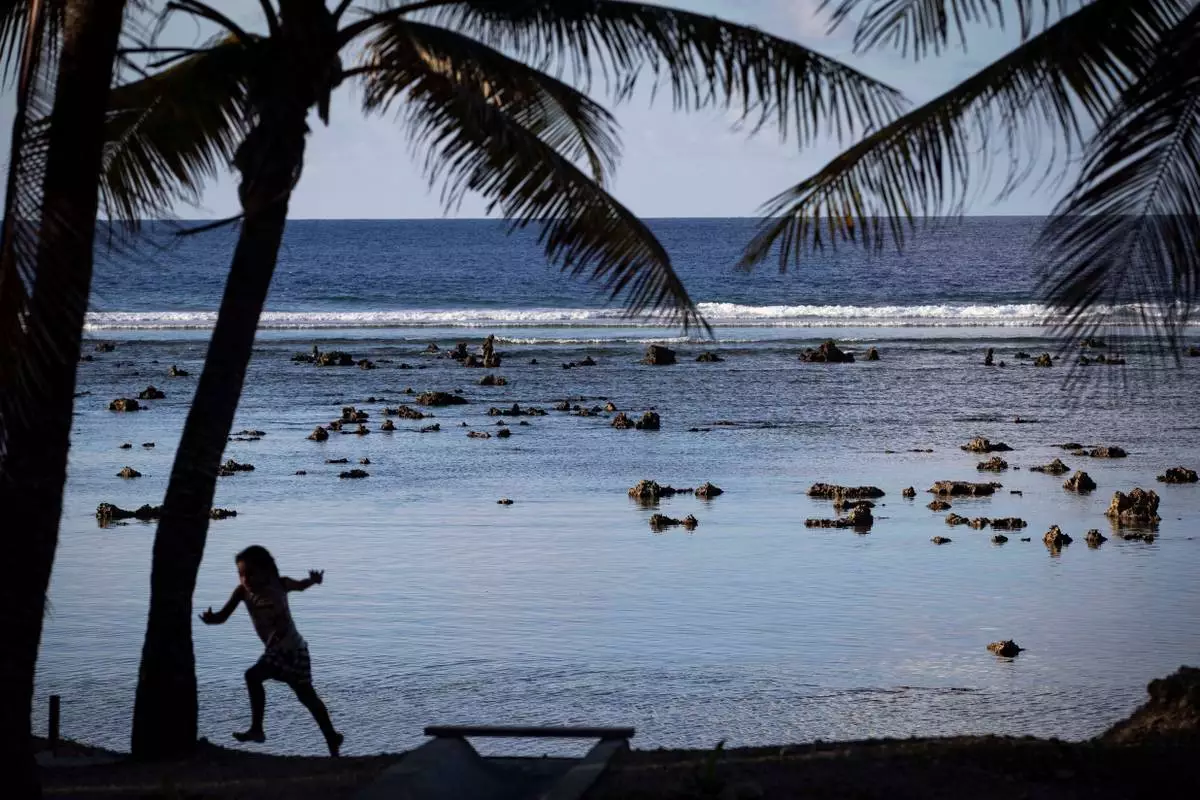
FILE- A child plays near the beach in Nauru during the Pacific Islands Forum on the tiny Pacific nation of Nauru Monday, Sept. 3, 2018. (Jason Oxenham/Pool Photo via AP, File)
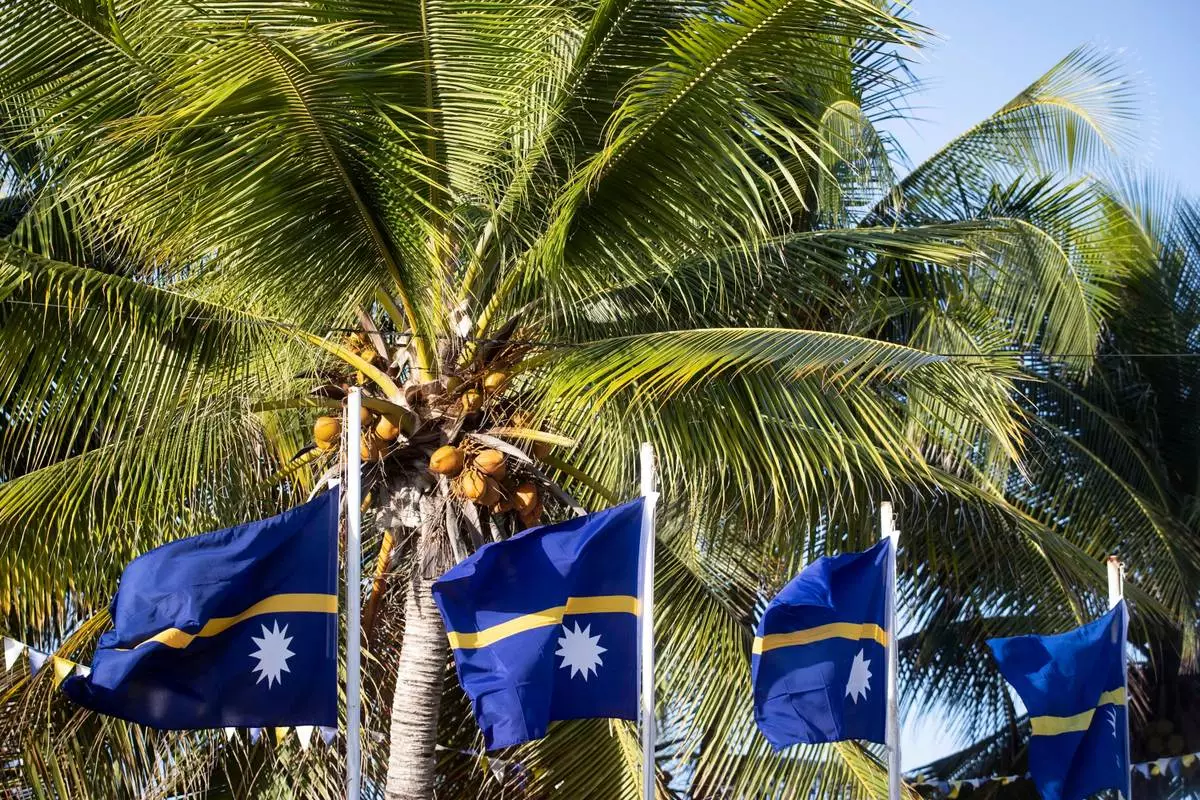
FILE - This shows national flags in Nauru for the Pacific Islands Forum on the tiny Pacific nation of Nauru, on Sept. 3, 2018. (Jason Oxenham/Pool Photo via AP, File)
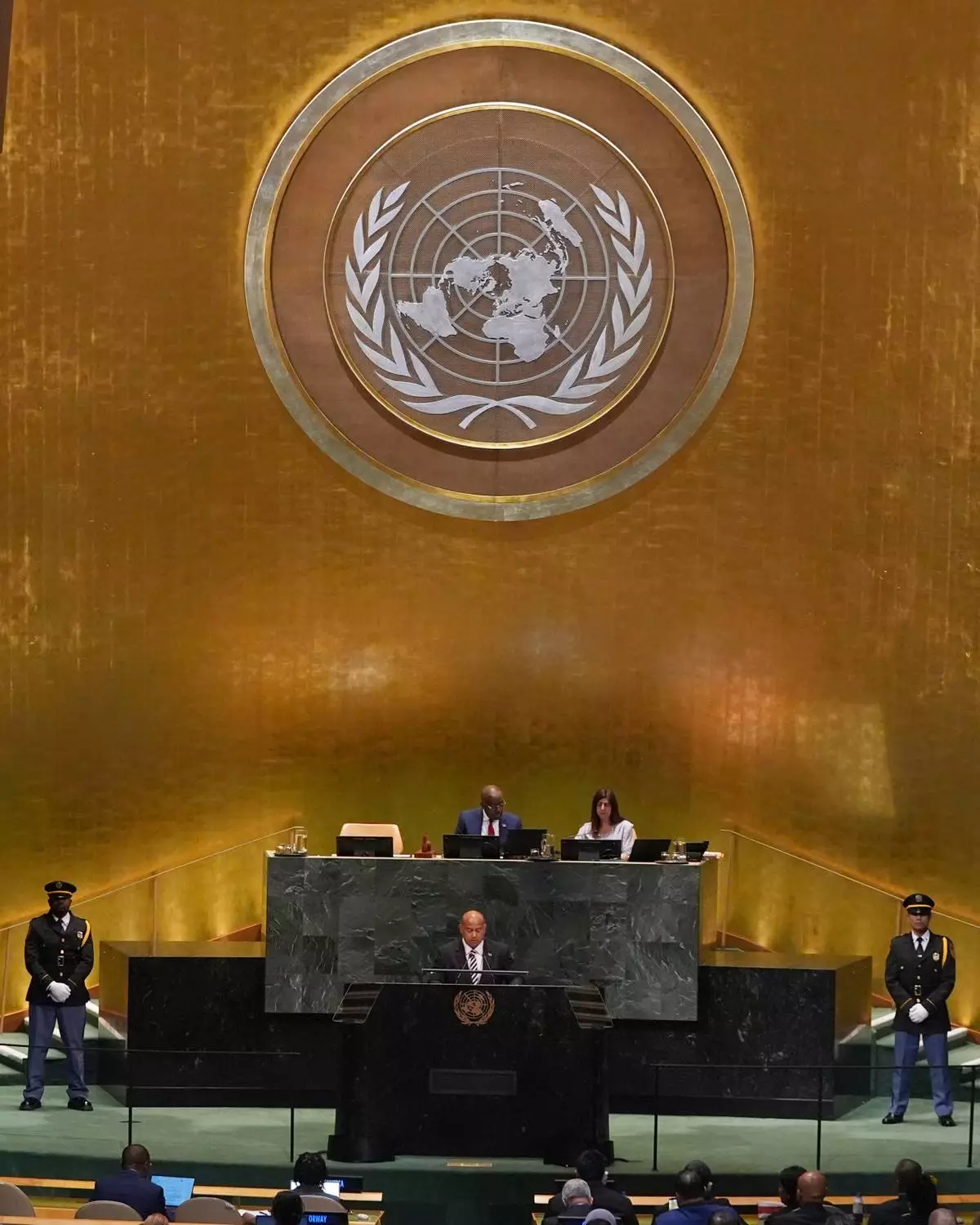
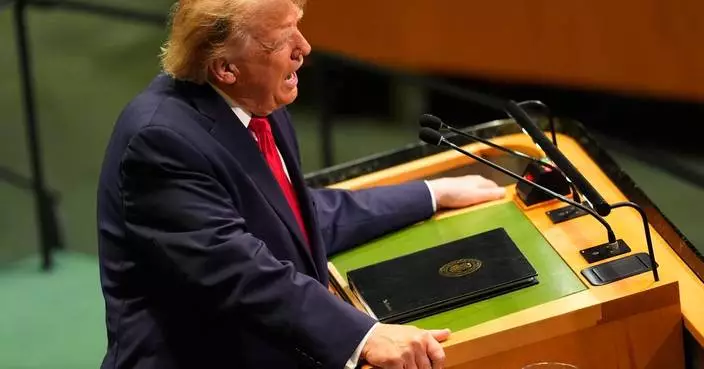
President of Naoero, David Ranibok Adeang addresses the 81st session of the United Nations General Assembly at U.N. headquarters Tuesday, Sept. 22, 2026. (AP Photo/Frank Franklin II)
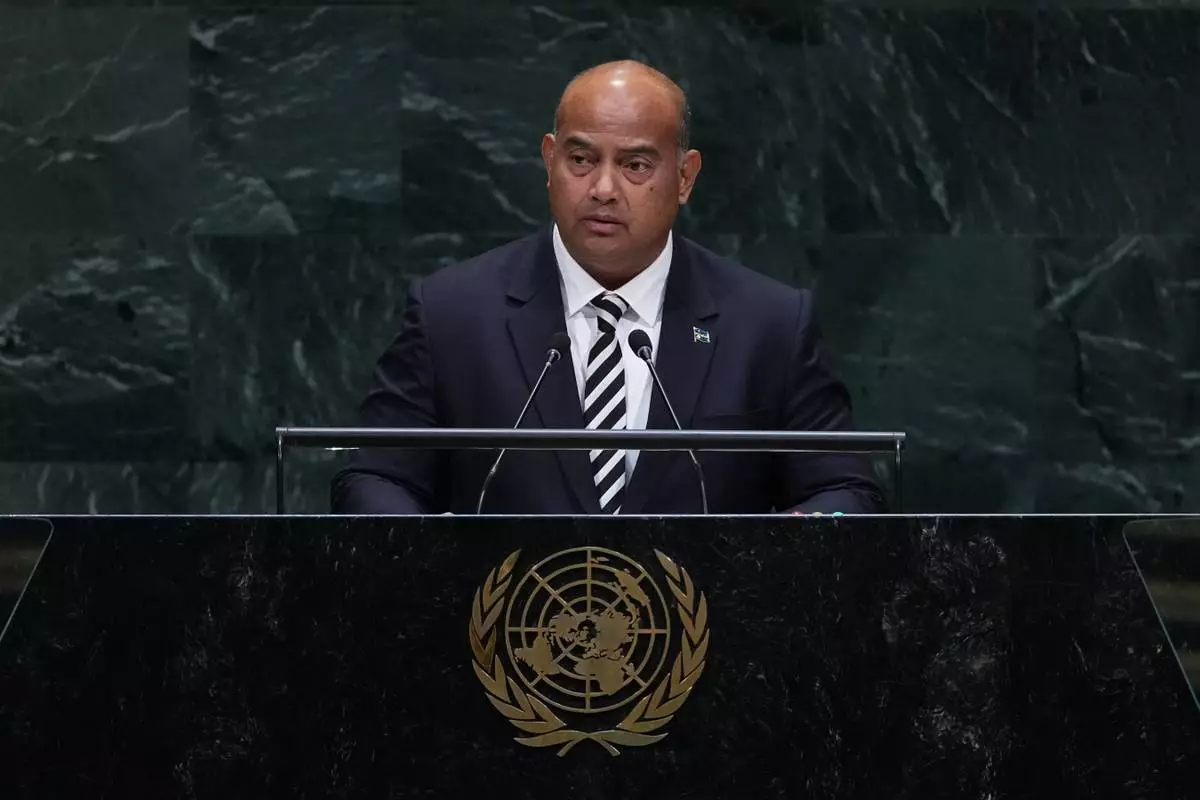
President of Naoero, David Ranibok Adeang addresses the 81st session of the United Nations General Assembly at U.N. headquarters Tuesday, Sept. 22, 2026. (AP Photo/Frank Franklin II)