Washington (AP) — Two leading progressive lawmakers, Sen. Bernie Sanders and Rep. Greg Casar, are unveiling legislation Wednesday that would ban artificial superintelligence and create a federal agency to oversee advanced AI as some of the industry’s own leaders urge Congress to impose guardrails on the advancing technology.
The bill, provided first to The Associated Press, would also pause advanced AI development until guidelines are implemented while creating the Department of Artificial Intelligence. Multiple employees at leading AI companies are endorsing the bill.
"It doesn’t take a genius to say, ‘slow it down,’” Sanders, I-Vt., said in an interview with AP. “Do we really want to develop a super intelligence that when it becomes smarter than human beings could act independently of human control? I don’t think we do.”
Congress has so far done little to rein in the AI industry even as some of its most prominent leaders warn about potentially catastrophic risks. President Donald Trump has resisted recent calls for greater government oversight, putting him at odds with tech leaders including Anthropic’s Dario Amodei, OpenAI’s Sam Altman and xAI’s Elon Musk.
The legislation would permanently prohibit artificial superintelligence, which it defines as a system that exceeds human cognitive ability or has sufficient capabilities to plan and execute the destruction or disempowerment of humanity.
It would temporarily pause development of the most advanced AI systems until new federal safety rules are established by a new Department of Artificial Intelligence. Advanced AI systems would then need federal approval before they could be deployed. Violations could carry significant penalties, including up to 20 years in prison in some cases.
A number of current employees at AI companies and experts signed on in support of the bill, according to a statement shared with AP.
Juan Felipe Cerón Uribe, a researcher in OpenAI’s Safety Systems, said in a statement supporting the bill that “superintelligence could either go extremely right or extremely wrong” and that “we shouldn’t be playing such games.”
Swante Scholz, a software engineer at Google DeepMind who said he was not speaking on behalf of his employer, said on the current path of development, the “most likely outcome is an existential catastrophe for humanity.”
“A ban on superintelligence development would be a positive change for the foreseeable future,” Scholz said in a statement.
The bill from Sanders and Casar faces long odds in the Republican-controlled Congress, where lawmakers have struggled to coalesce around even less sweeping AI regulations.
But it offers a window into how the progressive wing of the Democratic Party is approaching AI regulation ahead of November’s midterms and a 2028 presidential campaign in which the technology is expected to be an increasingly prominent issue. Casar, a Democrat from Texas, is the chair of the Congressional Progressive Caucus.
Potential 2028 presidential candidates have rushed in recent weeks to release proposals showing they're taking the issue seriously. Maryland Democratic Gov. Wes Moore announced a plan to regulate AI on Tuesday, while California Democratic Gov. Gavin Newsom signed an executive order to accelerate implementation of a California law that calls for independent oversight of AI companies last week.
Sanders, a two-time presidential candidate who is now 85, has especially focused on the issue in recent months. In June, he introduced legislation to create a sovereign wealth fund financed through a one-time tax on the stock of the largest AI companies. Last week, he hosted colleagues for a briefing with experts and also attended a conference focused on the issue alongside Republicans, including former White House adviser Steve Bannon.
The debate over AI regulations has scrambled political alliances both in Washington and for voters across the country.
Americans have grown more concerned about the environmental impacts of artificial intelligence over the last year, according to a recent poll from The Associated Press-NORC Center for Public Affairs Research and the Energy Policy Institute at the University of Chicago.
The survey data say about half, 53%, of Americans are “extremely” or “very” concerned about artificial intelligence’s environmental impacts. That is up from 41% last year. Democrats are driving much of the increase in environmental concern, but the poll also reveals broader worries about the local impact of data centers, which power AI and cloud computing.
While some industry leaders have called for new safeguards, Trump has pushed in the opposite direction. On Tuesday, Trump told the United Nations General Assembly that artificial intelligence will be renamed “super intelligence."
“I think Trump has very little understanding of what this issue is about,” Sanders said. “I think he’s mainly concerned about the economic implications of a slowdown.”
AI safety is expected to be a central part of talks between Trump and China’s Xi Jinping at the White House this week as the countries compete for dominance in the sector. The prospect of slowing development in the United States while China continues on has also been one of the central arguments against sweeping restrictions.
Sanders argued that avoiding the most dangerous forms of AI would ultimately require cooperation between the two countries, comparing the challenge to nuclear arms control during the Cold War.
“Ronald Reagan, arch-conservative, was smart enough to understand that he had to sit down with Gorbachev, a communist, and work out a nuclear treaty that protected humanity,” Sanders said. “I think we can do that again now.”
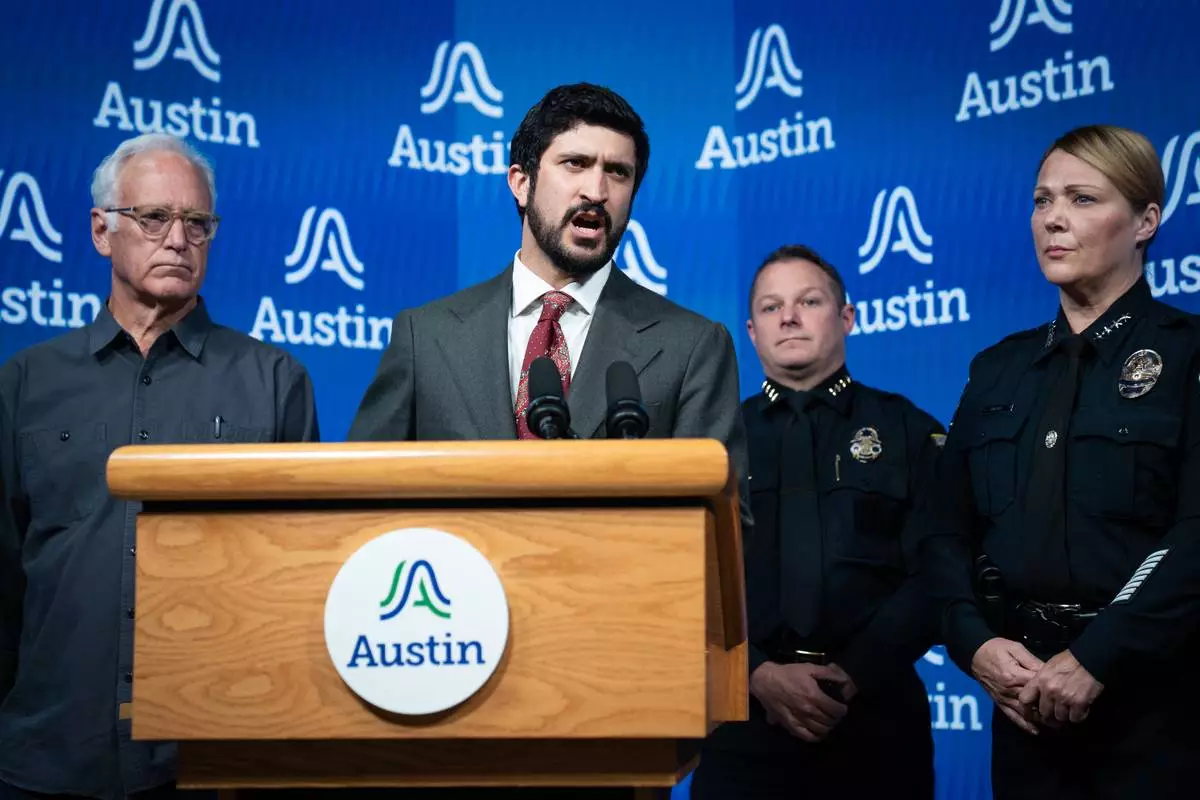
U.S. Rep. Greg Casar speaks during a news conference at Austin City Hall, Sept. 20, 2026, after a federal immigration agent shot and wounded a man in North Austin, Texas (Sara Diggins/The San Antonio Express-News via AP)

FILE - The OpenAI logo is displayed on a cell phone in front of an image generated by ChatGPT's Dall-E text-to-image model, Dec. 8, 2023, in Boston. (AP Photo/Michael Dwyer, File)
CAIRO (AP) — It took Houthi rebels less than 48 hours to seize Yemen's Red Sea coast from pro-government forces in a resounding blow to U.S. interests and Washington's regional allies.
But the Houthis didn’t do it alone. Iranian Revolutionary Guard advisers were in the field helping direct the battle, people familiar with the offensive told The Associated Press, marking Iran’s most direct intervention in favor of its longtime ally since Yemen’s civil war erupted in 2014.
The intervention shows how Iran has built the Houthis into a major regional partner able to open a new front in the wider war with the U.S. The rebels’ biggest land grab in years, along with the closure of a key Saudi pipeline, strengthened their ability to choke off Saudi Arabia’s oil exports, pushing up global fuel prices and giving Iran greater leverage. The United States has seemed reluctant to help its ally Saudi Arabia, even as the Houthis have gained momentum in Yemen's revived civil war.
The AP spoke to 10 officials and soldiers to assemble an account of the Houthi offensive. They included a senior Houthi official, two regional officials, a top Yemeni military commander and a member of Yemen's ruling presidential council. They spoke on condition of anonymity to discuss internal decision making.
The Houthis' swift, 115-kilometer (75-mile) assault exploited divisions among forces allied with Yemen's Saudi-backed, internationally recognized government. The Houthis penetrated the internal communications of one of the main forces, the National Resistance, allowing them to track its movements and sow confusion.
As pro-government forces beat a frantic retreat, the leader of the National Resistance fled to Saudi Arabia. The key port city of Mokha was abandoned as residents left in the night, allowing the Houthis to roll in unopposed on Sept. 10. Their seizure of strategic islands nearby further enhanced their ability to attack Saudi oil shipments in the Red Sea.
The Houthis had not conducted a major campaign along the coast since 2017, when government forces drove them out of the area. Since then, the Houthis had focused on trying to capture the oil-rich province of Marib in central Yemen.
A truce took hold in 2022. The following year, the Houthis began attacking Red Sea shipping over the war in Gaza, attacks that continued until a punishing U.S. bombing campaign in 2025. After the U.S. and Israel attacked Iran in February, the Houthis largely kept to the sidelines.
Last year, Iran began providing the Houthis with stepped-up training and logistical support on more advanced missiles, drones and uncrewed attack boats, said Mzahem Alsaloum, a security analyst who has followed Iranian-backed groups for nearly a decade and now runs a private intelligence firm.
In July, the Houthis renewed their attacks on Saudi Arabia after accusing it of striking the airport in the rebel-held capital, Sanaa. That strike appears to have been aimed at halting a flight from Tehran.
Alsaloum and the senior Houthi official said the Iranian flight, which later landed, brought Revolutionary Guard advisers, who joined other advisers from the Guard — and Iran's Lebanese ally, Hezbollah — already based in Yemen.
In early August, the Houthis resumed attacks on government forces, focusing on the city of Taiz, in the mountains overlooking the coast, and firing missiles and drones at Mokha.
The Houthi official said Iranian advisers had previously focused on strategic planning and were not in the field. But in the latest escalation, they were “present at all levels,” he said, including planning tactical maneuvers and working with front-line commanders.
The two regional officials, who are regularly briefed on the latest developments in Yemen, also said Iran provided direct support that helped the rapid advance.
Alsaloum said that in addition to helping in a command role, the Iranian advisers analyzed communications and satellite intelligence, capacities the Houthis were lacking.
Iran's U.N. mission did not respond to requests for comment.
The National Resistance, with some 30,000 fighters, was the strongest pro-government force along the coast. But it had not been involved in major fighting since 2017.
For a month, Houthi forces bombarded its positions with 130 ballistic missiles and 145 suicide drones, according to a National Resistance spokesman, Maj. Gen. Sadiq Dwaid. He said its fighters were stretched over 170 kilometers (100 miles), from Mokha into the mountainous interior, against what he estimated were 75,000 Houthi fighters.
In early September, the Giants Brigade, another militia, came to its aid, helping it to temporarily push back the rebels. But the Giants Brigade had not coordinated with the National Resistance, angering its field commanders, one government official said.
The two forces had a longtime rivalry rooted in the past struggle between Saudi Arabia and the United Arab Emirates over control of the anti-Houthi movement. That struggle led to the UAE abruptly pulling out of Yemen in January.
There was no “unified command,” said the senior military official. “This was a priceless opportunity for the Houthis.”
On Sept. 9, the Houthis advanced south toward Mokha through a narrow mountain valley, heavily bombarding their opponents.
Having breached their communications, the Houthis were able to listen in and exploit divisions, one of the government officials said, adding that National Resistance leaders lost contact with several field commanders.
By the afternoon, the Houthis had seized the mountain road and a nearby military base, cutting off government supply lines to Mokha. Lt. Gen. Tariq Saleh, the leader of the National Resistance, was forced to flee and then took refuge in Saudi Arabia.
At around 6 p.m. that night, orders went out to National Resistance field units to retreat back to Mokha. When thousands of fighters began arriving, the forces stationed in the port city thought a major Houthi attack was imminent and began to flee, two National Resistance fighters told the AP.
A Mokha resident, Issa Gubwani, said he saw fighters in military vehicles and pickups streaming out of the city. “They left us to face our fate,” he said. Tens of thousands of residents joined the exodus.
The Houthi official said that when the rebels rolled in early on Sept. 10, “the city was empty.”
The senior government military official said Yemeni forces were stunned that Saudi warplanes didn’t strike the Houthis as they advanced on Mokha. The Saudi government media office did not respond when asked for comment.
The Houthis seized weapons and military equipment, including armored vehicles, rockets, artillery shells and ammunition, most of it from the UAE and Saudi Arabia, two government officials said. The rebels displayed some of the captured weapons in a televised parade.
The National Resistance said it lost 500 fighters in the battles; that could not be independently confirmed. The Houthis have not announced their losses.
As government forces work to regroup, supporters of the various militias have been trading blame and accusations of treason online. The Houthis are meanwhile building defenses around the newly captured territories, according to the Houthi official.
“Losing the West Coast is not the end of the battle; rather, it marks the beginning of a fiercer battle,” Brig. Gen. Walid Ziyad, a senior National Resistance commander, declared on social media.
Associated Press reporters Sarah El Deeb in Beirut, Ahmed al-Haj in Aden, Yemen, and Lee Keath and Victoria Eastwood in Cairo contributed to this report.
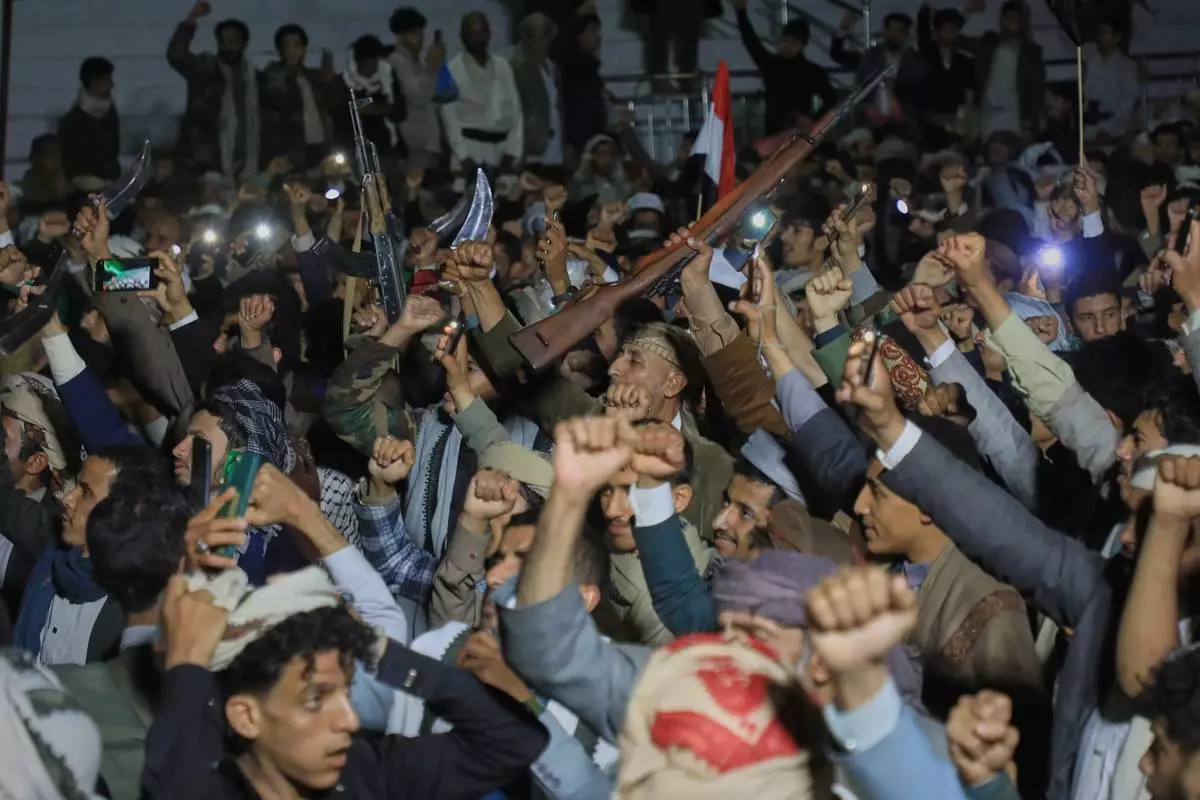
Supporters of Yemen's Houthi rebels raise rifles and their fists during a rally organized to celebrate the group's capture of Mayun Island in the strategic Bab el-Mandeb Strait, in Houthi-controlled Sanaa, Yemen, Friday, Sept. 11, 2026. (AP Photo/Osamah Abdulrahman)
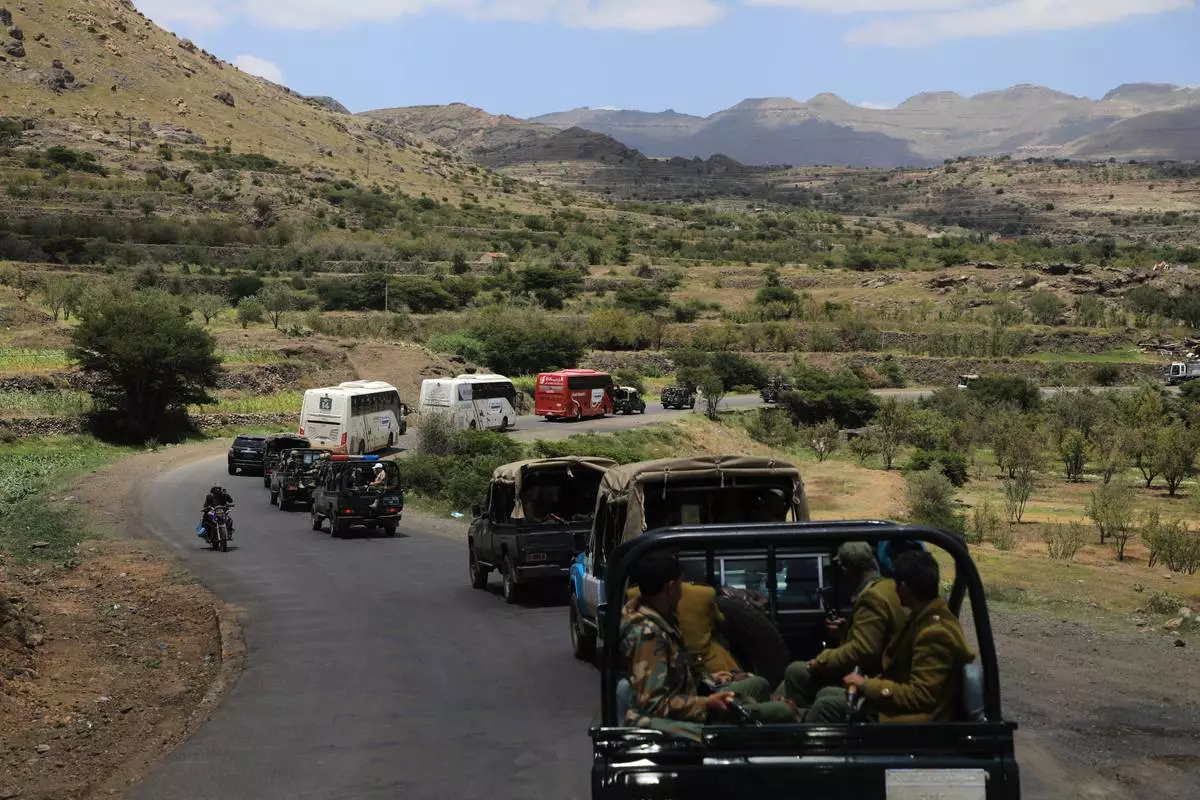
Houthi fighters escort a convoy carrying prisoners freed in Mokha through the Bani Matar district on its way to Sanaa, Yemen, Saturday, Sept. 12, 2026, following the Houthi takeover of the southern Red Sea port city. (AP Photo/STR)
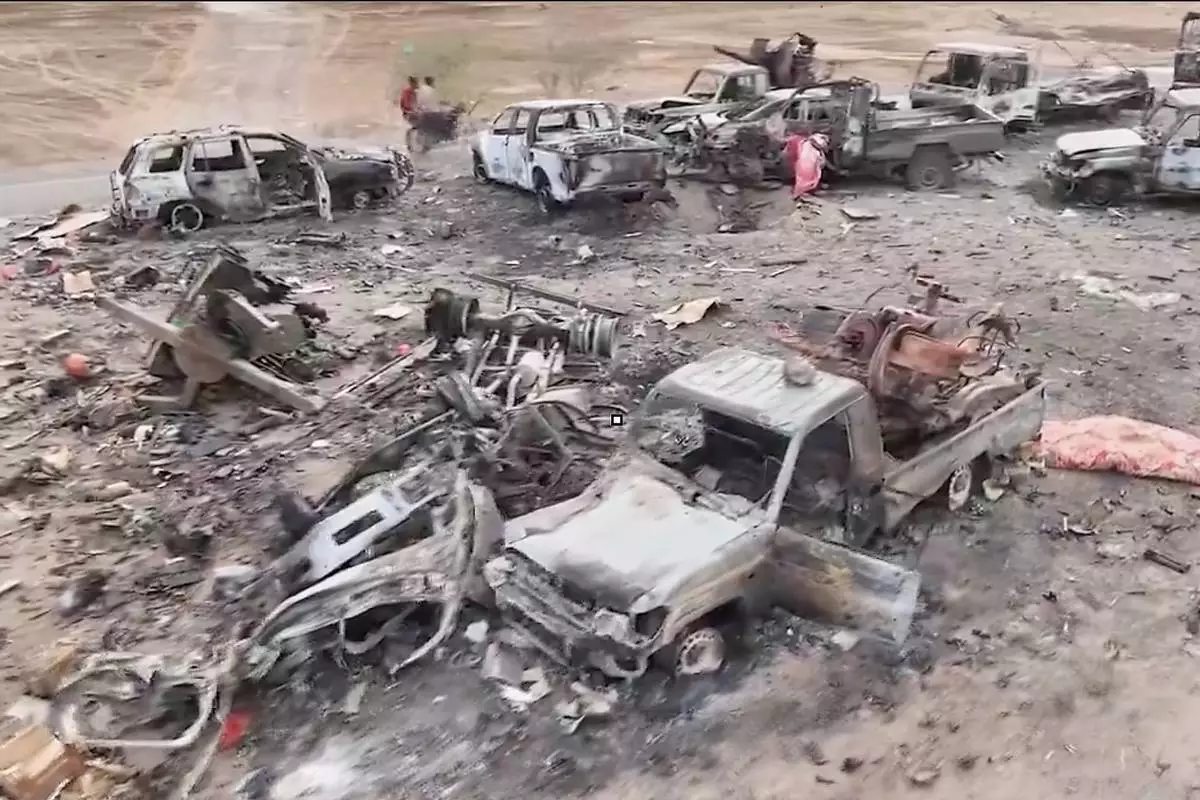
This image taken from undated video released by the Houthi-run Al-Masirah television channel on Saturday, Sept. 12, 2026, shows damaged vehicles on a road between the Dhubab and Amri junctions in Yemen, according to the channel. (Al-Masirah TV via AP)
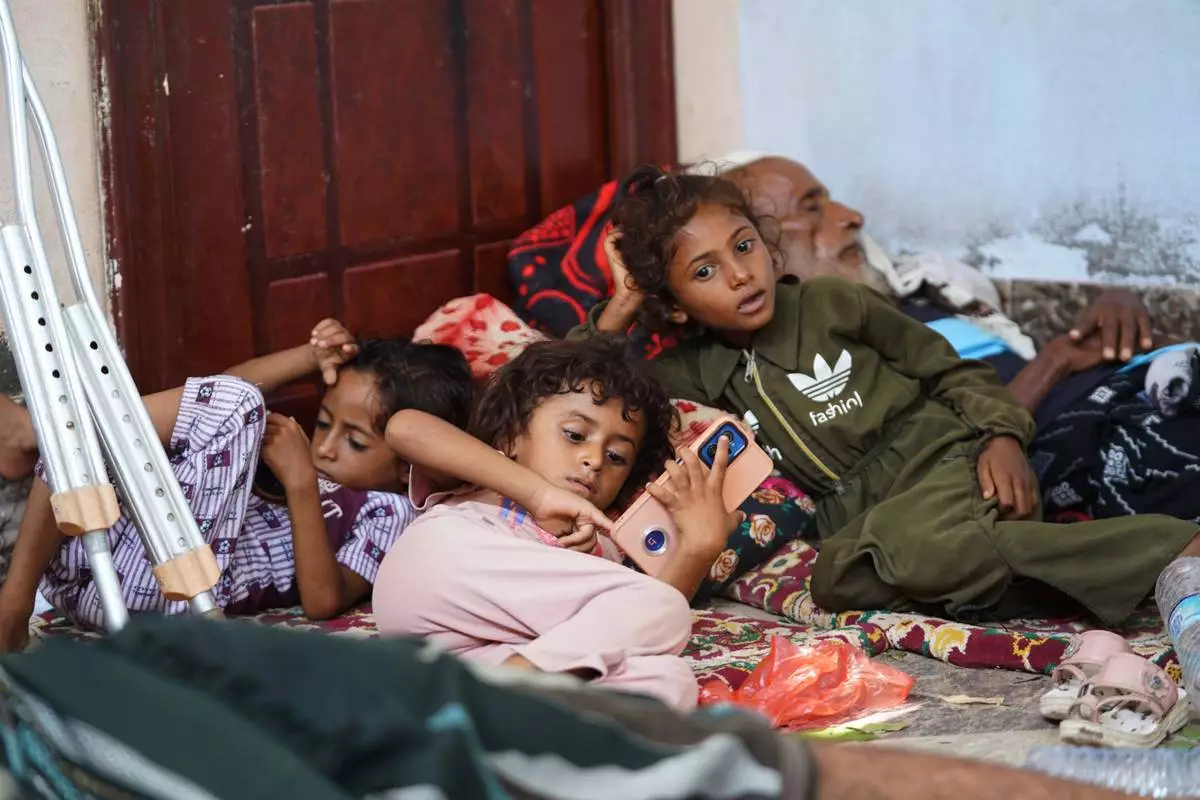
Displaced Yemenis rest at a temporary shelter in the Dar Saad district of Aden, Yemen, Saturday, Sept. 12, 2026, after fleeing Houthi attacks in the western coastal cities of al-Khokha and Mokha. (AP Photo/Abdulnasser Alseddik)
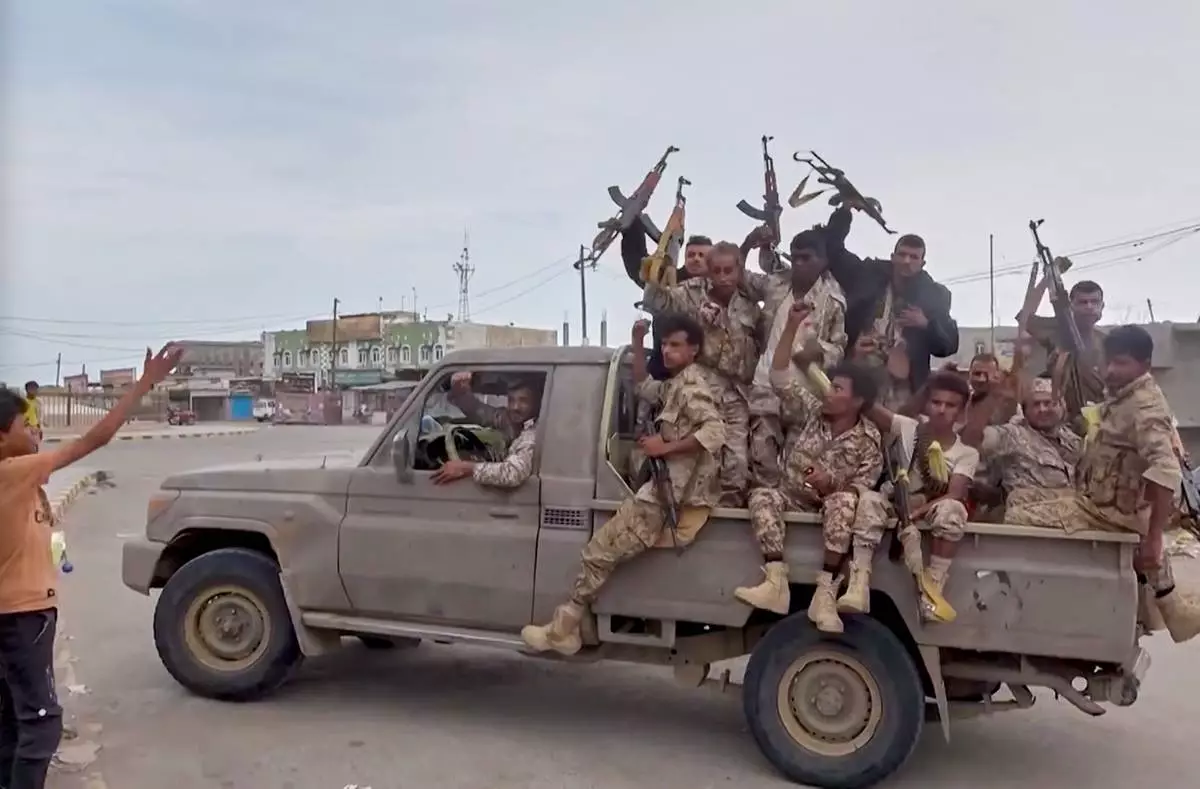
This image taken from undated video released by Al-Masirah TV, a channel owned by Yemen's Houthi rebels, on Friday, Sept. 11, 2026, shows, according to the channel, Houthi fighters chanting atop a pickup truck in Khawkhah, Hodeida province, Yemen. (Al-Masirah TV via AP)