U.S. President Donald Trump and the leaders of Denmark and Greenland signed an agreement about the status of the Arctic island after months of threats by Trump to seize the semiautonomous territory of a NATO ally.
The deal was officially signed Tuesday in New York, after U.S., Greenlandic and Danish officials had quietly negotiated for months behind the scenes — searching both for solutions to address some of Trump’s security concerns about the territory, as well as alleviating Danish and Greenlandic fears of being taken over by the U.S.
Click to Gallery
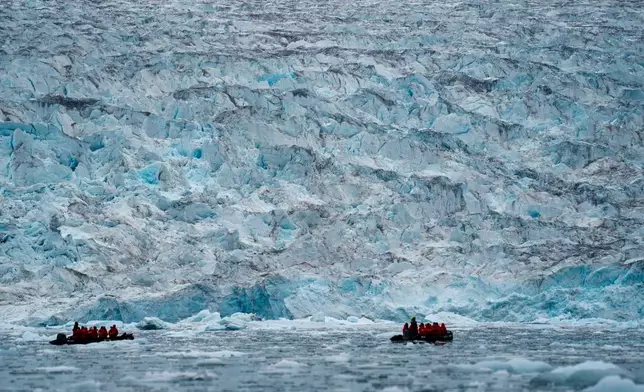
FILE - Two groups from the Poseidon Expeditions tour company look at a glacier in the Scoresby Sund, Sept. 7, 2023, in Greenland. (AP Photo/Chris Szagola, File)
FILE - An American flag is displayed on the facade of the US consulate in Nuuk, Greenland, Jan. 14, 2026. (AP Photo/Evgeniy Maloletka, File)
FILE - A crowd walks to the US consulate to protest against Trump's policy towards Greenland in Nuuk, Greenland, Jan. 17, 2026. (AP Photo/Evgeniy Maloletka, File)
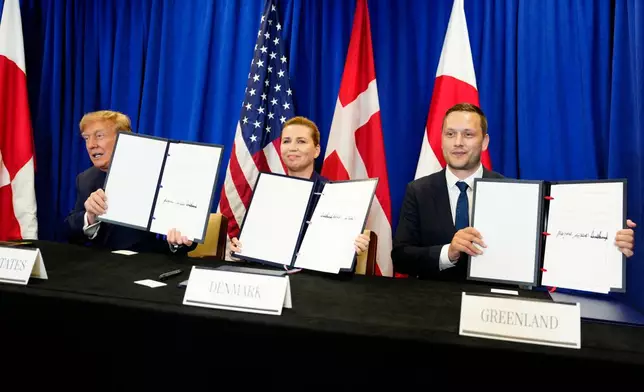
Denmark's Prime Minister Mette Frederiksen, center, Greenland's Prime Minister Jens-Frederik Nielsen, right, and US President Donald Trump at the signing ceremony of a security deal between the U.S., Denmark and Greenland at United Nations headquarters, Tuesday, Sept. 22, 2026. (Mads Claus Rasmussen/Ritzau Scanpix via AP)
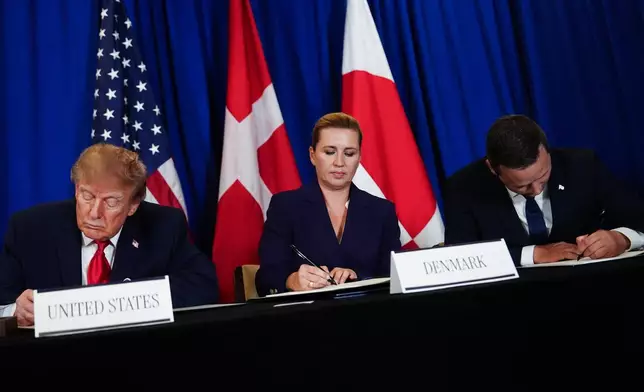
President Donald Trump signs a security agreement with Denmark's Prime Minister Mette Frederiksen and Greenland's Prime Minister Jens-Frederik Nielsen during the United Nations General Assembly, Tuesday, Sept. 22, 2026, at the UN headquarters. (AP Photo/Julia Demaree Nikhinson)
The three parties expressed satisfaction with the deal at the signing ceremony — but what exactly does it say?
Washington is allowed to “modernize and expand” its activities at the remote Pituffik Space Base in the northwest, according to the agreement.
The U.S. can also set up “defense areas” at Narsarsuaq in the south and Mestersvig in the east, and “may establish additional defense areas in Greenland and strengthen its military operations or facilities.”
The accord calls for wide U.S. military mobility on Greenland’s territory, including “undersea access," noting that “ the security situation in the Arctic is changing and that more efforts are needed to ensure security there in the future.”
The agreement reaffirms “the sovereignty and territorial integrity of the Kingdom of Denmark,” and recognizes the Greenlanders' "right to self-determination.”
The agreement says all three parties “support a stronger NATO engagement in the Arctic, including as regards planning, presence, exercises, and joint intelligence gathering.”
It allows U.S. military access to Greenland to defend the NATO area, Greenland itself and the American continent — including through a “Golden Dome defense system."
The deal spells out that “no state that is not a member of NATO shall be allowed to establish its own manned or unmanned military installations in Greenland nor shall they be allowed a persistent presence of military forces in Greenland."
In the preamble, the signatories recognize “the need to protect the pristine environment of Greenland.” It also stresses “the economic, social, and cultural rights of the people of Greenland, including with respect to their lands and their way of life, including hunting, fishing, and other traditional, cultural, historical, future activities.”
The accord “does not have an end date” and, if Greenland chooses to become independent, it will agree to remain in NATO and take on Denmark’s rights and obligations under the deal.
The deal will only “enter into force” once the “necessary parliamentary processes of the Kingdom of Denmark, in conjunction with Greenland, have been completed.”
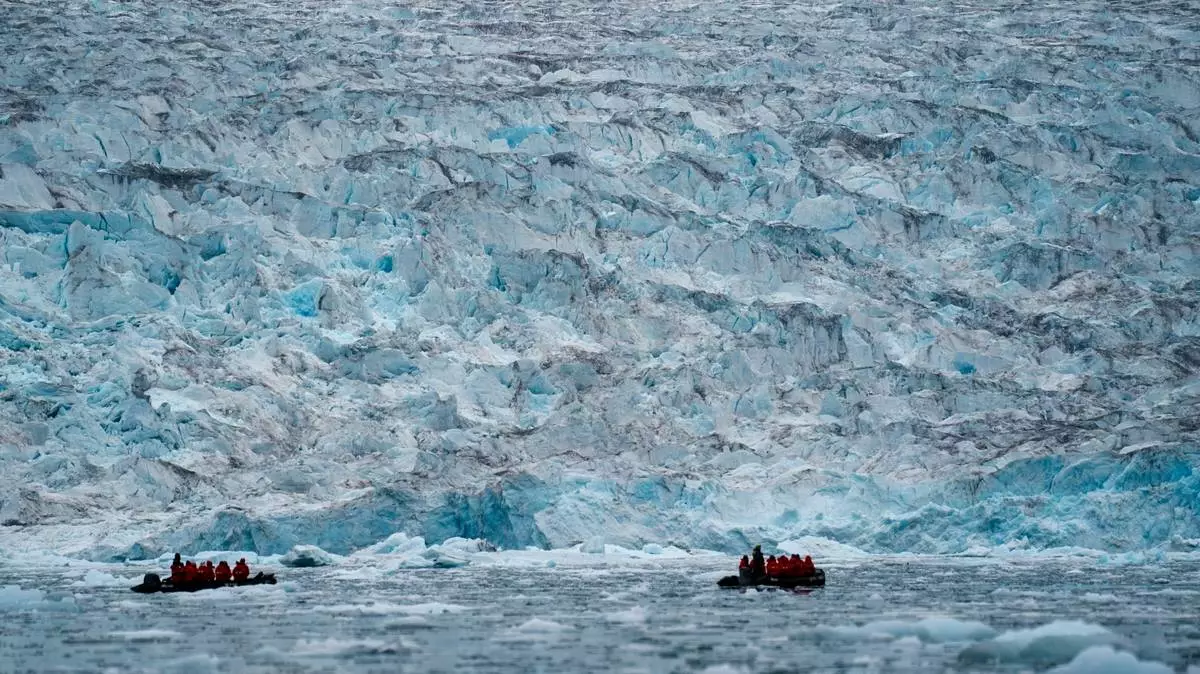
FILE - Two groups from the Poseidon Expeditions tour company look at a glacier in the Scoresby Sund, Sept. 7, 2023, in Greenland. (AP Photo/Chris Szagola, File)

FILE - An American flag is displayed on the facade of the US consulate in Nuuk, Greenland, Jan. 14, 2026. (AP Photo/Evgeniy Maloletka, File)

FILE - A crowd walks to the US consulate to protest against Trump's policy towards Greenland in Nuuk, Greenland, Jan. 17, 2026. (AP Photo/Evgeniy Maloletka, File)
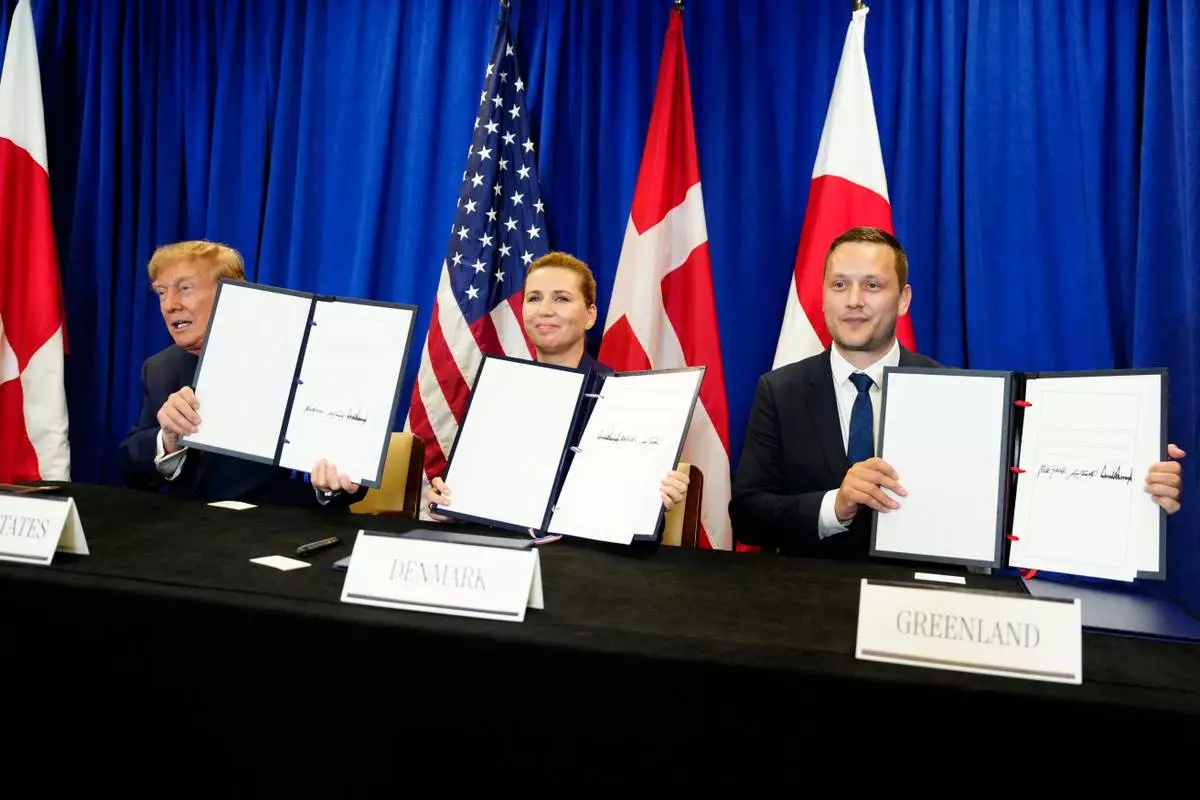
Denmark's Prime Minister Mette Frederiksen, center, Greenland's Prime Minister Jens-Frederik Nielsen, right, and US President Donald Trump at the signing ceremony of a security deal between the U.S., Denmark and Greenland at United Nations headquarters, Tuesday, Sept. 22, 2026. (Mads Claus Rasmussen/Ritzau Scanpix via AP)
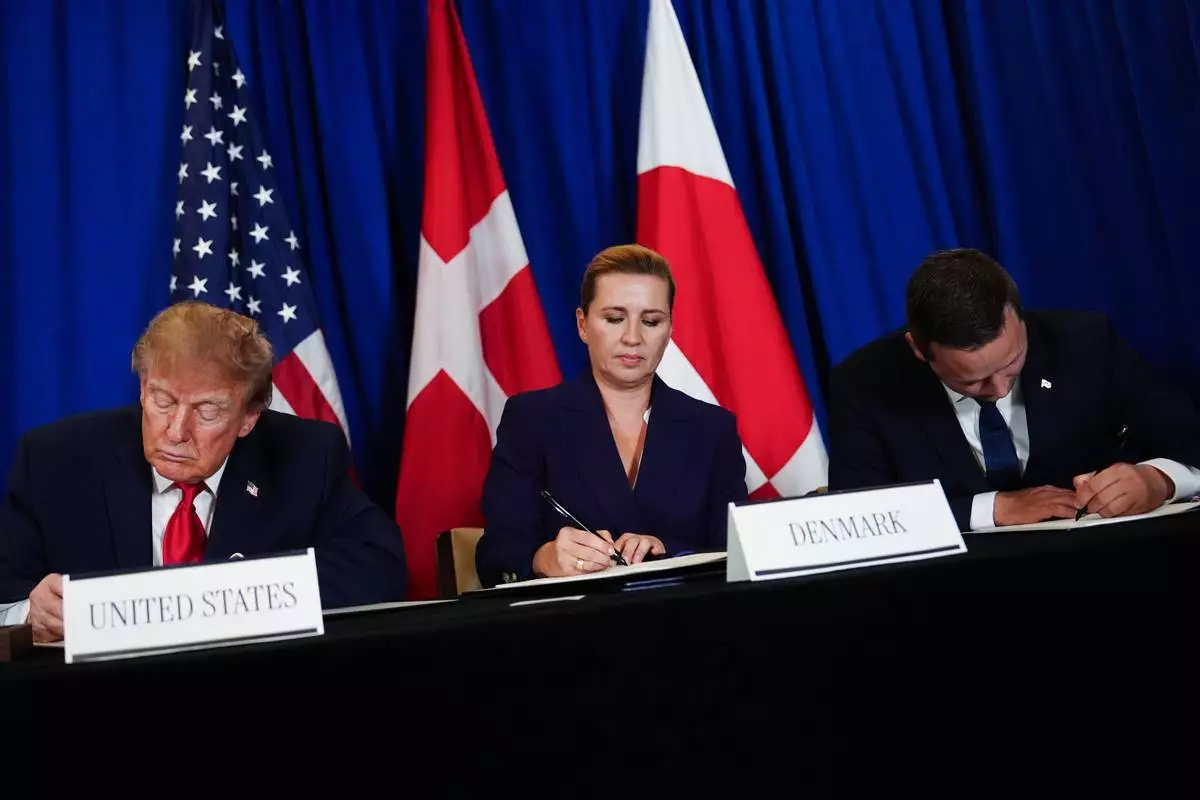
President Donald Trump signs a security agreement with Denmark's Prime Minister Mette Frederiksen and Greenland's Prime Minister Jens-Frederik Nielsen during the United Nations General Assembly, Tuesday, Sept. 22, 2026, at the UN headquarters. (AP Photo/Julia Demaree Nikhinson)
MEXICO CITY (AP) — Polo has grown into one of the most powerful Pacific cyclones in decades and was expected to skirt Mexico’s southwestern coast as a major hurricane, while another Pacific system, Odalys, strengthened Wednesday from a tropical storm to a hurricane without threatening land.
The U.S. National Hurricane Center in Miami has called Polo an “extremely dangerous” storm and forecast the system would turn sharply to the northwest before moving west-northwest over the next several days.
Early Wednesday, Polo was about 185 miles (300 kilometers) south of Zihuatanejo and 335 miles (540 kilometers) southeast of Manzanillo moving north at 2 mph (4 kph) with maximum sustained winds of 155 mph (255 kph), the center reported. That put it near the top of Category 4 strength, after earlier being a Category 5 storm.
“Fluctuations in intensity are expected, but Polo is expected to remain a very powerful major hurricane during the next few days,” the NHC said.
Odalys was a Category 1 hurricane and was about 1,295 miles (2,085 kilometers) off the southern tip of the Baja California peninsula of Mexico, moving east-northeast at 9 mph (15 kph) with maximum sustained winds of 75 mph (120 kph), the hurricane center said.
Mexican President Claudia Sheinbaum said experts indicated Polo was not likely to touch land. Still, hurricane-force winds extend up to 40 miles (65 kilometers) from the storm's center and tropical storm-force winds up to 105 miles (169 kilometers) from the eye, the U.S. center said.
Tropical storm conditions were expected along the Pacific coast in Guerrero, Michoacan and Colima states Wednesday into Thursday.
Polo on Tuesday became the third Category 5 hurricane of the Pacific season, following Genevieve and Lowell earlier this year. Category 5 is the highest level on the Saffir-Simpson scale, reflecting that a storm has maximum sustained winds exceeding 157 mph (253 kph).
The hurricane set residents along Mexico’s Pacific coast on edge once again after being walloped by a number of powerful cyclones in recent years. Beaches emptied and dark clouds swirled above choppy seas, while Mexican authorities temporarily suspended classes Tuesday in a number of areas. Mexico’s navy shut down ports in the states of Guerrero and Michoacán and warned civilians and fishermen to take care.
Concepción López Villegas was busily preparing her seaside restaurant for what may come. Strong waves were already lapping at the coastline of her city Lázaro Cárdenas in Michoacán. As men and children watched the stirring waters behind her, López Villegas said she feared powerful waves would destroy the small business she has worked decades to build.
“We're worried and trying to protect our businesses,” López Villegas said. “And of course, we're sad because it's our heritage, our legacy that from one moment to another could be destroyed.”
U.S. National Hurricane Center data shows Polo's winds reached speeds comparable to only a few hurricanes in the region in recent decades, primarily Hurricane Patricia, which had winds that reached 215 mph (346 kph) in 2015.
“This is one of the strongest storms ever in the (Pacific) Basin,” said Kristen L. Corbosiero, professor at the University at Albany’s Department of Atmospheric & Environmental Sciences.
Heavy rain could produce flash flooding and mudslides. About 3 to 6 inches (8 to 15 centimeters) of rain was forecast for Guerrero and Michoacán states, with smaller amounts possible for coastal portions of Oaxaca, Colima and Jalisco states.
The U.S. Embassy in Mexico issued a weather alert, instructing citizens to avoid water and beaches and to heed warnings from Mexican authorities.
“Even if the storm does not make direct landfall, heavy rain may produce life-threatening flooding and mudslides. Hazardous ocean conditions — intensified by storms — may result in deadly rip currents and rogue waves,” the embassy wrote in a statement.
The rapid intensification of the storm has stunned scientists and authorities alike, with the NHC writing in a report that it was “truly remarkable” how quickly Polo gained strength in 24 hours.
Philip Klotzbach, research scientist in the Department of Atmospheric Science at Colorado State University, attributed the intensification to the weather phenomenon known as El Nino, which has fueled crippling droughts in Mexico and Central America and floods in other parts of the region.
In the Pacific, it has resulted in warmer waters and wind patterns that act as fodder for hurricanes, he said.
“There are all the ingredients that hurricanes need to get really strong really fast,” Klotzbach said.
No Atlantic hurricanes have formed yet this year, and this year has set a record for the longest start to a season without a hurricane. The effects of this year’s El Nino crush storms before they get going.
Brooks reported from Atlanta.
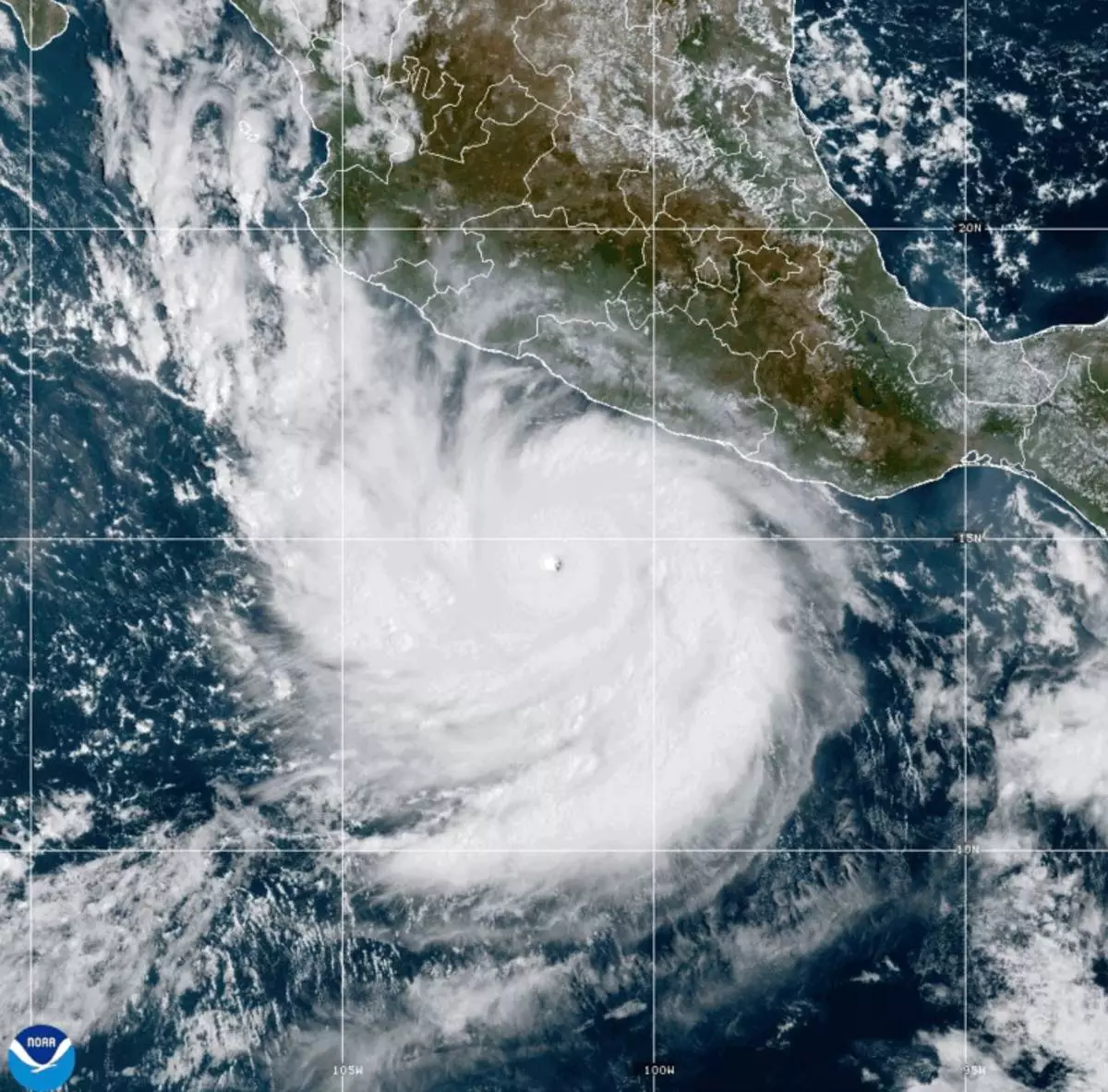
This photo provided by NOAA shows Hurricane Polo strengthening in the Pacific Ocean off the coast of Mexico on Tuesday, Sept. 22, 2026. (NOAA via AP)
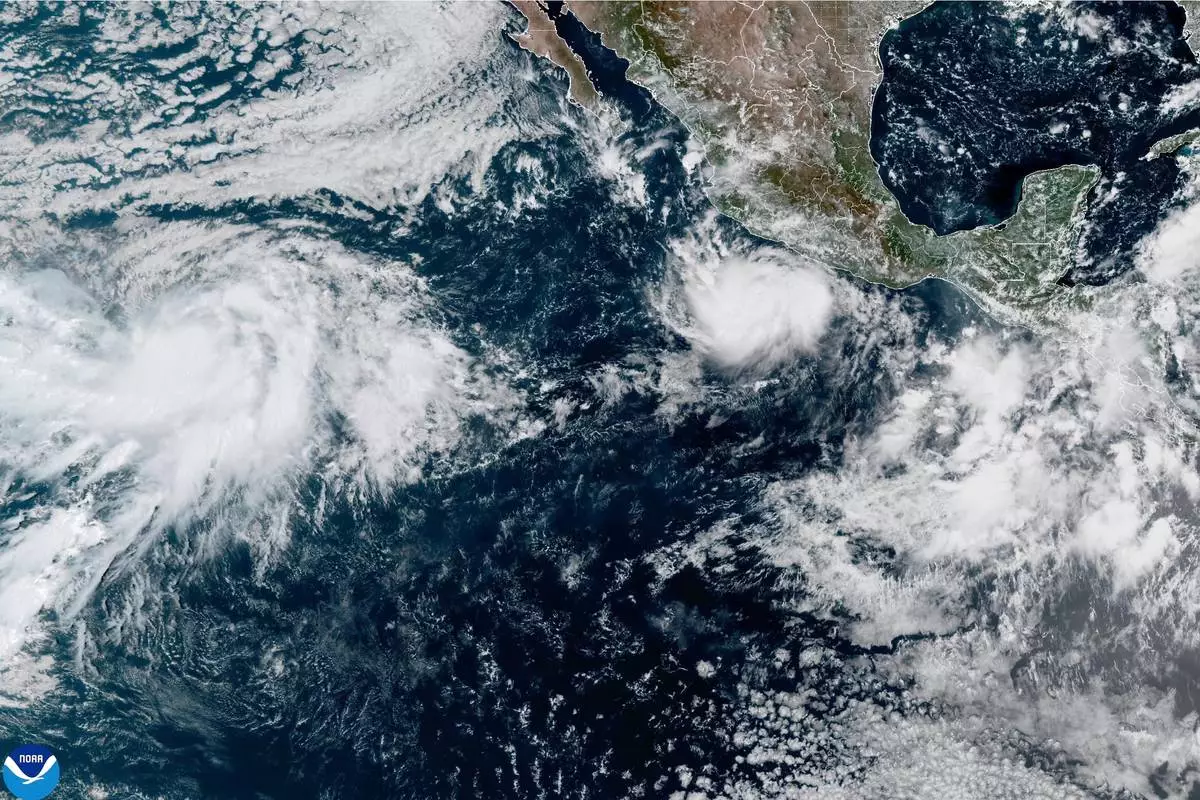
This photo provided by NOAA shows Hurricane Polo intensifying in the Pacific Ocean off the coast of Mexico on Monday, Sept. 21, 2026. (NOAA via AP)