AUSTIN, Texas (AP) — County election offices throughout Texas are scrambling to process a massive backlog of voter registration applications stemming from an error at the state level, a headache that is hitting just as they are preparing for voting to begin in the midterm elections.
The problem, which officials in the Republican-controlled state have not publicly defined, also could have disenfranchised people who wanted to vote in the state's March primary but whose registration applications were never processed, local election officials said during a news conference Wednesday.
“This is really out of left field. Knowing that this one element of (state) applications didn’t come through, and we had no insight on it,” said Chris McGinn, executive director of the Texas Association of County Election Officials.
The size of the backlog statewide hasn’t been determined, but the association said it is in the tens of thousands for some of the state's most populous counties. In Bexar County, which includes San Antonio, the election office received about 45,000 backlogged voter registration applications.
Some election offices will need to hire temporary workers to handle the crush, officials with the association said.
The issue started last October in the Texas Department of Public Safety, which among other things allows people to register to vote or update their voter registrations when they renew their driver’s license.
An unspecified error failed to send a large number of records to applicants' home counties, where the applications are processed and verified. Those records could be a new voter registration application or an update to an existing registration, such as a change of address.
The association of local election officials said its members did not receive any communication from the Department of Public Safety about why the backlog occurred or why they were not informed of the issue for nearly a year.
In a statement, the Department of Public Safety said certain records submitted online “were incomplete and not fully transmitted” to the secretary of state’s office. It said the “system issue” had been resolved, without elaborating on the nature of the issue. The department did not immediately respond to a request for further explanation. County officials said the problem appeared to be with the department's online portal.
Counties have until early in-person voting starts on Oct. 19 to finish processing the late-arriving applications.
During their news conference, county election officials said it is possible that some people might have been prevented from voting in the state's primary earlier this year or initially turned away because there was no record of them registering to vote or updating their registration.
The unexpected backlog comes as counties are already inundated with tasks leading up to the November election in a state with a nationally watched U.S. Senate race between Democratic state Rep. James Talarico and Republican Attorney General Ken Paxton.
The Texas Secretary of State’s office and county election leaders say voters don’t need to worry about their registration as long as it is submitted by Oct. 5. If a person shows up to vote and they do not appear on the voter rolls, election officials said they can cast a provisional ballot.
They also can check whether they are registered on the state's online registration site or call their county election office.
Wilder is a corps member for The Associated Press/Report for America Statehouse News Initiative. Report for America is a nonprofit national service program that places journalists in local newsrooms to report on undercovered issues.
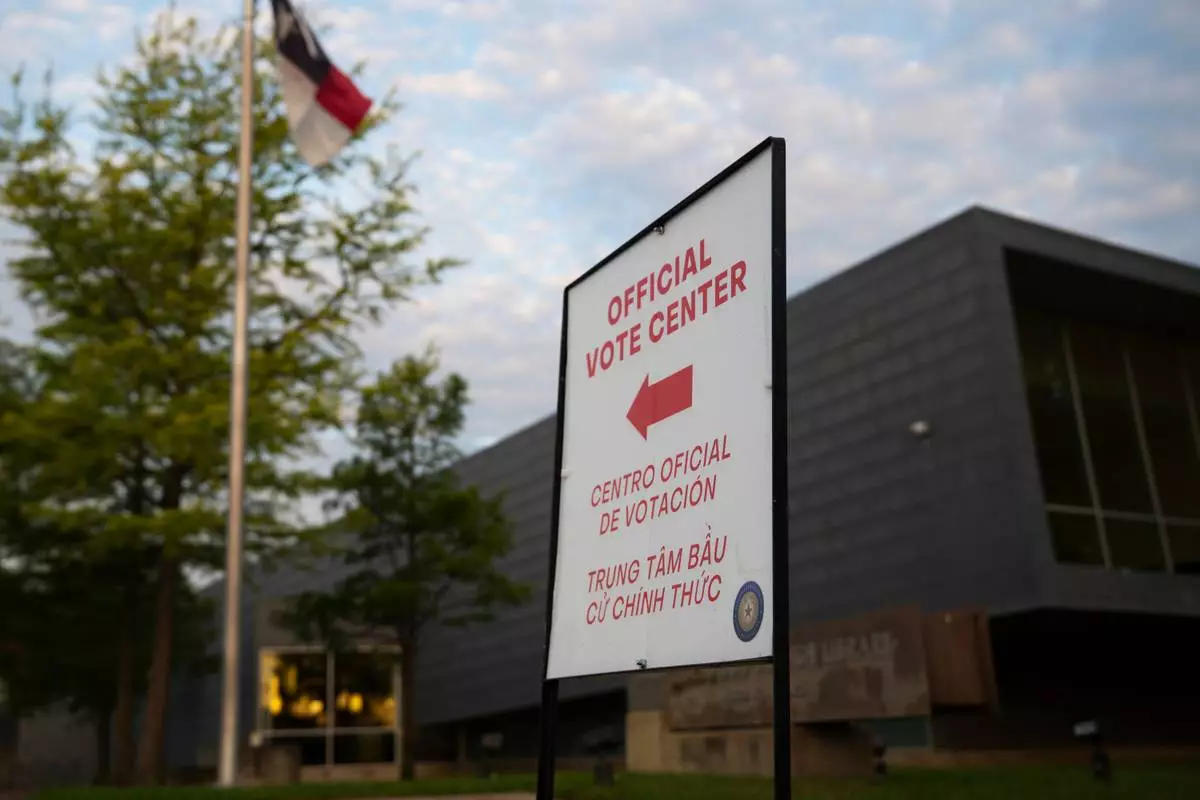
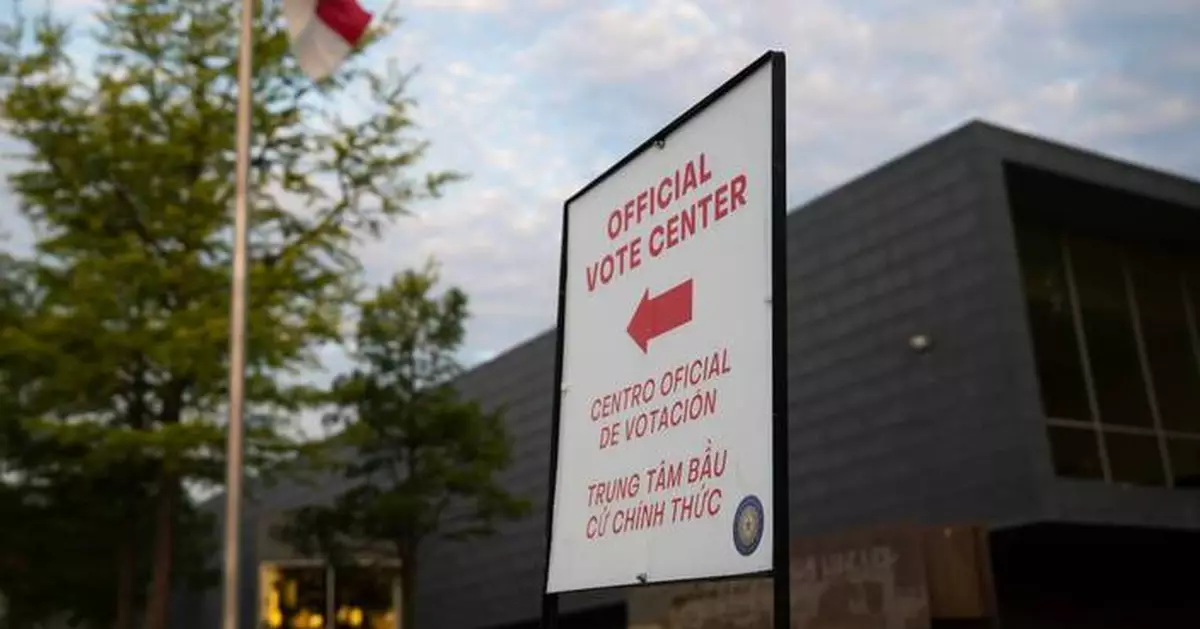
FILE - An official voting center sign stands outside of a polling location on May 26, 2026, in Dallas. (AP Photo/Gabriela Passos, File)
Diesel fuel, which powers the global economy and the American heartland, is hitting record prices as the war in the Middle East intensifies, leaving Republican candidates reeling and contemplating extreme steps that economists warn could only increase pain for consumers.
Republicans in key states like Iowa and Michigan called for ending exports of diesel refined in the United States to help boost domestic supply. President Donald Trump indicated he backs that step, though his energy secretary on Wednesday said a “blanket ban” won't happen. The U.S. has used 4.1 million barrels of diesel per day this year, and it has exported 1.5 million per day so far, according to S&P Global Energy.
The pain is obvious to anyone who drives a diesel-fueled vehicle or relies on a diesel generator to produce power. A gallon of diesel cost $6.52 Wednesday, up 73% from $3.77 right before the beginning of the war with Iran, according to AAA.
But the problem will likely spread to every consumer, fueling Democratic efforts to retake control of Congress by harnessing anger over runaway costs and an unpopular overseas conflict.
“The price of diesel touches everything in our economy that needs to move,” said Joseph Brusuelas, chief economist for RSM. “That includes the thing we buy the most of, groceries.”
Although regular gas prices usually get more attention, diesel has swiftly become a hot issue on the campaign trail. Adam Hamilton, a Democratic Senate candidate who has mounted a surprisingly strong challenge to Republican Sen. Roger Marshall in Kansas, told supporters in a Topeka coffee shop this week that farmers are afraid that it's getting harder to make ends meet.
“A war has sent up the price of diesel,” Hamilton said. “These guys said, ‘We don’t know if we’re going to keep the farm.’”
Elaine Luria, a Democrat running for a southeastern Virginia House seat, cited the high price of diesel at a Virginia Beach roundtable Wednesday.
“Iran is no further from acquiring a nuclear weapon. And Iran’s proxy groups, such as the Houthis in Yemen, are now expanding the footprint,” she said in an interview, adding that the conflict is becoming “an expanding economic crisis.” Luria is a former congresswoman trying to reclaim her seat from Republican Rep. Jen Kiggans.
Republicans like Rep. Ashley Hinson, who is running for Senate in Iowa, have called for an immediate end to the war and a ban on selling diesel overseas, hoping the extra fuel would then lower prices for Americans.
“Iowans are being squeezed and shouldn’t have to foot the bill at the pump or the checkout line for the war in Iran,” Hinton said. “We need to use every option at our disposal to provide some relief from high prices.”
The idea has split Republicans. Senate Majority Leader John Thune of South Dakota said he's open to it. Sen. Chuck Grassley, who is also from Iowa, has become the proposal's strongest champion, rejecting criticism from his colleagues from fuel-producing states.
“IF U CAN EMBARGO CHIPS U CAN EMBARGO DIESEL,” Grassley posted on social media, referring to export controls on computer technology.
Trump on Tuesday told reporters that “I've called for that too,” although Treasury Secretary Scott Bessent said the administration was still exploring how it might lower diesel prices. Energy Secretary Chris Wright echoed that point Wednesday, telling a climate conference in New York that “nobody wants a full blanket ban of zero exports of diesel, that's not what's being discussed,”
Diesel prices have skyrocketed due to a collision of events.
The Middle East produces a disproportionate share of the oil used to refine diesel, leading its price to rise faster than gasoline since the conflict began in February. The closure of the Strait of Hormuz during the war took about 20% of the world’s oil off the market, which raised the prices of diesel, gasoline and jet fuel.
Some of that supply has come back, but it’s nowhere near prewar levels, said Debnil Chowdhury, who leads the Americas and Europe fuels and refining team at S&P Global Energy. Then there were significant attacks by Ukraine on refineries in Russia, taking 800,000 to 1 million barrels per day of diesel off the market, according to S&P.
“These attacks have been pretty prominent," Chowdhury said. "If there is a way to a peace deal or a peace agreement announcing that there will be no more attacks on Russian refineries, on Middle Eastern refineries ... that would obviously make the largest impact on the underlying price.”
“The last few months eroded everyone’s cushion, but the last few weeks? Diesel went from under $6/gallon to over $6.53. Again, that was just in the last two weeks. You tell me what business, small or even large, budgeted for that,” William Stern, chief executive officer of Cardiff, a San Diego-based small business lender that's seen requests for loans spike due to the price increase, wrote in an email.
An export ban could make an impact — in the wrong direction. The American Petroleum Institute warned that diesel prices would actually rise for most Americans if an export ban is enacted, a caution shared by several economists.
“That will result in Americans taking a one-two punch for food and fuel prices that just don't stop,” Brusuelas said.
If U.S. refineries, which take crude oil and turn it into gasoline, diesel and jet fuel, stopped exporting diesel, they would wind up with a surplus of the material. They would need places to store it. Once those storage tanks filled up, analysts warn, refiners would have to stop making diesel. But they can’t just switch off diesel production without effectively cutting the supply of those other fuels and raising their prices.
“There really is no easy way to repair the kind of damage it would be to the global diesel supply chain,” Chowdhury said. “It really will have this effect across the entire global economy."
He added that "the chances of a global recession would increase massively as well.”
Phil Verleger, a longtime energy economist who advised the federal government during the 1970s oil shock, said he thought a diesel export ban could bring prices down but still have an extreme cost. ”In a couple decades," he warned, “the U.S. fossil fuel industry is dead.”
That's because the U.S. has been a reliable supplier of diesel to other countries that would likely look elsewhere if it cuts off supply. Verleger and other economists cited former President Richard Nixon's ban on the export of soybeans in 1973, which led to the rest of the world shifting to Brazil as a more reliable supplier. Now, the South American country is growing faster than the U.S.
But Verleger, who comes from an Iowa farming family, says he understands the visceral pain that a diesel spike causes, even though he also knows the dangers of trying to regulate it away.
“It’s terrible economics, the long-term consequences will be horrible,” Verleger said. “If I were an elected politician, I'd do it."
Riccardi reported from Denver and Bussewitz reported from New York. John Hanna in Topeka, Kansas, and Sarah Rankin in Virginia Beach, Virginia, contributed to this report.
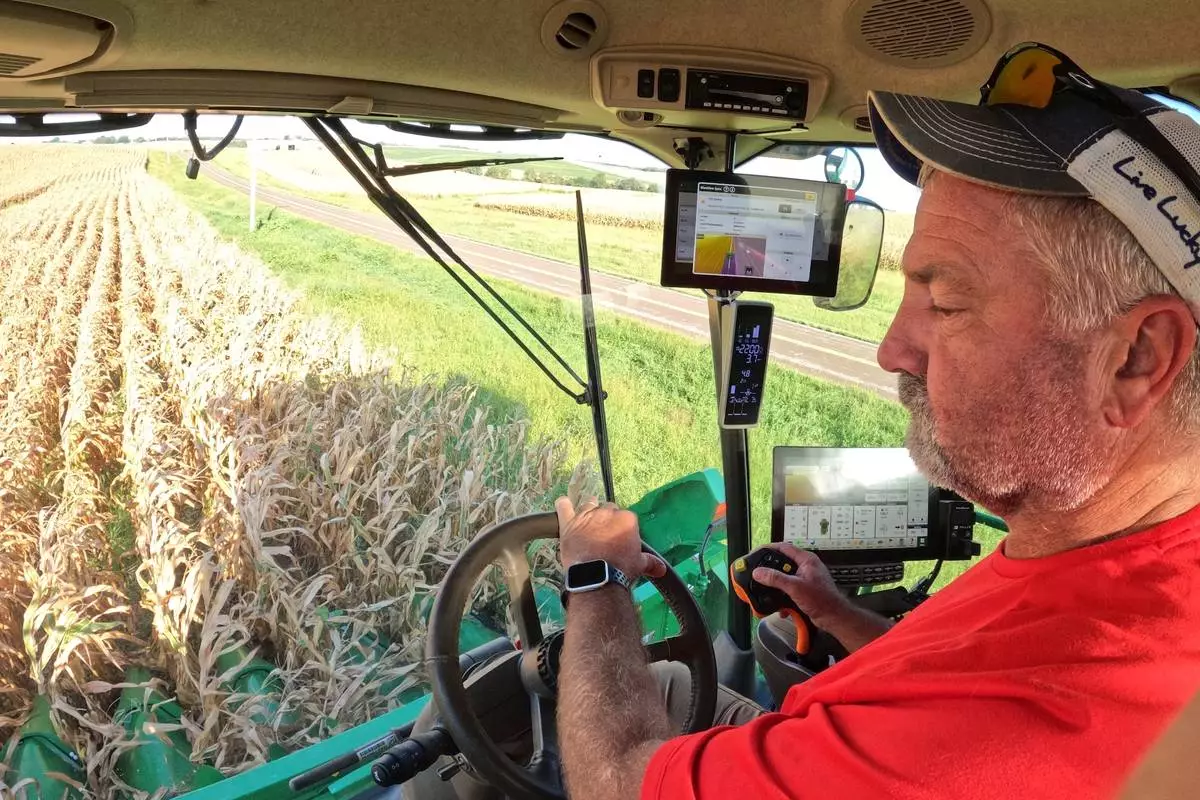
Farmer Jason Kurtz harvests corn Tuesday, Sept. 8, 2026, near Forest City, Mo. (AP Photo/Nick Ingram)
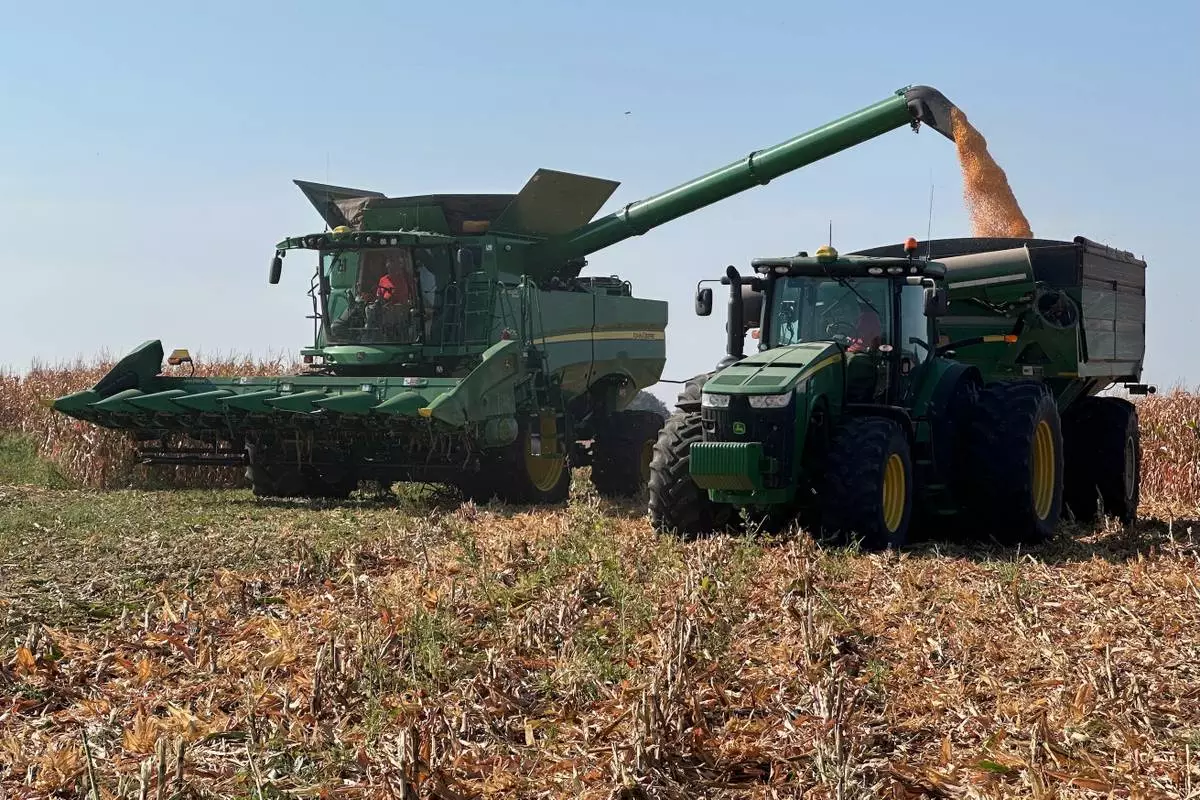
Farmer Jason Kurtz harvests corn Tuesday, Sept. 8, 2026, near Forest City, Mo. (AP Photo/Nick Ingram)