CHICAGO (AP) — Chicago Cubs third baseman Alex Bregman is thankful he’s not a little shorter.
Sporting a discolored left eye after being struck by a foul ball in the on-deck circle Sunday, the three-time All-Star said it could’ve been worse.
“Super lucky it hit where it hit and just a lot of gratitude that it wasn’t a few centimeters higher,” he said before Wednesday night’s game against Miami.
The ball, off the bat of teammate Michael Busch n Cincinnati, caused several facial fractures.
With the postseason approaching, the Cubs are glad the injury won’t require a stint on the injured list.
Bregman said he’ll likely start shagging ground balls in a day or so and will be trying out new styles of helmets to protect the eye.
“The whole left side of my face has been a little bit numb,” he said.
The Cubs can clinch an NL wild-card berth with a win Wednesday night or an Arizona loss.
“He’s still got significant swelling in his face and his eye that needs to improve,” Chicago manager Craig Counsell said Tuesday. “But all things considered, he’s in a good place.”
Bregman was on deck in the fourth inning of a 9-1 win at Cincinnati when he was hit on the left side of his face by Busch’s check-swing foul. Bregman immediately jogged toward the Cubs’ dugout and covered his face before going back to the clubhouse with an athletic trainer.
“When everything was going down on Sunday afternoon, I think that we all thought the worst case might be a possibility,” president of baseball operations Jed Hoyer said Tuesday. “And all the news since then has been really good. He’s had a lot of different doctor’s appointments, and they’ve been positive. And I think we have to take it one step at a time.”
Bregman is batting .262 with 26 homers and 89 RBIs in 153 games during his first season with Chicago. He signed a $175 million, five-year contract with the Cubs in free agency.
The 32-year-old Bregman got off to a rough start in his new home, hitting just .229 with two homers in his first 20 games. But he has been one of Chicago’s most productive players since the All-Star break, batting .305 with 17 homers and 48 RBIs in his last 57 games.
Bregman also has excelled in the postseason in the past. He won two World Series championships with the Houston Astros. He appeared in at least two postseason games in each of the previous nine years.
See AP’s full MLB coverage here

A fan holds a sign supporting Chicago Cubs' Alex Bregman during a baseball game against the Miami Marlins Tuesday, Sept. 22, 2026, in Chicago. (AP Photo/Paul Beaty)

Chicago Cubs' Alex Bregman, center, looks on from the dugout during the ninth inning of a baseball game against the Miami Marlins Tuesday, Sept. 22, 2026, in Chicago. (AP Photo/Paul Beaty)

Chicago Cubs' Alex Bregman, center, looks on from the dugout during the ninth inning of a baseball game against the Miami Marlins Tuesday, Sept. 22, 2026, in Chicago. (AP Photo/Paul Beaty)
Meta is going all in on a consumer-friendly AI agent and pushing forward with AI-powered wearable devices during a moment in the industry when its CEO Mark Zuckerberg acknowledged it is a “wild time to be building.”
At the company's annual Connect conference on Wednesday, Zuckerberg opened his keynote address by saying “it’s no secret that people in the industry have a wide range of views about how the future is going to go.” But at Meta, he said, “we are optimists because we believe in people.”
Zuckerberg has distanced himself and Meta from recent calls by rival companies for a coordinated slowdown in the development of advanced artificial intelligence, arguing that individual labs can and should ensure their technology is safe.
“We believe that the best way to create a positive future for everyone is to put power in people’s hands," he said at the conference. "We believe that empowering people is the source of prosperity in the world, that the highest purpose of superintelligence is creation and invention — not automation — and that the path to a safe future is to distribute this technology widely and create the right checks and balances, rather than concentrating it in the hands of just a few.”
Zuckerberg has long said he believes wearable AI will eventually replace smartphones as the primary way people interact with technology. At the conference, the company unveiled a slew of updates to its smart glasses and virtual reality goggles, which let people control their interface using their voice, eyes and hand and finger movements.
Zuckerberg said that Meta's recently launched agent Muse is the “centerpiece" of Meta's hopeful outlook for the future of AI.
Having an AI agent, which goes beyond chatbots in that it can act and perform tasks on a person’s behalf, has been a “sign of someone who is completely AI-pilled,” Meta's chief AI officer Alexandr Wang said at the conference. With Muse, Wang said, Meta is making agents more accessible and bringing “personal superintelligence” to everyone.
With the help of a mascot for the agent that looks like a plush toy, Wang and senior leadership at Meta demonstrated different uses for the Muse in everyday life. Users will be able to have real-time voice conversations and video chats with their version of the agent, which can also be customized to look and sound unique. The agent can help users plan travel, book reservations, order groceries and complete other helpful tasks. Meta has partnered with companies like OpenTable, Spotify, Ticketmaster and more to help its agents complete these tasks.
The company is working to bring Muse to its AI glasses lineup for hands-free access.
Zuckerberg also said Meta is planning to release a keychain-like device that has the “whole Muse experience” packed into it, called Muse Charm, in time for the holidays in December. The palm-sized device will allow users to engage with a personal AI agent without using a phone, computer or smart glasses.
Meta is launching an audio version of its more widely known smart glasses. The new product will let users listen to music, make calls and talk with an AI assistant — there’s just no screen, and no video recording, which has raised privacy concerns with some users recording people without permission. Called Ray-Ban Meta Audio, it will be available in October and the cost starts at $349.
Meta is also building upon a previous feature that allowed glasses wearers to better hear a conversation in a noisy environment. Now, Zuckerberg said, a feature called hearing enhancement turns your glasses into an “FDA-cleared, over-the-counter hearing aid” that can “compensate for perceived mild to moderate hearing loss.” The feature will launch in the U.S. later this year and will be available to add to supported AI glasses for $150, or with a Meta One subscription.
The Meta Ray-Ban Display glasses have been upgraded with new features, including improved cycling and transit navigation and a personalized hologram for video calls.
The company is also offering more styles to appeal to a broader range of people and says it will have more than 100 different options across its Ray-Ban, Oakley, and Meta Glasses by the end of the year. The glasses will also be available in more countries, including Turkey, Hong Kong and the Philippines.
The newest generation of the classic Ray-Ban Meta glasses is also now available, with what the company touts as a slimmer, sleeker design and increased battery life, among other upgrades. The Generation 3 models are available now with prices starting at $449.
The most drastic update announced at the conference is to the company's VR device, now called Meta VR Glasses. That is because the previous bulky headset has been replaced by a set of glasses, which weigh about 100 grams (3.5 ounces), or roughly as much as a deck of cards. In comparison, the Meta Quest 3, which launched in 2023, weighs about five times that much. The difference feels similar to that between scuba diving and swimming goggles.
While they are significantly lighter and more sleek than VR predecessors, the glasses require a wired connection to an external puck for battery, storage and compute.
Instead of controllers or a neural wristband that past headsets or glasses required, the VR glasses use an eye-tracking camera and sensor that essentially lets your eyes be the computer cursor and your fingers the mouse clicker. If you want to open an app, for instance, you look at it and use hand and finger gestures, or use voice commands to talk to the Meta AI agent.
In a demo at its Menlo Park, California, headquarters on Tuesday, Meta showed off entertainment and work offerings on the glasses, including sports events and concerts that replicate the experience of having courtside or front-row seats. A new feature called “VR Enhanced Cinema,” meanwhile, seeks to immerse viewers in the movie by transforming their surroundings beyond the screen into a virtual world inspired by the movie, with dynamic effects, 3D visuals and spatial audio.
Once the glasses launch, users will have access to more than 100 immersive live sports events from that courtside-like view, because of partnerships with ESPN, MLB, NBC Sports, TNT Sports and UFC. The glasses can also function as a gaming console, Meta said, and there will be more than 75 games at launch that users can play solely with hand gestures.
The glasses can also be used for work. Users can conjure a virtual keyboard on any flat surface and use the display as their computer screen (or several screens) only they can see. For even more of a robust setup, users will be able to connect their Mac or Windows PC to seamlessly transition onto these screens, and bring their own keyboard and mouse. The VR glasses, unlike headsets of the past, will let wearers see their desk setup and surroundings while they work.
One of Zuckerberg's live demos of the night also showed off the glasses' ability to use hologram technology to project a photorealistic digital version of a person, including their real-time expressions and reactions, for hands-free video calling.
The VR glasses will launch in the spring of 2027 and cost $1,300.
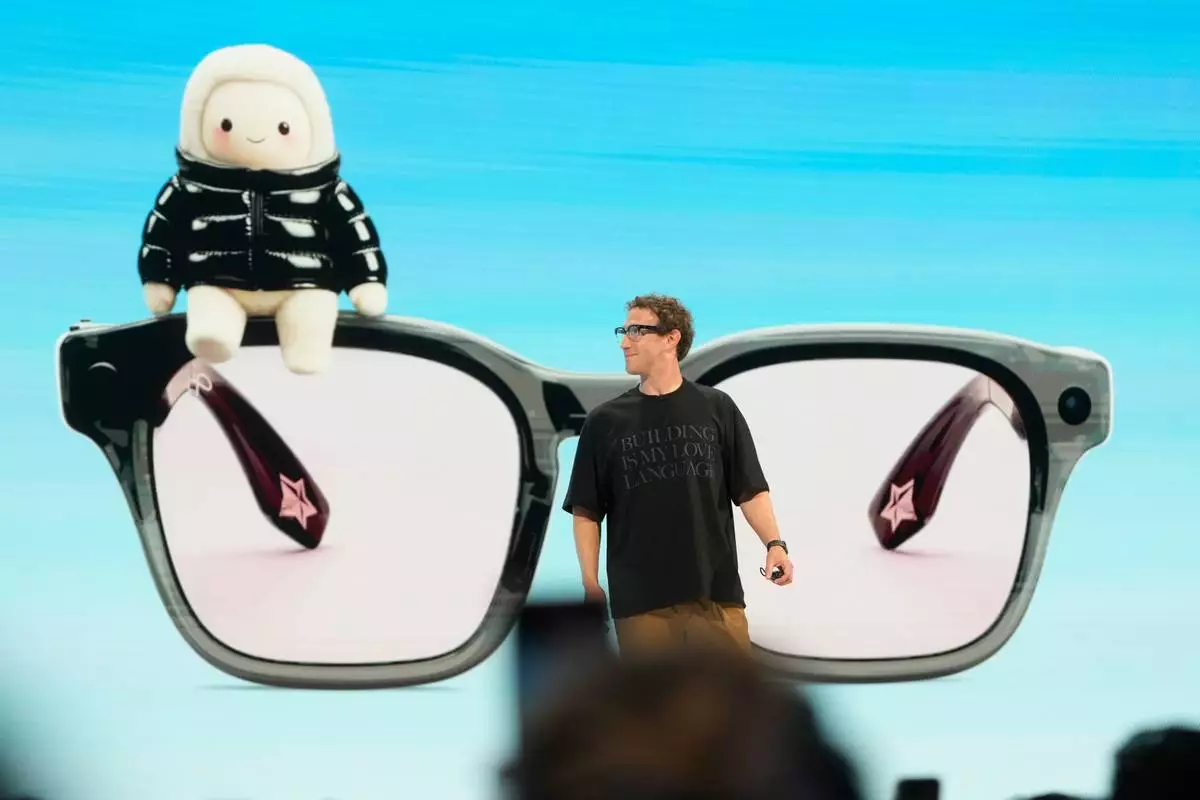
Meta CEO Mark Zuckerberg speaks during the Meta Connect conference, Wednesday, Sept. 23, 2026, in Menlo Park, Calif. (AP Photo/Jeff Chiu)
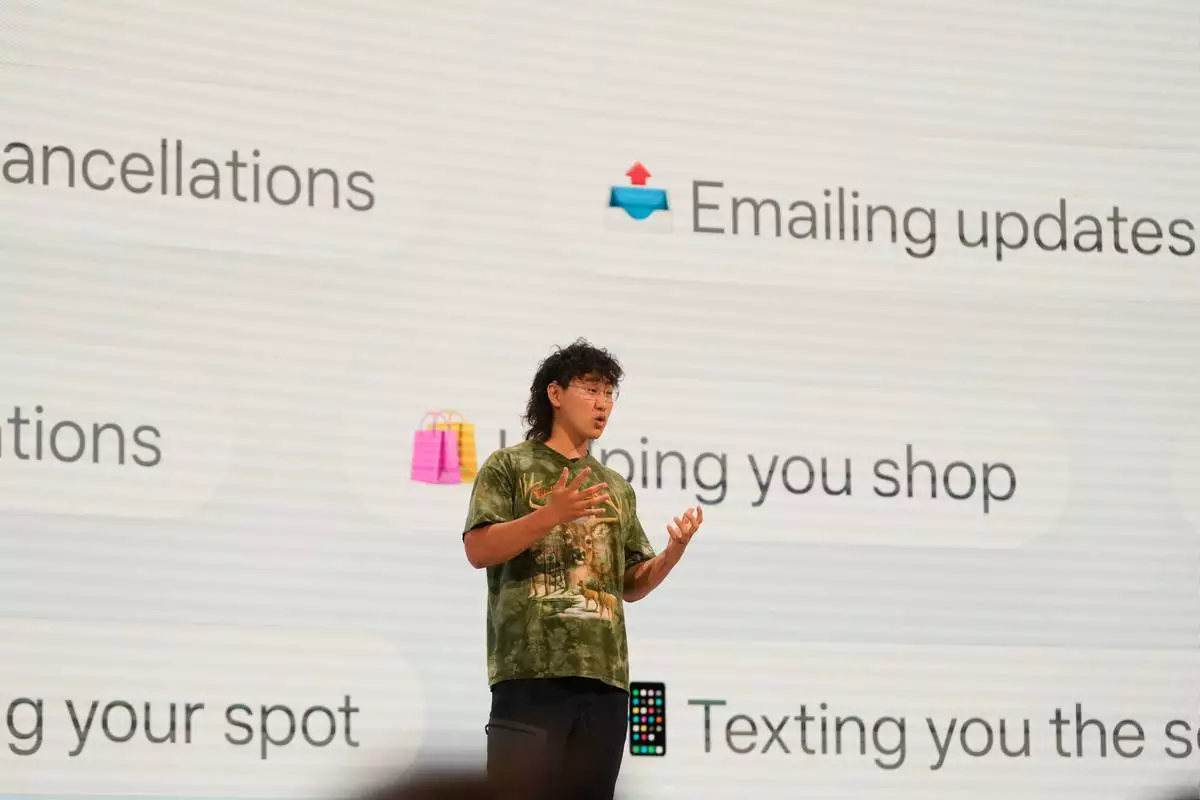
Alexandr Wang, Meta Chief AI Officer, speaks during the Meta Connect conference, Wednesday, Sept. 23, 2026, in Menlo Park, Calif. (AP Photo/Jeff Chiu)
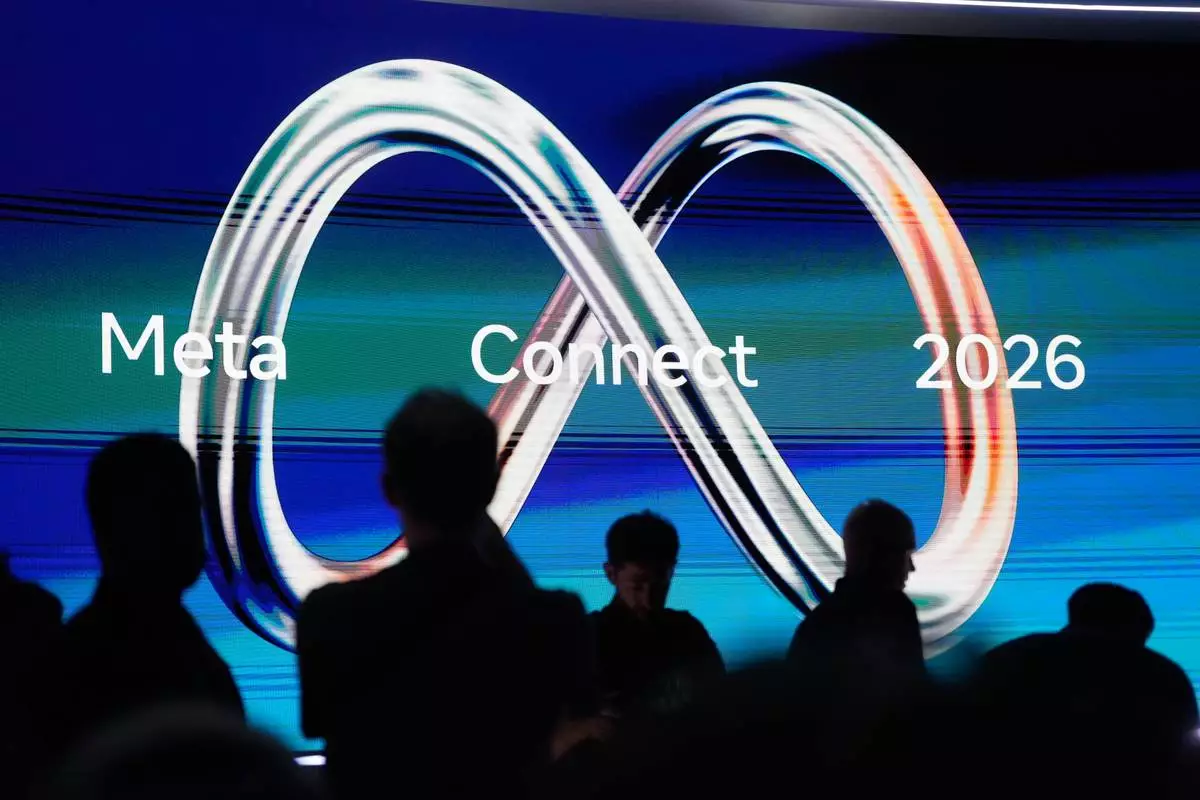
Attendees wait for Meta CEO Mark Zuckerberg's keynote address during the Meta Connect conference, Wednesday, Sept. 23, 2026, in Menlo Park, Calif. (AP Photo/Jeff Chiu)
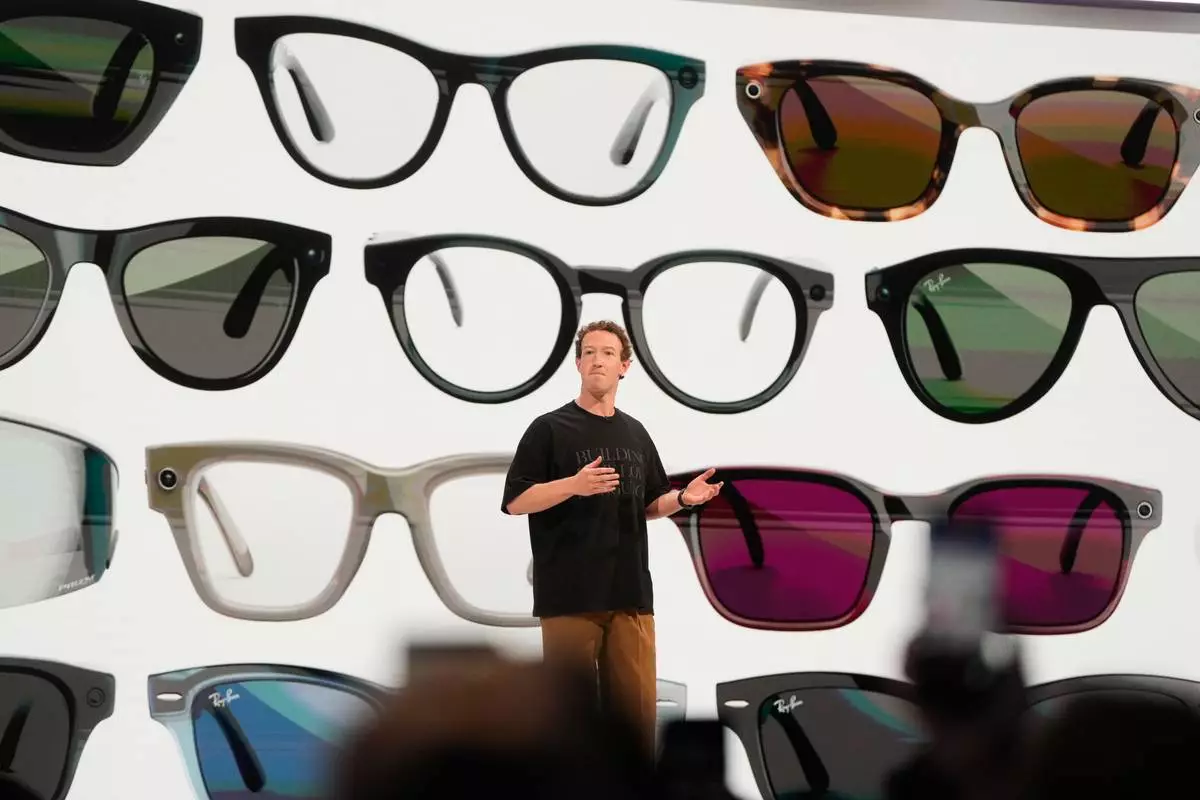
Meta CEO Mark Zuckerberg speaks during the Meta Connect conference, Wednesday, Sept. 23, 2026, in Menlo Park, Calif. (AP Photo/Jeff Chiu)
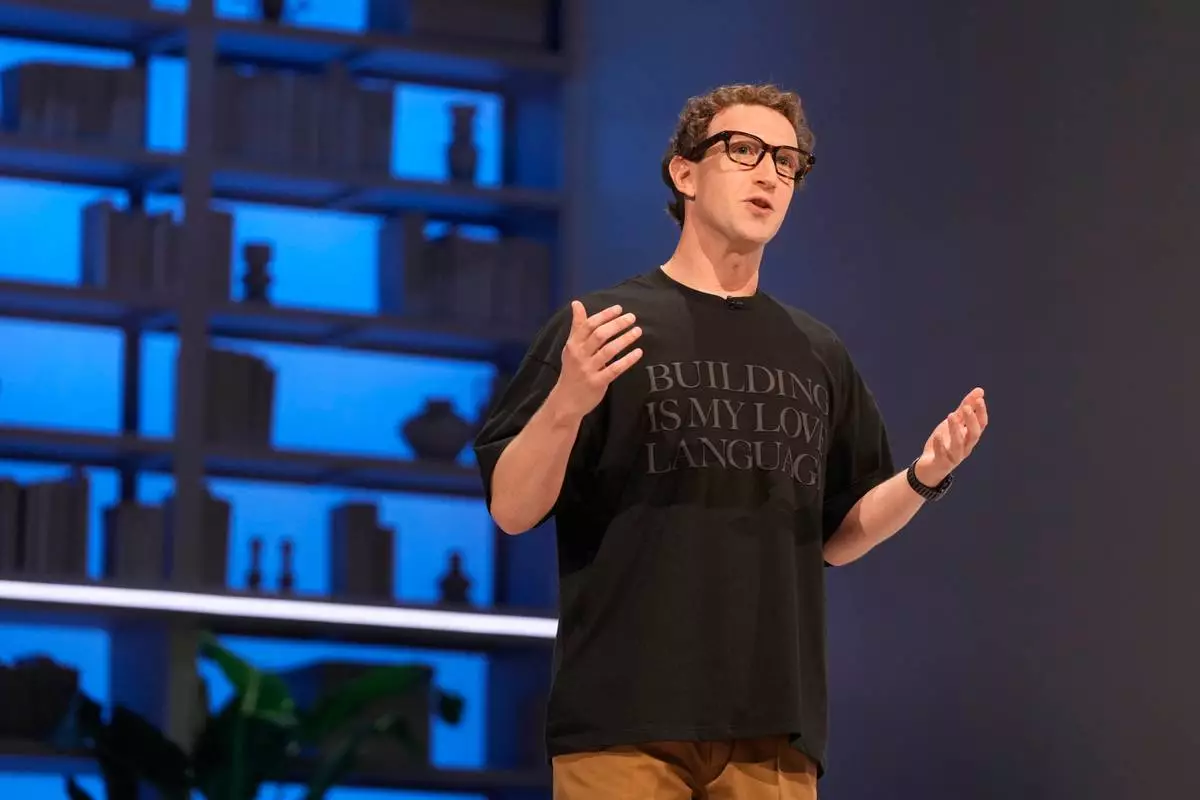
Meta CEO Mark Zuckerberg speaks during the Meta Connect conference, Wednesday, Sept. 23, 2026, in Menlo Park, Calif. (AP Photo/Jeff Chiu)