New initiatives will reach more than 4,000 youths in Singapore, introduce semiconductor concepts from age 10, and connect emerging talent across Asia
SINGAPORE, Sept. 24, 2026 /PRNewswire/ -- Singapore's semiconductor sector is widening its talent pipeline, with new initiatives reaching students from primary-school age through to university, while giving youths more opportunities to experience the industry first-hand and build connections across the region.
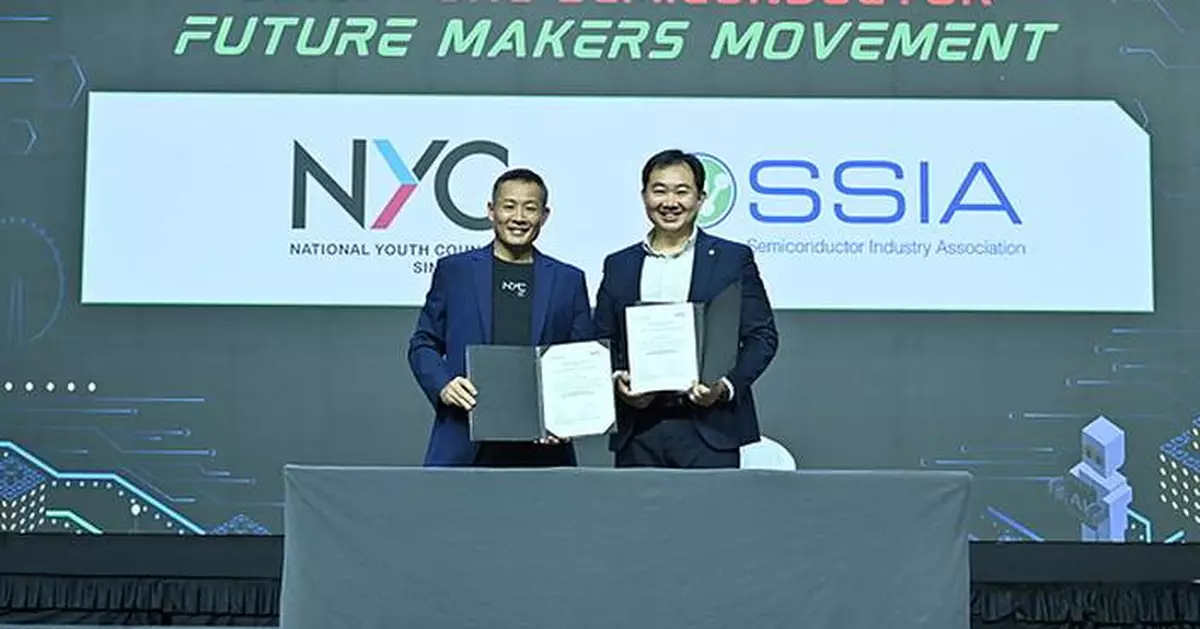
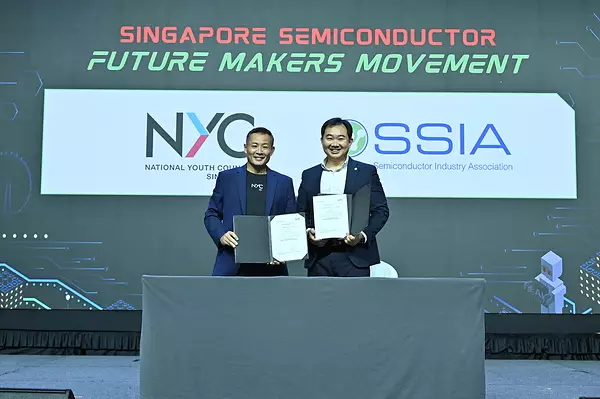
David Chua, CEO, National Youth Council, and Ang Wee Seng, Executive Director, SSIA, mark a three-year partnership to expand semiconductor industry exposure, Job Tasters and mentoring opportunities for youths.
The global semiconductor industry will need more than one million additional skilled workers by 2030, according to Deloitte, intensifying competition for engineers and technical talent. The scale of the challenge means the industry needs to widen the pipeline earlier and strengthen connections between technical education and industry.
Announced by the Singapore Semiconductor Industry Association (SSIA), the initiatives include a primary-school engagement pilot, a three-year partnership with the National Youth Council (NYC), a semiconductor future makers camp and SSIA's first regional student talent exchange.
"Building talent does not start at hiring. Semiconductors are behind almost everything we use, yet much of the industry remains unseen by young people," said Ang Wee Seng, Executive Director of SSIA.
"It is not about asking children to choose a career early. It is about widening what they can imagine for their future and giving them the exposure and connections to see where they could contribute."
MORE FIRST-HAND EXPOSURE TO SEMICONDUCTOR CAREERS
Under a three-year partnership between SSIA and NYC, the semiconductor industry will support up to 1,000 Job Taster opportunities and 300 industry mentors, alongside broader industry engagement expected to reach more than 4,000 youths.
Part of the SG Youth Plan, the partnership will provide opportunities including micro-work experiences, job shadowing, company learning journeys, project challenges and short-term work attachments, alongside mentoring by semiconductor professionals.
"As we expand Job Taster and mentoring opportunities under the SG Youth Plan, our partnership with SSIA will give youths first-hand exposure to the semiconductor industry and connect them with professionals who can help them better understand the pathways and possibilities ahead," said David Chua, Chief Executive Officer of the National Youth Council.
MAKING SEMICONDUCTOR TECHNOLOGY VISIBLE EARLIER
At the primary-school level, SSIA will introduce a two-year pilot for students aged 10 and above using LEGO® Education's Computer Science & AI solution, coupled with semiconductor context provided by SSIA and industry.
The pilot aims to reach more than 600 students. Using physical models, programmable motors and colour sensors, students will explore coding, computational thinking and age-appropriate AI concepts while learning how chips enable sensors, smart devices, robots and AI applications.
SSIA and ams OSRAM are also developing a Semiconductor Future Makers Camp for children and youths aged seven to 16, planned for 2027. As Founding Industry Partner, ams OSRAM will contribute engineers, mentors and hands-on experiences around light, sensing and semiconductor technologies.
CONNECTING EMERGING TALENT ACROSS ASIA
SSIA also launches its first Regional Student Talent Exchange, bringing together more than 50 students and educators from India, Indonesia, Malaysia, Vietnam and Singapore.
Participants span disciplines including IC design, VLSI and embedded systems, electronics engineering and manufacturing, wearable electronics and computer science. The exchange will connect them with peers, industry leaders and Singapore's semiconductor ecosystem before they enter the workforce.
"By bringing students from different markets and technical disciplines together early, we want them to build the relationships and regional perspective they will need in an industry where innovation, manufacturing and supply chains cross borders," said Wee Seng.
"Semiconductors are a regional and global industry, and the talent driving this sector must have the same international outlook. Early opportunities for students to engage with industry and peers across borders can help build the networks, knowledge and perspectives that will shape their future careers," said H.E. Trần Phước Anh, Ambassador of Vietnam to Singapore.
"NIELIT greatly values its collaboration with the Singapore Semiconductor Industry Association (SSIA), which provides a meaningful platform for strengthening India–Singapore cooperation in the semiconductor and electronics ecosystem. The participation of students and faculty from NIELIT Deemed to be University campuses in the SSIA Regional Exchange and Summit 2026 is an important step towards providing our young talent with international exposure, industry insights and opportunities for knowledge exchange.
"Through this collaboration, NIELIT and SSIA are creating valuable avenues for academic–industry engagement, capacity building and development of globally relevant semiconductor talent. We look forward to further deepening this partnership and building stronger bridges between the semiconductor ecosystems of India and Singapore," said Prof. M. M. Tripathi, Director General, NIELIT.
** This press release is distributed by PR Newswire through automated distribution system, for which the client assumes full responsibility. **
SEMICONDUCTOR INDUSTRY TAKES TALENT PIPELINE TO PRIMARY SCHOOLS AND ACROSS ASIA