Young vocational talents from around the globe are putting their skills to the test across dozens of high-intensity events at the WorldSkills Competition in Shanghai.
Running from Tuesday to Sunday, the competition drew more than 1,300 participants from 68 countries and regions. Among the most dynamic events is hotel reception, where contenders were tasked with real-time simulations of managing a Melbourne hotel to test their front-desk problem-solving and service skills.
For 21-year-old Danish competitor Johanne Pedersen, a recent graduate, the competition serves as an invaluable platform for professional growth.
"I practiced a lot about like the hotel description, so learning it and knowing as much as I can and then also the city, so what to see and what to do and how are you in Melbourne or how are the Australians and what do they do," said Pedersen.
While front-desk hotel work might seem straightforward at a glance, the role demands poise, adaptive problem-solving, and cross-cultural fluency under pressure, making the contest both a rigorous benchmark and a springboard for Pedersen.
"It is challenging and I do like it and I love it. I wanted to attend the competition because I want to be better at what I do, also be challenged in the way of my work and see how I can become better at what I do," said Pedersen.
Denmark fielded 15 competitors across 13 disciplines this year, a delegation reflecting a broader global push to elevate essential skilled trades that, while often overlooked, remain fundamental to modern industries.
"I think lifelong learning is an important thing. You think if you're educated as an auto mechanic, then you know how to fix cars, but now we have electric cars. That's a different kind of skill. So I think you need to upgrade them also with new technologies," said Michael Starbæk Christensen, Danish Ambassador to China.

Young talents compete in vocational events at WorldSkills Competition in Shanghai
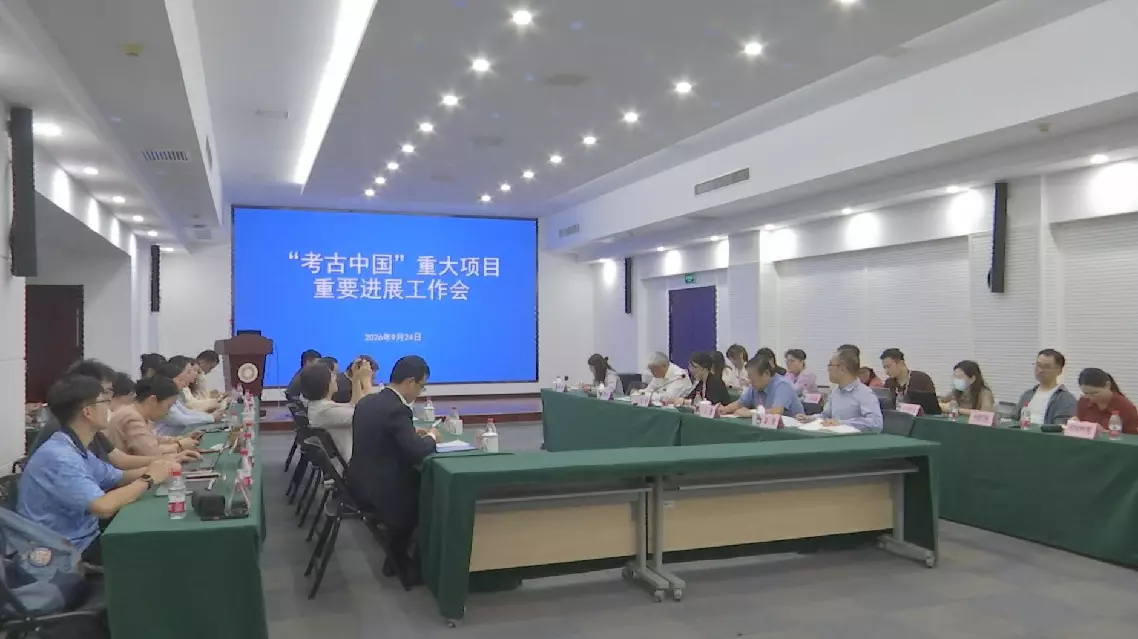
The National Cultural Heritage Administration (NCHA) held a meeting on major progress in the "Archaeology China" program in Beijing on Thursday, releasing the latest results of three joint archaeological projects in Kyrgyzstan, Egypt and Tunisia.
In Kyrgyzstan, archaeologists from northwest China's Shaanxi Province have joined in local institutions' archaeological surveys and excavations at Krasnaya Rechka, a large city site dating from the sixth century to the early 13th century.
Located in Kyrgyzstan's Chui Region, the Krasnaya Rechka site covers an area of approximately 20 square kilometers. It's known as New City as recorded in medieval Chinese and foreign documents.
Frequently mentioned in Chinese literature, the New City, along with the cities of Suyab and Talas, are all related to the Chu river valley in Kyrgyzstan.
Since 2018, the China-Kyrgyz joint archaeological team has unearthed more than 100 artifacts, including everyday pottery, bricks and coins.
They have also carried out systematic surveys of city ruins in the Chu river valley, identifying 24 sites.
These new discoveries reveal the historical process of urban system development in the region during the medieval period and present a vivid picture of exchanges and mutual learning among civilizations along the Silk Road.
In Egypt, the Institute of Archaeology at the Chinese Academy of Social Sciences launched a joint archaeological mission with Egyptian institutions in 2018 for studies at the Temple of Montu in the Karnak Temple Complex in Luxor, a city renowned for its rich monuments in southern Egypt.
They have uncovered a previously unknown second "sacred lake" at the site, which is an ancient man-made water reservoir covering more than 50 square meters.
The new discovery, termed as the Southern Sacred Lake, combines with the known Northern Sacred Lake to form a unique two-lake layout, marking the first time two sacred lakes are found in the same temple precinct. In Tunisia, a joint archaeological team, comprising Chinese and Tunisian professionals, has discovered remains of architectural complexes, water storage facilities, ash pits, and kilns dating from the Punic (3rd-1st centuries BC) to Roman (1st-5th centuries) periods at the Ben Arous Forest site since 2023.
They have identified functional areas such as temple areas, residential areas, private bath areas, and artisan areas at the site, refining the archaeological chronological framework for the transition from Carthaginian to Roman civilization in the western coastal region of North Africa.
Based on the findings at the site, they have also built a small urban heritage park, becoming a cultural landmark for China-Tunisia people-to-people and cultural exchanges and effectively promoting mutual understanding between the two peoples.
"China has practical, replicable and promotable experience in large-site heritage protection. Following the concepts and methods of China's large-site protection and using visual simulation, we have built a heritage park to show the Tunisian public that we can not only successfully excavate the site and do careful studies of the findings, but also display these findings," said Tong Wei, deputy director of the National Archaeological Research Center of the National Cultural Heritage Administration.
Chinese archaeologists release latest findings from overseas sites