Skip to Content Facebook Feature Image

Energy Department will spend $2 billion to squeeze more electricity from aging power grid

News

Energy Department will spend $2 billion to squeeze more electricity from aging power grid
News

News

Energy Department will spend $2 billion to squeeze more electricity from aging power grid

2026-09-24 19:00 Last Updated At:19:20

WASHINGTON (AP) — The Energy Department is set to announce it will spend almost $2 billion to try to squeeze more electricity out of the nation's aging and stressed power grid, as President Donald Trump's administration steps up efforts to avoid blackouts amid skyrocketing energy demand spurred by artificial intelligence.

The money will go toward 31 projects across 26 states that are expected to produce more than 23 gigawatts of additional electricity capacity — enough to power 16 million homes. The projects will use new technologies such as sensors and other devices to measure real-time weather conditions to ensure safe transmission or direct power away from congested or overloaded paths, the department said.

The upgrades could improve power reliability and lower electricity costs for about 100 million Americans, officials said.

“These investments will get more out of the infrastructure we already have, move more electricity across the grid, and help deliver affordable, reliable and secure power that will fuel American prosperity for decades to come," Energy Secretary Chris Wright said in a statement.

Wright was set to announce the grant program Thursday in Allentown, Pennsylvania. The Associated Press obtained program details before its public release.

The announcement comes amid warnings that AI’s voracious demand for power is threatening to overwhelm U.S. power supplies, as massive new data centers come online faster than new power plants can be built. It also comes as electricity bills rise faster than inflation in many parts of the U.S., blamed in some areas on demand from data centers.

The snowballing opposition to data centers in communities across the country has thrown a wrench into the plans of the world’s richest companies and transformed the midterm election landscape.

Trump continues to stick up for data centers, even as politicians from both major political parties criticize them and many communities try to block them. Trump, a Republican, said last month that U.S. communities that don’t have data centers will “end up being backwards and poor.”

In the meantime, Congress and some states are trying to push regulators to require utilities to use technology and new components to make grids more efficient and better able to serve new customers without additional power sources.

Utilities — which have seen rising profits and share prices during the data center-fueled energy boom — tend to stay away from such efficiencies because they make more money from building new power plants and grid infrastructure projects that are more expensive and take longer to complete, utility critics say.

Projects being announced Thursday will involve component enhancements on more than 1,500 miles (2,400 kilometers) of transmission lines and technological enhancements across nearly 21,000 miles (34,000 kilometers), the department said.

Projects were prioritized based on those that can be put into operation quickly, officials said. Money for the grants comes from the bipartisan infrastructure law enacted by Congress under then-President Joe Biden, a Democrat. The government's $1.9 billion in funding will be matched by $3.35 billion in cost-share funding from the recipients, the Energy Department said.

Trump has vowed to “unleash” the nation's energy sector in his second term, aiming to drive up record-setting domestic oil and gas production, strip away pollution restrictions on power plants and keep expensive coal-fired power plants operating past their retirement dates.

His administration has pushed to help tech giants build and connect data centers to power plants and high-voltage power lines and convert Cold War-era uranium enrichment plants into data center and power plant complexes.

Trump's Environmental Protection Agency this summer issued a plan that would make it harder for the public to learn about and comment on proposed AI data centers.
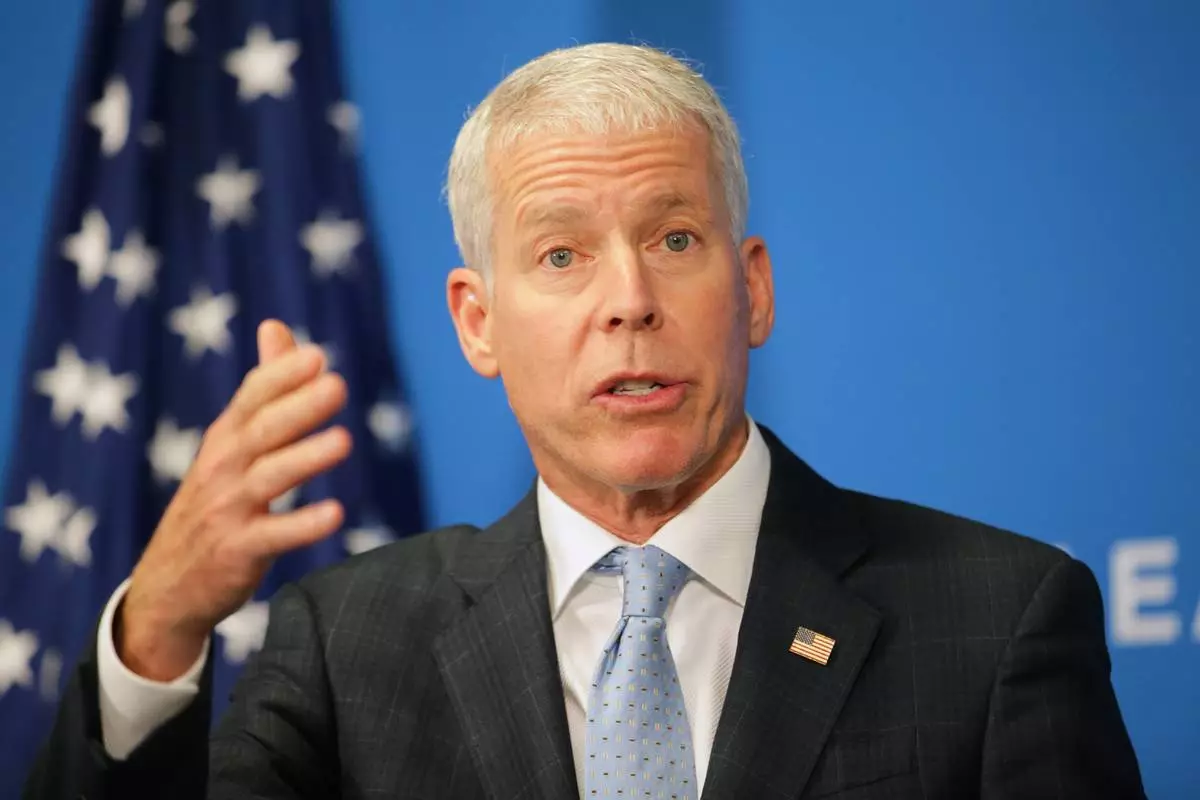
United States Secretary of Energy Chris Wright, talks to the media during a press conference on the sidelines of the annual General Conference of the International Atomic Energy Agency (IAEA) in Vienna, Austria, Monday, Sept. 14, 2026. (AP Photo/Heinz-Peter Bader)

United States Secretary of Energy Chris Wright, talks to the media during a press conference on the sidelines of the annual General Conference of the International Atomic Energy Agency (IAEA) in Vienna, Austria, Monday, Sept. 14, 2026. (AP Photo/Heinz-Peter Bader)
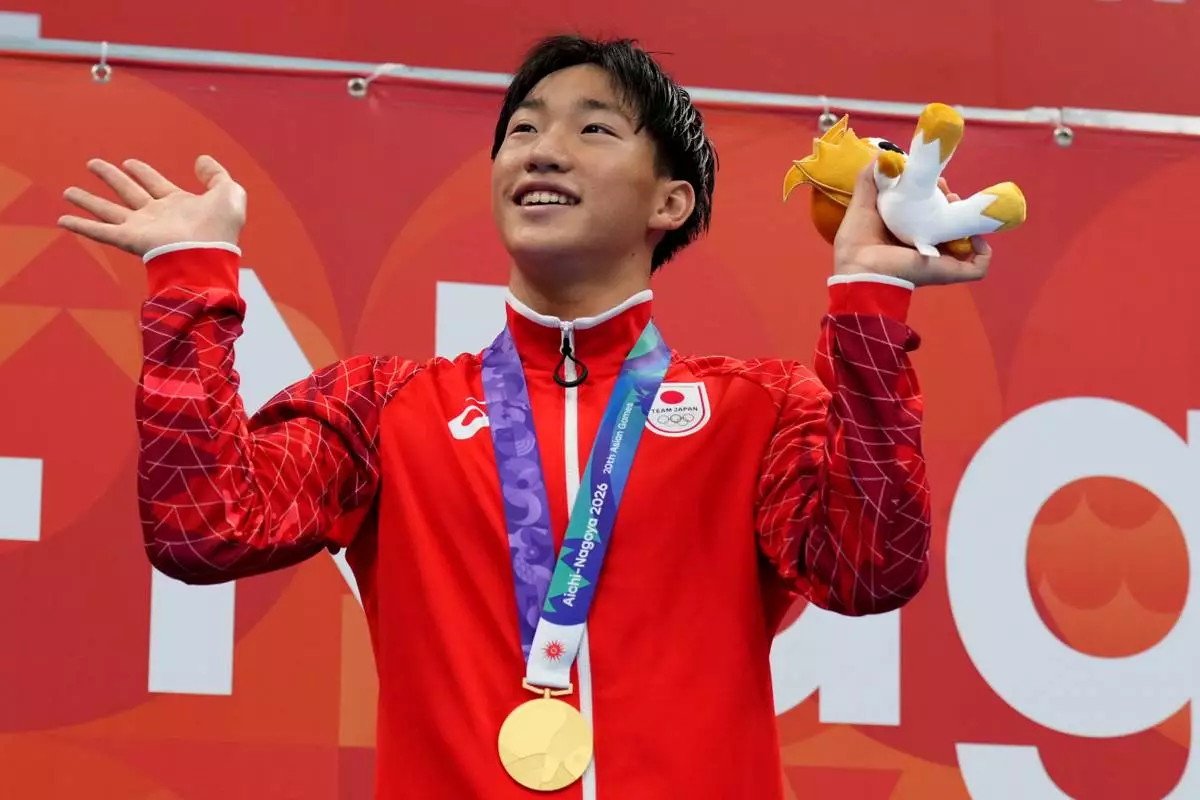
NAGOYA, Japan (AP) — Japanese teenager Shin Ohashi set a world record in the 200-meter breaststroke on Thursday at the Asian Games, swimming a time of 2 minutes, 4.83 seconds.

The old record was 2:05.48 set by Qin Haiyang of China at the 2023 swimming world championships in Fukuoka, Japan.

Denis Petrashov of Kyrgystan was second in 2:08.67 and Cho Sung-jae of South Korea took bronze in 2:08.76.

The 17-year-old Ohashi already had the fastest time of the year (2:06.59) and has been the breaststroker to beat this season.

Ohashi’s record temporarily took the spotlight away from China and 13-year star Yu Zidi. Yu has won three gold medals in the 200 butterfly, and 200 and 400 IM during the Asian Games. She will not swim any other individual events.

Ohashi won the 400 individual medley earlier in the week in the Asian Games, clocking 4:07.02. That world mark is held by Leon Marchand of France (4:02.50), who won four gold medals in the 2024 Paris Olympics.

Marchand has been among the presenters handing out medals on the pool deck during the games with swimming being held in the Olympic pool in Tokyo.

Ohashi is far from physically imposing. He is only 1.69 meters tall — just under 5-feet-7 — and broke Japan's national record earlier in the year in the 100-meter breaststroke.

That record had been held by Japan's Kosuke Kitajima, a four-time Olympic gold medalist and three-time world champions.

China, slightly in the shadows of Ohashi's world record, still won four gold medals in Thursday's seven events. Through five days in the pool — swimming ends Friday — China has won 25 gold medals in 34 events.

Chinese winners on Thursday included Wu Qingfeng in the women's 50 free (23.98); Zhang Zhanshuo in the men's 800 free (7:42.49); the men's 4x100 freestyle relay (3:10.60); the women's 4x200 free relay (7:49.37).

In addition to Ohashi, Japan also picked up gold from Kotomi Kato (2:22,57) in the women's 200 breaststroke.

The other gold on Thursday went to Mikhail Arkhangelskiy of Bahrain (22.91) in the men's 50-butterfly. Arkhangelskiy was born in Russia and has swum for Florida State University.

See full AP coverage of Asian sports here

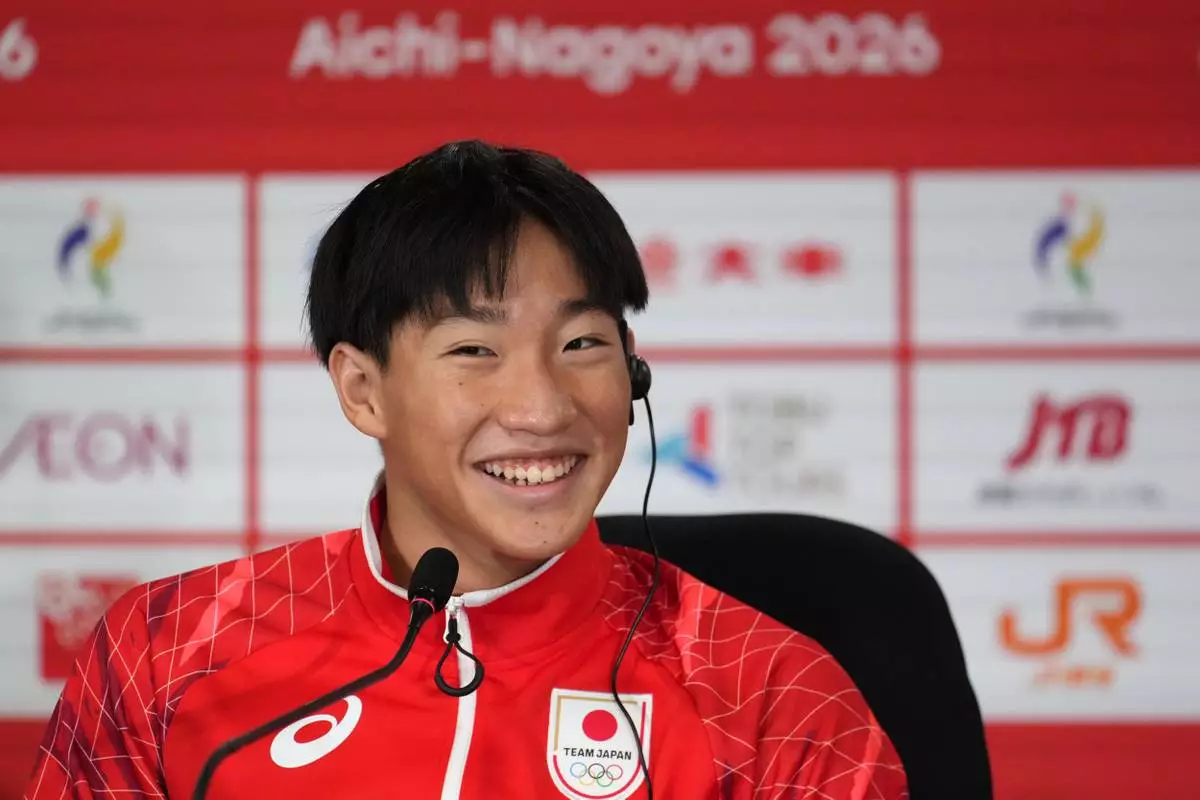
Shin Ohashi of Japan speaks during a press conference as he set a world record in the men's 200-meter breaststroke in swimming at the Asian Games in Tokyo, Japan, Thursday, Sept. 24, 2026. (AP Photo/Hiro Komae)

Shin Ohashi of Japan speaks during a press conference as he set a world record in the men's 200-meter breaststroke in swimming at the Asian Games in Tokyo, Japan, Thursday, Sept. 24, 2026. (AP Photo/Hiro Komae)

Gold medalist Shin Ohashi of Japan poses on the podium after the men's 200-meter breaststroke final in swimming at the Asian Games in Tokyo, Japan, Thursday, Sept. 24, 2026. (AP Photo/Hiro Komae)

Gold medalist Shin Ohashi of Japan poses on the podium after the men's 200-meter breaststroke final in swimming at the Asian Games in Tokyo, Japan, Thursday, Sept. 24, 2026. (AP Photo/Hiro Komae)

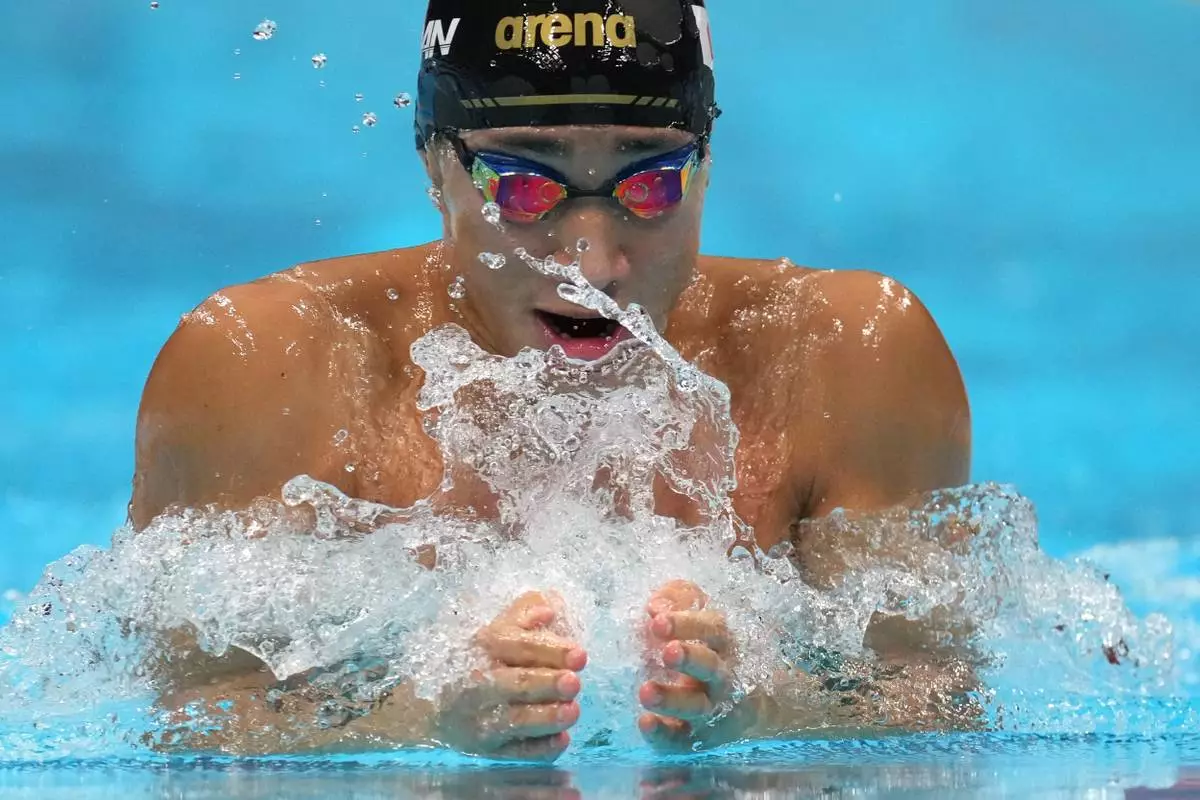
Shin Ohashi of Japan competes during the men's 200-meter breaststroke final in swimming at the Asian Games in Tokyo, Japan, Thursday, Sept. 24, 2026. (AP Photo/Hiro Komae)

Shin Ohashi of Japan competes during the men's 200-meter breaststroke final in swimming at the Asian Games in Tokyo, Japan, Thursday, Sept. 24, 2026. (AP Photo/Hiro Komae)

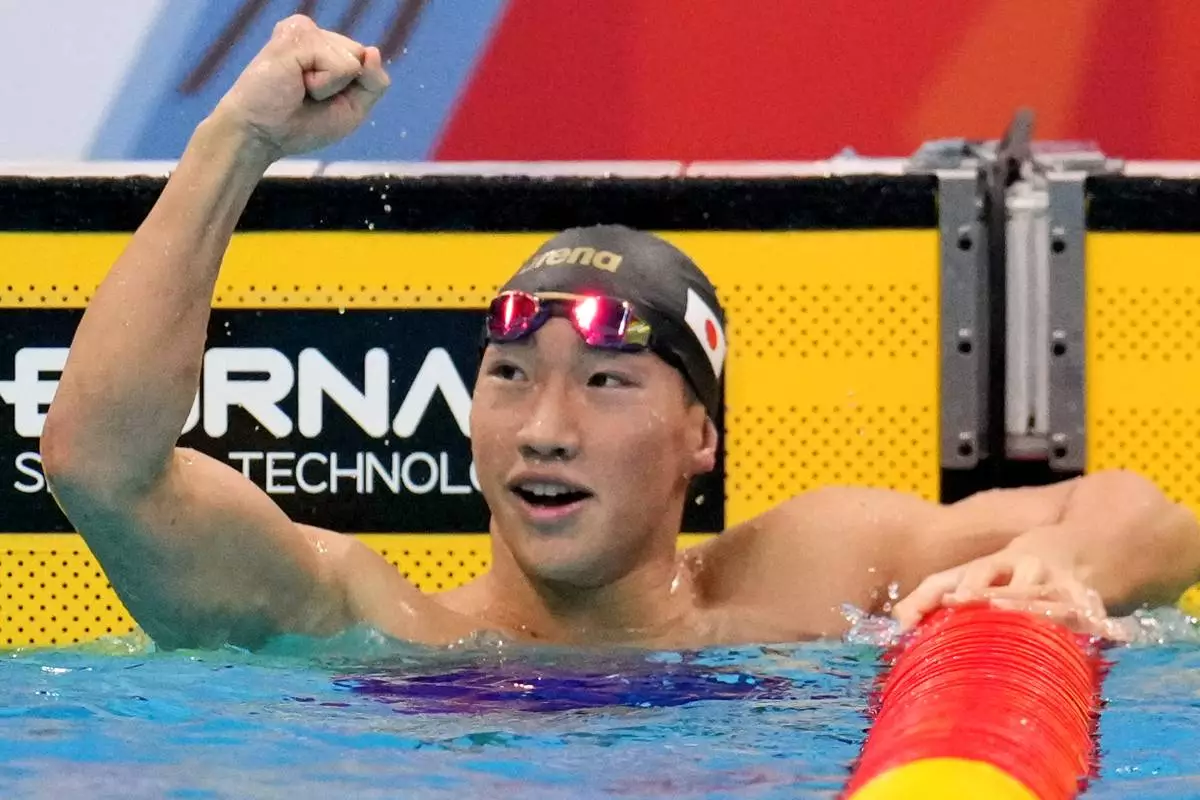
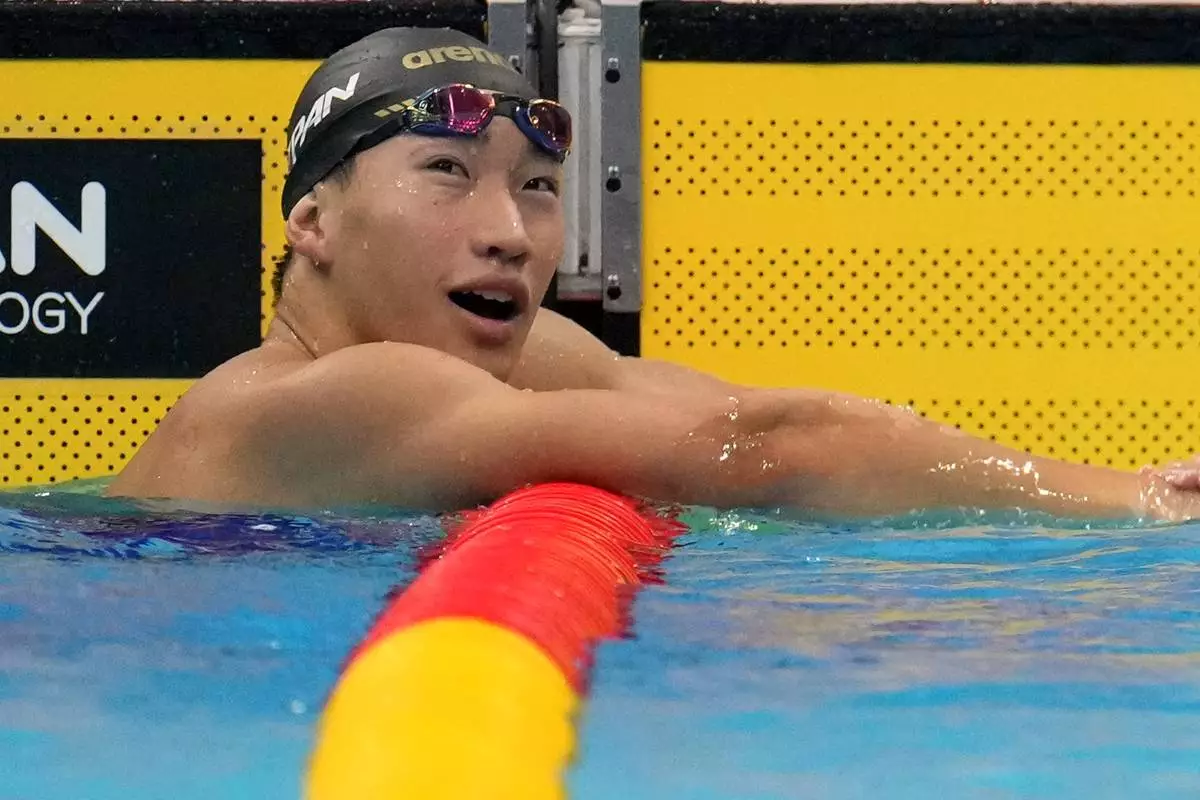
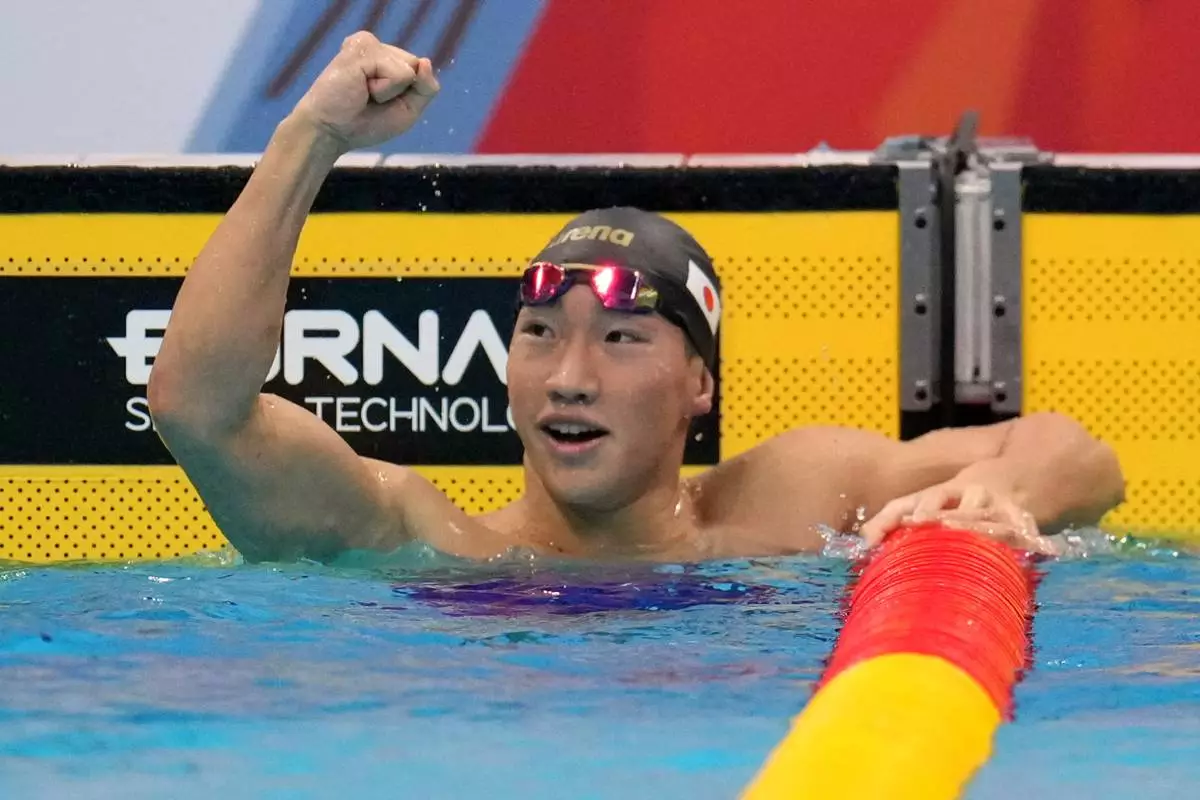
Shin Ohashi of Japan celebrates after winning the men's 200-meter breaststroke final in swimming at the Asian Games in Tokyo, Japan, Thursday, Sept. 24, 2026. (AP Photo/Hiro Komae)

Shin Ohashi of Japan celebrates after winning the men's 200-meter breaststroke final in swimming at the Asian Games in Tokyo, Japan, Thursday, Sept. 24, 2026. (AP Photo/Hiro Komae)

Shin Ohashi of Japan competes during the men's 200-meter breaststroke final in swimming at the Asian Games in Tokyo, Japan, Thursday, Sept. 24, 2026. (AP Photo/Hiro Komae)

Shin Ohashi of Japan competes during the men's 200-meter breaststroke final in swimming at the Asian Games in Tokyo, Japan, Thursday, Sept. 24, 2026. (AP Photo/Hiro Komae)

Shin Ohashi of Japan celebrates after winning the men's 200-meter breaststroke final in swimming at the Asian Games in Tokyo, Japan, Thursday, Sept. 24, 2026. (AP Photo/Hiro Komae)

Shin Ohashi of Japan celebrates after winning the men's 200-meter breaststroke final in swimming at the Asian Games in Tokyo, Japan, Thursday, Sept. 24, 2026. (AP Photo/Hiro Komae)

Shin Ohashi of Japan celebrates after winning the men's 200-meter breaststroke final in swimming at the Asian Games in Tokyo, Japan, Thursday, Sept. 24, 2026. (AP Photo/Hiro Komae)

Shin Ohashi of Japan celebrates after winning the men's 200-meter breaststroke final in swimming at the Asian Games in Tokyo, Japan, Thursday, Sept. 24, 2026. (AP Photo/Hiro Komae)

Recommended Articles