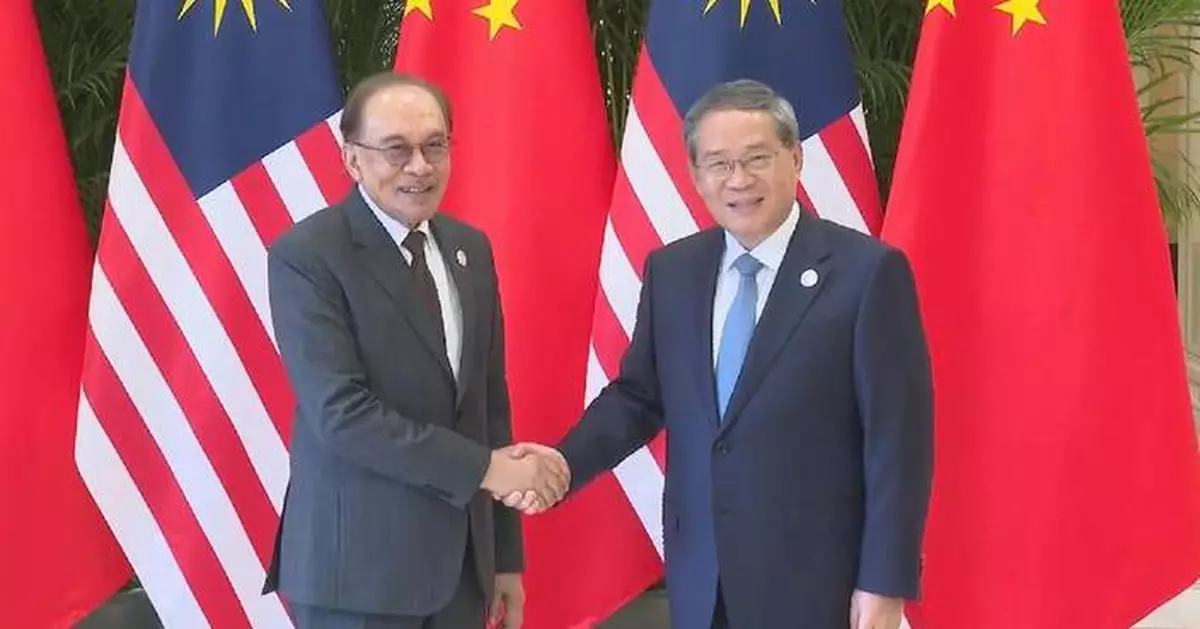
Chinese Premier Li Qiang on Thursday met with Malaysian Prime Minister Anwar Ibrahim in Hangzhou, the provincial capital of Zhejiang in east China, where both attended the opening ceremony of the Fifth Global Digital Trade Expo.
Li said China is ready to work with Malaysia to carry forward the traditional friendship, consolidate political mutual trust, continue high-quality Belt and Road cooperation, expand and upgrade bilateral trade, strengthen cooperation in artificial intelligence and other emerging industries, and advance the building of a high-level strategic China-Malaysia community with a shared future.
The two sides should strengthen coordination of positions on major issues, and deepen cooperation under the Global Development Initiative, the Global Security Initiative, the Global Civilization Initiative and the Global Governance Initiative, the premier said.
He called on both countries to jointly oppose bullying practices, safeguard the multilateral trading system, and defend their legitimate rights and interests.
Anwar said Malaysia and China enjoy solid political mutual trust and have achieved fruitful cooperation.
Malaysia firmly adheres to the one-China policy and stands ready to deepen cooperation in all sectors with China, he added.
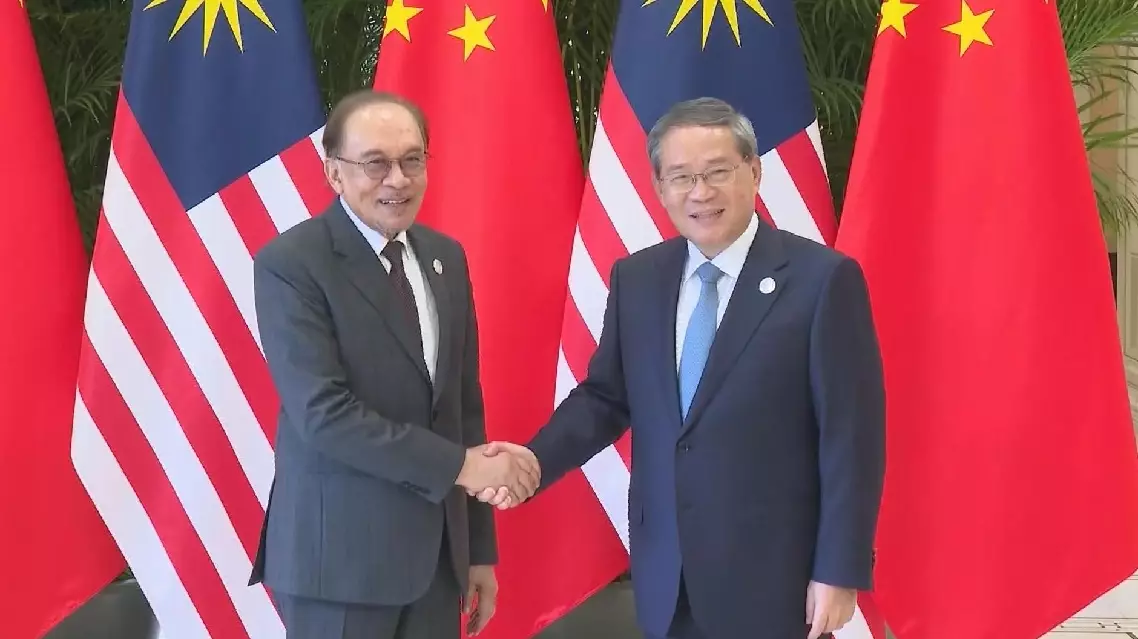
Chinese premier meets Malaysian prime minister
Inbound travel to China has kept growing since the start of this year, as the country's adoption of travel facilitation measures, including expanded visa-free access, has made border entry easier for international visitors.
Foreign nationals made nearly 61.29 million border crossings in the January-August period, up 19.5 percent from a year earlier, according to the latest official data released Thursday. Visa-free entries accounted for 23.72 million of the total, or 77.6 percent, up 26.8 percent from a year earlier.
In Beijing, various ports in Beijing have seen an average of 15,000 border entries by foreigners each day since the start of September, up 20 percent from August's daily average. Notably, the figure topped 17,000 on Sept 7, setting a new single-day record for the year.
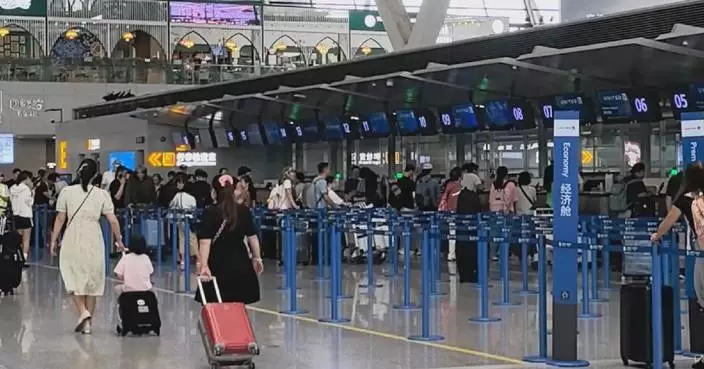
During the three-day Mid-Autumn Festival which starts on Friday and the week-long National Day holiday season starting on Oct 1, the number of border entries and exits through Beijing's airports is projected to reach 727,000. The Beijing Capital International Airport is expected to handle 547,000 entries and exits, or 54,700 per day on the average, while the Beijing Daxing International Airport is expected to handle 180,000, or 18,000 per day on the average.
To ensure smooth customs clearance, the Beijing General Border Inspection Station will open additional inspection lanes during peak periods to reduce travelers' waiting time. It will also maintain permanent multilingual advisory and guidance stations staffed by on-site officers, thereby improving passenger clearance efficiency.
East China's Shandong Province, one of the Chinese provinces closest to South Korea, is expected to see more than 190,000 border entries and exits by travelers, averaging over 8,000 per day, according to the Shandong General Border Inspection Station. Notably, the Weihai Shidao Port is expected to receive more than 3,000 tourist arrivals from South Korea, a marked increase in inbound group travel compared with previous years.
"I'm very interested in Chinese traditions, so I've chosen to visit Rongcheng in Weihai during the Mid-Autumn Festival to experience the holiday here firsthand," said Kim Kyung-nam, a tourist from South Korea.
In response to the overlapping passenger flows and the concentrated arrival of large tour groups during the Mid-Autumn Festival holiday, the Shidao Border Inspection Station has worked out a specific duty plan including strategic deployment of personnel and the opening of all inspection lanes to minimize clearance times and maximize operational efficiency.
"We have set up border inspection and cultural tourism facilitation service posts, where on-duty officers will provide bilingual service for consultation and process entry formalities for tour groups, balancing efficient customs clearance with a human touch," said Li Nannan, head of a frontier inspection team at the Shidao Border Inspection Station.
East China's Jiangsu Province, with its rich cultural heritage and diverse cultural and tourism resources, attracts tourists from around the world. The Jiangsu General Border Inspection Station predicts that the ports across the province will process 110,000 border entries and exits and handle over 750 inbound and outbound flights and vessel voyages during the two holiday seasons. For outbound travel, Singapore, Thailand and other countries have emerged as popular destinations for mainland residents departing from Jiangsu's ports.
Tourist cities in south China's Guangxi Zhuang Autonomous Region are top choices for Vietnamese tourists. Thanks to its advantageous geographic location, efficient customs clearance services, and abundant border tourism resources, cross-border tourism between Guangxi and Vietnam is steadily gaining popularity.
According to the Guangxi General Border Inspection Station, the total number of border entries and exits through the four key ports -- Nanning, Guilin, Youyiguan, and Dongxing -- is expected to exceed 355,800 during this year's Mid-Autumn Festival and National Day holiday season.
The Mid-Autumn Festival, a traditional Chinese holiday, is celebrated on the 15th day of the eighth month of the Chinese lunar calendar. This year, the festival falls on Friday, and the public holiday lasts three days through Sunday.
China's National Day holiday lasts from Oct 1 to 7 this year.
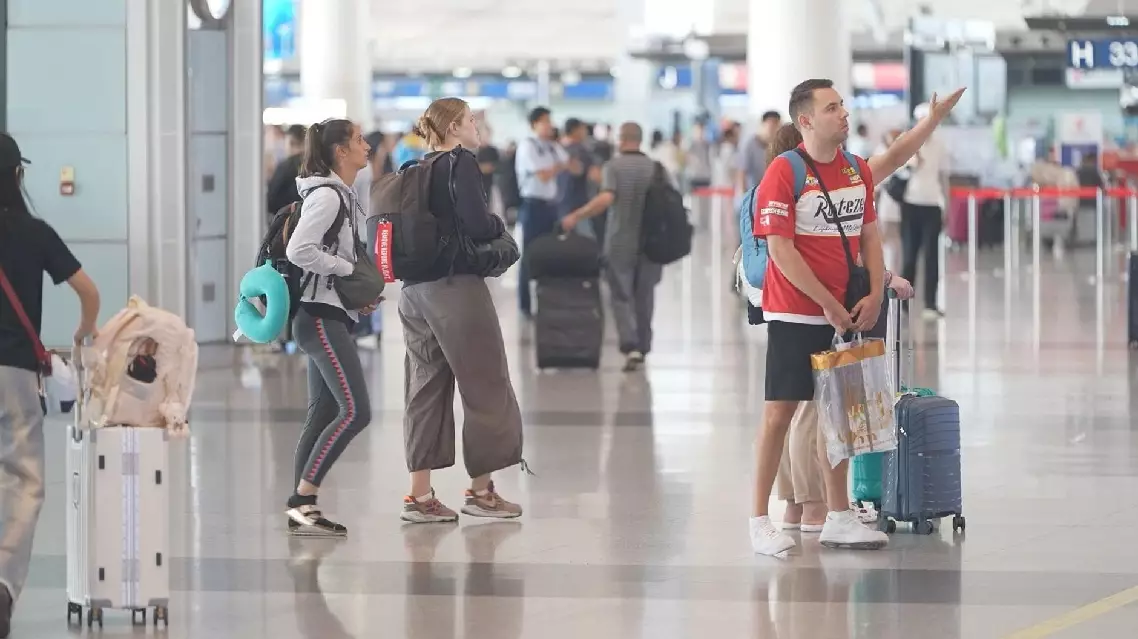
Inbound travel to China continues to surge as visitors seek diverse experiences