The Ebola outbreak in the Democratic Republic of the Congo (DRC) remains uncontrolled despite signs of improvement in some affected areas, as cases have risen sharply in the eastern province of North Kivu, a senior World Health Organization (WHO) official said Wednesday.
Marie Roseline Belizaire, director of the WHO emergencies program in the African region, made the remarks during an online press briefing. The country had recorded 7,773 confirmed cases, including 3,759 deaths as of Monday, according to the DRC health authorities.
Between Aug. 31 and Sept. 20, cases declined by about 26 percent in Ituri Province, the long-time epicenter of the outbreak, and by around 15 percent in Haut-Uele Province. North Kivu, however, recorded a 73-percent increase over the same period, she said.
Children under five remain particularly vulnerable, with a case fatality rate of more than 60 percent, compared with around 40 percent among adults, according to the WHO official.
While contact follow-up has improved to nearly 88 percent, too many new infections are still being detected without a known epidemiological link, highlighting persistent gaps in surveillance, she said.
Belizaire stressed that the response must now focus resources on areas where transmission and risks are highest while maintaining essential health services.
The outbreak, declared in May, has become the largest and deadliest Ebola outbreak ever recorded in the DRC and the second-largest Ebola outbreak globally, after the 2014-2016 West Africa epidemic.
Inside the Kitatumba Ebola Treatment Centre in Butembo, patients are monitored around the clock. Since the center opened on June 30, it has admitted 239 patients, including 113 confirmed Ebola cases. Thirty-six patients have recovered, while another 104 unconfirmed cases have been discharged.
But poverty, conflict and resistance to health measures continue to fuel the disease.
"It is premature to say the situation is under control. Here, we continue to record new positive cases every day more than suspected ones. In Butembo alone, there are sometimes as many as ten cases a day," said Kakule Kihasaki Samson, medical director of the Kitatumba Ebola Treatment Center.
"This population, long-suffering and traumatized, lives in a state of deep distress, fueling resistance to care and humanitarian measures. Some have not fully understood the reality of the disease, leading to resistance against response teams and failure to observe safety measures," he said.
The pressure is also being felt in care facilities. A facility supported by Doctors Without Borders in Butembo does not have enough beds.
"Our capacity is 29 beds, yet we are consistently operating above 100 percent occupancy. Here, we primarily treat confirmed cases, but we also run a transit center for unconfirmed cases," said Toussin Selemani, head of medical activities in Butembo for Doctors Without Borders.
"We also have a transit center for suspected Ebola cases, but the needs remain significant. We continue to advocate for an increase in our patient intake capacity," he said.
Despite the pressure, recoveries are offering some hope. Justine Kavira Kanduki spent two weeks at the Kitatumba centre after becoming severely ill. She was discharged on Monday.
"I felt sick all over, extreme fatigue, headaches and vomiting. I arrived in a very bad state, but after two weeks here, with God's help, I feel better," she said.
For families affected by Ebola, early treatment can mean the difference between life and death. Marie Masika, a caregiver at the treatment centre, accompanied her two children after they recovered. She said she has lost several acquaintances to the disease.
"People should not refuse to come to the hospital. I've noticed those who die often arrive in the final stage of the illness, then people say that you die at the facility. But if you come in time, people do recover," she said.
Authorities said the response is showing encouraging results in some affected areas. But in areas like Butembo, new infections and pressure on treatment centers mean health teams are still overwhelmed with surveillance, treatment and prevention efforts.
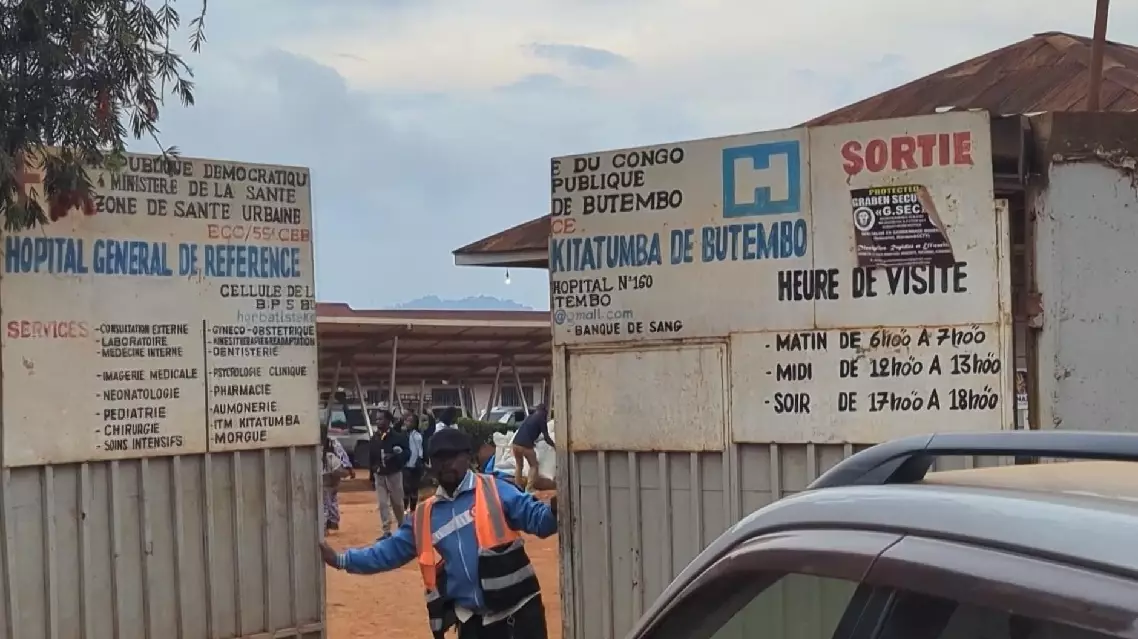
WHO warns DR Congo Ebola outbreak still uncontrolled as North Kivu cases surge
Inbound travel to China has kept growing since the start of this year, as the country's adoption of travel facilitation measures, including expanded visa-free access, has made border entry easier for international visitors.
Foreign nationals made nearly 61.29 million border crossings in the January-August period, up 19.5 percent from a year earlier, according to the latest official data released Thursday. Visa-free entries accounted for 23.72 million of the total, or 77.6 percent, up 26.8 percent from a year earlier.
In Beijing, various ports in Beijing have seen an average of 15,000 border entries by foreigners each day since the start of September, up 20 percent from August's daily average. Notably, the figure topped 17,000 on Sept 7, setting a new single-day record for the year.
During the three-day Mid-Autumn Festival which starts on Friday and the week-long National Day holiday season starting on Oct 1, the number of border entries and exits through Beijing's airports is projected to reach 727,000. The Beijing Capital International Airport is expected to handle 547,000 entries and exits, or 54,700 per day on the average, while the Beijing Daxing International Airport is expected to handle 180,000, or 18,000 per day on the average.
To ensure smooth customs clearance, the Beijing General Border Inspection Station will open additional inspection lanes during peak periods to reduce travelers' waiting time. It will also maintain permanent multilingual advisory and guidance stations staffed by on-site officers, thereby improving passenger clearance efficiency.
East China's Shandong Province, one of the Chinese provinces closest to South Korea, is expected to see more than 190,000 border entries and exits by travelers, averaging over 8,000 per day, according to the Shandong General Border Inspection Station. Notably, the Weihai Shidao Port is expected to receive more than 3,000 tourist arrivals from South Korea, a marked increase in inbound group travel compared with previous years.
"I'm very interested in Chinese traditions, so I've chosen to visit Rongcheng in Weihai during the Mid-Autumn Festival to experience the holiday here firsthand," said Kim Kyung-nam, a tourist from South Korea.
In response to the overlapping passenger flows and the concentrated arrival of large tour groups during the Mid-Autumn Festival holiday, the Shidao Border Inspection Station has worked out a specific duty plan including strategic deployment of personnel and the opening of all inspection lanes to minimize clearance times and maximize operational efficiency.
"We have set up border inspection and cultural tourism facilitation service posts, where on-duty officers will provide bilingual service for consultation and process entry formalities for tour groups, balancing efficient customs clearance with a human touch," said Li Nannan, head of a frontier inspection team at the Shidao Border Inspection Station.
East China's Jiangsu Province, with its rich cultural heritage and diverse cultural and tourism resources, attracts tourists from around the world. The Jiangsu General Border Inspection Station predicts that the ports across the province will process 110,000 border entries and exits and handle over 750 inbound and outbound flights and vessel voyages during the two holiday seasons. For outbound travel, Singapore, Thailand and other countries have emerged as popular destinations for mainland residents departing from Jiangsu's ports.
Tourist cities in south China's Guangxi Zhuang Autonomous Region are top choices for Vietnamese tourists. Thanks to its advantageous geographic location, efficient customs clearance services, and abundant border tourism resources, cross-border tourism between Guangxi and Vietnam is steadily gaining popularity.
According to the Guangxi General Border Inspection Station, the total number of border entries and exits through the four key ports -- Nanning, Guilin, Youyiguan, and Dongxing -- is expected to exceed 355,800 during this year's Mid-Autumn Festival and National Day holiday season.
The Mid-Autumn Festival, a traditional Chinese holiday, is celebrated on the 15th day of the eighth month of the Chinese lunar calendar. This year, the festival falls on Friday, and the public holiday lasts three days through Sunday.
China's National Day holiday lasts from Oct 1 to 7 this year.
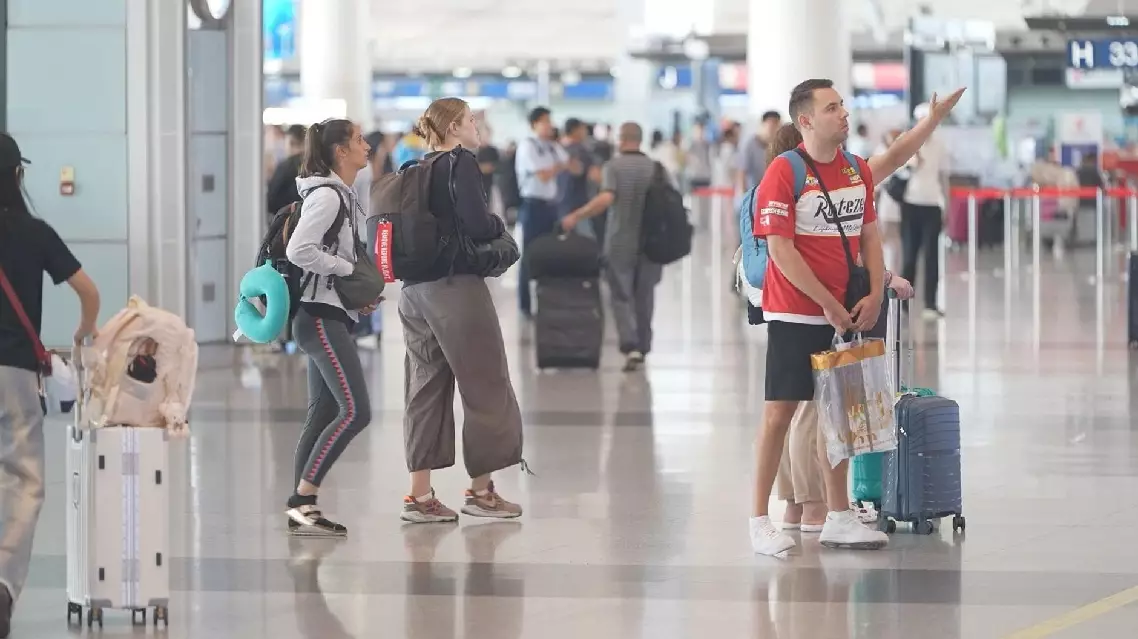
Inbound travel to China continues to surge as visitors seek diverse experiences