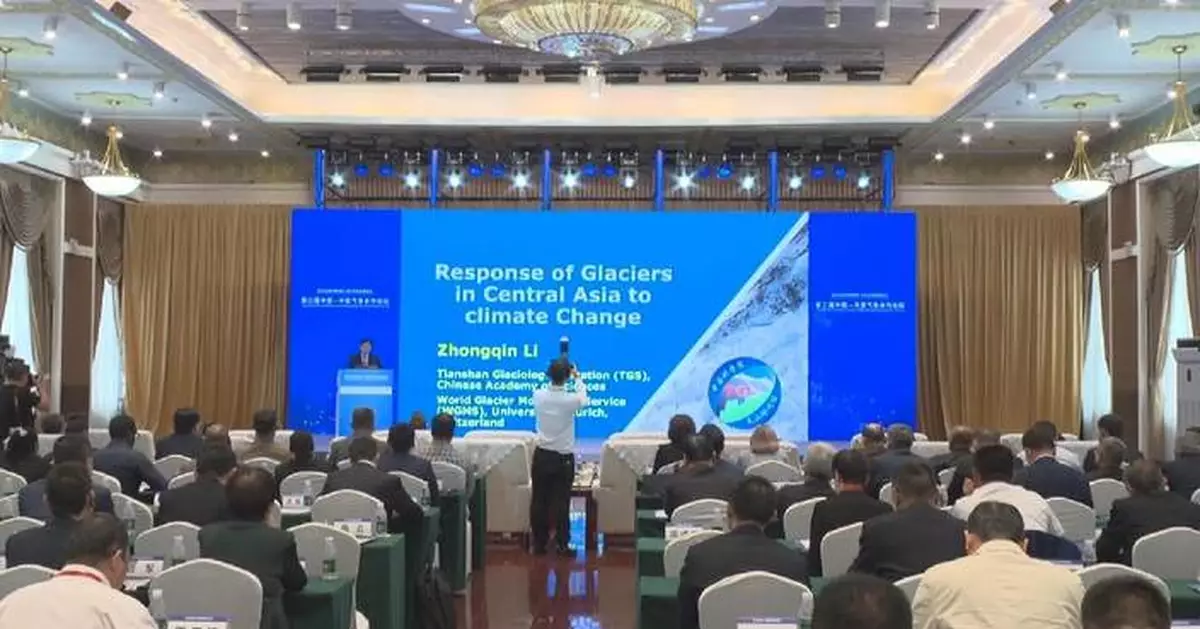
Scientists and regional officials gathered Tuesday at a meteorological forum in Urumqi, capital of northwest China's Xinjiang Uygur Autonomous Region, discussing solutions to tackle accelerating glacier retreat and risks it brings to the arid heart of Eurasia.
The two-day Second China-Central Asia Meteorological Cooperation Forum opened on Tuesday in Urumqi where China announced the delivery of a customized version of its homegrown AI-powered meteorological early warning system to Nepal to help the country improve early warning and disaster response.
The move came after the China Meteorological Administration (CMA) gave Nepal's meteorological department a version of MAZU for cloud-based trial use on Aug. 29, following a deadly mudslide at the Gyirong-Rasuwa border crossing on the China-Nepal border.
MAZU, short for multi-hazard, alert, zero-gap and universal, is an AI-driven meteorological early warning platform named after the Chinese guardian goddess of the sea.
The majestic Tianshan range, spanning China's Xinjiang region as well as Kazakhstan, Kyrgyzstan, and Uzbekistan, serves as a crucial natural water tower for Central Asia. However, rising temperatures driven by climate change are causing these vital reservoirs to melt away at an alarming pace, threatening agriculture, energy production, and ecosystems across national borders.
"The five Central Asian countries are closely connected by shared mountains and rivers. Changes in glaciers affect water resources, the ecological environment, water uses in arid regions, in all respects. In Central Asia, much of agriculture, hydropower, and industrial activity, as well as people's drinking water and the broader ecosystem, depend on meltwater from glaciers. So, when glaciers in this region retreat or even disappear, the resulting impacts are far greater than in many other parts of the world," said Li Zhongqin, a researcher at the Northwest Institute of Eco-Environment and Resources of Chinese Academy of Sciences.
The strain is already being felt downstream. In landlocked Uzbekistan, farmers are grappling with erratic water availability that disrupts seasonal cultivation.
"It's affecting the wellbeing of the people, because melting causes runoff water,leading to water scarcity in a needed period -- mainly it is during the seeding period of agriculture crops etc.," said Farrukh Sattarov, director of the National Climate Change Center under Uzbekistan's Ministry of Ecology.
"In Central Asia, temperatures are rising faster than the global average. The region is more vulnerable, with a large proportion of the population engaged in agriculture. If drought or water shortages occur, it could prompt mass migration, and the situation could escalate into a socioeconomic problem," said Azamat Kauazov, a programme manager at the Climate Change and Sustainable Energy Program Regional Environmental Centre for Central Asia.
To combat these transboundary challenges, scientists stress that fragmented responses are no longer sufficient. Comprehensive, collaborative monitoring across all river basins is essential.
"The water is interconnected. If monitoring relies only on the efforts of one country, it could only observe part of the glaciers. The Central Asian countries need to work together to comprehensively monitor glaciers across the different basins of these glacier-fed rivers," said Li.
At the same event, the CMA unveiled a plan for implementing the MAZU system in Central Asian countries for 2026-2027, aiming to deepen meteorological cooperation between China and Central Asian countries, jointly enhance regional disaster prevention and mitigation capacity, and better serve regional economic and social development.
Bolstering these regional efforts, attendees said they hope MAZU will provide the precise forecasting needed to anticipate climate shocks.
"So, for decision-making, nowadays, accurate data is needed. MAZU can present such kind of data because it is a combination of artificial intelligence, satellite data, and ground-based data. So, people will have more accurate data. We can predict all these climate-change-related impacts, meteorological conditions," said Sattarov.
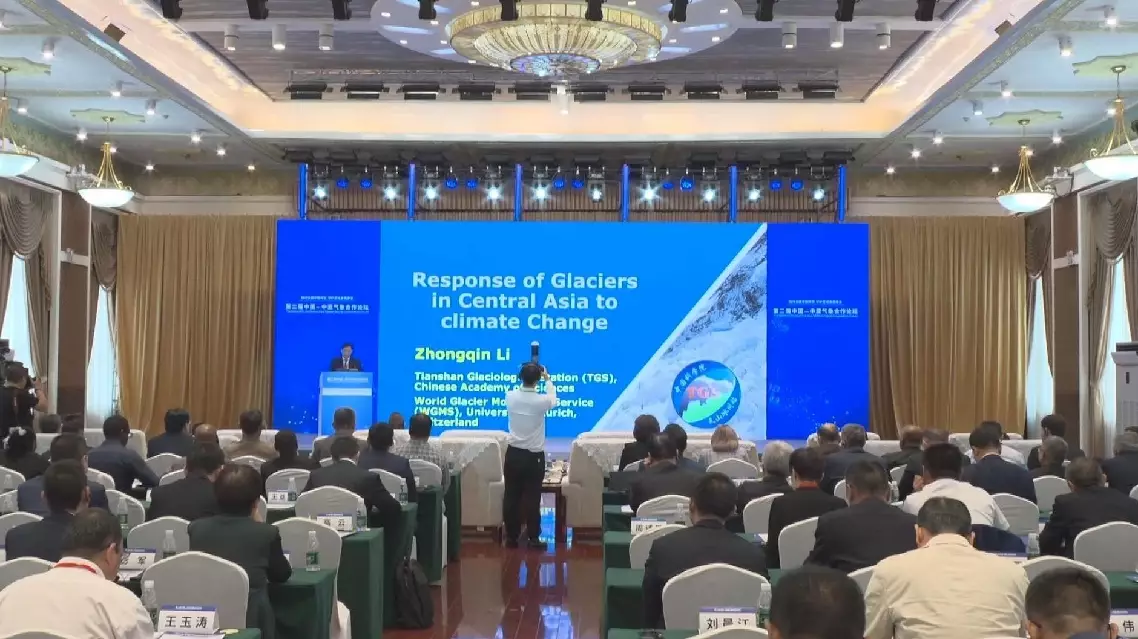
Meteorological forum in Xinjiang tackles Eurasia's glacier retreat, climate risks