WASHINGTON (AP) — Increasingly anxious about the Iran war, senators are set to vote Thursday on a war powers resolution seeking to halt President Donald Trump 's military action, which has been largely blamed for the spike in fuel prices and become a flashpoint in the midterm election.
The Senate vote, days after Trump's bombastic address to the United Nations in which he threatened to “annihilate” Iran, is likely to be the last chance for lawmakers to go on record about the war ahead of November. More Republicans are peeling way from the president as the war drags on, a rare slap back to Trump, as they campaign for control of Congress.
“They have been carrying water for this ridiculous and illegal war for months and months and months and not listening to their constituents,” said Sen. Tim Kaine, D-Va., who pushed the war powers resolution forward. “And now they finally are.”
About half of rural American voters believe the economy is worse off now than when Trump returned to office, according to a new survey from The Associated Press in partnership with KFF. The costs of groceries, gas and healthcare rank as top pain points for the rural voters.
"We’ve got to break the cycle,” said Sen. Thom Tillis, R-N.C., who said he would vote for the resolution to end the war.
War powers resolutions are largely political statements, without the full force of law, but stand among the sharper tools the House and Senate have to express disapproval of the White House, short of halting funds for Trump's military actions. As resolutions, they do not go to the president's desk for his signature.
Republicans in control of Congress have shied away from directly confronting Trump over the war, now stretching past the seven-month mark. But their unrest is beginning to surface as stubbornly high gas prices leave voters in a cash crunch back home.
Diesel costs, in particular, have almost doubled, topping $6 a gallon, according to AAA.
Just returning from a swing through Iowa, Kansas and Nebraska stumping for GOP candidates who are suddenly at risk in their elections, Sen. John Kennedy of Louisiana called on Trump to hold a prime-time address to the nation to explain the Iran war strategy and the end game.
“People are confused about the war and upset about the cost of living,” he said.
But he and others are not yet ready to vote against the war.
“My own view is that the focus right now needs to be on attacking the cost of living issues,” said Sen. Josh Hawley, R-Mo., who opposes the war powers resolution and believes the president is acting within his authority to conduct the military action.
House Democratic Leader Hakeem Jeffries scoffed at the handful of Republicans now trying to distance themselves from what he called Trump's failed economy. “Now all of a sudden they’re waking up,” he said.
This would be the 14th time the Senate has considered a war powers resolution, since Trump launched the conflict on Feb. 28.
Earlier this month, the House for a third time approved a war powers resolution, this time with seven Republicans joining the Democrats, including two from battleground Iowa, Rep. Zach Nunn and Rep. Mariannette Miller Meeks, where affordability issues among rural voters are dominating the campaigns.
Senators, though, have rarely been able to confront Trump by passing a war powers resolution.
In June, the Senate approved a war powers resolution after four GOP senators joined Democrats, but Republicans abruptly reversed course the next day after Trump berated them during a private lunch over the outcome.
One GOP Sen. Bill Cassidy of Louisiana, stood up to defend his vote only to end up in a shouting match with Trump. He later switched to oppose the war powers resolution after receiving a personal briefing from the White House.
As the war drags on, costing $43.5 billion so far, Congress is also seeking other ways to force Trump to rethink his military strategy in Iran.
Rep. Thomas Massie, the renegade Republican from Kentucky, pushed forward articles of impeachment against Secretary of Defense Pete Hegseth before the GOP leadership abruptly adjourned the House and sent lawmakers home to campaign for the election, avoiding any potential vote on the matter.
Lawmakers also have the power of the purse to curtail military spending, something Republicans have been reluctant to do but Democrats are sure to tackle if they win power in the midterm election. The White House's request for an additional $87.6 billion funding package for the war and other needs has idled in Congress.
First created in the aftermath of the Vietnam War as a way to hold a president accountable for military actions, the war powers act has long posed a test of the balance of power between the executive and legislative branches of government.
While the Constitution says only Congress can declare war, the president as commander-in-chief is also able to engage the military. The war powers act seeks to provide clarity by requiring the president, within 60 days of any such action, to seek approval — or risk disapproval — from Congress.
Associated Press writer Mary Clare Jalonick contributed to this report.
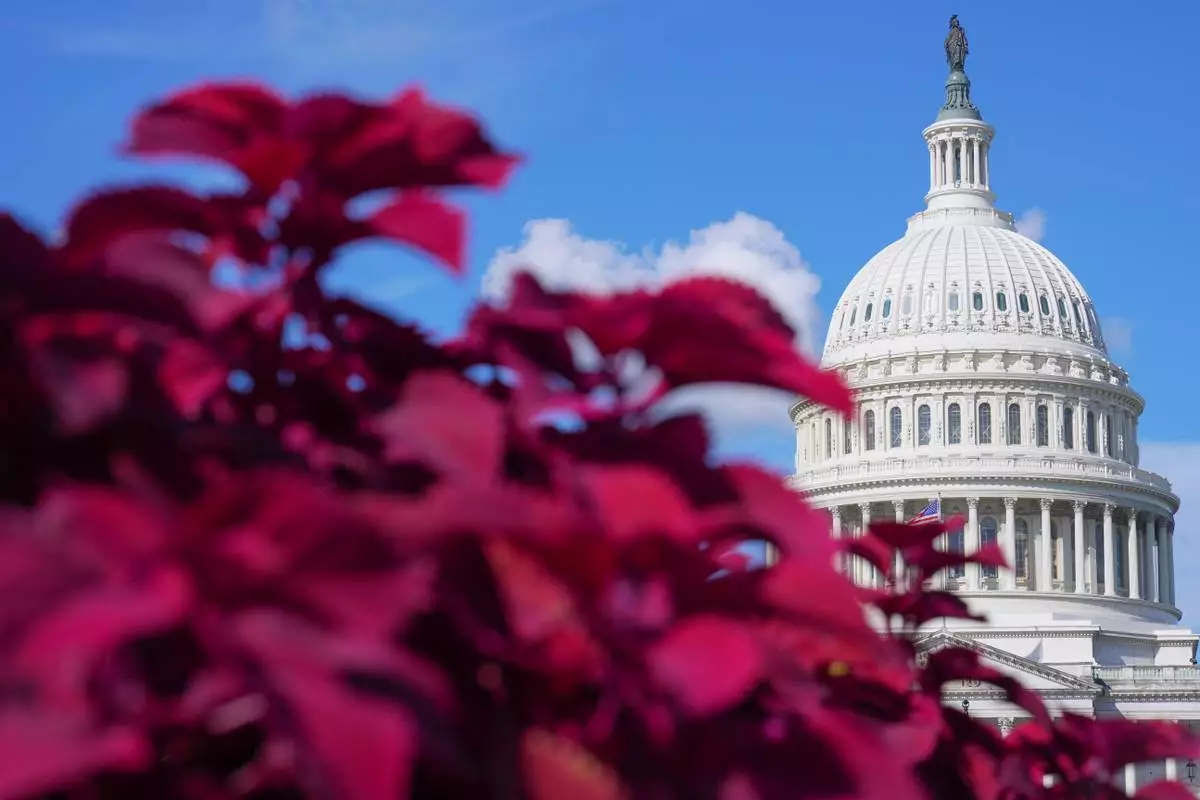
The U.S. Capitol is seen Friday, Sept. 18, 2026, in Washington. (AP Photo/Mariam Zuhaib)
Palestinian President Mahmoud Abbas addressed the U.N. General Assembly on Thursday, delivering prerecorded remarks from his office in Ramallah after the United States denied him and other top Palestinian officials visas to attend the gathering for the second year in a row.
The 90-year-old leader's popularity at home and relevance abroad have both waned. But in his remarks, Abbas made clear he did not intend to quietly accept being sidelined.
“We will not leave our homeland. We will not accept displacement. And we will not allow anyone to decide our future on our behalf,” Abbas said.
Though world leaders have repeatedly invoked the plight of Palestinians in speeches throughout the week, Abbas urged the international community to take more tangible action against Israel.
"How long will some countries continue to remain silent about Israel, or continue supplying it with weapons that it uses against our people? The world has witnessed the enormous cost in the Gaza Strip and the West Bank," Abbas said. “What, then, is the international community waiting for before it acts to protect the Palestinian people?”
Israeli Prime Minister Benjamin Netanyahu was scheduled to speak in person early in the afternoon and arrived in New York in the morning. As Abbas spoke, the Israeli delegations' seats in the General Assembly hall sat vacant.
“The Palestinian people face one of the most dangerous periods in their history,” Abbas said.
In Gaza, he said, “Neighborhoods, cities, refugee camps, institutions, schools, universities, hospitals, mosques, and churches have been destroyed. Every foundation of life, and the future of entire generations, has been targeted.”
Though negotiations have not taken place for years, Abbas urged the international community to push for a two-state solution to the Israeli-Palestinian conflict and said Palestinians could live “alongside the state of Israel.”
Netanyahu has said no Palestinian state will be established while he is Israel’s leader and has argued that the Palestinian Authority is not a partner for peace.
“Saving the (two-state) solution begins with preserving the land on which the Palestinian state is to be established,” he said, referring to expanding Israeli settlements in the West Bank. “We do not want another process designed merely to manage the conflict while realities on the ground change every day."
Since 2005, Abbas has led the Palestinian Authority, which is the internationally recognized representative of the Palestinian people. But his support among Palestinians has withered during years of corruption and anger toward the authority's security cooperation with Israel.
Under Abbas, Palestine has been recognized as a country by a majority of U.N. member states. But on the ground in the West Bank, the mostly symbolic moves have not affected Israel’s decades long military occupation. Throughout the war in Gaza, Abbas and the authority have been largely sidelined from negotiations over the territory's postwar future.
The international community has instead backed President Donald Trump’s plan for a group of apolitical administrators to govern Gaza under the Board of Peace. Yet Abbas said the territory could not remain politically separate from the West Bank and east Jerusalem for the long term.
He said the Gaza Strip, east Jerusalem and the West Bank needed to be governed by “one state, one government, one law and one legitimate entity authorized to bear arms.”
The Palestinian Authority was created under a series of peace agreements with Israel in the 1990s and administers semiautonomous areas of the West Bank, while relying heavily on foreign aid.
It was ousted from Gaza after Hamas won parliamentary elections in 2006 and violently seized control the following year. Abbas was elected to what was supposed to be a four-year term in 2005. The authority has not held presidential or legislative elections since 2006, though in his speech Abbas promised that both were on the horizon. Elections have long been demanded by international donor countries as preconditions for aid to the Palestinian Authority.
Israel captured the West Bank and east Jerusalem in the 1967 war, and the Palestinians want both as part of their future state. The Palestinians and much of the international community view the settlements as illegal and as an obstacle to creating a viable, contiguous Palestinian state.
Abbas recorded the video on Wednesday.
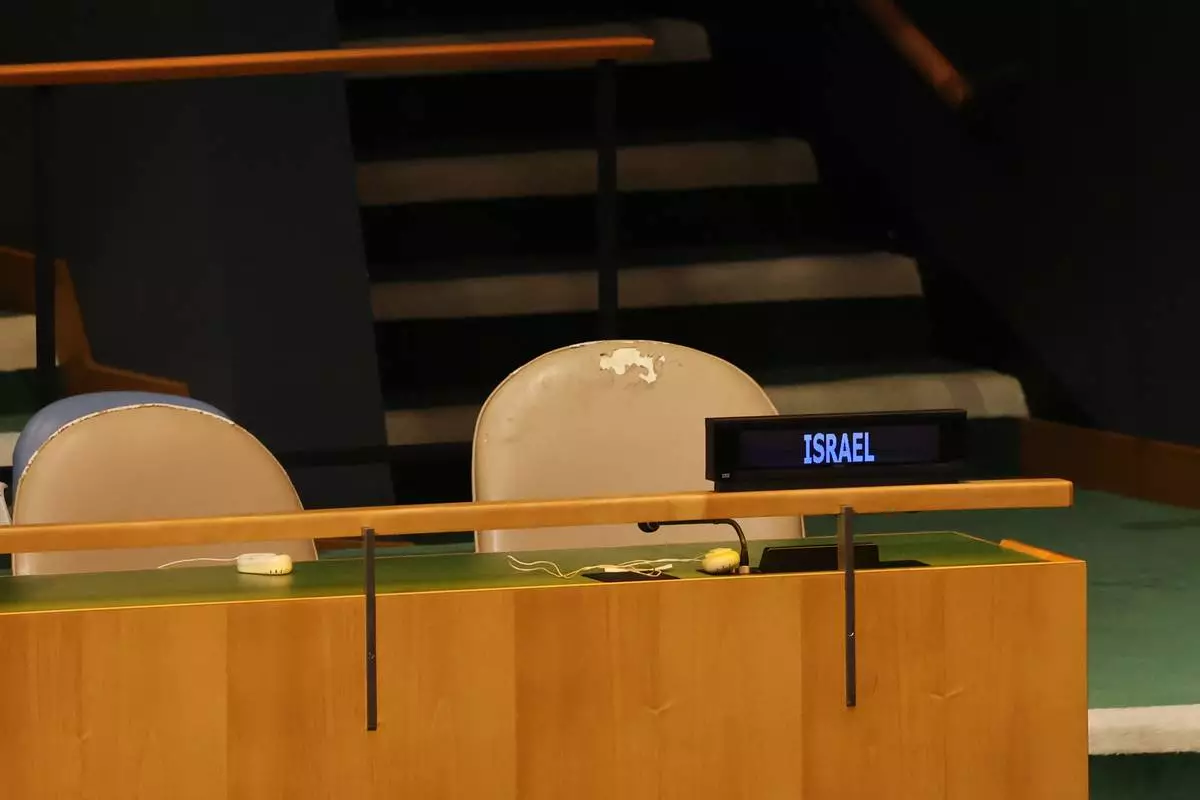
Chairs for delegates from the state of Israel are unoccupied as Palestinian President Mahmoud Abbas speaks via pre-recorded video during the 81st session of the United Nations General Assembly at United Nations headquarters, Thursday, Sept. 24, 2026. (AP Photo/Heather Khalifa)
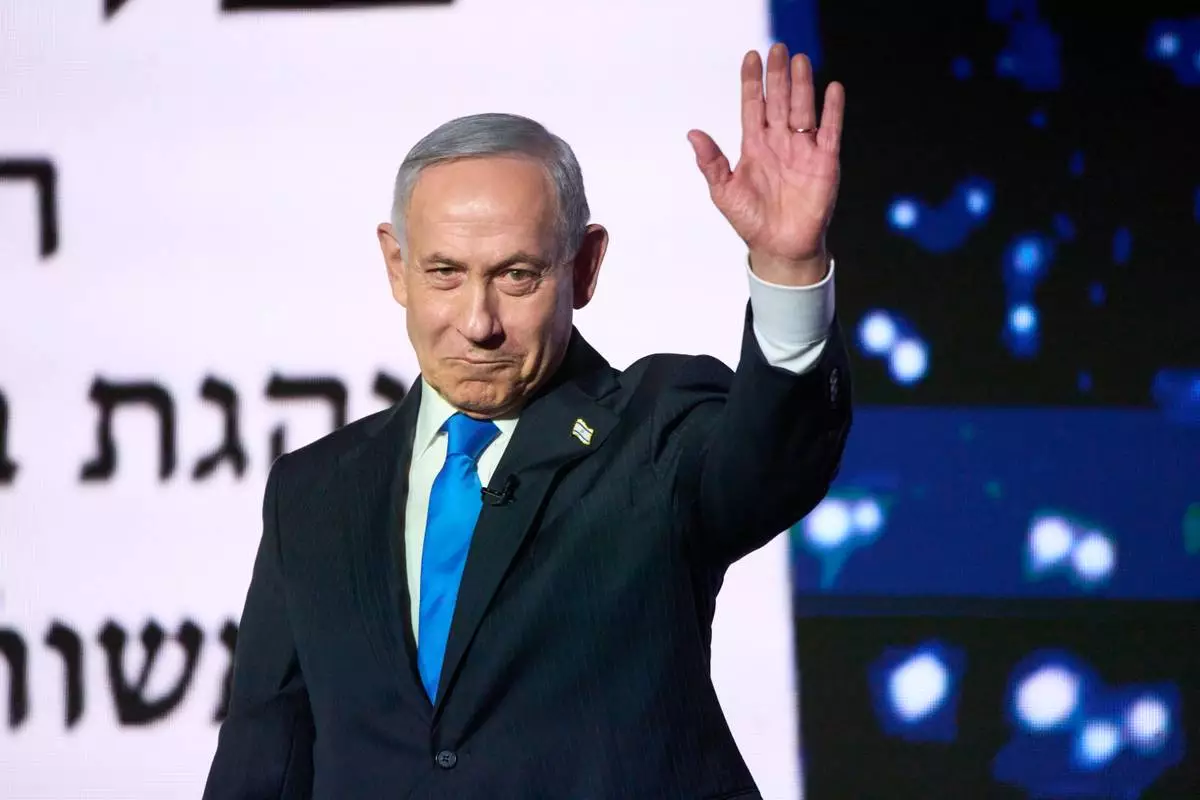
Israeli Prime Minister Benjamin Netanyahu at his Likud party New Year event in Tel Aviv, Israel, Thursday, Sept. 17, 2026. (AP Photo/Ariel Schalit)
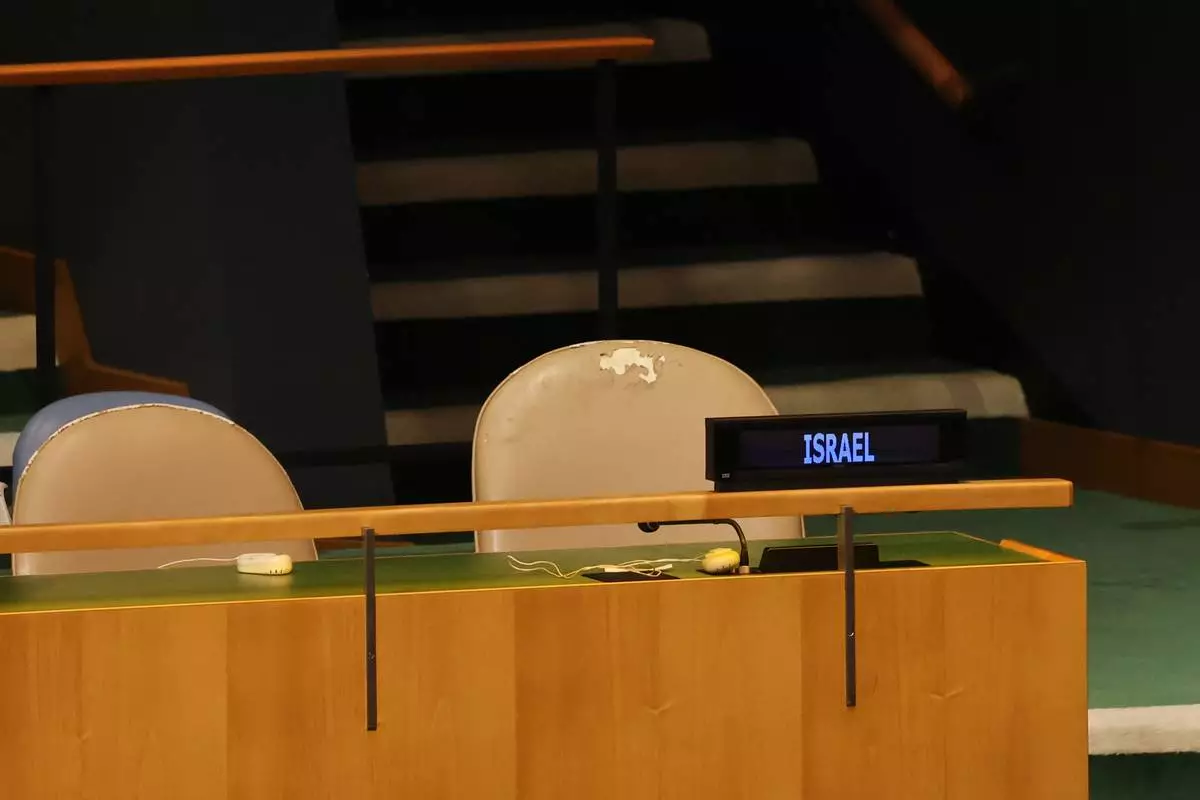
Chairs for delegates from the state of Israel are unoccupied as Palestinian President Mahmoud Abbas speaks via pre-recorded video during the 81st session of the United Nations General Assembly at United Nations headquarters, Thursday, Sept. 24, 2026. (AP Photo/Heather Khalifa)
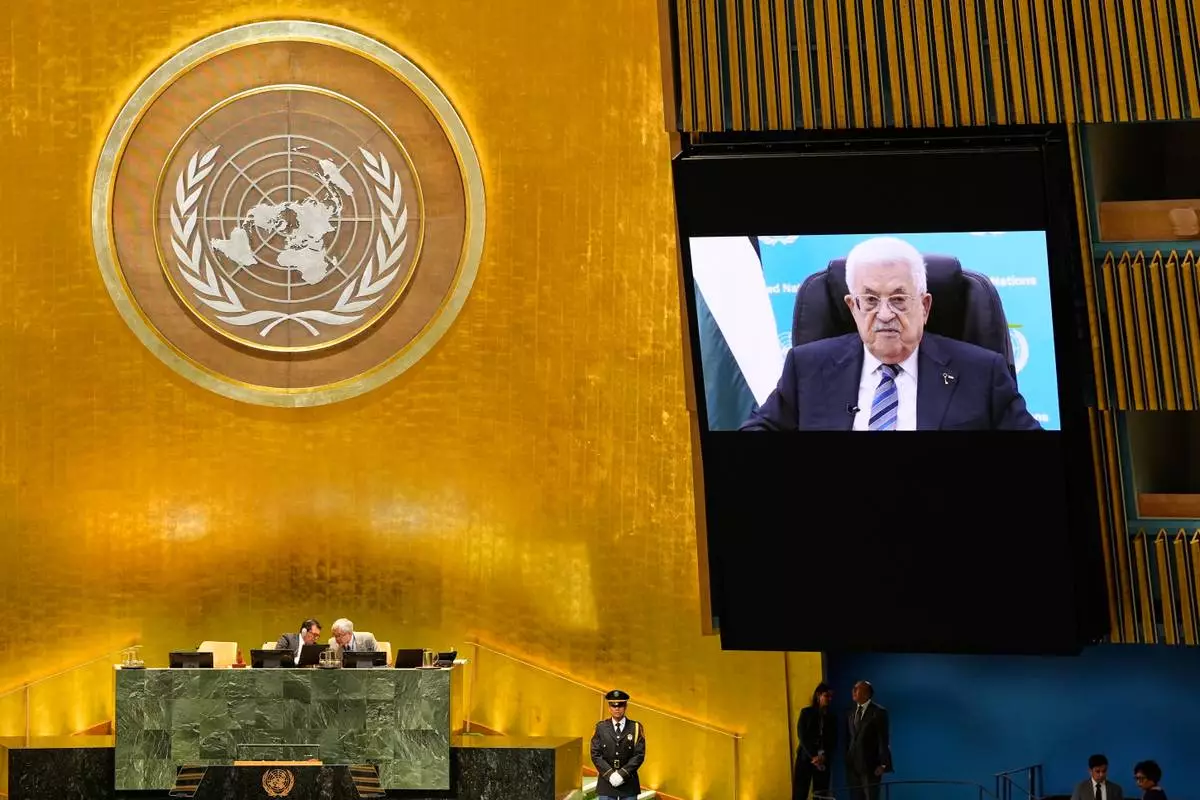
Palestinian President Mahmoud Abbas speaks via pre-recorded video after being denied a visa to attend in person during the 81st session of the United Nations General Assembly at United Nations headquarters, Thursday, Sept. 24, 2026. (AP Photo/Seth Wenig)