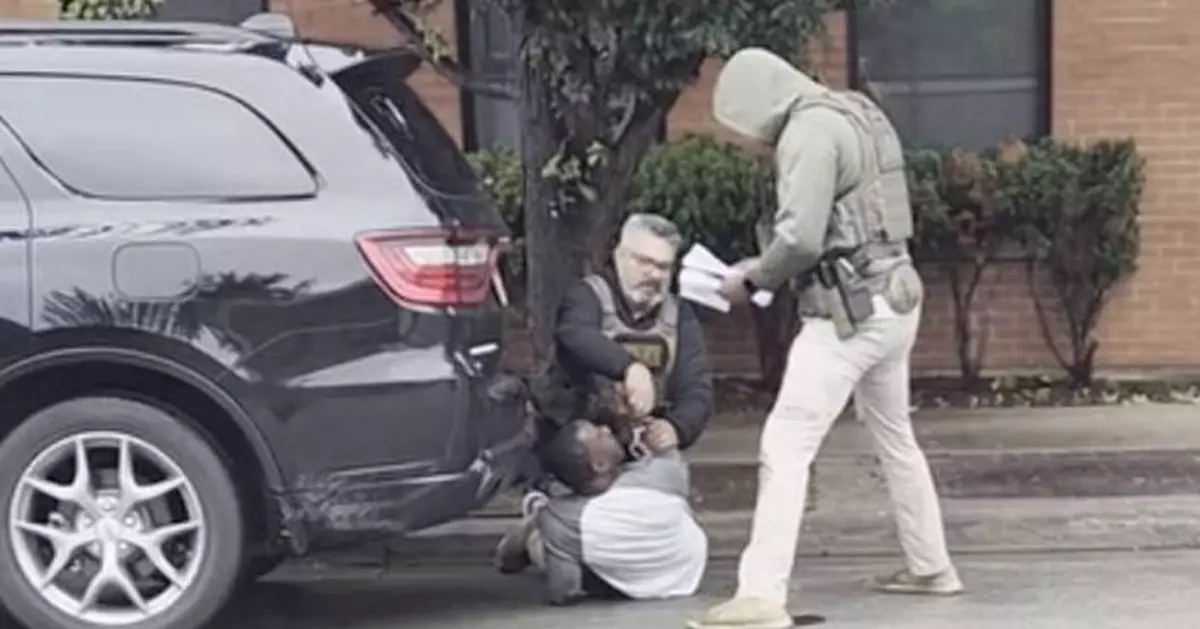
CHICAGO (AP) — A U.S. citizen was left bloodied and injured on the side of the road in a Chicago suburb after a confrontation with immigration enforcement agents who mistook him for a fugitive, according to local police and a resident who tried to help the man.
The man, whose identity was not disclosed, was taken away in an ambulance after the encounter on Sunday in Evanston, a city around 12 miles (19 kilometers) north of downtown Chicago. He told police his head, neck and teeth were injured, according to a news release from the Evanston Police Department.
A federal agent told officers who responded to calls reporting an altercation at just before 10 a.m. that morning that five agents in separate vehicles were looking for a fugitive with a Chicago address and a warrant for his arrest, according to the release. The agents mistook the man for the fugitive, the agent told police.
When the man refused to give his identification, the agents tried to handcuff him, the agent said. After realizing he was a U.S. citizen and not the person they were seeking, they released him.
One police officer saw blood on the agent’s hands, according to the release. The agent told police he was injured while trying to handcuff the man, and that they left the area immediately after because they feared protesters who had gathered would attack them, it noted.
Police have visited the man at the hospital and photographed his injuries, and are investigating the encounter.
Evanston Mayor Daniel Biss said in a post on X that the man was treated at St. Francis Hospital for minor injuries. The police department “continues to investigate the situation, and we will remain vigilant about federal activities,” he wrote.
U.S. Immigration and Customs Enforcement officers had “encountered an individual who resembled the target” of a “targeted enforcement operation,” the Department of Homeland Security said in a statement. “The individual was given lawful commands but was not cooperative and refused to identify himself.”
The officers “left the scene without further incident” after the man identified himself, according to the statement. “When ICE officers offered the individual assistance, he refused.”
The incident drew condemnation from Illinois officials as backlash grows against ICE's presence in communities around the country. ICE announced a record number of arrests last month, with nearly 51,000 people arrested.
“I am disgusted and outraged by reports of what happened in my hometown of Evanston on Sunday,” Illinois Rep. Jan Schakowsky said in a statement.
Ryan Garton, 56, told The Associated Press that he saw the agents pinning down the man, who was Black, on the side of the road as he was driving home. He pulled over to document what was happening on video.
One agent had his knee on the man’s back and was “beating up on him,” Garton told the AP. “I’m a citizen, leave me alone,” Garton said the man screamed as the agent pinned him down. Around five people stood nearby and yelled at the agent to stop.
Garton said he urged the agent to get off the man so he could inspect his injuries, and that the agent acknowledged that he was already aware the man was a U.S. citizen. When the agent stepped away, Garton saw bloodstains in the shape of handprints on the man's shirt.
“His upper right eye socket and temple were swollen as if he had been punched” and his face was scraped “as if it had been ground into the sidewalk,” he said.
The man told Garton that he had been walking to the pharmacy to pick up a prescription when the agents stopped him.
Michael Lipson, the owner of a store across the street from where the incident occurred, said he saw the agents wrestle the man to the ground as he repeatedly yelled that he is a U.S. citizen. The man's face looked “badly messed up,” Lipson told the AP.
Lipson said the agents checked cards and papers from the man’s wallet before leaving them scattered on the road. Lipson laid out his sweatshirt for the man to rest on while Garton inspected his injuries.
The same day, ICE agents shot and wounded a man in Austin, Texas, the latest in a string of shootings by federal immigration agents that have prompted growing backlash against the Trump administration's aggressive immigration tactics.
At least 10 people have died in encounters with immigration agents in President Donald Trump's second term, including a Colombian man shot dead in Maine in July by an agent with a history of violent behavior, and a Mexican man hit by a tractor trailer as he fled agents in Florida the same month. ICE agents fatally shot Renee Good and Alex Pretti, both U.S. citizens, during the Trump administration's siege of Minneapolis, named “Operation Metro Surge,” earlier this year.
Mayes-Osterman is a corps member for The Associated Press/Report for America Statehouse News Initiative. Report for America is a nonprofit national service program that places journalists in local newsrooms to report on undercovered issues.
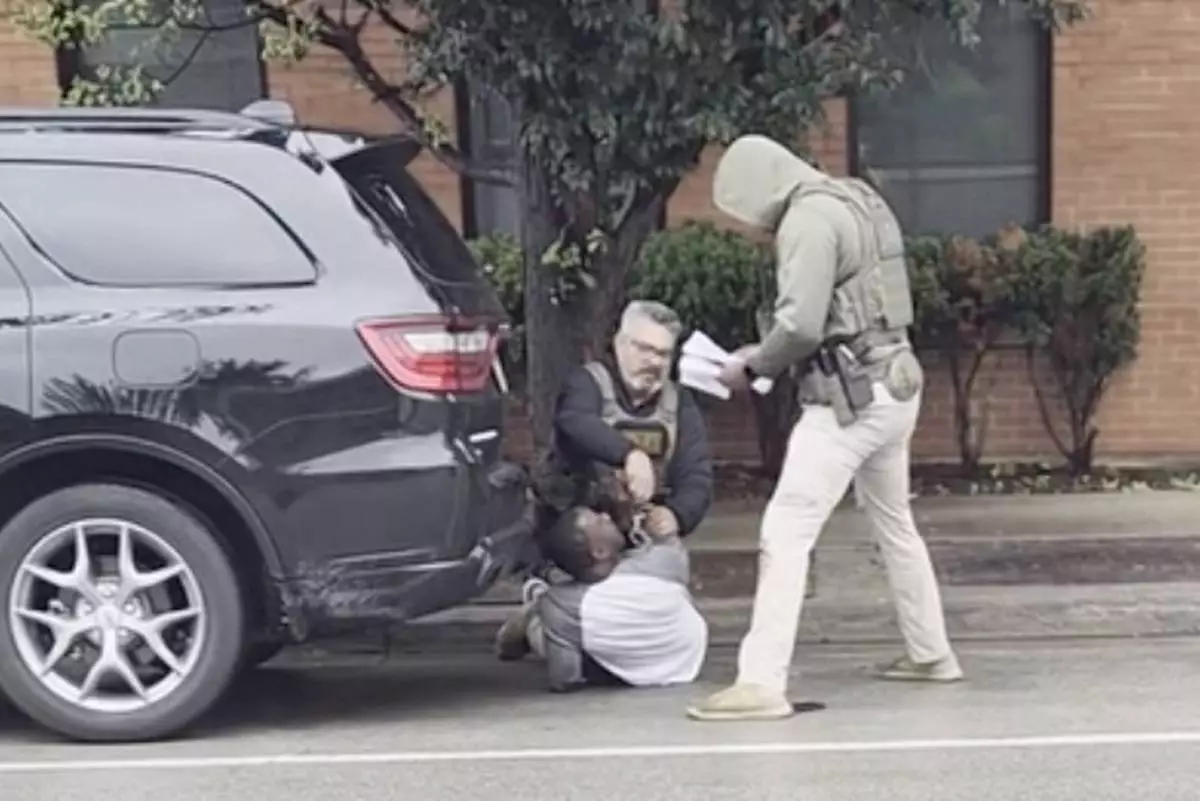
This image taken from video shows a federal officer removing handcuffs from a U.S. citizen after immigration enforcement agents mistook him for a fugitive, Sunday, Sept. 20, 2026, in Evanston, Ill. (Michael Lipson via AP)
MEXICO CITY (AP) — The powerful Hurricane Polo poured bands of heavy rain across Mexico's Pacific coast Thursday while a growing Tropical Storm Nolo approached Hawaii with the potential for catastrophic flooding.
Polo has seesawed between Category 4 and 5 — both major-hurricane strength— and is on track to skirt Mexico's coast over the next few days. Rain and strong winds were already pummeling the coast, with waves crashing onto the normally pristine beaches.
While the eye and the strongest winds were expected to remain at sea, heavy rains could cause life-threatening flooding and landslides, according to the U.S. National Hurricane Center.
Farther west in the Pacific, Tropical Storm Nolo was churning a couple hundred miles from the southern tip of Hawaii's Big Island. Nolo was forecast to strengthen and bring hurricane conditions to there by Friday night. A hurricane watch was issued for the island and schools were closed for the rest of the week.
Forecasters said the storm could drop 20 inches (50 centimeters) of rain on the Big Island, with higher amounts possible through Saturday. The island of Maui could also be hit with life-threatening floods, the hurricane center said.
The series of hurricanes come as the weather phenomenon El Niño prompts major environmental shifts across the world, fueling drought in some areas and flooding in others. As El Niño traditionally dampens the Atlantic hurricane season, it tends to rev up tropical cyclone activity in the Pacific, with moist air and little wind shear.
Mexican authorities were busy preparing shelters and clearing people from beaches, while coastal residents stacked sandbags in front of their businesses in fear that they might get swept away.
Much of the worry from locals came from hurricanes in past years that devastated cities along the Pacific coast. Hurricane Otis in 2023 unexpectedly plunged Acapulco into turmoil for weeks.
“So many people said it wouldn’t happen and then it did. After that, you’re left on edge,” said Gonzalo Ramírez, a bartender in the city.
Guerrero state was particularly at risk of life-threatening flooding and mudslides, the hurricane center said.
Polo was swirling about 195 miles (315 kilometers) west-southwest of Zihuatanejo early Thursday. It was forecast to move further out to sea before turning back toward the coast Saturday.
The storm was expected to remain a major hurricane for the next few days. Hurricane-force winds extended up to 40 miles (65 kilometers) from the eye and tropical-storm-force winds extended up to 125 miles (205 kilometers).
The region most under threat from Polo is further south along the rural and mountainous coast of Michoacan and Guerrero, scattered with a few small tourist towns and ports. Much of the area is marked by poverty and residents routinely complain they are left to fend for themselves during natural disasters.
Mexican authorities have deployed 15,000 security personnel across the coast, set up hundreds of shelters and suspended schools as a precaution. Authorities didn’t immediately say how many people had been evacuated.
Projections from the U.S. National Hurricane Center show Polo could arc back as a weakened storm and hit Mexico's Baja California on Tuesday.
The National Weather Service said Tropical Storm Nolo would likely strengthen before closing in on the Big Island on Friday.
The storm has the potential to be a major hurricane, said John Bravender, a weather service warning coordination meteorologist, during a news conference Wednesday afternoon.
While high winds are expected, Bravender said the main concern is flash flooding. He the heavy rainfall coming to the Big Island could impact the same southeastern region hit hard in August by Hurricane Lala.
“That by itself could cause catastrophic flooding, but when you put that on top of grounds that we’ve been raining off and on for the last couple of months … that rain could cause even more damage,” Bravender said.
Hawaii officials told residents to put together emergency kits and the governor issued an emergency proclamation, activating more than 230 Hawaii National Guard members.
Kauai’s electric cooperative urged residents to prepare for “the possibility of prolonged power outages,” and to store nonperishable food and potable water. Over 100 Kauai households remain without power from Hurricane Lowell, which passed west of the island less than three weeks ago.
Hawaiian Electric, the state’s primary utility, said crews would return to at-risk areas in preparation for the coming storm.
In the northern Atlantic Ocean, Tropical Storm Fay re-formed early Thursday, the U.S. hurricane center said. It was nearly 1,000 miles (1,600 kilometers) west-southwest of the Azores.
In the Pacific, Hurricane Odalys was centered about 1,110 miles (1,785 kilometers) west-southwest of the southern tip of Mexico’s Baja California peninsula.
Aoun reported from San Diego. Associated Press writer Hallie Golden in Seattle contributed.
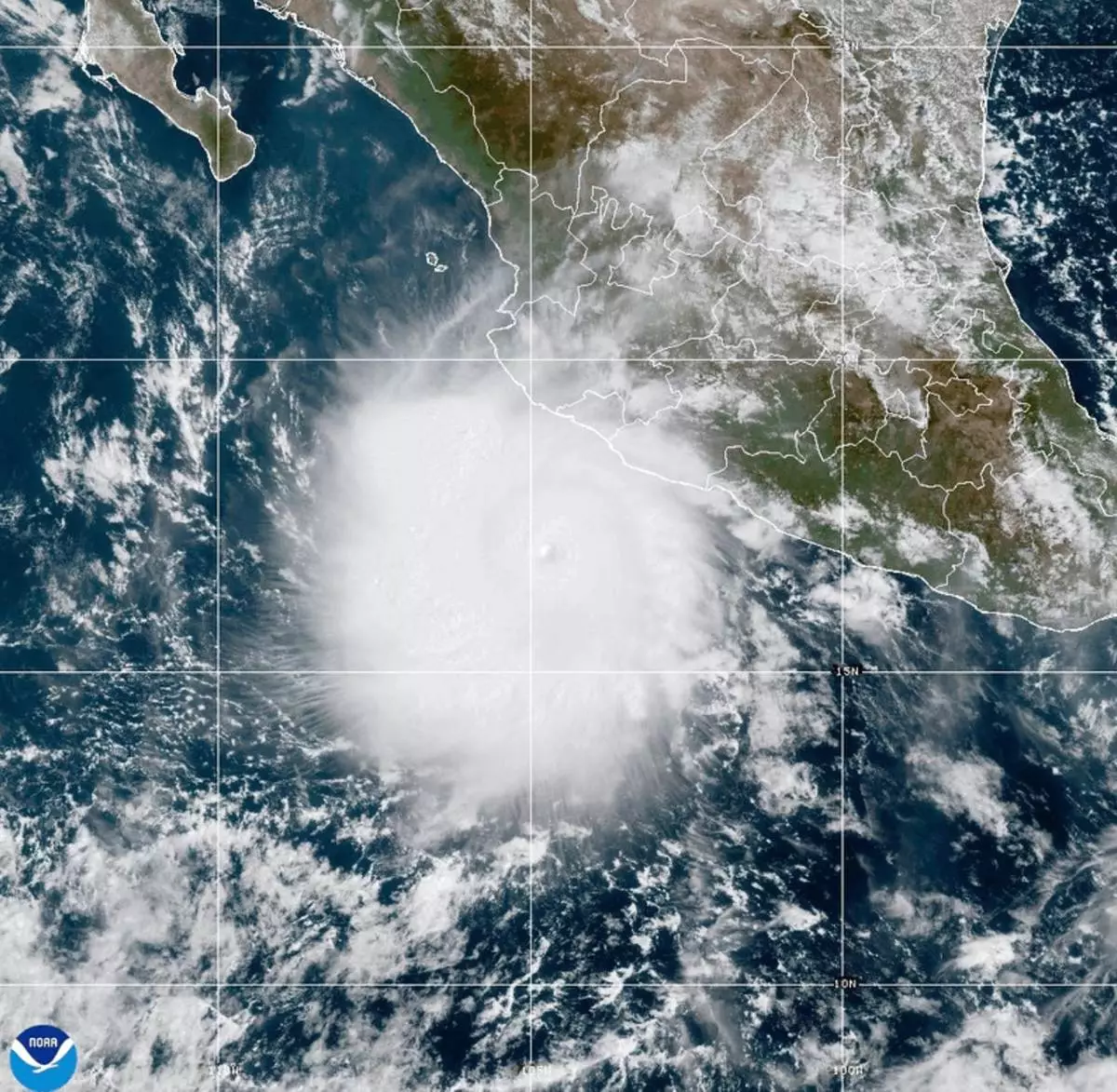
This photo provided by NOAA shows Hurricane Polo moving away from the southwestern coast of Mexico on Thursday, Sept. 24, 2026. (NOAA via AP)
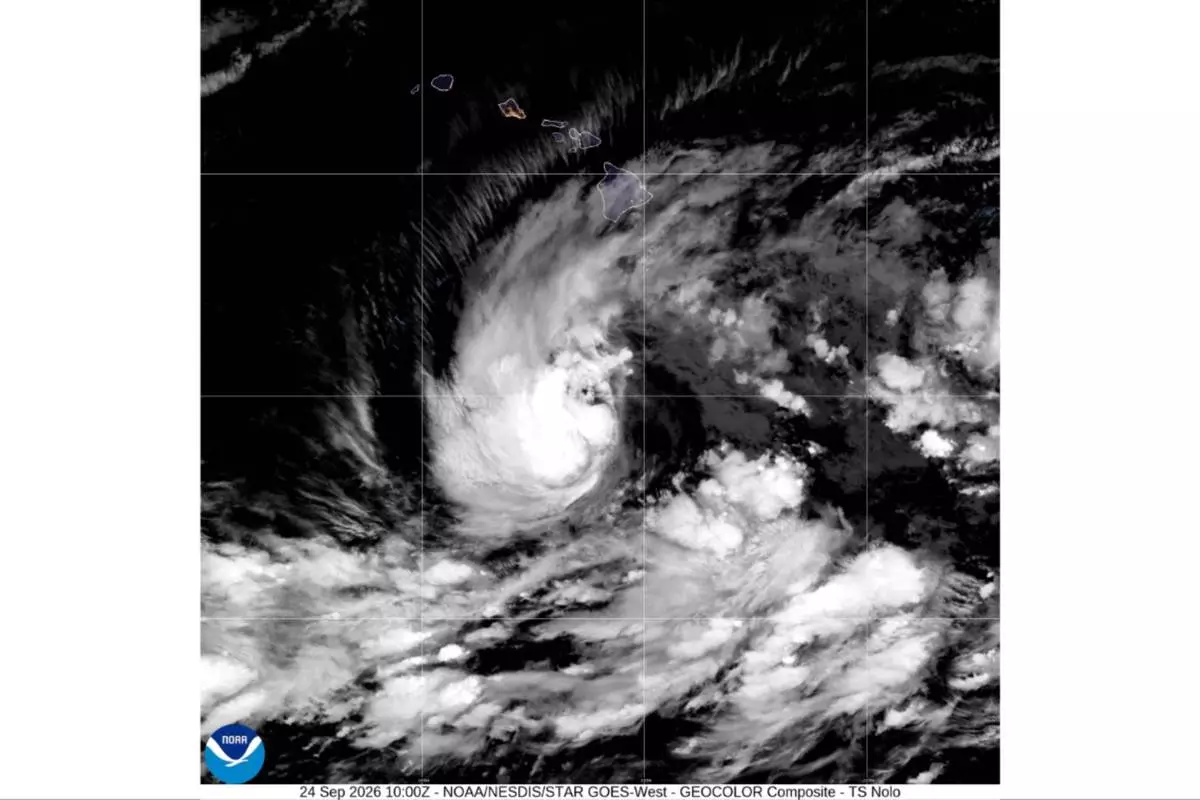
This satellite image from the National Oceanic and Atmospheric Administration shows Tropical Storm Nolo in the Pacific Ocean, Thursday, Sept. 24, 2026. (NOAA via AP)
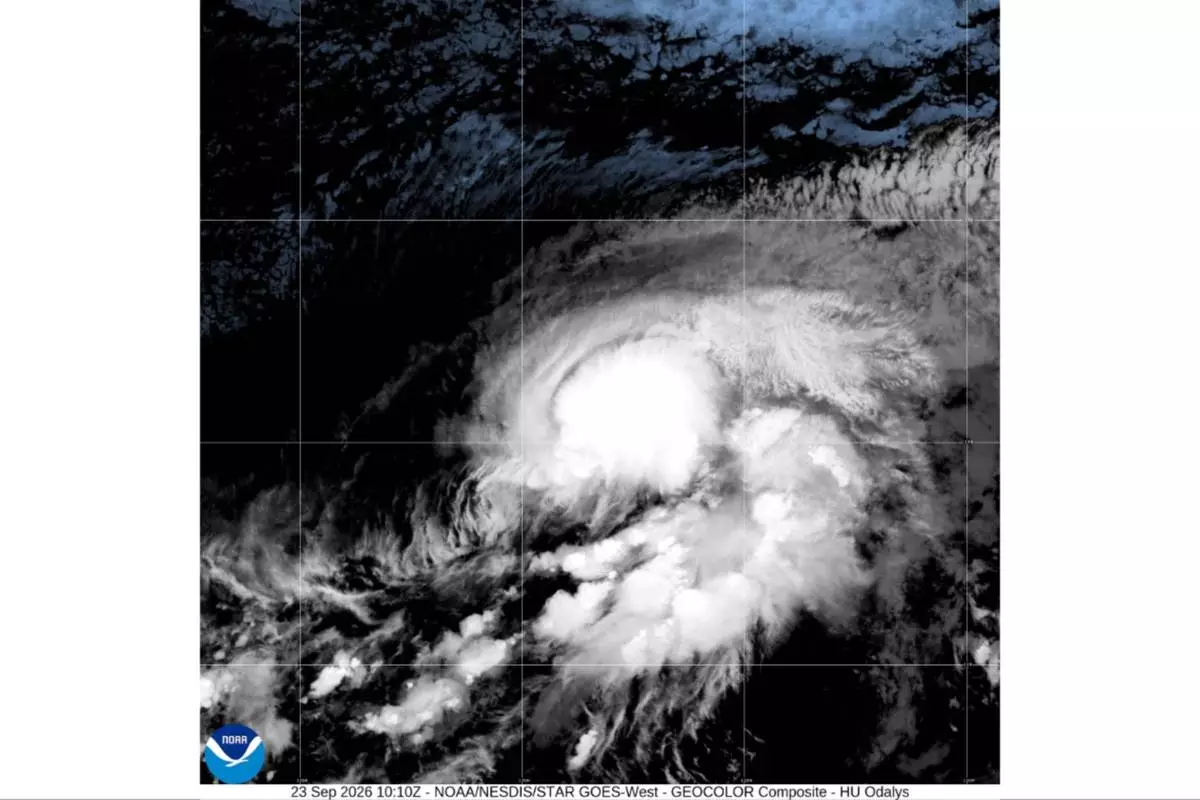
This satellite image from the National Oceanic and Atmospheric Administration shows Hurricane Odalys in the Pacific Ocean, Wednesday, Sept. 23, 2026. (NOAA via AP)
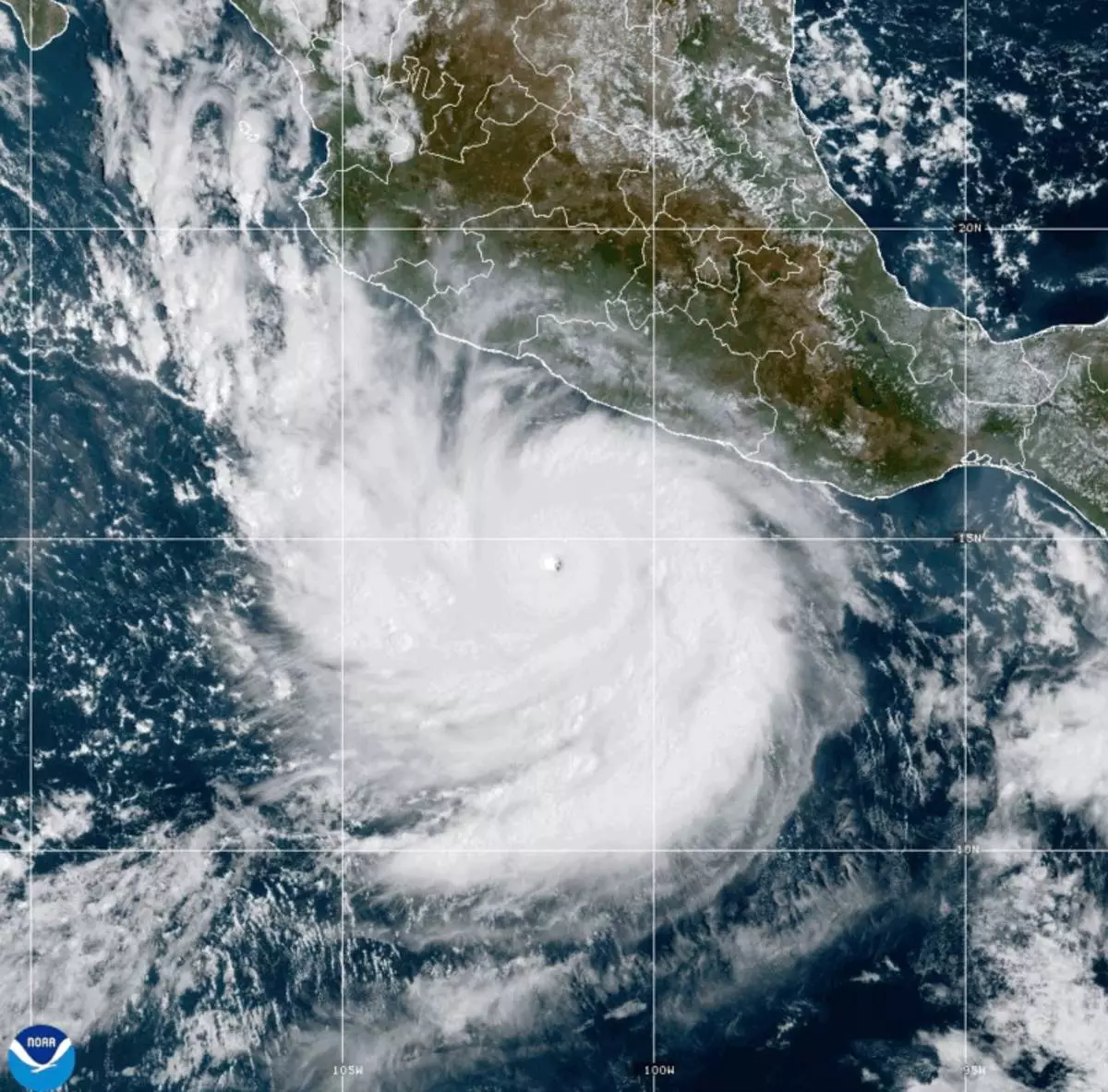
This photo provided by NOAA shows Hurricane Polo strengthening in the Pacific Ocean off the coast of Mexico on Tuesday, Sept. 22, 2026. (NOAA via AP)