Skip to Content Facebook Feature Image

Italy decrees limits on non-Italian speakers and veils in school classrooms

News

Italy decrees limits on non-Italian speakers and veils in school classrooms
News

News

Italy decrees limits on non-Italian speakers and veils in school classrooms

2026-09-25 03:13 Last Updated At:03:20

ROME (AP) — Italy’s government passed a decree Thursday to place an upper limit on the number of students in each school classroom who have only limited Italian language skills and to ban face-covering Islamic veils in schools.

Premier Giorgia Meloni’s conservative government said the package is aimed at strengthening integration through language learning and has drawn support from right-wing allies.

Opponents including some educators, unions and opposition parties warn that new rules could force students to attend schools far from their neighborhoods, while critics accuse the government of turning immigration into a political issue.

With elections possible as early as next spring, analysts say the measures allow the premier to reassert her credentials on issues central to her conservative base, even though their impact is likely to be limited and significant questions remain about how they would be enforced.

Under the plan, a limit of 30% of foreign students lacking sufficient Italian proficiency would be allowed in any individual classroom.

The government decree goes into effect immediately but needs to be endorsed within 60 days in parliament, where Meloni's coalition commands a majority.

Meloni wrote on social media that they are “common-sense measures that do not divide but help foster genuine integration, avoiding ‘ghetto’ classrooms and giving all students equal opportunities.”

The decree comes as Meloni faces mounting pressure on her right flank from a new hard-line challenger, retired army Gen. Roberto Vannacci, who has been seeking to capitalize on voter concerns over immigration and national identity.

Education Minister Giuseppe Valditara said local school authorities will coordinate student placements to avoid concentrations of non-Italian-speaking pupils, while schools unable to comply would be eligible for exemptions and additional language-support funding.

The minister says it would affect around 1,000 classrooms, about 0.3% of the total nationwide, and primarily those with high concentrations of recently arrived students with little or no Italian-language proficiency.

School principals questioned how the measure could work in areas with large migrant populations.

“From an educational perspective, the issue is well-founded and valid, but it’s difficult to turn it into a practical solution,” said Antonello Giannelli, president of the National Association of Principals.

"We have situations in which there is a district, a neighborhood that is mainly inhabited by immigrants and maybe there is only one school. So, since these are children, presumably young children in primary school, it is evident that they will hardly be able to go kilometers from their home,” Giannelli added.

Teachers’ unions criticized what they called a lack of both consultation and resources for the measure. They argued that the government’s 14-million-euro ($16 million) funding package would not be enough to hire specialized language teachers and cultural mediators needed to support students.

“Differences mean opportunities, and as with every opportunity one must be able to catch it. In most cases they (foreign students) allow the class to enrich their view of the world,” said Giovanni Castagno, a 52-year-old primary school teacher in central Rome.

According to Education Ministry data, students without Italian citizenship accounted for 11.2% of Italy’s school population in the 2022-23 academic year, while classes with more than 30% foreign students represented 7.6% of the total.

Foreign students who were born in the country would be exempt from the cap, along with those who attended Italian preschool or have already progressed through the school system.

The decree also bans burqas and niqabs in schools while continuing to allow hijabs.

The measure is narrower than restrictions adopted in some other European countries.

France banned full-face veils in public spaces in 2011, citing public security concerns, despite the small number of women affected. France also prohibits students from wearing conspicuous religious symbols, including Islamic headscarves, in public schools under its strict secularism doctrine.

Critics in Italy said the provision addresses a phenomenon rarely seen in Italian classrooms. Educators noted that while headscarves are common among some Muslim students, full-face veils are seldom seen in schools, and they argued that the provision risks becoming a symbolic political issue rather than an educational one.

Opposition parties also said the 30% threshold largely mirrors guidance already introduced by the Education Ministry in 2010, noting the government was repackaging an existing policy rather than investing in struggling schools. Center-left leader Elly Schlein accused the government of using schools to advance a political message on migration.

Valditara, the education minister, rejected those criticisms, saying the goal is integration through language acquisition and stronger educational support.

The decree provides additional teaching resources for schools where newly arrived foreign students exceed 20% of enrollment and additional language-learning funds for schools exceeding the 30% threshold.

It also would require some parents of foreign students to attend Italian-language courses when language barriers within families contribute to educational or behavioral difficulties.

Schools would refer eligible families to social services, which could enroll them in a tailored support program through adult education centers. Parents who fail to attend the courses could face fines ranging from 200 to 1,000 euros, although exemptions are included for those with certified age-related, medical or disability-related barriers to language learning.

— AP video journalist Paolo Santalucia in Rome contributed to this report.
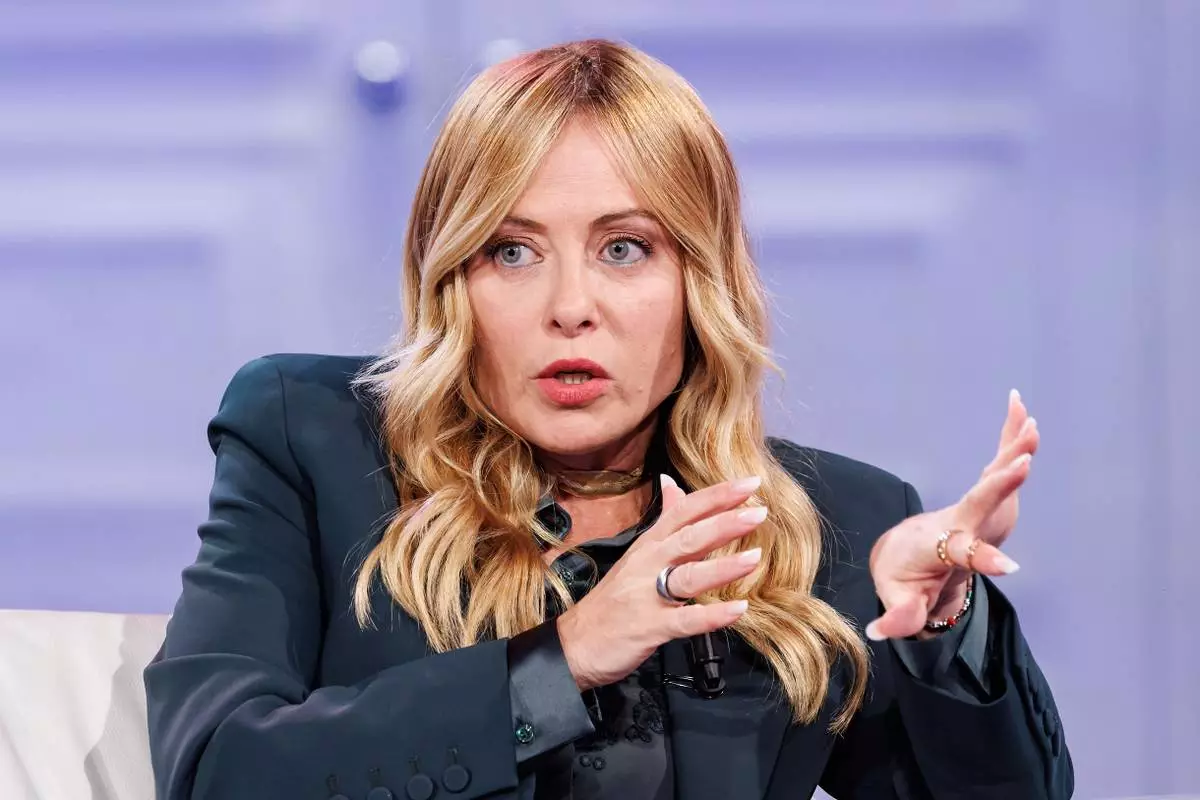
Italian premier Giorgia Meloni speaks during "Porta a porta" TV program in Rome, Tuesday, Sept. 22, 2026 (Roberto Monaldo/LaPresse via AP)

Italian premier Giorgia Meloni speaks during "Porta a porta" TV program in Rome, Tuesday, Sept. 22, 2026 (Roberto Monaldo/LaPresse via AP)
JERUSALEM (AP) — Israeli Prime Minister Benjamin Netanyahu began the year declaring that he stood “shoulder to shoulder” with U.S. President Donald Trump as the two countries launched a war against Iran. But this week, as world leaders gather in New York for the United Nations General Assembly, there are no plans for the two men to be in the same room, or even in the same city.

As the war with Iran has dragged on, Trump and Netanyahu have split over how to prosecute it, straining a relationship between the two allies. Netanyahu has also faced global criticism both for Israel’s war in Gaza and settler violence in the occupied West Bank. Instead of a packed itinerary, Netanyahu, who arrived on Thursday, was scheduled to meet only a handful of leaders before giving his speech.

The apparent snub underscored how badly the relationship between Trump and the prime minister has fractured. Many in Washington associate Netanyahu with the increasingly unpopular fight with Iran and Trump has labored to avoid the appearance that the Israeli leader forced him into a war that Trump said would be a “little excursion” lasting only weeks.

Netanyahu's brief visit also demonstrated how isolated he is globally, three years after launching a punishing war in Gaza in retaliation for the Hamas-led attacks on Oct. 7, 2023. He faces an election next month widely seen as a referendum on his responsibility for the security failures surrounding the attacks and his ability to defend Israel's reputation on the world stage.

Day after day this week, as other heads of state have stepped to the podium, many have harshly criticized Israel's actions, particularly in Gaza. Ahead of his visit, New York City Mayor Zohran Mamdani urged his arrest, saying the U.S. should honor a warrant for Netanyahu issued by the International Criminal Court. He is wanted for war crimes and crimes against humanity allegedly committed in Gaza, though the U.S. is not a member of the court and New York City lacks the authority to arrest him.

Still, the prime minister is a master showman, and often turns to props and visual aids during speeches in flawless English to drive home his message. Last year at the summit, scores of diplomats walked out while he was speaking. But that is unlikely to faze him, as he speaks primarily to an audience of Israeli voters.

“He times his speech so that it is broadcast here in primetime,” said Michael Oren, a former Israeli ambassador to the U.S. who served under Netanyahu and lives in Israel.

But experts say without the usual high-profile meetings, the trip could hurt Netanyahu’s image at home.

“I think the trip is a mistake, because it exposes his weaknesses,” said Eytan Gilboa, an expert on U.S.-Israel relations and professor at Israel’s Bar-Ilan and Reichman universities.

While many Israelis view the U.N. as hostile toward Israel, he added, the fact that he could not secure a meeting with Trump only highlights how poorly Netanyahu has managed the relationship with his nation's strongest ally.

In 2023, U.S. President Joe Biden was reluctant to host Netanyahu at the White House but still made time to sit down with him on the sidelines of the U.N. General Assembly.

“Israel cannot survive without the United States,” Gilboa said.

The slight in New York follows sharp criticism from Mike Huckabee, the U.S. ambassador to Israel and a longtime supporter of Israeli settlements, of the settlers attacking Palestinian communities in the West Bank. In unusual remarks for an ambassador, he referred to the attackers as “terrorists."

“It’s significant of a deeper rift,” Oren said of Netanyahu's slim itinerary.

When Trump was in New York on Tuesday, he met with an array of leaders from Arab nations, as well as from Denmark, Japan, Greenland, Ukraine and Venezuela, among others. He then quickly returned to Washington to roll out the red carpet for Chinese President Xi Jinping.

For a leader who likes to portray himself as a global statesman, it is a “big, big miss for him at a time where he can’t afford misses,” Natan Sachs, senior fellow at the Middle East Institute in Washington, said of Netanyahu.

On other past trips, Netanyahu met with a slate of high-profile leaders, including Ukrainian President Volodymyr Zelenskyy, Turkish President Recep Tayyip Erdogan and then-German Chancellor Olaf Scholz.

This year, though, the prime minister's office said “many world leaders” asked to meet with Netanyahu during his brief visit, but that he was on a “tight schedule” and needed to return to Israel before the start of the Jewish holiday of Sukkot, which begins at sundown on Friday.

On his schedule, the statement said, were leaders from Argentina, Bolivia, Paraguay, Panama, Ethiopia, Greece, Slovenia, and Papua New Guinea.

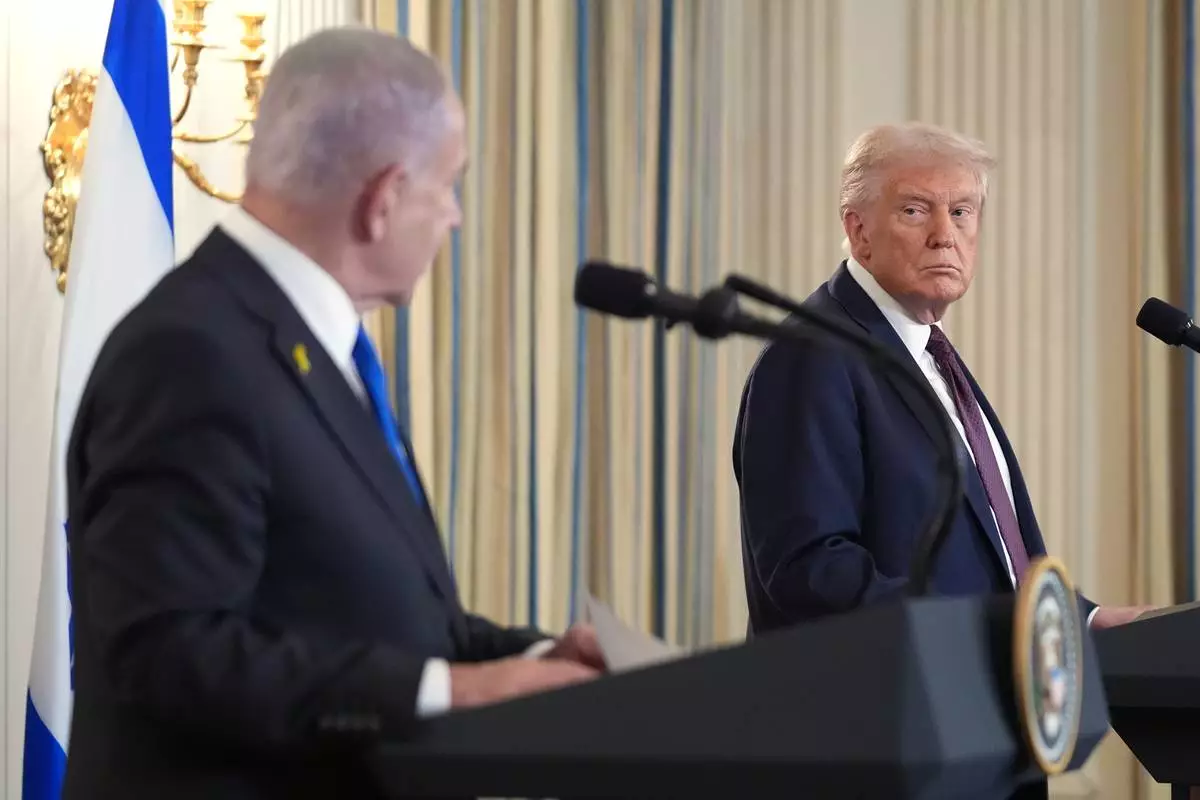
FILE - President Donald Trump, right, listens during a news conference with Israeli Prime Minister Benjamin Netanyahu in the State Dining Room of the White House, Sept. 29, 2025, in Washington. (AP Photo/Evan Vucci, File)

FILE - President Donald Trump, right, listens during a news conference with Israeli Prime Minister Benjamin Netanyahu in the State Dining Room of the White House, Sept. 29, 2025, in Washington. (AP Photo/Evan Vucci, File)

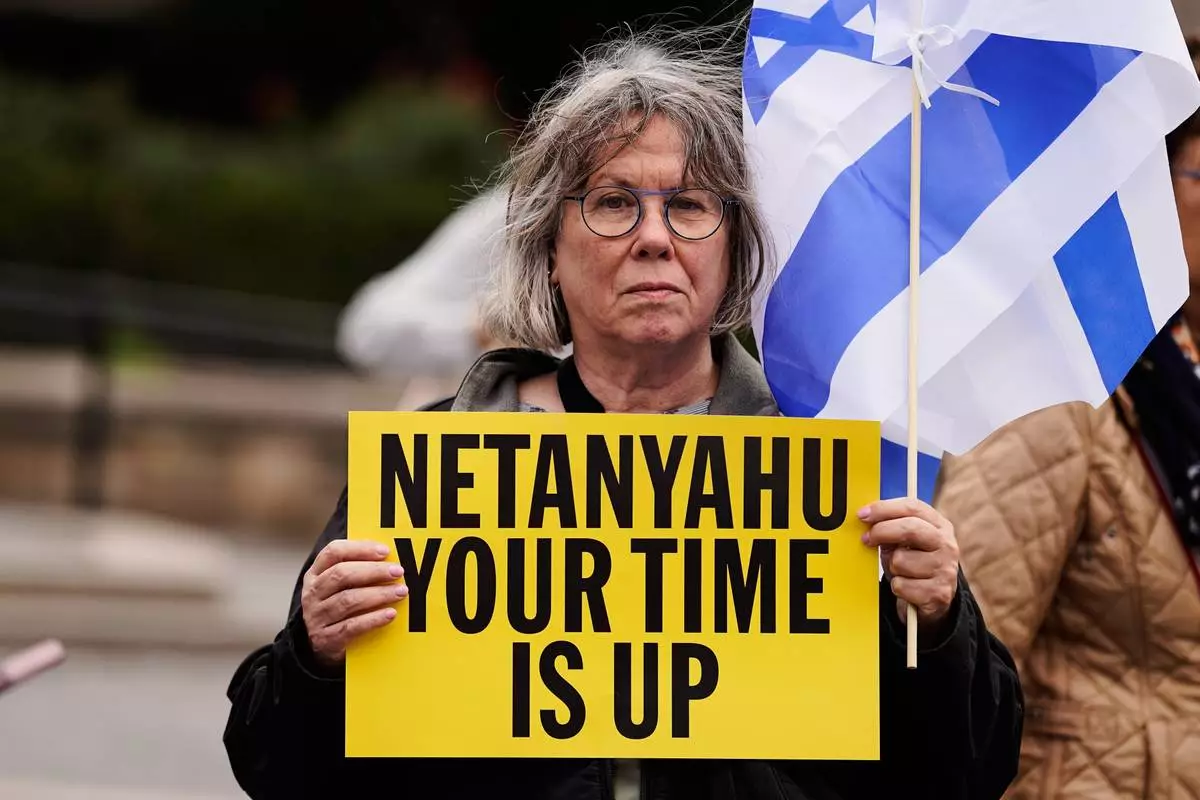
A person holds a sign during a protest ahead of Israeli Prime Minister Benjamin Netanyahu's address at the 81st session of the United Nations General Assembly, Thursday, Sept. 24, 2026, in New York. (AP Photo/Madison Swart)

A person holds a sign during a protest ahead of Israeli Prime Minister Benjamin Netanyahu's address at the 81st session of the United Nations General Assembly, Thursday, Sept. 24, 2026, in New York. (AP Photo/Madison Swart)

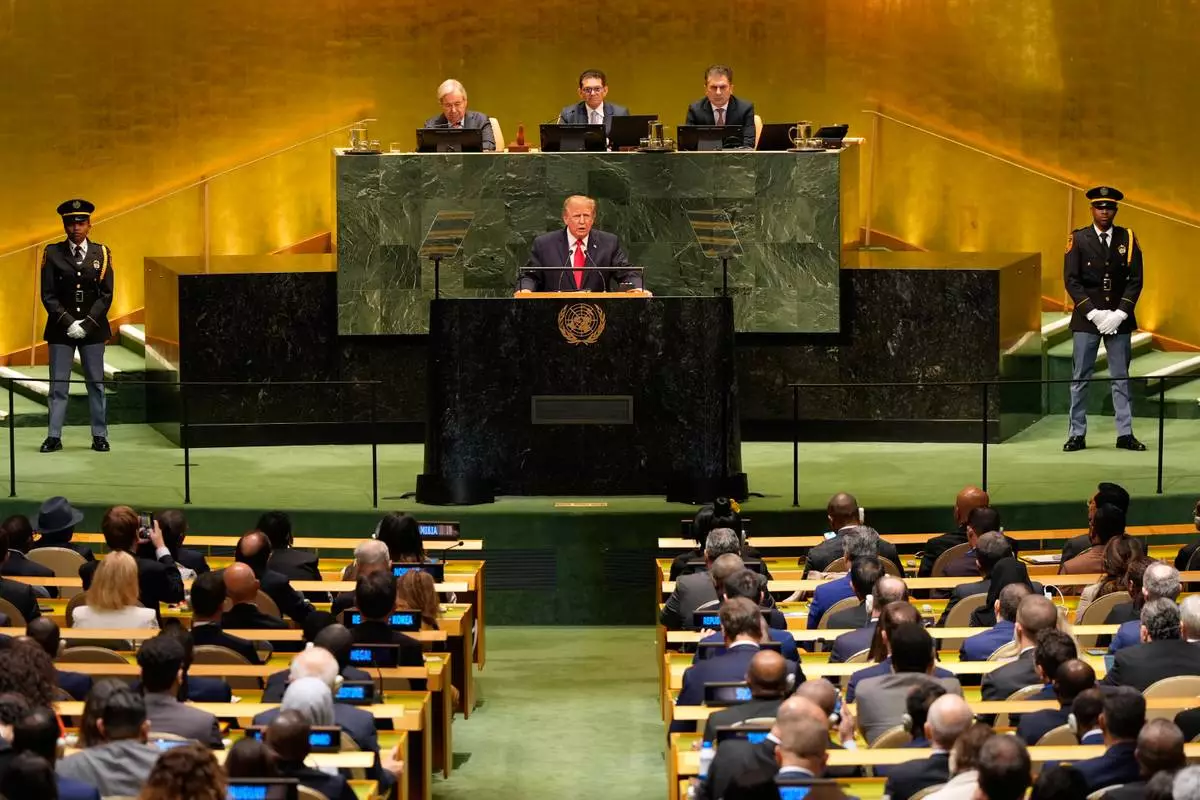
United States President Donald Trump speaks during the 81st session of the United Nations General Assembly at United Nations headquarters, Tuesday, Sept. 22, 2026. (AP Photo/Seth Wenig)

United States President Donald Trump speaks during the 81st session of the United Nations General Assembly at United Nations headquarters, Tuesday, Sept. 22, 2026. (AP Photo/Seth Wenig)

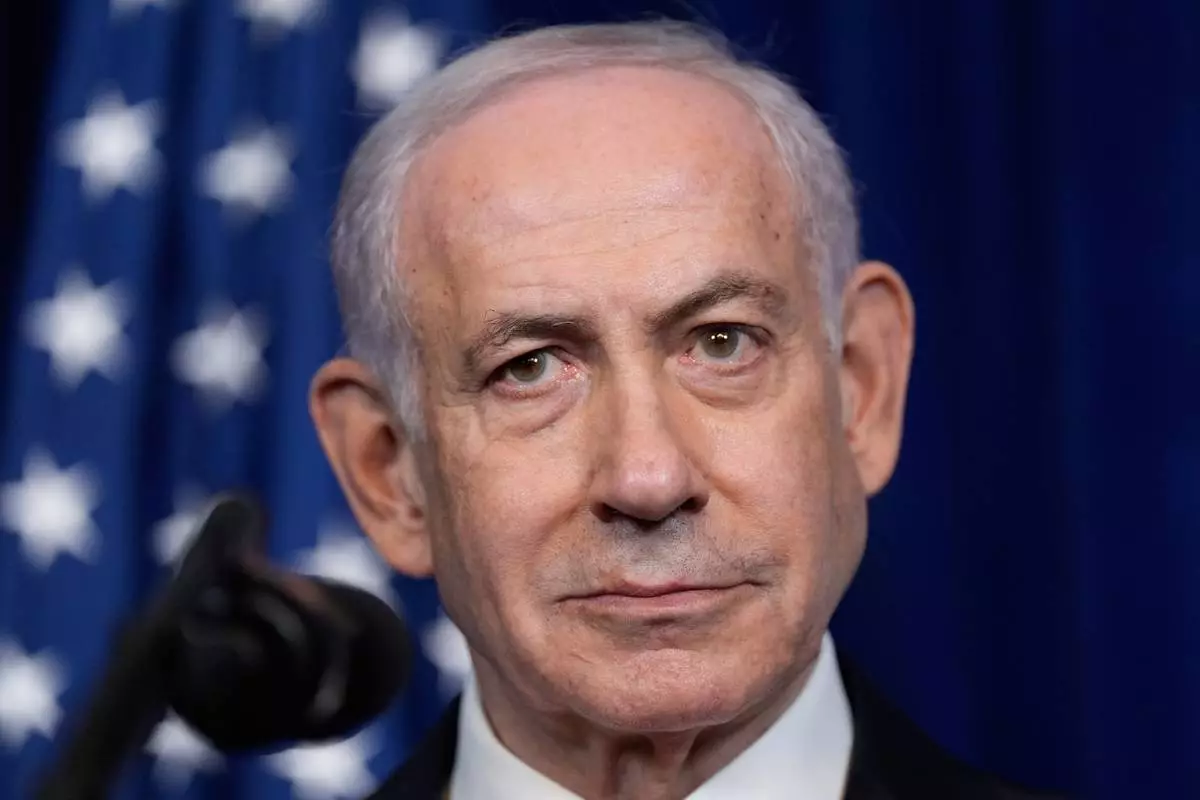
FILE - Israel's Prime Minister Benjamin Netanyahu listens during a news conference with President Donald Trump at Mar-a-Lago, Dec. 29, 2025, in Palm Beach, Fla. (AP Photo/Alex Brandon, File)

FILE - Israel's Prime Minister Benjamin Netanyahu listens during a news conference with President Donald Trump at Mar-a-Lago, Dec. 29, 2025, in Palm Beach, Fla. (AP Photo/Alex Brandon, File)

Recommended Articles