Skip to Content Facebook Feature Image

Utah prosecutors say DNA evidence doesn't match man who spent decades on death row

News

Utah prosecutors say DNA evidence doesn't match man who spent decades on death row
News

News

Utah prosecutors say DNA evidence doesn't match man who spent decades on death row

2026-09-25 06:50 Last Updated At:07:01

Utah prosecutors are dropping their plan to seek the death penalty in an upcoming retrial of a 71-year-old man who spent decades on death row for a 1985 killing in which newly analyzed DNA evidence did not match him.

Douglas Stewart Carter was sentenced to death in 1985 after a jury found him guilty of murdering Eva Olesen, the aunt of a former Provo police chief. The state Supreme Court last year ordered a new trial, citing misconduct by investigators. Carter remains in custody and maintains his innocence.

No physical evidence linked him to the crime scene, but the jury convicted Carter, a Black man, based on a signed confession and two witnesses who said he had bragged about killing Olesen, who was white.

Judge Derek Pullan set a bond hearing for Monday, when defense attorney Neal Hamilton said he expects his client to be released pending an eight-week trial set to begin next July.

“It's not time to try to save face and continue with a tainted prosecution,” Hamilton said. “They know they don't have a case. The moral obligation is to dismiss.”

Utah County Attorney Jeffrey Gray said in a Wednesday court filing that the state was withdrawing an earlier notice that it intended to seek the death penalty. He said results of a DNA analysis received Tuesday excluded Carter as a possible match to blood found on a doorknob and material found on the handle of a knife used to stab Olesen, who was also shot.

Gray said the state planned to reexamine its decision to move forward with the case. But the prosecutor added that the new evidence “does not necessarily exonerate Carter of the murder.” Gray noted the handgun used to shoot Olesen was never found and Carter confessed.

Members of Olesen's family had testified during a hearing last month that Carter could pose a safety risk to them if he were released.

In a Thursday statement, the family said they “will not comment on the guilt or innocence of any individual” while prosecutors decide how to proceed.

“The latest developments have raised difficult questions and once again left our family without the sense of resolution we had hoped for after so many years,” the family said in the statement released by the Utah County Attorney's Office.

Carter has said his signed confession was coerced. The two witnesses he allegedly bragged to — a couple living in the U.S. without legal status — said years later that police and prosecutors offered to pay their rent, coached them to lie in court and threatened them and their son with deportation if they did not implicate Carter.

His defense attorneys also say witnesses saw a white man fleeing the crime scene and that an investigator suppressed evidence pointing to other suspects, including the victim’s husband, Orla Olesen. They allege prosecutors were close to filing charges against the husband, but a Provo police lieutenant asked them not to, so he could continue investigating. Carter was identified as a suspect soon after, the document alleges.

Orla Olesen, who died in 2009, had told police he found his wife dead in their home, partially undressed and with her hands tied behind her back.
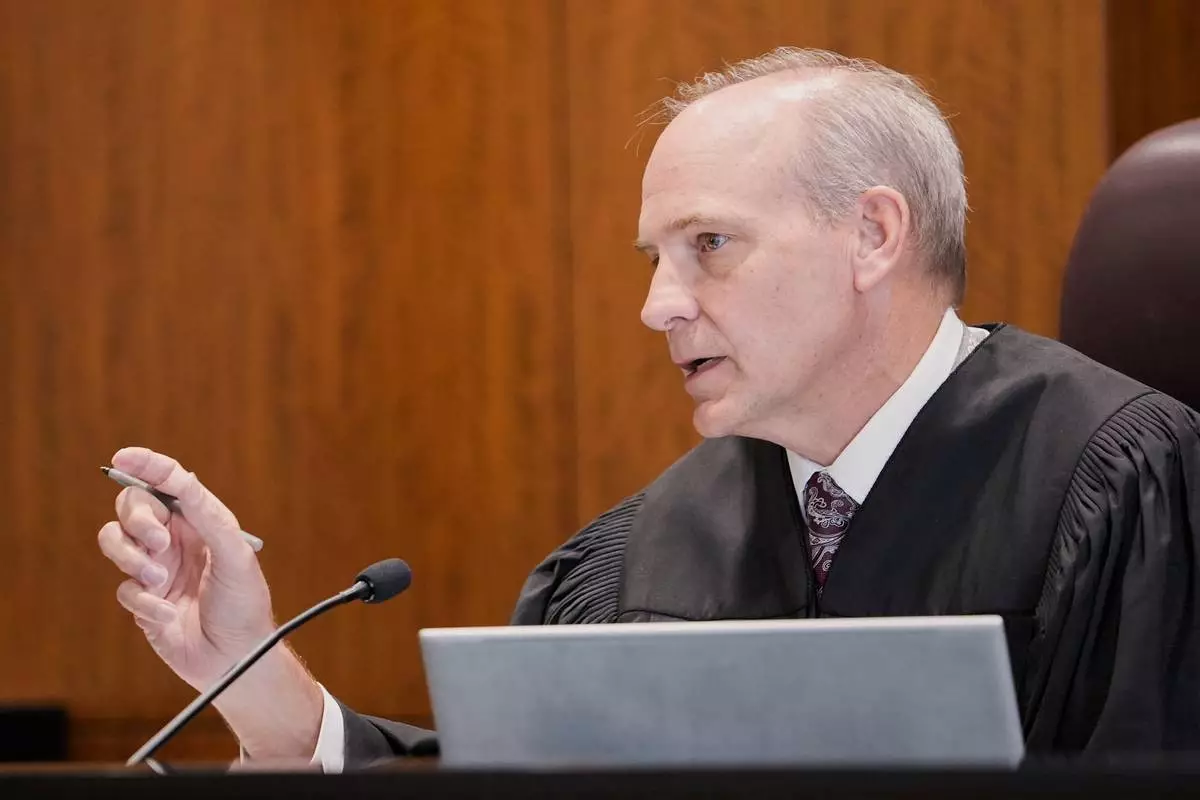
FILE - Fourth District Judge Derek Pullan presides over a hearing for Douglas Carter in 4th District Court in Provo, Utah, April 3, 2026. (Chris Samuels/The Salt Lake Tribune via AP, Pool, File)
FILE - Fourth District Judge Derek Pullan presides over a hearing for Douglas Carter in 4th District Court in Provo, Utah, April 3, 2026. (Chris Samuels/The Salt Lake Tribune via AP, Pool, File)

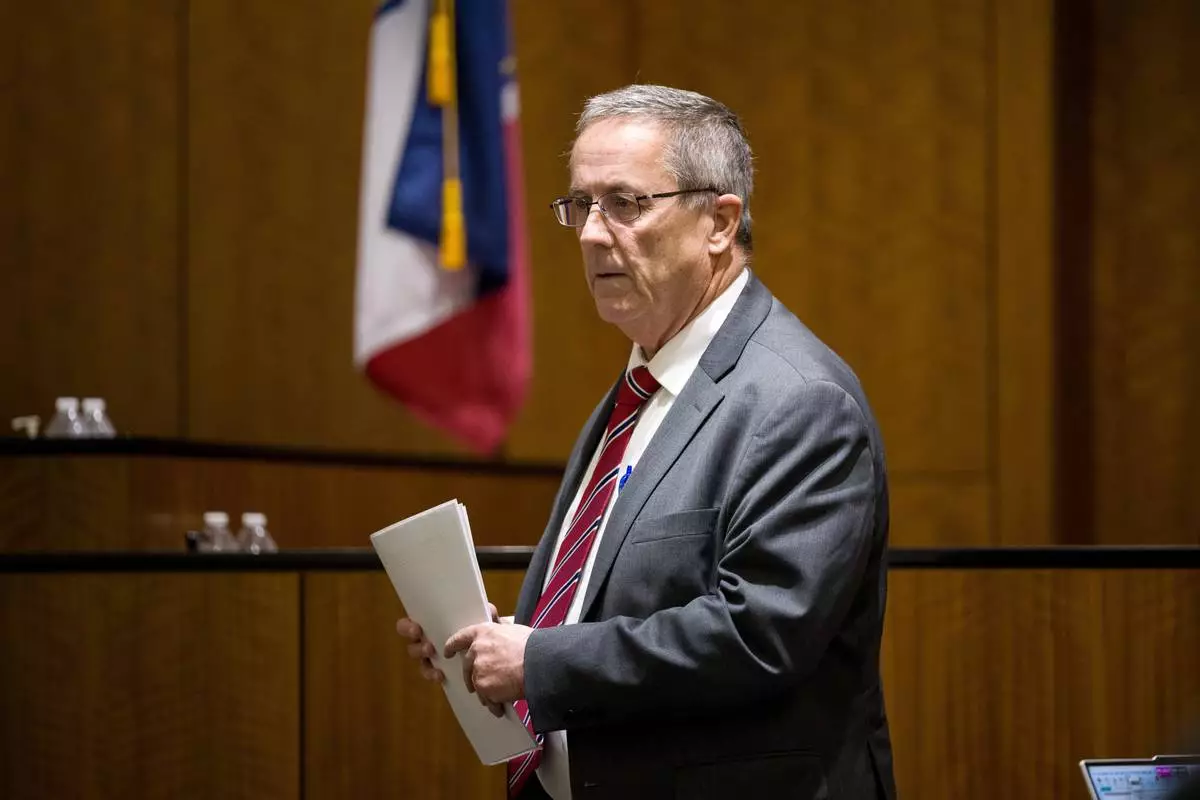
FILE - Utah County Attorney Jeffrey Gray stands during a hearing on the shooting of conservative activist Charlie Kirk in 4th District Court in Provo, Utah, Feb. 3, 2026. (Trent Nelson/The Salt Lake Tribune via AP, Pool, File)
FILE - Utah County Attorney Jeffrey Gray stands during a hearing on the shooting of conservative activist Charlie Kirk in 4th District Court in Provo, Utah, Feb. 3, 2026. (Trent Nelson/The Salt Lake Tribune via AP, Pool, File)

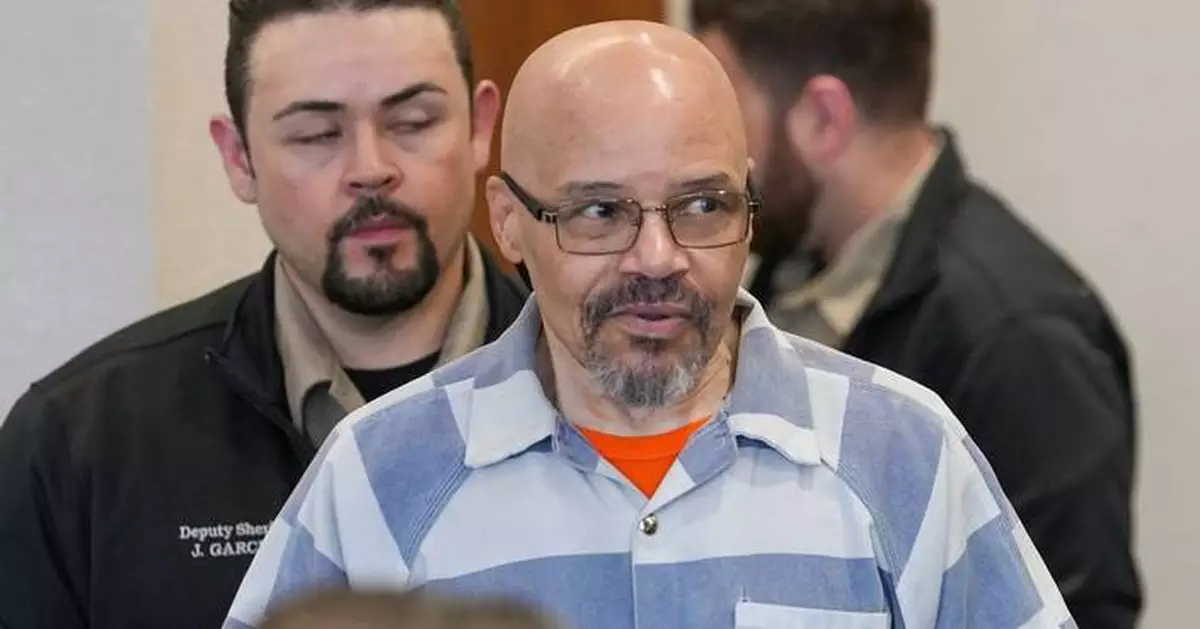
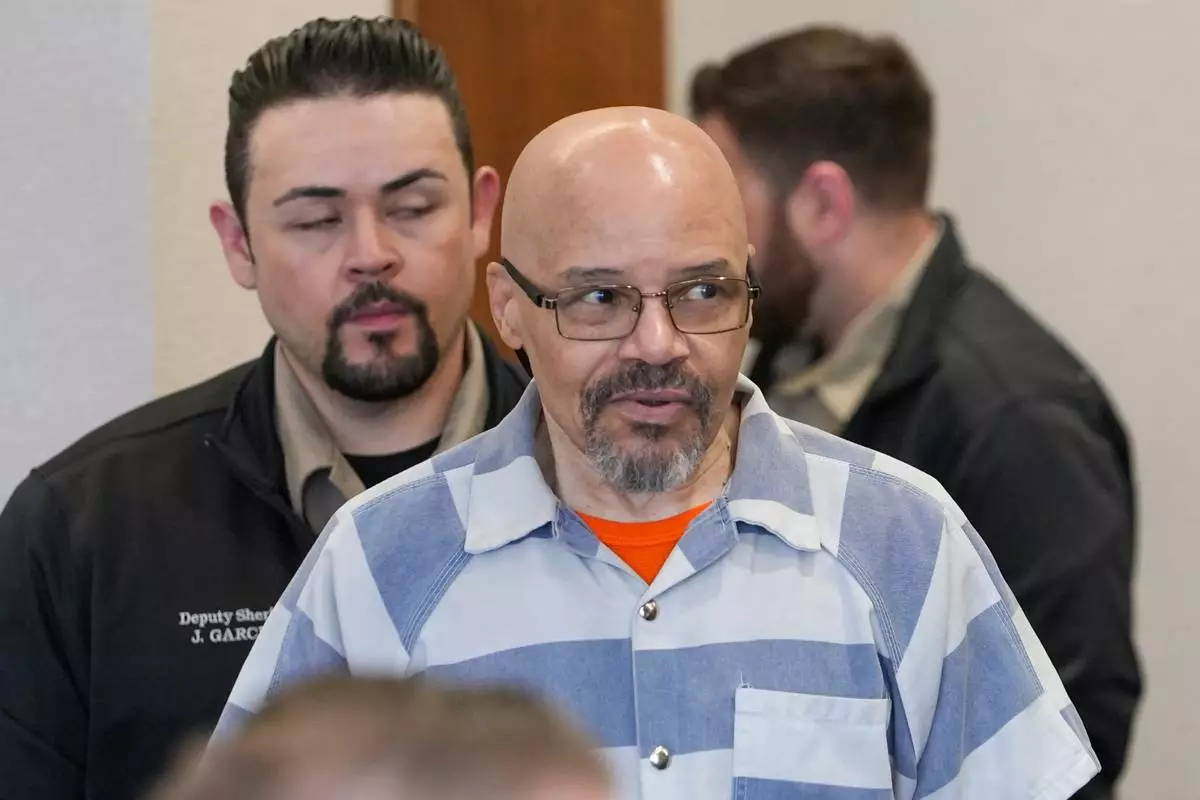
FILE - Douglas Carter is brought into the courtroom for a hearing in 4th District Court in Provo, Utah, April 3, 2026. (Chris Samuels/The Salt Lake Tribune via AP, Pool, File)
FILE - Douglas Carter is brought into the courtroom for a hearing in 4th District Court in Provo, Utah, April 3, 2026. (Chris Samuels/The Salt Lake Tribune via AP, Pool, File)

KYIV, Ukraine (AP) — A Russian strike on the center of Ukrainian President Volodymyr Zelenskyy’s hometown, Kryvyi Rih, killed two people and wounded 60 others, local officials said Saturday.

A 7-year-old boy and a 20-year-old woman were killed in the attack Friday night on the city in central Ukraine, Oleksandr Vilkul, the head of the city administration, wrote on Telegram. Oleksandr Hanzha, head of the regional military administration, said 60 people were wounded, including six children.

The strike caused four fires and damaged about 25 apartment buildings, a hospital, schools and an industrial facility, as well as businesses and vehicles, Vilkul said.

The attack fits the pattern of Moscow’s heavy responses to eye-catching Ukrainian attacks, such as the ones this week on the Kerch Bridge linking Russia to illegally annexed Crimea.

The missile attack came hours after two Russian missiles and a suspected drone came down in Poland, in what its prime minister said was likely a provocation timed to coincide with European military exercises in his country for a possible postwar mission in Ukraine.

European troops were taking part Friday in an unprecedented two-week military exercise that began Nov. 9 in southeastern Poland. Forces are preparing for a possible postwar mission in Ukraine aimed at helping to stabilize the country and rebuild its military. European countries previously have expressed alarm at what they deem to be Russia’s attempts to destabilize the continent.

The development stoked tensions between Europe and Moscow just as the U.S. tries to add momentum to talks it is mediating on ending the war that began with Russia’s all-out invasion of Ukraine nearly five years ago.

U.S. President Donald Trump discussed the war with Russian President Vladimir Putin and Chinese leader Xi Jinping at a summit in China on Thursday, according to his envoy Steve Witkoff. Trump called Putin his “friend” during the meeting and continued to tout their relationship at a White House news conference Friday.

Asked about Trump’s remarks in an interview with CNN, Zelenskyy called Putin “a killer.”

“For us, he is an enemy. And of course, for us, he is a killer,” Zelenskyy said Friday. He warned that describing the Russian leader in friendly terms could mean “he doesn’t feel enough pressure.”

Elsewhere in Ukraine, 11 people, including two children, were wounded when a Russian drone attacked a five-story apartment building in the Kharkiv region, Ukraine’s State Emergency Service said Saturday. One person was wounded in a Russian attack on the capital, Kyiv, according to the service.

In Russia, local officials said Saturday that Ukrainian drone attacks wounded three people in the Bryansk and Belgorod border regions.

Morton reported from London.

Follow the AP’s coverage of the war in Ukraine at https://apnews.com/hub/russia-ukraine

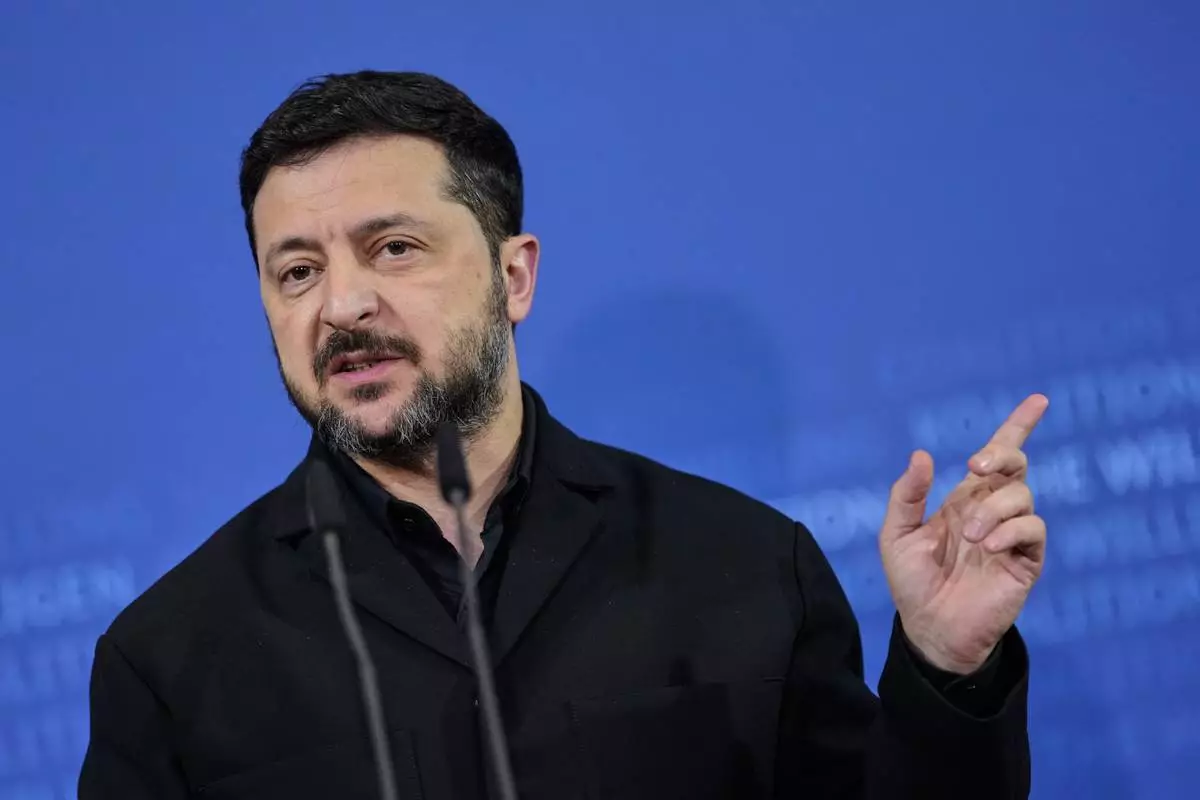
Ukraine's President Volodymyr Zelenskyy attends a press conference after a meeting of the "Coalition of the Willing" at the Chancellery in Berlin, Germany, Thursday, Nov. 19, 2026. (AP Photo/Markus Schreiber)

Ukraine's President Volodymyr Zelenskyy attends a press conference after a meeting of the "Coalition of the Willing" at the Chancellery in Berlin, Germany, Thursday, Nov. 19, 2026. (AP Photo/Markus Schreiber)

Recommended Articles