Skip to Content Facebook Feature Image

Yemen tells UN that Houthi rebels' moves on key strait threaten global economy

News

Yemen tells UN that Houthi rebels' moves on key strait threaten global economy
News

News

Yemen tells UN that Houthi rebels' moves on key strait threaten global economy

2026-09-25 11:49 Last Updated At:12:00

UNITED NATIONS (AP) — Yemen's internationally recognized government pressed world leaders anew Thursday for help defeating the Iran-backed Houthi rebels, saying that their new perch along one of the world's busiest waterways presents an international economic risk.

The Houthis — who have controlled Yemen's capital, Sanaa, and much of the country's north for over a decade — stormed down Yemen's coast this month and seized the crucial port city of Mokha and key Red Sea islands. That gives them better surveillance of ships passing through the Bab el-Mandeb Strait, at the sea's southern end. About 12% of the world’s trade usually passes through the waterway.

More Images
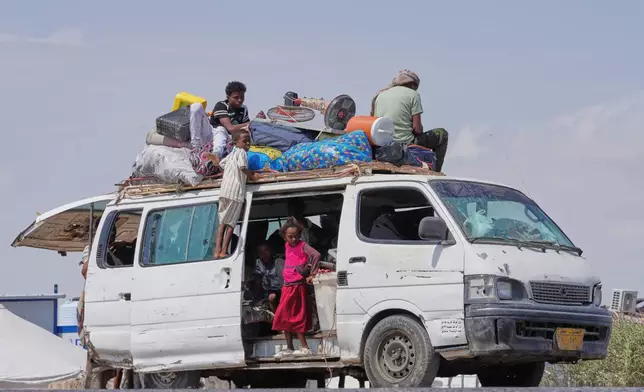
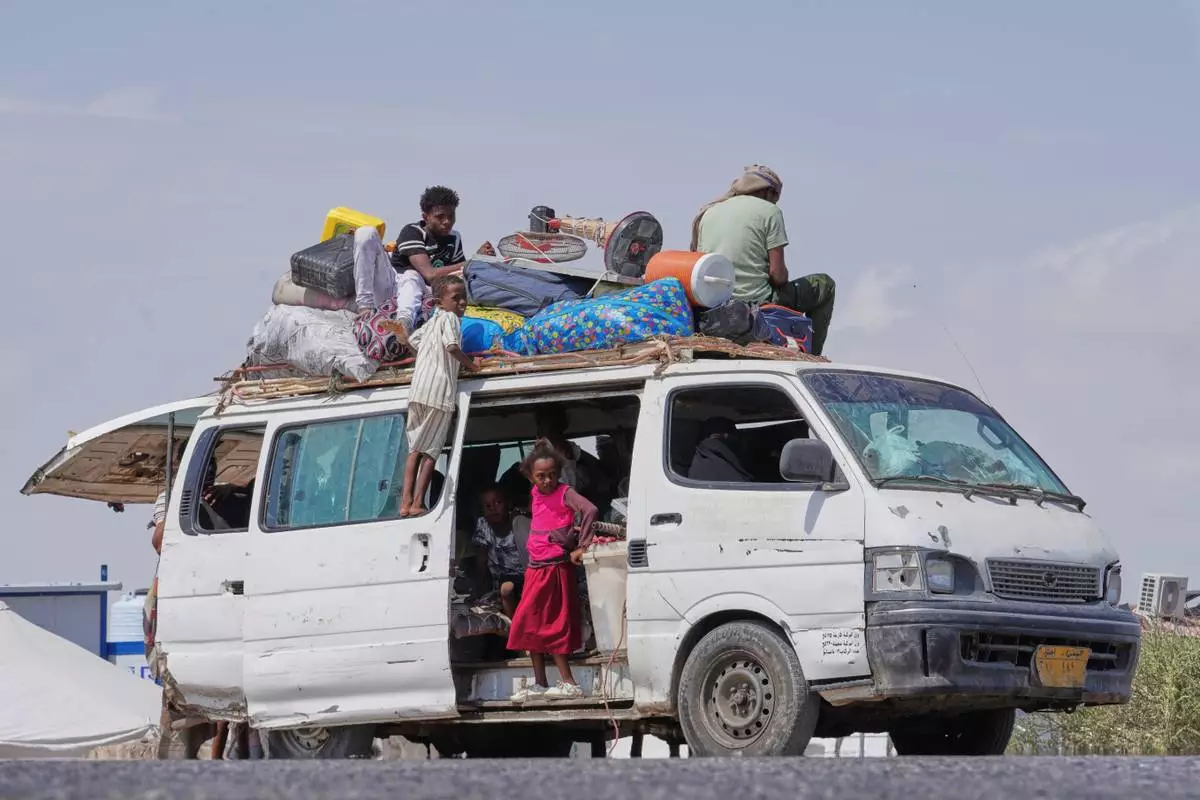
Members of the Haj Ali Araj family, who displaced from Mokha, arrive at Al-Firdaws camp in Ras Imran, on the western outskirts of Aden, Yemen, Thursday, Sept. 24, 2026. (AP Photo/Abdulnasser Alseddik)

Members of the Haj Ali Araj family, who displaced from Mokha, arrive at Al-Firdaws camp in Ras Imran, on the western outskirts of Aden, Yemen, Thursday, Sept. 24, 2026. (AP Photo/Abdulnasser Alseddik)

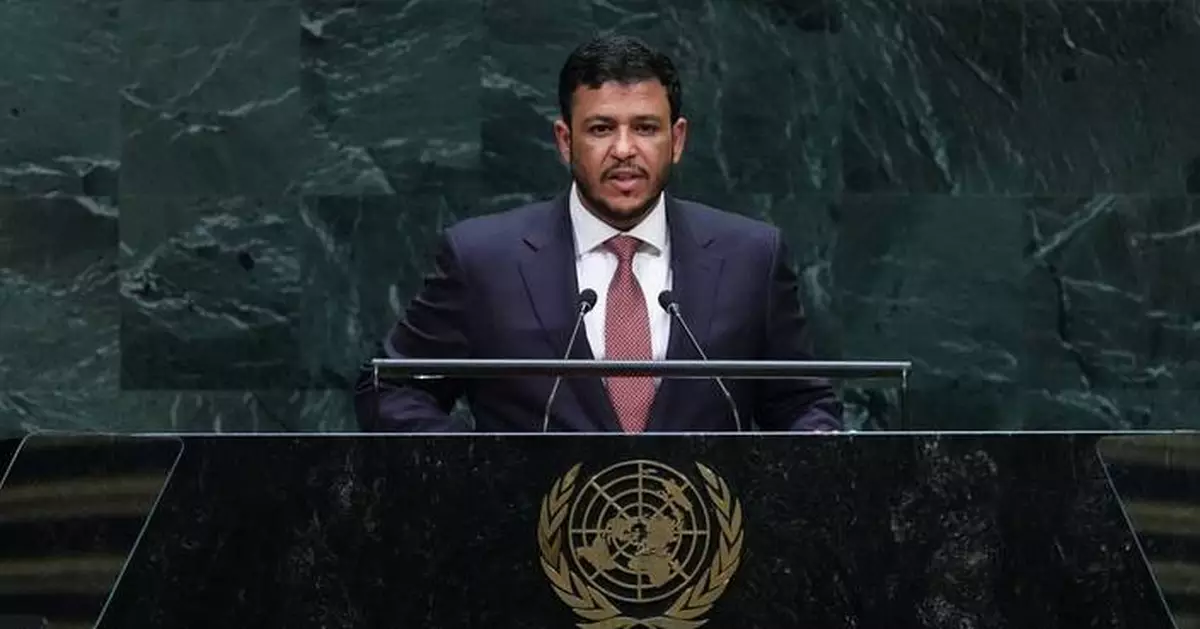
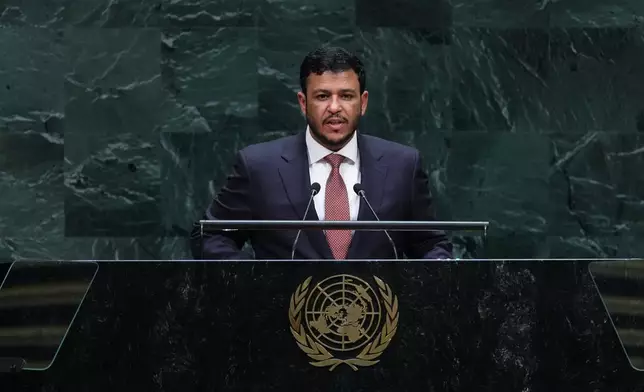
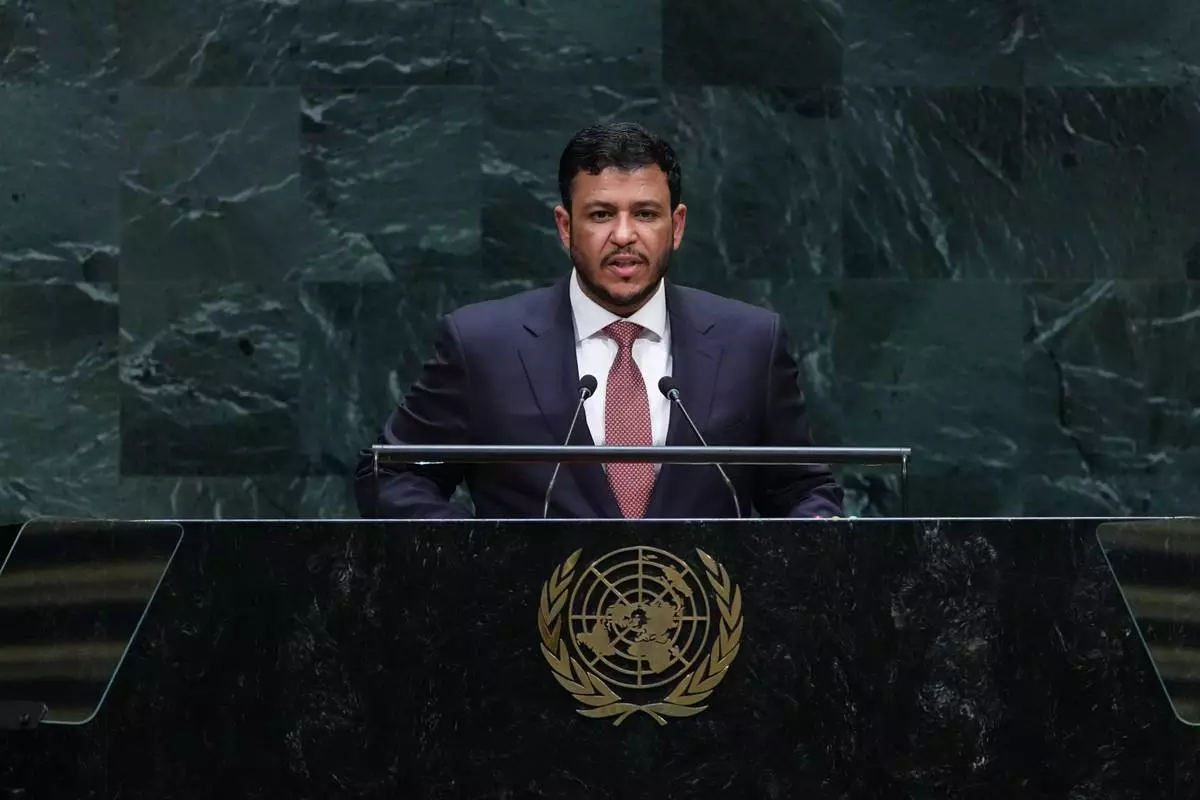
Yemen Vice President Abdullah Abdulkader Al Alimi-Bawzer addresses the 81st session of the United Nations General Assembly at U.N. headquarters Thursday, Sept. 24, 2026. (AP Photo/Frank Franklin II)
Yemen Vice President Abdullah Abdulkader Al Alimi-Bawzer addresses the 81st session of the United Nations General Assembly at U.N. headquarters Thursday, Sept. 24, 2026. (AP Photo/Frank Franklin II)

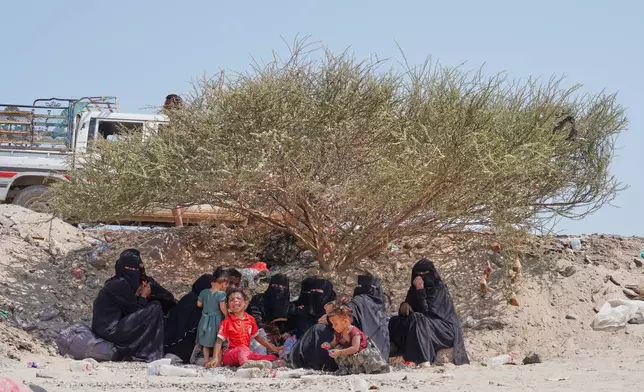
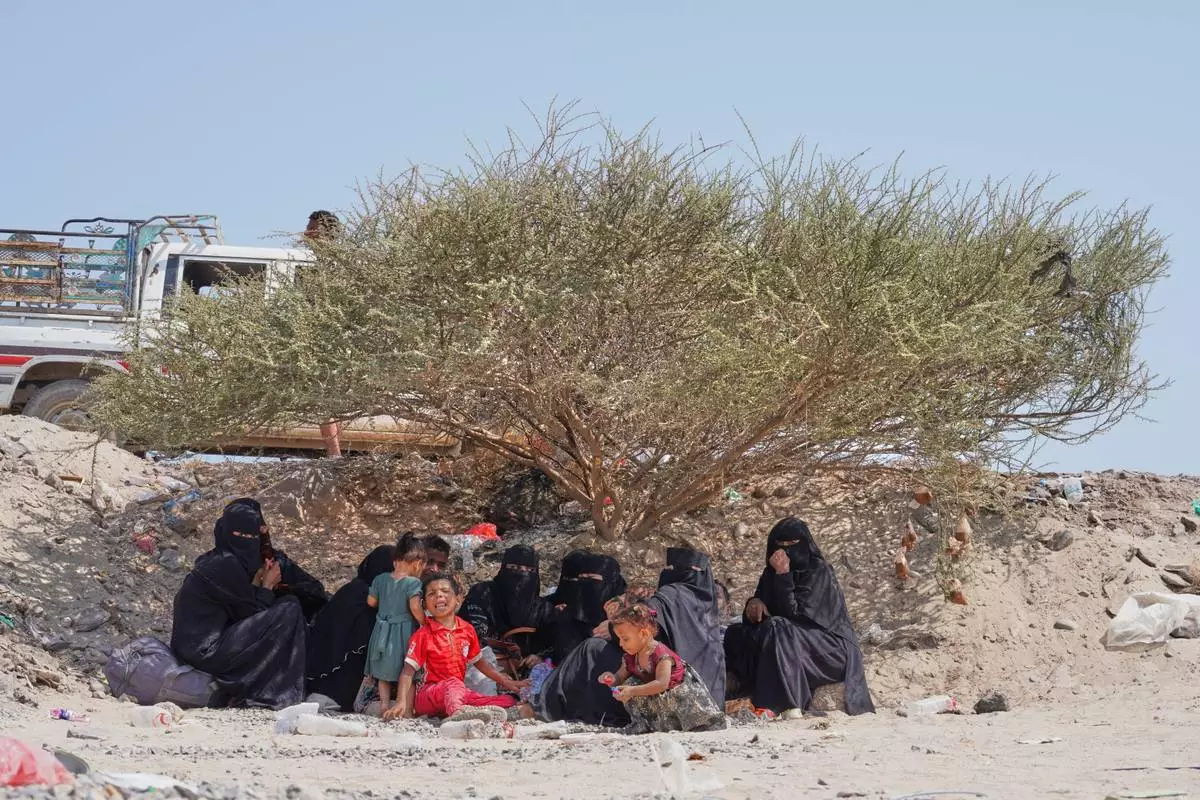
Displaced Yemenis sit outside at Al-Firdaws camp in Ras Imran, on the western outskirts of Aden, Yemen, Thursday, Sept. 24, 2026. (AP Photo/Abdulnasser Alseddik)
Displaced Yemenis sit outside at Al-Firdaws camp in Ras Imran, on the western outskirts of Aden, Yemen, Thursday, Sept. 24, 2026. (AP Photo/Abdulnasser Alseddik)

Yemen Vice President Abdullah Abdulkader Al Alimi-Bawzer addresses the 81st session of the United Nations General Assembly at U.N. headquarters Thursday, Sept. 24, 2026. (AP Photo/Frank Franklin II)

Yemen Vice President Abdullah Abdulkader Al Alimi-Bawzer addresses the 81st session of the United Nations General Assembly at U.N. headquarters Thursday, Sept. 24, 2026. (AP Photo/Frank Franklin II)

The rebels have declared a blockade on Saudi shipping. While asserting there's no other threat to commercial shipping on the Red Sea, they have warned other nations not to get involved.

But the vice president of the internationally recognized government council urged world leaders at the U.N. General Assembly not to trust the Houthis' assurances — and to see a bigger picture in the strife around the strait.

“The Houthi militias' use of the safety of navigation as a tool for blackmail threatens not only Yemen. It is taking hostage the entire global economy,” said the vice president, Abdullah Abdulkader al Alimi-Bawzer.

Arguing that protecting the strait “is the responsibility of every economy that depends on secure supply chains, energy security and freedom of navigation,” he urged the international community to keep weapons and technology from getting into the rebels' hands.

For years, the U.N. Security Council has imposed an arms embargo on the Houthis and an asset freeze and travel ban on their leaders and top officials.

Iran denies arming the Houthis, but smuggled Iranian weapons and parts have been seized from numerous shipments bound for Yemen, and a report by U.N. experts in 2024 documented extensive military ties between the Houthis, Iran and its other allies. Al Alimi-Bawzer contended Thursday that the rebels wouldn't have been able to maintain their position for a dozen years without Iranian weapons, expertise and military technologies.

The Houthis claimed Thursday to have fired dozens of ballistic missiles and drones at Saudi Arabia’s southwestern Jazan province. A Saudi military spokesperson, Maj. Gen. Turki al-Malki, said the kingdom intercepted six ballistic missiles targeting its Red Sea port of Yanbu and the southwestern city of Taif, blaming the Houthis.

His statement followed alerts by Saudi civil defense authorities, who later noted the danger had passed.

In Yemen, the latest fighting risks a full-scale return to the civil war that killed more than 150,000 people and forced millions from their homes. Already, nearly 130,000 people have been newly displaced and hundreds killed, and a humanitarian crisis is deepening in the Arab world’s poorest country.

The fighting near the crucial Red Sea shipping corridor and the Houthis' pursuit of a blockade of Saudi Arabia, the world’s top oil exporter, also have worried global markets. The Bab el-Mandeb Strait has become all the more crucial since Iran has asserted control over the even busier Strait of Hormuz, off its coast, since the U.S. and Israel attacked the Islamic Republic in February.

After the Houthis overran Sanaa and northern parts of Yemen in 2014, Saudi Arabia formed a military coalition to intervene on behalf of the Yemeni government. But the fighting wore on, and the Houthis endured.

A truce took hold in 2022. But after the Israel-Hamas war began the next year, the Houthis began attacking Red Sea shipping. The attacks continued until a U.S. bombing campaign in 2025.

On Thursday, Al Alimi-Bawzer thanked the Saudis and hailed the U.S. for having shown a “decisive approach.”

The Saudis have recently again sought military support from allies, but the U.S. hasn't renewed military involvement. U.S. Secretary of State Marco Rubio has said repeatedly that the U.S. will fulfill its defense commitments to Saudi Arabia but has not specified how.

Saudi Foreign Minister Prince Faisal bin Farhan told reporters at the U.N. on Thursday that his country was “continuing to work with our partners in the U.S. to address the issue of this conflict.”

Despite the Houthis’ latest advances, he suggested his country wasn’t worried about a Houthi takeover in Yemen's south. The Yemeni government, he said, “is very capable of defending the territory it controls."

Anna reported from Jerusalem and Khaled from Cairo. Associated Press writer Farnoush Amiri contributed from the United Nations.
Members of the Haj Ali Araj family, who displaced from Mokha, arrive at Al-Firdaws camp in Ras Imran, on the western outskirts of Aden, Yemen, Thursday, Sept. 24, 2026. (AP Photo/Abdulnasser Alseddik)

Members of the Haj Ali Araj family, who displaced from Mokha, arrive at Al-Firdaws camp in Ras Imran, on the western outskirts of Aden, Yemen, Thursday, Sept. 24, 2026. (AP Photo/Abdulnasser Alseddik)

Yemen Vice President Abdullah Abdulkader Al Alimi-Bawzer addresses the 81st session of the United Nations General Assembly at U.N. headquarters Thursday, Sept. 24, 2026. (AP Photo/Frank Franklin II)
Yemen Vice President Abdullah Abdulkader Al Alimi-Bawzer addresses the 81st session of the United Nations General Assembly at U.N. headquarters Thursday, Sept. 24, 2026. (AP Photo/Frank Franklin II)

Displaced Yemenis sit outside at Al-Firdaws camp in Ras Imran, on the western outskirts of Aden, Yemen, Thursday, Sept. 24, 2026. (AP Photo/Abdulnasser Alseddik)
Displaced Yemenis sit outside at Al-Firdaws camp in Ras Imran, on the western outskirts of Aden, Yemen, Thursday, Sept. 24, 2026. (AP Photo/Abdulnasser Alseddik)

Yemen Vice President Abdullah Abdulkader Al Alimi-Bawzer addresses the 81st session of the United Nations General Assembly at U.N. headquarters Thursday, Sept. 24, 2026. (AP Photo/Frank Franklin II)

Yemen Vice President Abdullah Abdulkader Al Alimi-Bawzer addresses the 81st session of the United Nations General Assembly at U.N. headquarters Thursday, Sept. 24, 2026. (AP Photo/Frank Franklin II)
MEXICO CITY (AP) — Residents along Mexico’s west coast stacked sandbags to fortify beachfront shops and evacuated their homes, while Hawaii’s Big Island and Maui braced for potentially catastrophic flooding, as separate hurricanes swirled in the Pacific on Thursday.

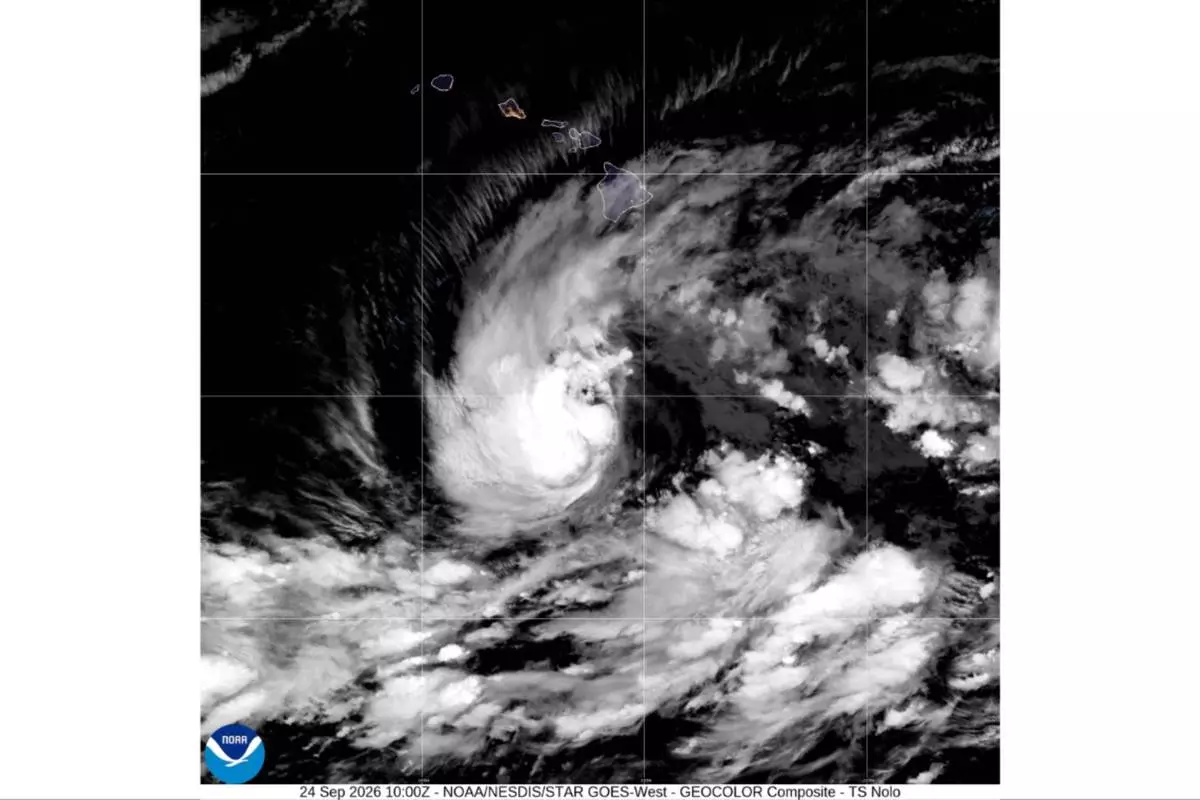
Nolo became a hurricane in the Pacific Ocean on Thursday night and was expected to strengthen while turning toward the Big Island, the National Hurricane Center said. Forecasters warned that the Big Island could see rainfall totals of 15 to 30 inches (38 to 76 centimeters), with higher amounts possible through Saturday. The island of Maui also could be hit with life-threatening floods, the hurricane center said.

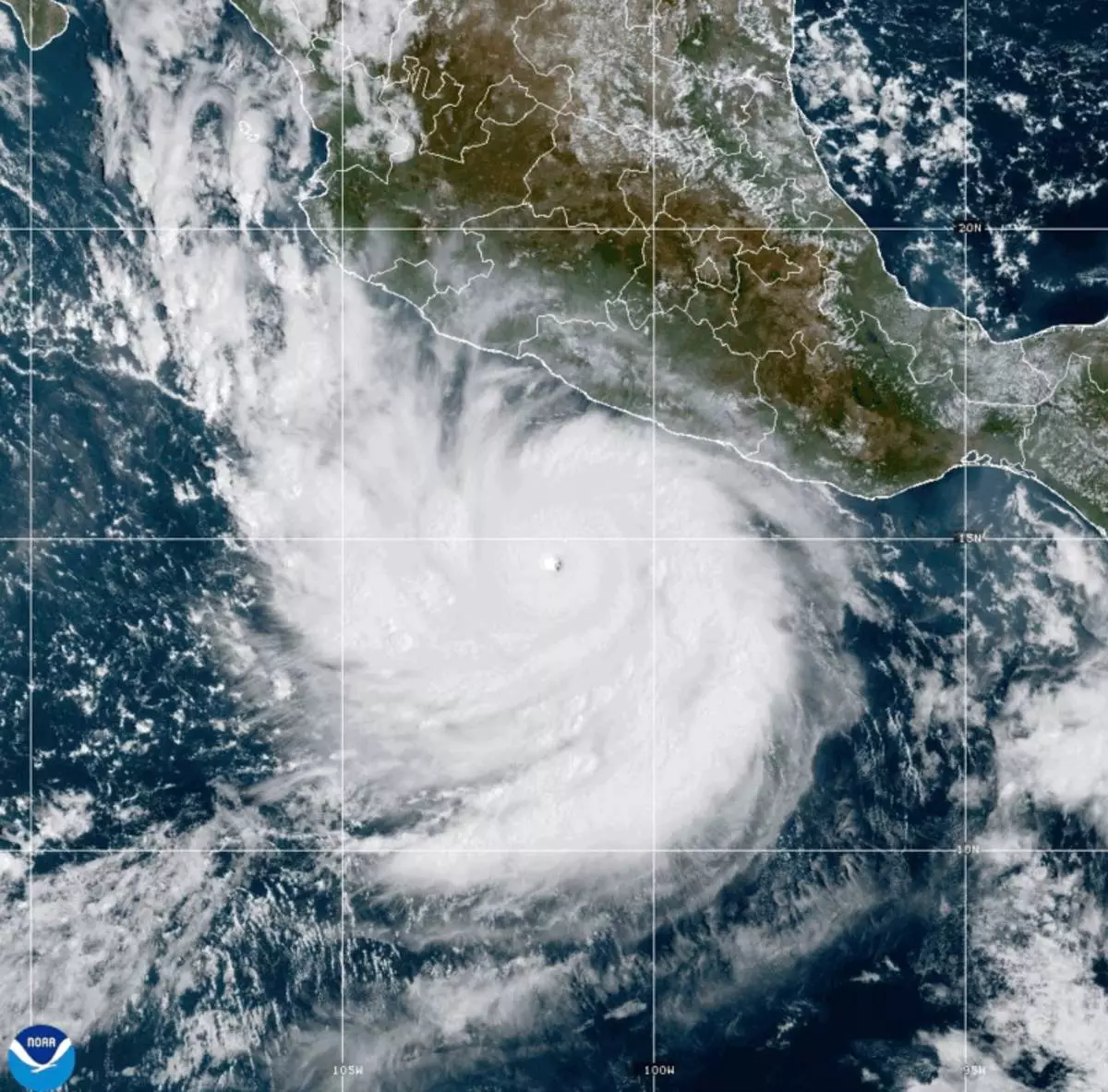
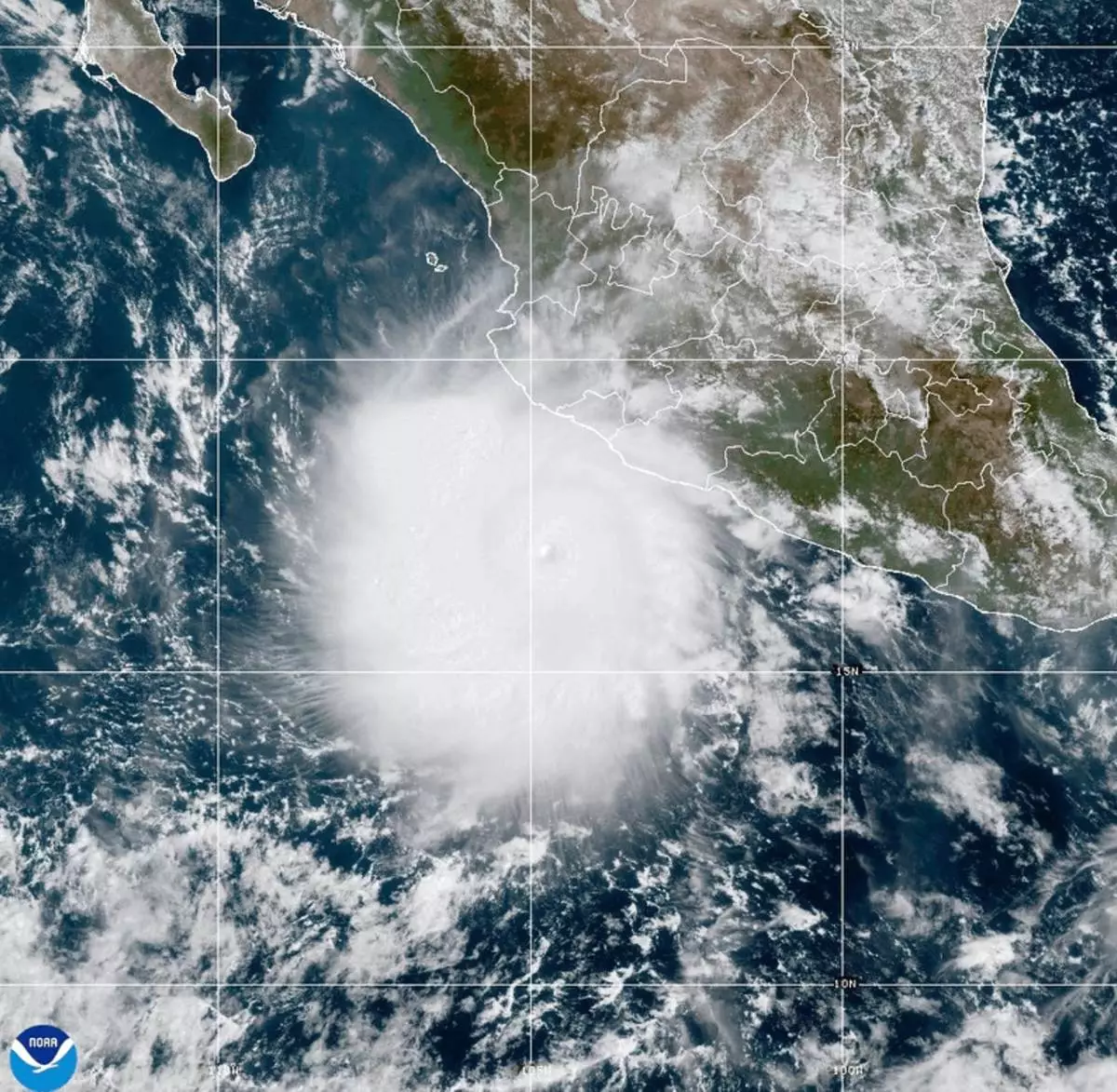
Meanwhile, heavy rains from powerful Hurricane Polo could cause torrential flooding and landslides in Mexico, according to the U.S. hurricane center. In the port city of Lázaro Cárdenas, seawater already swept through homes Thursday and left wooden planks and furniture strewn on the streets.

Polo has fluctuated between Category 4 and 5, both major-hurricane strength. It was expected to regain Category 5 status on Friday, then gradually weaken Friday night and Saturday, the hurricane center said.

After skirting Mexico's coast, Polo was expected to move farther out to sea Thursday night and Friday before hooking back toward land to the north on Saturday.

The series of powerful storms comes as the weather phenomenon El Niño prompts major environmental shifts across the world, fueling drought in some areas and flooding in others. El Niño traditionally dampens the Atlantic hurricane season, while it tends to rev up tropical cyclone activity in the Pacific with moist air and little wind shear.

Hawaii has been battered this year by major flooding in the spring, an earthquake and two other hurricanes since mid-August.

“In my 20 years of experience here, I’ve never seen three hurricane watches for the islands in the same year,” said John Bravender of the National Weather Service in Honolulu.

Mexican authorities were opening shelters and clearing people from beaches, while coastal residents tried to protect businesses from getting swept away. People in high-risk areas were being evacuated, though authorities didn’t immediately say how many.

Much of the worry from locals comes from hurricanes in past years that devastated cities along the Pacific coast. Hurricane Otis in 2023 unexpectedly plunged Acapulco into turmoil for weeks.

“So many people said it wouldn’t happen and then it did. After that, you’re left on edge,” said Gonzalo Ramírez, a bartender in the city.

Polo posed the biggest threat to Guerrero and Michoacán, neighboring states in southwest Mexico that share a long coastline scattered with small ports, tourist towns and fishing villages. Much of the area is marked by poverty, and residents routinely complain they are left to fend for themselves during natural disasters.

Mexican authorities have deployed 15,000 security personnel across the coast and suspended schools.

In Lázaro Cárdenas, a port city in Michoacán that was hit with high surf, locals and government officials were clearing out piles of wooden planks from a number of destroyed ramadas and shoveling thick mud coating much of the town.

Alicia Contreras said the walls and roof of her restaurant had been severely damaged by 15-foot (4.5-meter) waves. As officers and family helped pick through the damaged house, Contreras worried how she would economically recover.

“This is huge because we have no other source of income. Now we’re just surviving,” Contreras said.

While the Big Island is expected to bear the brunt of Nolo, its full path remains uncertain, according to Bravender, the weather service's warning coordination meteorologist in Hawaii.

Most concerning, he said Thursday, is that the heaviest rain is likely to fall over the same southeastern region of the Big Island hit in August by Hurricane Lala and where grounds are still wet from additional precipitation.

“There are several communities that were isolated, flooded, roads that were washed out,” he said. “It’s that same area that is most under threat,” Bravender said.

Hawaii officials told residents to put together emergency kits and the governor issued an emergency proclamation, activating more than 230 Hawaii National Guard members. Schools were closed for the rest of the week.

Hawaiian Electric, the state’s primary utility, said crews that had been helping restore power in Kauai after this month’s Hurricane Lowell would return to Oahu, Maui and the Big Island in preparation for the coming storm.

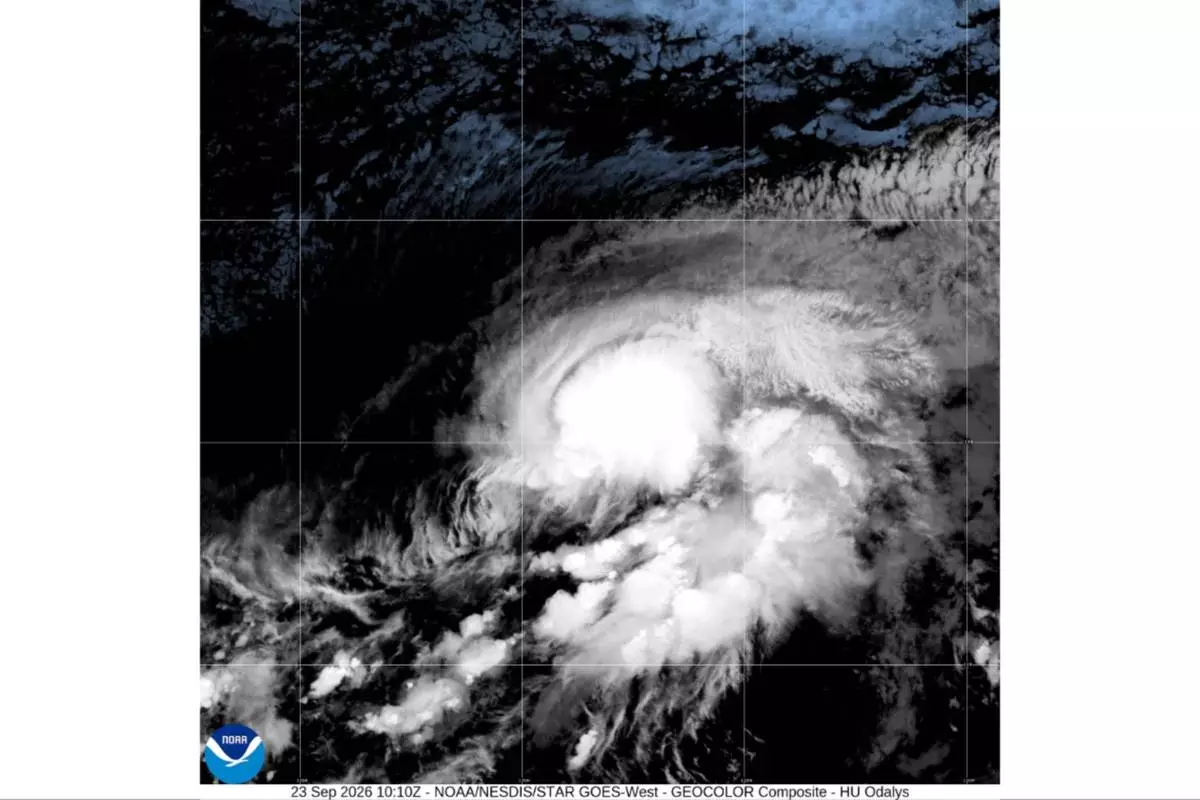
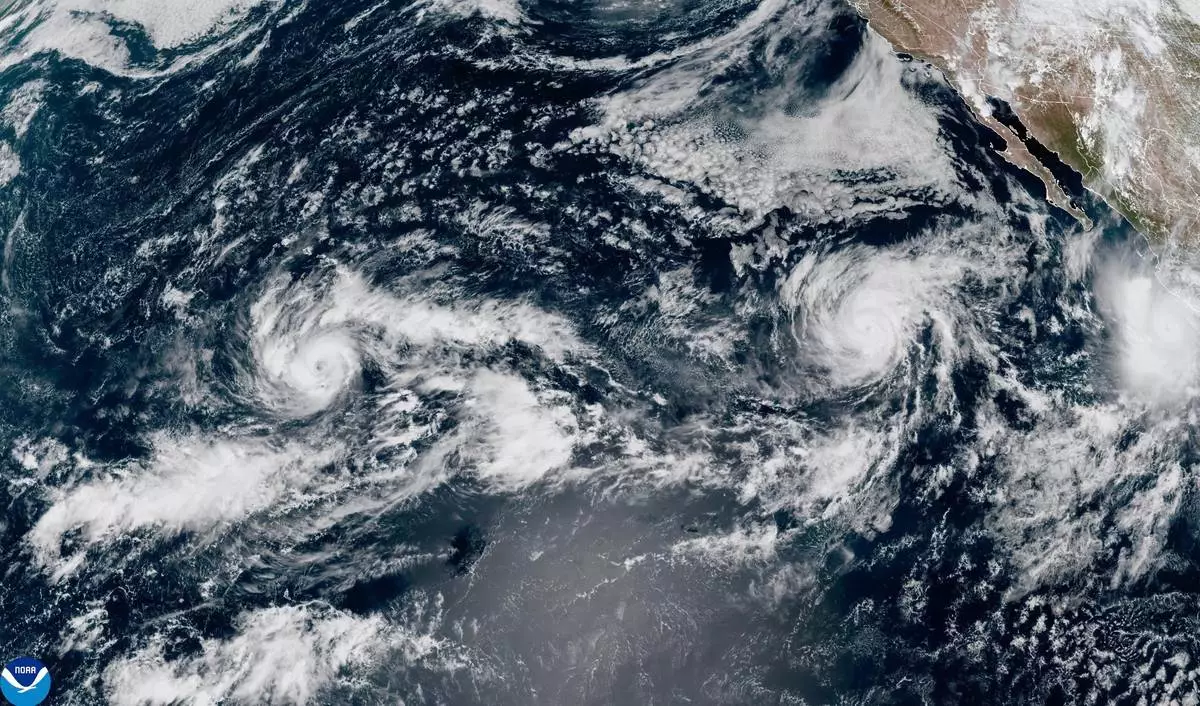
A third storm in the Pacific, Hurricane Odalys, was centered far from land, roughly 1,110 miles (1,785 kilometers) west-southwest of the southern tip of Mexico’s Baja California peninsula.

In the northern Atlantic Ocean, Tropical Storm Fay re-formed early Thursday, the U.S. hurricane center said. It was nearly 1,000 miles (1,600 kilometers) west-southwest of the Azores.

Tropical Storm Gonzalo formed in the Atlantic Ocean late Thursday, about 190 miles (306 kilometers) southeast of the Cape Verde islands off the coast of West Africa. The U.S. hurricane center said that if it stays on its current track, the storm will pass near or over portions of the islands on Friday.

Aoun Angueira reported from San Diego. Associated Press journalists John Seewer in Toledo, Ohio, Hannah Schoenbaum in Salt Lake City and Jeriel Vargas Ambriz in Lázaro Cárdena, Mexico, contributed.

This satellite image provided by NOAA shows Tropical Storm Nolo, left, south of Hawaii; Hurricane Odalys, middle, and Hurricane Polo, right, off the coast of Mexico, in the Pacific Ocean on Thursday, Sept. 24, 2026. (NOAA via AP)

This satellite image provided by NOAA shows Tropical Storm Nolo, left, south of Hawaii; Hurricane Odalys, middle, and Hurricane Polo, right, off the coast of Mexico, in the Pacific Ocean on Thursday, Sept. 24, 2026. (NOAA via AP)

This photo provided by NOAA shows Hurricane Polo moving away from the southwestern coast of Mexico on Thursday, Sept. 24, 2026. (NOAA via AP)

This photo provided by NOAA shows Hurricane Polo moving away from the southwestern coast of Mexico on Thursday, Sept. 24, 2026. (NOAA via AP)

This satellite image from the National Oceanic and Atmospheric Administration shows Tropical Storm Nolo in the Pacific Ocean, Thursday, Sept. 24, 2026. (NOAA via AP)

This satellite image from the National Oceanic and Atmospheric Administration shows Tropical Storm Nolo in the Pacific Ocean, Thursday, Sept. 24, 2026. (NOAA via AP)

This satellite image from the National Oceanic and Atmospheric Administration shows Hurricane Odalys in the Pacific Ocean, Wednesday, Sept. 23, 2026. (NOAA via AP)

This satellite image from the National Oceanic and Atmospheric Administration shows Hurricane Odalys in the Pacific Ocean, Wednesday, Sept. 23, 2026. (NOAA via AP)

This photo provided by NOAA shows Hurricane Polo strengthening in the Pacific Ocean off the coast of Mexico on Tuesday, Sept. 22, 2026. (NOAA via AP)

This photo provided by NOAA shows Hurricane Polo strengthening in the Pacific Ocean off the coast of Mexico on Tuesday, Sept. 22, 2026. (NOAA via AP)

Recommended Articles