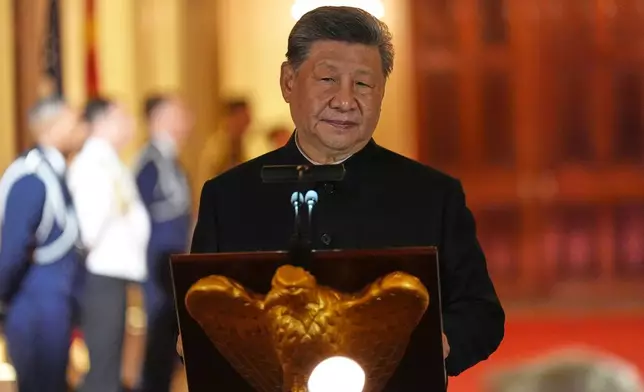
WASHINGTON (AP) — President Donald Trump is taking Chinese President Xi Jinping to visit the National Archives on Friday, showing off the sacred texts of U.S. democracy to the leader of the world’s most powerful communist country to cap off a three-day state visit criticized for being heavy on pomp and light on substance.
Xi is expected to depart Washington after touring the nation's vault of records, where the Declaration of Independence, the Constitution and the Bill of Rights are held. The two leaders have made a show of working to preserve harmony between the world's two largest economies, though there were no major breakthroughs on issues such as trade or the safety of artificial intelligence.
Click to Gallery
President Donald Trump toasts with Peng Liyuan during a State Dinner with China's President Xi Jinping in the East Room of the White House, Thursday, Sept. 24, 2026, in Washington. (AP Photo/Alex Brandon)
First lady of China Peng Liyuan, from left, and first lady Melania Trump react as children from the Hope Chinese School perform during a visit to the Smithsonian's National Museum Of Asian Art, Thursday, Sept. 24, 2026, in Washington. (Finn Gomez/Pool Photo via AP)
President Donald Trump and first lady Melania Trump greet China's President Xi Jinping and his wife Peng Liyuan as they arrive at the North Portico of the White House for a State Dinner, Thursday, Sept. 24, 2026, in Washington. (AP Photo/Alex Brandon)
China's President Xi Jinping speaks during a State Dinner with President Donald Trump in the East Room of the White House, Thursday, Sept. 24, 2026, in Washington. (AP Photo/Alex Brandon)
President Donald Trump and China's President Xi Jinping walk in the Grand Foyer of the White House during a State Dinner, Thursday, Sept. 24, 2026, in Washington. (AP Photo/Alex Brandon)
The visit comes as the U.S. celebrates the 250th anniversary of its founding, and Trump said Thursday that he wanted to show Xi “some of the greatest treasures of that proud history.”
The Archives has a special exhibit marking the sesquicentennial, titled “The American Story,” which highlights the country’s accomplishments and advances, along with images depicting its darker moments.
Trump showed Xi one copy of the Declaration of Independence on Thursday — a wall-mounted copy he keeps in the Oval Office.
The U.S. president also said he wanted to show Xi artifacts about the relationship between the two countries. “Just as our ancestors reached across the ocean centuries ago to trade, to learn, and to build a better world, our two countries do really the same thing, and we’re very proud of it,” he said.
Xi's day will begin at the White House, where Trump and first lady Melania Trump will host the Chinese leader and his wife, Peng Liyuan, for tea.
The Trumps feted their guests Thursday night with a black-tie state dinner attended by technology industry titans. Earlier in the day, Trump gave Xi a personal tour of his White House flourishes, including a gallery wall of presidents and a new 100-foot-long (30-meter) granite helicopter landing pad — and pointed out his ballroom, still under construction. Melania Trump and Peng Liyuan toured the Smithsonian’s National Museum of Asian Art.
The two leaders also met behind closed doors for 90 minutes on Thursday, during which they discussed issues such as the Middle East, Ukraine and the Korean Peninsula, according to the official Chinese government readout of the meeting. The White House has not yet provided any information about the private talks.

President Donald Trump toasts with Peng Liyuan during a State Dinner with China's President Xi Jinping in the East Room of the White House, Thursday, Sept. 24, 2026, in Washington. (AP Photo/Alex Brandon)

First lady of China Peng Liyuan, from left, and first lady Melania Trump react as children from the Hope Chinese School perform during a visit to the Smithsonian's National Museum Of Asian Art, Thursday, Sept. 24, 2026, in Washington. (Finn Gomez/Pool Photo via AP)

President Donald Trump and first lady Melania Trump greet China's President Xi Jinping and his wife Peng Liyuan as they arrive at the North Portico of the White House for a State Dinner, Thursday, Sept. 24, 2026, in Washington. (AP Photo/Alex Brandon)
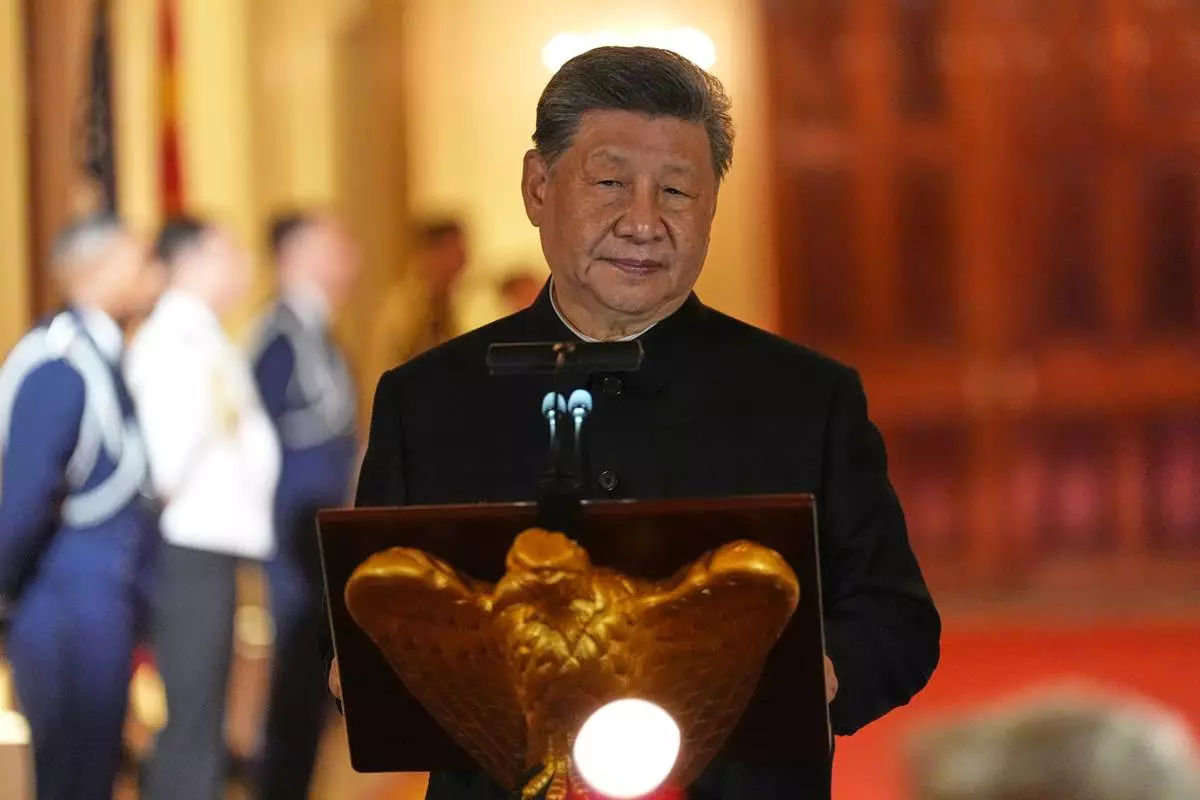
China's President Xi Jinping speaks during a State Dinner with President Donald Trump in the East Room of the White House, Thursday, Sept. 24, 2026, in Washington. (AP Photo/Alex Brandon)

President Donald Trump and China's President Xi Jinping walk in the Grand Foyer of the White House during a State Dinner, Thursday, Sept. 24, 2026, in Washington. (AP Photo/Alex Brandon)
MEXICO CITY (AP) — Residents along Mexico’s west coast stacked sandbags to fortify beachfront shops and evacuated their homes, while Hawaii’s Big Island and Maui braced for potentially catastrophic flooding, as separate hurricanes swirled in the Pacific on Thursday.
Nolo became a hurricane in the Pacific Ocean on Thursday night and was expected to strengthen while turning toward the Big Island, the National Hurricane Center said. Forecasters warned that the Big Island could see rainfall totals of 15 to 30 inches (38 to 76 centimeters), with higher amounts possible through Saturday. The island of Maui also could be hit with life-threatening floods, the hurricane center said.
Meanwhile, heavy rains from powerful Hurricane Polo could cause torrential flooding and landslides in Mexico, according to the U.S. hurricane center. In the port city of Lázaro Cárdenas, seawater already swept through homes Thursday and left wooden planks and furniture strewn on the streets.
Polo has fluctuated between Category 4 and 5, both major-hurricane strength. It was expected to regain Category 5 status on Friday, then gradually weaken Friday night and Saturday, the hurricane center said.
After skirting Mexico's coast, Polo was expected to move farther out to sea Thursday night and Friday before hooking back toward land to the north on Saturday.
The series of powerful storms comes as the weather phenomenon El Niño prompts major environmental shifts across the world, fueling drought in some areas and flooding in others. El Niño traditionally dampens the Atlantic hurricane season, while it tends to rev up tropical cyclone activity in the Pacific with moist air and little wind shear.
Hawaii has been battered this year by major flooding in the spring, an earthquake and two other hurricanes since mid-August.
“In my 20 years of experience here, I’ve never seen three hurricane watches for the islands in the same year,” said John Bravender of the National Weather Service in Honolulu.
Mexican authorities were opening shelters and clearing people from beaches, while coastal residents tried to protect businesses from getting swept away. People in high-risk areas were being evacuated, though authorities didn’t immediately say how many.
Much of the worry from locals comes from hurricanes in past years that devastated cities along the Pacific coast. Hurricane Otis in 2023 unexpectedly plunged Acapulco into turmoil for weeks.
“So many people said it wouldn’t happen and then it did. After that, you’re left on edge,” said Gonzalo Ramírez, a bartender in the city.
Polo posed the biggest threat to Guerrero and Michoacán, neighboring states in southwest Mexico that share a long coastline scattered with small ports, tourist towns and fishing villages. Much of the area is marked by poverty, and residents routinely complain they are left to fend for themselves during natural disasters.
Mexican authorities have deployed 15,000 security personnel across the coast and suspended schools.
In Lázaro Cárdenas, a port city in Michoacán that was hit with high surf, locals and government officials were clearing out piles of wooden planks from a number of destroyed ramadas and shoveling thick mud coating much of the town.
Alicia Contreras said the walls and roof of her restaurant had been severely damaged by 15-foot (4.5-meter) waves. As officers and family helped pick through the damaged house, Contreras worried how she would economically recover.
“This is huge because we have no other source of income. Now we’re just surviving,” Contreras said.
While the Big Island is expected to bear the brunt of Nolo, its full path remains uncertain, according to Bravender, the weather service's warning coordination meteorologist in Hawaii.
Most concerning, he said Thursday, is that the heaviest rain is likely to fall over the same southeastern region of the Big Island hit in August by Hurricane Lala and where grounds are still wet from additional precipitation.
“There are several communities that were isolated, flooded, roads that were washed out,” he said. “It’s that same area that is most under threat,” Bravender said.
Hawaii officials told residents to put together emergency kits and the governor issued an emergency proclamation, activating more than 230 Hawaii National Guard members. Schools were closed for the rest of the week.
Hawaiian Electric, the state’s primary utility, said crews that had been helping restore power in Kauai after this month’s Hurricane Lowell would return to Oahu, Maui and the Big Island in preparation for the coming storm.
A third storm in the Pacific, Hurricane Odalys, was centered far from land, roughly 1,110 miles (1,785 kilometers) west-southwest of the southern tip of Mexico’s Baja California peninsula.
In the northern Atlantic Ocean, Tropical Storm Fay re-formed early Thursday, the U.S. hurricane center said. It was nearly 1,000 miles (1,600 kilometers) west-southwest of the Azores.
Tropical Storm Gonzalo formed in the Atlantic Ocean late Thursday, about 190 miles (306 kilometers) southeast of the Cape Verde islands off the coast of West Africa. The U.S. hurricane center said that if it stays on its current track, the storm will pass near or over portions of the islands on Friday.
Aoun Angueira reported from San Diego. Associated Press journalists John Seewer in Toledo, Ohio, Hannah Schoenbaum in Salt Lake City and Jeriel Vargas Ambriz in Lázaro Cárdena, Mexico, contributed.
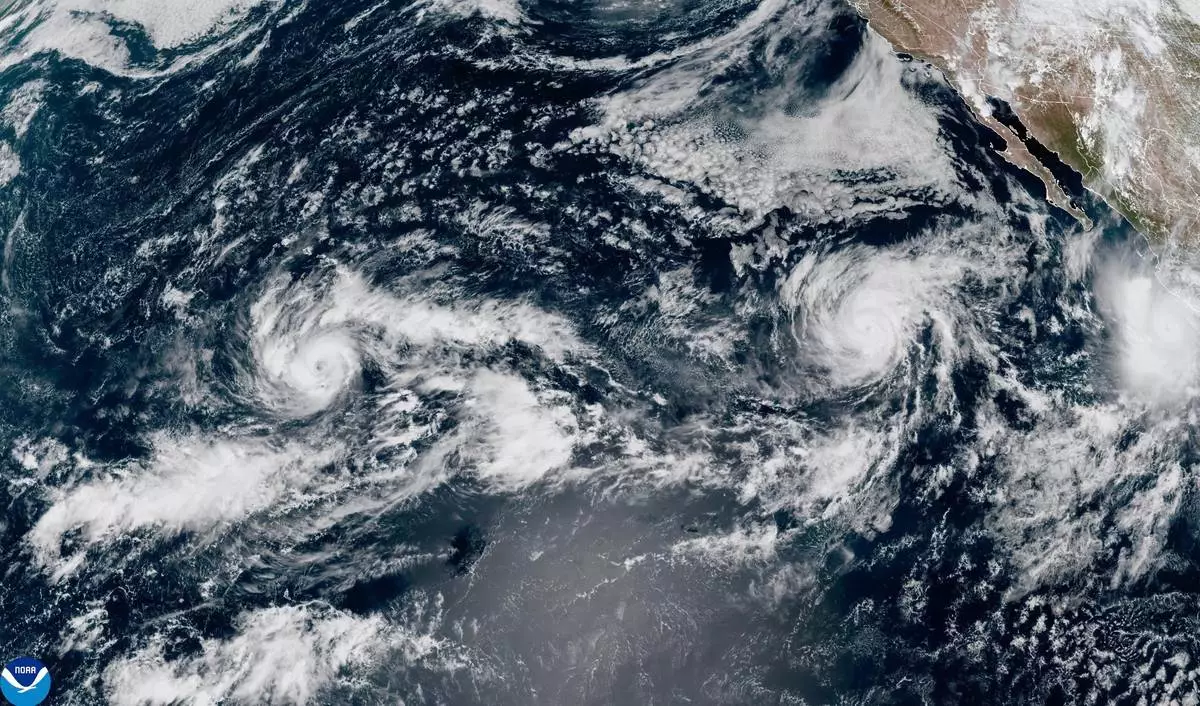
This satellite image provided by NOAA shows Tropical Storm Nolo, left, south of Hawaii; Hurricane Odalys, middle, and Hurricane Polo, right, off the coast of Mexico, in the Pacific Ocean on Thursday, Sept. 24, 2026. (NOAA via AP)
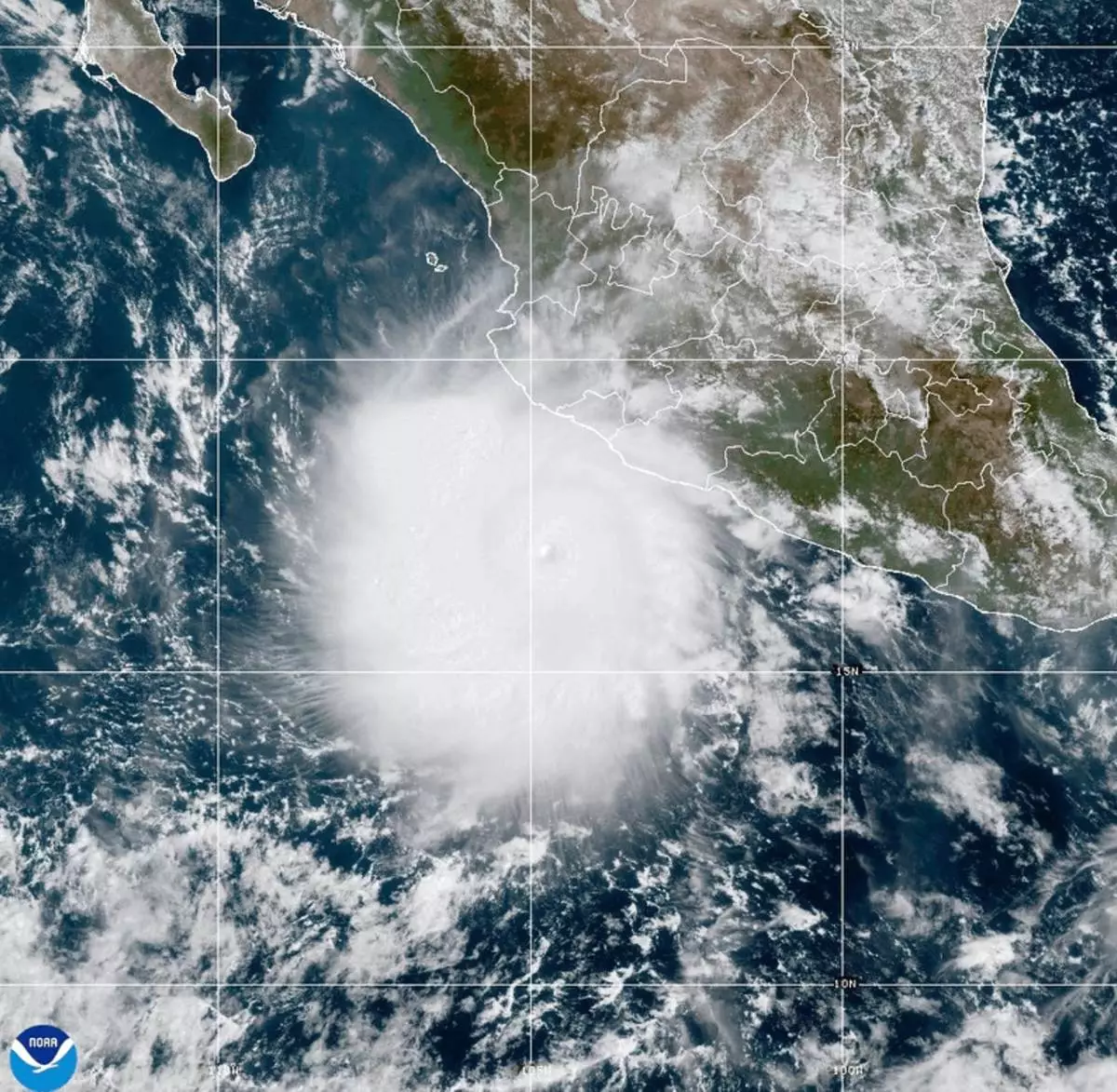
This photo provided by NOAA shows Hurricane Polo moving away from the southwestern coast of Mexico on Thursday, Sept. 24, 2026. (NOAA via AP)
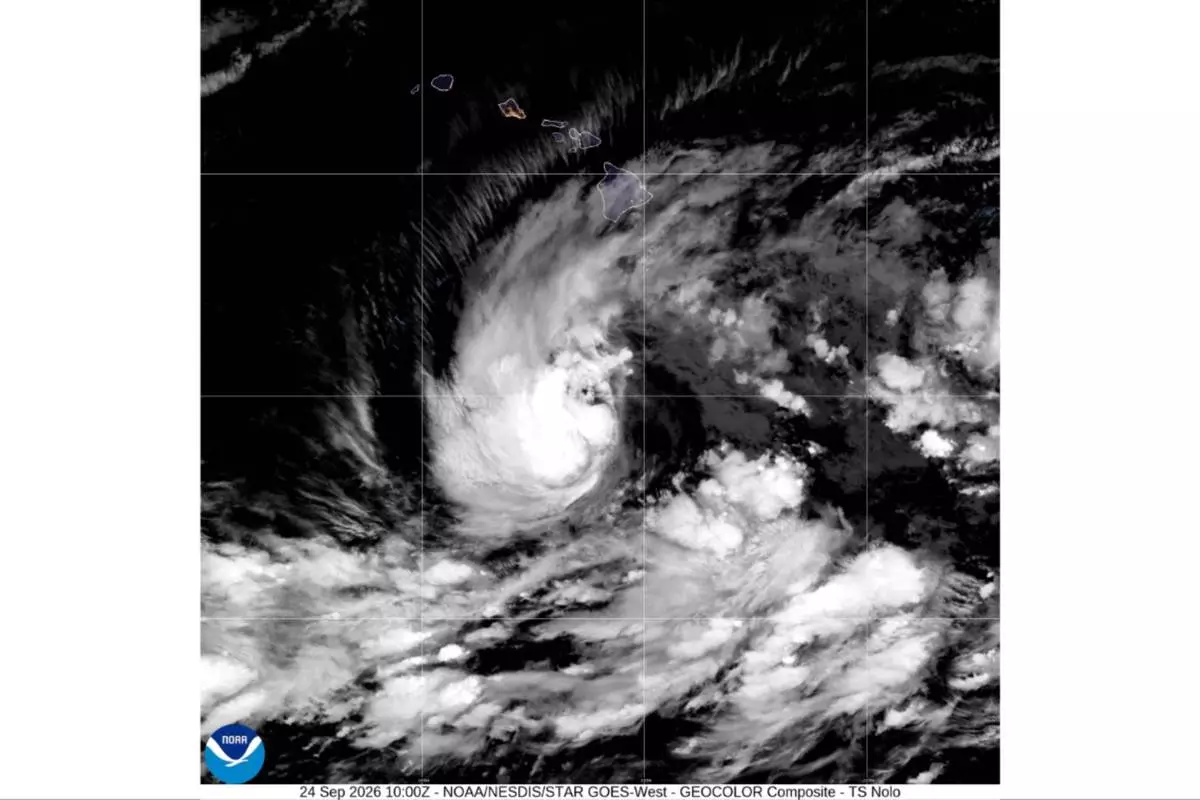
This satellite image from the National Oceanic and Atmospheric Administration shows Tropical Storm Nolo in the Pacific Ocean, Thursday, Sept. 24, 2026. (NOAA via AP)
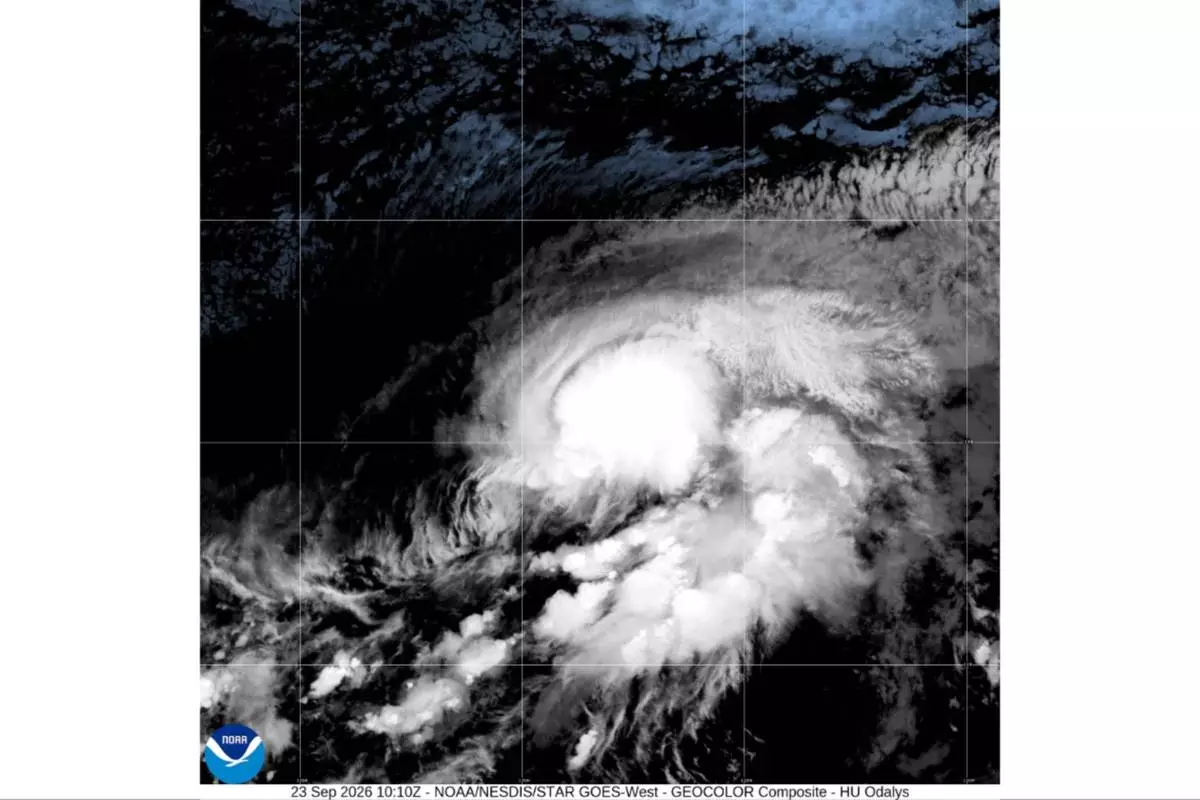
This satellite image from the National Oceanic and Atmospheric Administration shows Hurricane Odalys in the Pacific Ocean, Wednesday, Sept. 23, 2026. (NOAA via AP)
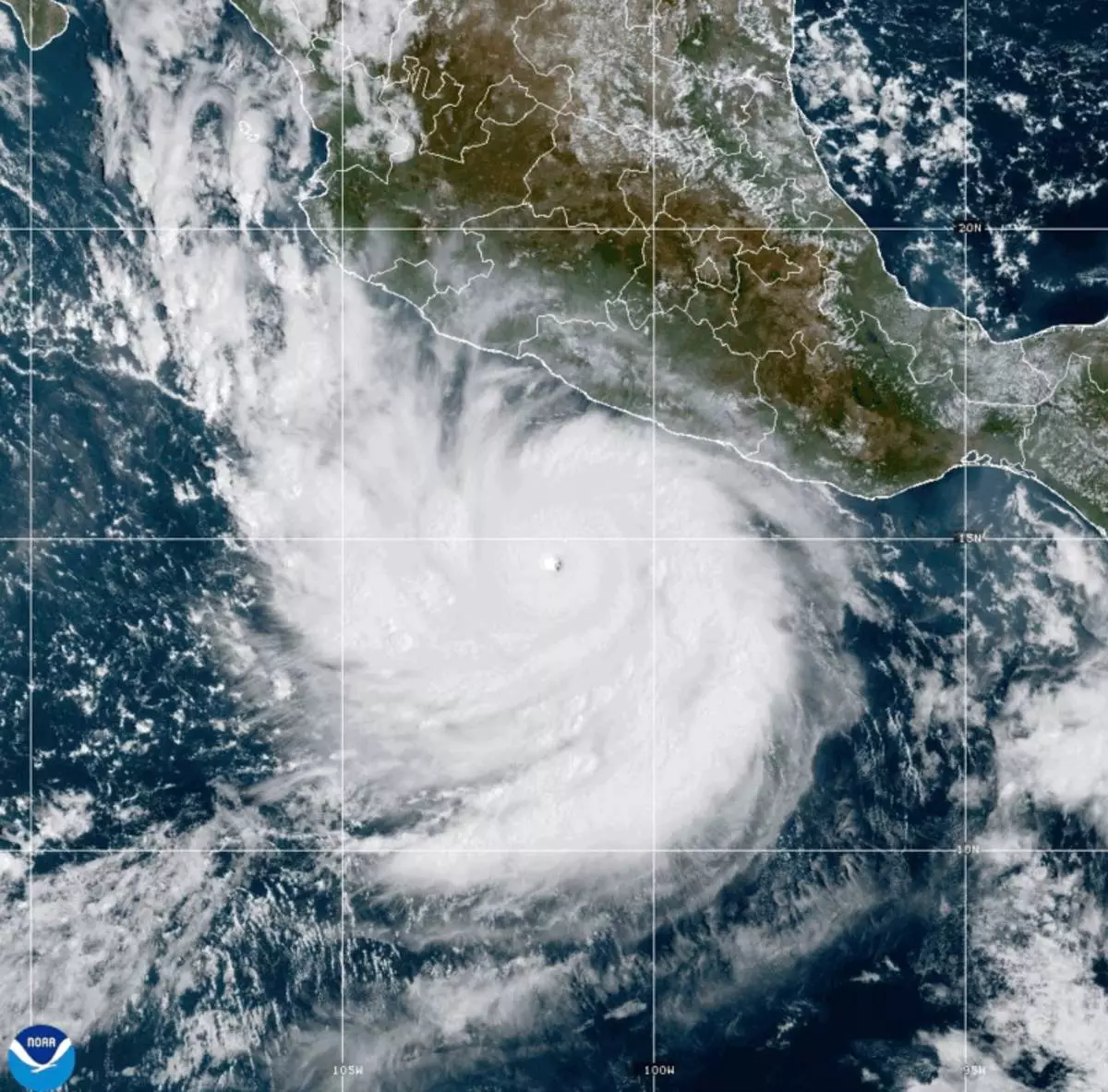
This photo provided by NOAA shows Hurricane Polo strengthening in the Pacific Ocean off the coast of Mexico on Tuesday, Sept. 22, 2026. (NOAA via AP)