DH steps up enforcement actions against illegal use of pharmacy logo and title ahead of festivities to safeguard public health
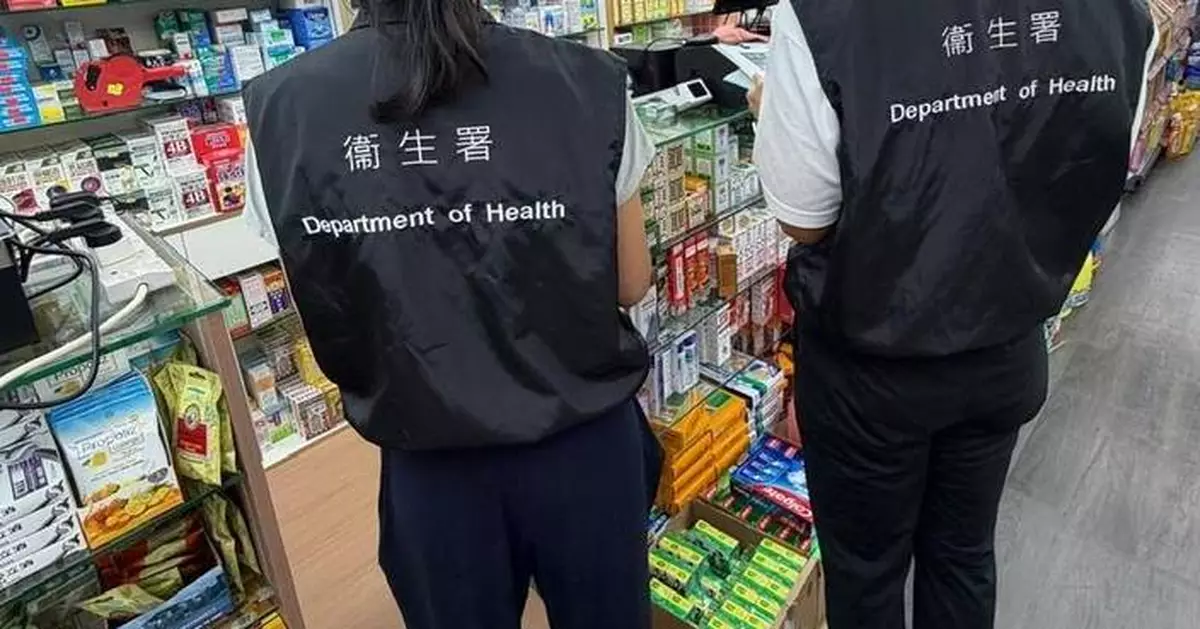
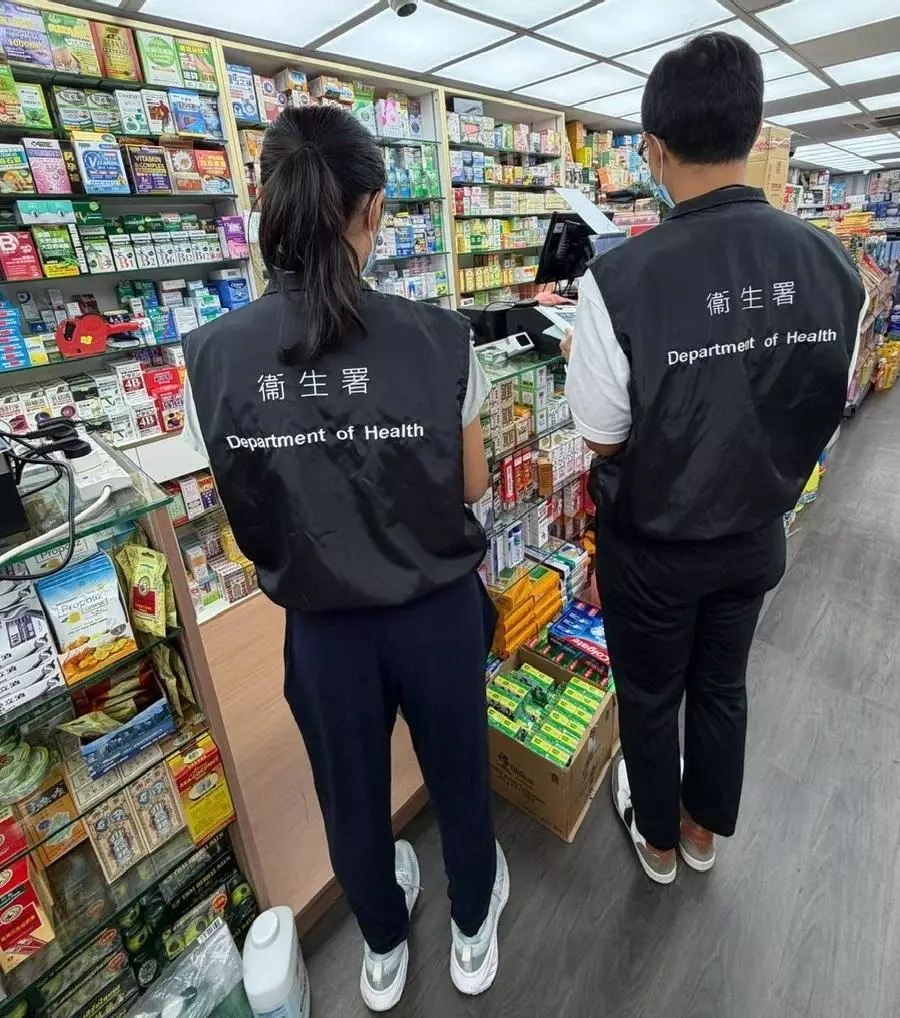
In anticipation of the upcoming Mid-Autumn Festival and National Day holidays on the Golden Week of the Chinese Mainland, the Department of Health (DH) today (September 25) announced that it has stepped up inspections of Authorized Sellers of Poisons (ASPs), commonly known as pharmacies, and Listed Sellers of Poisons (LSPs), commonly known as medicine companies, focusing on tourist areas to monitor their compliance with relevant laws and codes of practice. These inspections form part of the DH's routine year-round enforcement efforts. In the first half of 2026, around 5 800 such inspections were conducted. In response to the increased visitor numbers and business activities during the Mainland's Mid-Autumn Festival and National Day holidays, the DH will step up inspections to crack down on any violations to protect public health.
Stepping up efforts to crack down on illegal use of pharmacy logo
-------------------------------------------------------------------------
To address the illegal use of pharmacy logos and titles by shops, the DH reminded the public, including tourists, that they can refer to the attached pharmacy logo (see Annex 1) to verify whether a shop is a registered pharmacy when purchasing medicines in Hong Kong.
According to the Pharmacy and Poisons Ordinance (Cap. 138) (the Ordinance), only LSPs can conduct the retail business of selling poisons listed in Part 2 of the Poisons List and sell only common drugs, such as cold and flu medicines. Such vendors do not have a registered duty pharmacist in the shop and cannot use the abovementioned pharmacy logo or title. Displaying a pharmacy logo in the prescribed form, or a logo resembling the prescribed form, at a premises other than a registered pharmacy, or using the Chinese term "" or terms such as "pharmacy", "dispensary" or "drug-store" in connection with any business engaged in the retail sale of poisons, constitutes an offence. Furthermore, illegal sale or possession of unregistered pharmaceutical products or Part 1 poisons, or illegal sale of Part 2 poisons, is a criminal offence. Upon conviction, the offender is liable to a maximum fine of $100,000 and two years' imprisonment.
Over the past 12 months (between September 2025 and to August 2026), 10 limited companies, two company directors and two retail proprietors, none of which were operating unregistered pharmacies, were convicted of displaying logos on their premises that resembled the pharmacy logo in the prescribed form. They were fined amounts ranging from $800 to $32,000. During the same period, 23 limited companies and 11 individuals were convicted of illegal sale and/or possession of unregistered pharmaceutical products. They were fined amounts ranging from $500 to $12,000 and sentenced to imprisonment ranging from one to two months.
The DH reminded the public that illegal sale of medicines controlled under the Ordinance, regardless of the sales channel, including online sales platforms, instant messaging applications or social media, incurs criminal liability. Members of the public should not risk breaking the law.
Points to note when purchasing medicines
-----------------------------------------------
The DH reminded members of the public that all registered pharmaceutical products carry a Hong Kong registration number on their packaging. Registered pharmaceutical products are labelled with a number in the format of "HK-XXXXX”. The safety, quality and efficacy of unregistered pharmaceutical products are not guaranteed. Members of the public should not self-purchase, or consume products of doubtful composition or from unknown sources, as this poses health risks. Besides the lack of a doctor's assessment of an individual's health condition, it is difficult to ascertain the legitimate source of the drugs. It is also impossible to know whether the drugs were properly stored during transportation (especially for drugs requiring cold-chain storage). This leaves their safety, quality and efficacy unguaranteed.
To help the public identify registered pharmacies, the DH has formulated a label (Annex 2) for identification of ASPs. The labels have been sent to each registered pharmacy for display at a conspicuous place on their premises. Members of the public and tourists can also download the eHealth app from the website (app.ehealth.gov.hk) and use the "Licence Scanner" on its homepage to scan the QR code displayed at the pharmacy. For registered pharmacies, the message "This is a QR Code issued for licensed pharmacy" will be shown, alongside details of that particular registered pharmacy.
Members of the public can also visit the website of the Drug Office of the DH for names and addresses of all licensees including ASPs.
In addition, to help Mainland visitors distinguish between pharmacies in Hong Kong, the DH has provided relevant information on its social media and official WeChat account regarding important points to note when purchasing medicines in Hong Kong. The DH has also distributed relevant information including "three Steps to Buying Medicine Wisely" to relevant tourism authorities which include the Travel Industry Council of Hong Kong and the Hong Kong Tourism Board to strengthen public awareness.
For more information on the safety of buying and safe use of medicines, please visit the website of the DH's Drug Office.
DH steps up enforcement actions against illegal use of pharmacy logo and title ahead of festivities to safeguard public health Source: HKSAR Government Press Releases