Cutting-edge artificial intelligence and low-carbon hydrogen rail technologies from Chinese enterprises have taken the center stage at the 15th InnoTrans in Berlin, drawing widespread attention from industry professionals worldwide.
The biennial event, widely regarded as the world's leading exhibition for rail technology, is held at Messe Berlin from Tuesday to Friday, attracting more than 3,000 exhibitors from around the globe, including over 200 from China.
A standout Chinese exhibit is the "VELLINK", a digital metro train fitted with "embodied intelligence" technology, a key research priority for China's rail rolling stock industry.
The technology redefines trains from mere command-executing vehicles into intelligent entities capable of perceiving their surroundings, analyzing conditions and making independent operational judgments.
The train is equipped with more than 600 sensors, paired with cameras, radar systems and an on-board computing platform to deliver real-time perception of track environments and vehicle status. Artificial intelligence algorithms then support data-driven decision-making, effectively giving the train both perceptive and cognitive capabilities.
"So the VELLINK train is a very innovative train, state-of-the-art in many different aspects as we have learned. And obviously there are a lot of new features driven by AI technology. I strongly believe that AI is a very important step also for the railway industry and it's a kind of a very good, improved and developed example," said Frank Spörl, global senior vice president of the rail division at TÜV Rheinland.
If embodied intelligence makes trains "smarter", another Chinese showcase, a hydrogen fuel cell hybrid locomotive, tackles another core challenge for rail transport: achieving decarbonization.
Powered by hydrogen fuel cells, the locomotive boasts a hydrogen utilization rate of over 98 percent and a refueling time of roughly 15 to 20 minutes. It provides a promising new low-carbon solution for non-electrified railway lines and station shunting operations.
"I believe hydrogen definitely has strong development prospects. I can imagine it becoming an ideal alternative to diesel locomotives and other power systems in the coming years. I will be closely following its progress. This is without doubt a very good innovation," said Finn Siering, an industry expert attending the exhibition.
Beyond intelligent trains and hydrogen power, Chinese exhibitors are also showcasing lightweight materials, high-efficiency traction systems and digital solutions at the fair. These advances are driving the railway sector's green transition from isolated energy-saving measures toward a more systematic, holistic transformation.
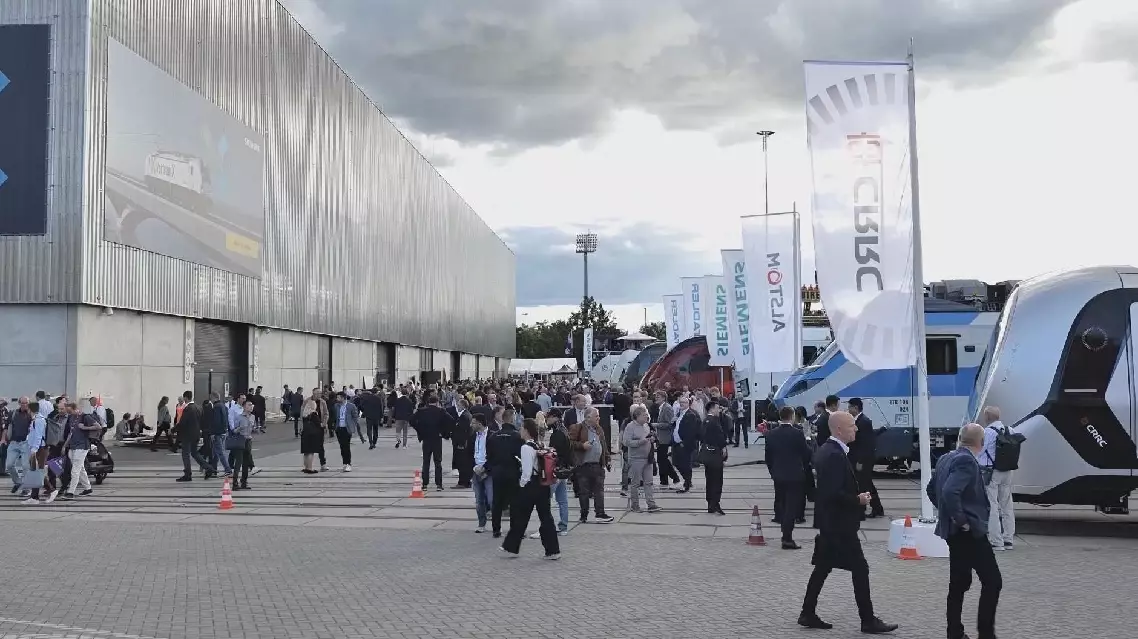
Chinese firms showcase smart, green rail innovations at Berlin InnoTrans