Regions across China are celebrating the Mid-Autumn Festival with a rich array of traditional folk activities, bringing locals and foreign visitors together to experience the festive atmosphere and the charm of local culture.
The Mid-Autumn Festival, one of the most important traditional Chinese holidays, falls on Sept 25 this year. Celebrated on the night of a full moon, it is a time when families gather to share mooncakes, light lanterns and admire the moon, a symbol of reunion.
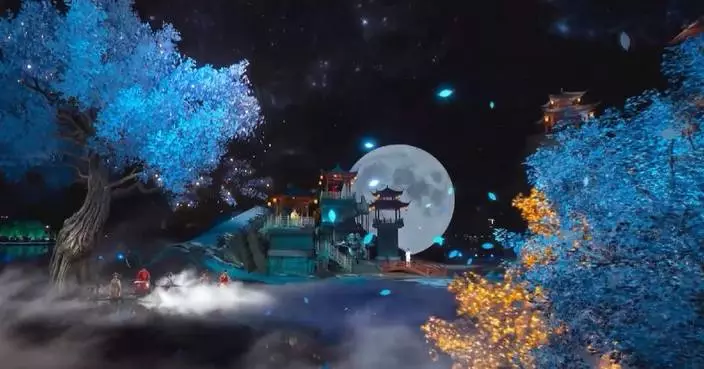
In Huai'an, east China's Jiangsu Province, a moon-worshipping ceremony was held along the Li Canal, a section of the Grand Canal, on Wednesday evening.
Since ancient times, the Mid-Autumn Festival has included the custom of moon worshipping, with people today still expressing good wishes for their home and country and hopes for a happy life.
Accompanied by ceremonial music, performers wearing Hanfu, a type of traditional Chinese clothing, followed ancient procedures to recreate the traditional rituals of worshipping the moon and praying for blessings.
At the end of the ceremony, visitors from home and abroad jointly cut an 80-centimeter-wide mooncake, distributing slices to residents and tourists on-site.
"Today I saw the complete ceremony by the Li Canal, and I could truly feel everyone's good wishes for reunion and peace," said Wu Fangting, a resident.
During another activity that evening, a Chinese-style parade featured performers in traditional attire walking along the canal promenade as visitors stopped to watch and take photos.
"I can enjoy such a strong traditional festive atmosphere right at my doorstep, and it feels great," said Liu Shiqi, another resident.
In southwest China's Chongqing Municipality, a variety of folk activities have been staged in ancient towns.
At Fengsheng ancient town, foreign visitors joined locals in making mooncakes and ciba, a traditional cuisine of steamed glutinous rice pounded into paste, experiencing the atmosphere of working together in unity.
"This is my first time celebrating the Mid-Autumn Festival in China. Today I made ciba, and the festival is really lively," a Thai student said.
"I'm very interested in traditional Chinese culture and food. Celebrating the Mid-Autumn Festival together with everyone makes me feel really great," a Bangladeshi student said.
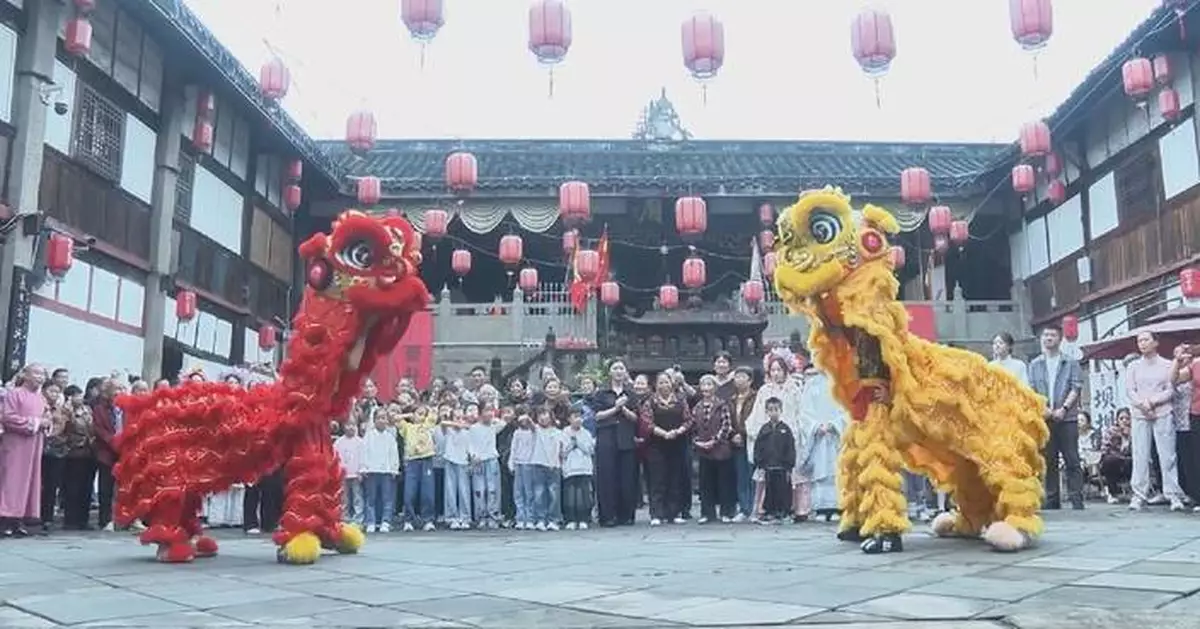
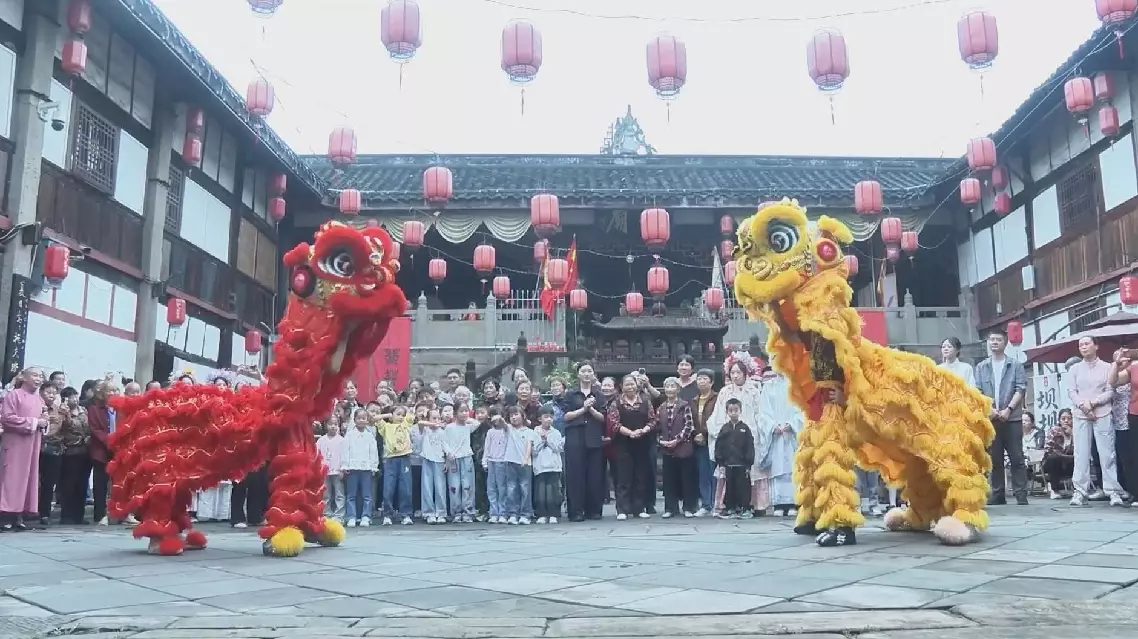
Another ancient town of Zouma, once a key post station on the Chengdu-Chongqing Ancient Post Road, has recreated the traditional welcome ceremony of ancient post stations.
The lion dance was a highlight of the ceremony. To the beating of drums and gongs, a red lion and a yellow lion leaped and danced. Moving into the crowd, they nodded to residents and tourists to offer blessings and interacted with children, bringing the lively scene to a peak.
“It's been decades since I last saw this event. Now I see it again, and I feel very happy. The event is well organized, and it has boosted the popularity of Zouma ancient town," said Chen Kaihui, a resident.
In Qitang, a town in Chongqing, villagers used locally grown ingredients to make giant mooncakes, gathering to enjoy the treats and share their wishes for prosperity and unity.
A vibrant music festival that blends Chinese intangible cultural heritage with contemporary international sounds is underway in Shanghai, bringing traditional opera, folk music and electronic beats to Yu Garden, a famous classical garden in the city.
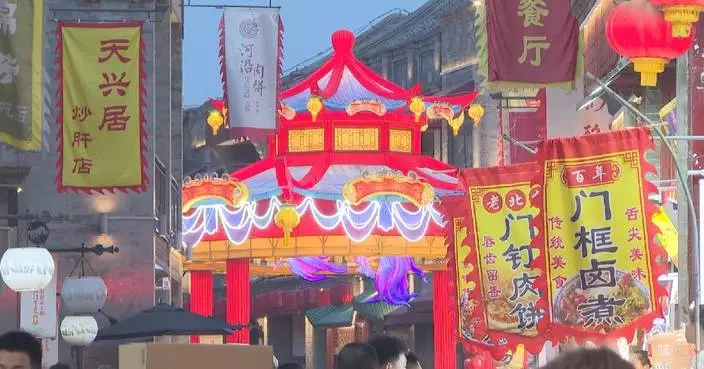
In Wenshan, southwest China's Yunnan Province, tourists enjoy traditional nighttime activities such as lantern riddle games and festive performances.
Beijing's municipal parks and the Museum of Chinese Gardens and Landscape Architecture are staging more than 140 activities, ranging from flower shows to cultural performances.
Various folk activities held across China to celebrate Mid-Autumn Festival