BERLIN (AP) — Kai Havertz was sent back to Arsenal on Friday after sustaining a leg muscle strain on international duty in Germany's 1-1 draw with the Netherlands in the Nations League.
The forward left Thursday night's game in the 30th minute clutching the back of his left thigh, but the German team's diagnosis was only a strain.
Havertz, who missed time last year with a knee injury, has started every Premier League game this season, picked ahead of Viktor Gyokeres in the battle for the striker spot for the English champions. Havertz has scored two goals in five league games this campaign.
Havertz was not the only early departure from Germany’s camp. Jamal Musiala sustained a “torn muscle fiber” in his right thigh during warmups Thursday and has returned to Bayern Munich, the German federation added Friday.
Florian Wirtz and Jonathan Burkardt were called in earlier than planned to replace the pair. They could be available to play Sunday when Germany hosts Greece in Augsburg.
Germany coach Jürgen Klopp had selected a whopping 44 players in two separate squads for the four-match Nations League stretch.
See AP’s full soccer coverage here
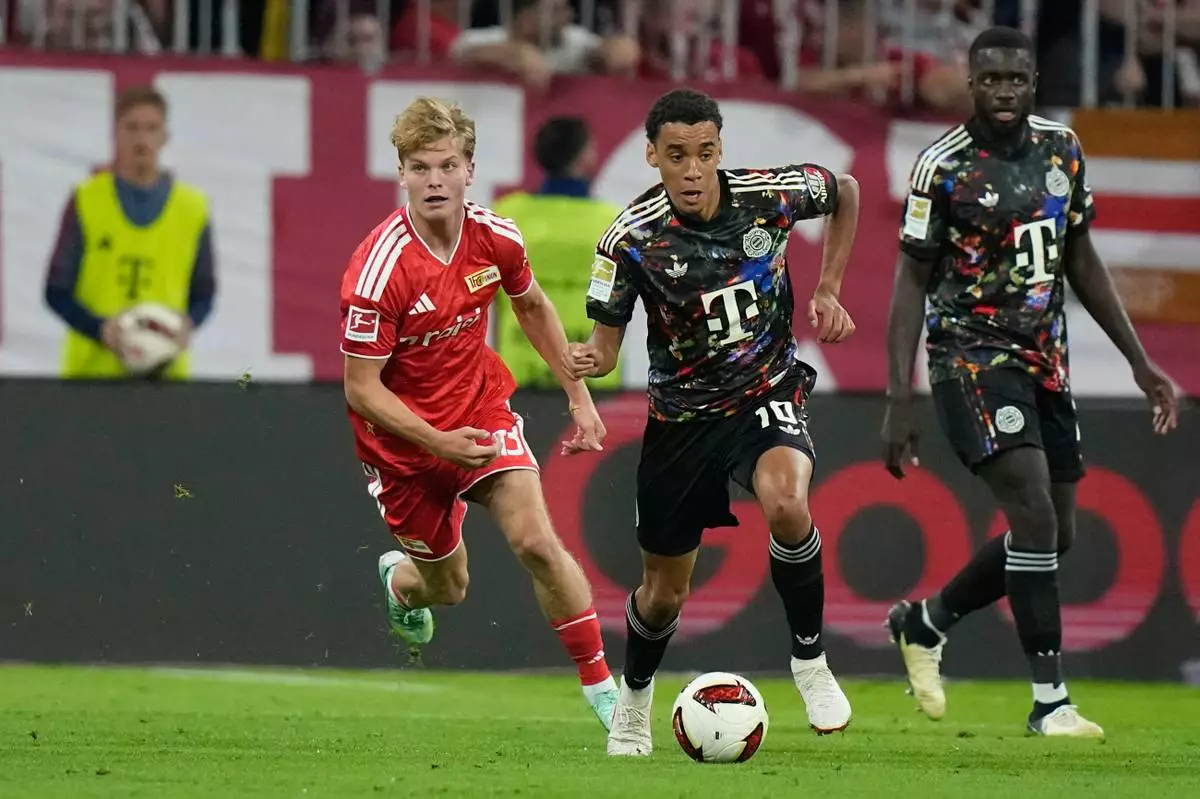
Bayern's Jamal Musiala, second from right, and Union's Andras Schaefer, left, challenge for the ball during the Bundesliga soccer match between Bayern Munich and 1. FC Union Berlin in Munich, Germany, Friday, Sept. 18, 2026. (AP Photo/Matthias Schrader)
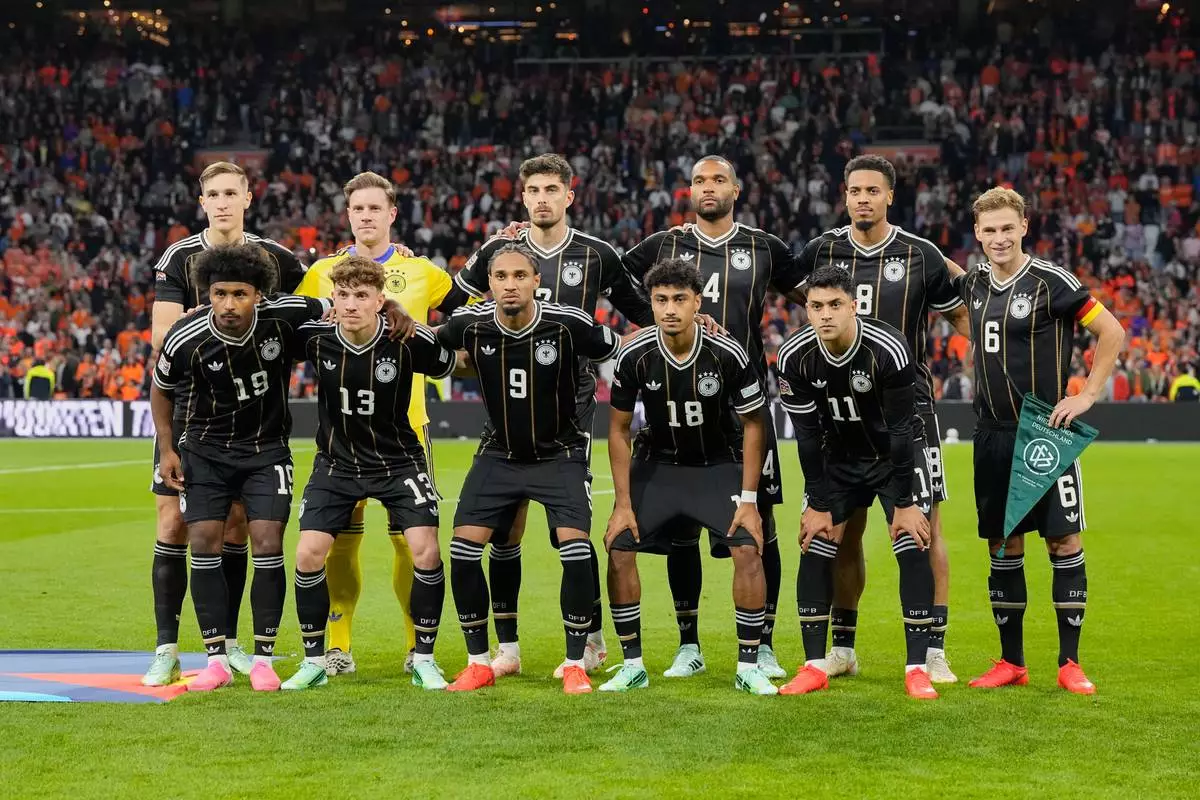
German players pose before the UEFA Nations League soccer match between the Netherlands and Germany in Amsterdam, Netherlands, Thursday, Sept. 24, 2026. (AP Photo/Martin Meissner)
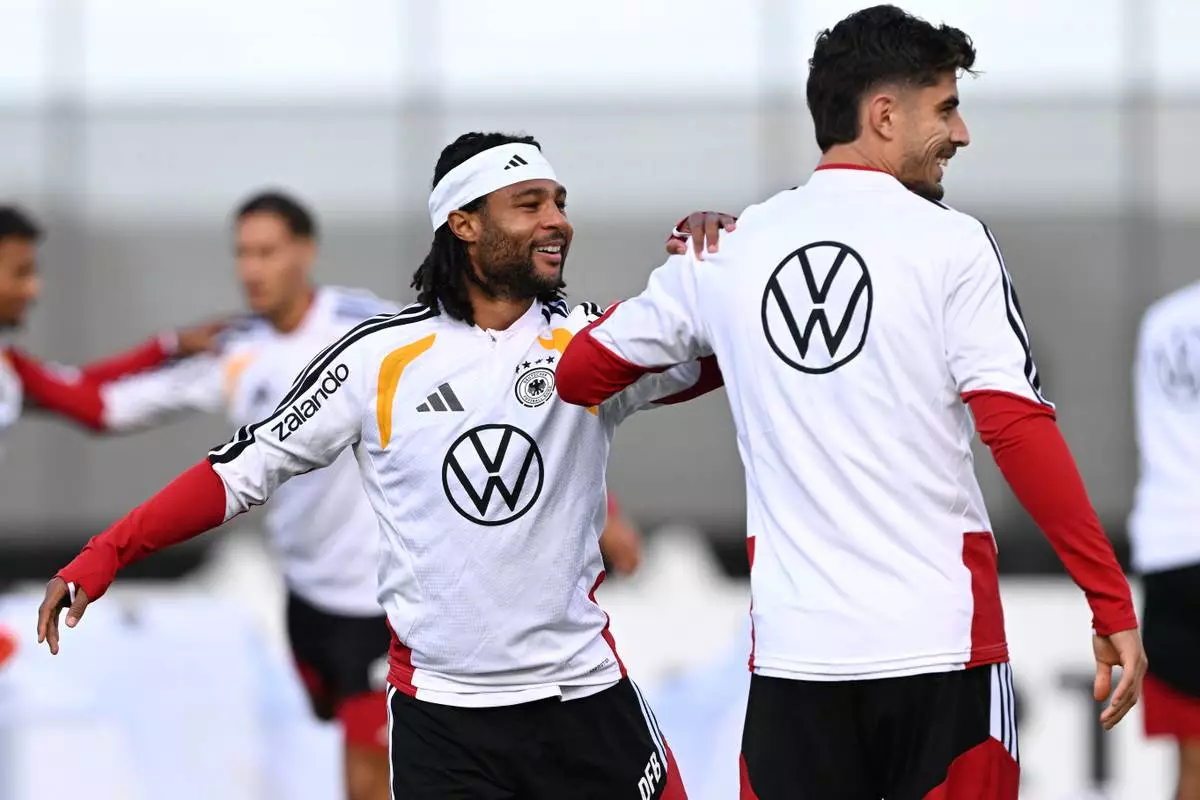
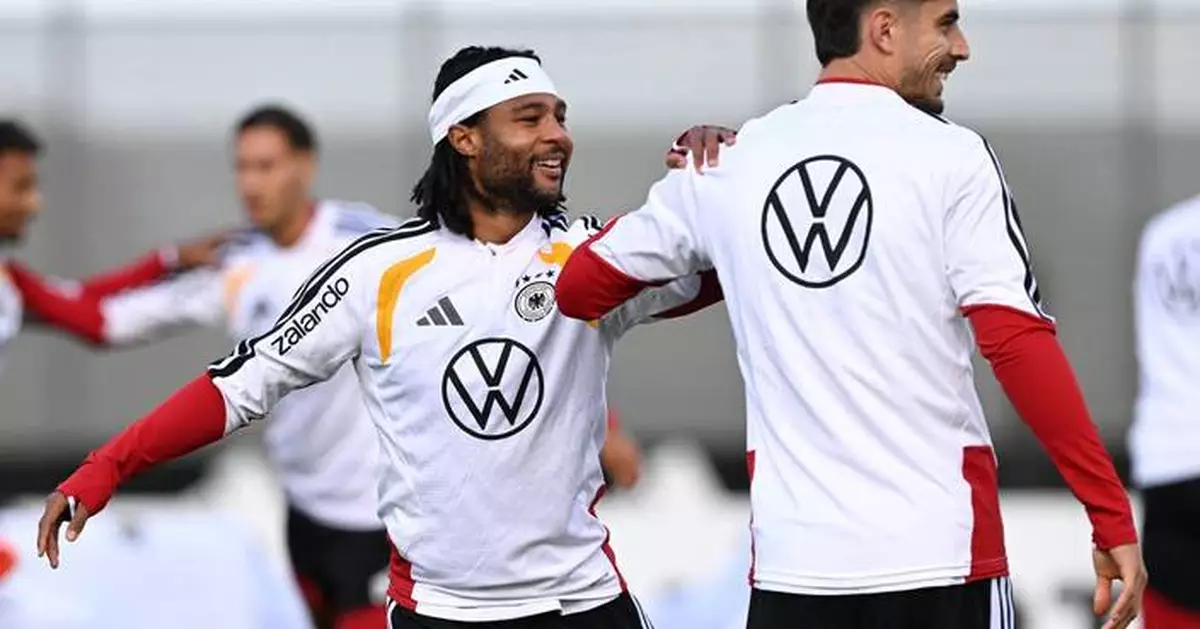
Germany's Serge Gnabry, left, and Kai Havertz attend a training session in Herzogenaurach, Germany, Tuesday Sept. 22, 2026, ahead of the Nations League soccer match against the Netherlands on Thursday. (Federico Gambarini/dpa via AP)
PARIS (AP) — Pope Leo XIV warned Friday that a “paradise of machines” risked undermining humanity as he opened a trip to France by posing fundamental questions about what it means to be human in the age of artificial intelligence, nuclear arms race and other threats to life itself.
Leo raised existential questions about scientific progress, life and human rights during his opening speech to President Emmanuel Macron and diplomats at the Élysée Palace.
Given the wars plaguing Europe and the Middle East, he reaffirmed the Vatican’s opposition to nuclear weapons and said the nuclear deterrence doctrine was “mistaken” since it was just fueling a new arms race.
“Peace is not a balance of power; rather, it is built day by day through dialogue and justice,” he said.
Leo arrived in Paris at the start of four intense days in France, where the Catholic Church has lost ground on influencing ethical issues given the strict approach to secularism that is enshrined in the French Constitution.
Church bells across France tolled when Leo’s charter flight landed at Paris’ Orly airport, and upward of a million people are expected to turn out to see him during his visit. The welcome has underscored the surprising level of interest in Leo’s visit, the first by a pope in 18 years.
Later Friday, Leo was to deliver a speech at UNESCO headquarters, celebrate vespers at the newly reopened Notre-Dame cathedral and then preside over a massive youth vigil at the Paris stadium Friday night.
For Macron, who is barred from seeking a third term in May elections, hosting the American pope is something of a capstone, after Pope Francis refused repeatedly to make a proper state visit to France during his 12-year pontificate.
“For a president of the republic as Macron, who is at the end of his mandate, it can be important to be aside the pope and to capture a part of his popularity. It’s not new,” said Charles Mercier, director of history and sociology of Catholicism studies at Paris EPHE university.
With seven months left in his term, Macron’s approval ratings are near record lows, driven by anger over the rising cost of living and criticism of France’s growing debt and deficit and deteriorating public services. Macron’s office said Friday’s meeting with Leo will provide an opportunity to discuss global challenges such as climate change and artificial intelligence, along with European and international affairs. The talks also are expected to address end-of-life care and the protection of children.
Leo seems keen to emphasize Europe’s Christian roots and try to push the church’s message about the value and dignity of human life in a country where the right to abortion was enshrined in the Constitution in 2024 and where lawmakers recently gave final approval to a bill allowing adults with incurable illnesses to receive lethal medication.
The French Catholic hierarchy strongly opposed the measures, in keeping with Catholic teaching that human life must be protected and defended from conception until natural death. But the French hierarchy has lost much of its influence amid the secularizing trends at play across Western Europe as well as a credibility crisis stemming from France’s reckoning with its legacy of clergy sexual abuse.
France’s distinctive model of secularism, known as laïcité and enshrined in its Constitution, guarantees the freedom to believe or not to believe, as well as the freedom to practice a religion as long as it doesn't disturb public order. It also requires the state to remain neutral toward all religions.
Key rules have been defined by a historic 1905 law, primarily intended to distance the state from the then-powerful influence of the Catholic Church.
Olympic-level security measures were being put in place, including mounted police, bomb disposal experts, anti-drone measures and counter-terrorism measures, said Paris police prefecture spokesperson Hélène Denéchère.
In Paris alone, plans called for 14,000 police officers, gendarmes, and military personnel and 2,500 firefighters on Friday. On Saturday, when Leo celebrates Mass at the central Place de la Concorde, the numbers are only slightly lower.
“We are implementing a system similar to what was in place during the Paris 2024 Olympic and Paralympic Games, which means a protective perimeter around which other security perimeters will be added,” Denéchère said.
Associated Press visual journalist Jeffrey Schaeffer contributed to this report.
Associated Press religion coverage receives support through the AP’s collaboration with The Conversation US, with funding from Lilly Endowment Inc. The AP is solely responsible for this content.
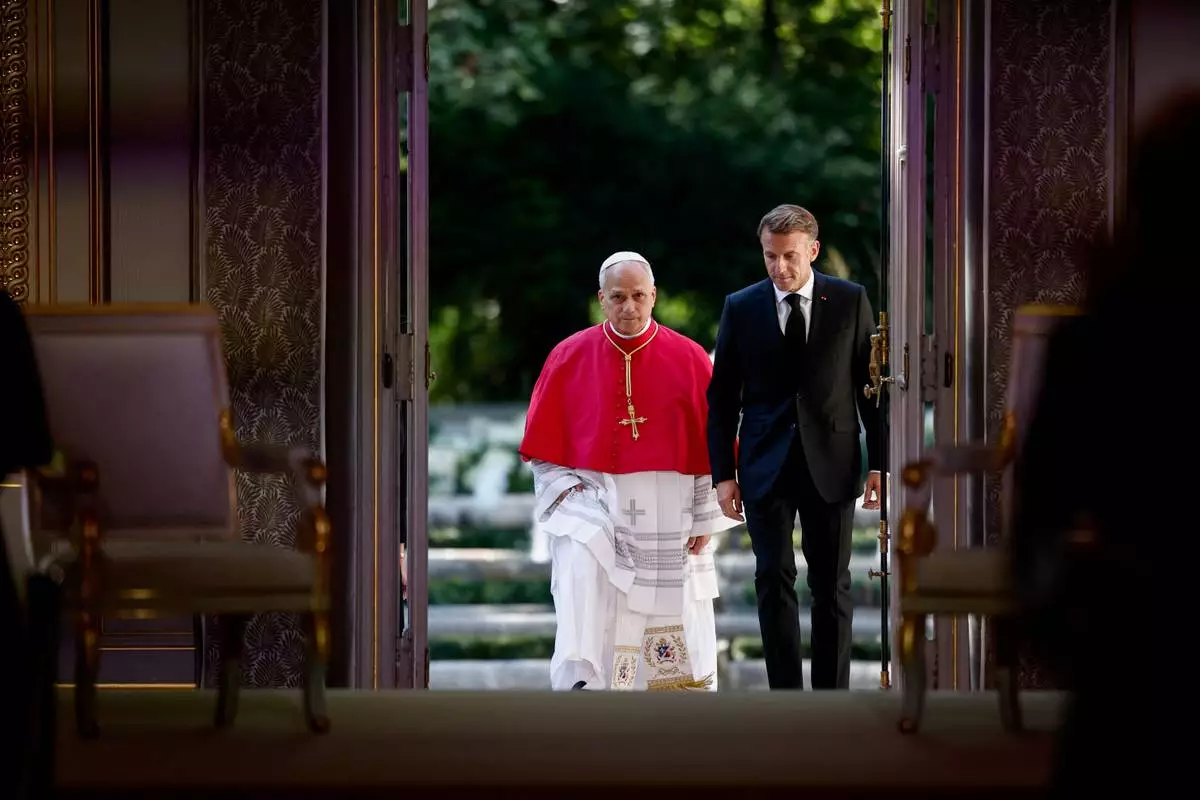
French President Emmanuel Macron welcomes Pope Leo XIV to the Elysee Palace in Paris, Friday, Sept. 25, 2026. (Benoit Tessier/Pool Photo via AP)
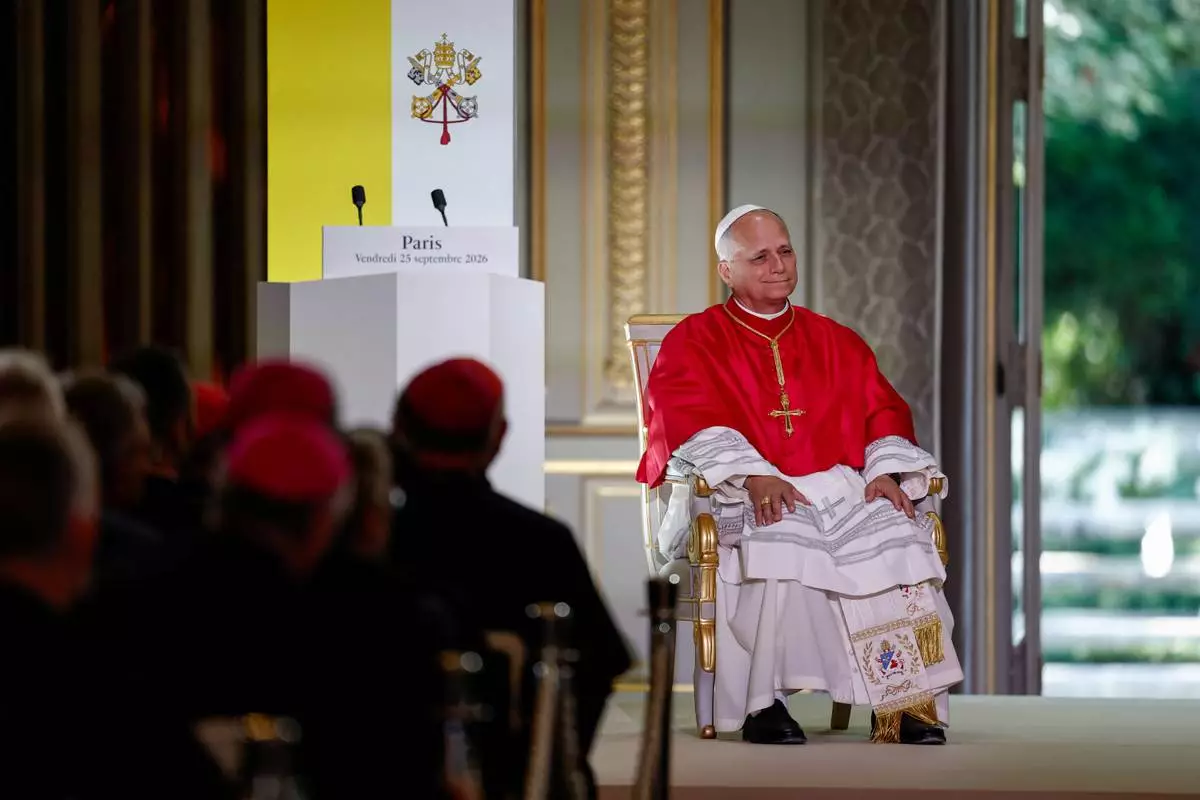
Pope Leo XIV is welcomed to the Elysee Palace in Paris, Friday, Sept. 25, 2026. (Benoit Tessier/Pool Photo via AP)
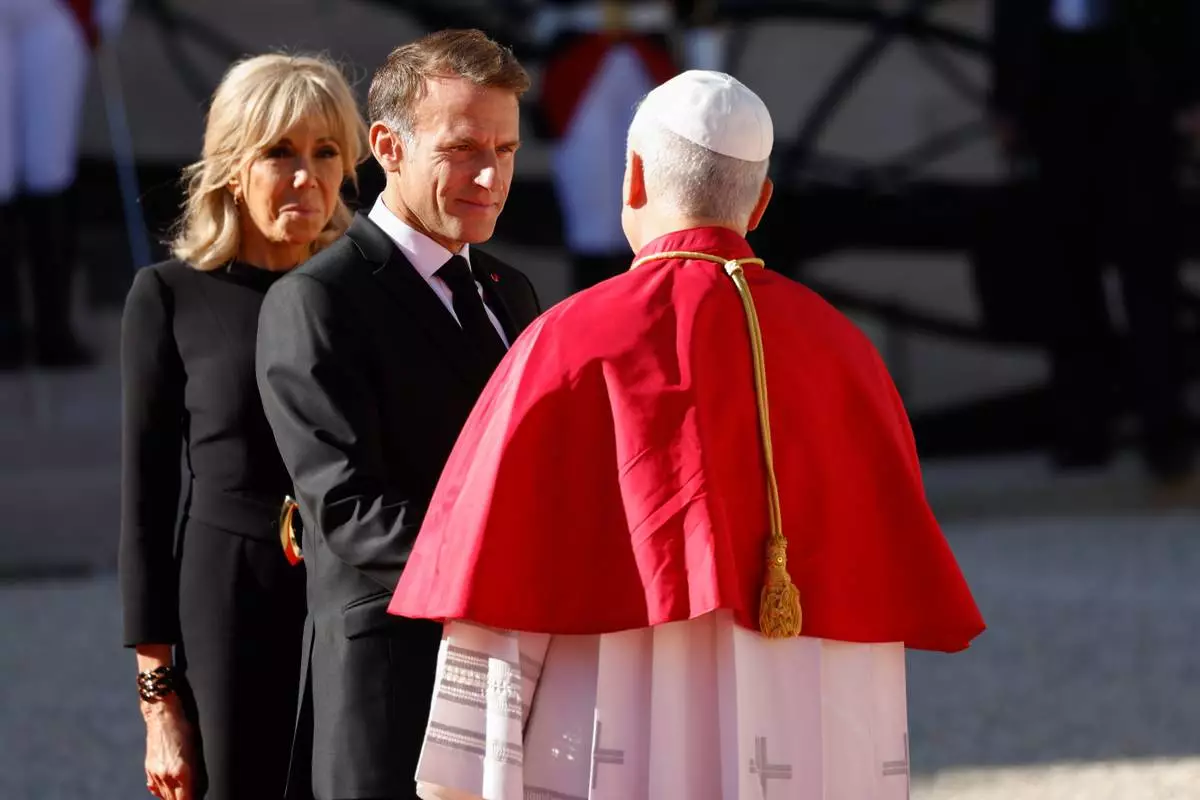
Pope Leo XIV, right, is welcomed by French President Emmanuel Macron, center, and his wife Brigitte as he arrives at the Elysee Palace in Paris, Friday, Sept. 25, 2026. (Remo Casilli/Pool Photo via AP)
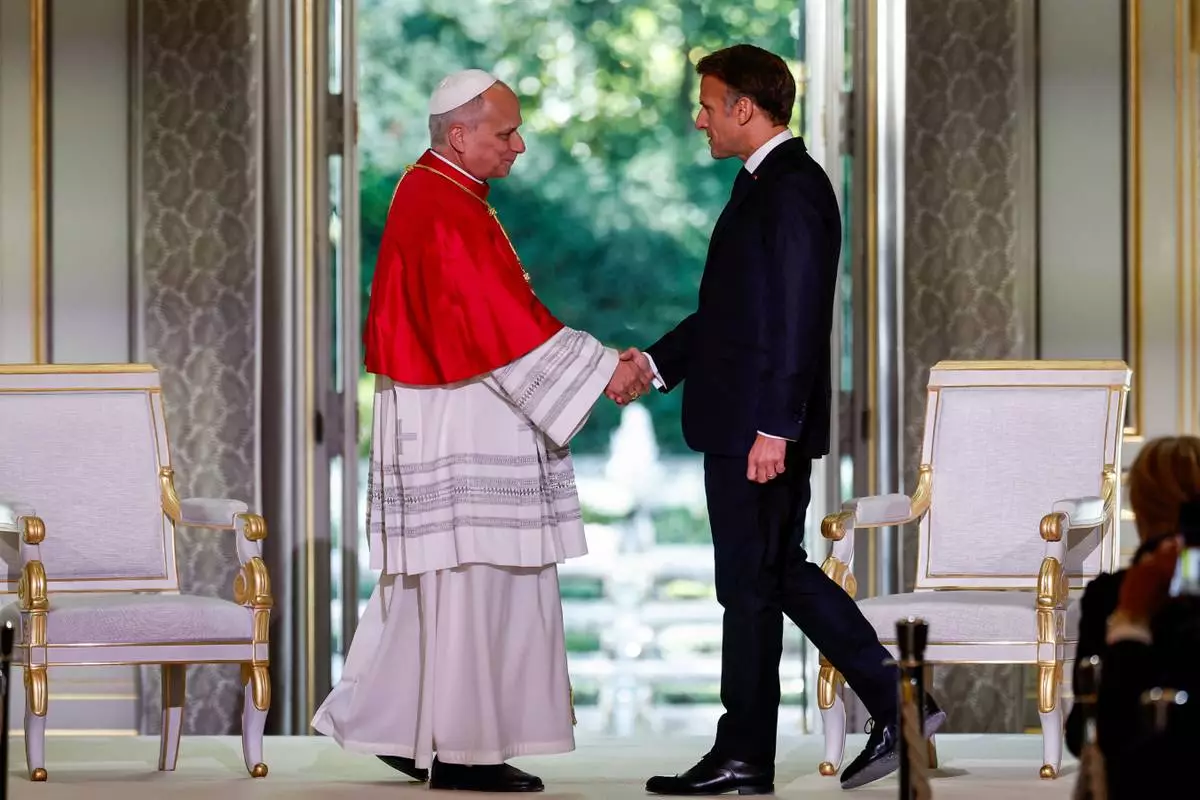
French President Emmanuel Macron welcomes Pope Leo XIV to the Elysee Palace in Paris, Friday, Sept. 25, 2026. (Benoit Tessier/Pool Photo via AP)
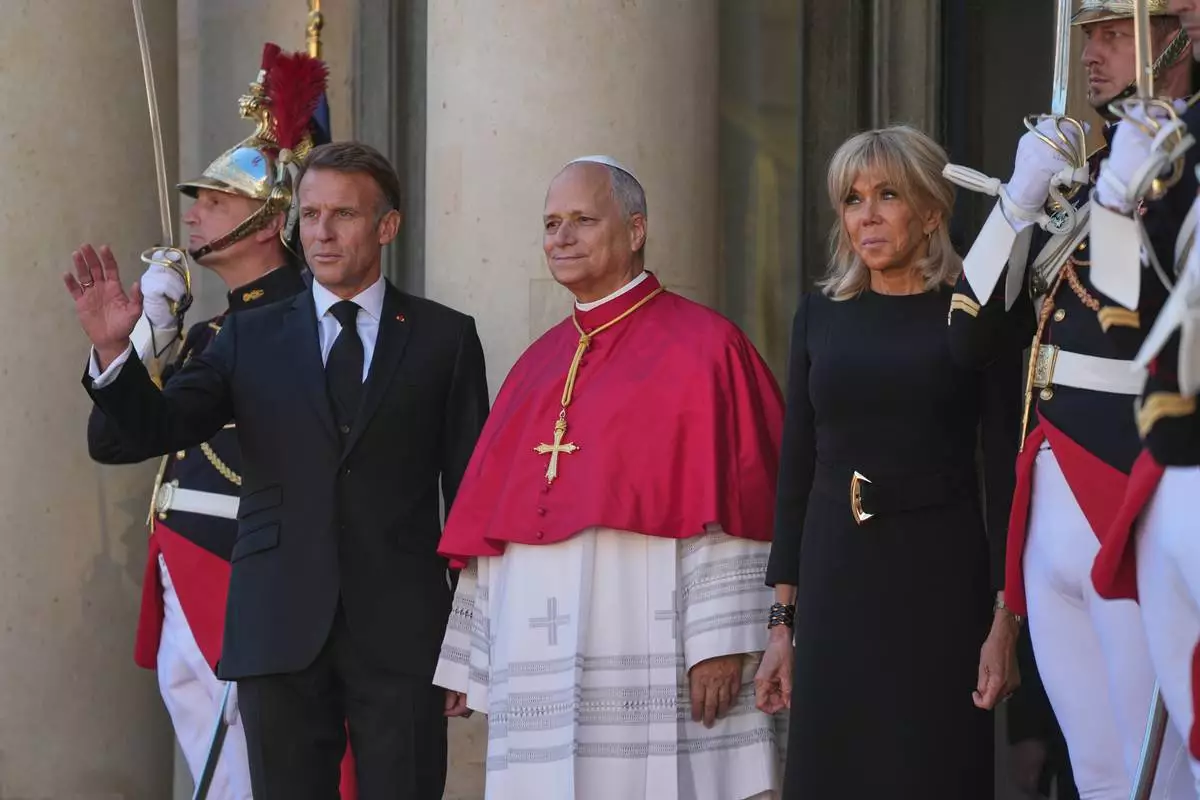
Pope Leo XIV, center, is welcomed by French President Emmanuel Macron, left, and his wife Brigitte as he arrives at the Elysee Palace in Paris, Friday, Sept. 25, 2026. (AP Photo/Gregorio Borgia)
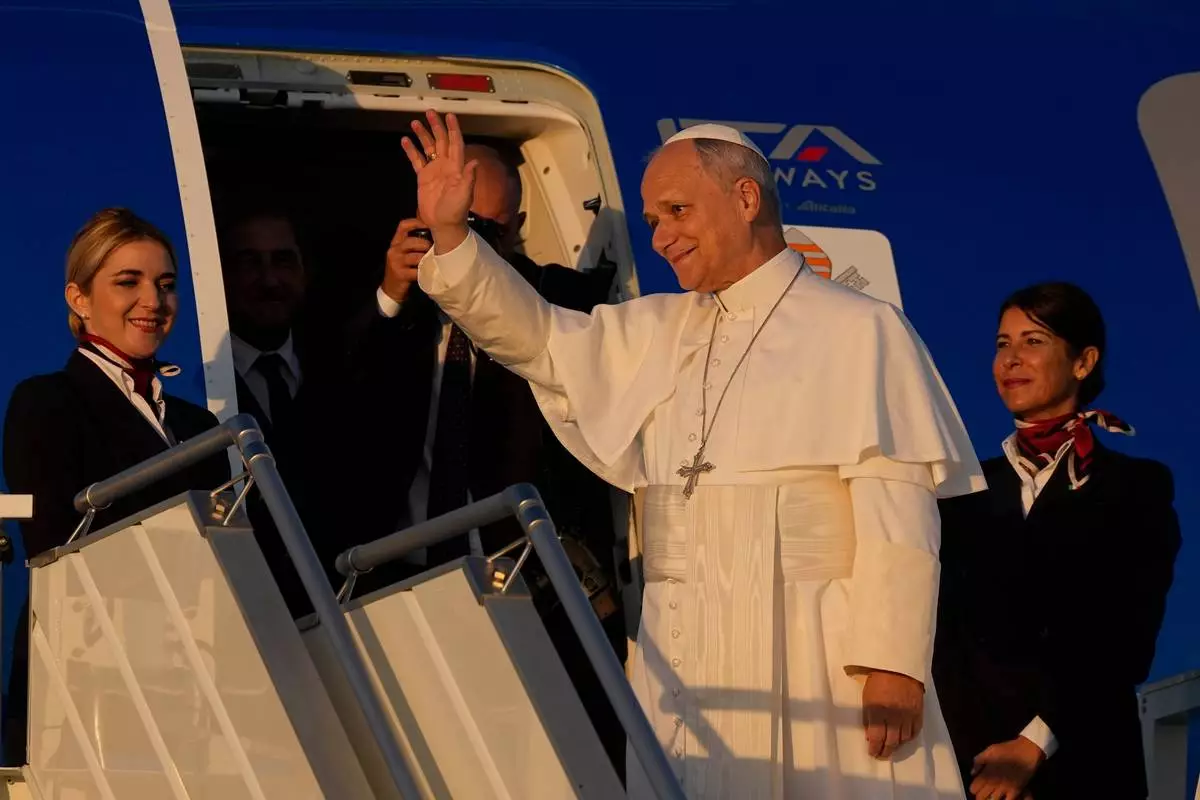
Pope Leo XIV boards a flight to Paris at Rome's Leonardo da Vinci International Airport in Fiumicino for a four-day pastoral visit to France, Friday, Sept. 25, 2026. (AP Photo/Alessandra Tarantino)
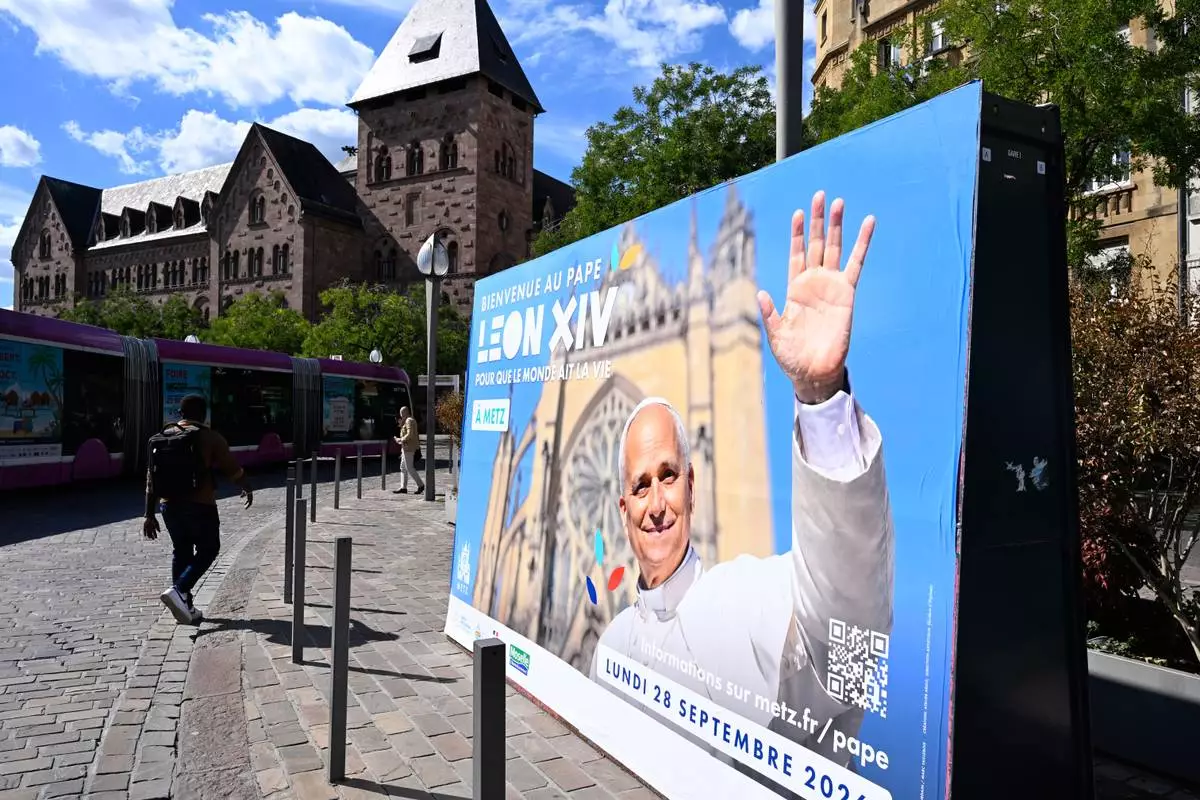
A banner announces the upcoming visit of Pope Leo XIV in Metz eastern France, Tuesday, Sept 15, 2026 as part of his official visit to France from Sept. 26 to 28. (AP Photo/Pascal Bastien)
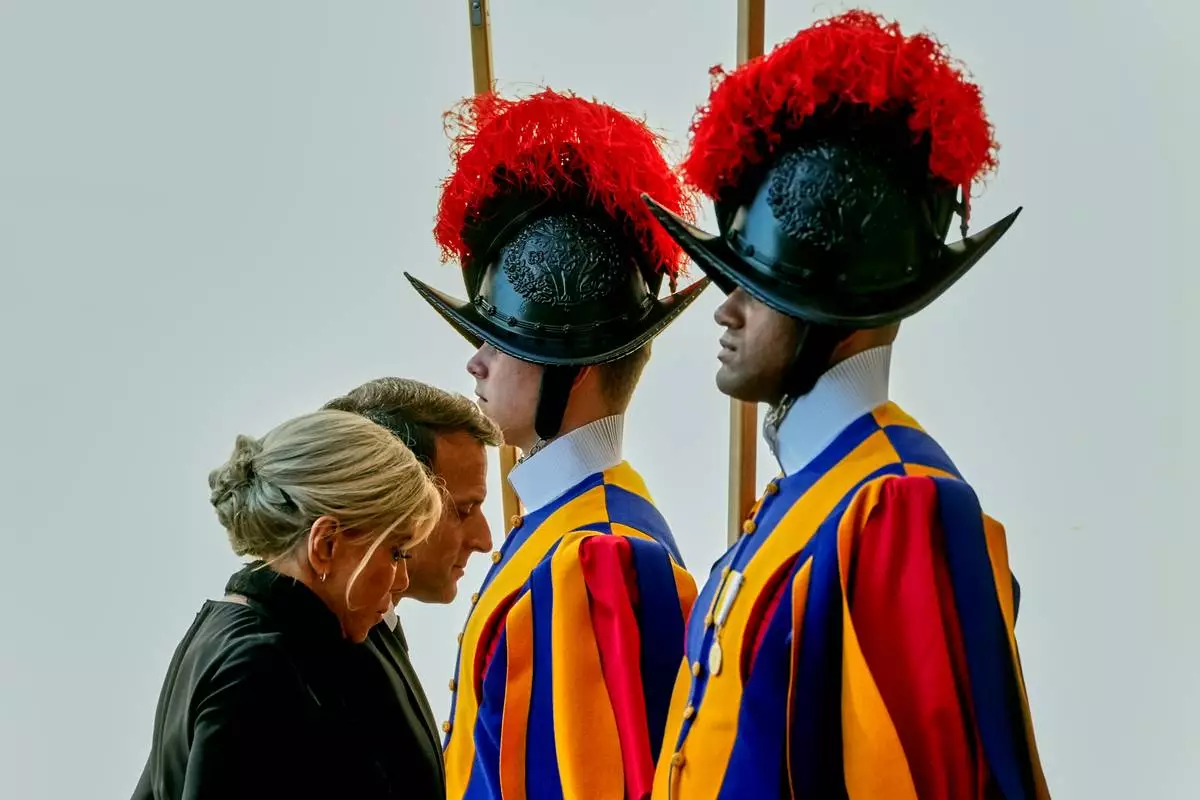
FILE - French President Emmanuel Macron and his wife Brigitte arrive in the St. Damasus Courtyard at the Vatican to meet with Pope Leo XIV, Friday, April 10, 2026. (AP Photo/Andrew Medichini, File)
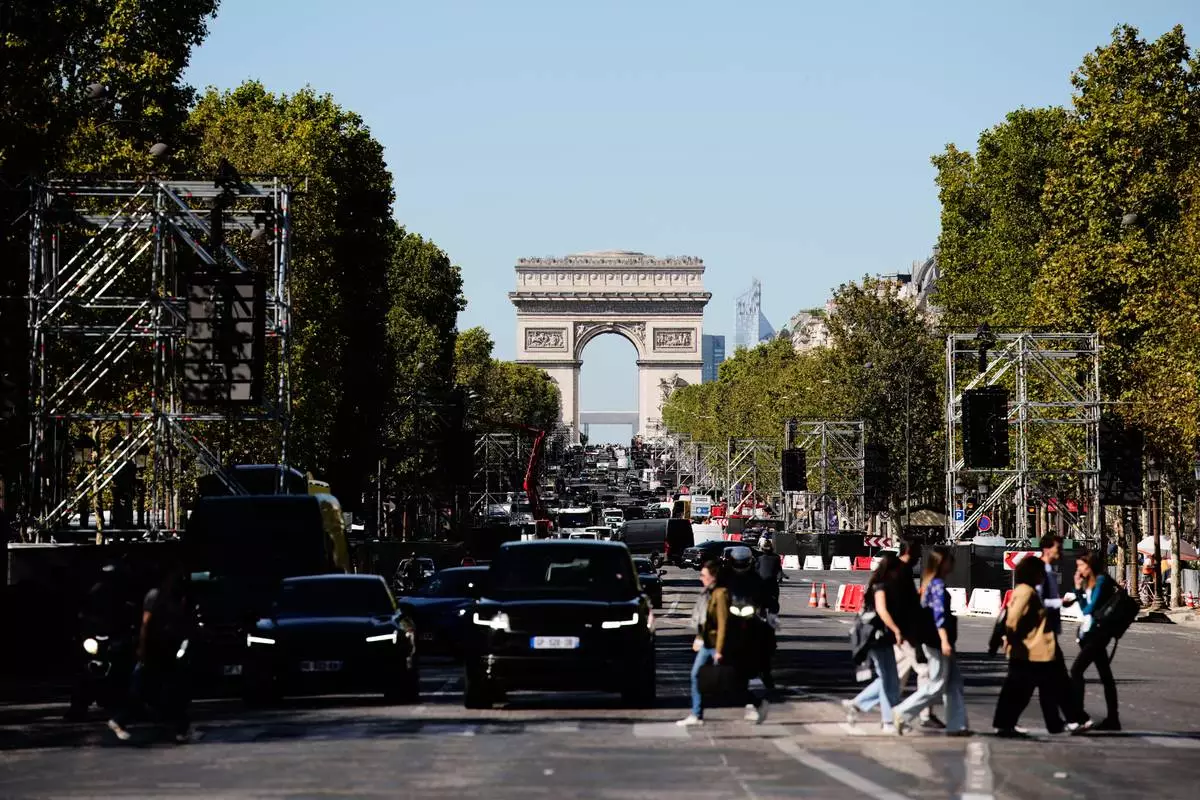
The Champs Elysees prepares for the mass that Pope Leo XIV will celebrate during his visit in Paris, Wednesday, Sept. 23, 2026. (AP Photo/Teresa Suarez)
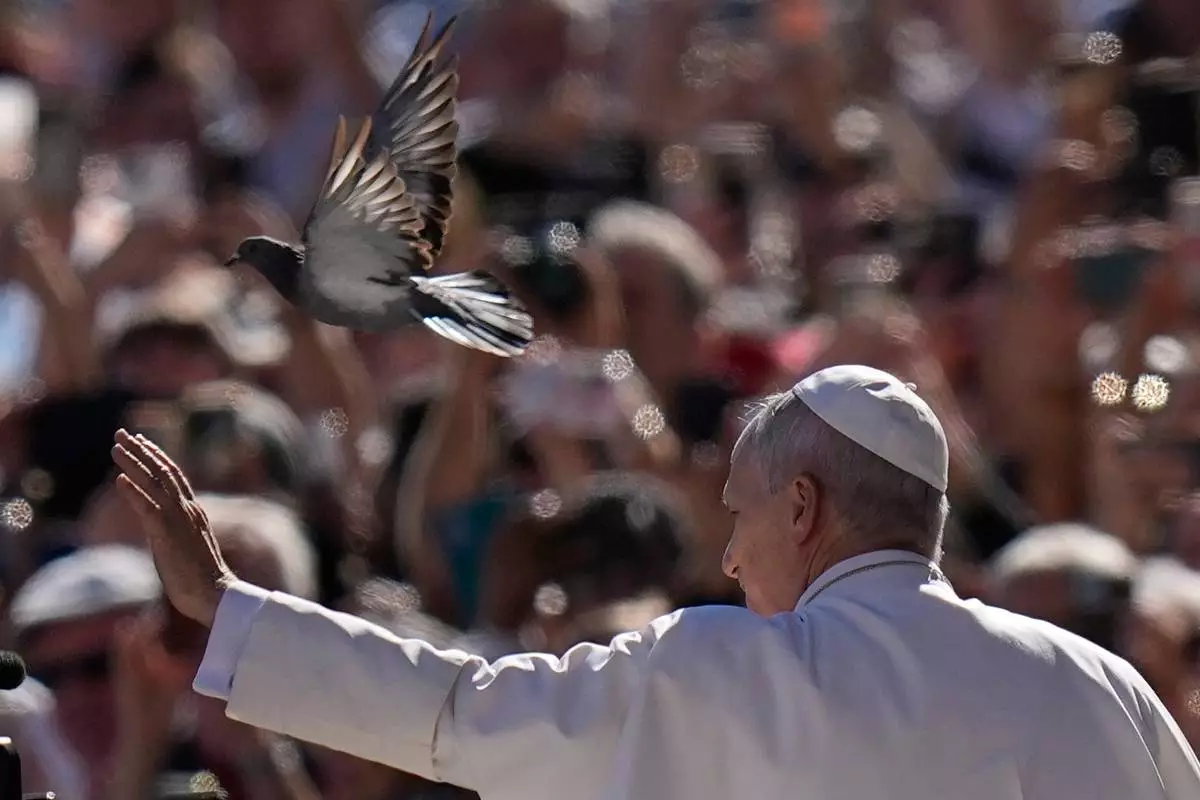
A pigeon flies past Pope Leo XIV as he arrives for his weekly general audience in St. Peter's Square, at the Vatican, Wednesday, Sept. 23, 2026. (AP Photo/Alessandra Tarantino)