Wild brown bears have frequently been spotted by visitors in the Greater Khingan Range, north China's Inner Mongolia Autonomous Region, these days, especially along the forested sections of the National Highway 331.
Some adult brown bears have been seen strolling leisurely through the forest, while mother bears travel together with their adorable cubs.
Encountering wild brown bears while driving leaves visitors both surprised and delighted. Some stopped to take photos, while a few more daring tourists even got out of their vehicles to feed the bears. At times, the distance between the wild bears and the visitors was as little as three to five meters.
The frequent appearances of wild brown bears along the national highway are closely linked to their natural behavior.
Before hibernation, brown bears experience a feeding frenzy. They consume enormous amounts of food to build crucial fat reserve for winter. They often extend their foraging territory to forested areas along the highway to hunt for food.
The steady recovery of the brown bear population is a testament to the success of ecological conservation in the forest region. However, getting out of a vehicle to photograph brown bears is extremely dangerous.
"The presence of brown bears is a clear indication of improving ecology in the Greater Khingan Range. However, people are strongly advised not to feed them. Once bears associate humans and vehicles with food, they may begin stopping cars to beg for food, posing a serious safety risk," said Guo Wei, Party branch secretary of the local forest conservation bureau's emergency affairs center.
In response to the recent increase in brown bear activity, local forest police have stepped up patrols and management efforts, put up more warning signs and strengthened guard on crowded areas.
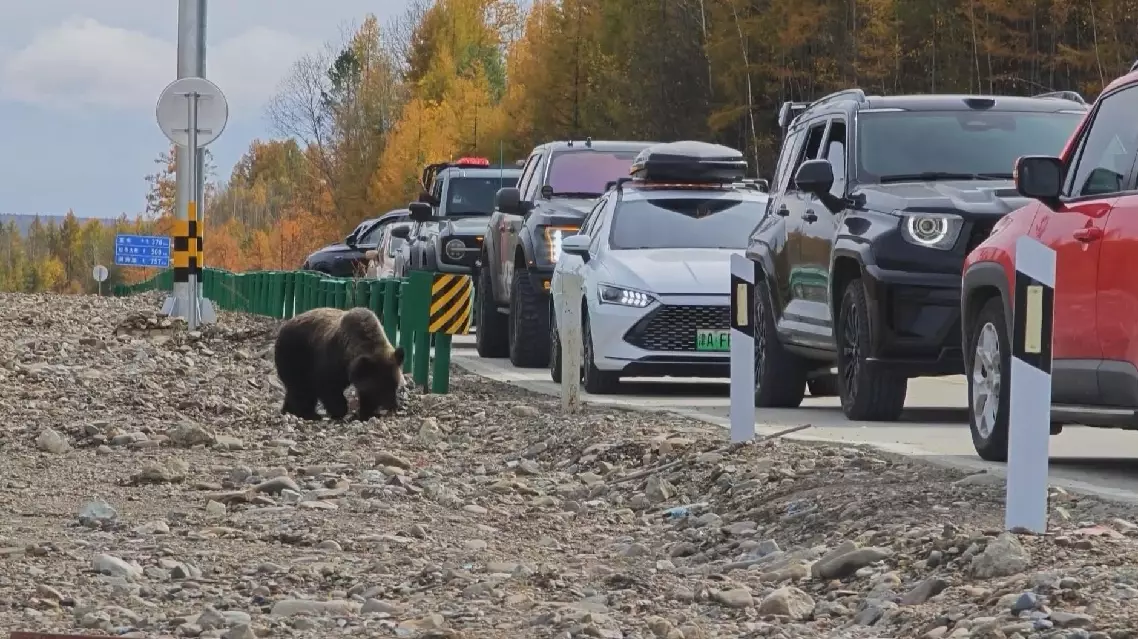
Brown bears frequently seen recently in Inner Mongolia