MILAN (AP) — Gucci creative director Demna moved beyond the strict archetypes of his debut collection and fixed his gaze on the fashion house’s luxe heritage for his all-important second collection, previewed Friday during Milan Fashion Week.
The runway was transformed into a luxury Gucci boutique, where Cardi B, wrapped in white faux fur, and Donatella Versace, wearing a stole from Demna’s first Gucci collection, sat on cushioned sofas. Brand ambassador Jannik Sinner took a seat beside Vogue’s Anna Wintour.
Click to Gallery
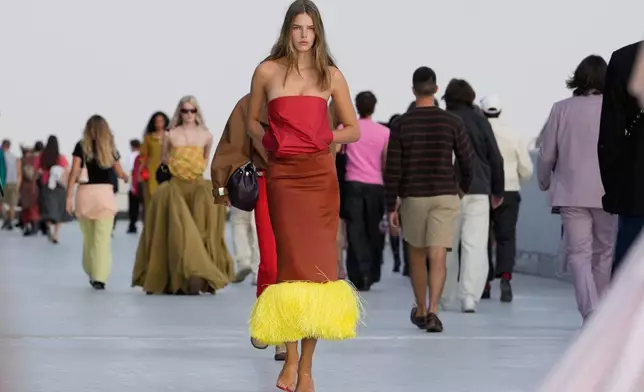
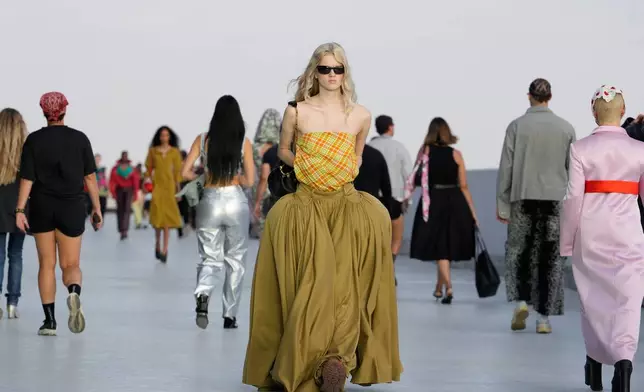
A model wears a creation part of the Moschino women's Spring-Summer 2027 collection, presented in Milan, Italy, Friday, Sept. 25, 2026. (AP Photo/Luca Bruno)
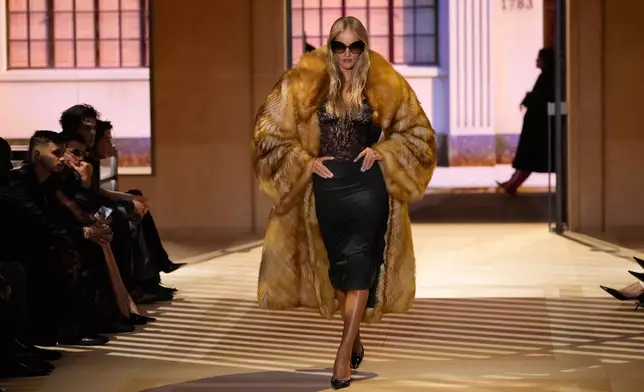
Model Rosie Huntington Whiteley wears a creation part of the Gucci women's Spring-Summer 2027 collection, presented in Milan, Italy, Friday, Sept. 25, 2026. (AP Photo/Luca Bruno)
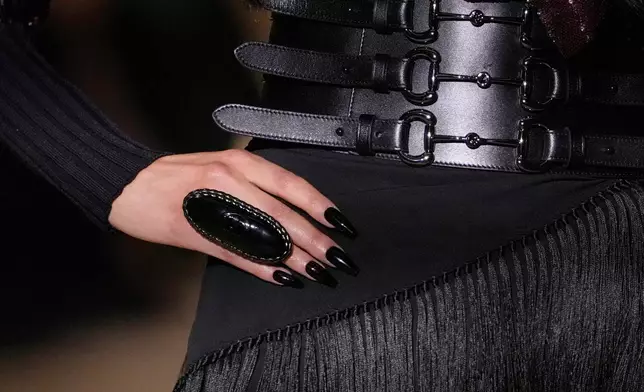
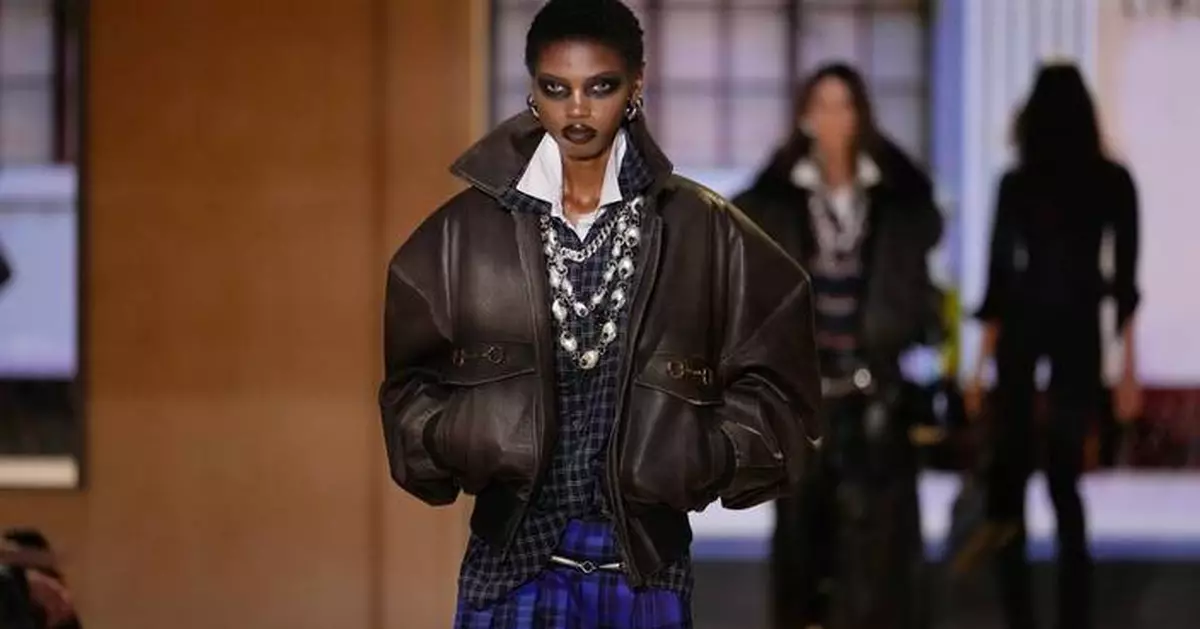
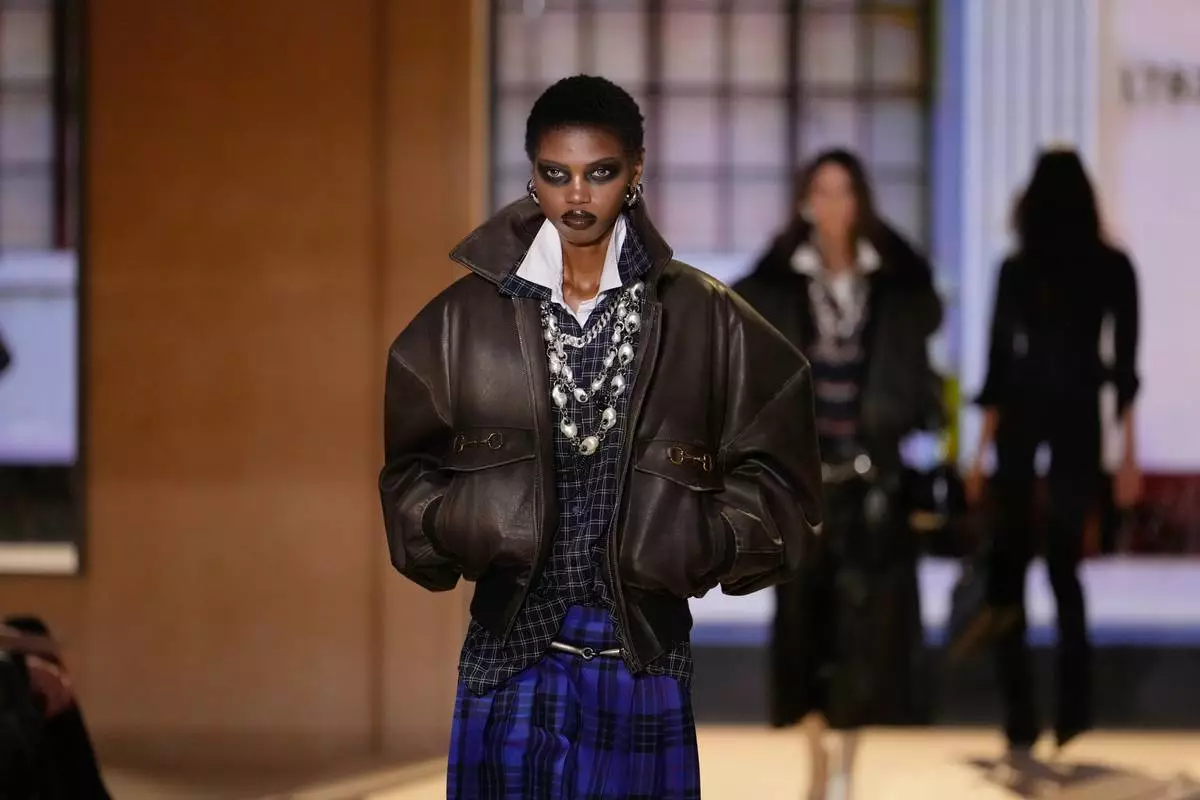
A model wears a creation part of the Gucci women's Spring-Summer 2027 collection, presented in Milan, Italy, Friday, Sept. 25, 2026. (AP Photo/Luca Bruno)
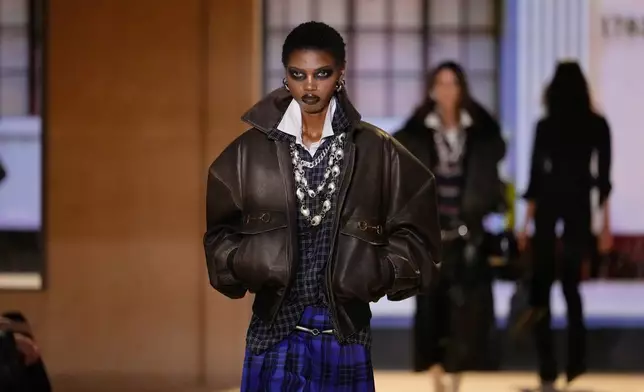
Models broadcast nonchalance as they strolled through the boutique, casting their eyes over jewelry cases, shelves of handbags and racks of ready-to-wear.
At a moment when the luxury business is struggling, the setting made the commercial imperative unusually explicit: These were clothes intended not merely to project an image, but to move from rack to wardrobe. And the runway offered flexible propositions for eager consumers.
“Gucci is about luxury that wants to be seen,” Demna wrote in show notes.
A bold silhouette made the first pitch, before the details became apparent. Men’s suits had exaggeratedly broad shoulders, while pagoda shoulders shaped women’s jackets and dresses. Collars were turned up, adding to the attitude. The styling remained Italian: cropped pants and elongated loafers with no socks for him, a cinched trench coat over a blouse and skirt for her.
References to Alessandro Michele’s eccentricity and Tom Ford’s sexualized silhouettes were less stark than in Demna’s debut. Instead of asking customers to embody one of his sharply drawn Italian “famiglia” archetypes, the collection proposes borrowing elements without becoming captive to them.
Layering made those identities harder to pin down. Low-slung trousers held precariously in place by three belts suggested the swagger of a maranza, or troublemaking urban youth. But a bourgeois tartan skirt of an impeccably groomed Milanese woman was destabilized by a leather bomber worn over a plaid shirt and finished with an oversized necklace.
The collection’s strongest looks had undoubted commercial appeal: A double-breasted navy peacoat paired with high-heeled equestrian boots — with spurs for a Demna flourish — and a rugby shirt with Gucci stripes for him layered under an Oxford shirt and Gucci logo jacket.
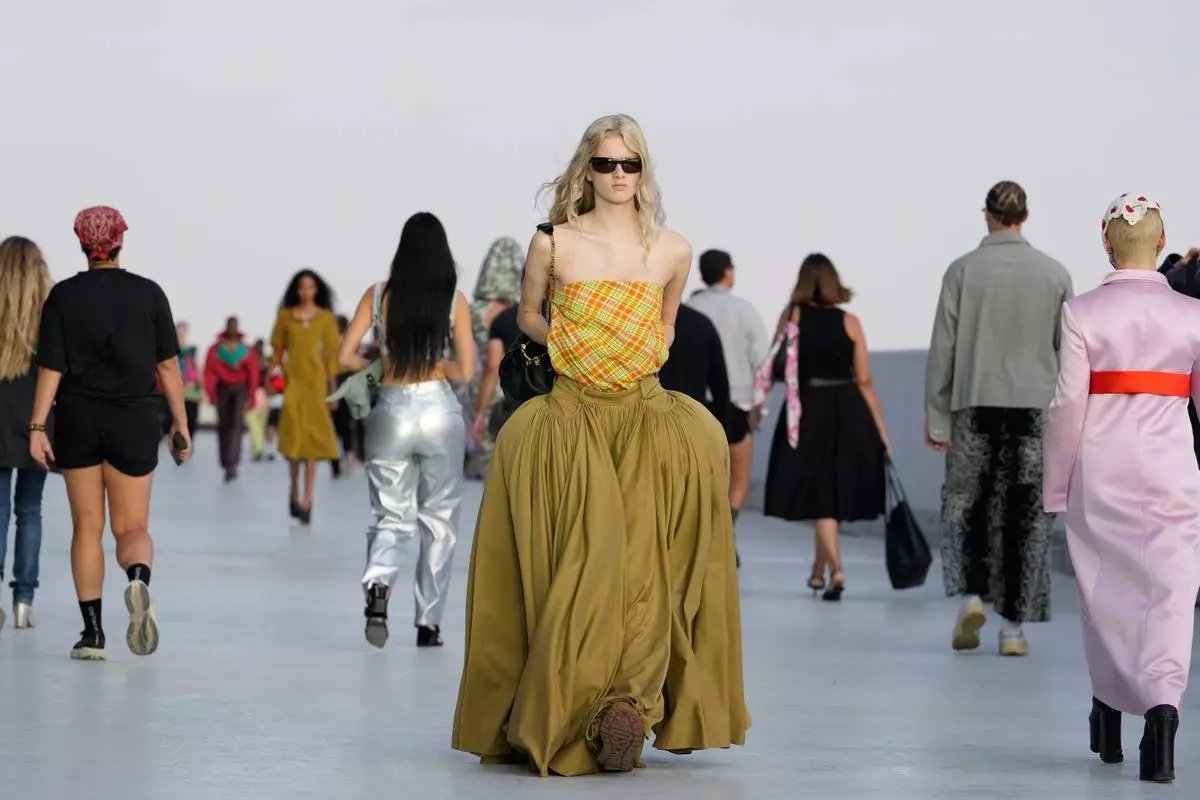
At Moschino, Loris Messina and Simone Rizzo brought the cult credibility they built at Sunnei to their debut as creative directors, taking up founder Franco Moschino’s legacy of intellectual wit.
Their debut show was set on the top floor of a parking garage overlooking the 2026 Olympic ice hockey venue just as the setting sun created a pinkish sky in the background.
The runway was flanked by hundreds of people in their own clothes walking in the opposite direction throughout the show, creating a stream of personal styles that situated the collection among everyday wardrobes.
The house’s irony remained, but it felt less dependent on quirk and gimmick than in recent iterations. Grass fringe punctured the preciousness of luxury, while cartoonish graphics functioned more as art than as characters or caricatures.
Still, humor came through the clothes themselves: exaggerated side bustles brought Marie Antoinette proportions to skirts worn like denim, while padding turned the enhanced backside to suggest a female ideal. It was still recognizably Moschino, but the joke didn’t overwhelm the clothes.
Fans who look to Moschino for novelty bags shaped like milk cartons or cooking pots may be disappointed by the pared-down aesthetic. The bag of the season was a very practical, large bucket bag and the only nod to novelty was a bag shaped like a cat that perched on a model's shoulder.
The designers said they are forging a modern version of the fashion house that isn't stuck in previous decades.
“We want Moschino to become a cultural loudspeaker again,” Rizzo said. “We have the same urgency in terms of creativity and breaking walls, but it's 2026.”
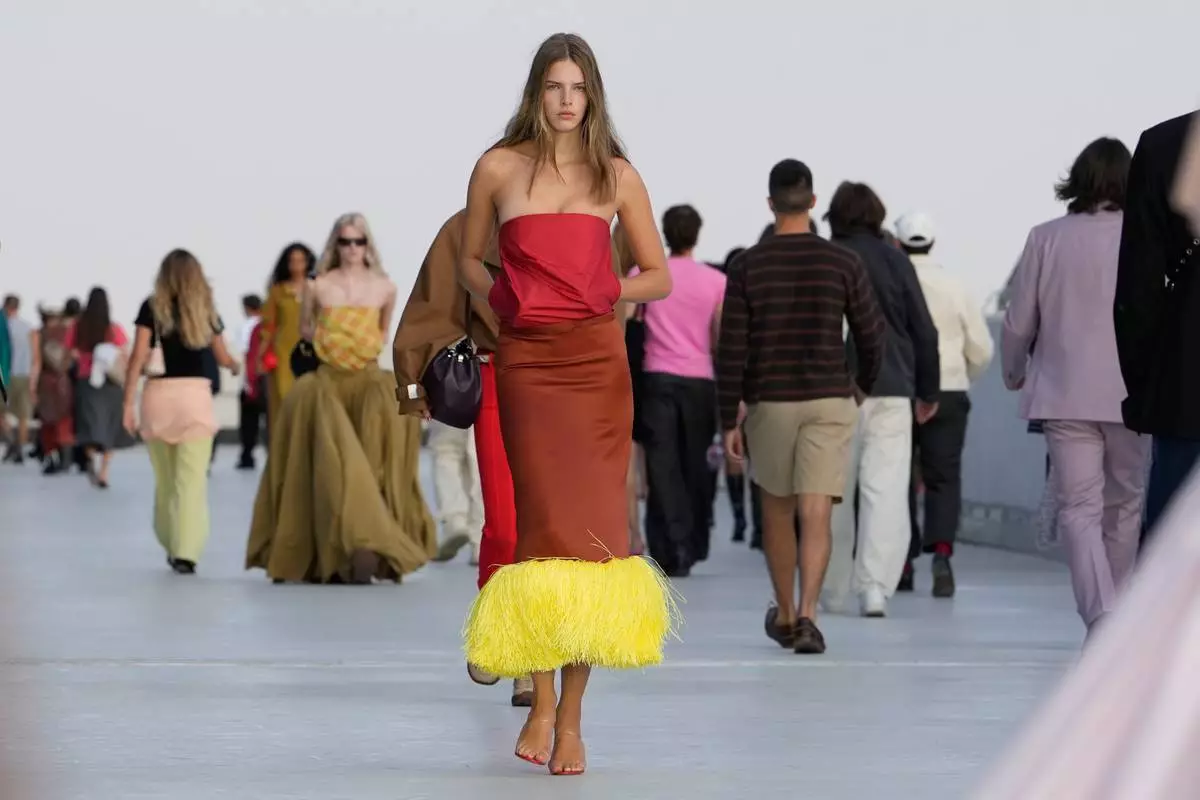
A model wears a creation part of the Moschino women's Spring-Summer 2027 collection, presented in Milan, Italy, Friday, Sept. 25, 2026. (AP Photo/Luca Bruno)
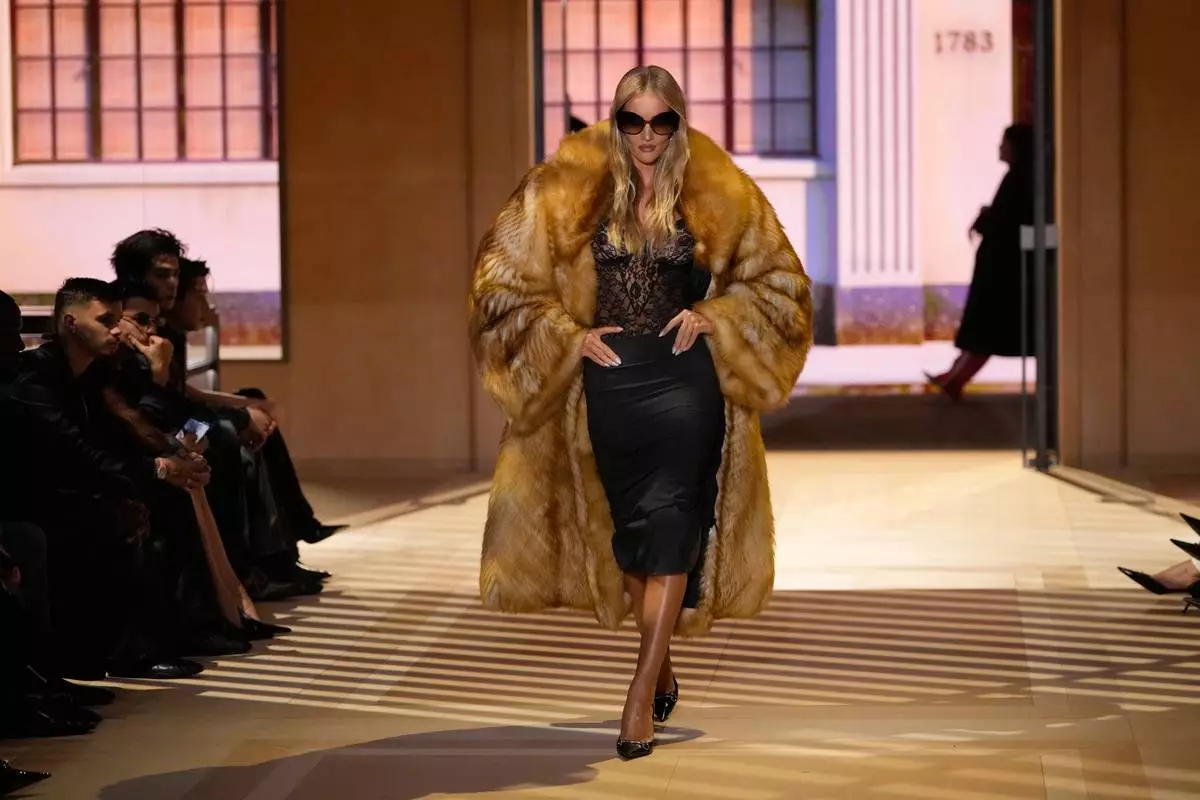
Model Rosie Huntington Whiteley wears a creation part of the Gucci women's Spring-Summer 2027 collection, presented in Milan, Italy, Friday, Sept. 25, 2026. (AP Photo/Luca Bruno)
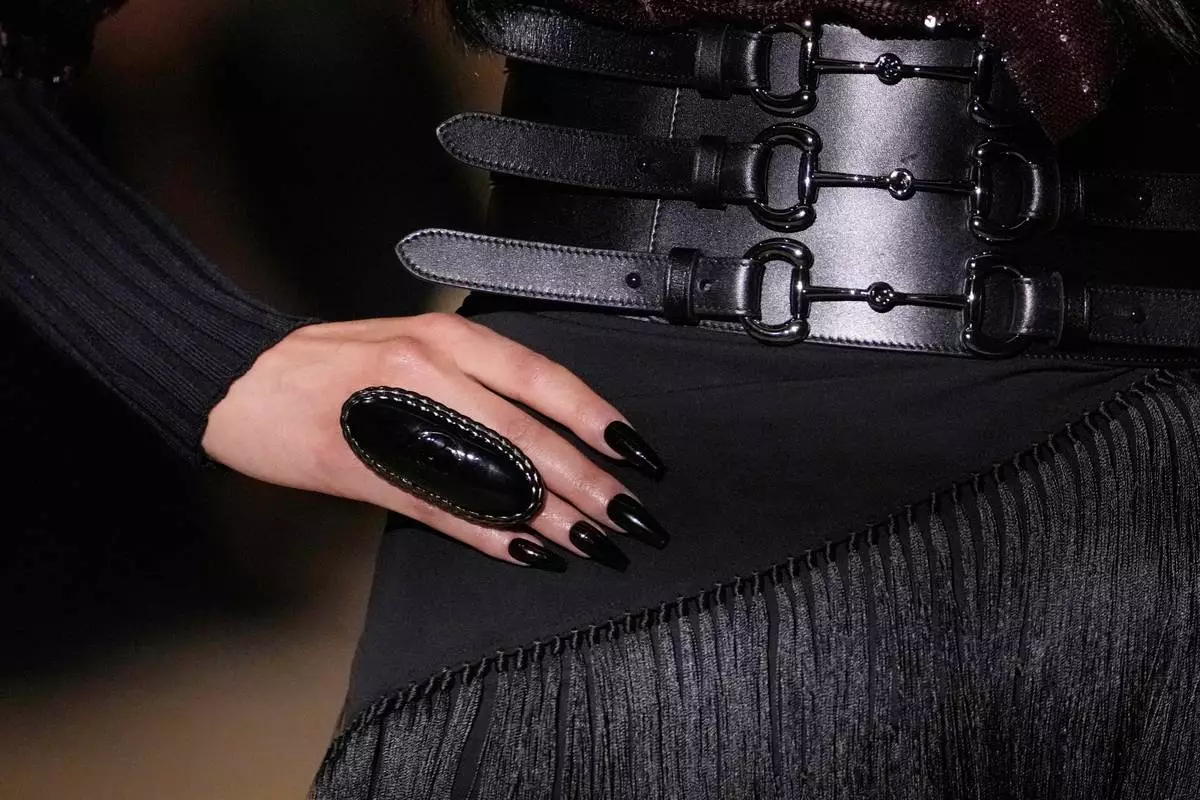
A model wears a creation part of the Gucci women's Spring-Summer 2027 collection, presented in Milan, Italy, Friday, Sept. 25, 2026. (AP Photo/Luca Bruno)

A New Mexico jury on Friday found Facebook liable for deceiving users about privacy protections on the platform in the latest legal setback against the social media giant that has already cost it billions of dollars.
The jury found over 43 million violations of state consumer protection law and it is now up to the judge to determine how much the company would pay, with attorneys representing the state asking for the maximum $5,000 penalty per violation.
“The verdict marks a significant victory for New Mexico consumers and holds one of the world’s largest technology companies accountable for its conduct,” the New Mexico Department of Justice said in a statement.
The two-week trial in Santa Fe centered on accusations that Facebook, owned by Meta, deceived users about a data breach stemming from a third-party personality quiz that harvested data from roughly 87 million profiles and sold it to a political consulting firm, Cambridge Analytica, to generate targeted ads. The now-defunct firm’s clients included the 2016 campaign for Donald Trump.
Jurors sided with prosecutors, finding Facebook made deceptive statements about protecting users’ data that affected New Mexico’s entire population of more than two million people. The jury also found Facebook misled the public about investigations into third-party app developers that harvest user data following the Cambridge Analytica scandal.
“We disagree with the verdict and will continue to defend ourselves against efforts to distort our record,” said Alex Burgos, a spokesperson for Meta in an email.
During closing arguments, lawyers for Facebook claimed the state’s evidence was outdated and that despite having five years to gather material, New Mexico found only one other instance of a data breach.
The trial also addressed Facebook's policies for removing harmful content. The state claimed the company favored certain accounts and allowed for violent, or inaccurate, content to proliferate. Facebook denied the claims, arguing the company has adapted its policies since the state's lawsuit was filed in 2021 and that it removes 99% of content that violates standards.
The jury reviewed 34 statements made by the company about data protections and content policies, finding the company deceived users about its practices in almost every case.
In one of the few wins for the defense, jurors found the state didn't prove that Facebook made false claims about removing harmful content, including misinformation about the COVID-19 pandemic.
Despite jurors finding millions of violations, it's unclear how much of an impact the case will have on the company's bottom line, given how profitable Meta is.
"It's unlikely that this is going to be the case that effectively penalizes the company in a meaningful way," said Peter Ormerod, an associate professor of law at Villanova University.
Ormerod said the social media company has very high margins and previously skirted regulatory actions on its platforms.
If the state successfully persuaded the judge to award the maximum civil penalties for every violation, the company could owe over $200 billion, with interest accruing if it decides to appeal. The judge will have to weigh complex arguments from both sides about what penalties are fair. In a previous case, New Mexico secured $942 million over the platform’s policies to protect minors.
Ormerod commended the state’s “dogged prosecution” of the social media giant, but isn’t sure the judgment will be significant enough to change Meta’s ways.
“There’s been a lot of criticism that none of these amounts of money are enough to discipline the company,” Ormerod said.
In a deposition played for jurors, CEO Mark Zuckerberg said the company had robust systems to determine whether content should be taken down. During closing arguments, Randi McGinn, an attorney representing the state, argued that Facebook profited off harmful content, which lawyers for the company denied.
“Meta’s platforms are forums for free expression. We have a First Amendment right to manage those platforms in a way we believe best serves the interests of our community. This means prioritizing free speech, protecting our users’ information and giving them control over their data,” said Burgos.
The judge will decide on penalties at a later date, but that hearing hasn’t been set yet. Attorney General Raúl Torrez told reporters following the verdict that the judgment will be decided within weeks and that all money awarded will go into a fund for the state's education system. The state is also seeking an injunction to stop similar practices in the future.
In August, Meta agreed to pay up to $18 billion to settle a multistate lawsuit involving child safety issues. Buried in the 130-page settlement was an agreement to release Meta from future liability related to the Cambridge Analytica privacy breach, making New Mexico the only state to decide to pursue a case on its own. Florida was the only other state that did not sign the settlement, saying it was not tough enough on Meta, leaving the door open for future litigation.
Also this year, New Mexico won judgments totaling $942 million from Meta in a two-phase trial about the company’s safety protections for minors. The court ordered Meta to implement new safeguards, including age-verification technology and time limits on its platforms.
—
Schuettler reported from Phoenix.
— Schuettler is a corps member for The Associated Press/Report for America Statehouse News Initiative. Report for America is a nonprofit national service program that places journalists in local newsrooms to report on undercovered issues.
FILE - The Meta logo is seen at the Vivatech show in Paris on June 14, 2023. (AP Photo/Thibault Camus, File)