TRENTON, N.J. (AP) — New Jersey ’s Democratic lieutenant governor has resigned after the governor demanded he step down over sexual harassment allegations and ethical lapses involving his relationships with women.
Gov. Mikie Sherrill had given Lt. Gov. Dale Caldwell an ultimatum that he resign by Friday, though she lacked the power to remove him if he said no.
Sherrill announced the resignation at a news conference Friday afternoon.
“His decision will allow us to move forward with important work serving the people of our state,” she said.
THIS IS A BREAKING NEWS UPDATE. AP’s earlier story follows below.
TRENTON, N.J. (AP) — New Jersey’s Democratic governor worked Friday to sever ties with her own lieutenant governor after he was accused of inappropriate behavior with women, giving him an ultimatum to resign by the end of the day and quickly end a scandal that threatened to be a drag on her fledgling administration.
The showdown between Gov. Mikie Sherrill and Lt. Gov. Dale Caldwell comes weeks ahead of midterm elections that will decide who controls Congress. State Republicans have hammered Sherrill for weeks on the investigation into Caldwell, who oversees elections as New Jersey's secretary of state and also serves as acting governor in her absence.
Sherrill scheduled a news conference Friday afternoon at the State House in Trenton to address the situation. She had called for Caldwell to resign on Thursday after a law firm she hired concluded he behaved inappropriately around women.
The Democrat, who had hand-picked Caldwell for the role as her second-in-command, said his “serious, repeated violations of state policy” continued even after multiple warnings and trainings.
But Caldwell has disputed the allegations and has shown no signs he might leave office willingly. In New Jersey, a governor can’t simply fire the lieutenant governor, as the post is independently elected.
Lieutenant governors can be impeached and removed from office by the Legislature, and the governor can strip a lieutenant governor of certain duties and responsibilities, effectively sidelining them from the administration.
A Methodist pastor, Caldwell served as president of Centenary University in Hackettstown before Sherrill tapped him as her running mate last year, making him first in line to lead the state should she die, be removed from office or become incapacitated.
Republican state Sen. Kristin Corrado questioned Sherrill’s judgment over allowing Caldwell to fill in for the governor when she's away, even as his conduct was being investigated.
“New Jersey residents deserve leadership, transparency, and answers from their government,” she said Friday. “So far, we have gotten none.”
Messages left with leaders of the Democrat-led Legislature went unanswered Friday morning.
In a report dated Wednesday but released Thursday, the lawyers said Caldwell had committed several violations of state policy. It said Caldwell, 66, had made an advance toward a staff member’s friend and when he was rebuffed told the staffer, “you young women are looking for young sperm.”
The report also said Caldwell had tried to get a promotion for a state employee he was dating and brought personal guests to the opera and other ticketed events without paying for them, as required by ethics rules.
Caldwell denied any misconduct, and said in a letter included in the law firm’s report that he suspected his relationships with women were being subjected to extra scrutiny because he was a single Black man.
Caldwell’s lawyer, Thomas Calcagni, said his client “categorically denies” making the sperm statement but acknowledged that Caldwell had recommended the woman for a promotion, though he denied ordering anyone to promote her. Caldwell denied other claims, including that he gives out his business cards to women for inappropriate reasons.
Caldwell, who is Black and served for decades on the New Brunswick Board of Education, has suggested race played a role in the allegations.
In neighboring New York, a similar impasse has played out over the past year between Democratic Gov. Kathy Hochul and her estranged Lt. Gov. Antonio Delgado, who launched a caustic primary challenge to unseat her only to withdraw from the race as the election neared.
Hochul is now running for reelection in November with Adrienne Adams, the former speaker of the New York City Council, as her replacement lieutenant governor nominee.
Marcelo reported from New York.
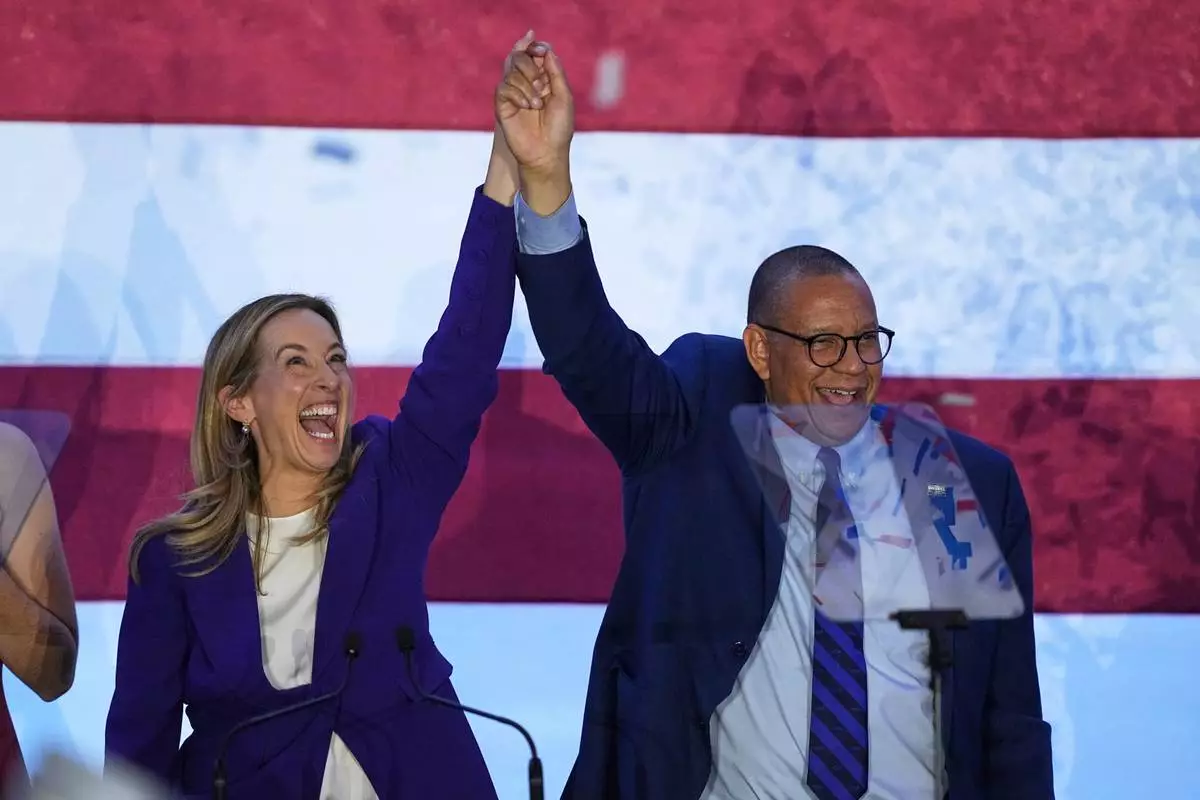
FILE - New Jersey Democratic Gov. elect Mikie Sherrill and Lt. Gov. elect Dale Caldwell celebrate during an election night party in East Brunswick, N.J., Tuesday, Nov. 4, 2025. (AP Photo/Matt Rourke, File)
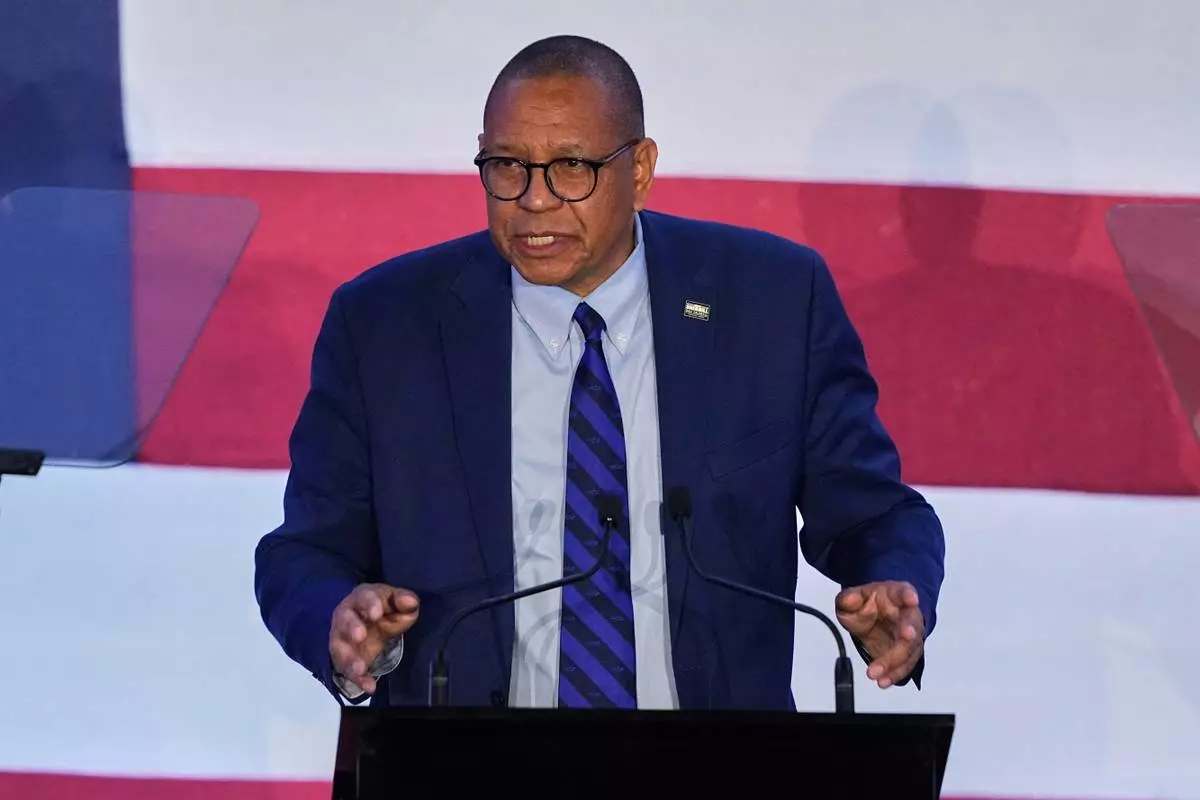
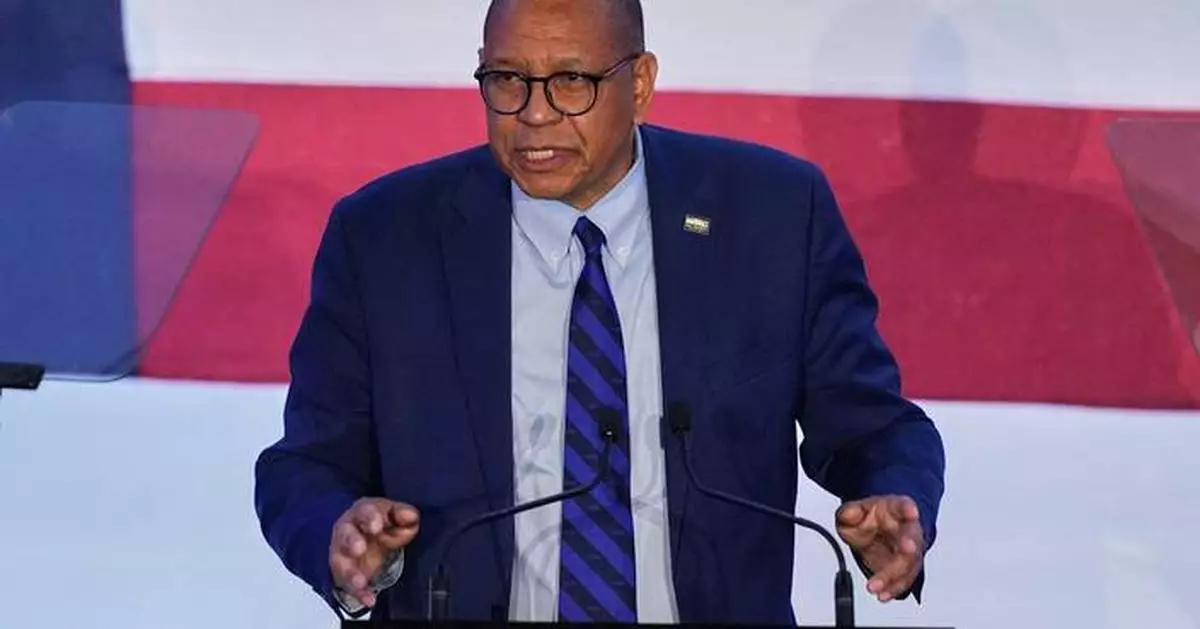
FILE - New Jersey Democratic Lt. Governor elect Dale Caldwell speaks during an election night party in East Brunswick, N.J., Nov. 4, 2025. (AP Photo/Matt Rourke, File)
NEW YORK (AP) — The Supreme Court on Friday lifted restrictions on a controversial federal voter database before November’s elections, granting President Donald Trump a temporary win in his aggressive campaign against noncitizen voting.
The court's three liberal-leaning justices publicly dissented from the decision.
The emergency order allows states, for now, to use the Trump administration's revamped version of a Department of Homeland Security program, called Systematic Alien Verification for Entitlements, or SAVE, in their efforts to verify the eligibility of voters on their rolls. It's a program that has drawn scrutiny for its use of voters' sensitive personal data and its tendency to wrongly flag some eligible voters as noncitizens.
States' use of the SAVE program is voluntary, limiting the ruling's impact on the midterm elections. Existing law also blocks most states from systematically purging voters from their rolls within 90 days of an election, said David Becker, an election law expert who leads the Center for Election Innovation and Research. He said DHS itself has admitted the data is not perfect.
Maine Secretary of State Shenna Bellows, a Democrat who has refused to participate in the SAVE program, said the ruling will have no effect in her state because it “does not force states to change the way we run our elections.”
The plaintiffs and their lawyers in the case called the ruling “profoundly disappointing” and said it puts “millions of Americans at risk of being unlawfully targeted by the administration’s unreliable voter purge database” before the midterms.
On X, James Percival, the general counsel for DHS, responded to a post about the decision with, “Yes, you read that right. We had to file an emergency petition in the Supreme Court just so we could use government data to help states stop noncitizens from illegally voting.”
The White House did not immediately respond to a message seeking comment.
The court’s order puts on hold a federal judge’s June ruling that had deemed the Republican administration’s recently revamped version of SAVE illegal. U.S. District Court Judge Sparkle L. Sooknanan had blocked the use of the tool, saying it violated Americans’ privacy rights and could result in voters being wrongly removed from the rolls.
A federal appeals court let her order stand.
But the Supreme Court majority found that a 1996 law explicitly allows DHS to get information about citizenship and immigration from other federal agencies. The federal government also has “an obligation to respond” to states seeking to verify citizenship.
“The order below prevents the Federal Government from using the program it believes is best suited to the task,” the majority wrote in the unsigned order.
Justice Ketanji Brown Jackson dissented, joined by Justices Elena Kagan and Sonia Sotomayor. The database has long been seen to fall under federal privacy laws, she wrote, and there are real risks that legitimate voter registrations could be mistakenly revoked.
“The harm caused by burdening or disenfranchising even a few lawful voters outweighs the nonexistent harm that the Government experiences when it is prevented from taking an action that it likely lacks the authority to take,” Jackson wrote.
The plaintiffs pledged to do “everything in our power” to ensure the district court decision stands.
The SAVE program was created under an immigration law mandating that DHS help federal, state and local agencies prevent government benefits from going to noncitizens. The Trump administration last year moved to significantly expand its search abilities. Since then, at least 67 million registrations have been scanned through the program, but critics worry it could end up purging valid voters from the rolls.
Some registrants have already been wrongly flagged. In Travis County, Texas, for example, officials said they investigated 97 voters flagged by SAVE as apparent noncitizens and found that at least 10% of them — and likely up to 21% — were U.S. citizens. The county urged the Supreme Court to reject the administration’s appeal, while the state of Texas submitted its own brief defending the database.
In Denton, Texas, north of Dallas, voter Anthony Nels was disappointed that the Supreme Court allowed the continued use “of a system that harms people’s constitutional right to vote.”
Last year, after Texas ran its voter registrations through the SAVE system, Nels, 29, was flagged as a potential noncitizen, even though the South Africa native had become a U.S. citizen more than a decade ago. His local election office temporarily canceled his registration while he obtained a new passport to replace an expired one.
“This just seems like another illegitimate way to affect upcoming and future elections,” he said in a text to The Associated Press.
Stephen Richer, the Republican former top election official in Arizona's largest county, said the Supreme Court's ruling could be a positive step “if used responsibly.”
“That being said, the SAVE program has been shown time after time to be a highly-imperfect tool, so election administrators should only use it as a starting point, not as a definitive indicator of citizenship,” he wrote on social media.
Even though the use of the SAVE program was blocked for months ahead of Friday's ruling, the administration has said in court filings that it has continued using Social Security Administration data "in certain cases to verify information and help determine whether illegal voting may have occurred."
DHS in August launched its own investigation to find noncitizen voters on state rolls, according to a federal whistleblower statement that said the effort is rushed, filled with errors and potentially violates state laws. DHS has defended that investigation as being conducted “diligently and professionally.”
Homeland Security Secretary Markwayne Mullin also suggested over the summer that there could be as many as 250,000 noncitizens registered to vote across four states, an unsubstantiated claim that puzzled state election officials who said the numbers dramatically exceeded their own findings.
The effort to create a national voter list is among numerous steps Trump has taken during his second term to try to overhaul the way elections are run. Most of those steps have been blocked by various courts, in part because the Constitution gives states and Congress the authority to set election rules, but provides no such power to the president. In mid-September, the Supreme Court rejected a bid from Trump to restrict mail ballot procedures before the midterms.
Trump has remained fixated on the idea that massive numbers of noncitizens are voting in U.S. races, but all evidence says otherwise.
Ahead of the 2024 presidential election, Georgia’s secretary of state found that 20 of the state’s 8.2 million registered voters were not U.S. citizens. In Ohio, prosecutors secured indictments against nine people for voting as noncitizens over the span of 10 years. The state has some 8 million registered voters. Even with the Trump administration laser-focused on the issue in his second term, DHS said its investigations into potential noncitizens on voter rolls nationwide had led to 160 arrests.
Those numbers are supported by a mountain of research at the national and state level that has found the percentage of noncitizens on voter rolls is a tiny fraction of the nation's nearly 228 million registered voters.
Hanna reported from Topeka, Kansas, and Whitehurst reported from Washington.
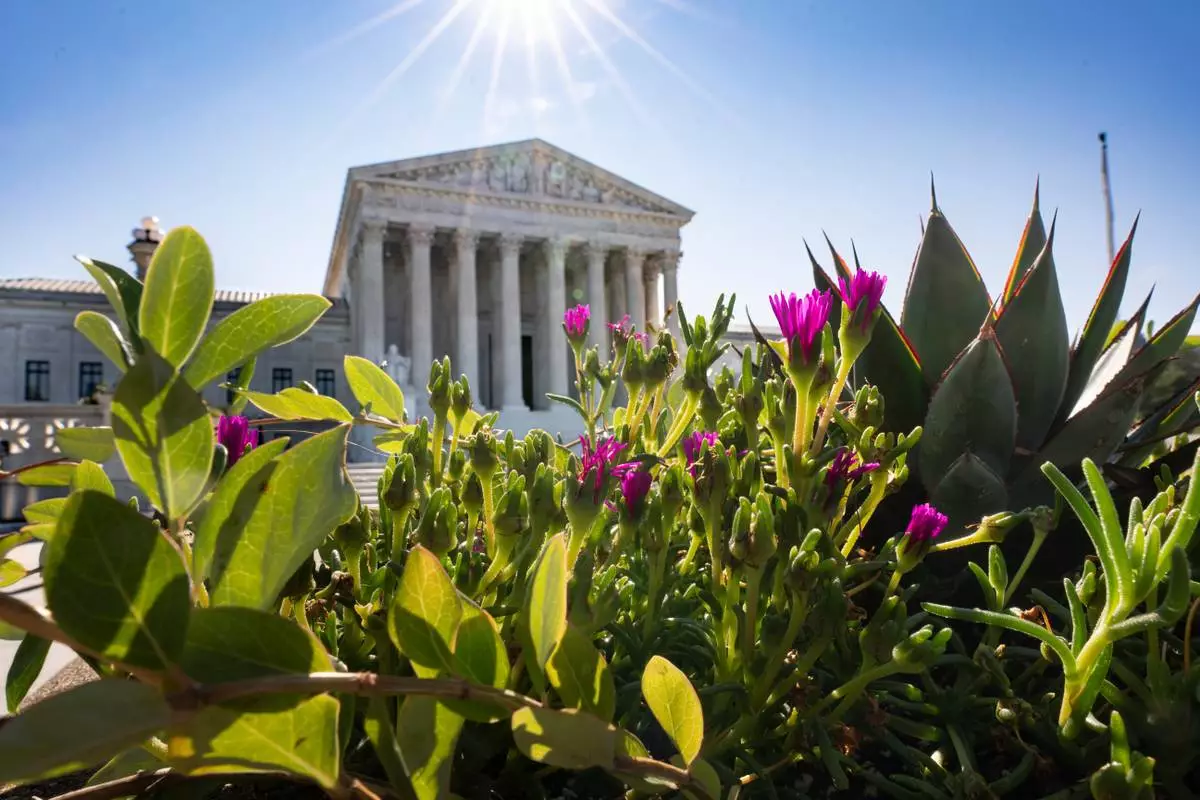
FILE - The Supreme Court is seen on Capitol Hill in Washington, Aug. 25, 2026. (AP Photo/J. Scott Applewhite, file)