LOS ANGELES (AP) — The Los Angeles Sparks fired coach Lynne Roberts on Friday, a day after her team missed the playoffs for the second straight year under her leadership.
Roberts was hired in 2024 and the Sparks went 37-51 in her two seasons in charge of the team.
“We are grateful to Lynne for the commitment and determination she brought to the role, which was evident all the way through our last game last night” Sparks special advisor Farhan Zaidi said. “Lynne has cared deeply about our organization and for our players and their development. We sincerely thank her for everything she has invested in the Sparks and wish her and her family the best moving forward.”
The Sparks had a solid squad coming into this season with Kelsey Plum and Nneka Ogwumike leading the way along with Cameron Brink. Plum was hurt in the early part of the season and then traded to Phoenix. Ogwumike was solid all year long, but announced this would be her last season playing in the WNBA and retired after Thursday's loss to Golden State.
The Sparks will rebuild around Brink and two potential lottery draft picks. The team has a new general manager in Ariana Andonian, who was hired last month to replace Raegan Pebley.
Speaking Thursday about her time in Los Angeles, Roberts said: “I think we’ve had two tough years of injuries, and I’m not trying to blame anything on that, it’s just the reality. There has been a lot of change. Our president’s been here ... four months. So just again, so much change.”
See AP’s full WNBA coverage here

Los Angeles Sparks head coach Lynne Roberts calls out to players during the first half of an WNBA basketball game between the Las Vegas Aces and the Los Angeles Sparks Tuesday, Sept. 22, 2026, in Las Vegas. (Steve Marcus/Las Vegas Sun via AP)
HILO, Hawaii (AP) — Residents on Hawaii's Big Island were bracing Friday for potentially life-threatening and catastrophic flooding from Hurricane Nolo, while Mexico was still under the threat of Hurricane Polo as it headed toward the Baja Peninsula after bringing storm conditions to the southwestern coast.
Nolo was about 185 miles (298 kilometers) south of the Big Island on Friday morning and headed northeast, with tropical storm conditions expected to begin on land in the evening, the U.S. National Hurricane Center said. It was expected to take a turn west Saturday and avoid directly hitting the islands.
Forecasters warned eastern and southern areas of the island could see rainfall totals of 10 to 15 inches (25 to 38 centimeters), with a maximum of 25 inches (64 centimeters). That was down from an earlier forecast of 15 to 30 inches (38 to 76 centimeters), with a maximum of 35 inches (89 centimeters). Wind gusts on land could hit 50 mph (80 kph).
Nolo was expected to strengthen to a major hurricane on Saturday.
“People are going to want to kind of shelter in place on the Big Island, be in their safe place, certainly by later today, tonight, well into Saturday," Michael Brennan, director of the National Hurricane Center, said Friday. “Don’t venture out if you don’t have to into the dangerous flooding environment, but also high winds. We can have trees and power lines down.”
Heavy rainfall also was possible on Hawaii's other islands, the hurricane center said. Maui also could see heavy rainfall and potential life-threatening flooding and mudslides, forecasters said.
The hurricane's maximum sustained winds were 85 mph (137 kph) on Friday morning and were expected to increase into the weekend.
Hawaii officials told residents to put together emergency kits and the governor issued an emergency proclamation, activating more than 230 Hawaii National Guard members. Schools were closed.
Hawaii County officials on the Big Island were urging residents in flood-prone areas to consider taking refuge at shelters being set up or other locations. Authorities said sand for sandbags was publicly available at several locations.
“We encourage everyone to complete their preparations, stay connected to official alerts and weather updates, and secure safe shelter before flooding strikes,” Mayor Kimo Alameda said in a statement.
The heaviest rain from Nolo is likely to fall over the same southeastern region of the Big Island that was hit in August by Hurricane Lala and where grounds are still wet from additional precipitation. The storm surge could hit 1 to 3 feet (30 to 91 centimeters), creating large and dangerous waves and coastal flooding, the hurricane center said.
Hawaiian Electric, the state’s primary utility, said crews that had been helping restore power in Kauai after this month’s Hurricane Lowell would return to Oahu, Maui and the Big Island in preparation for the coming storm.
Residents and tourists on the Big Island were busy preparing.
“I guess that’d be my concern — whether we’re getting out of here or not, but, you know, as far as the weather goes, it is what it is," said Daniel Compton, who was visiting from Seattle.
Hawaii Gov. Josh Green has requested an emergency disaster declaration for four Hawaii counties.
The hurricane center said Polo gained significant force overnight into Friday morning as it brought storm conditions to parts of the western Mexico coast. The latest estimated sustained winds were 180 mph (290 kph). Its center was far from land over the ocean and headed west, but it is expected to turn north and hit the Baja California Peninsula late Sunday into Monday, the center said.
No major damage or flooding was reported along the coast overnight into Friday.
Residents stacked sandbags to fortify beachfront shops and evacuated their homes in some coastal areas on Thursday. Mexican authorities opened shelters and cleared people from beaches, and 15,000 security personnel were deployed across the coast. Schools were closed.
In the port city of Lázaro Cárdenas in Michoacán, seawater swept through homes and left wooden planks and furniture strewn on the streets. Locals and government officials were clearing debris and shoveling thick mud coating much of the town.
Alicia Contreras said the walls and roof of her restaurant had been severely damaged by 15-foot (4.5-meter) waves. As officers and family helped pick through the damage, Contreras worried about how she would recover economically.
“This is huge because we have no other source of income. Now we’re just surviving,” Contreras said.
Brennan said some moisture associated with Polo will be pushed into parts of the southwestern U.S. by Monday, possibly producing scattered flash flooding in the Four Corners region, particularly portions of Arizona and New Mexico.
El Niño is prompting major environmental shifts across the world, fueling drought in some areas and flooding in others. It traditionally dampens the Atlantic hurricane season, while it tends to rev up tropical cyclone activity in the Pacific with moist air and little wind shear.
A third storm in the Pacific, Hurricane Odalys, was at Category 4 status and was still far from land, roughly 955 miles (1,537 kilometers) west-southwest of the southern tip of the Baja California peninsula.
Two other powerful storms were churning in the Atlantic Ocean, but were not near land.
In the northern Atlantic, Tropical Storm Fay re-formed early Thursday. As of Friday, it was about 1,040 miles (1,674 kilometers) west-southwest of the Azores, the hurricane center said. Off Africa's western coast, Tropical Storm Gonzalo strengthened early Friday as it approached the Cabo Verde Islands.
Associated Press writers Dave Collins in Hartford, Connecticut; Gabriela Aoun Angueira in San Diego; and Kathy McCormack in Concord, New Hampshire, contributed to this report.
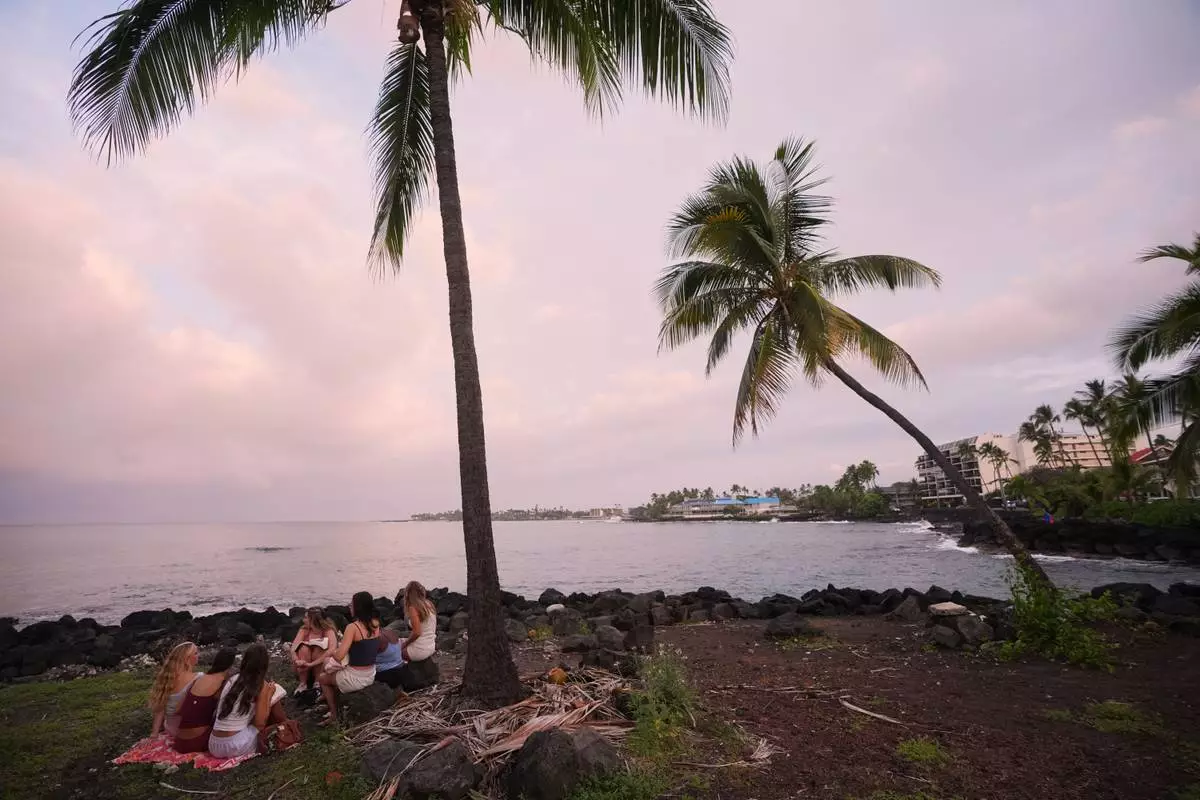
Members of Youth With A Mission read under a palm tree as Hurricane Nolo sits nearby Friday, Sept. 25, 2026, in Kona, Hawaii. (AP Photo/Gregory Bull)
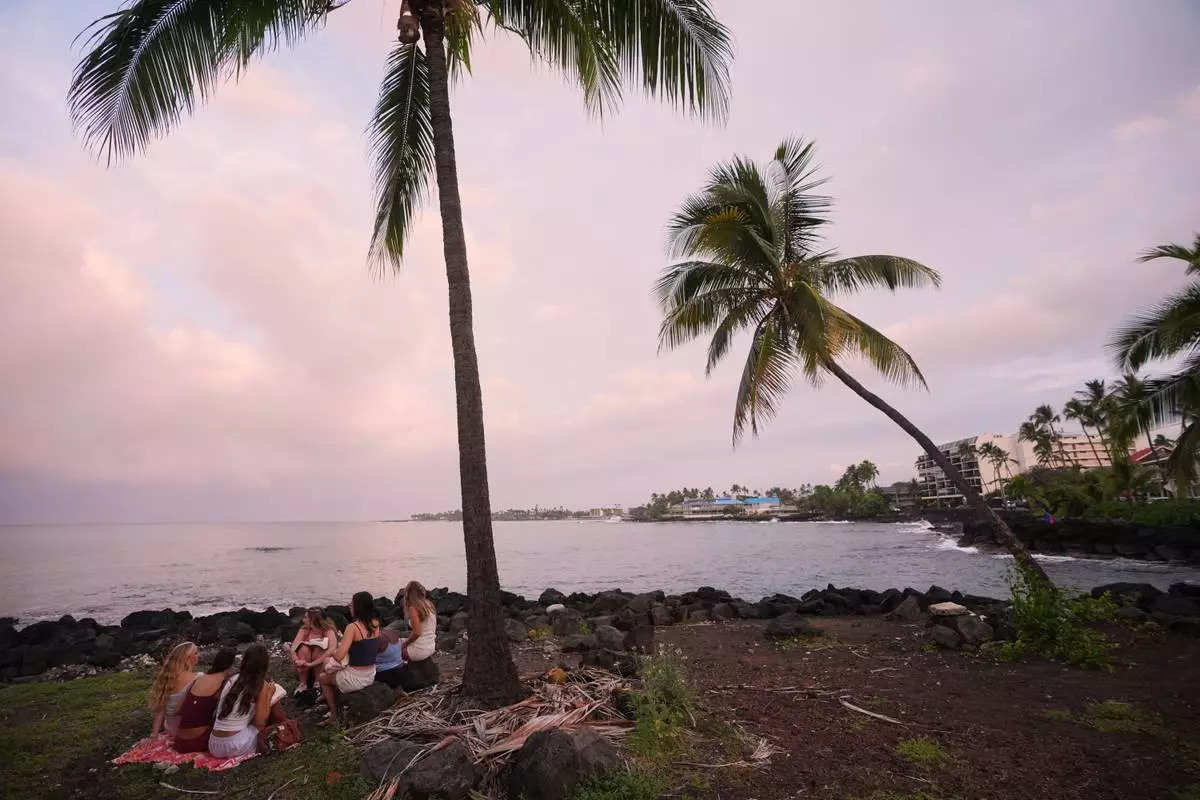
Members of Youth With A Mission read under a palm tree as Hurricane Nolo sits nearby Friday, Sept. 25, 2026, in Kona, Hawaii. (AP Photo/Gregory Bull)
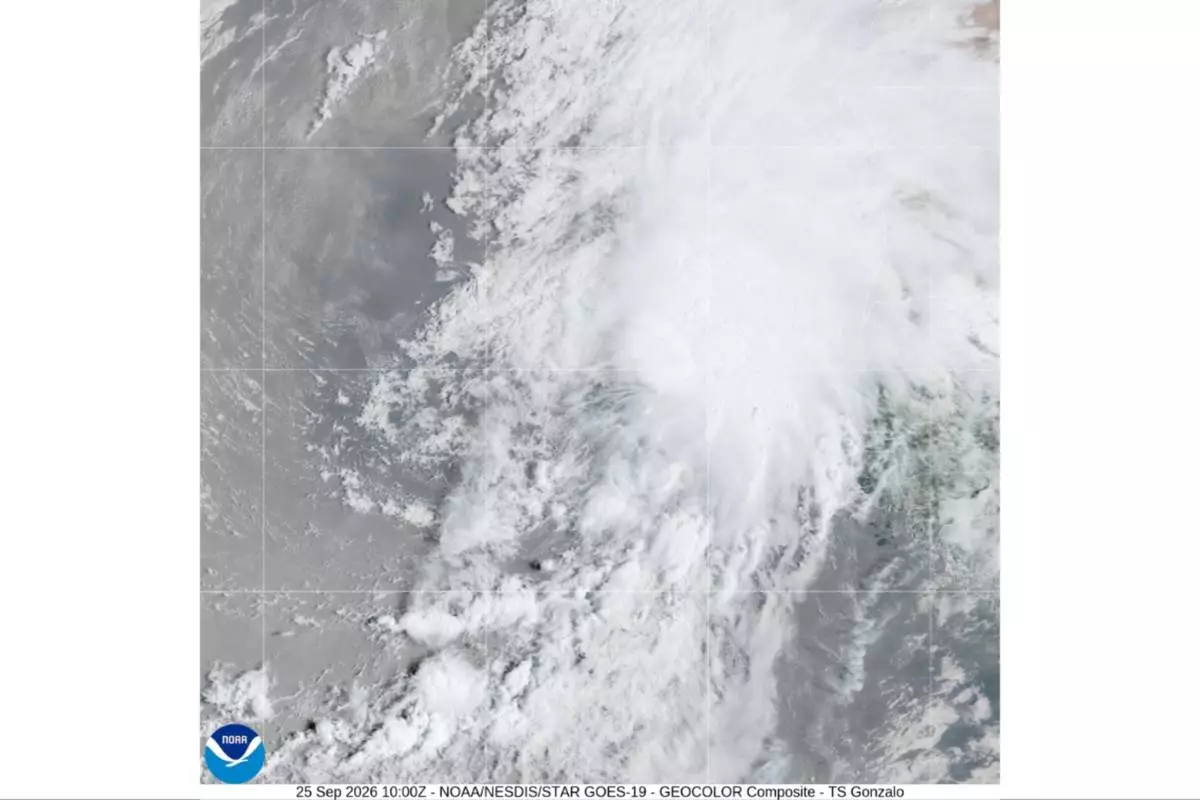
This satellite image from the National Oceanic and Atmospheric Administration shows Tropical Storm Gonzalo in the Atlantic Ocean, Friday, Sept. 25, 2026. (NOAA via AP)
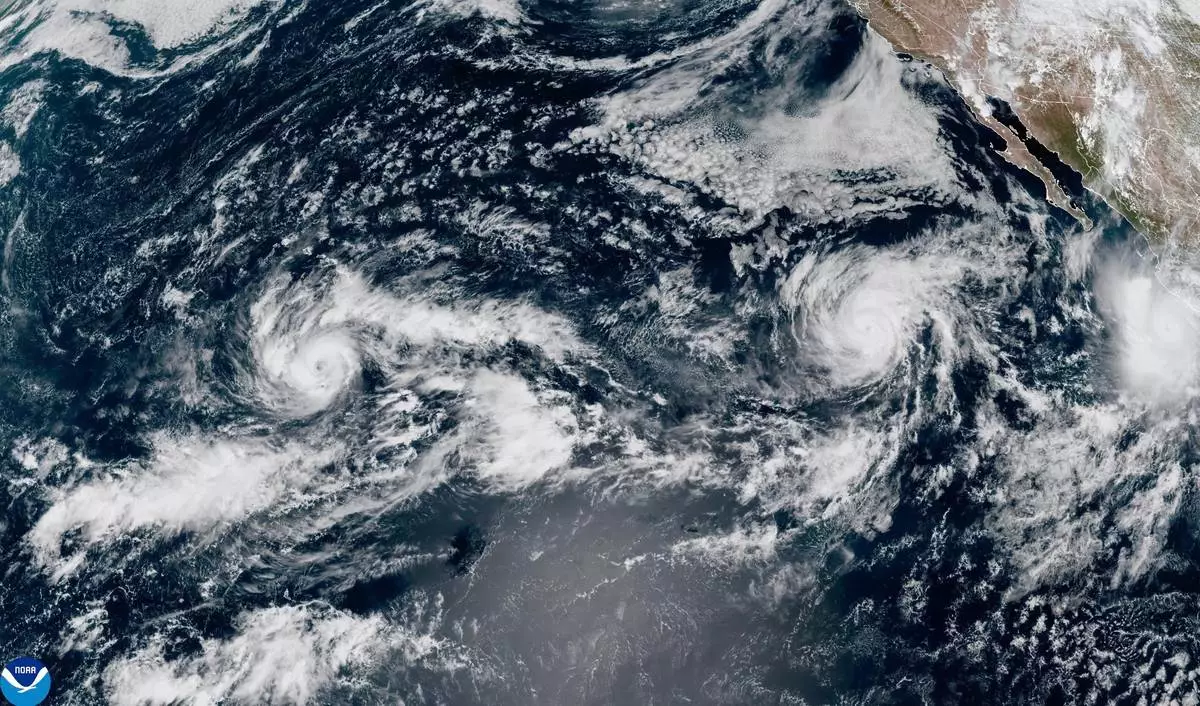
This satellite image provided by NOAA shows Tropical Storm Nolo, left, south of Hawaii; Hurricane Odalys, middle, and Hurricane Polo, right, off the coast of Mexico, in the Pacific Ocean on Thursday, Sept. 24, 2026. (NOAA via AP)
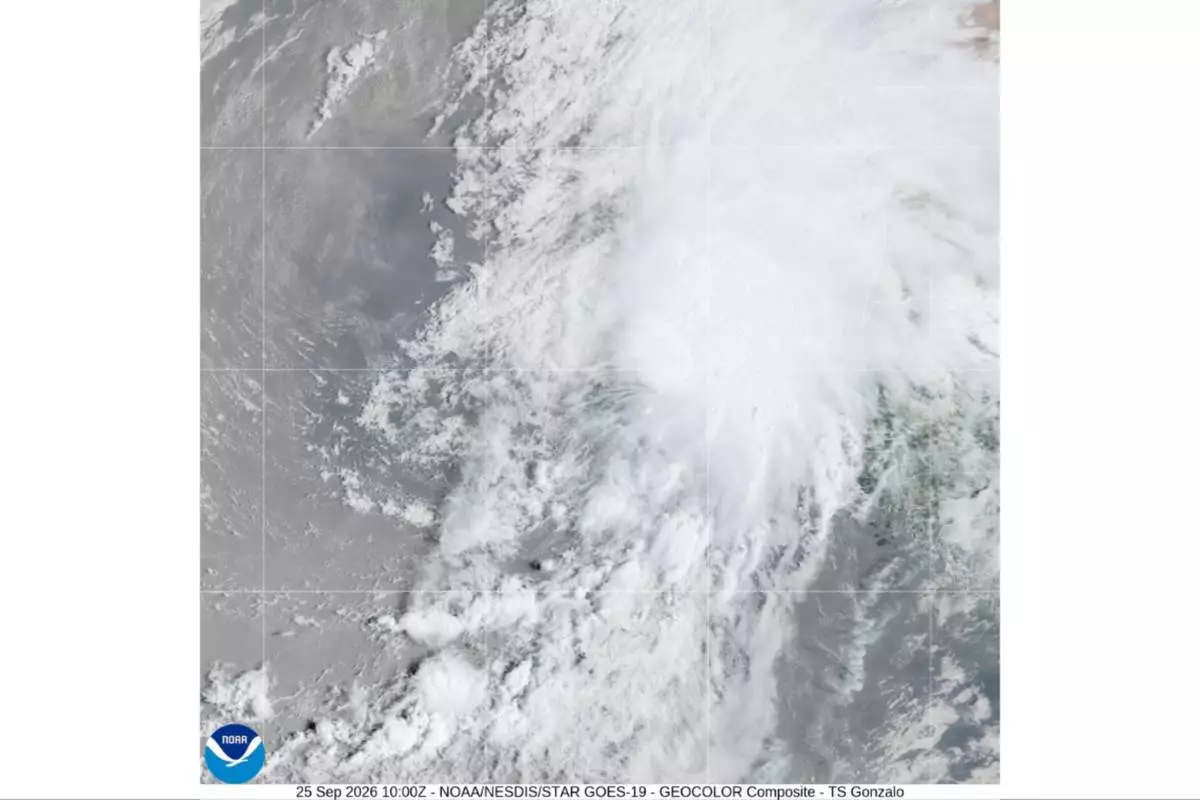
This satellite image from the National Oceanic and Atmospheric Administration shows Tropical Storm Gonzalo in the Atlantic Ocean, Friday, Sept. 25, 2026. (NOAA via AP)
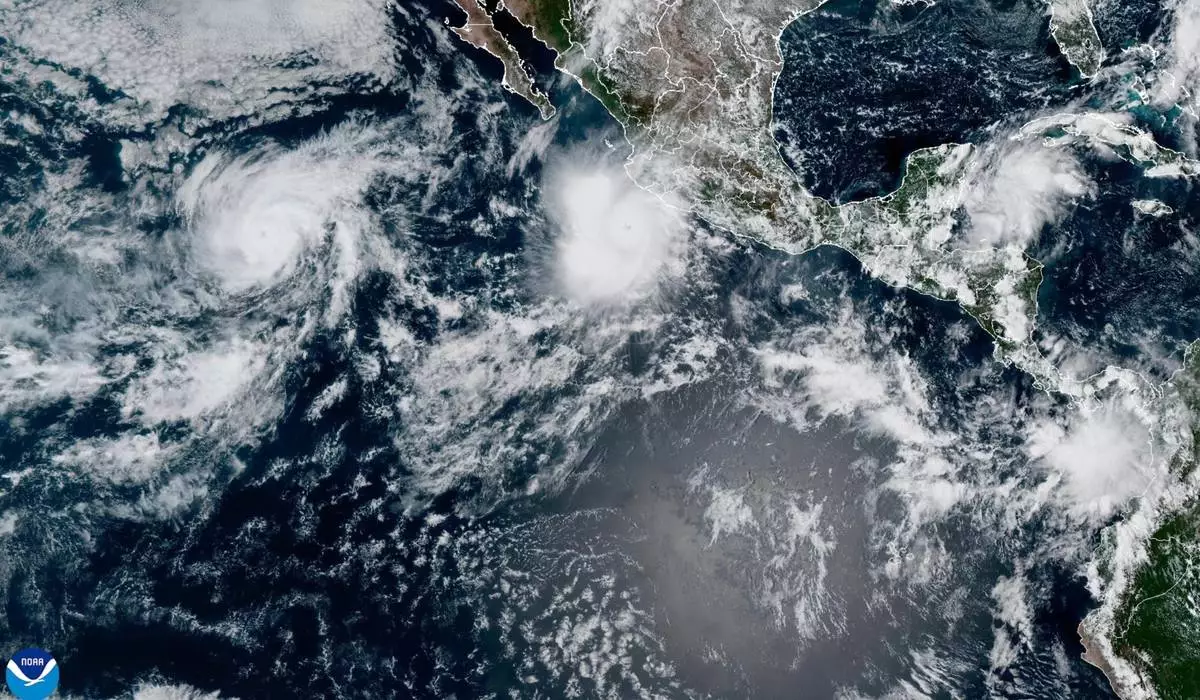
This satellite image provided by NOAA shows Hurricane Polo off the southwestern coast of Mexico and Hurricane Odalys, left, on Thursday, Sept. 24, 2026. (NOAA via AP) CORRECTION: Changes to Hurricane Odalys, not Tropical Storm Nolo.
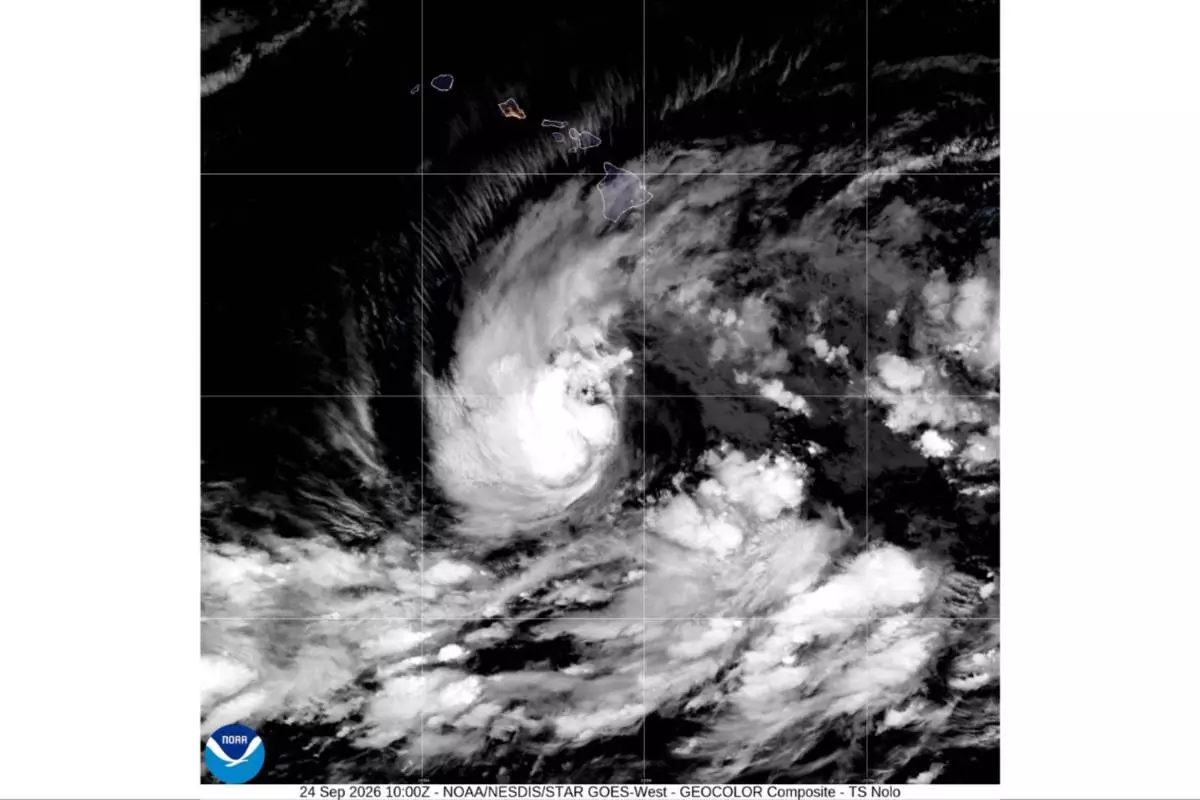
This satellite image from the National Oceanic and Atmospheric Administration shows Tropical Storm Nolo in the Pacific Ocean, Thursday, Sept. 24, 2026. (NOAA via AP)
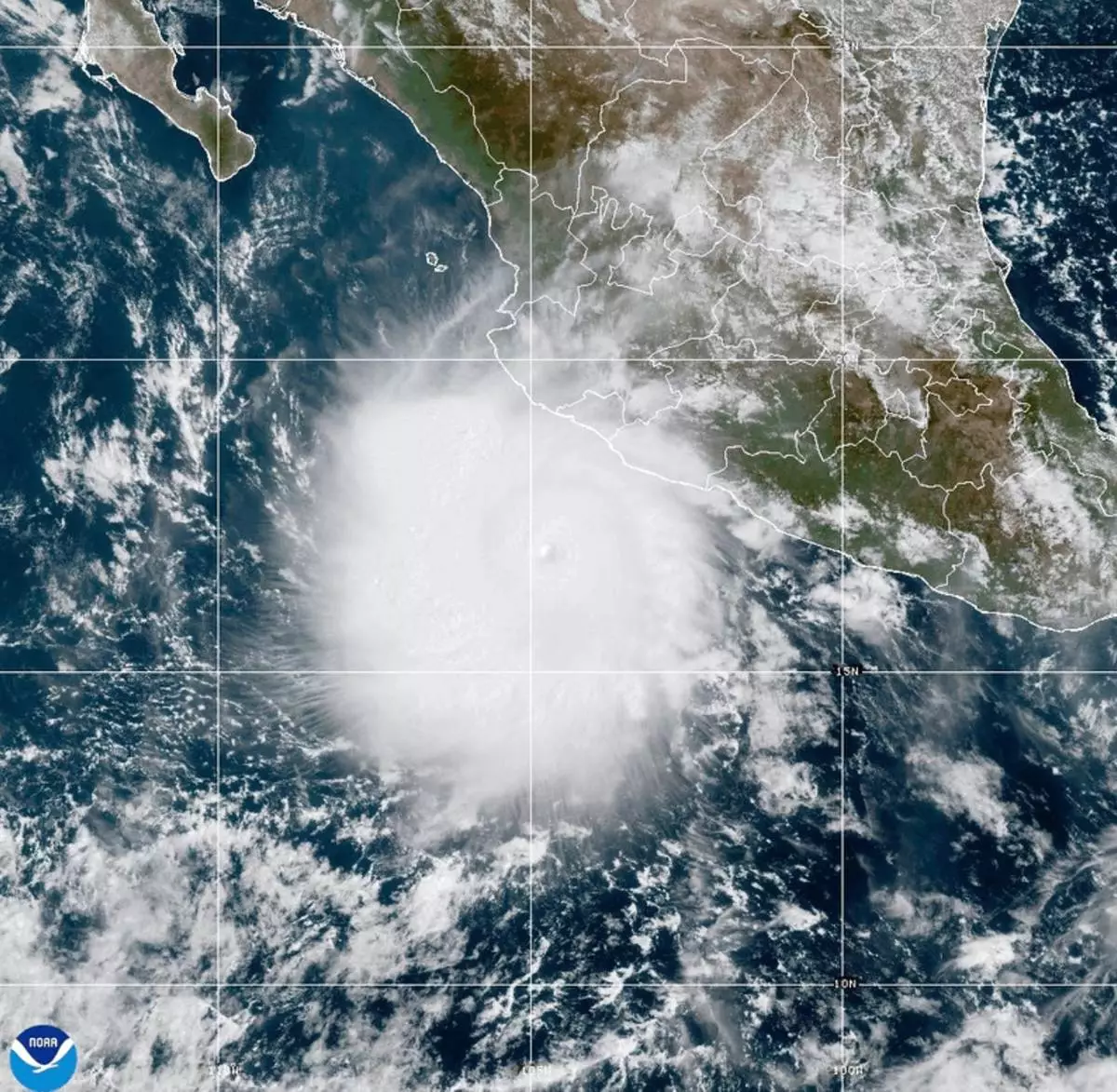
This photo provided by NOAA shows Hurricane Polo moving away from the southwestern coast of Mexico on Thursday, Sept. 24, 2026. (NOAA via AP)
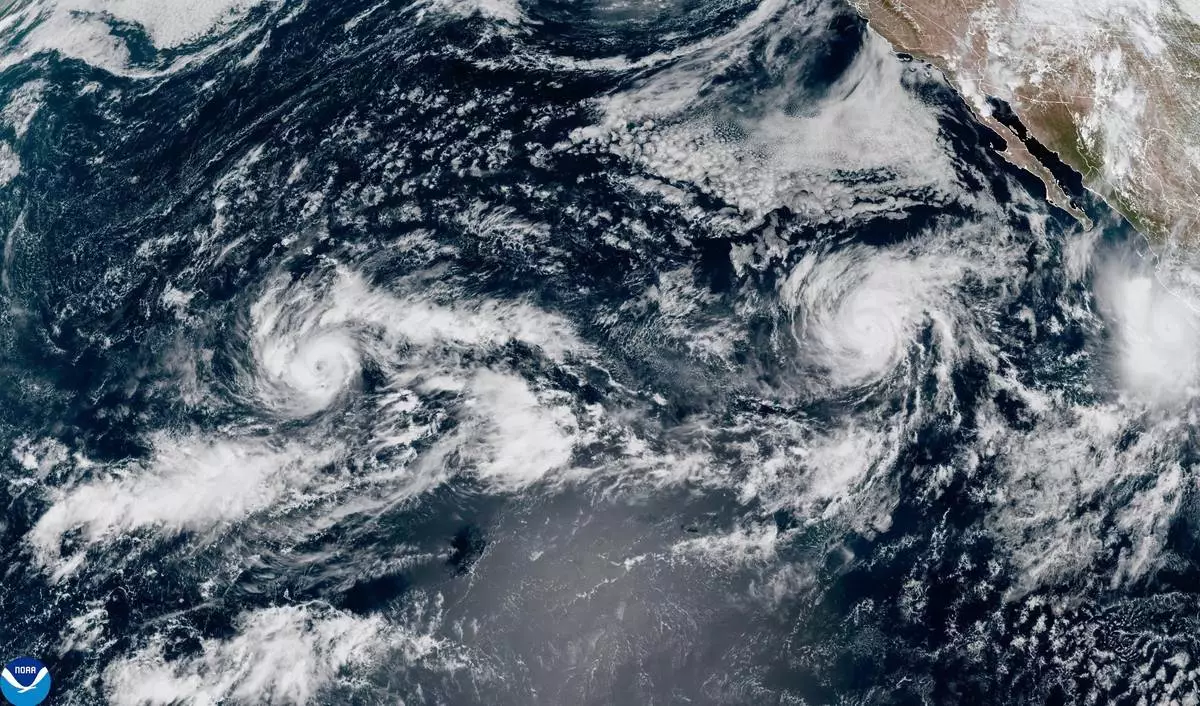
This satellite image provided by NOAA shows Tropical Storm Nolo, left, south of Hawaii; Hurricane Odalys, middle, and Hurricane Polo, right, off the coast of Mexico, in the Pacific Ocean on Thursday, Sept. 24, 2026. (NOAA via AP)