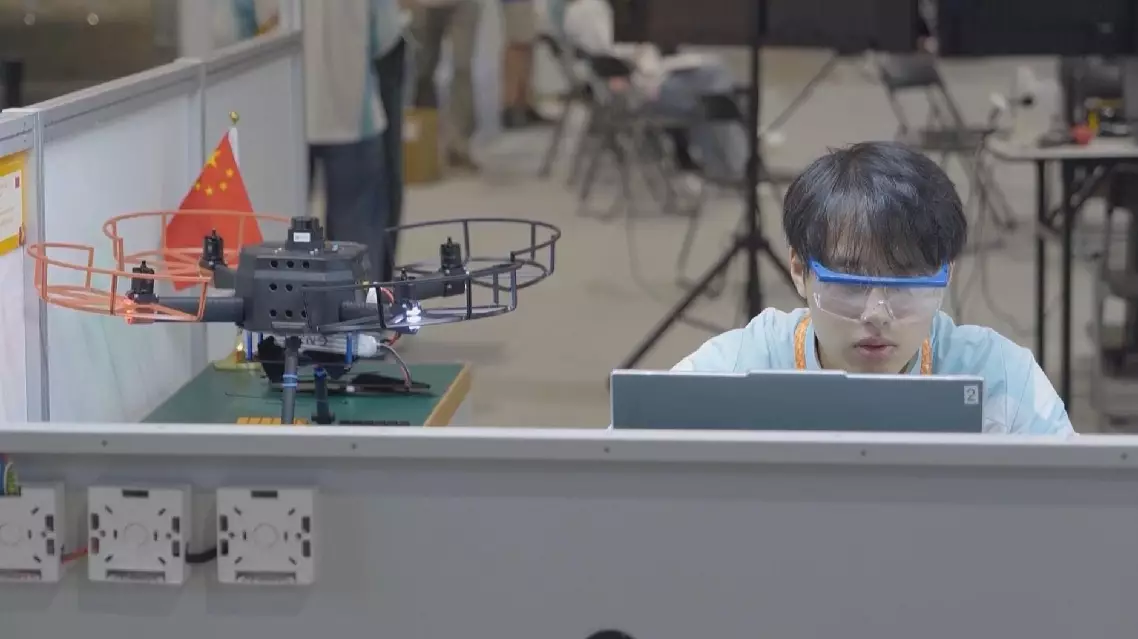
A series of cutting-edge Chinese digital technology applications are stealing the spotlight at the ongoing fifth Global Digital Trade Expo, showcasing fresh possibilities for global cooperation in artificial intelligence (AI).
The fifth expo, an event dedicated to promoting digital trade and industrial cooperation, is being held from Sept. 23 to 27 in Hangzhou City of east China's Zhejiang Province.
China's intelligent meteorological early warning solution "Mazu" was on display in the themed exhibition area of this year's Expo. The Mazu Fengyun Satellite AI Toolbox is the core computing power product for localized deployment of the solution. A single set of equipment can complete the entire process from satellite data collection to disaster early-warning output, while adapting to diverse usage scenarios worldwide. As one of the core events of this year's Expo, the "African Digital Trade Day" hosted a special presentation on the Mazu solution, promoting its further implementation in Africa.
"[We have to] to start utilizing this technology moving forward with these early warning technologies, to warn our people and to prepare ourselves accordingly. We're talking about smart cities, we're talking about smart agriculture," said Emmanuel Mutisya, Chairperson of the University Council of the Kenya Advanced Institute of Science and Technology.
The "Three-Body Computing Constellation," once again appearing at the Expo, is a thousand-satellite-scale space computing infrastructure initiated by Zhejiang Lab and jointly built by global partners. To date, it has 16 satellites in orbit, with a total computing power of 5.8P and 25 in-orbit AI models, making it the largest known space computing constellation in terms of computing power globally.
"Relying on the Three-Body Computing Constellation, we integrate data, models, and space computing power into an international public science and technology product, lowering the threshold for space research in developing countries," said Li Chao, chief technology engineer of the Three-Body Computing Constellation.
In addition, the space AI infrastructure "Lingjing Constellation" made its global debut at this year's Expo. The project, jointly developed by China Aerospace Science and Technology Corporation and Zhejiang Province, plans to launch its first batch of nine satellites in the first half of 2027 and ultimately complete a thousand-satellite network. Once completed, the constellation will enable in-orbit perception, computing, and decision-making by satellites, breaking through the bottlenecks of traditional satellite-to-ground transmission, and will further expand the international sharing and services of space computing power in the future.
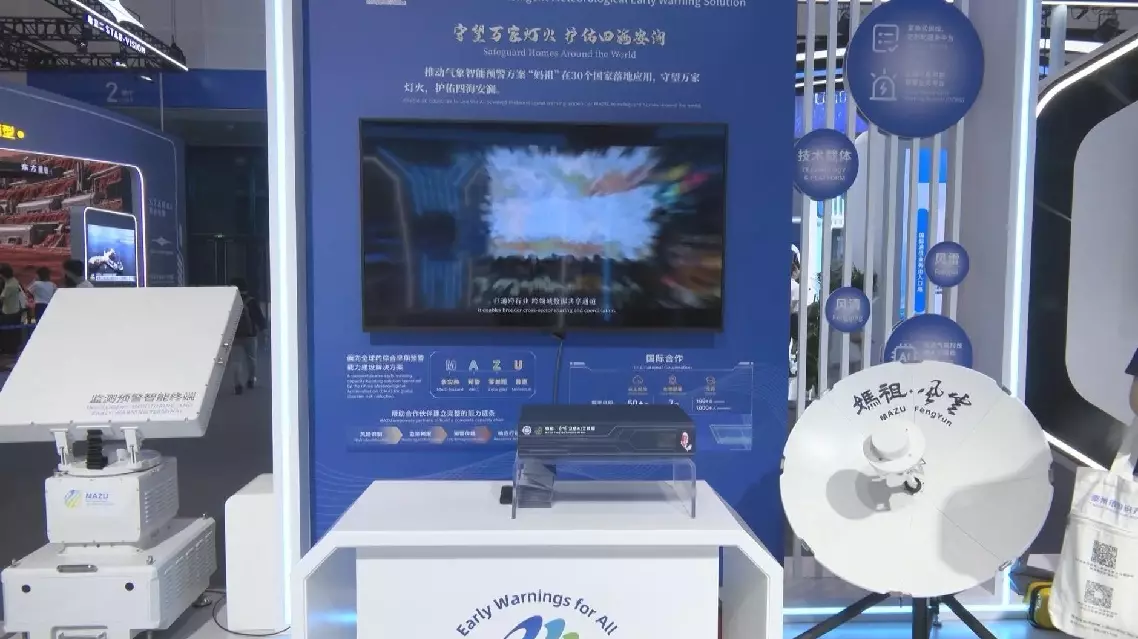
Cutting-edge AI applications take center stage at Digital Trade Expo in Hangzhou