BADEN-BADEN, Germany (AP) — Munich will bid to bring the Olympics back to Germany for the first time in more than 60 years after seeing off a rival bid from Cologne to become the focus of the country's push to host a Summer Games.
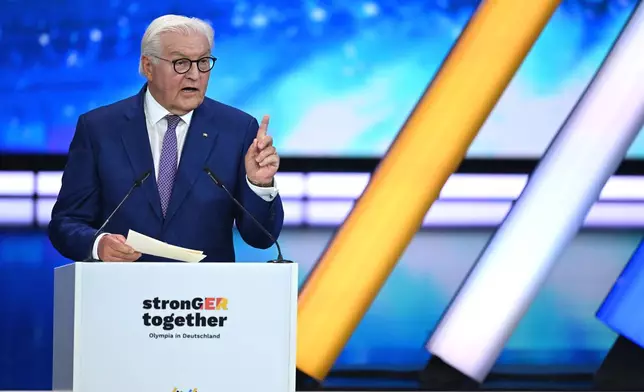
German President Frank-Walter Steinmeier announced Munich as the selection at a glitzy event hosted by the German Olympic Sports Confederation on Saturday. He said it was a “huge opportunity for the whole of Germany.”
Click to Gallery
From left, Olympic weightlifting champion Matthias Steiner, Olympic dressage champion Isabell Werth, Olympic rhythmic gymnastics champion Darja Varfolomeev, Paralympian shot putter Niko Kappel and host Esther Sedlaczek speak on stage at the extraordinary DOSB General Assembly to select Germany's Olympic bid for 2036, 2040, or 2044, in Baden-Baden, Germany, Saturday Sept. 26, 2026. (Marijan Murat/dpa via AP)
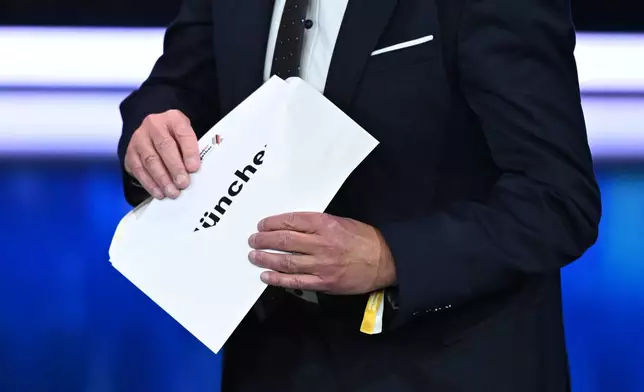
Thomas Weikert, President of the German Olympic Sports Confederation (DOSB), opens the envelope on stage at the extraordinary DOSB General Assembly to select Germany's Olympic bid for 2036, 2040, or 2044, in Baden-Baden, Germany, Saturday Sept. 26, 2026. Munich is Germany's candidate city. (Marijan Murat/dpa via AP)
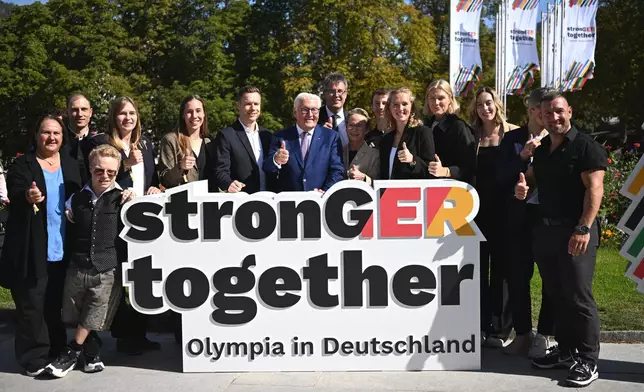
Germany's President Frank-Walter Steinmeier, center, with politicians and athletes pose for the media at the extraordinary DOSB General Assembly to select Germany's Olympic bid for 2036, 2040, or 2044, in Baden-Baden, Germany, Saturday Sept. 26, 2026. (Marijan Murat/dpa via AP)
From left, Olympic weightlifting champion Matthias Steiner, Olympic dressage champion Isabell Werth, Olympic rhythmic gymnastics champion Darja Varfolomeev, Paralympian shot putter Niko Kappel and host Esther Sedlaczek speak on stage at the extraordinary DOSB General Assembly to select Germany's Olympic bid for 2036, 2040, or 2044, in Baden-Baden, Germany, Saturday Sept. 26, 2026. (Marijan Murat/dpa via AP)
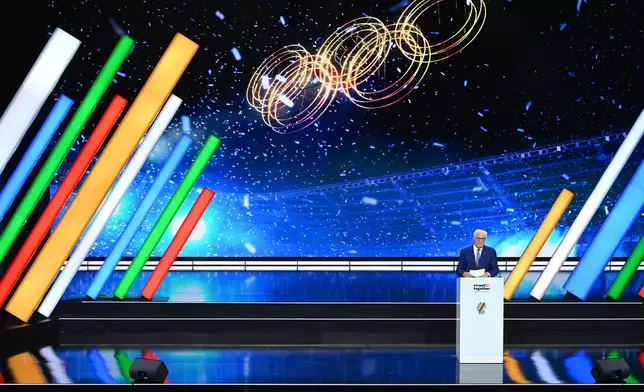
Germany's President Frank-Walter Steinmeier speaks at the extraordinary DOSB General Assembly to select Germany's Olympic bid for 2036, 2040, or 2044, in Baden-Baden, Germany, Saturday Sept. 26, 2026. (Marijan Murat/dpa via AP)
Germany's President Frank-Walter Steinmeier speaks at the extraordinary DOSB General Assembly to select Germany's Olympic bid for 2036, 2040, or 2044 in Baden-Baden, Germany, Saturday Sept. 26, 2026. (Marijan Murat/dpa via AP)
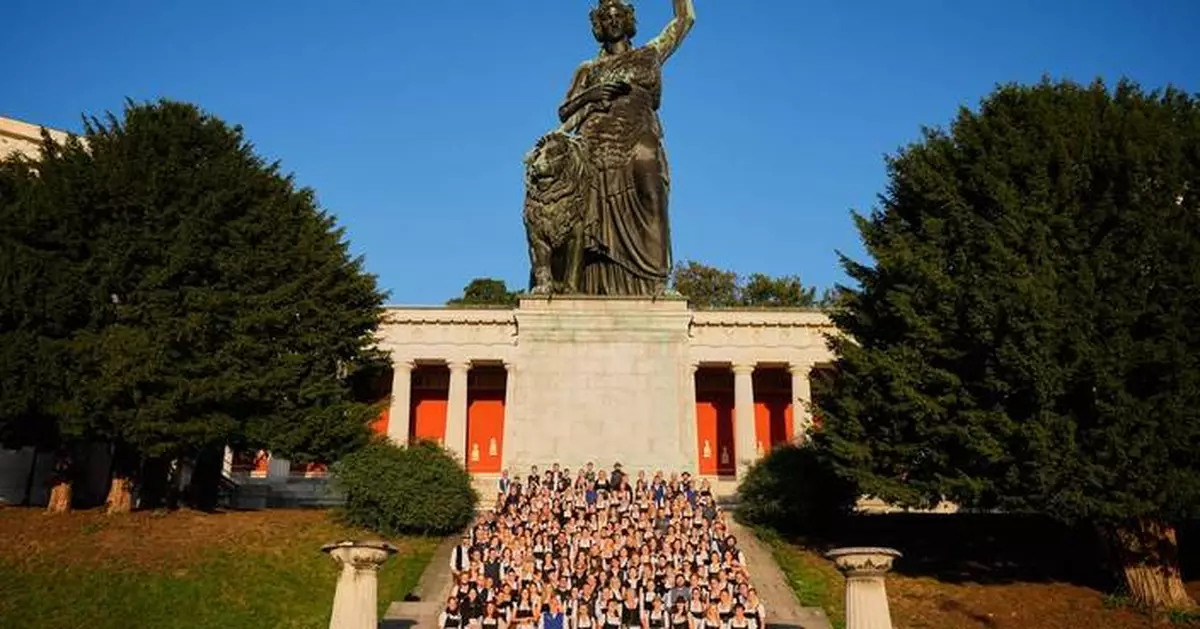
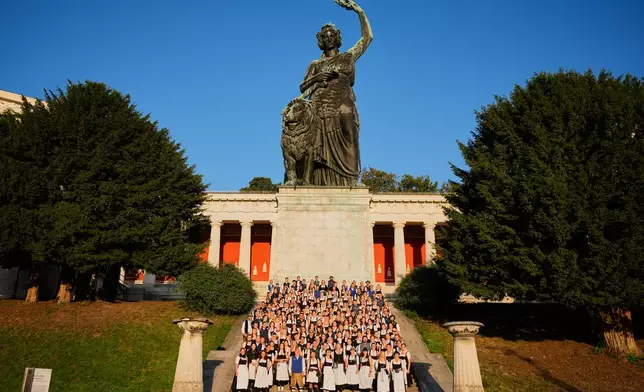
Waitresses pose for a picture prior to the opening of the 191st Oktoberfest beer festival in Munich, Germany, Saturday, Sept.19, 2026. (AP Photo/Matthias Schrader)
With the exception of soccer games in Stuttgart and sailing in the northern city of Kiel, Munich would stage the rest of the Olympic and Paralympic competitions.
Germany hasn't settled on when it wants to host the Games and is targeting a potential event in 2036, 2040 or even 2044.
That would be at least 62 years since the last Olympics in Germany. The 1972 Summer Games in Munich were overshadowed when 11 Israeli athletes were killed by Palestinian militants.
The Munich bid scored top on a German Olympic committee evaluation of the cities' sports facilities and international appeal published Wednesday. It boasted local support after the bid was approved in a referendum by a two-thirds majority last year.
The Cologne-based bid would have spread venues through 15 towns and cities across the western region of North Rhine-Westphalia, including several in the post-industrial landscape of the Ruhr valley.
Berlin withdrew its bid Thursday after coming a distant third in the evaluation and struggling with a lack of popular backing. Local politicians championing the bid had declined to hold a referendum, and their hopes were dealt a major blow last week when they lost support in local elections won by the Left party, whose local leader opposed the bid. A bid from Hamburg was dropped after it again lost a referendum in May.
The potential for a German bid for 2036 — 100 years since Berlin held the Olympics under Nazi rule — has been controversial. Steinmeier's office indicated to German media earlier this year he'd prefer 2040 or 2044 to avoid the centenary, but since signaled he'd accept a 2036 bid, too.
See full AP coverage of European sports here

Thomas Weikert, President of the German Olympic Sports Confederation (DOSB), opens the envelope on stage at the extraordinary DOSB General Assembly to select Germany's Olympic bid for 2036, 2040, or 2044, in Baden-Baden, Germany, Saturday Sept. 26, 2026. Munich is Germany's candidate city. (Marijan Murat/dpa via AP)
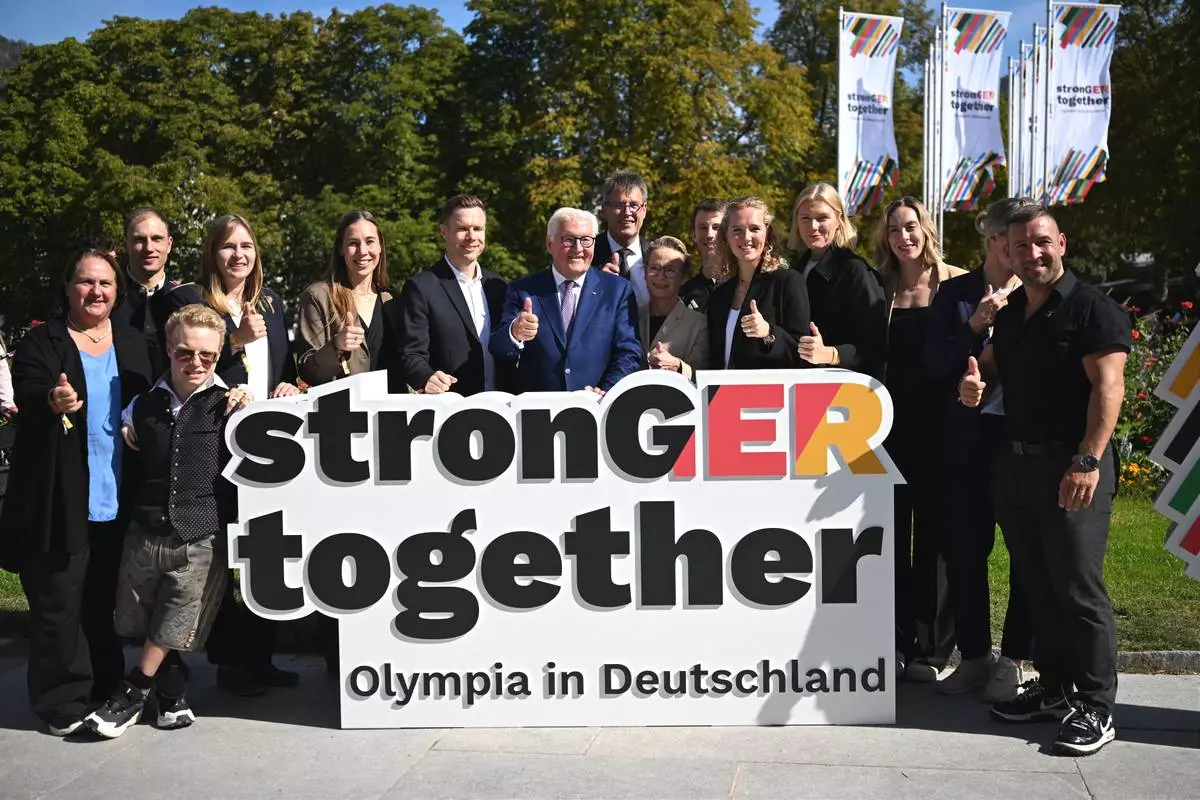
Germany's President Frank-Walter Steinmeier, center, with politicians and athletes pose for the media at the extraordinary DOSB General Assembly to select Germany's Olympic bid for 2036, 2040, or 2044, in Baden-Baden, Germany, Saturday Sept. 26, 2026. (Marijan Murat/dpa via AP)

From left, Olympic weightlifting champion Matthias Steiner, Olympic dressage champion Isabell Werth, Olympic rhythmic gymnastics champion Darja Varfolomeev, Paralympian shot putter Niko Kappel and host Esther Sedlaczek speak on stage at the extraordinary DOSB General Assembly to select Germany's Olympic bid for 2036, 2040, or 2044, in Baden-Baden, Germany, Saturday Sept. 26, 2026. (Marijan Murat/dpa via AP)
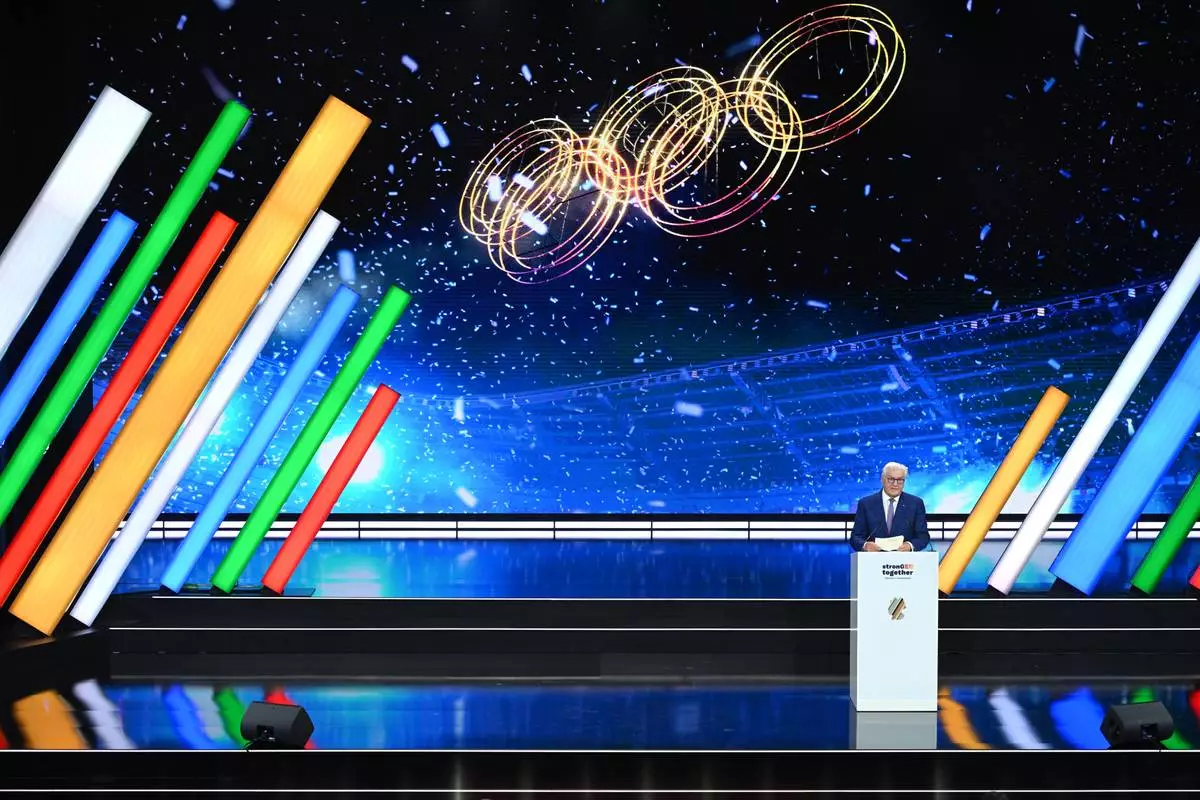
Germany's President Frank-Walter Steinmeier speaks at the extraordinary DOSB General Assembly to select Germany's Olympic bid for 2036, 2040, or 2044, in Baden-Baden, Germany, Saturday Sept. 26, 2026. (Marijan Murat/dpa via AP)
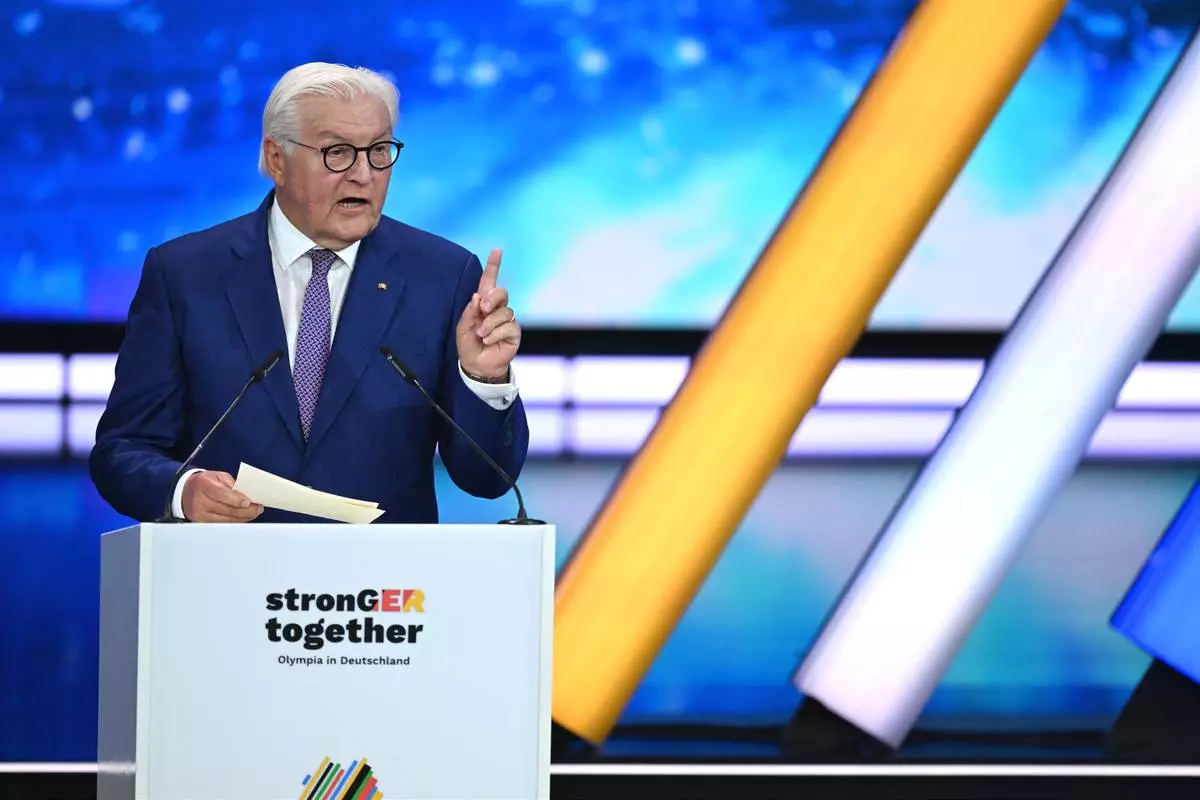
Germany's President Frank-Walter Steinmeier speaks at the extraordinary DOSB General Assembly to select Germany's Olympic bid for 2036, 2040, or 2044 in Baden-Baden, Germany, Saturday Sept. 26, 2026. (Marijan Murat/dpa via AP)
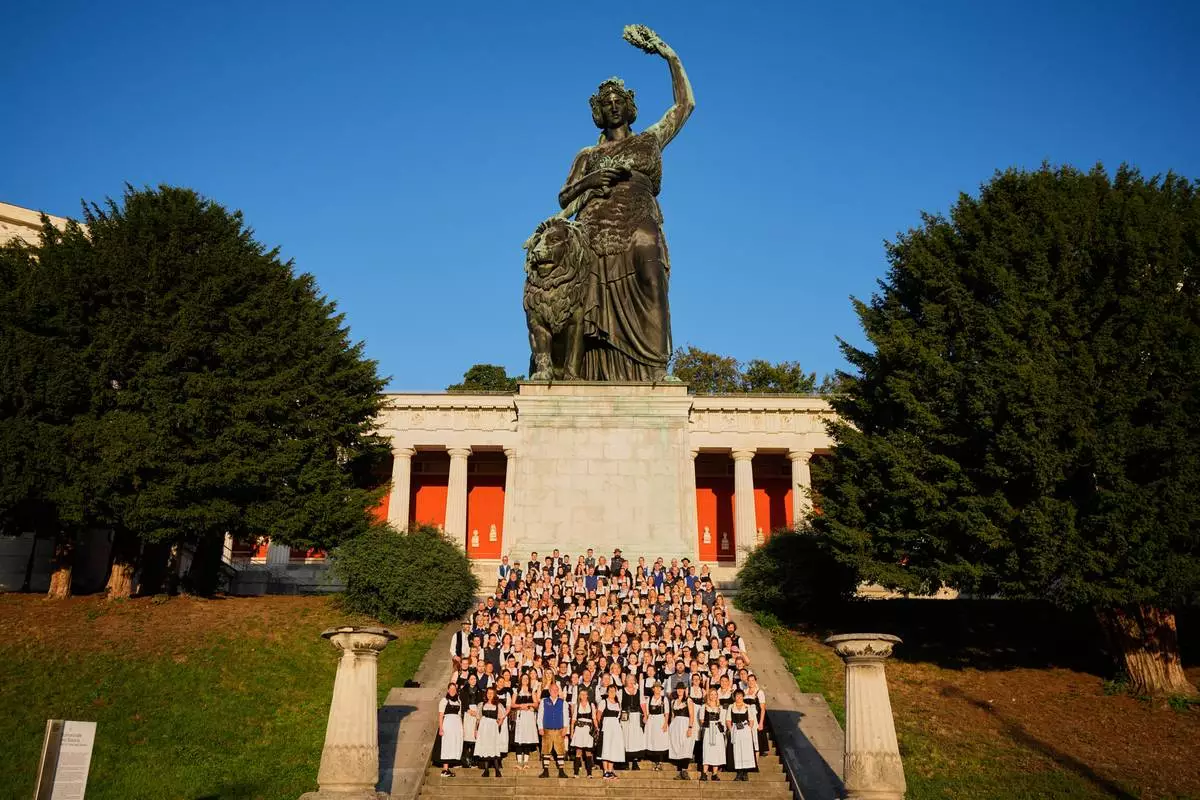
Waitresses pose for a picture prior to the opening of the 191st Oktoberfest beer festival in Munich, Germany, Saturday, Sept.19, 2026. (AP Photo/Matthias Schrader)
PARIS (AP) — Hundreds of thousands of people packed Paris’ iconic Champs-Élysées avenue for Pope Leo XIV’s big outdoor Mass on Saturday, a sign of the Catholic Church’s enduring appeal in the once staunchly Catholic but officially secular country.
The American pope greeted the flag-waving, cheering throngs from his popemobile during a 2-kilometer (1.2-mile) parade along the grand boulevard leading to the Place de la Concorde for Mass, essentially the heart of Paris and a symbol of the French republic.
The Vatican estimated that 700,000 people came out for the Mass — more than the 600,000 who had registered in advance. The stunning turnout testified to the church’s enduring influence in France, despite sharp declines in churchgoing in recent decades and secularizing trends that have emptied churches around Europe.
Although a massive security blanket shut down central Paris to road traffic, the party-like atmosphere drew people of multiple faiths and no faith at all. The fervor spanned generations. People brought dozens of babies and young children from the crowd for Leo to caress on the head as he rode slowly past them aboard the popemobile.
“The message of Pope Leo goes well beyond Catholic people; he speaks about social justice, for example,” said Leontine Joseph, 42, a fervent Catholic who came with two friends of Moroccan origin who grew up in Muslim culture.
Leo has sought to encourage French Catholics to persevere in their faith “even amid the thorns” of a secular world during his four-day visit. It began on Friday with his arrival and prayer at the restored Notre Dame cathedral, the first by a pope since the devastating 2019 fire, and continues with his prayer at the Catholic shrine at Lourdes.
During a visit to the Catholic Institute of Paris on Saturday morning, the pope said he was surprised by the numbers of new converts registered in recent years and grateful for what he said was God’s “unfathomable work” to counter all statistical and sociological analysis.
“We must recognize, welcome and protect the small flame that the Holy Spirit has kindled in the darkness of the night, the tiny seed that strives to grow even amid the thorns,” he said.
The number of adult baptisms in France each year has tripled since 2016, hitting 13,000 this year. But statistics and experts caution that the uptick, which has been recorded also in secular Spain, doesn’t counteract the overall generational trend of children of practicing French Catholics no longer going to Mass or baptizing their babies.
In 1980, there were 513,000 baptisms in France; in 2024, a total of 186,000.
The rivers of people who crammed central Paris and their joyful enthusiasm rivaled other communal but non-religious moments of celebration that marked France in recent decades. Huge crowds celebrated on the Champs-Elysées when France won the soccer World Cup in 1998 and again in 2018.
Many on Saturday didn't identify as Catholics, but came out of interest in the pope's message.
“People are seeing a lot of really terrible images. This kind of event reminds people of what is really important in life," said Thierry Chen, a 40-year-old Parisian startup entrepreneur who is not Catholic. "You see a lot of different people here, so it’s not just about one race, religion or nation, but about a common belief in humankind.”
Sylvane Le Goff, 68, who lives in the Paris region, came with her 10- and 12-year-old grandchildren to “give them unforgettable memories.” Le Goff, who was raised Catholic but is not practicing, said she wanted to open her grandchildren’s minds.
"It’s not only about seeing the pope but it also is about his message of peace and unity, values I’d like to share with them,” she said.
Leo has clearly been impressed by the numbers and enthusiasm of the French, especially at a Friday night vigil that kept the 71-year-old pope out until nearly 11 p.m. after a packed first day.
Some 80,000 young people filled the national stadium north of the French capital for an extravaganza of fireworks and a theatrical retelling of French Catholic history.
“Thank you for your courage! Thank you for your presence,” Leo told the crowd, speaking off the cuff in French. “Thank you for your faith. You are the saints of France!” he said to raucous cheers.
The choice of Place de la Concorde for Saturday's Mass was significant.
Organizers said they chose it because it was the only area in central Paris that could accommodate the hundreds of thousands of people expected to attend. Last week, organizers extended the crowd site because they predicted more.
But the choice of the venue has been criticized by staunch supporters of secularism who argue that the site represents the Republic, and that other places such as the Invalides, a complex of buildings where Pope Benedict XVI celebrated Mass in front of 240,000 people in 2008, would have been more appropriate.
France is a traditionally Catholic country, but adheres to a strict form of secularism in public life based on a 1905 law separating church and state.
The Place de la Concorde was designed at the end of the 18th century and was among the main sites of execution during the French Revolution. Louis XVI and Marie-Antoinette were guillotined there. For many French people, the square embodies the Republic: French presidents traditionally celebrate Bastille Day there.
Leo’s visit to Paris came as a birthday present for Jean-Claude Farnabe, who turned 63 on Saturday and spent the morning securing a spot amid the throngs of people.
A lifelong Catholic, Farnabe attends Mass in the Paris suburb of Suresnes every Sunday, and has recently witnessed a surge in faith.
“There are more and more converts,” he said as he waited for the pope. “Many youngsters are interested in faith and in God. Every Sunday, I see new people, people aged between 25 and 40, who are getting baptized.”
Associated Press religion coverage receives support through the AP’s collaboration with The Conversation US, with funding from Lilly Endowment Inc. The AP is solely responsible for this content.
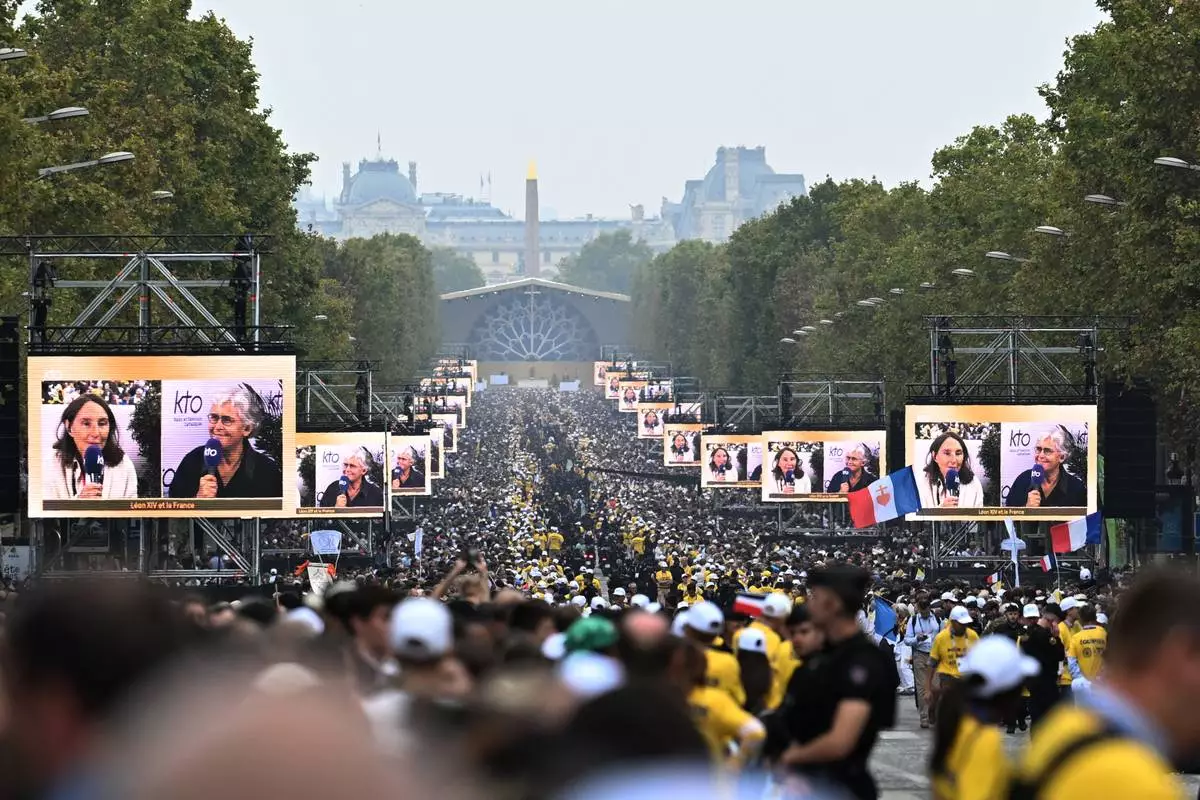
People wait for Pope Leo XIV on the Champs Elysees avenue before a mass at Place de la Concorde in Paris, Saturday, Sept. 26, 2026. (AP Photo/Emma Da Silva)
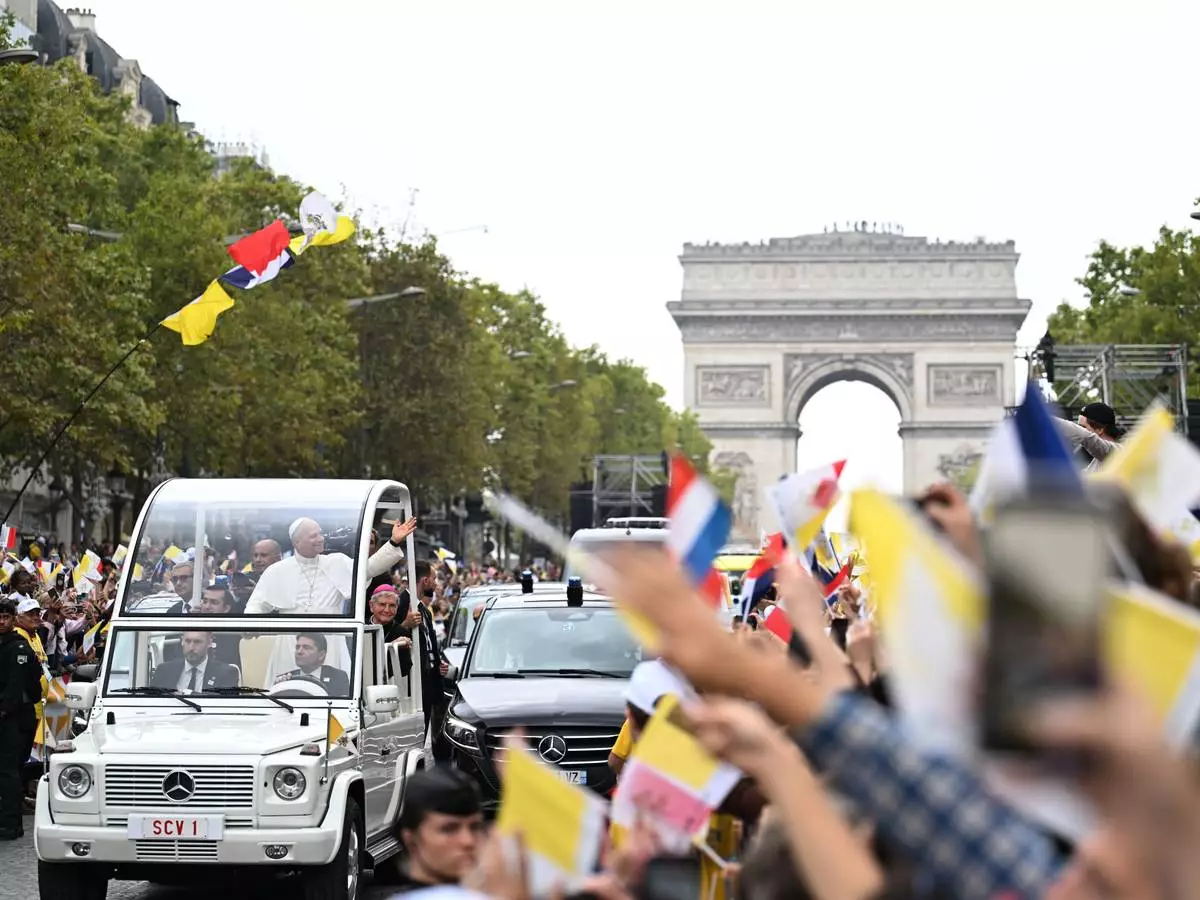
Pope Leo XIV waves to the crowd on the Champs Elysees avenue before a mass at the Place de la Concorde in Paris, Saturday, Sept. 26, 2026. (AP Photo/Emma Da Silva)
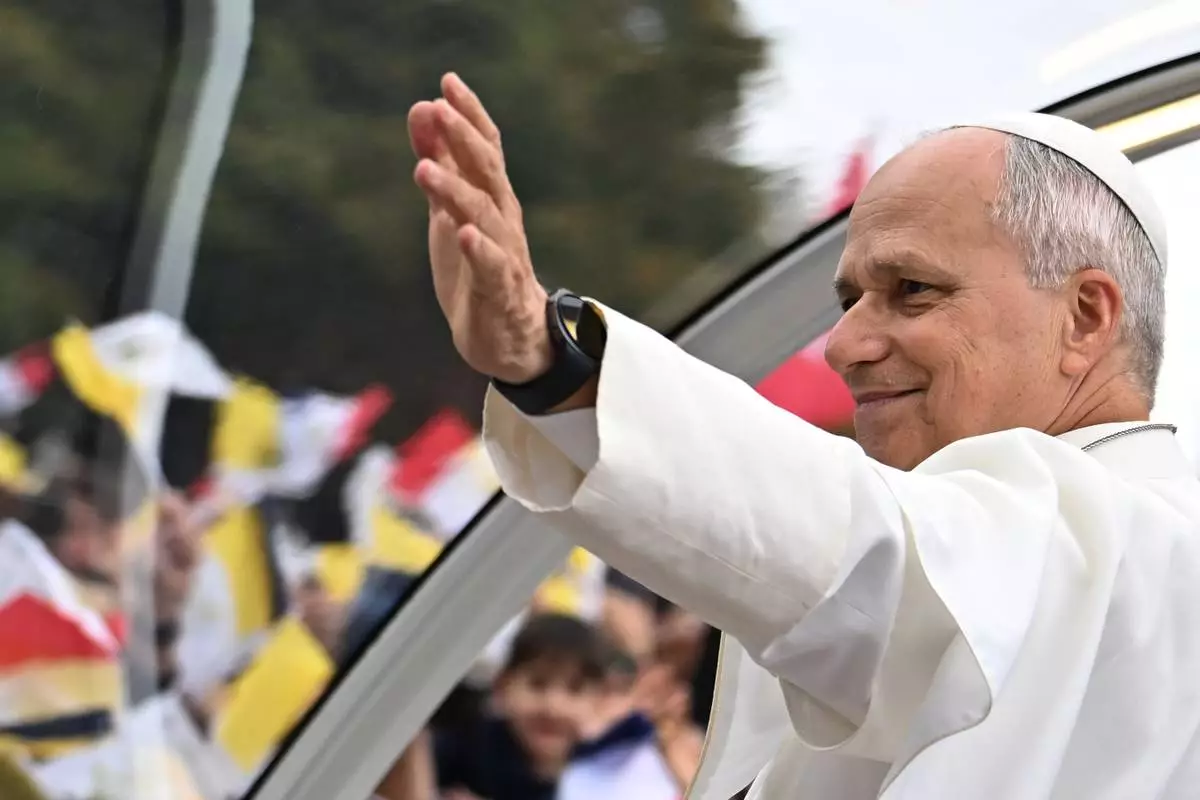
Pope Leo XIV waves to the crowd on the Champs Elysees avenue before a mass at the Place de la Concorde in Paris, Saturday, Sept. 26, 2026. (AP Photo/Emma Da Silva)
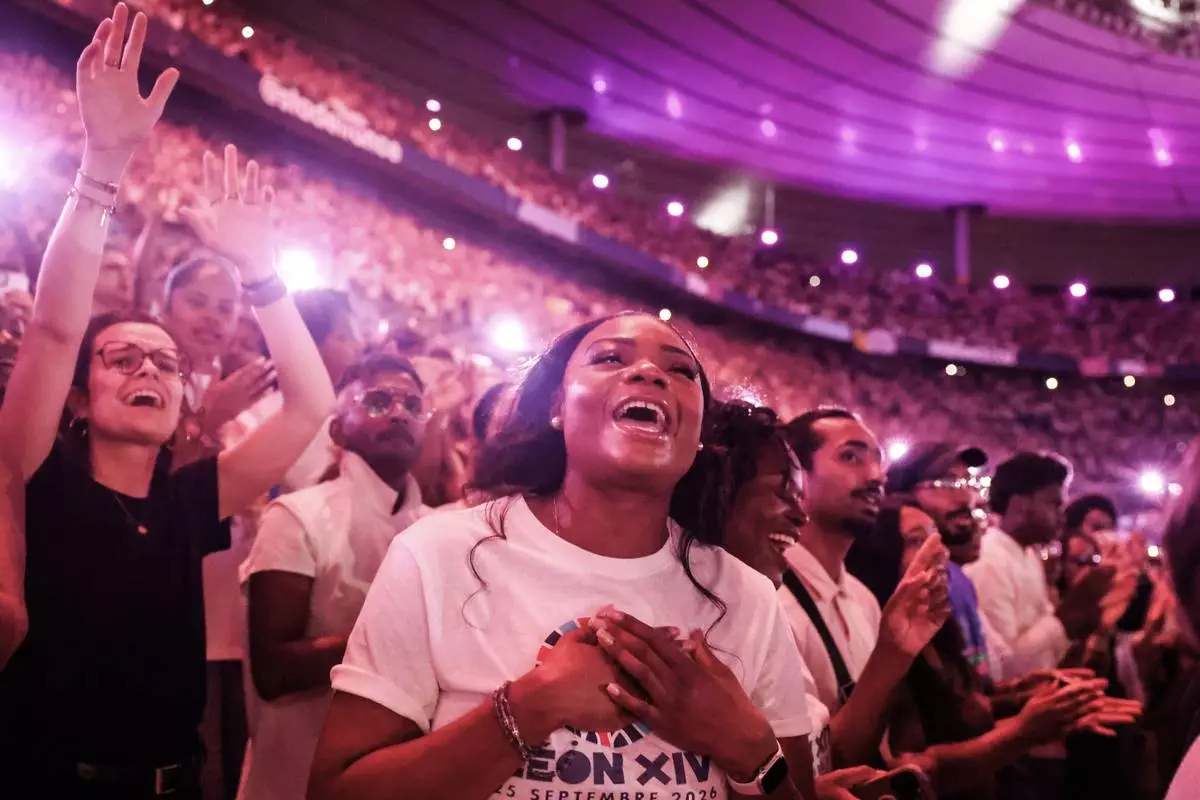
Faithful cheer Pope Leo XIV at the Stade de France in Saint-Denis near Paris during a prayer vigil with young people, Friday, Sept. 25, 2026. (AP Photo/Thomas Padilla)
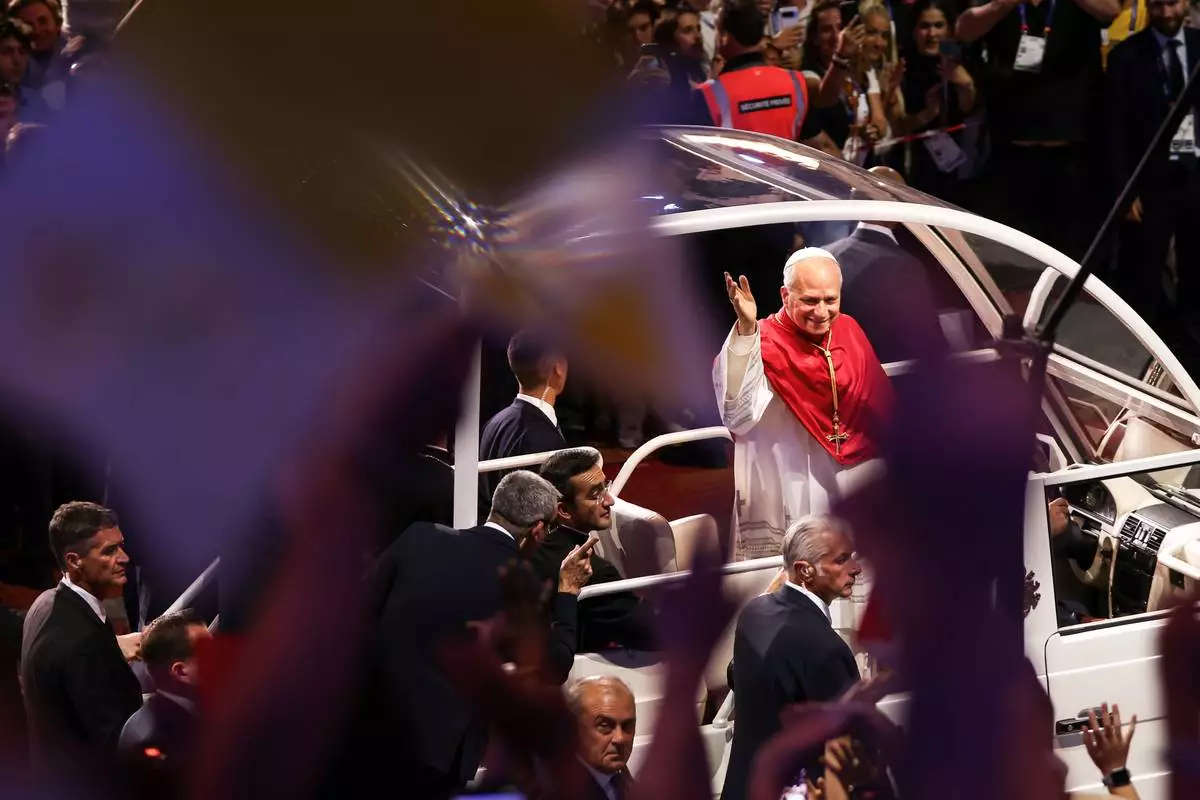
Pope Leo XIV arrives on the popemobile at the Stade de France in Saint-Denis near Paris to preside over Vespers with young people, Friday, Sept. 25, 2026. (AP Photo/Thomas Padilla)
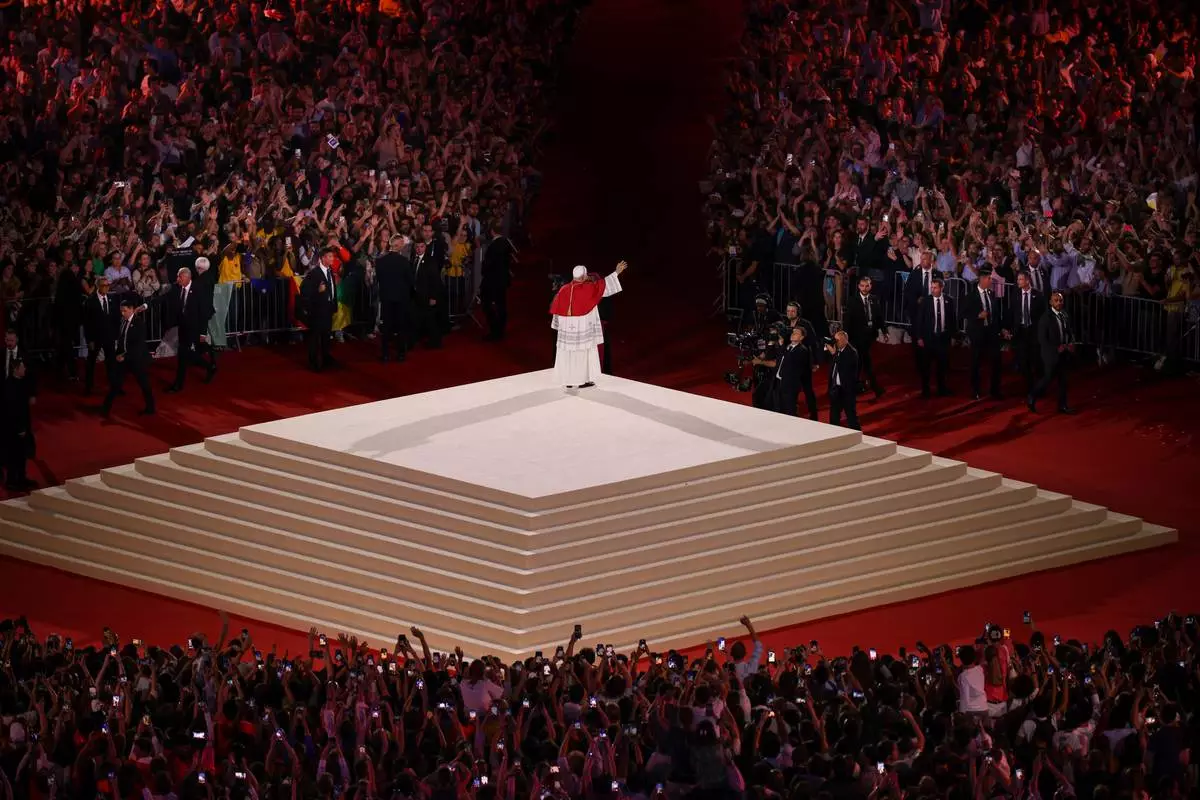
Pope Leo XIV waves after a prayer vigil with young people at the Stade de France in Saint-Denis near Paris, Friday, Sept. 25, 2026. (AP Photo/Thomas Padilla)
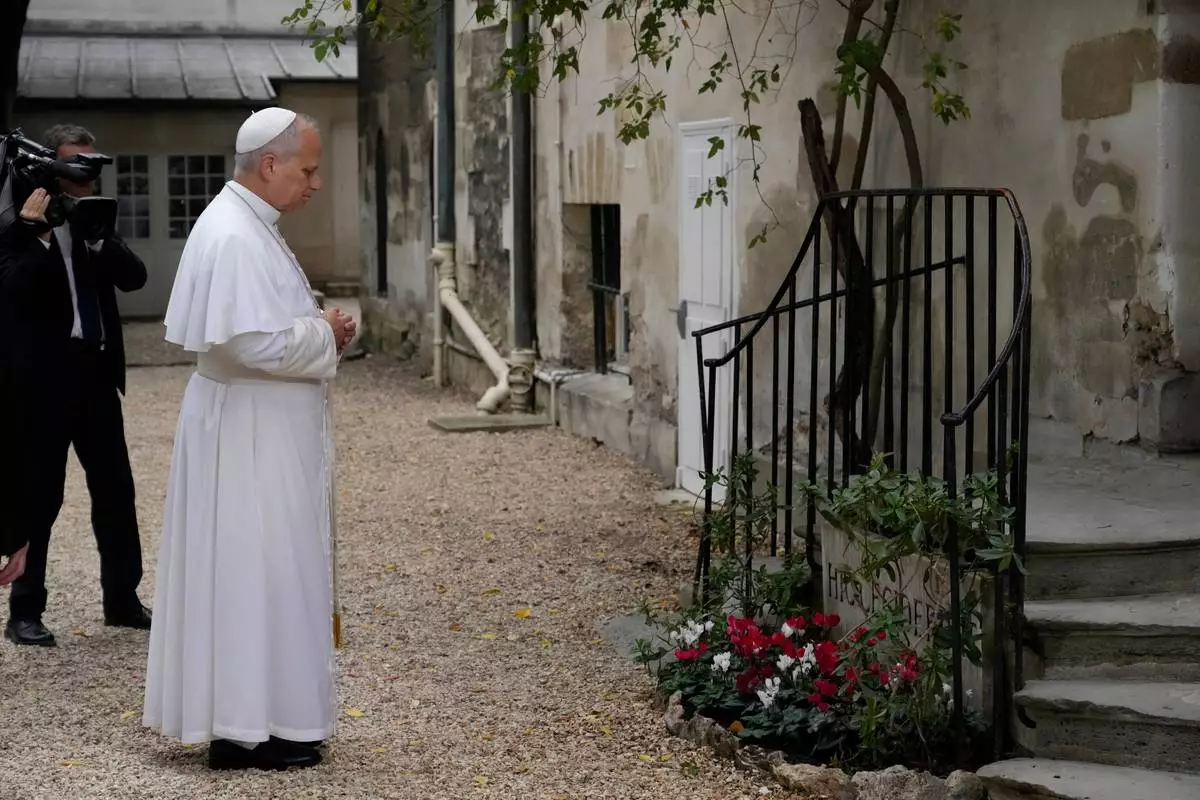
Pope Leo XIV arrives at the Institut Catholique de Paris to meet with members of the provincial synodal assembly, catechumens and neophytes, Saturday, Sept. 26, 2026, in Paris. (AP Photo/Gregorio Borgia)
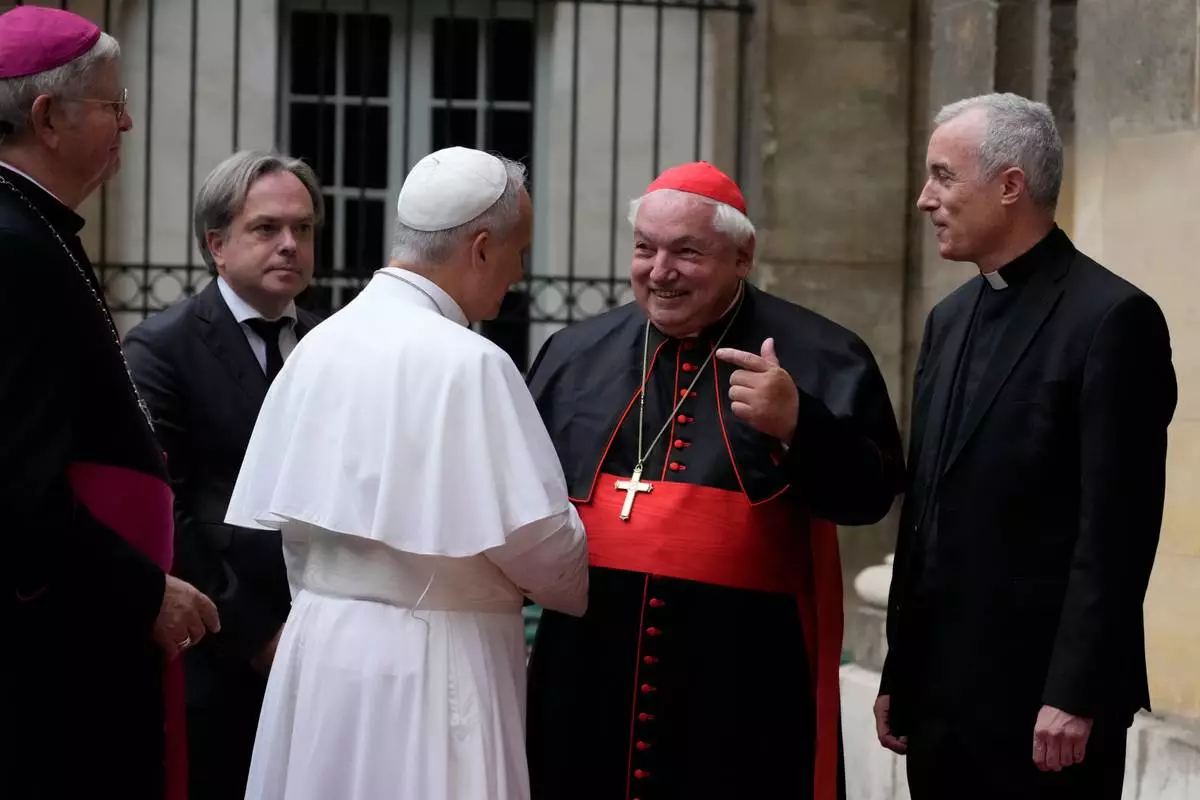
Pope Leo XIV is welcomed by Archbishop of Paris Laurent Ulrich, left, Cardinal Jean-Marc Aveline, second from right, and Institut Catholique de Paris Rector Emmanuel Petit as he arrives to meet with members of the provincial synodal assembly, catechumens and neophytes at the ICP in Paris, Saturday, Sept. 26, 2026. (AP Photo/Gregorio Borgia)