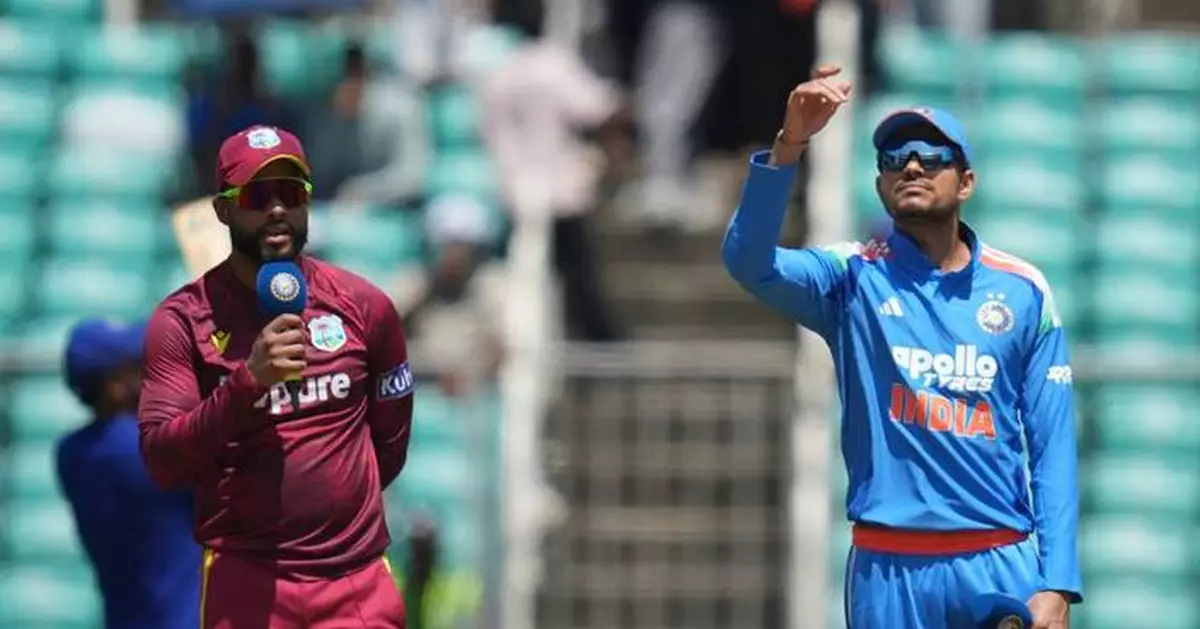
THIRUVANANTHAPURAM, India (AP) — Shubman Gill called the coin toss correctly and India opted to bowl against West Indies in the first of three ODIs on Sunday.
Guwahati and Chandigarh will host the second and third ODIs on Wednesday and Saturday, followed by a five-match T20 series starting Oct. 6.
Star batters Rohit Sharma and Virat Kohli return for India. The duo only feature in this format on the international stage, having previously retired from both tests and T20s.
Batting all-rounder Naman Dhir makes his ODI debut for India. Ravindra Jadeja and Kuldeep Yadav are the other two spin options for the hosts, who have also picked three pace options in Prasidh Krishna, Gurnoor Brar and all-rounder Nitish Reddy.
West Indies opted for a pace-heavy attack with Jayden Seales, Alzarri Joseph and Matthew Forder in as the fast bowlers, along with two medium-pace options. Roston Chase and Gudakesh Motie are the spinners.
The pitch at Greenfield International Stadium should aid batters through the game. The venue last hosted an ODI in January 2023, when India beat Sri Lanka by 317 runs.
Line-ups:
West Indies: John Campbell, Justin Greaves, Keacy Carty, Shai Hope (captain), Amir Jangoo, Jewel Andrew, Roston Chase, Matthew Forde, Gudakesh Motie, Alzarri Joseph, Jayden Seales
India: Rohit Sharma, Shubman Gill (captain), Virat Kohli, Ruturaj Gaikwad, KL Rahul, Naman Dhir, Ravindra Jadeja, Nitish Kumar Reddy, Gurnoor Brar, Kuldeep Yadav, Prasidh Krishna
See AP’s full cricket coverage here
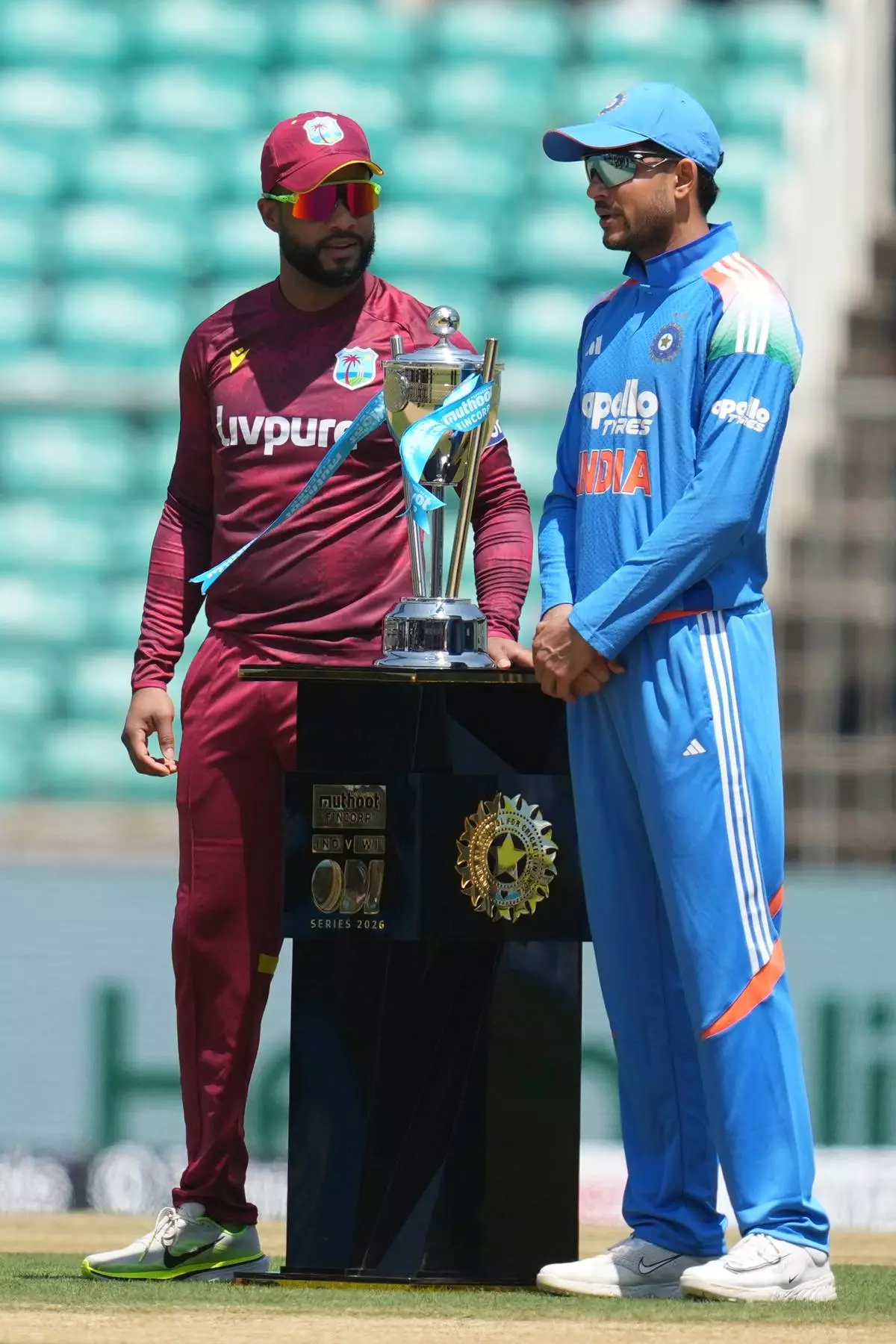
India's captain Shubman Gill, right, and West Indies' captain Shai Hope pose for photograph with trophy during the first one day international cricket match between India and West Indies in Thiruvananthapuram, India, Sunday, Sept. 27, 2026. (AP Photo/ Rafiq Maqbool)
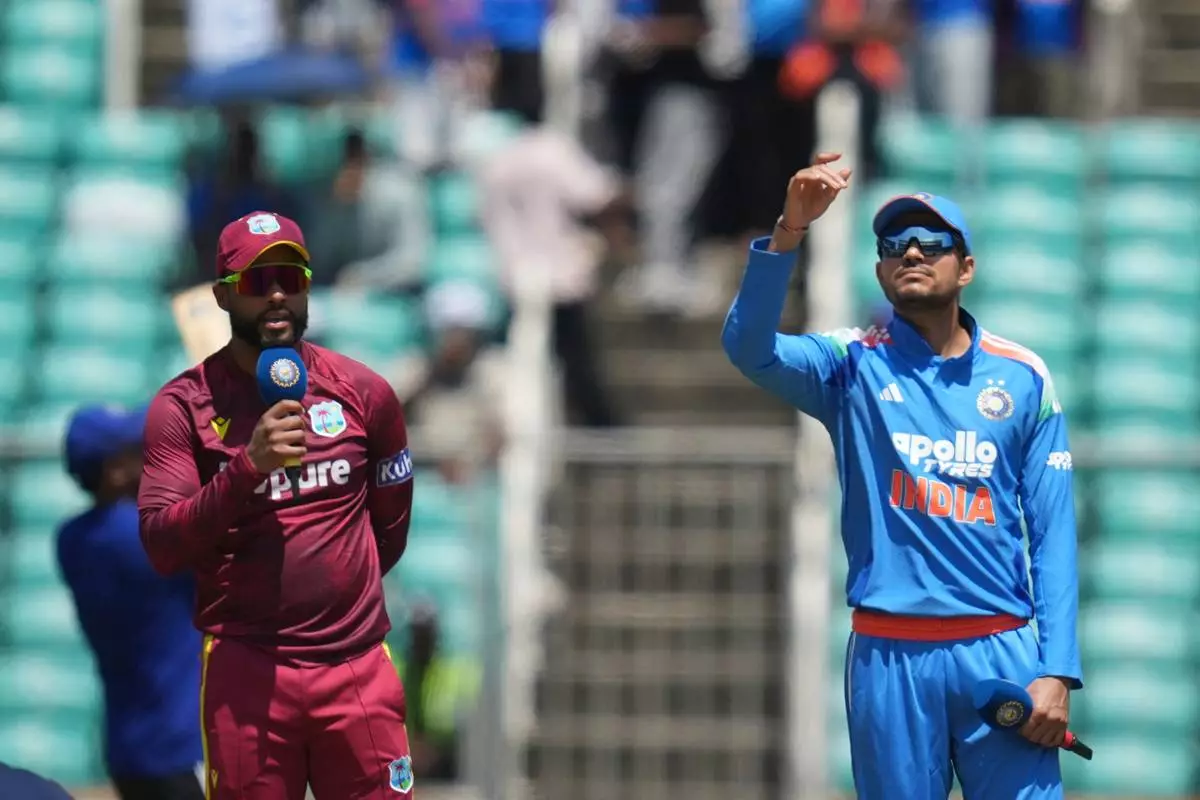
India's captain Shubman Gill, right, toss the coin as West Indies' captain Shai Hope looks on during the first one day international cricket match between India and West Indies in Thiruvananthapuram, India, Sunday, Sept. 27, 2026. (AP Photo/ Rafiq Maqbool)
LOURDES, France (AP) — Pope Leo XIV on Sunday took his opposition to euthanasia and medically assisted dying to Lourdes, the French Catholic shrine associated with miraculous cures and now also a place of healing for survivors of clergy sexual abuse.
Leo met with French bishops on Sunday and then was to celebrate Mass on the prairie next to Lourdes’ main basilica before an estimated 150,000 people. Hundreds of buses pulled into Lourdes early Sunday in a kilometers-long stream, depositing pilgrims onto the field. They cheered and waved when Leo arrived in his popemobile ahead of Mass.
Lourdes became a major pilgrimage destination after the Catholic Church officially recognized visions of the Virgin Mary reported here by a young girl in 1858.
The site near the Spanish border draws millions of pilgrims each year, especially sick and disabled believers hoping for a cure from the famed spring water in the Lourdes grotto where the visions purportedly occurred.
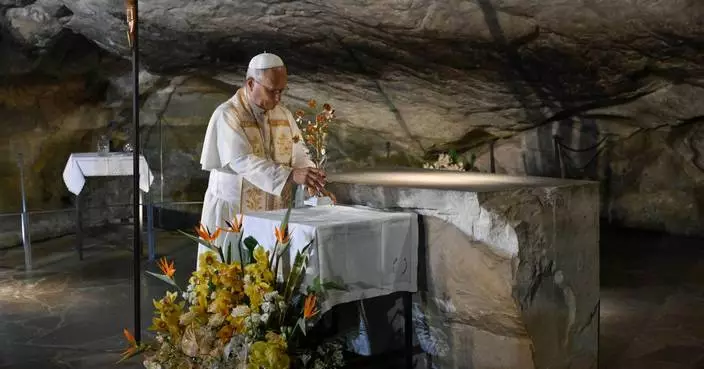
Leo arrived in Lourdes on Saturday night from Paris and immediately prayed inside the Grotto of Apparitions and drank from the spring.
“He has given a message of hope for France, a message of hope and greatness for France, and renewal for France," said Paris pilgrim Pierre Caziljc.
During his four-day visit to France, Leo has repeatedly called for a renewed respect for life in keeping with Catholic teaching that all human life must be protected and defended from conception until natural death. The teaching translates into firm opposition to abortion and medically assisted dying.
France’s National Assembly in 2024 enshrined abortion as a constitutional right and recently gave final approval to a bill allowing adults with incurable illnesses to receive lethal medication.
In Lourdes, where the church has recognized as authentic 72 “miraculous” cures, the question of respecting even the most frail, sick and vulnerable is particularly acute.
More recently, Lourdes has also become a place of healing for survivors of clergy sexual abuse. Leo was to meet with seven survivors on Sunday, including one who was abused as an adult, in recognition of the new frontier of the abuse crisis that the church faces.
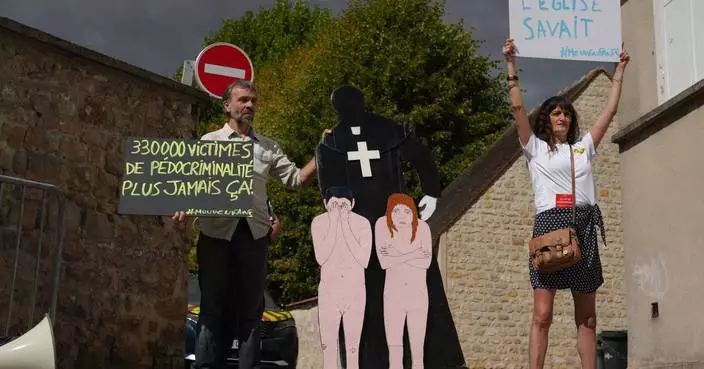
The French church has endured a brutal reckoning with its legacy of abuse. An independent report in 2021 estimated 330,000 children had been abused over 70 years by some 3,000 priests and church workers.
Despite criticism of the report’s methodology and conclusions, French bishops put in place an independent system of compensation for victims that to date has recommended the church pay out more than 20 million euros ($22.7 million).
On the day Leo arrived in Paris, a group of victims wrote an open letter asking him to acknowledge the church’s responsibility and criticizing that the seven survivors were chosen by the church, not victims’ groups.
“The Church must relinquish its position as both judge and party to the proceedings,” they wrote in the letter published by French newspaper Liberation.
In Lourdes, Leo will also be reminded of a prickly abuse case inherited from Pope Francis.
The façade of one of the Lourdes basilicas was designed by the Rev. Marko Rupnik, one of the Catholic Church’s most famous mosaic artists.
Rupnik is currently on trial in a Vatican court, accused by more than two dozen women of having psychologically, spiritually and sexually abused them starting in the 1990s, including during the creation of his artworks.
His case was covered up for three decades by his Jesuit superiors, and even Francis was suspected of having protected his fellow Jesuit. In response to a media outcry, Francis in 2024 ordered a canonical trial, which is ongoing.
The Rupnik case posed the question of what to do with his mosaics, which adorn basilicas around the world.
In 2024, Lourdes Bishop Jean-Marc Micas decided to no longer illuminate the façade of the Notre Dame du Rosaire Basilica at night. He subsequently ordered the decorated doors covered, and more recently decided to cover the façade’s mosaics entirely. He reasoned that abuse victims who come to Lourdes for healing shouldn’t be forced to see them.
As Leo approached the grotto on Saturday night, his popemobile drove by the basilica and its boarded up mosaics.
In a letter to Leo ahead of his trip, five women who say they were abused by Rupnik praised Micas’ decision to cover the mosaics but criticized the Vatican’s treatment of their case and the three decades it has taken for them to be heard.
“This prolonged and loud silence has been experienced by us the victims as a further, continuous violence,” they wrote.
Associated Press religion coverage receives support through the AP’s collaboration with The Conversation US, with funding from Lilly Endowment Inc. The AP is solely responsible for this content.
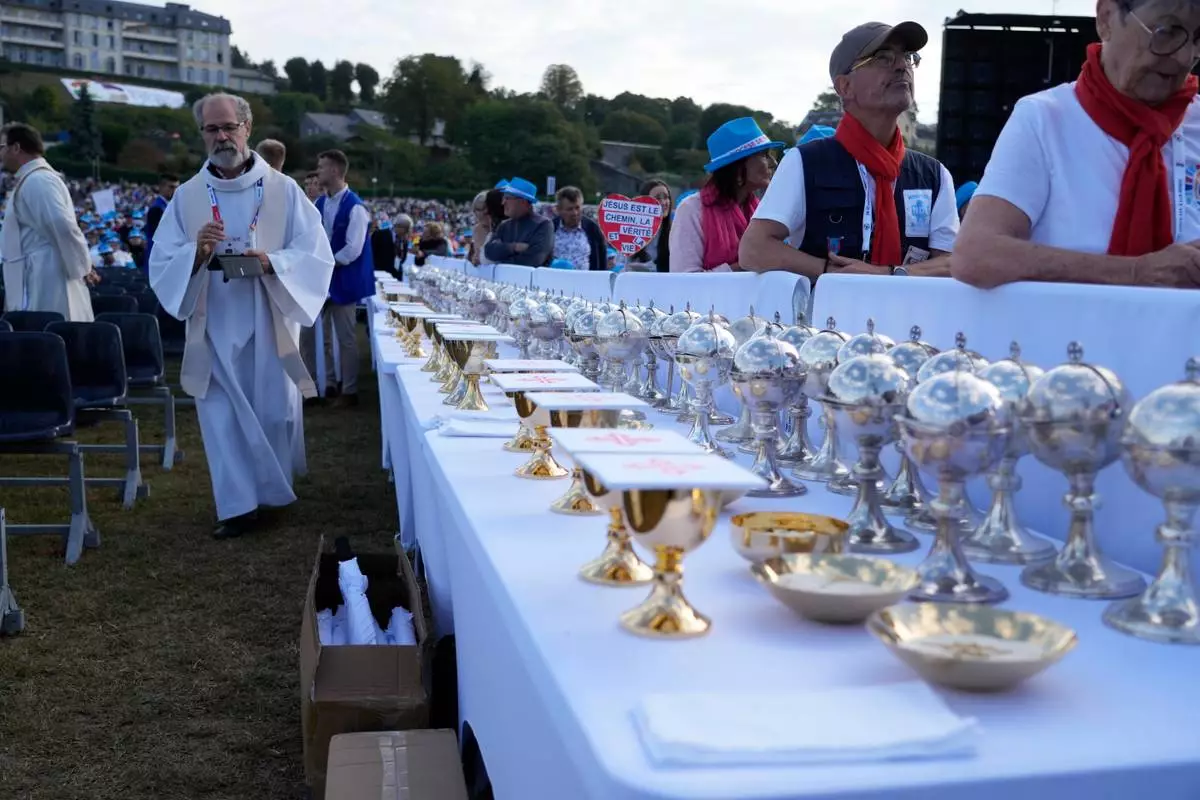
Pilgrims and faithful wait for Pope Leo XIV to celebrate Mass at the Sanctuary of Our Lady of Lourdes, Sunday, Sept. 27, 2026, in Lourdes, France. (AP Photo/Gregorio Borgia)
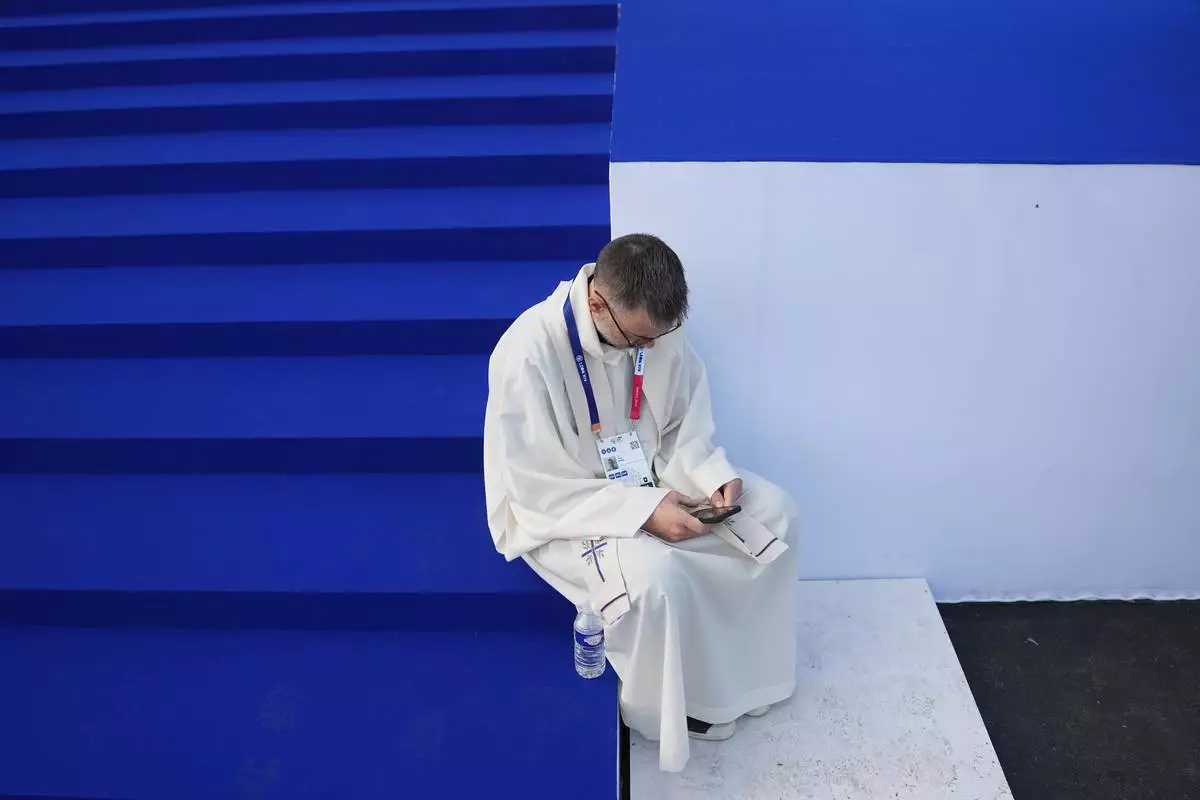
A priest watches his phone before a Mass celebrated by Pope Leo XIV at the Sanctuary of Our Lady of Lourdes, France Sunday, Sept. 27, 2026. (AP Photo/Thibault Camus)
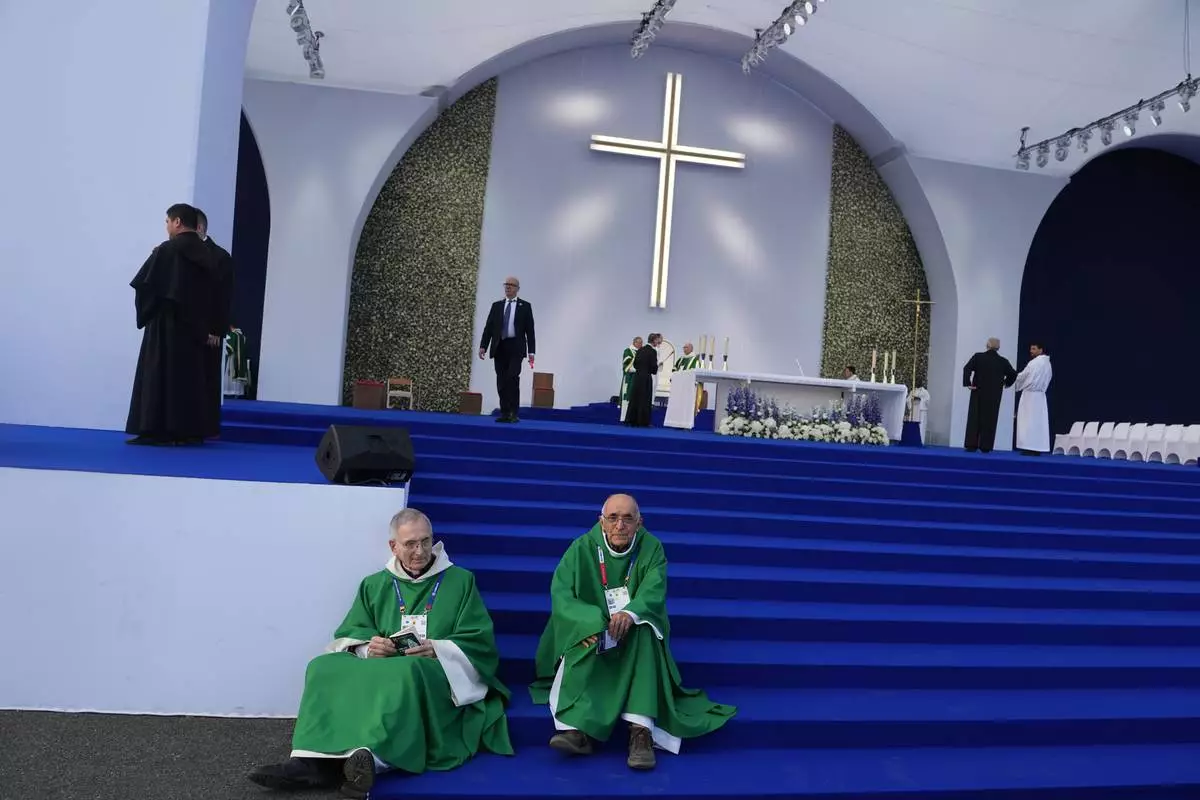
Priests sit before a Mass celebrated by Pope Leo XIV at the Sanctuary of Our Lady of Lourdes, France Sunday, Sept. 27, 2026. (AP Photo/Thibault Camus)
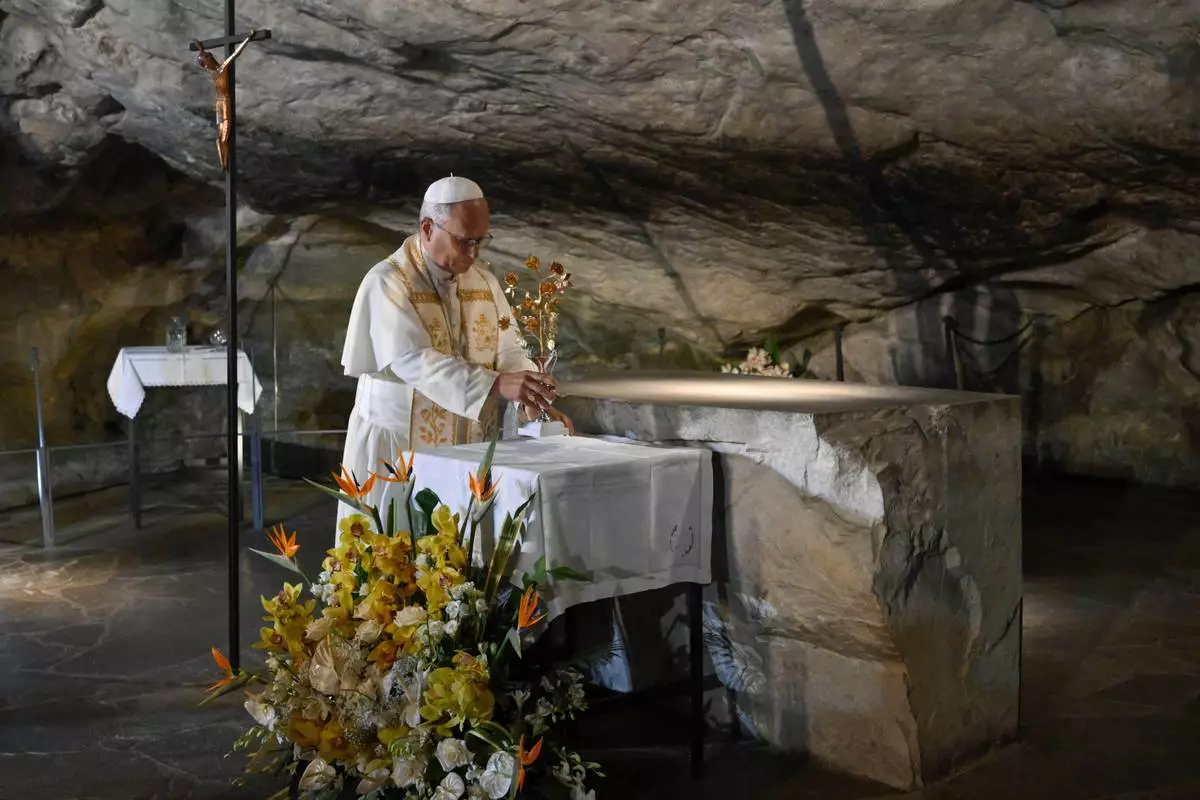
In this handout photo provided by Vatican Media Pope Leo XIV prays at the Grotto of the Apparitions of Massabielle, in Lourdes, France, Saturday, Sept. 26, 2026. (Vatican Media via AP)
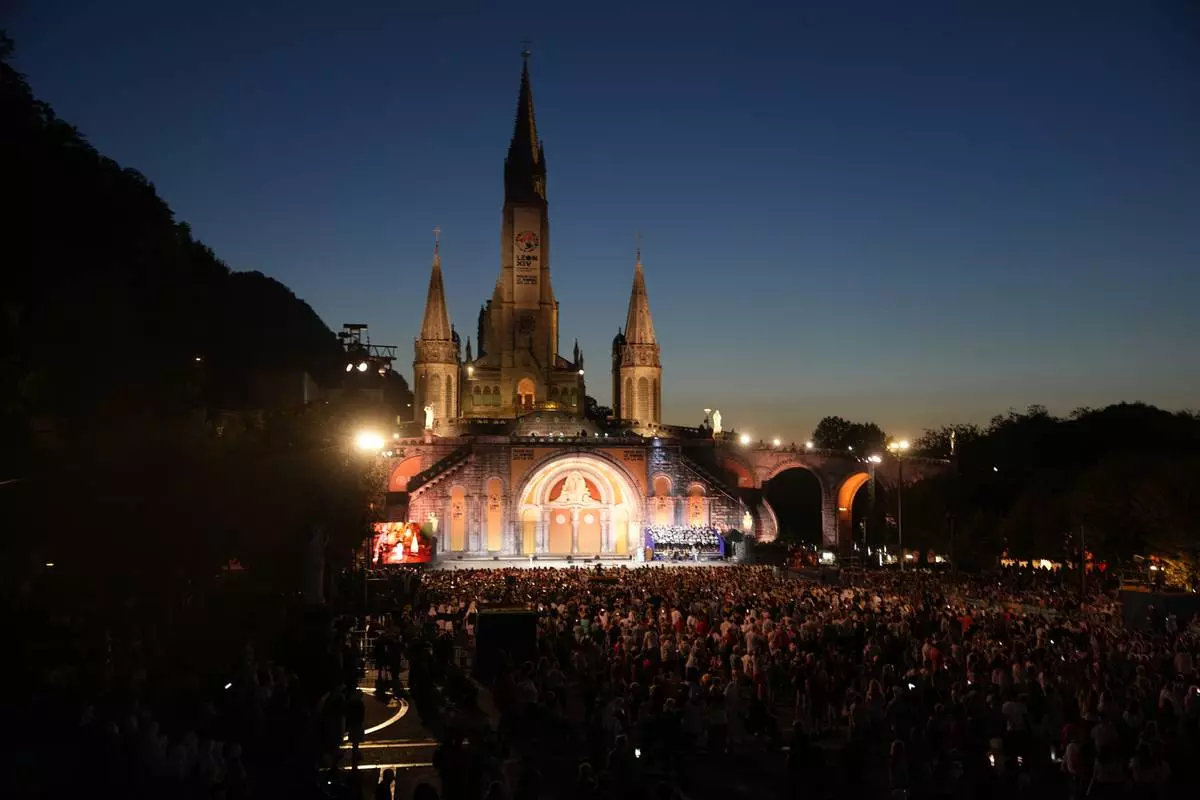
The Notre-Dame-du-Rosaire Basilica is seen during the prayer of Pope Leo XIV in Lourdes, France, Saturday, Sept. 26, 2026. (AP Photo/Thibault Camus)
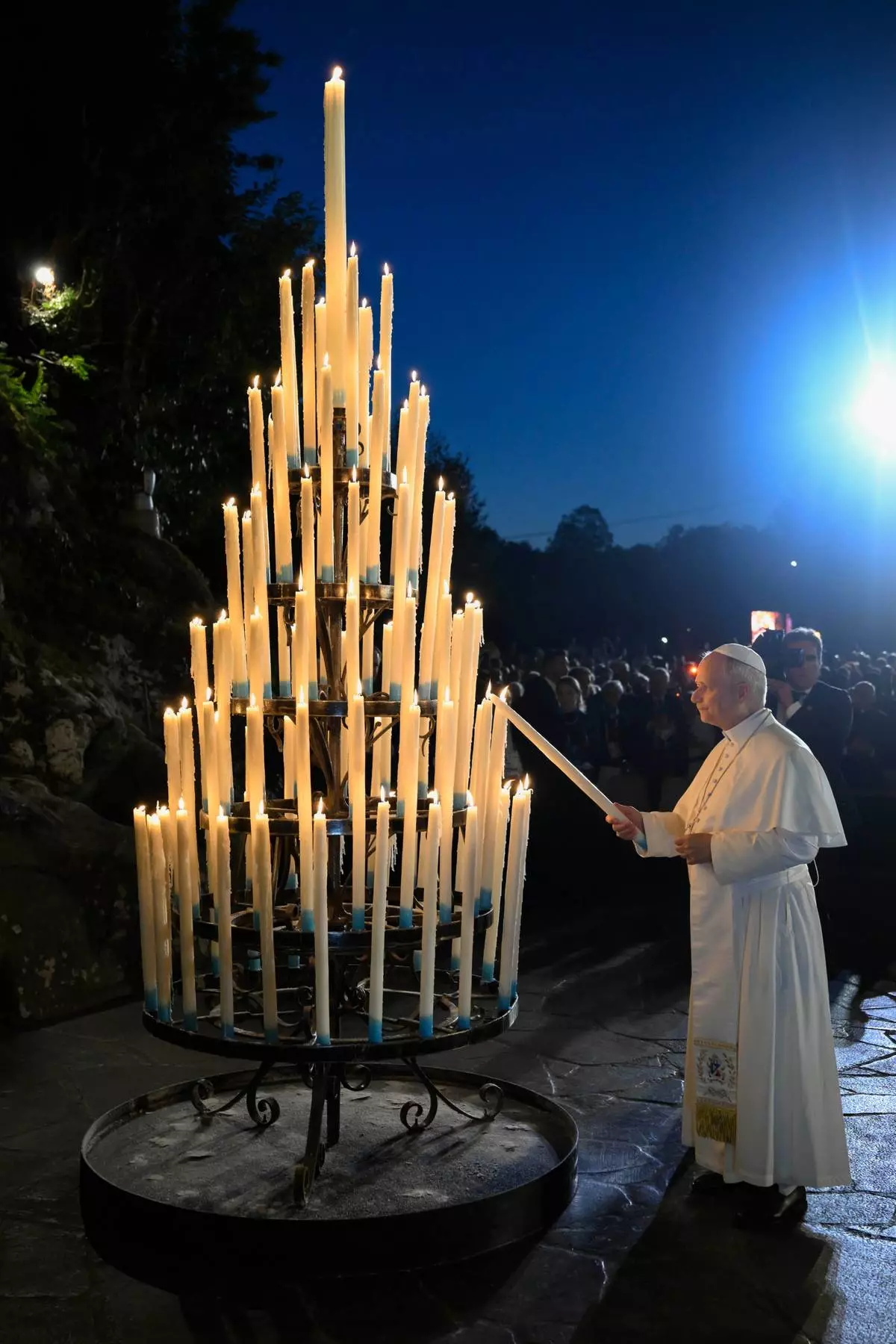
In this handout photo provided by Vatican Media Pope Leo XIV lights candels before praying at the Grotto of the Apparitions of Massabielle, in Lourdes, France, Saturday, Sept. 26, 2026. (Vatican Media via AP)
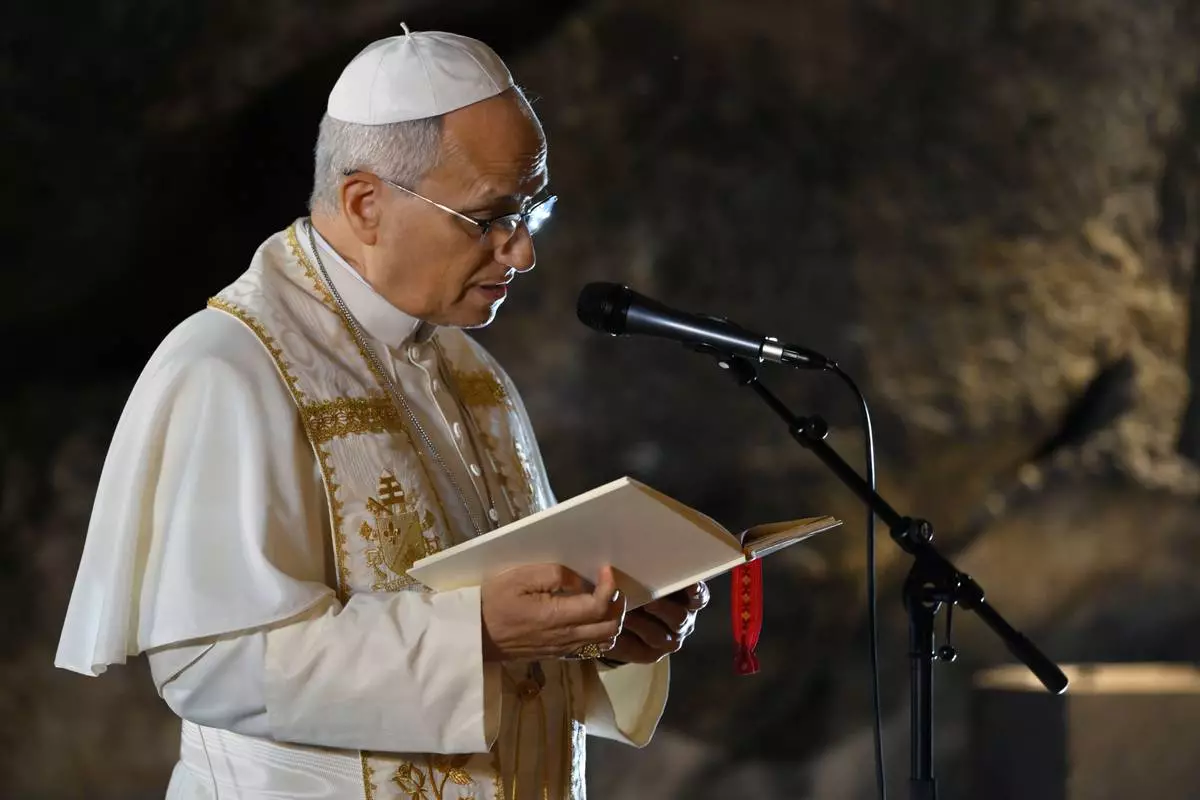
In this handout photo provided by Vatican Media Pope Leo XIV leads a prayer at the Grotto of the Apparitions of Massabielle, in Lourdes, France, Saturday, Sept. 26, 2026. (Vatican Media via AP)
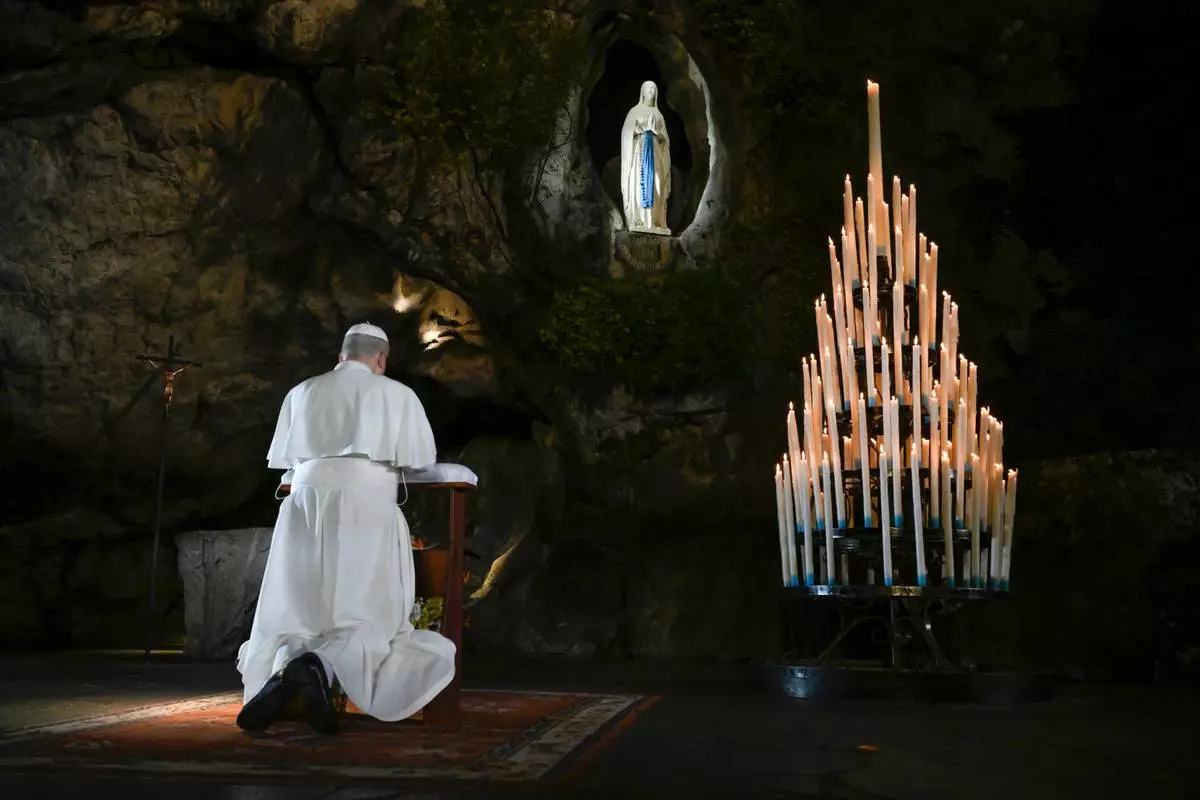
In this handout photo provided by Vatican Media Pope Leo XIV prays at the Grotto of the Apparitions of Massabielle, in Lourdes, France, Saturday, Sept. 26, 2026. (Vatican Media via AP)