PARIS (AP) — Pope Leo XIV is visiting the Sanctuary of Our Lady of Lourdes this weekend as part of his four-day apostolic journey to France, which is the first official papal state visit to the country in 18 years.
The site near the Spanish border draws millions of pilgrims annually, including sick and disabled believers hoping for a cure from the famed spring water in the Lourdes grotto. Here is what to know about Lourdes, one of Catholicism’s most important pilgrimage sites.
Click to Gallery
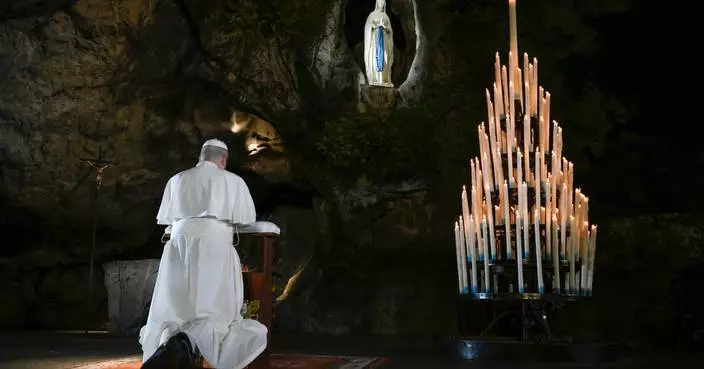
Pope Leo XIV prays at the Grotto of the Apparitions of Massabielle, in Lourdes, France, Saturday, Sept. 26, 2026. (AP Photo/Laurent Cipriani)
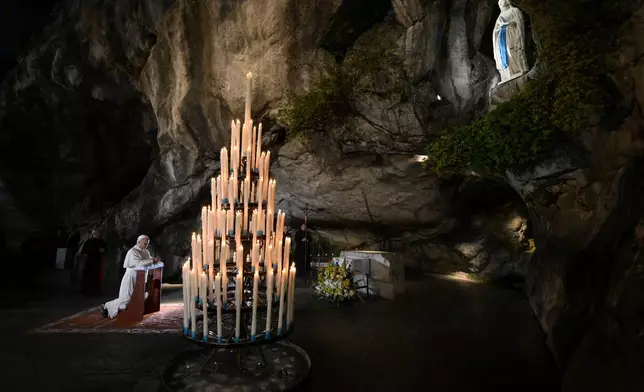
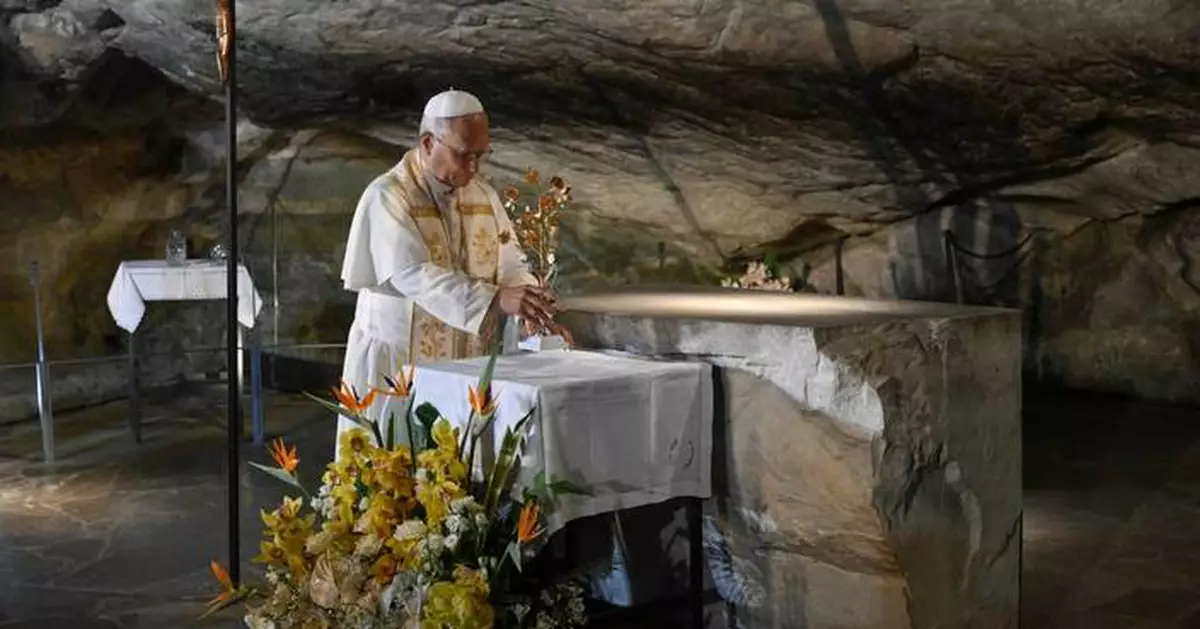
In this handout photo provided by Vatican Media Pope Leo XIV prays at the Grotto of the Apparitions of Massabielle, in Lourdes, France, Saturday, Sept. 26, 2026. (Vatican Media via AP)
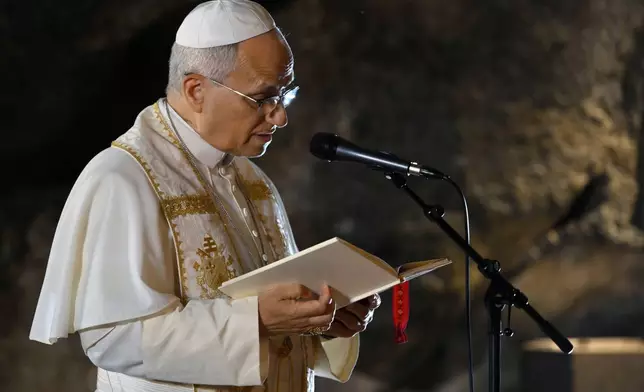
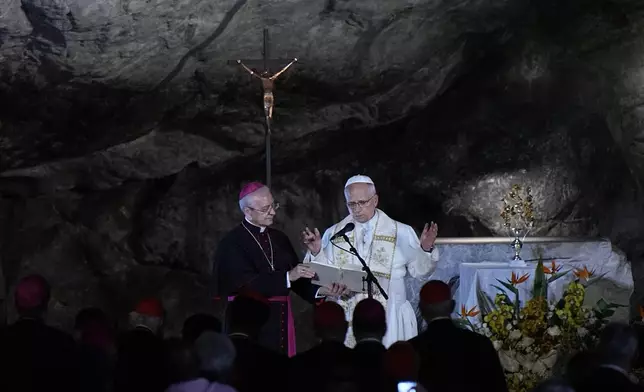
In this handout photo provided by Vatican Media Pope Leo XIV leads a prayer at the Grotto of the Apparitions of Massabielle, in Lourdes, France, Saturday, Sept. 26, 2026. (Vatican Media via AP)
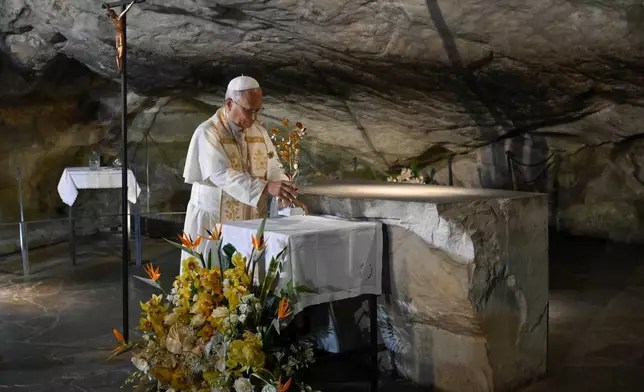
In this handout photo provided by Vatican Media Pope Leo XIV prays at the Grotto of the Apparitions of Massabielle, in Lourdes, France, Saturday, Sept. 26, 2026. (Vatican Media via AP)
Lourdes’ popularity is intrinsically linked to Bernadette Soubirous. A young girl who came from a modest background, she was uneducated, with no knowledge of religion, and suffered from asthma when she reported 18 visions of a lady dressed in white in the Grotto of Massabielle near Lourdes, between February and July 1858. The Catholic Church later accepted that the visions were of the Virgin Mary.
Bernadette’s visions, and the subsequent discovery of allegedly healing spring waters, led the church to build a sanctuary there.
In 1866, Bernadette left Lourdes to join the convent of the Sisters of Charity in Nevers, where she lived until her death at age 35. Pope Pius XI canonized her in 1933 as Saint Bernadette.
Believers say that during the ninth apparition of the lady dressed in white, Bernadette heard her say: “Go and drink at the spring and wash yourself there.”
Millions of pilgrims and visitors have since journeyed to Lourdes to drink and wash in this water, which has no therapeutic or specific properties. Lourdes water is free to access from the sanctuary’s taps and drinking fountains. Many pilgrims take some back home.
Lourdes became a major pilgrimage destination after the Catholic Church officially recognized Bernadette's visions as Apparitions in 1862. Since then, millions of pilgrims from around the world have flocked to the Grotto of Massabielle.
As well as being a holy site, Lourdes attracts around 3 million pilgrims a year, including approximately 60,000 sick and disabled pilgrims. According to the town hall, it's the fourth most visited Catholic pilgrimage site in the world, after the Vatican, the Basilica of Our Lady of Guadalupe in Mexico City, and the Basilica of Our Lady of Aparecida in Brazil.
Upon arrival Saturday night, Pope Leo prayed inside the Grotto of Apparitions and drank from the spring.
The Grotto of Massabielle is one of the 22 sites making up the Sanctuary of Our Lady of Lourdes. The sanctuary is home to numerous places of worship, including three basilicas: the Basilica of the Immaculate Conception, the oldest, the Basilica of Our Lady of the Rosary, and the underground Basilica of Saint Pius X.
Pilgrims can also follow one of the two Stations of the Cross, featuring cast-iron or marble statues, before taking a dip in the sanctuary’s baths. There, they can immerse themselves in the 12 degrees Celsius (53.6 degrees Fahrenheit) water from the spring discovered in the Grotto of the Apparitions.
Among the millions traveling to Lourdes, many seek physical and spiritual healing, hoping for a miracle. The Catholic Church has officially recognized 72 healings as miraculous at Lourdes, out of more than 7,000 cases examined since 1858.
Less than 15,000 people actually live in Lourdes. But with nearly 10,000 hotel rooms and around 21,200 beds, it has the second-largest hotel capacity in France, after Paris.
Finding an affordable roof over your head during Leo's visit, however, is a tall order.
The pope's visit will draw hundreds of thousands of visitors, sending accommodation prices skyrocketing. Some hoteliers are charging extremely high rates, sometimes reaching more than 2,000 euros ($2,300) per night.
Even though most pilgrims traveling to Lourdes each year come from France — 42%, according to the Sanctuary of Our Lady of Lourdes — many visitors from Eastern Europe are expected to come and greet Leo.
Following the end of the Cold War, Catholics from Central and Eastern Europe gained the freedom to go west, sharply increasing the number of pilgrims from former Communist countries visiting Lourdes. This trend has continued to the present day. Poland ranks sixth among the more than 160 nations sending pilgrims to Lourdes each year.
Leo won't get a glimpse of the mosaics by an ex-Jesuit artist accused of abusing women adorning the façade of the Basilica of Our Lady of the Rosary. They will all be covered during Leo's visit.
The artwork was made by Rev. Marko Ivan Rupnik, a Slovenian artist whose mosaic designs decorate Vatican chapels and churches and basilicas around the world. The Vatican confirmed this summer that a church trial against Rupnik is ongoing.
Lourdes Bishop Jean-Marc Micas announced the move last month, after a decision two years ago that the mosaics would no longer be lit during evening prayer. In March 2025, the mosaics on the basilica's entrance doors had already been covered.
The Rupnik scandal exploded publicly in late 2022, when Italian blogs first reported claims by women and nuns of sexual, spiritual and psychological abuse by Rupnik dating back to the 1990s that had been consistently dismissed by the Catholic hierarchy.
Leo will meet seven survivors of sexual abuse who were assaulted as children or adults, according to the Bishops’ Conference of France. A 2021 report estimated that 330,000 children had been sexually abused over 70 years by church personnel in France.
The Lourdes sanctuary said the pope will land at the Tarbes airport on Saturday and begin his pilgrimage with a prayer at the Grotto of the Apparitions. On Sunday morning, Leo will meet with the bishops at the French Bishops’ Conference, then celebrate Mass on the Prairie, followed by the Angelus prayer.
In the afternoon, he will meet the staff and sick people of the Accueil Notre-Dame. He closes the visit with one of Lourdes’ signature rites: the Rosary and torchlight procession through the sanctuary.
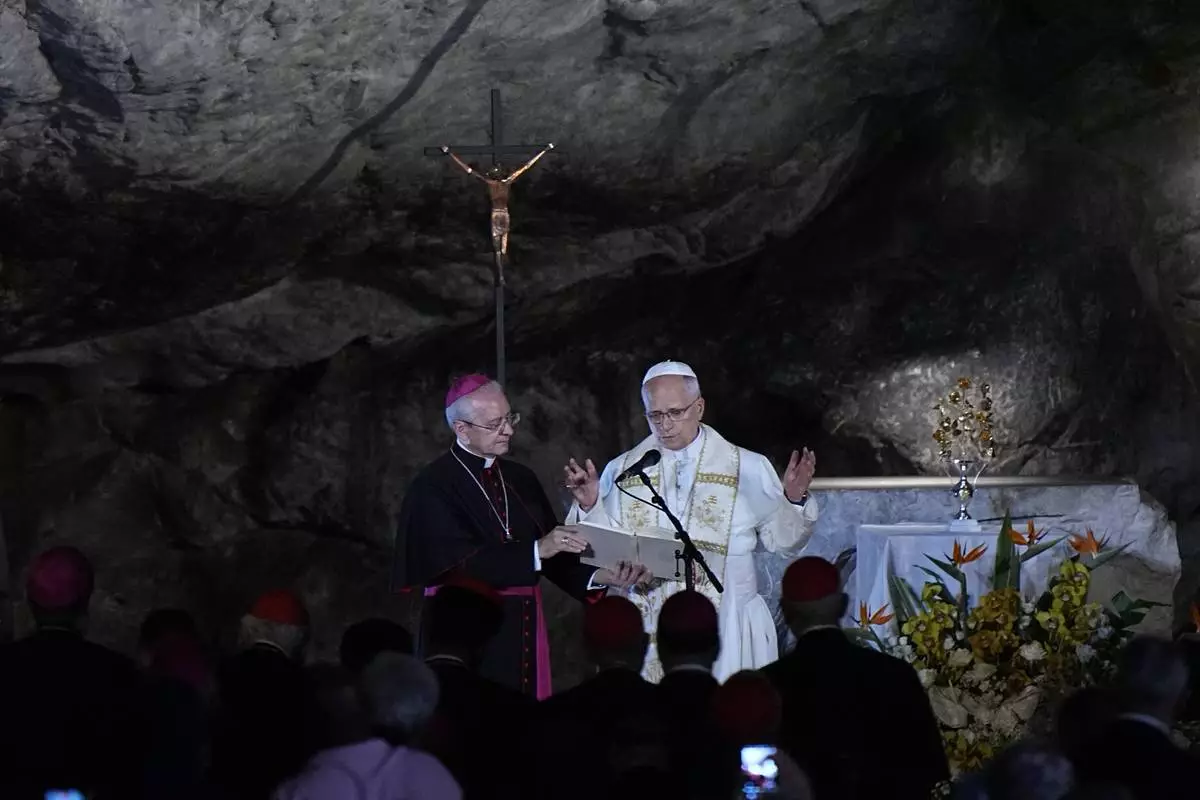
Pope Leo XIV prays at the Grotto of the Apparitions of Massabielle, in Lourdes, France, Saturday, Sept. 26, 2026. (AP Photo/Laurent Cipriani)
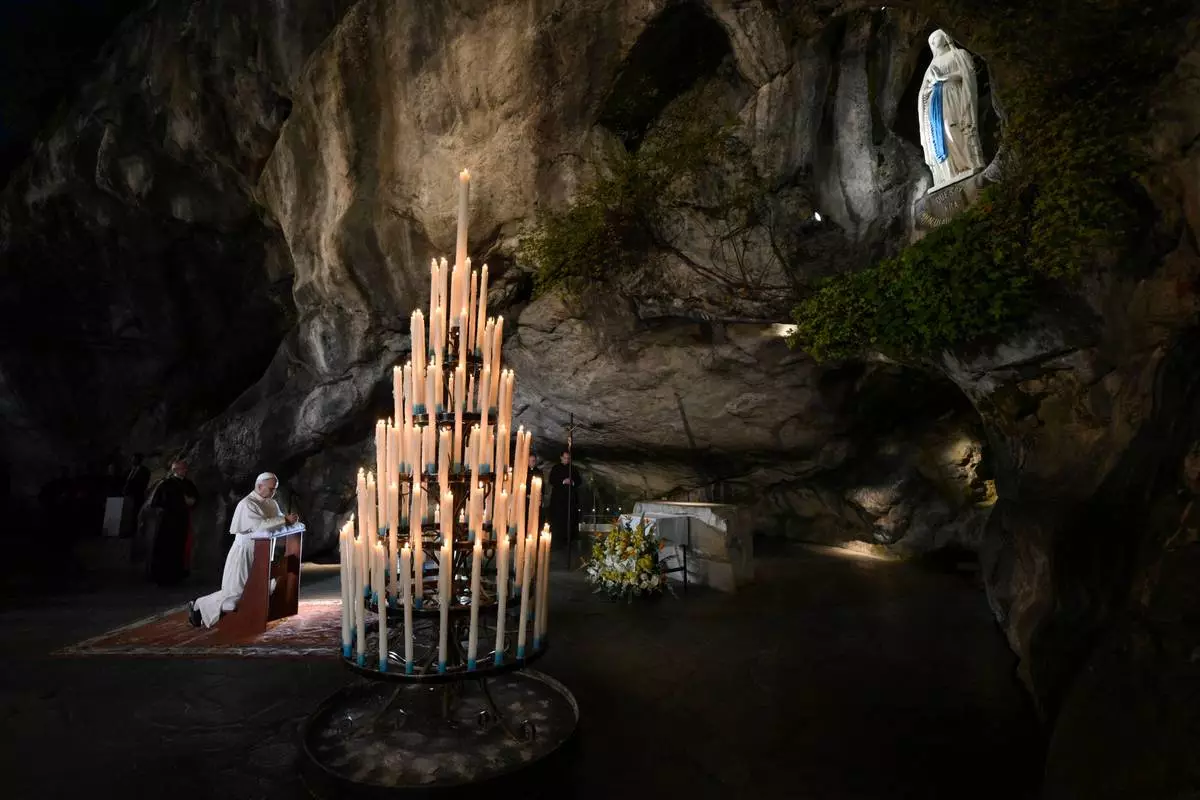
In this handout photo provided by Vatican Media Pope Leo XIV prays at the Grotto of the Apparitions of Massabielle, in Lourdes, France, Saturday, Sept. 26, 2026. (Vatican Media via AP)
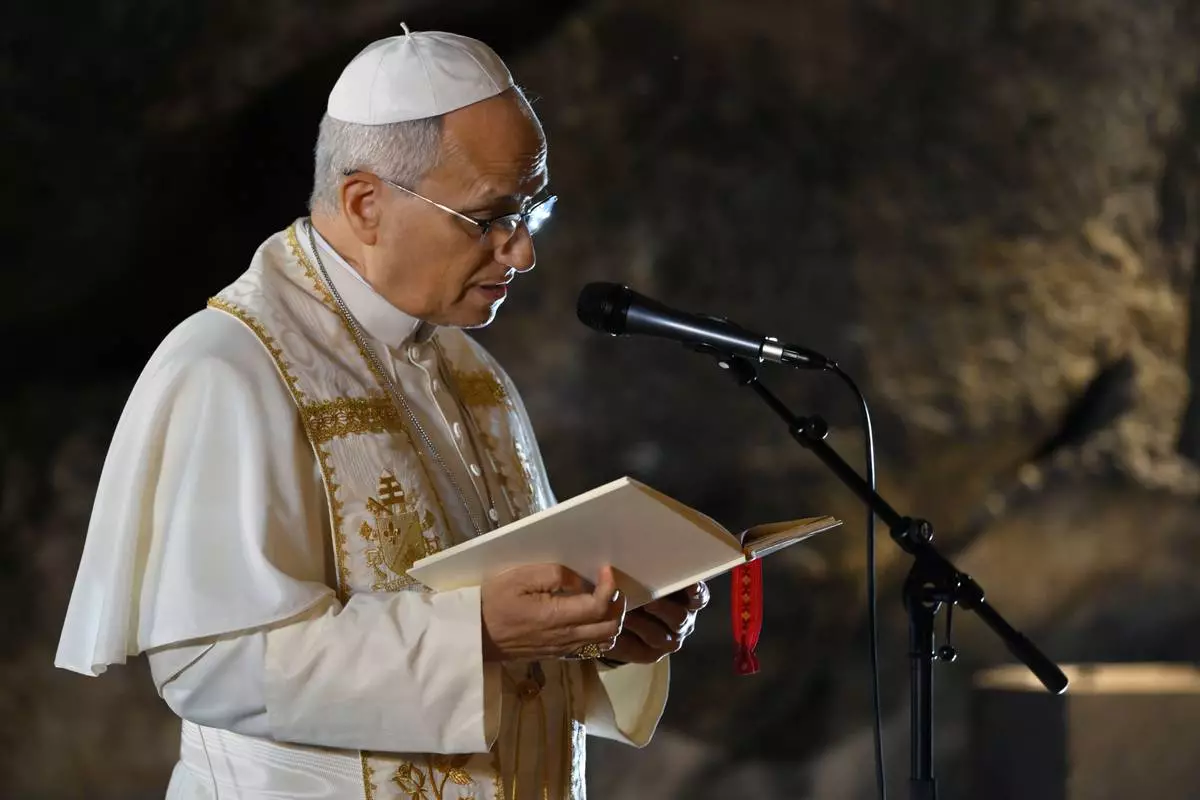
In this handout photo provided by Vatican Media Pope Leo XIV leads a prayer at the Grotto of the Apparitions of Massabielle, in Lourdes, France, Saturday, Sept. 26, 2026. (Vatican Media via AP)
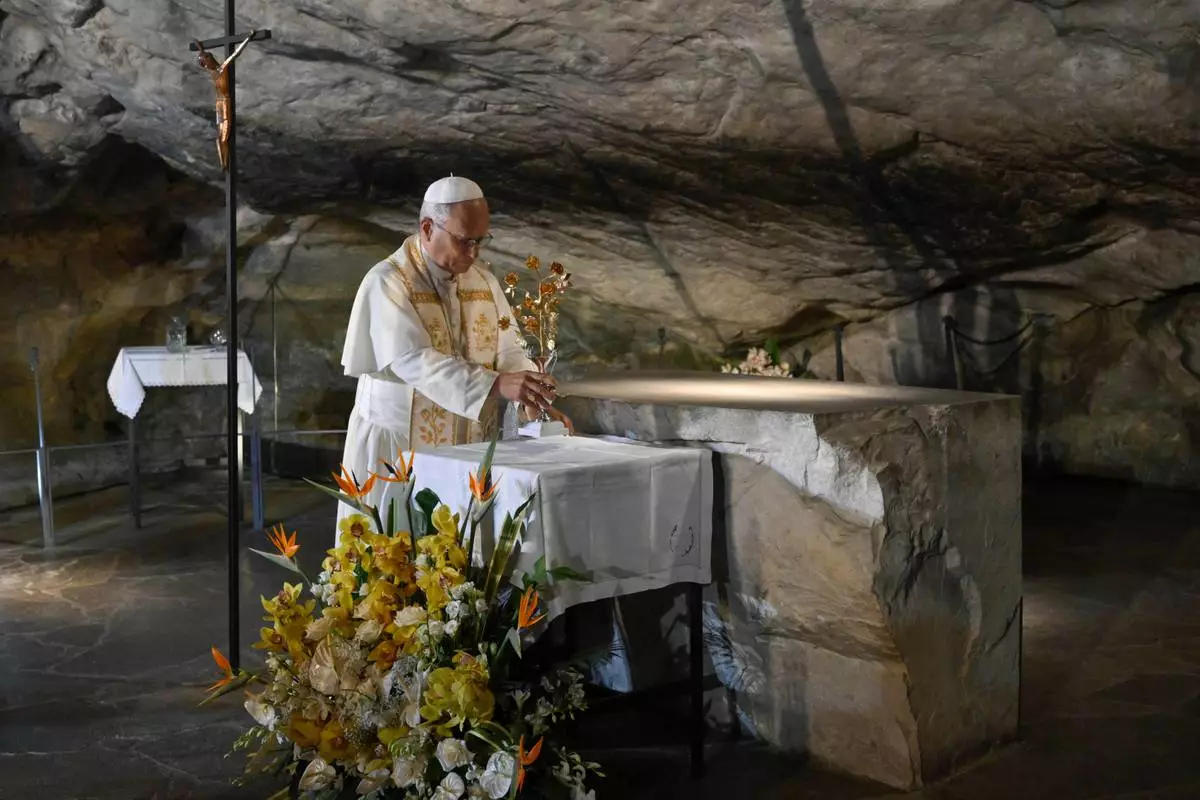
In this handout photo provided by Vatican Media Pope Leo XIV prays at the Grotto of the Apparitions of Massabielle, in Lourdes, France, Saturday, Sept. 26, 2026. (Vatican Media via AP)