LONDON (AP) — British Prime Minister Andy Burnham called for calm in Northern Ireland on Sunday after a contentious parade was given the go-ahead by the High Court in Belfast in a late-night sitting.
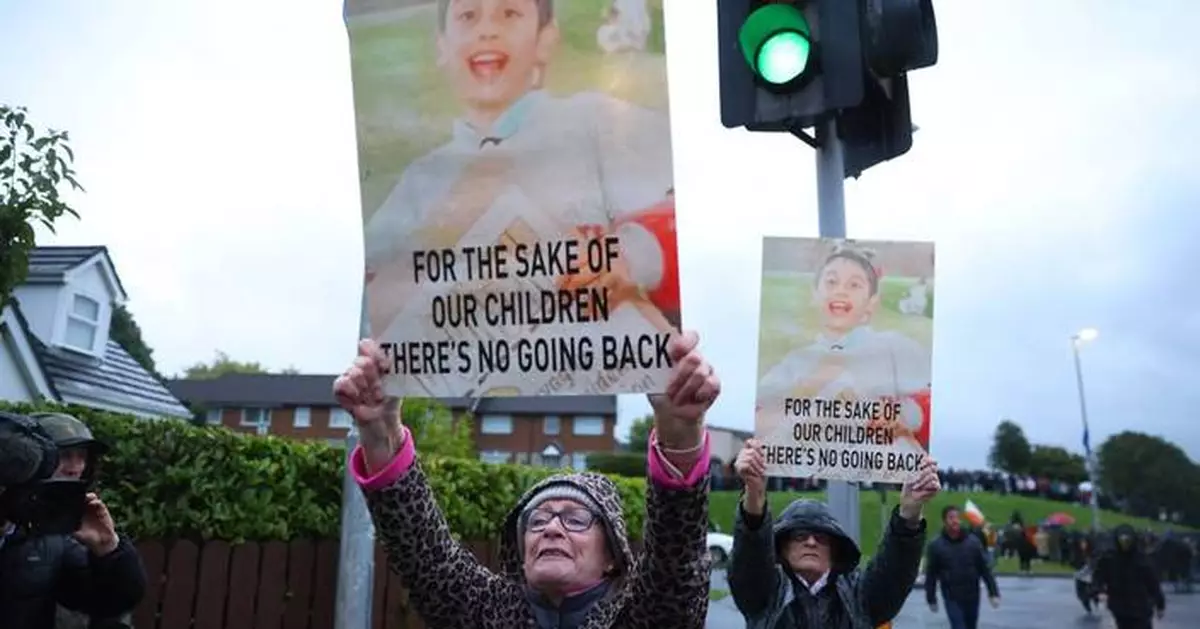
Thousands of protesters, many wearing balaclavas, gathered to block the marchers from the Orange Order, a group hugely supportive of Northern Ireland being part of the U.K., from proceeding down a street in the town of Portadown, where many favor unification with the Republic of Ireland.
It's the first time in nearly 30 years that the Orange Order parade has been allowed to go down the Garvaghy Road, which had been a notorious flashpoint between the communities in the years before the Good Friday Agreement of 1998 largely ended the bloodshed in Northern Ireland. During the so-called Troubles, some 3,600 people were killed while some 50,000 were wounded.
Ending the Troubles meant balancing competing identities in Northern Ireland, which remained in the United Kingdom when the rest of Ireland won independence a century ago. Irish nationalists in the north — most of them Catholic — seek union with the Republic of Ireland, while largely Protestant unionists want to stay part of the U.K.
Burnham appealed for “calm on all sides” over the parade, saying there have been “big gains made in Northern Ireland, and we don’t want to see things go backwards.”
Jon Boutcher, the head of the Police Service of Northern Ireland called for “those with influence to encourage people to comply with the law,” referring to a large protest blocking the Garvaghy Road. He said there has been no signs of violence or disorder.
"Police are engaging and working with all parties and will continue to do so. It is incumbent on us all to come together at times like this to do all we can to preserve a peaceful Northern Ireland.”
Politicians representing the two sides were opposed in their viewpoints on whether the march should go ahead.
Northern Ireland First Minister Michelle O’Neill, who represents Sinn Fein, the party historically linked to the Irish Republican Army, said the decision to give the march the go-ahead “brings into question how this whole peace process works.”
“The progress of the last 28 years have been brought into question by the actions of the Orange Order and those within political unionism that want to drag us backwards," she said while attending the counterprotest on the Garvaghy Road.
Gavin Robinson, the leader of the Democrat Unionist Party, the largest pro-U.K. party in Northern Ireland, called out Sinn Fein leaders for inflaming the situation.
“The rule of law cannot apply only when Sinn Fein likes the outcome,” he said. "Our institutions are founded on respect for the police, the courts and the rule of law.”
The march was given the final go-ahead at a court hearing concluded at 2:15 a.m. Sunday.
The Orange Order is named after William of Orange, a Protestant prince of Holland who defeated the Catholic King James to take over the British throne in the 17th century.
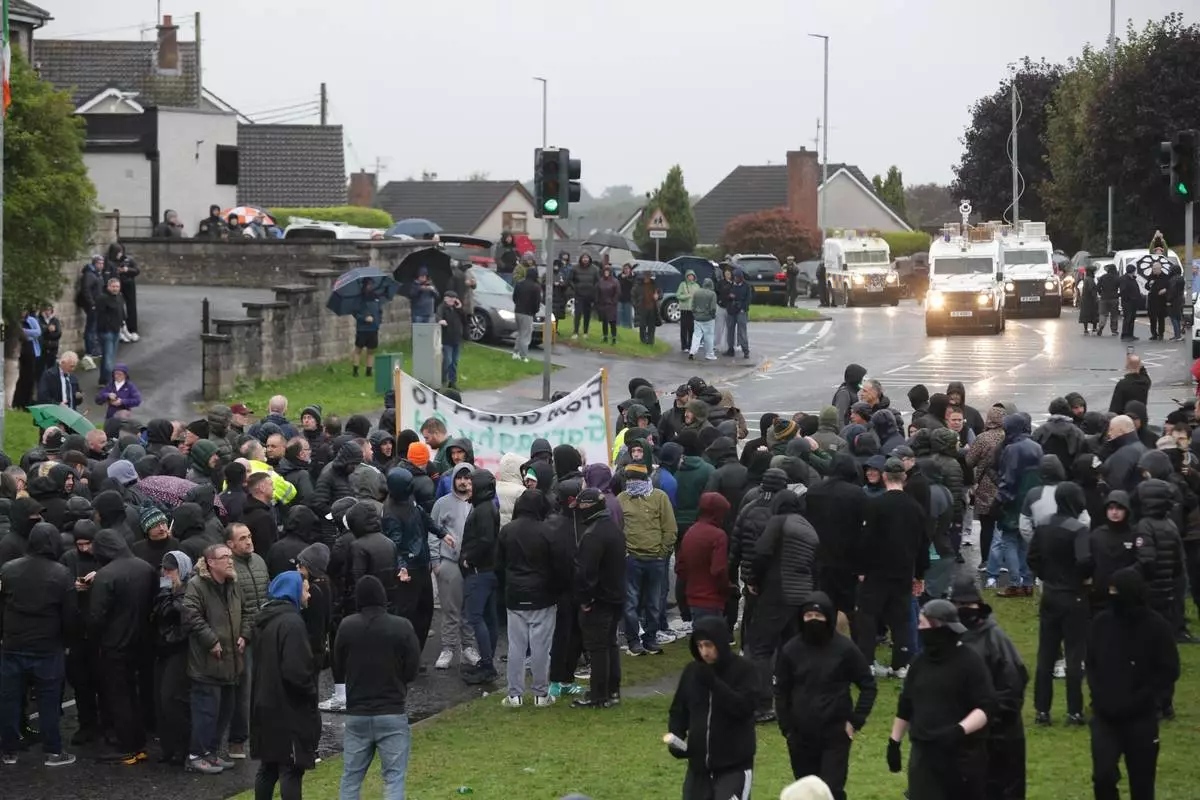
Protesters block the Garvaghy road ahead of a Portadown District Loyal Orange Lodge (LOL) No 1 march in the first parade for almost 30 years, after the parade was given clearance in a late-night hearing, in Portadown, Northern Ireland, Sunday, Sept. 27, 2026. (Peter Morrison/PA via AP)
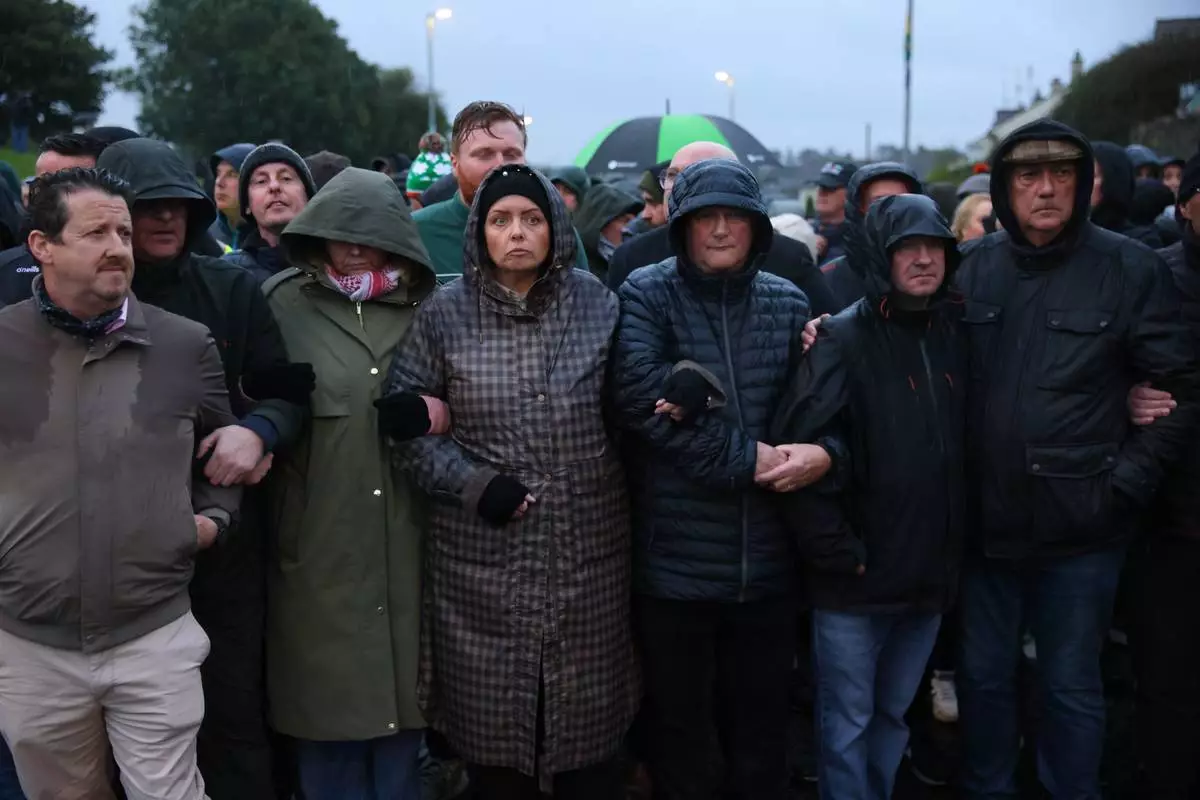
Protesters block the Garvaghy road ahead of a Portadown District Loyal Orange Lodge (LOL) No 1 march in the first parade for almost 30 years, after the parade was given clearance in a late-night hearing, in Portadown, Northern Ireland, Sunday, Sept. 27, 2026. (Peter Morrison/PA via AP)
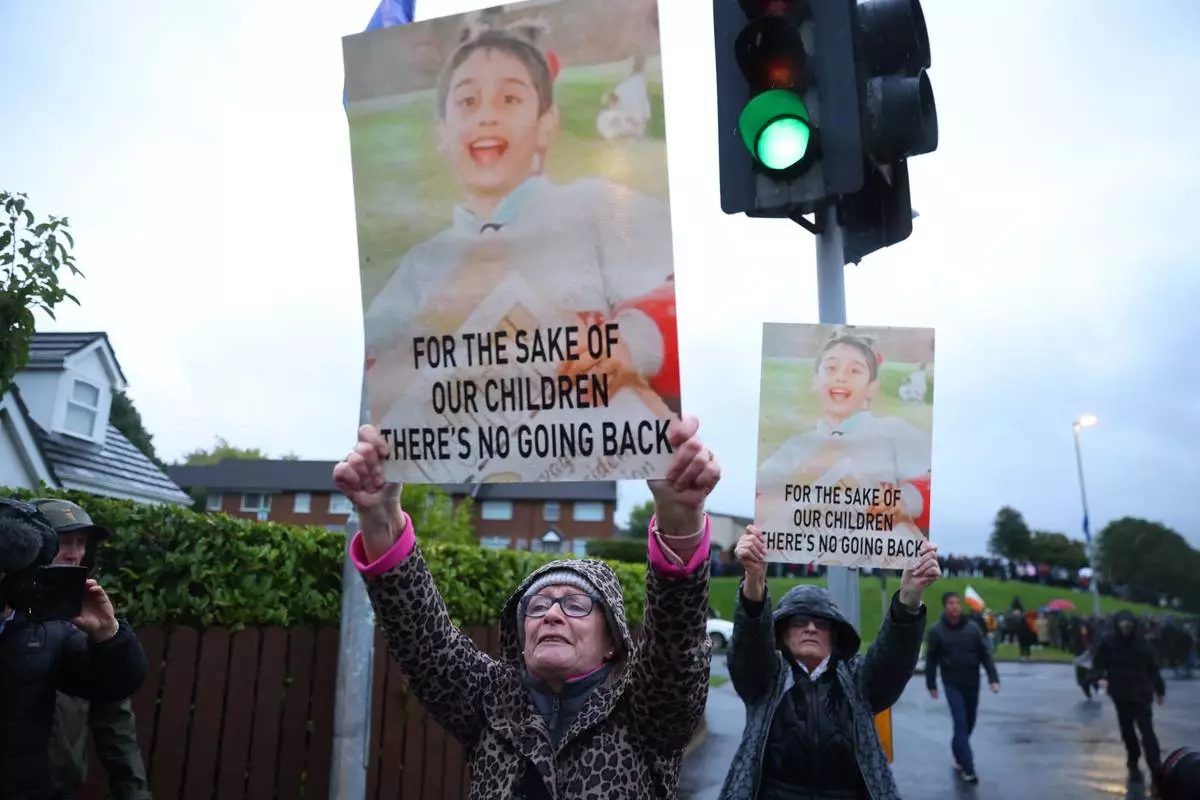
Protesters hold banners ahead of a Portadown District Loyal Orange Lodge (LOL) No 1 march in the first parade for almost 30 years, after the parade was given clearance in a late-night hearing, in Portadown, Northern Ireland, Sunday, Sept. 27, 2026. (Peter Morrison/PA via AP)
LIVERPOOL, England (AP) — British Prime Minister Andy Burnham has been in the job for two months, and so far his party isn’t demanding his head. These days, that’s an accomplishment.
The governing Labour Party opened its annual conference beside the River Mersey in Liverpool on Sunday, with Burnham pledging to turn the page on a decade of economic and political turmoil that has made him the U.K.’s seventh prime minister since its 2016 vote to leave the European Union.
He said his message in a keynote speech on Tuesday will be: “It’s time for Britain to have hope again.”
“We’ve had a decade since Brexit and it’s been a decade of too much drift, too much division, and we need to draw a line on that,” Burnham said as he arrived in Liverpool on Saturday.
His message is aimed at both the British public and a center-left party that is hopeful but nervous — ready to embrace his promise of better times, but worried about economic damage rippling out from conflict in the Middle East.
University of Manchester political science professor Rob Ford said Burnham’s difficult task is to win over “a skeptical electorate" eager for change, "while at the same time doing that within the constraints of a very difficult economic and fiscal situation.”
In short: “How do you serve people a bowl of cold porridge and convince them it’s a pepperoni pizza?”
Britain’s main political parties all hold conferences in September and October, combinations of pep rally, social gathering and policy forum that set the political tone and agenda for the year ahead.
Last year’s Labour gathering was gloomy, as members despaired about Prime Minister Keir Starmer’s deep unpopularity, little more than a year after winning power in a landslide, and the seemingly unstoppable rise of the anti-immigration opposition party Reform UK.
Burnham, then the popular mayor of Greater Manchester, was followed around Liverpool by journalists as speculation grew that he would challenge Starmer.
Events came to a head months later when a panicky party forced Starmer’s resignation and his replacement by Burnham as party leader and prime minister in July.
Now, Labour is seeing a “Burnham bounce” driven by the new leader’s upbeat talk and modest moves to put money in voters’ pocketbooks by cutting tax on electricity bills and capping bus fares.
Meanwhile, Reform is facing parliamentary and police investigations over its finances – though it also recently received a whopping 72 million pounds ($95 million) from two cryptocurrency billionaires.
Burnham has already set out some priorities, including handing more power to local leaders in order to generate "good growth in every post code.” He says he’ll reform Britain’s privatized utilities, especially the expensive, leaky and polluting water network, and will tackle the soaring cost of housing with measures including a government-backed loan plan to help people buy their first homes.
While the party is relatively united behind Burnham, he faces a divisive decision about whether to approve new oil drilling in the North Sea – opposed by environmentalists but backed by trade unions – and pushback over plans agreed under Starmer to make it harder for immigrants to settle permanently in Britain.
The next general election does not have to be called until 2029, but Labour’s revival has sparked talk of a snap election – something Burnham denies he’s considering.
“All of this speculation on an early election, I can knock that dead,” Burnham told broadcaster ITV on Friday.
But no matter how upbeat Burnham is, economic pain is coming.
Burnham must explain to party members and voters how he will deal with economic turbulence from the on-off U.S.-Iran war, which has severely restricted the movement of oil tankers through the Strait of Hormuz.
Treasury chief John Healey is set to deliver the Burnham government’s first budget on Oct. 28, with rising energy prices pushing up inflation and the cost of government borrowing. Like other countries, Britain also needs to find money to increase defense spending to counter threats from Russia.
At the same time, Burnham is promising to strengthen Britain’s state-funded National Health Service and set up a “national care service” to fix what he calls a “ broken” social care system.
That means tax rises or spending cuts – or both – could be on the cards.
One thing that might bring an economic boost is to ease some of the trade barriers erected by Brexit. Burnham has pledged closer ties with the European Union, though he's currently bound by Starmer's 2024 election pledge not to rejoin the bloc or enter its single market for goods, services and employment.
Progress toward closer ties has been slow. An EU-U.K. reset summit initially penciled in for July has slipped to November at the earliest because the two sides are wrangling over the bloc’s “made in Europe” rules, which the U.K. says will hurt British producers.
Ford said that unlike Starmer, who quickly squandered the public’s goodwill, Burnham has held onto his reputation “as an optimist and an effective communicator.” But he said Burnham's “really stern test” is yet to come.
“The bills are still going to land on the doormat,” Ford said. “He’s going to have to be the prime minister who can sell the average voter on, ‘Yes, that is indeed a bowl of cold porridge in front of you, but it will get better.’”
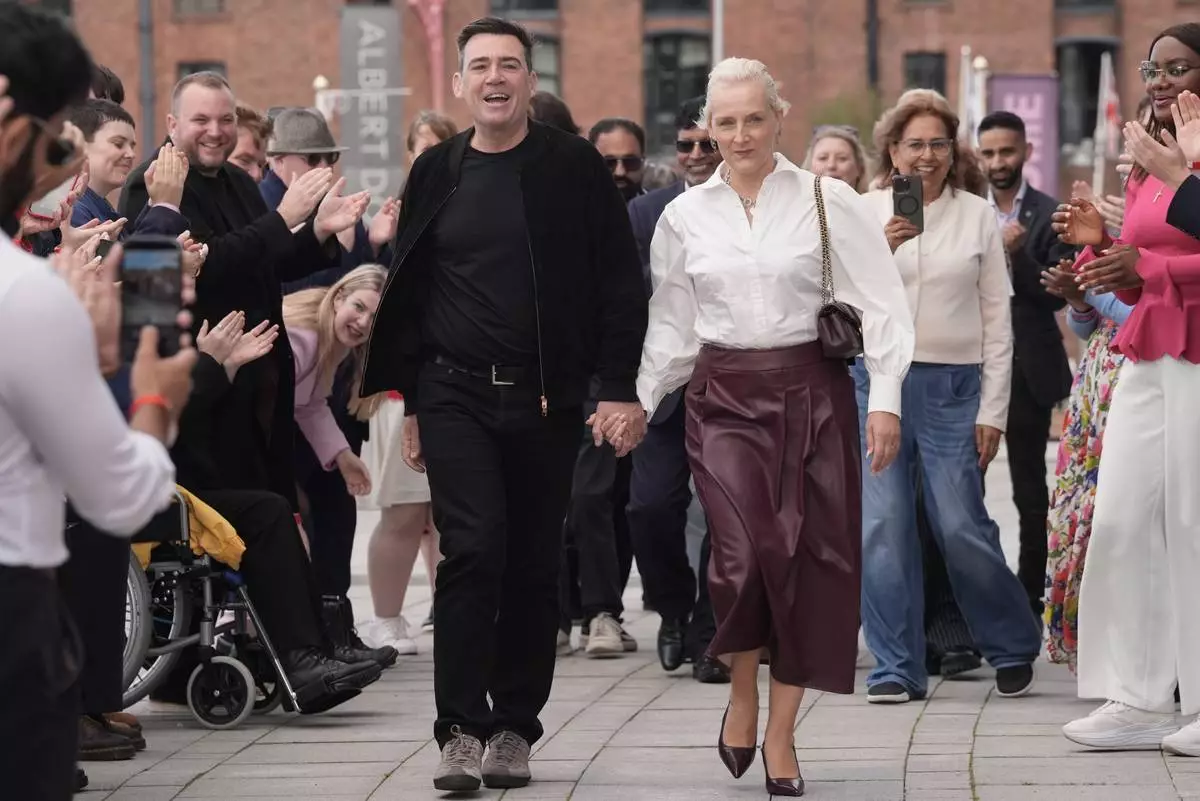
Britain's Prime Minister Andy Burnham and his wife Marie-France Van Heel arrive for the Labour Party Conference at the ACC Liverpool, in Liverpool, England,, Saturday, Sept. 26, 2026. (Stefan Rousseau/PA via AP)