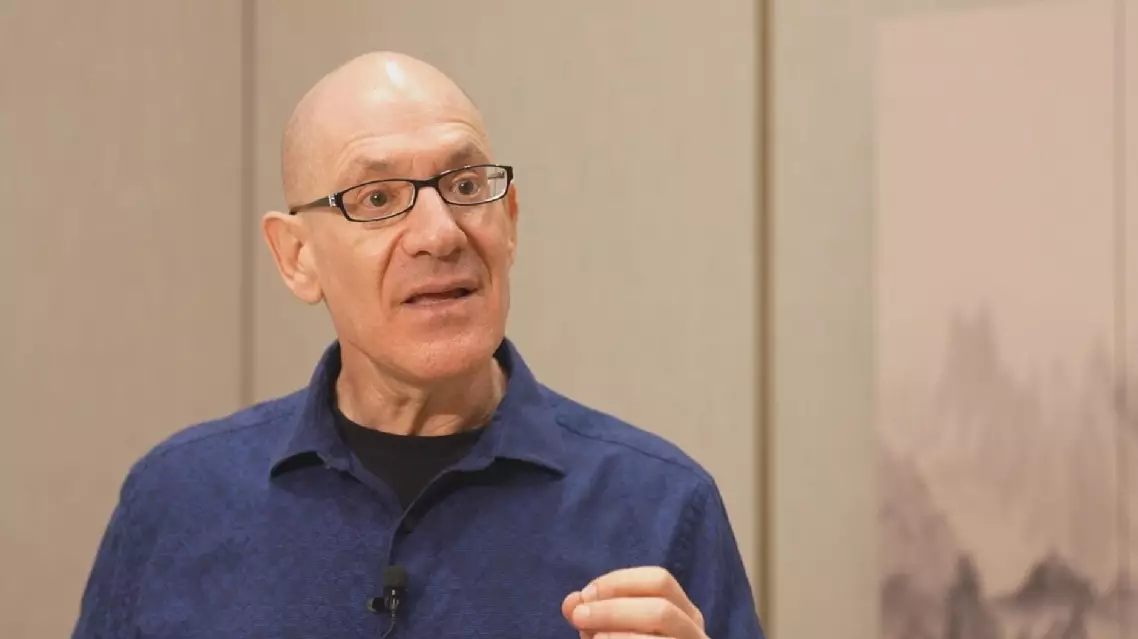
Steve Hoffman, CEO and chairman of Founders Space, one of the leading incubators in Silicon Valley, has called on China and the United States -- the two leading artificial intelligence (AI) powerhouses -- to cooperate closely in order to jointly tackle the growing challenges posed by the technology.
In an interview with China Media Group (CMG) released on Saturday, the entrepreneur warned of the problems inherent in rapid AI development -- the massive data centers operated by tech giants consume enormous amounts of electricity and water and have significant environmental impacts.
"People who live near these data centers aren't too happy because they [the centers] are noisy and they disrupt life in that area. So the biggest challenge is that these are not easy problems to solve; these are hard problems because they are at the junction between artificial intelligence and the physical world, like our physical resources. That gap is what we have to bridge. And that falls upon, the responsibility falls upon the tech company: how do you use AI right now, which is still maturing?" he said.
However, Hoffman views this gap not merely as a burden, but also as an opportunity to leverage complementary strengths. He pointed to China's leading role in electric vehicles (EVs) and solar energy, as well as U.S. strengths in research, capital and markets.
The two countries should build upon their common ground, complement each other well and work together, said Hoffman.
"Right now, China has taken the lead in EVs and clean energy production with solar. It's amazing the cost is coming down so fast. How can we go to the next level? How can we replace fossil fuels with 100 percent clean energy sources? It is totally doable if we cooperate, if we leverage the advantages of China with its supply chain and its technology companies and the advantages of the United States with its markets, its research, its capital," he said.
China, US must work closely together on AI challenges: Silicon Valley entrepreneur
A U.S. researcher who has a strong bond with China on Saturday said that the meeting between the Chinese and American heads of state is a historic moment that will aid mutual understanding and deepening people-to-people ties.
Chinese President Xi Jinping visited the United States from Wednesday to Friday at the invitation of U.S. President Donald Trump. It followed Trump's state visit to China back in May.
Elyn MacInnis, a cultural expert from the United States who lived and worked in China for 30 years, has dedicated much of her research to the stories of American families who, over a century ago, built enduring friendship with their Chinese neighbors as they resided on the serene hills of Kuliang, the outskirts of Fuzhou, capital of Fujian Province in east China.
As the founder of “Kuliang Friends” and a keen observer of how people-to-people ties between the two countries continue to develop, she welcomes more talks at the highest levels as well.
"We have two of the most important and biggest countries in the world talking to each other and going back and forth. And I think this is a very positive thing. Because it's only when you communicate that you can have understanding and make progress with whatever points are difficult for you," said MacInnis.
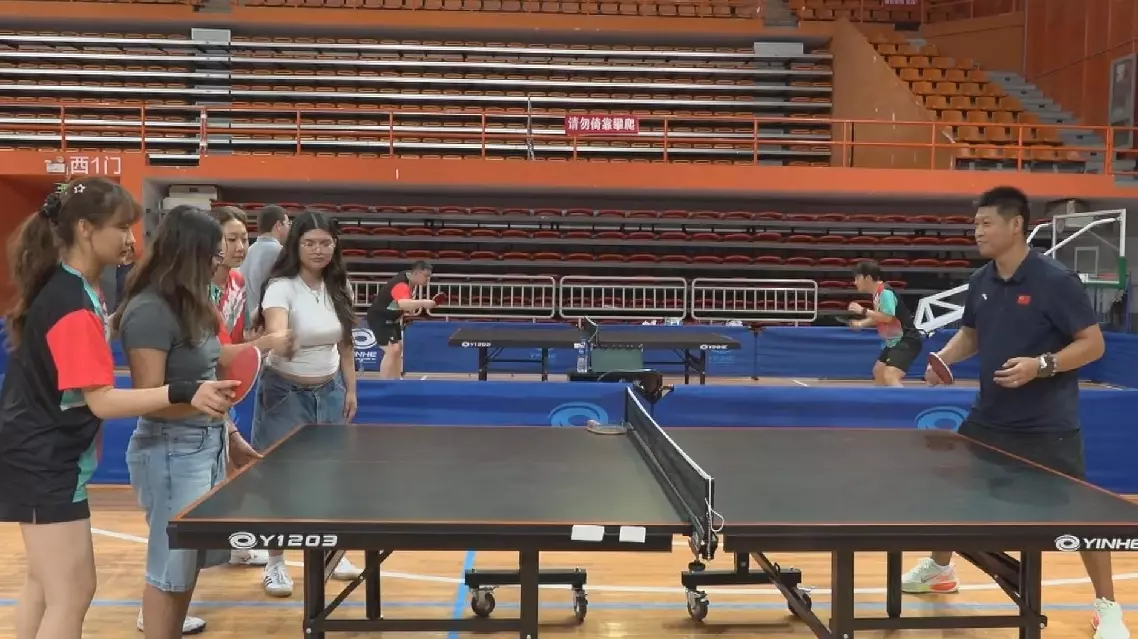
MacInnis said she paid particular attention to President Xi's announcement that China would invite 100,000 American youths to China for exchanges and study over the next five years. In her view, people-to-people exchanges between China and the U.S., especially among the youth, will lay a solid foundation for the friendly development of relations between the two countries.
"President Xi has always cared about people-to-people exchange, and I think the 100,000 students going to China will be the same. Although it's not a long, long visit, it not many generations, [but] it's still a visit and they have time to make friends with their Chinese peers. And when they make friends, something new happens, their minds open up to a new culture, a new way of doing things. So it's so positive," said MacInnis.
During the visit, President Xi also announced that the giant pandas "Ping Ping" and "Fu Shuang" would soon make their new home at Zoo Atlanta to meet the American people.
The panda pair departed from Chengdu Shuangliu International Airport in Sichuan Province on a chartered flight at 02:55 Sunday, kicking off their 10-year stay at Zoo Atlanta.
MacInnis said that the cooperation on giant panda conservation stands as a vivid testament to the friendship between China and the U.S., and will continue to bring the peoples of the two countries closer together.
“They're a symbol of friendship. And I think it's a great opportunity to help people learn more about China. I think it's wonderful that we have more pandas coming. And I'm sure they'll be as loved by the American people as all the pandas were that came before them," said MacInnis.
US-China presidential meeting to bolster youth exchanges: US researcher