A wide range of Mid-Autumn Festival celebrations have been held across China over the past few days, immersing people in a rich festive atmosphere and offering them a chance to feel the unique charm of traditional Chinese culture.
The Mid-Autumn Festival, traditionally a time for family reunion and moon viewing, fell on Friday this year, with a three-day public holiday running from Sept 25 to 27.
The Qingming Shanghe Garden in Kaifeng City, central China's Henan Province, is an antique cultural theme park based on the legendary art work "Along the River During the Qingming Festival" by Song Dynasty (960-1279) painter Zhang Zeduan. It presented Song Dynasty street scenes with live-action performances and interactive activities on Friday night, making visitors feel like they were traveling inside the painting.
In Tongren City of southwest China's Guizhou Province, the Zhongnanmen Ancient Town, a scenic spot that retains many well-preserved buildings dating back to the Ming (1368-1644) and Qing (1644-1911) dynasties, has staged a series of theatrical performances and intangible cultural heritage exhibitions, captivating crowds of visitors.
"We were overwhelmed, because it's our first time watching an intangible cultural heritage drama in the old town," said Wan Fen, a visitor.
In Sanya City of south China's Hainan Province, more than 20 international tourists gathered to make mooncakes together. While learning about the history of the traditional festival, they also shared about family reunion traditions in their own cultures.
In Xiamen City of east China's Fujian Province, a mooncake dice event has brought together more than 1,000 participants from across the Taiwan Strait to celebrate the festival and experience the joy of the centuries-old folk custom.
"Sharing the same Mid-Autumn Festival and common cultural traditions, we can truly feel here that people on both sides of the Taiwan Strait are of the same family," said Lin Yijun, a participant from Taiwan.
In Shenzhen City of south China's Guangdong Province, a performance of Shatoujiao fish lantern dance -- a national-level intangible cultural heritage passed down for 300 years, lit up the Shatoujiao Street, adding a poetic touch to Mid-Autumn Festival celebrations.
In Liuzhou City of south China's Guangxi Zhuang Autonomous Region, the Longtan Park integrated festival traditions with new technologies to diversify festival offerings for visitors, holding innovative activities such as parades featuring ethnic minority customs, lantern riddle guessing activities with AI-powered robots, and stunt shows by robot dogs.
At nighttime, more than 200 performers presented a live-action show at the park, staging classic scenes such as Chang'e -- the goddess of moon in a famous Chinese legend, flying to the moon.
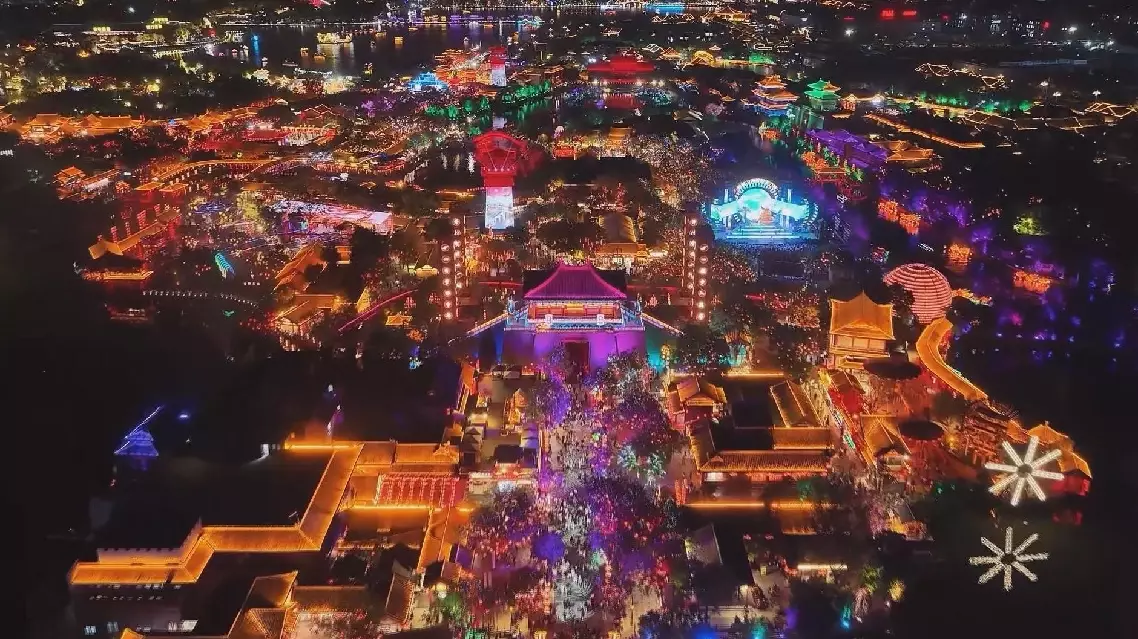
Mid-Autumn Festival celebrations across China blend tradition, technology, cultural exchange
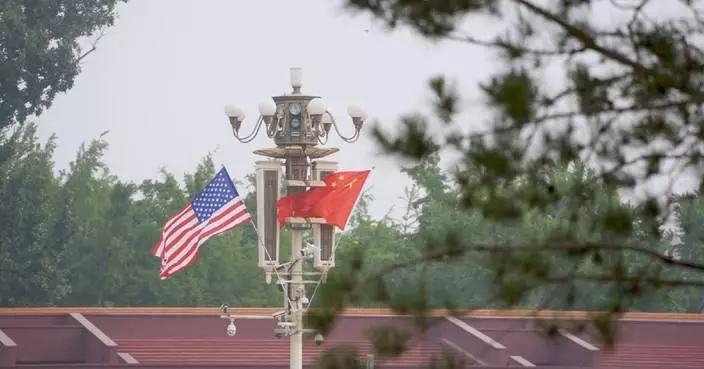
Two American veterans of the historic "ping-pong diplomacy" have welcomed the renewed mention by Chinese President Xi Jinping of the episode during the recent China-U.S. summit, expressing hope that the two countries will strengthen exchanges, enhance mutual trust and pass on their friendship from generation to generation.
Xi mentioned "ping-pong diplomacy" in a toast at a welcome banquet hosted by the U.S. president on Thursday evening, saying it opened the great process of normalizing China-U.S. relations with the political wisdom of "a small ball moving the globe".
In an interview with China Media Group (CMG) on Friday, Connie and her husband Dell Sweeris, former players on the U.S. National Table Tennis Team, said they were delighted that the episode was mentioned again during the China-U.S. summit.
"I was really, really kind of shocked about that, because here in the United States, it's not as popular. And I don't think many people, a lot of people, young people, maybe don't even know about Ping-Pong Diplomacy. So I was really surprised to hear that. But at the same time, I was really happy that he mentioned that," Connie said.
In 1971, Connie visited China with the U.S. table tennis delegation. The following year, she and her husband Dell hosted the Chinese table tennis team on its return visit to the United States.
Dell recalled that when the Chinese team visited the United States, American audiences not only wanted to watch matches but also wanted to meet these Chinese friends from afar. After a training session, a remark by a Chinese player left him with deep impression.
"We were practicing and they said they would give us some instruction. So they were telling us some things to do that would improve our skills. And then when they finished, they said, 'well now you teach us something'. The intent was to have a mutual exchange and not just have only one-sided. They wondered about us and we showed them our country, all different aspects of it," Dell said.
More than half a century of friendship also endures in the small moments. Connie remembered how, during the Chinese team's 1972 visit to the United States, the Chinese players learned “Home on the Range” and sang it to them in English on the bus. When she returned to Beijing this April, she reunited with a Chinese player from back then - someone who still remembered the tune and could sing it.
Today, the couple hopes more young Americans will have experiences like theirs.
"I would like to encourage them, if they get opportunities to do this, where they can go into China, as a student or as a ping pong player or music or education, take advantage of doing that. Because I'm a firm believer that the more you understand a person's culture and their beliefs, it helps promote communication and keeps friendships, and making friendships go forward," Connie said.
The couple also reflected on the wider stakes of the China-U.S. relationship, calling on both countries to work together for global peace and solutions to shared challenges.
"The relationship between China and the U.S. is on a global stage, and I really believe that if we can make it work between our two countries, that will set forth peace maybe throughout the world," Connie said.
"We need the leaders of the country and the people that work under them to work together and find common ground and appreciate both sides of things and come up with a solution to the world, because everybody's looking to us to do that, I think," Dell said.
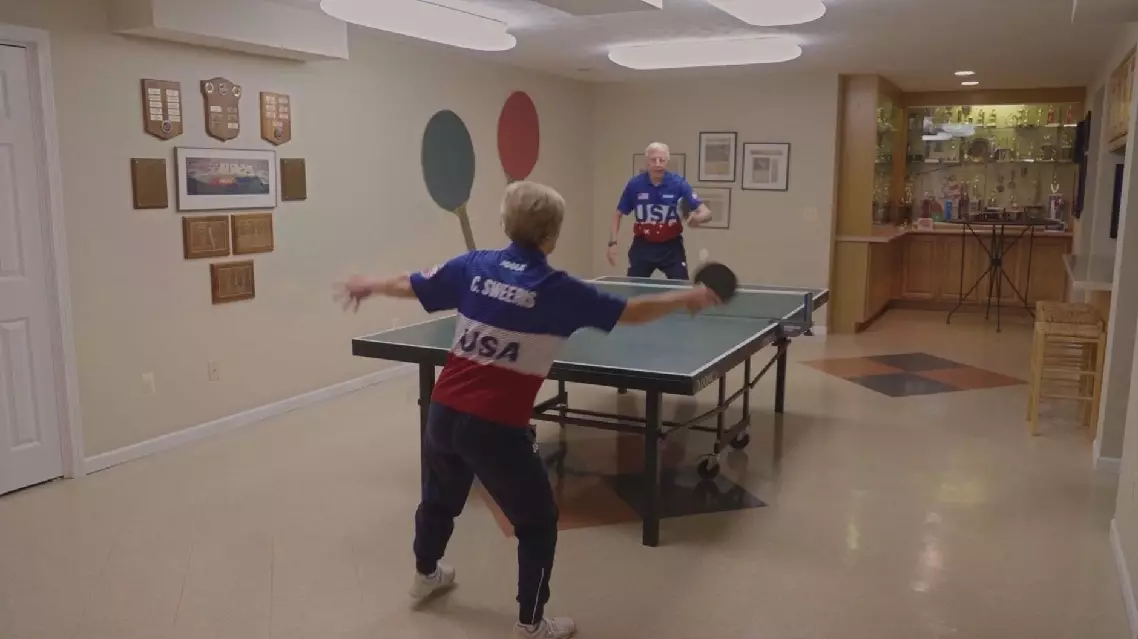
Ping-pong diplomacy veterans hope for stronger China-US ties